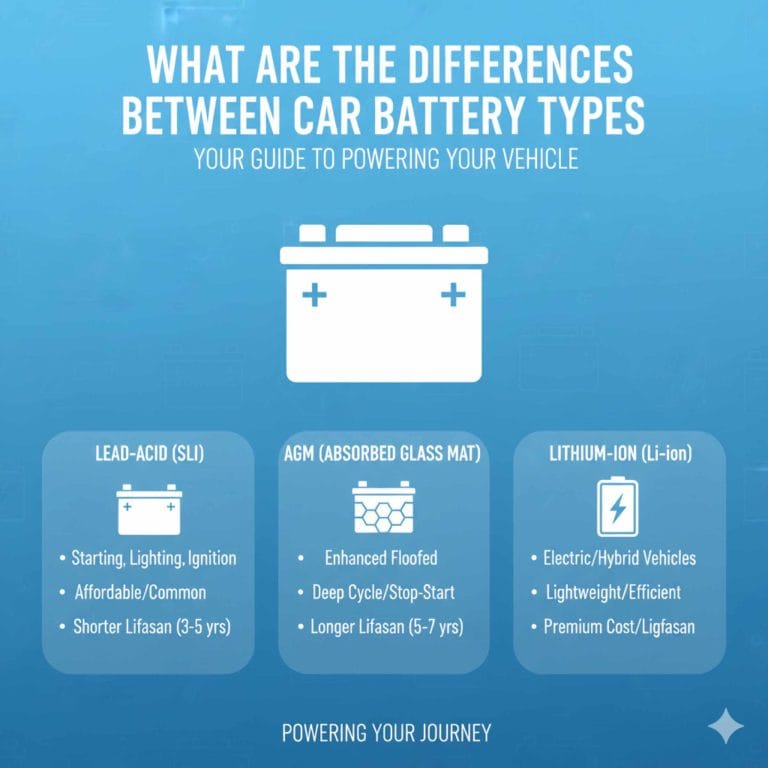
Ford Car Maintenance Guide
Use your Ford’s Maintenance Schedule plus a simple rule: service by whichever comes first: miles, months, or symptoms, with severe-use intervals for towing, short trips, dusty roads, diesel idling, and hybrid taxi-like use. Miss the right interval and you risk denied warranty claims, early transmission or turbo wear, brake damage, and paying dealer-menu prices for work you do not need. This Ford car maintenance guide matches mileage, age, driving conditions, and warning signs to the next Ford service and separates covered maintenance from pay-as-you-go repairs.
Start here: how Ford maintenance decisions actually work


Ford maintenance decisions come from four inputs: the exact scheduled guide for the vehicle, current mileage, calendar age, and what the vehicle is doing right now. That last part changes everything. A quiet commuter with low miles is one case, a towing F-150, an idling diesel, or an SUV that only does cold short trips is another.
Owners also need to split service into three buckets that dealers often blur together. Scheduled maintenance is what the Ford Owner’s Scheduled Maintenance Guide calls for at mileage or time intervals. Inspections are checks done at service visits to see whether parts or fluids need attention. Wear-item replacement happens when pads, blades, tires, filters, or similar parts are worn, even if the calendar says little.
The two-minute workflow is simple. Confirm the exact guide. Check mileage and in-service age. Mark any severe-use driving. Then scan for symptoms like brake noise, rough shifting, low fluid, warning lights, vibration, weak battery cranking, tire edge wear, or overheating.
The four inputs that decide the next service
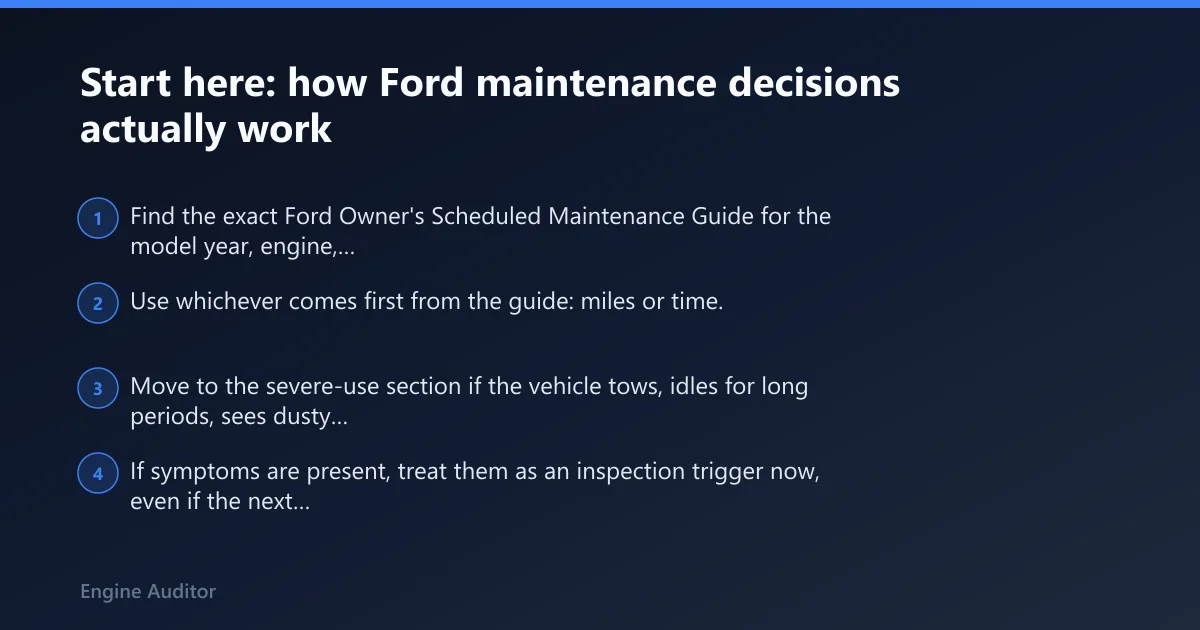
- Find the exact Ford Owner’s Scheduled Maintenance Guide for the model year, engine, drivetrain, and fuel type.
- Use whichever comes first from the guide: miles or time.
- Move to the severe-use section if the vehicle tows, idles for long periods, sees dusty roads, repeated stop-and-go driving, or frequent short trips.
- If symptoms are present, treat them as an inspection trigger now, even if the next scheduled service is not yet due.
What owners can confirm before booking service
Owners can usually identify the next action without a service advisor menu. Oil service timing comes from the guide. Tire rotation lands on a repeating interval. Brake pad and lining service depends on wear and inspection findings. Fluid checks happen during service, but fluid replacement is a separate call and must match the guide or a clear inspection finding.
This is also where many extra recommendations begin. A multi-point inspection may flag an item for monitoring, not immediate replacement. A damp area around a hose is not the same as active fluid loss. Low washer fluid is a top-off. Transmission fluid replacement is a different decision.
Understanding Annual Ford Maintenance Expenses by Model
The guide breaks down how much Ford owners should expect to spend each year on routine service, tires, brakes, fluids, and batteries, showing a typical range of $500‑$1,200 but noting that trucks, SUVs and older models can push the bill above $2,000, while newer hybrids and EVs often sit at the lower end. It also details extra wear‑item costs, post‑warranty price spikes, and how the optional FordCare plan can affect budgeting. By presenting a model‑by‑model cost table, the article lets you forecast monthly and yearly expenses, compare different vehicle types, and decide whether a maintenance plan makes financial sense. See the detailed breakdown in the Ford maintenance cost analysis.
How do I know what my Ford’s scheduled maintenance is?
Your Ford’s scheduled maintenance is whatever the exact Ford Owner’s Scheduled Maintenance Guide says for that model year, engine, drivetrain, and duty cycle. Ford says the Scheduled Maintenance Guide indicates the vehicle’s maintenance needs, so the right answer starts there, not with a generic dealer package or a list copied from another Ford.
Where to find the correct guide
The correct reference is the Ford Owner’s Scheduled Maintenance Guide for the exact vehicle. Owners should match model year first, then verify engine, transmission or drivetrain, fuel type, and any diesel or hybrid equipment. Trucks, performance trims, and diesel models often carry different service notes from standard gas commuter models.
If the vehicle has been modified, tows regularly, or sees commercial-like use, the severe-use section matters more than the base schedule. I see owners miss that section all the time, and that is where earlier fluid or inspection needs usually hide.
How to match the guide to the vehicle
Use the VIN, the door-jamb label, and the underhood emissions label if there is any doubt about engine or fuel type. Then confirm whether the vehicle is front-wheel drive, rear-wheel drive, all-wheel drive, four-wheel drive, hybrid, plug-in hybrid, or diesel. The wrong engine or drivetrain can send you to the wrong maintenance line.
Why model type changes the schedule
A low-mile commuter Ford sedan may age into time-based oil service before it racks up miles. A towing pickup may hit severe-use fluid and inspection needs much sooner. A diesel can bring in diesel exhaust fluid checks and more attention to idle-heavy use. A hybrid used like a taxi can compress service timing through repeated stop-and-go duty.

What maintenance does a Ford need on a basic schedule?
A basic Ford schedule usually centers on oil and filter service set by the guide, tire rotations at repeating intervals, recurring inspections, fluid and reservoir checks, and brake wear checks. The exact interval still depends on the vehicle’s guide, but those are the owner-facing building blocks that show up across most Ford models and most service visits.
Engine oil and filter changes
Oil and filter service is one of the core scheduled jobs on a Ford, and covered maintenance includes engine oil and filter changes. Timing comes from the Scheduled Maintenance Guide, not from a universal mileage sticker on the windshield. A low-mileage vehicle can still need service by time, while hard-use vehicles may need the severe-use schedule sooner.
For turbocharged gas engines, frequent short trips, repeated cold starts, or long idling can make the severe-use schedule the safer reading of the guide. The same applies to trucks that tow or work under load.
Tire rotations and tire-condition checks
Covered maintenance includes tire rotations. Rotation is a periodic service item, and in practice it is also the best moment to catch tire wear early because the inspection checks tires for wear and proper air pressure. Uneven shoulder wear, feathering, or cupping can push the next action away from “rotate only” and toward alignment, suspension, or pressure correction.
Multi-point inspection and fluid-reservoir checks
Ford Protect Premium Maintenance covers routine inspections and covers preventive care. At service intervals, a multi-point inspection should look at lights, wipers, steering, tires, leaks, and fluid levels. That is usually where low brake fluid, a seep at a hose, weak wiper performance, or changing tire wear patterns get caught.
Vehicle fluids and reservoirs commonly checked include transmission fluid condition where applicable, the brake reservoir, power steering fluid where fitted, coolant recovery reservoir, window washer fluid, and diesel exhaust fluid on diesel models. A check or top-off is not the same as a full replacement service.
Brake pad and lining inspections plus other wear items
Covered maintenance includes brake pads and linings. Brake service is wear-driven, so it should be based on thickness, condition, and symptoms such as squeal, grinding, pulsation, or longer stopping distance. Ford Protect also lists spark plugs as a covered item and lists engine coolant hoses, clamps and o-ring seals.
How often should I service my Ford by mileage?
Service a Ford by the exact mileage or time interval in its Scheduled Maintenance Guide, using whichever comes first. If the vehicle is low-mileage, age still counts. If use is severe, shorten timing by following the severe-use section, and if symptoms appear, inspect the related system now rather than waiting for the next mileage band.
Mileage bands owners should use
Instead of memorizing one number, owners should think in bands. There is the current due now band, the coming soon band, and the symptom-triggered now band. The guide sets the formal interval. The owner’s job is to decide which band the vehicle is in today.
That matters because a Ford with low miles but a one-year-old oil interval can still be due now, while another with moderate miles and no symptoms may only need its next scheduled inspection and rotation.
When age matters more than mileage
Low-mileage vehicles often miss service because the odometer looks safe. In practice, age catches them first. Oil service, brake fluid condition checks, battery condition, tire aging, and wiper performance can all become live issues on a vehicle that mostly sits.
When symptoms override the schedule
If the vehicle has brake noise, rough shifting, a fluid drip, a warning light, battery weakness, overheating, or steering change, the next step is not “wait until the next service visit.” It is inspection now. Scheduled maintenance and symptom diagnosis are related, but they are not the same job.
Ford maintenance decision table
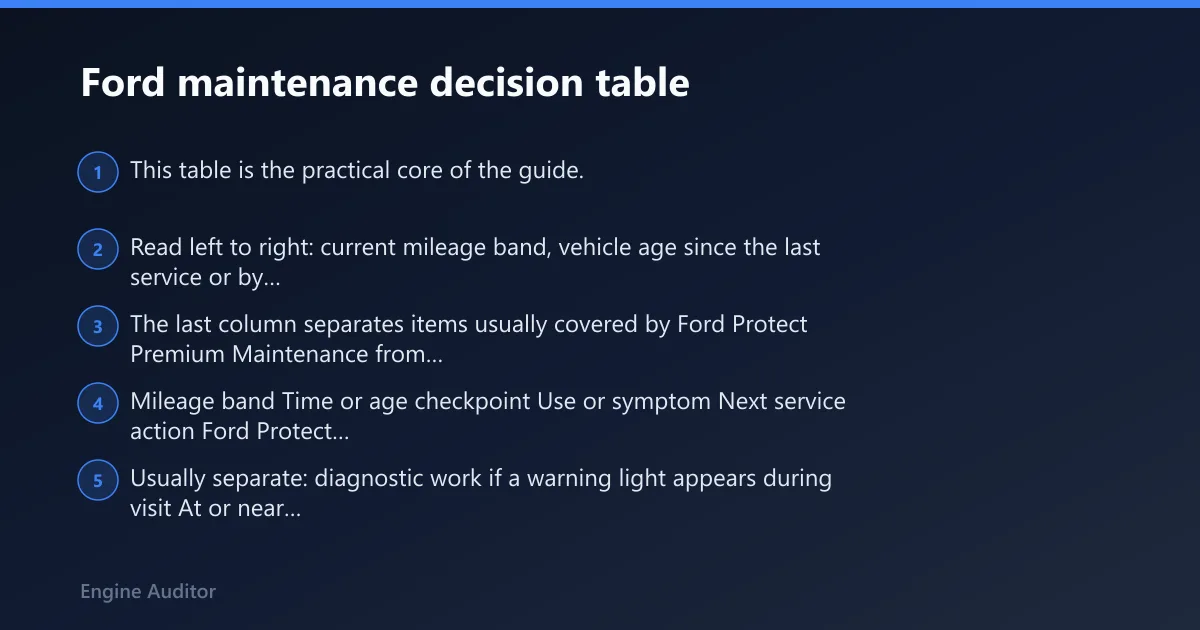
This table is the practical core of the guide. Read left to right: current mileage band, vehicle age since the last service or by calendar use, whether driving is normal or severe, any current symptom, then the next service action. The last column separates items usually covered by Ford Protect Premium Maintenance from items owners often pay for separately.
| Mileage band | Time or age checkpoint | Use or symptom | Next service action | Ford Protect Premium Maintenance vs pay-as-you-go |
|---|---|---|---|---|
| Low current miles, below next guide interval | Approaching time-based service in the guide | No symptoms, mostly short local trips | Book oil and filter service by time, add tire rotation if due, request multi-point inspection and fluid reservoir check | Usually covered: engine oil and filter changes, tire rotations, routine inspections. Usually separate: diagnostic work if a warning light appears during visit |
| At or near next guide mileage | Within current scheduled service window | Normal commuting, no warning lights | Perform scheduled maintenance from the guide, including oil and filter if listed, tire rotation, inspection of brakes, tires, lights, wipers, steering, and fluid levels | Usually covered: preventive care, routine inspections, oil service, tire rotation. Separate: repairs unrelated to scheduled maintenance |
| Any mileage | Any age | Brake squeal, grinding, pulsation, longer stops | Brake inspection now; replace brake pads and linings if worn, inspect rotors and hardware as needed | Usually covered: brake pads and linings. Often separate: rotor machining or replacement, brake diagnosis if another fault is present |
| Any mileage | Any age | Uneven tire wear, pull, vibration | Inspect tire condition and pressure, rotate if due, check suspension and steering, consider alignment or tire replacement if wear pattern is advanced | Usually covered: tire rotation, routine tire inspection. Often separate: alignment, tire replacement, suspension repair |
| Any mileage | Any age | Fluid loss, sweet smell, low reservoir, overheating | Inspect cooling system and related hoses, clamps, and seals; confirm whether issue is low coolant only or active leak before any replacement plan | Ford Protect lists engine coolant hoses, clamps and o-ring seals. Often separate: repair for damage caused by overheating or unrelated cooling faults |
| Any mileage | Any age | Rough shifting, heavy towing, repeated stop-and-go | Check the exact guide for severe-use transmission service and inspect for leaks or driveline concerns; do not treat this as a basic oil visit | Scheduled inspection elements may be included. Fluid replacement or repair may be pay-as-you-go unless specifically listed under the plan and schedule |
| Any mileage | Any age | Weak start, repeated jump-starts, battery warning | Battery and charging-system inspection now; replace battery if testing confirms weakness | Mobile service can often handle batteries. Battery coverage depends on plan details; diagnosis and charging faults are often separate |
| Higher-use truck or SUV reaching scheduled interval quickly | Frequent towing or long idling | No obvious symptoms yet | Use severe-use section of the guide, move up oil and inspection timing, watch brakes and tires closely, inspect fluids and reservoirs at each visit | Usually covered: routine inspections, preventive care, oil service, tire rotation, some wear items. Separate: many repairs, alignments, and damage-related work |
| Diesel model at current service window | Regular idle time or work use | Low diesel exhaust fluid warning or heavy-use pattern | Perform scheduled service from the diesel guide, check diesel exhaust fluid, coolant system, brakes, and tires, and verify any idle-related severe-use notes | Routine inspection items are commonly included. Diesel exhaust fluid top-offs and non-covered diesel repairs are commonly separate |
| Commuter car with moderate miles | No symptoms, age and miles line up with next service | Normal use | Basic scheduled maintenance visit: oil and filter if due, tire rotation, multi-point inspection, reservoir checks, brake wear check | Usually covered: oil and filter changes, tire rotations, routine inspections. Separate: cabin concerns, tire replacement, non-scheduled repairs |
How to use the table on real vehicles
A commuter car usually stays close to the base schedule unless age sneaks up on oil service. A towing pickup often shifts early into the severe-use path. A short-trip SUV can look fine on miles while still needing time-based oil service and brake inspection. A diesel model adds diesel exhaust fluid awareness and heavier attention to idle-related service notes.
Do Ford service intervals change by vehicle type or driving conditions?
Yes. Service intervals can vary by engine, drivetrain, diesel or hybrid equipment, towing use, short trips, dusty conditions, stop-and-go driving, long idle time, and temperature extremes. The right interval is therefore vehicle-specific and use-specific, which is why one Ford owner’s schedule should never be copied onto another vehicle.
Severe-use conditions that shorten timing
Severe use usually means the vehicle works harder than the odometer alone suggests. Common triggers include towing, carrying heavy loads, repeated cold short trips, extended idling, dusty or unpaved roads, repeated stop-and-go operation, and extreme heat or cold. These conditions can move oil service, brake checks, tire attention, and fluid inspections earlier.
Differences across cars, SUVs, trucks, hybrids, and diesel vehicles
Cars used for commuting often age into service by time. SUVs that do school-run short trips build condensation and heat cycles without many highway miles. Trucks can wear brakes and tires faster under towing. Hybrids used for delivery or ride work see many start-stop cycles. Diesel models add diesel exhaust fluid and may carry different notes for idle-heavy use.
When to shorten service timing even if mileage is low
If a vehicle sits often, only runs a few miles at a time, tows on weekends, or idles at job sites, the severe-use section deserves attention even when mileage looks light. That is one of the most common ways owners miss the correct Ford service path.
What inspections happen during Ford service visits?
A Ford service visit usually includes a multi-point inspection that checks basic operating and wear items, then turns any findings into either monitor, service soon, or replace now decisions. This inspection is separate from a repair diagnosis, but it often reveals the next maintenance item before it becomes a louder or more expensive problem.
What the multi-point inspection includes
The multi-point inspection checks exterior lamps, turn signals, and brake lights. It checks windshield washer spray, wiper operation, and wiper blades. It checks steering and steering linkages. It also checks tires for wear and proper air pressure.
Many service departments also use the inspection to look for obvious leaks, visible suspension concerns, fluid level issues, and brake wear indicators. That is inspection work. Replacement only follows if wear, leakage, or performance justifies it.
Vehicle fluids and reservoirs reviewed at service
Owners should expect a look at the transmission fluid condition where serviceable, the brake reservoir, power steering fluid where the vehicle uses it, the coolant recovery reservoir, the washer reservoir, and diesel exhaust fluid on diesel vehicles. A low reservoir can mean top-off only, or it can point to a leak that needs diagnosis.
How inspection findings become service recommendations
A useful inspection result names the system, the finding, and the next action. For example: brake pads low and due now; front tires wearing on the inner edge and need alignment check; coolant reservoir low with no visible external leak, recheck pressure system; wiper blades streaking and should be replaced. That is far better than “recommended maintenance package.”
Which maintenance items are covered by Ford Protect Premium Maintenance?
Ford Protect Premium Maintenance covers routine inspections, covers preventive care, and covers replacement of normal wear-and-tear items that require periodic attention. Owners should still read the exact contract because coverage is not the same as repair coverage, and many diagnostics, failures, and damage-related items remain outside routine maintenance.
Items commonly included
Covered maintenance includes engine oil and filter changes. Covered maintenance includes tire rotations. Covered maintenance includes brake pads and linings. Ford Protect also lists spark plugs as a covered item. Those are owner-relevant items because they come up often in real service planning, especially on higher-mileage or higher-use vehicles.
Routine inspections and preventive care
Ford Protect Premium Maintenance covers routine inspections and preventive care. That matters because inspections are what catch wear before it becomes a repair visit. A plan can make sense if the vehicle is likely to use its included oil services, rotations, and wear-item attention within the term of ownership.
What owners commonly pay for separately
Owners commonly pay separately for diagnosis of warning lights, repairs from damage, many alignment corrections, tire replacement, and work that falls outside covered routine maintenance. Scheduled maintenance is not the same as warranty repair, recall work, accident repair, or troubleshooting a drivability fault.
Can Ford Mobile Service handle the work my vehicle needs?
Sometimes, yes. Ford Mobile Service can perform oil and filter changes remotely, and Ford Mobile Service can also handle brakes, batteries, and tire rotation. That makes it a practical option for straightforward maintenance, but symptom-heavy work, leak tracing, and many driveline or warning-light cases still fit an in-shop visit better.
What mobile service commonly handles
For owners trying to keep routine care simple, mobile service fits best when the next action is already clear: oil and filter service, brake pad service, battery replacement, or tire rotation. Those are defined jobs, and they line up well with driveway service when access and parts are straightforward.
When mobile service makes sense
It works well for a commuter car due for oil and rotation, a work truck that needs a battery, or a vehicle with confirmed brake pad wear and no other brake-system symptoms. It also helps owners avoid turning a basic service need into a larger dealership menu visit.
When an in-shop visit is the better call
If the vehicle has rough shifting, overheating, a fluid leak that is not identified, a suspension clunk, major vibration, or multiple warning lights, shop diagnosis makes more sense. Those cases need lift access, road testing, scan tools, pressure testing, or broader inspection time.
Frequently asked questions
what basic maintenance is required for my car
For most Ford owners, the basic maintenance path is oil and filter service when the guide says it is due, tire rotations, brake wear checks, multi-point inspections, and fluid reservoir checks. The exact interval is vehicle-specific, so the right baseline comes from the Ford Owner’s Scheduled Maintenance Guide.
how do i know what maintenance my car needs
Start with the exact Ford guide for the model year and powertrain, then compare it with current mileage, calendar age, severe-use conditions, and symptoms. If those four inputs agree, the next service is usually clear. If symptoms disagree with the schedule, inspection now takes priority.
How often should I service my Ford by mileage?
Service by the guide’s mileage or time interval, whichever comes first, and switch to the severe-use section if the vehicle tows, idles, runs short trips, or sees dust and stop-and-go traffic. Mileage alone is not enough for low-use vehicles or hard-work vehicles.
Which maintenance items are covered by Ford Protect Premium Maintenance?
Ford Protect Premium Maintenance covers routine inspections, preventive care, and normal wear-and-tear items that require periodic attention. Covered maintenance includes engine oil and filter changes, tire rotations, and brake pads and linings. Some plans also list spark plugs and certain cooling-system hose-related parts.
What inspections happen during Ford service visits?
A typical Ford multi-point inspection checks exterior lamps, turn signals, brake lights, windshield washer spray, wiper operation, wiper blades, steering and steering linkages, and tire wear and pressure. Service staff may also review leaks, fluid levels, and visible wear to decide what needs service now.
Is Ford maintenance plan worth it for routine service?
It can be worth it if the vehicle will stay long enough to use recurring oil changes, tire rotations, inspections, and likely wear-item coverage such as brake pads and linings. It is less compelling when annual mileage is very low, ownership is short, or most future costs are likely to be repair-related rather than maintenance-related.
Products related to this article
Sponsored / affiliate links. As an Amazon Associate I earn from qualifying purchases. I may earn additional commission from eligible campaigns.