What Is a Compact Car? Size, Use, and Best Buyers Guide
A compact car is a small passenger car that is generally shorter than midsize cars and gives up some cabin and cargo space for easier parking, lower fuel use, and lower prices. Pick wrong, and you end up with tight rear seats, cargo limits that bite fast, and a car that looks right on paper but fails in daily use. This guide explains compact-car size, how it compares with subcompacts and midsize cars, and which buyers get the most value from it.
This guide is part of our Vehicle types guide: body styles and categories series.
What is a compact car?


A compact car sits between a subcompact and a midsize car. By EPA rules, compact cars have 100–109 cubic feet of combined passenger and cargo volume. That matters because it matches real ownership: easier parking than a midsize, more breathing room than a subcompact, and enough interior space for many daily drivers.
EPA compact car class and what the number means
The EPA classification standard uses interior volume, not just exterior length. A car can look small from the curb and still land in the compact class if its cabin and trunk add up to the right total. For buyers, that means the badge on the window sticker matters less than whether the car leaves enough room for people, bags, and child seats.
Typical compact-car length and what it feels like in traffic
Car and Driver says compact cars are between 161 and 187 inches long. That span explains why some compacts feel nimble in tight lots while others feel closer to a small midsize sedan. In traffic, the class usually means easier lane changes, less front-to-back footprint in parking, and fewer curb-fitting headaches than a larger sedan.
According to Best Compact Cars for 2026, Tested — Car and Driver says compact cars are between 161 and 187 inches long. (source)
How big is a compact car compared with a subcompact or midsize car?
A compact car is the middle step between smaller subcompact cars and larger midsize cars. The practical question is not only how many cubic feet it has, but where that space shows up. Subcompacts feel tighter in the rear seat and cargo area; midsize cars usually buy more legroom, a bigger trunk, and easier long-trip comfort.
Compact vs. subcompact: where the extra space shows up
The jump from subcompact to compact usually shows up in the back seat first. Adults sit with less knee contact, child seats fit with fewer compromises, and the trunk opening is often more usable. That extra room also helps when a driver carries work bags, groceries, strollers, or luggage at the same time.
Compact vs. midsize: when the bigger class is worth it
A midsize car starts to make sense when rear-seat comfort matters every week, not once in a while. Families with taller teens, frequent adult passengers, or long highway trips often notice the difference quickly. If a buyer routinely fills all seats or hates folding into a shallow rear bench, midsize is the safer move.
| Class | EPA interior volume | Typical buyer feel |
|---|---|---|
| Subcompact | Below compact range | Easier to park, tighter for adults and cargo |
| Compact | 100–109 cubic feet | Balanced size for commuting, errands, and light family use |
| Midsize | Above compact range | More rear-seat room and easier road-trip comfort |
What body styles come in the compact class?
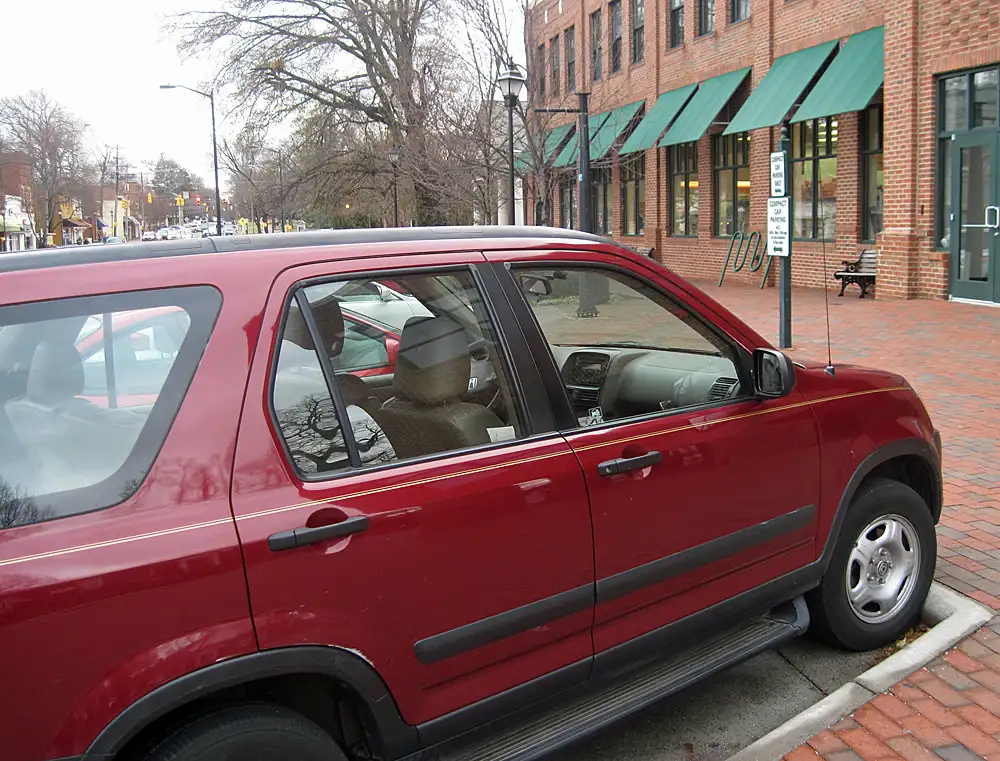
Compact cars often come as sedans and hatchbacks. The body style changes how the same size class works day to day. A compact sedan usually feels simpler and quieter for commuting. A compact hatchback usually makes cargo loading easier and gives the owner more flexibility when the trunk needs to do extra work.
Compact sedan for commuting and simple ownership
A compact sedan is the familiar four-door shape. It works well for drivers who care about straightforward daily use, a separate trunk, and easier cabin isolation from messy cargo. Many buyers like it because it behaves predictably in traffic and on the highway, with rear seats that are acceptable for short trips.
Compact hatchback for cargo flexibility and tighter parking
A compact hatchback trades a separate trunk lid for a rear hatch and folding cargo area. That usually means better access for boxes, soft bags, and bulky items that would fight a sedan opening. In tight parking, the shorter rear overhang and taller cargo opening often make loading less frustrating.
Common examples show the body-style spread clearly. Car and Driver identifies the 2026 Honda Civic as available in sedan or hatchback form, and the 2026 Mazda 3 is also offered as a sedan and hatchback. The 2026 Volkswagen Jetta is described as a compact four-door package, which tells buyers where its value proposition sits: conventional shape, compact footprint, easy daily use.
Are compact cars good on gas and cheap to run?
Compact cars are often a smart choice for buyers who want reasonable fuel use without moving into a larger vehicle. Hybrid compact cars matter most for drivers who rack up mileage in traffic or mixed commuting. Running costs also depend on tires, brakes, and insurance, but a smaller car usually keeps the budget more manageable than a midsize.
Why hybrid compact cars appeal to efficiency-focused buyers
A hybrid compact car is built for buyers who want the fuel bill down without giving up the easy parking and manageable size of a compact. The 2026 Toyota Prius is rated at 49–57 combined MPG, and the 2026 Toyota Prius PHEV delivers up to 127 MPGe on battery power alone. That is the kind of efficiency many commuters want. (caranddriver.com)
How fuel use fits with insurance, tires, and routine costs
Fuel savings are only part of the ownership picture. Compact cars often need smaller tires than larger sedans, and that can help keep replacement costs in check. Insurance and routine service vary by model and trim, but a compact usually starts from a simpler cost base than a larger car with more weight and more material to maintain.
Who should buy a compact car?
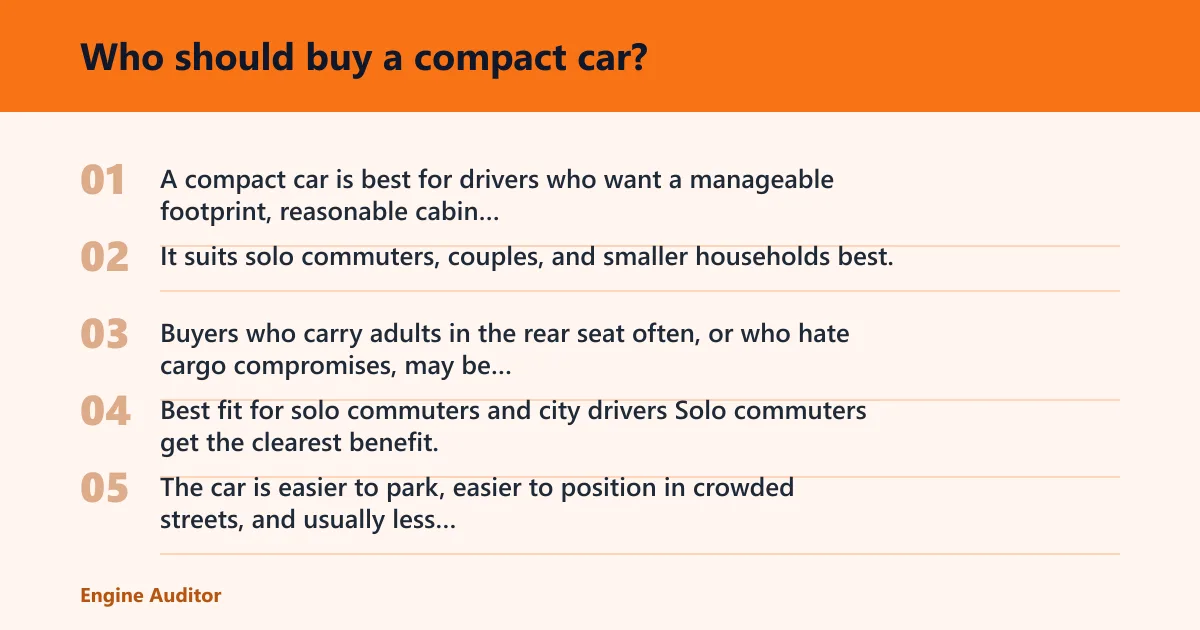
A compact car is best for drivers who want a manageable footprint, reasonable cabin space, and everyday usefulness without stepping up to a larger sedan or SUV. It suits solo commuters, couples, and smaller households best. Buyers who carry adults in the rear seat often, or who hate cargo compromises, may be happier in a midsize car.
Best fit for solo commuters and city drivers
Solo commuters get the clearest benefit. The car is easier to park, easier to position in crowded streets, and usually less tiring in tight garages or dense downtown blocks. City drivers also tend to appreciate a compact’s smaller turning and parking demands, especially when street parking is part of normal life.
Best fit for couples and small families
Couples often land in the sweet spot. Two adults, a grocery run, and a weekend bag fit a compact sedan or hatchback without much drama. Small families can also do well if trips are short and the rear seat is used for child seats or young children rather than tall adults on every drive.
When a compact is the wrong size
A compact starts to feel too small when every drive includes rear passengers, oversized strollers, or vacation luggage for four. It can also frustrate buyers who want a wide trunk opening for bulky gear or who need adult comfort in the back seat. In those cases, midsize usually earns its cost.
Compact-car buyer fit matrix
| Buyer scenario | Compact sedan | Compact hatchback | Subcompact | Midsize |
|---|---|---|---|---|
| City parking and street parking | Good | Very good | Excellent | Fair |
| Solo commuting and daily errands | Very good | Very good | Good | Good |
| Couple use and mixed driving | Good | Very good | Fair | Very good |
| Small family duty and weekend cargo | Fair | Good | Poor | Very good |
Which compact cars are worth a look?
Good compact-car shopping starts with the model’s body style, powertrain, and value position. The best choices are usually the ones that match the buyer’s routine, not the flashiest nameplate. Honda Civic, Toyota Corolla, and Volkswagen Jetta remain strong starting points because they cover the main use cases without asking buyers to guess.
Honda Civic: sedan, hatchback, and hybrid choices
The 2026 Honda Civic fits buyers who want choices. Car and Driver says it is available in sedan or hatchback form, and it can be had with or without a hybrid powertrain. That gives it a wide target: commuters, first-time buyers, and shoppers who want a compact that can lean efficient or more flexible.
Toyota Corolla: affordable transportation in sedan and hatchback form
The Corolla stays near the center of the compact-car pitch. Its sedan and hatchback availability makes it easy to sort by need rather than by brand image. Buyers who want affordable transportation and low drama tend to consider it because the formula is straightforward: compact size, simple layout, and broad everyday usefulness.
Volkswagen Jetta: compact four-door value and fuel use
The 2026 Volkswagen Jetta is described as a compact four-door package, which tells shoppers exactly where it fits. It is aimed at buyers who want a conventional sedan shape, easy daily use, and a value story tied to fuel use and reasonable size. For many shoppers, that is enough without extra complexity.
How to compare these models before buying
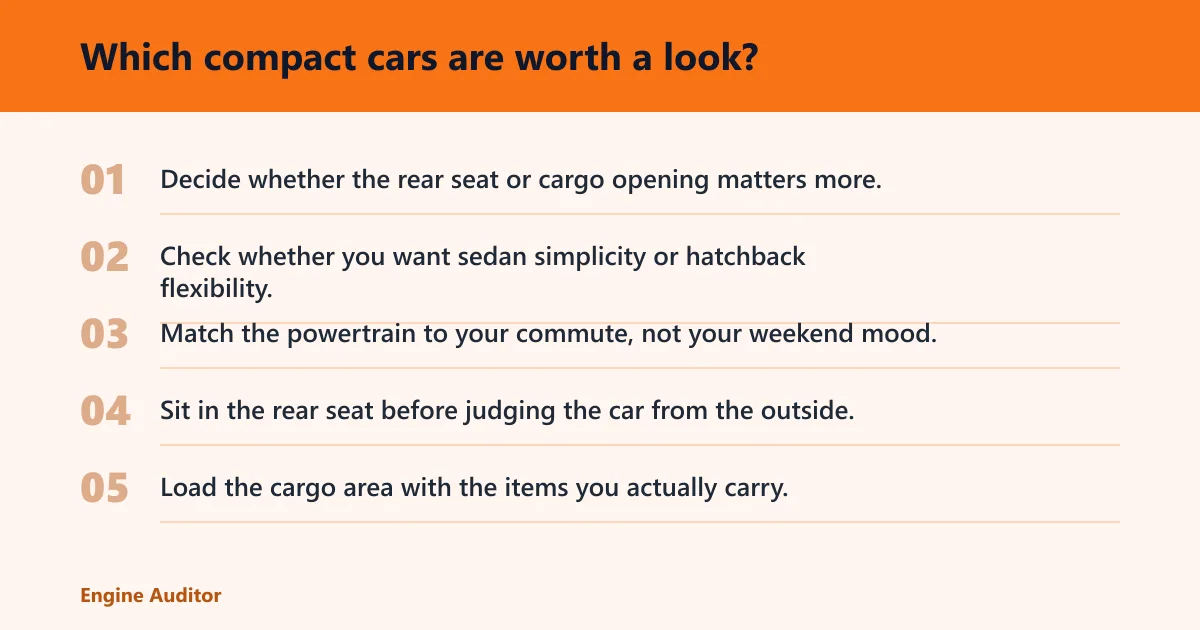
- Decide whether the rear seat or cargo opening matters more.
- Check whether you want sedan simplicity or hatchback flexibility.
- Match the powertrain to your commute, not your weekend mood.
- Sit in the rear seat before judging the car from the outside.
- Load the cargo area with the items you actually carry.
Frequently asked questions
What is considered a compact car?
A compact car is a passenger car that sits between a subcompact and a midsize car. EPA compact cars have 100–109 cubic feet of combined passenger and cargo volume. In practice, that means enough room for commuting and errands, with less rear-seat and cargo room than many midsize sedans.
How big is a compact car compared with a midsize car?
A compact car is smaller than a midsize car in both footprint and interior space. Car and Driver says compact cars are between 161 and 187 inches long, while midsize cars usually stretch farther and provide more rear legroom and luggage room. The bigger class is worth it when people ride in back often.
Is a compact car good for families?
A compact car can work for small families, especially if the household has one child or uses the back seat mainly for short trips. It becomes a tighter fit when adults ride in back often, or when strollers, sports gear, and luggage share the same trip. Families who travel often may prefer a midsize car.
Are compact cars good on gas?
Many compact cars are good on gas, and hybrid versions are especially appealing to commuters. The 2026 Toyota Prius is rated at 49–57 combined MPG, and the 2026 Toyota Prius PHEV delivers up to 127 MPGe on battery power alone. That efficiency is a major draw for high-mileage drivers.
What body styles come in the compact class?
Compact cars commonly come as sedans and hatchbacks. A compact sedan suits buyers who want a normal four-door shape and a separate trunk. A compact hatchback helps when cargo flexibility matters more, because the rear opening is larger and the folded cargo area is easier to use.
Who should buy a compact car?
Compact cars can fit solo commuters, couples, city drivers, and small families that do not need a large rear seat every day. They also fit buyers who want easy parking and manageable ownership costs without moving into a subcompact’s tighter cabin or a midsize car’s larger footprint and price.
Products related to this article
Sponsored / affiliate links. As an Amazon Associate I earn from qualifying purchases. I may earn additional commission from eligible campaigns.