Ford Power Steering Fluid Check for Ford Vehicles
Check Ford power steering fluid only on hydraulic systems. If your vehicle has electric power steering assist (EPAS), there is typically no fluid reservoir to inspect. Looking in the wrong place wastes time, hides leaks, and can miss a steering fault that needs diagnosis. Start by confirming which steering system your Ford has, then check the reservoir, fluid spec, and common leak points.
Ford steering system check


Start here before you open a hood or top off anything. A Ford with hydraulic steering has fluid, a reservoir, and usually a belt-driven pump. A Ford with EPAS has no hydraulic fluid to check, so a warning light or heavy steering calls for diagnostic trouble codes, wiring checks, or a steering assist fault diagnosis instead.
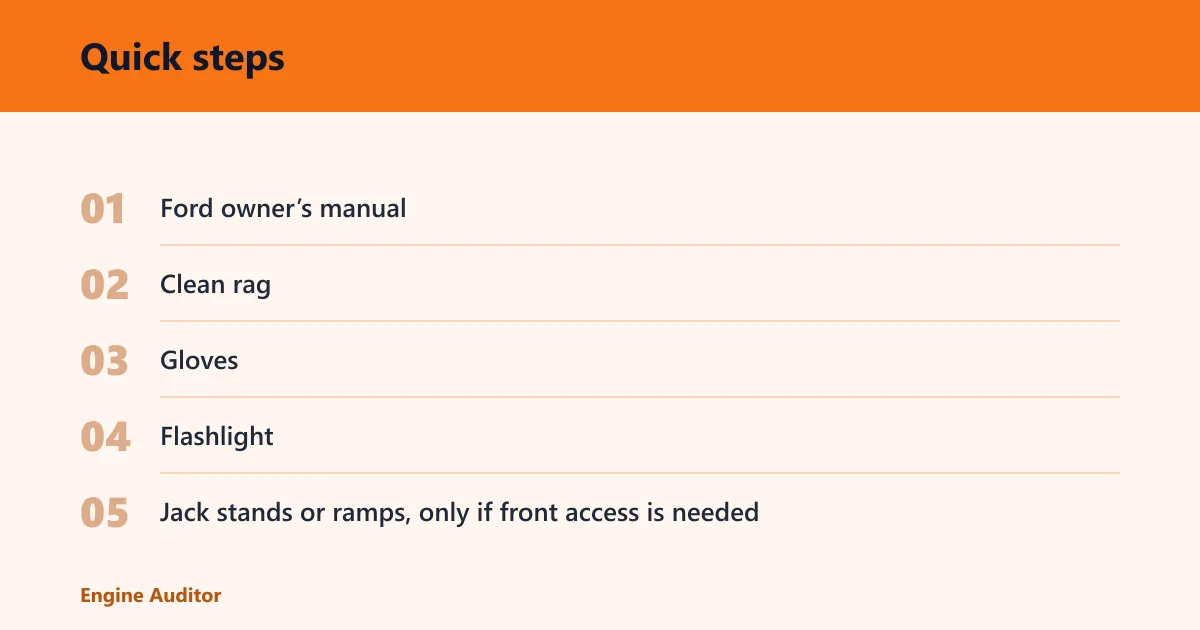
What you’ll need
- Ford owner’s manual
- Clean rag
- Gloves
- Flashlight
- Jack stands or ramps, only if front access is needed
- Wheel chocks
- Parking brake
- Turkey baster or suction tool for excess fluid
Ford steering fluid decision table
| Steering system type | Check method | Next action |
|---|---|---|
| Hydraulic Ford system | Inspect the reservoir cap markings, then read MIN/MAX or HOT/COLD marks with the engine off unless the manual says otherwise | Top off with the exact fluid spec, then inspect for leaks if the level is low again |
| EPAS system | No fluid reservoir check; inspect warning lamps, steering feel, and scan data | Read fault codes and inspect the battery, charging system, connectors, and steering assist module |
| Unknown or unsure | Use the owner’s manual and look for a reservoir, pump, and hoses before opening anything | Confirm the system type first; do not add fluid until you know the specification |
How do you check Ford steering fluid?
Check hydraulic Ford steering fluid with the vehicle parked level, the engine off unless the manual says otherwise, and the steering system cool if possible. Find the reservoir, read the cap and level marks, and compare the fluid to the specified range. Overfilling can aerate the system and create noise.
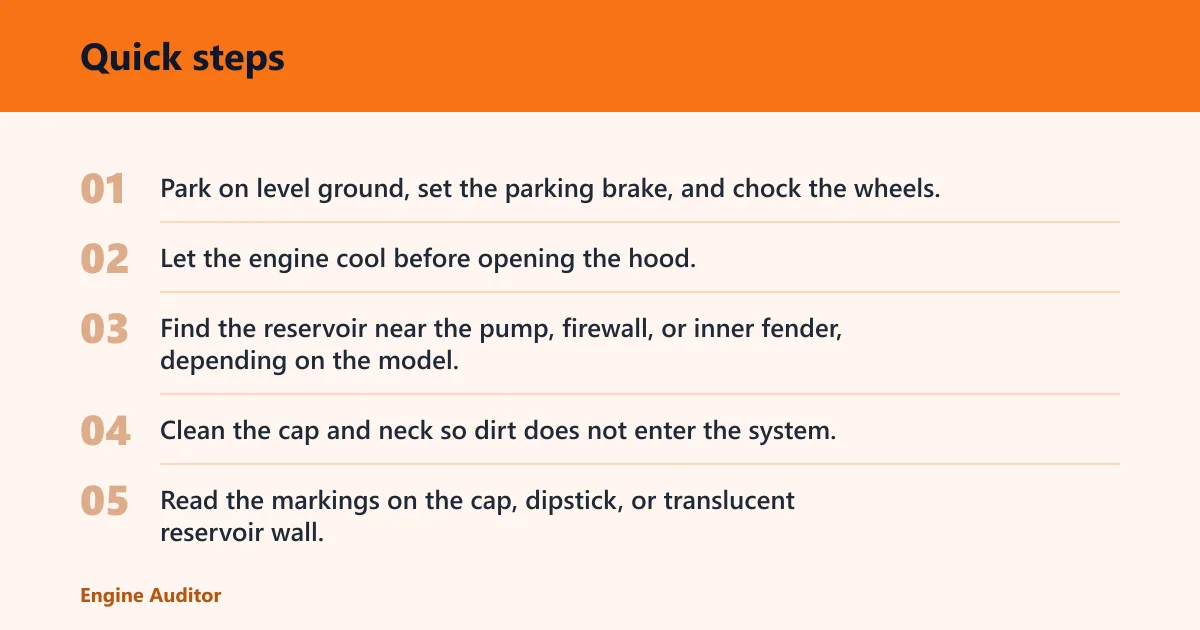
- Park on level ground, set the parking brake, and chock the wheels.
- Let the engine cool before opening the hood.
- Find the reservoir near the pump, firewall, or inner fender, depending on the model.
- Clean the cap and neck so dirt does not enter the system.
- Read the markings on the cap, dipstick, or translucent reservoir wall.
- Check the level against MIN/MAX or HOT/COLD marks at the temperature listed in the manual.
- Inspect the fluid for dark color, foam, or bubbles.
- Add fluid in 2-ounce increments, then recheck before adding more.
Some Ford reservoirs are translucent, so you can read the level through the side. Others use a dipstick in the cap. A few are tucked low near the belt drive, so front access may be easier with ramps or rated jack stands. If front access is needed, support the vehicle correctly first; do not rely on a jack alone.
How do you know if the level is low?
Low hydraulic fluid usually shows up as a whine, a heavy wheel, or slow assist when turning at parking speeds. Foaming points to air in the system, often from low fluid, a loose fitting, or overfill. Wet hoses, a damp pump body, or drips under the front subframe can confirm a leak.
Say your Ford starts whining only when you turn into a tight parking space, and the reservoir sits below the MIN mark. That points toward low fluid or air ingestion, not a tire problem. If the wheel feels stiff in both directions, check the belt, pump, and reservoir level before driving farther.
If that didn’t work, try this next
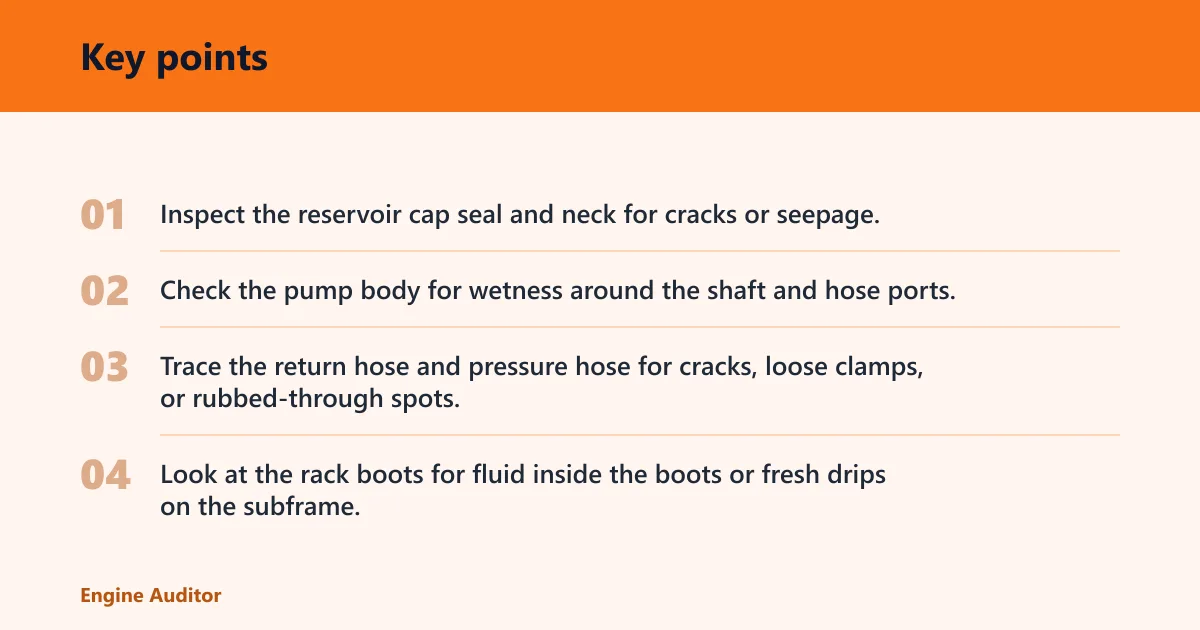
- Inspect the reservoir cap seal and neck for cracks or seepage.
- Check the pump body for wetness around the shaft and hose ports.
- Trace the return hose and pressure hose for cracks, loose clamps, or rubbed-through spots.
- Look at the rack boots for fluid inside the boots or fresh drips on the subframe.
Small leaks matter. A slow seep at a hose fitting or rack seal can drop the level again after a top-off, which is why a second check matters after a short drive.
What fluid does your Ford take?
Use the owner’s manual first. Ford steering systems do not all use the same fluid, and a generic bottle is not a safe default. Some older hydraulic systems use Mercon ATF, while other models specify a different power steering fluid or a Ford fluid standard listed by code.
Do not mix fluids unless the manual allows it. Wrong fluid can cause noise, seal wear, or poor assist. If the reservoir cap lists a specification, match that exact spec. If the manual gives a temperature-based fill procedure, follow that rather than guessing from the sight glass alone.
If that didn’t work: open the Ford owner’s manual
- Open the Ford owner’s manual to the steering or maintenance section.
- Find the fluid specification code or approved fluid name.
- Match the label on the bottle to that code, not just the words “power steering fluid.”
- If the system was overfilled, remove excess with a dedicated turkey baster or suction tool made for automotive use.
Suppose the reservoir is just above MAX after a top-off and the steering now foams on turns. Removing 2 ounces and rechecking can be enough to bring the level back into range without a full drain.
Can I drive my Ford with low power steering fluid?
Short trips at low speed may still be possible, but hard or erratic steering is a reason to stop driving. Low fluid can damage the pump quickly and can make the wheel suddenly heavier during a turn. If assist fades or the wheel becomes very hard to turn, park the vehicle and inspect it before more driving.
If the wheel only feels a little heavier and the reservoir is slightly low, a careful top-off may be enough to move the vehicle home or to a repair bay. If the reservoir is nearly empty, it is commonly treated as a leak until proven otherwise.
What are the signs of a power steering fluid leak on a Ford?
A Ford hydraulic leak often shows up as wet hoses, drips near the pump, fluid on the rack boots, or a damp area under the front subframe. You may also see a shrinking reservoir level after a few days. A leak can be tiny and still create repeated low-fluid symptoms.
Start the search at the reservoir, then move to the hoses, fittings, pump, and rack boots. A wet clamp, cracked return hose, or seep at the rack seal is more useful evidence than the pump alone. If the boots contain fluid, the rack seal is a strong suspect.
If that didn’t work: wipe every visible fitting dry
- Wipe every visible fitting dry.
- Have a helper turn the wheel with the engine running for a brief check on hydraulic systems.
- Watch for fresh seepage at the pressure hose, return hose, and pump ports.
- Check the rack boots again after a short drive.
Does my Ford have electric power steering instead of fluid?
Many newer Ford vehicles may use EPAS, which has no hydraulic fluid reservoir and no pump to check. If your Ford has EPAS, a steering warning light or heavy assist problem points to electrical or sensor faults, not low fluid. The owner’s manual is the quickest way to confirm the system type.
Look for signs of hydraulic hardware before opening anything. A reservoir, belt-driven pump, and fluid hoses point to hydraulic steering. If those parts are absent, do not keep searching for a reservoir that is not there. Scan the vehicle for steering-related codes instead.
If that didn’t work: read the steering section
- Read the steering section in the owner’s manual.
- Check the instrument cluster for a steering warning lamp.
- Inspect battery voltage, charging output, and connectors if EPAS assist fails.
- Use a scan tool to read power steering or chassis codes.
Common mistakes
- Checking for fluid on an EPAS Ford. Confirm the steering system first.
- Using the wrong fluid type. Match the manual or cap spec.
- Overfilling the reservoir. Extra fluid can foam and mimic a bad pump.
- Ignoring small leaks at hose clamps, fittings, or rack seals.
- Relying on a cold reading when the manual calls for a warm check, or the reverse.
- Driving when steering is very hard. That can turn a fluid issue into a larger repair.
Prevention is straightforward: check the level on the schedule in the owner’s manual, keep the reservoir cap clean, and inspect the hoses and boots any time you open the hood for a related noise or leak.
Frequently asked questions
How often should Ford power steering fluid be checked?
Check it at oil-change intervals or whenever steering noise, heaviness, or a wet leak appears. If the manual lists a service interval, use that schedule first. A quick glance at the reservoir takes little time and can catch a slow leak before the pump starts whining.
Where is the power steering fluid reservoir on a Ford?
Location varies by model and engine layout. It is often near the pump, inner fender, or firewall, and some Ford reservoirs are translucent. The owner’s manual gives the exact location and the correct level method for that vehicle, which is the safest starting point.
How do I know if my Ford power steering fluid is low?
Look for a level below the MIN mark, a whine during turns, or heavier steering at low speed. Foamy fluid also points to air in the system. If the level drops again after topping off, a leak search should start at the reservoir and move through the hoses and rack boots.
Why is my Ford steering wheel hard to turn?
Low fluid, air in the system, a slipping belt, a worn pump, or an EPAS fault can all cause a hard wheel. For hydraulic steering, check the reservoir and belt first. For EPAS, check for warning lamps and scan codes before replacing parts.
Products related to this article
Sponsored / affiliate links. As an Amazon Associate I earn from qualifying purchases. I may earn additional commission from eligible campaigns.