A-1 Boarding Care: Essential, Proven Guide
A-1 Boarding Care is the trusted, comprehensive approach to vehicle storage and protection, ensuring your car remains in top condition during periods of inactivity by focusing on preventative maintenance, secure location, and proper preparation. This guide breaks down every essential step for perfect vehicle care.
Have you ever put your car away for a few weeks or months, only to pull it out and find things aren’t quite right? Maybe the battery is dead, or those pesky pests found a new home under the hood. It’s frustrating when something you rely on needs extra work just because it was sitting still! Keeping a vehicle perfectly preserved while it’s parked long-term—what we call A-1 Boarding Care—doesn’t have to be complicated or expensive.
I’m Md Meraj, and I’m here to walk you through the proven steps. We’ll cover everything from battery care to pest control, making sure your car is ready to go when you are. Let’s dive into making your next storage period worry-free!
Understanding A-1 Boarding Care: Why Preparation Matters
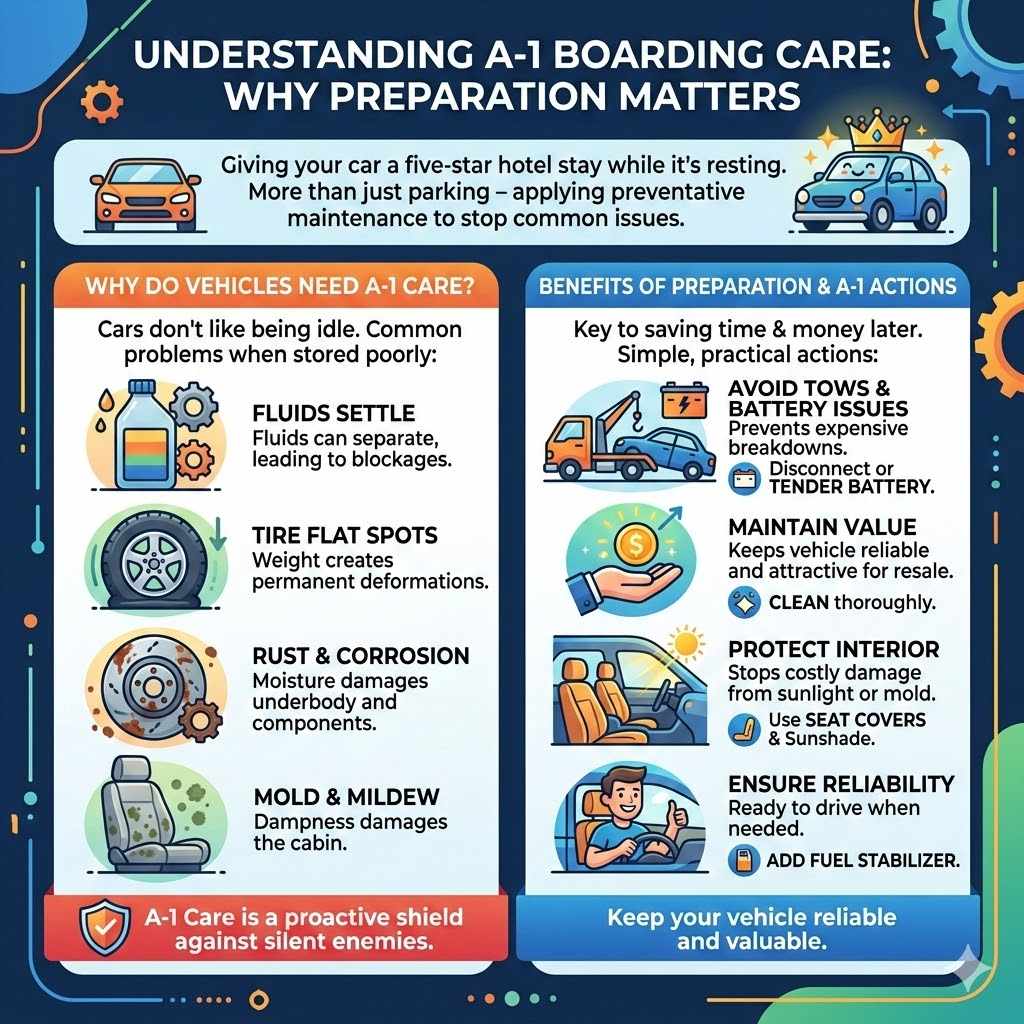
When we talk about “A-1 Boarding Care,” think of it as giving your car a five-star hotel stay while it’s resting. It’s more than just parking it in the garage; it’s about applying preventative maintenance techniques that stop common issues before they start. Vehicles don’t like being idle. Fluids can settle, tires can develop flat spots, and moisture can encourage rust or mold. A-1 care is the proactive shield against all these silent enemies.
For the everyday driver, understanding this preparation is key to saving money and time later. You avoid expensive tow bills, dead battery replacements, and costly interior damage. Good storage preparation keeps your vehicle reliable and maintains its value. This guide is built around simple, practical actions you can take right now.
Phase 1: The Pre-Storage Cleanse and Inspection
Before you even think about putting the car to sleep, a thorough cleaning and inspection are mandatory. Dirt, bird droppings, and road salt are corrosive culprits that attack paint and metal even when the car isn’t moving. A clean start prevents long-term damage.
Exterior Deep Clean
Washing your car thoroughly is the first line of defense. Pay special attention to the undercarriage, where salt and grime love to hide and accelerate rust. Then, apply a coat of quality wax.
- Wash: Use a pH-neutral car soap. Rinse thoroughly to remove all residues.
- Dry Completely: Never store a wet car, as trapped moisture leads to mildew or mold inside, and localized rust outside.
- Wax Protection: A fresh layer of wax seals the paint against dust, humidity, and atmospheric contaminants.
Interior Tidy Up
The interior needs care too! Crumbs attract pests, and moisture can encourage mold on upholstery.
- Remove all trash, food wrappers, and loose items.
- Vacuum carpets and seats thoroughly.
- Place moisture absorbers (like silica gel packets or specialized dehumidifiers) in the cabin and trunk. Do not use kitty litter, as it can spill and cause damage.
Fluid Check and Top-Up
Fluids degrade, evaporate, or absorb moisture over time. Check every level and top them off to the correct marks.
A Note on Fuel: This is critical for long-term storage. Fuel degrades, leaving varnish deposits in your fuel system that clog injectors and filters. Always store the tank as full as possible (about 90–95%) to reduce air space, which minimizes condensation buildup inside the tank. You must add a quality fuel stabilizer.
| Fluid Type | Pre-Storage Action | Why It Matters |
|---|---|---|
| Fuel | Fill tank 90% full and add stabilizer. | Prevents tank rust and fuel system varnish. |
| Oil | Change oil and filter, even if slightly early. | Used oil contains contaminants that can damage engine internals while sitting. |
| Coolant | Ensure the mixture is correct (50/50 antifreeze/water). | Protects against freezing and corrosion inside the engine block. |
| Washer Fluid | Top up with a winterized mix. | Prevents lines and pumps from freezing and cracking. |
Phase 2: Battery Management – The Lifeline of Your Stored Car
Dead batteries are the number one annoyance when bringing a car out of storage. Car batteries naturally discharge over time, even when the car is off. For A-1 care, you have two main proven strategies.
Option 1: Disconnect the Battery (Short-Term Storage: 1–3 Months)
If you are storing the car for just a few weeks or a month, simply disconnecting the negative terminal might suffice. However, modern cars have computers and alarms that draw a small, constant current (parasitic draw). This means even disconnected, the battery will eventually die.
Option 2: Use a Battery Tender (Recommended for All Storage)
This is the gold standard for A-1 boarding care. A battery tender (or trickle charger) is a smart device that monitors the battery’s charge and only sends a small amount of power when needed. It prevents overcharging while ensuring the battery stays topped up.
- Connect the tender directly to the battery posts.
- Plug it into a safe, grounded outlet.
- Ensure the tender is rated for your specific battery type (standard lead-acid, AGM, etc.).
For longer storage (over three months), many experts recommend removing the battery entirely and storing it in a cool, dry place, perhaps on a trickle charge, away from concrete floors. Always check guidelines from reputable sources like the U.S. Department of Energy regarding safe battery handling.
Phase 3: Protecting Tires and Brakes
Tires are often the first things to show signs of long-term neglect. Sitting in one spot causes the weight of the car to press down on the same area of the tire, leading to flat spots that cause vibration and noise when you start driving again.
Tire Solutions
- Inflate High: Inflate all tires to the maximum recommended pressure listed on the tire sidewall (not the door jamb sticker, which is for normal driving). This slight over-inflation helps keep the sidewall firm.
- Use Jack Stands (Ideal): If you can safely lift the vehicle and place it on sturdy jack stands under the frame rails, this completely removes the weight from the tires. This is the absolute best way to prevent flat spots and suspension settling.
- Rotate Position (If Possible): If the storage period is short, move the car a few feet every month to change the contact patch on the tires.
Brake Care
Brake rotors can develop surface rust, and brake pads can sometimes stick to the rotors, especially in humid environments.
If the car is stored for a very long time, consider placing a thin layer of plastic wrap or paper between the brake pads and rotors if you can remove the wheels, though this is often overly complicated for beginners. The simplest solution is to ensure the car is stored somewhere dry. When you first bring the car out, drive slowly and apply the brakes gently several times to clean off any minor surface rust before relying on them fully.
Phase 4: Environment Control and Pest Prevention
The environment where you store your vehicle dramatically affects its condition. Garages are best, but even indoor storage comes with threats like rodents and moisture.
Choosing the Right Location
If possible, avoid storing cars outdoors uncovered. If you must store outdoors, invest in a high-quality, breathable car cover. A cheap plastic tarp traps moisture against the paint, causing severe damage.
For indoor storage, humidity is the enemy. Dehumidifiers can be very helpful in damp garages or basements to keep the air dry and prevent metal from rusting or mold from growing inside.
Keeping Pests Out
Mice, rats, and insects love nesting in warm, dark places like air boxes, exhaust pipes, and engine bays. They chew wires, which is an extremely costly repair.
Here are proven ways to discourage uninvited guests:
- Block Exhaust and Intake: Stuff steel wool (which pests hate chewing through) loosely into the exhaust tips and the air intake snorkel. Crucially: Put a bright piece of brightly colored tape or ribbon on the steering wheel or dashboard as a HUGE reminder to remove the steel wool before starting the engine.
- Use Repellents: Place peppermint oil-soaked cotton balls or commercial rodent repellents near tires and engine components. Avoid mothballs, as the smell is incredibly hard to remove from the interior.
- Cleanliness is Key: If there is no food source (crumbs, food wrappers), pests are less likely to stay.
Phase 5: Protecting Soft Parts (Belts, Hoses, and Seals)
Rubber components degrade faster when exposed to temperature swings or sitting unused. When rubber dries out, it cracks, leading to expensive failures later.
Before storage, inspect all visible rubber hoses and belts. If they look dry or cracked, replacing them is a wise investment before long-term storage.
- Conditioning: You can use a specialized, non-petroleum-based rubber conditioner spray on belts and hoses. This keeps them supple. Avoid greasy silicone sprays that attract dirt.
- Wipers: Lift the wiper blades off the glass or place a small piece of cloth under the rubber edge. This prevents the rubber from sticking permanently to the glass surface.
Bringing the Car Out of Storage: The Decommissioning Process
The process of taking your car out of A-1 boarding care is just as important as putting it in. Rushing this step can cause damage.
Step-by-Step Restart Procedure
Follow these steps in reverse order of storage prep:
- Remove Blockages: Remove the steel wool from the exhaust pipes and air intake. Double-check this!
- Check Tires: Lower the car from jack stands (if used). Deflate the tires back down to the normal, manufacturer-recommended pressure found on the driver’s door jamb sticker.
- Battery Reconnection: Reconnect the battery terminals (negative first, then positive). If you removed the battery, reinstall it and ensure the connection is tight.
- Check Fluids: Do a quick visual inspection of oil, coolant, and washer fluid levels one last time.
- Engine Startup (The Crucial Step): Do NOT start the engine immediately. Turn the key to the “Accessory” or “On” position for 15 seconds, then turn it off. Repeat this two or three times. This primes the oil pump and allows oil to circulate to the top of the engine before the starter strains the system.
- Start Gently: Start the engine. Let it idle for a few minutes, listening for any unusual noises. Check the dashboard for any warning lights.
- Brake Check Drive: Drive slowly in a safe area (like an empty parking lot) and apply the brakes gently several times to burn off any surface rust.
Common Misconceptions About Long-Term Storage
Many people skip key steps because they think they are unnecessary for short periods. Here are a few things that are always necessary:
| Misconception | The Reality (Why A-1 Care is Needed) |
|---|---|
| “I only stored it for two months, so the fuel is fine.” | Modern gasoline starts degrading in as little as 30–60 days without a stabilizer. Varnish buildup is guaranteed. |
| “Parking on concrete is fine; it’s indoors.” | Concrete floors leach moisture, which can promote rust on the undercarriage over many months. Use a vapor barrier mat or plastic sheeting underneath. |
| “I’ll just use a regular plastic tarp.” | Plastic tarps trap condensation against the paint, which is worse than dust because it holds moisture directly against the clear coat, accelerating paint failure. |
Remember, preparation protects your investment. While it seems like more work upfront, it prevents headaches later. If you are interested in learning more about how modern battery chemistries affect storage times, you can check out detailed guides from automotive electrical associations.
Advanced Tips for Extended Storage (Over 6 Months)
If you are storing your vehicle for half a year or longer—perhaps storing a classic car or a seasonal vehicle—you need to take a few extra protective measures.
Engine Fogging
This involves spraying a special “fogging oil” directly into the carburetor or throttle body (with the engine running briefly) or into the spark plug holes (with plugs removed). This coats the cylinder walls, piston rings, and valves with a protective layer of oil, preventing corrosion where the metal touches the air over many months.
- Remove spark plugs.
- Spray a small amount of fogging oil into each cylinder.
- Hand-crank the engine slowly a few times to distribute the oil.
- Reinstall spark plugs.
This step is vital for vehicles that are rarely run, as it prevents scoring damage when the engine is started dry after a long rest.
Suspension Relief
For very long storage, especially in heavy vehicles, the rubber bushings and springs can settle or compress unevenly. If you are using jack stands, ensure they are supporting the frame at the manufacturer’s specified lift points. This takes the load off the suspension components entirely, which is ideal for maximizing component life.
Interior Environmental Shielding
If the storage location is prone to humidity, consider using an automatic, low-power dehumidifier in the garage space. Furthermore, if you use a car cover, make sure it’s a high-quality, soft fleece-lined cover specifically designed for indoor use. This keeps dust off while allowing gentle air circulation.
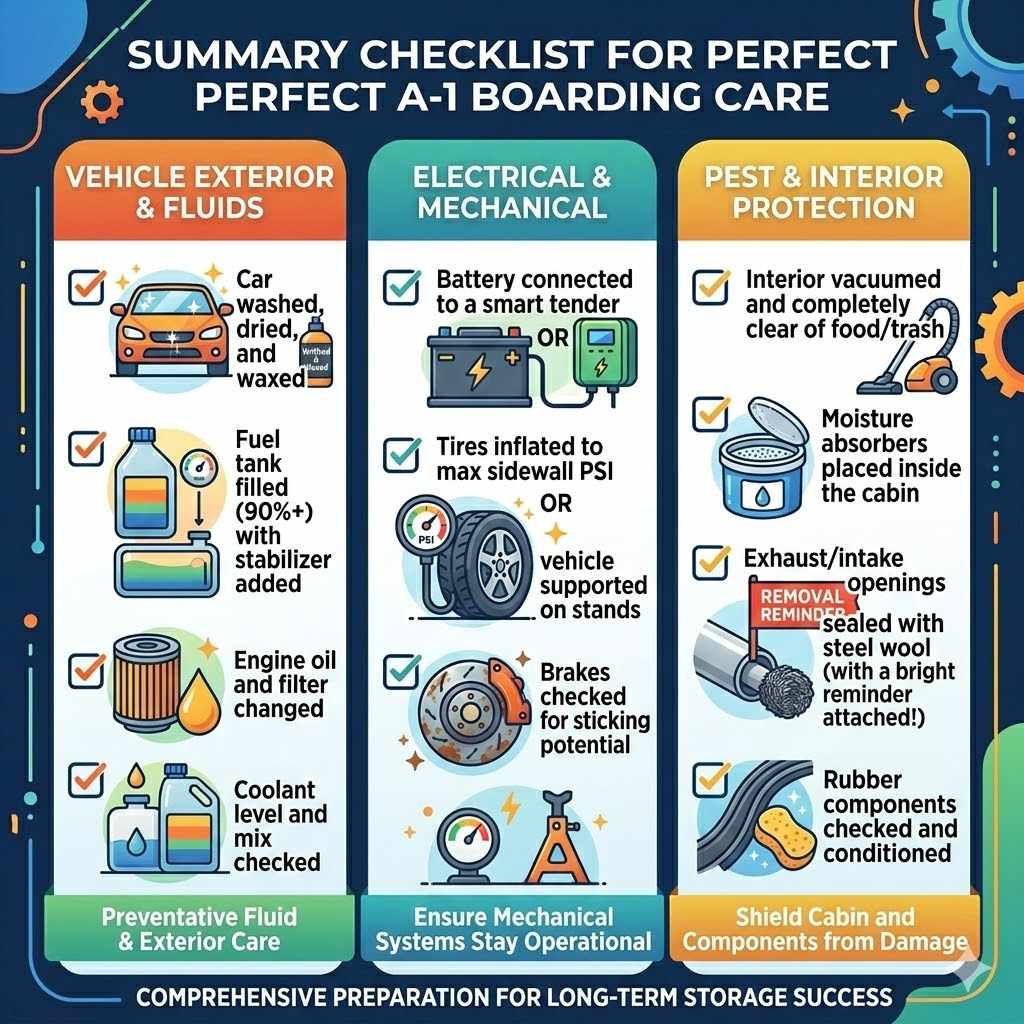
Summary Checklist for Perfect A-1 Boarding Care
Use this quick checklist to ensure you haven’t missed any major A-1 boarding care steps:
Vehicle Exterior & Fluids:
- Car washed, dried, and waxed.
- Fuel tank filled (90%+) with stabilizer added.
- Engine oil and filter changed.
- Coolant level and mix checked.
Electrical & Mechanical:
- Battery connected to a smart tender OR disconnected/removed.
- Tires inflated to max sidewall PSI OR vehicle supported on stands.
- Brakes checked for sticking potential.
Pest & Interior Protection:
- Interior vacuumed and completely clear of food/trash.
- Moisture absorbers placed inside the cabin.
- Exhaust/intake openings sealed with steel wool (with a bright removal reminder attached!).
- Rubber components checked and conditioned.
Frequently Asked Questions (FAQ) About Car Storage
Q1: How long can I store my car without needing a battery tender?
A: For a modern car, generally no more than 3 to 4 weeks. Even with the ignition off, small electronics draw power. A tender is highly recommended for anything over two weeks to ensure the battery remains healthy.
Q2: Do I need to worry about mice if my car is in a climate-controlled storage unit?
A: Yes, you still need to worry. Mice seek warmth, shelter, and nesting material, not just food. They will happily chew on wiring harnesses for fun or nesting material, so blocking the exhaust is still crucial.
Q3: Is it better to leave the parking brake off or on during storage?
A: It is generally safer to leave the parking brake OFF for long-term storage. Brake pads can fuse or stick to the rotors, especially in humid climates. Chock the wheels (place blocks of wood or rubber in front of and behind the tires) instead to prevent rolling.
Q4: How often should I start the engine if the car is stored for many months?
A: If you cannot connect a battery tender, aim to run the engine for about 10–15 minutes every 4 to 6 weeks. When you run it, let it reach full operating temperature to burn off any condensation that has built up in the exhaust system.
Q5: Should I cover the windows with sun shades even if the car is in a dark garage?
A: Yes, it’s still a good idea. While the garage blocks UV rays, a quality sun shade helps stabilize the interior temperature swings and protects dashboards from any incidental light, preventing fading and plastic warping.
Products related to this article
Sponsored / affiliate links. As an Amazon Associate I earn from qualifying purchases. I may earn additional commission from eligible campaigns.
 NGK Spark Plugs 4323 - BR6FS - 10 Pack of Spark Plugs | Replaces AF3 ARF2 ARF3 R42T R43T ARF26 ARF36 MR41T MR43T R42CT R43CT 33-59571B 90793-20121 94701-00365 5038 5039 T20R-U.
 Battery Tender Plus 12V 1.25 AMP Car & Motorcycle Battery Charger and Maintainer, Float Charge for Automotive, and ATVs - Smarter Than a Trickle Charger