Ford Brake Fluid Change on Ford Cars: Signs and Timing
Ford brake fluid is commonly changed every 2 to 3 years on many models, but Ford’s own maintenance schedules can call for different time and mileage intervals depending on the vehicle, model year, and duty cycle. For example, Ford schedules and owner manuals may place brake-fluid service on a time basis for some cars and trucks, while severe use such as towing, repeated downhill braking, or heavy stop-and-go commuting can justify earlier service. Old brake fluid can become a safety concern under heat or repeated hard use, where boiling or fade may occur. This guide explains Ford fluid-service timing, the warning signs that matter, and how to separate fluid issues from pad wear, leaks, or ABS faults.
Brake fluid basics
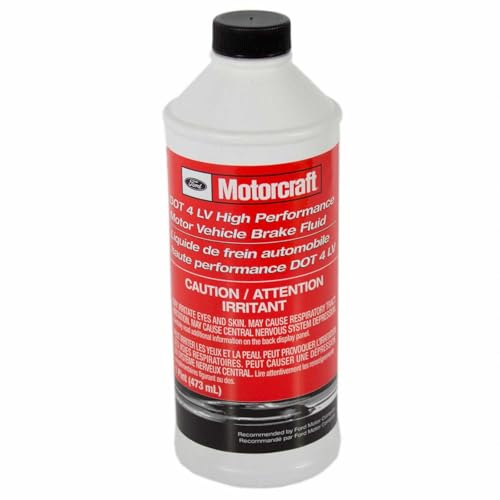


Brake fluid is the hydraulic fluid that moves force from the pedal to the calipers or wheel cylinders. In a Ford brake system, that force transfer depends on clean fluid, the correct DOT specification, and a sealed system with no trapped air. Ford owner manuals and the brake-fluid reservoir cap specify the required fluid type for the vehicle; Motorcraft also publishes the approved fluid specifications for Ford service applications.
Moisture contamination matters because brake fluid pulls water into the system over time. That can lower the boiling point and raise corrosion risk inside hydraulic components such as the master cylinder, lines, ABS hydraulic unit, and calipers. Ford’s maintenance guidance treats brake-fluid condition as a safety issue, especially where heat, moisture, and repeated braking are common.
Ford fluid specification matters
Ford brake fluid must match the vehicle’s required DOT specification. Many models call for DOT 3 or DOT 4, but the exact specification on the reservoir cap and in the owner’s manual must be followed for the vehicle and model year in question. Check the reservoir cap and the owner’s manual before buying fluid, and use Motorcraft brake fluid that meets the listed Ford specification when that is the OEM requirement.
That point matters because the service result depends on more than fluid color. A correct refill with the wrong specification is still a mistake, and a correct specification does not fix a leak, worn pads, or a bad bleeding procedure. Ford service information and Motorcraft product data are the right references for spec, fill, and bleeding decisions.
When should I change it?
Start with the Ford maintenance schedule in the owner’s manual, because Ford intervals vary by model and use case. Many schedules use both time and mileage, and severe driving conditions can shorten the interval. If the manual is not handy, a 2- to 3-year replacement window is a common starting point for many vehicles, not a universal Ford rule.
Use time first, then mileage, then driving severity. Short-trip use, towing, repeated hill descents, and heavy stop-and-go traffic can pull more moisture into the system and raise fluid temperature, so the fluid can age faster even when the car does not rack up high mileage. That is why Ford service schedules may differ between a city-driven Escape, a towing-capable F-150, a family Explorer, and a Mustang that sees repeated performance braking.
Time-based intervals to check first
Look for a service interval measured in years. If the manual lists a brake-fluid replacement time, follow that before relying on appearance alone. Dark fluid often means the fluid has aged, but moisture can build up before the fluid looks obviously dirty.
Mileage-based intervals and severe-use adjustments
Some Ford schedules also use mileage, especially for owners who put on steady annual miles. Severe use changes the picture. A truck that tows through hills, a daily commuter that crawls in traffic, or a vehicle used for repeated mountain descents may need fluid service sooner than a low-mileage vehicle used mostly on easy roads. In practice, the interval can tighten well before the nominal time limit if the system runs hotter than average.
Ford model/year examples to compare against your manual
Use your exact owner manual and maintenance schedule as the reference, because Ford intervals can differ by model year and brake package. For example, F-150, Escape, Explorer, and Mustang schedules are not always written the same way, and severe-duty guidance can change the interval again. If your vehicle is used for towing, police-style idling, repeated braking, or mountain driving, the severe-use notes in the Ford schedule matter as much as the base interval.
Examples matter because a city-driven Escape may age fluid by moisture exposure even at modest mileage, while a tow-used F-150 can stress the fluid with heat, and a Mustang or Explorer used for repeated hard braking may need earlier service than a lightly driven commuter. The correct answer is the one printed for your model year and powertrain, not a blanket rule from another Ford.
Why the owner’s manual still wins
The manual is the final check because Ford brake-fluid requirements can differ by model year, brake package, and electronic brake system. Use the manual and cap markings together. If they disagree, use the exact specification shown for the vehicle and its service documentation. Ford service schedules and owner manuals are the reference for interval, fluid type, and any severe-use exceptions.
Brake fluid decision table
| Symptom | Likely cause | Urgency | Why this is not just fluid | Next action | DIY or mechanic |
|---|---|---|---|---|---|
| Dark, cloudy, or dirty fluid | Moisture contamination or old fluid | Schedule soon | Old fluid is often the issue, but discoloration can also show contamination in the reservoir or past poor service work | Check the manual, then plan a full fluid change | DIY if you can follow the exact spec and bleeding steps; mechanic if ABS service is likely |
| Soft or spongy pedal | Air in the system, moisture, or degraded fluid | High | A soft pedal can also come from a leak, a failed hose, or an incorrect bleed sequence | Do not ignore it; inspect for leaks and service the fluid | Mechanic if pedal feel is poor after a basic level check |
| Longer pedal travel | Air, moisture, pad knockback, or hydraulic wear | High | Long travel is not only fluid age; it can indicate pad wear, rotor issues, or a hydraulic problem | Inspect immediately and avoid hard driving until checked | Mechanic is the safer choice |
| Repeated brake fade | Boiling moisture-contaminated fluid or overheated brakes | Stop driving if severe | Fade can come from overheated pads/rotors as well as contaminated fluid, so braking hardware must be checked | Pull over and inspect; arrange service before more driving | Mechanic |
| Low reservoir level | Worn pads, leak, or service need | Depends on symptoms | Low level often reflects pad wear or a leak, not fluid quality alone | Check pad wear and leaks before topping up | DIY for a visual check; mechanic if the level keeps dropping |
| Brake warning lamp | Fluid level issue, parking brake issue, or system fault | High | The lamp can point to a level switch, parking brake switch, or hydraulic fault, not just fluid condition | Read the manual and inspect the reservoir and brake system | Mechanic if the lamp stays on |
| ABS or brake message | ABS fault, sensor issue, or contaminated fluid affecting hydraulic operation | High | An ABS warning is often a separate fault that a fluid change will not solve | Scan for codes and service according to Ford procedure | Mechanic |
| Recent brake-pad wear | Pad wear lowering reservoir level | Moderate | As pads wear, reservoir level naturally drops; that is not the same as fluid failure | Inspect pads before adding fluid | DIY if you can inspect pads safely; mechanic if wear is uneven |
| No visible symptoms | Fluid age may still be the issue | Routine | Brake fluid can absorb moisture long before symptoms show | Follow the time or mileage interval in the manual | DIY or mechanic |
| Fluid smells burnt after hard use | Overheated fluid from repeated braking | High | Burnt smell may also come with overheated pads, rotors, or calipers | Inspect and replace fluid before more towing or mountain driving | Mechanic if braking feel changed |
| Fluid level is low but pads are new | Leak, incorrect fill, or trapped air after service | High | New pads should not normally leave the reservoir low unless there is a leak or service error | Inspect for external leakage and verify service history | Mechanic |
| Pedal feels firm at first, then sinks | Internal bypass in master cylinder or hidden leak | Urgent | This is usually not a routine fluid-age issue; it can signal a master-cylinder fault | Do not keep driving; have the hydraulic system tested | Mechanic |
| One wheel shows wetness at the caliper | Caliper, hose, or bleeder leak | Urgent | Fluid loss at one corner means a repair, not just a flush | Inspect the wheel and repair the leak before service | Mechanic |
| Pedal was okay until a brake job | Air introduced during service or wrong bleed order | High | The problem started with service, so bleeding technique matters more than fluid age alone | Re-bleed correctly and verify the procedure | Mechanic if the pedal does not recover |
| Brake warning lamp with low reservoir and worn pads | Normal pad wear plus level switch warning or low level | High | This is not just “old fluid”; it may be pad wear plus a separate switch or level issue | Inspect pads, level, and switch circuit | DIY if you can inspect safely; mechanic if the lamp remains on |
What are the signs that Ford brake fluid needs changing?
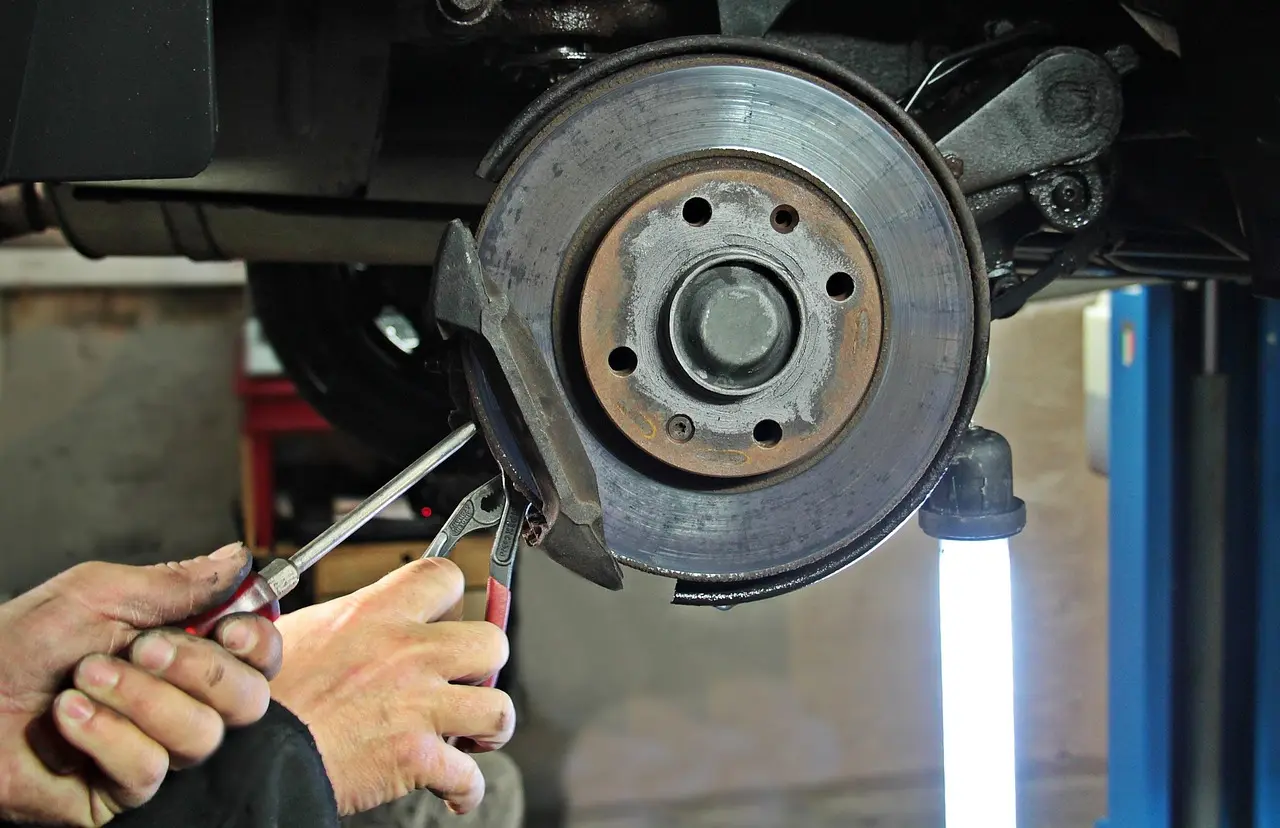
Common signs include dark or cloudy fluid, a soft or spongy pedal, longer pedal travel, brake fade under repeated braking, and an overdue service interval. Low fluid can matter too, but low level alone does not prove the fluid is worn out. Ford service information also treats warning lamps and ABS messages as separate diagnostic clues, not automatic proof of bad fluid.
Do not treat every sign as the same problem. Dark fluid points more toward fluid age or moisture. A low reservoir often points to pad wear or a leak. A soft pedal can point to air, moisture, or bad service work. ABS warnings can mean a separate fault. If a symptom changes suddenly, that is more urgent than a gradual change over time.
Dark or cloudy fluid
Discolored fluid is a warning sign, especially if it looks brown, cloudy, or dirty. Color alone does not diagnose every problem, but it is enough reason to inspect the rest of the system and check the service interval. Ford and Motorcraft service guidance still treats the vehicle’s maintenance schedule and fluid spec as the primary reference.
Soft or spongy pedal feel
A soft or spongy pedal, or one that needs more travel before the brakes bite, can point to air or moisture in the system. On a Ford, that can come from old fluid, poor bleeding, or a leak that lets air into the hydraulics. If the pedal became spongy right after a brake service, bleeding procedure is a prime suspect, especially on models that require special ABS bleeding steps.
Longer pedal travel or brake fade
Longer travel or fade under repeated braking is more serious than simple discoloration. Moisture-contaminated fluid can boil sooner during hard use, which reduces hydraulic performance. If the pedal changes sharply during driving, stop and inspect the car. Heat-related fade also makes sense to inspect pads, rotors, and calipers, not just the fluid.
Low reservoir level or repeated top-ups
Low fluid can mean worn pads, a leak, or another servicing need. Do not assume the reservoir is the cause by itself. If the level keeps dropping after topping up, the car needs inspection, not just more fluid. Reservoir level also drops naturally as pads wear, so the level must be interpreted with pad thickness in mind.
Say your Ford sedan shows a low reservoir and the front pads are nearly worn out. In that case, the low level may be normal wear-related movement in the system, not a fluid-quality problem. A full flush may still be due on time, but the immediate fix is pad inspection.
Warning lamp or ABS message
A Ford brake warning light meaning can include low fluid, parking brake engagement, or a hydraulic/system fault. An ABS message can mean more than old fluid. It can point to a low level, parking brake issue, sensor problem, or an ABS fault. When the message appears with poor pedal feel or reduced braking, treat it as urgent.
How do you check it on a Ford?
Check how to inspect brake fluid at the reservoir in the engine bay on most Ford cars. Use the MIN and MAX markings on the reservoir, inspect the fluid color, and look for wet spots around the master cylinder, reservoir, lines, and calipers. A level check is useful, but it is not a full diagnosis.
- Park on level ground and let the car sit safely.
- Open the hood and locate the brake-fluid reservoir.
- Read the MIN and MAX marks on the side of the reservoir.
- Look at the fluid through the reservoir walls, if possible.
- Check for discoloration, cloudiness, or sediment.
- Inspect around the master cylinder, hoses, and visible lines for leaks.
- Compare what you see with the service interval in the owner’s manual.
Read the level correctly
The fluid should sit between MIN and MAX on the reservoir. If it is near or below MIN, inspect the pads and look for leaks before adding fluid. Overfilling can cause trouble when the pads wear or the fluid expands. On a Ford, the reservoir can look deceptively normal when the pads are healthy and then drop as the pads thin, so pad thickness should be part of the check.
Inspect color and contamination
Look for discoloration, cloudiness, or debris. If the fluid looks older than the service interval, replace it rather than assuming a top-up will fix the problem. A dirty reservoir cap area can also point to poor maintenance or contamination. Look for sediment at the bottom of the reservoir, darkening around the cap, and any sign the fluid was topped up repeatedly instead of serviced.
Check for leaks
Wet fittings, stained dust around calipers, and damp spots near the master cylinder all deserve attention. A leak changes the diagnosis completely. That is a repair job, not a fluid-aging issue. On a Ford, a fluid level that keeps falling after a top-up usually means the system is losing fluid somewhere.
Picture a Ford crossover that has a soft pedal after a long downhill drive, plus a low reservoir. That combination does not point to one simple fix. It raises concern for moisture, a leak, or air in the system, and it deserves prompt inspection before more driving.
Topping up vs full change
Topping up the reservoir is not the same as changing the fluid. A top-up only restores level. A flush removes old fluid and trapped air, which is the step that matters when the fluid has absorbed moisture or the pedal feel has changed. Ford service guidance generally treats fluid replacement as the corrective step when the fluid has aged beyond the schedule.
When topping up is only a short-term fix
If the level is low because the pads are worn, a top-up may restore the mark, but it does not solve pad wear. If the level is low because of a leak, topping up only hides the problem. In both cases, the cause still needs attention. A reservoir that is repeatedly topped up without finding the reason is a warning sign, not a repair plan.
Why a flush removes old fluid and trapped air
A proper brake-fluid service exchanges the old fluid for fresh fluid and usually includes bleeding. That removes moisture-laden fluid and air pockets. The result should be firmer, more consistent pedal feel when the system is otherwise sound. Ford brake service procedures also call for the correct fluid spec and proper sequence to avoid leaving air in the system.
Why bleeding sequence matters
Brake system bleeding typically follows a wheel sequence set by the manufacturer, and the order matters. On some Ford models with ABS or other electronic brake systems, the right procedure may also require scan-tool support. Wrong sequence or poor technique can leave the pedal soft. Common shop mistakes include letting the reservoir run low during bleeding or using the wrong bleed order for the platform.
Brake fluid and ABS faults
ABS and other electronic brake systems use hydraulic pressure, so contaminated fluid or poor service procedure can affect them. Some Ford models need specific bleeding steps to keep air out of the modulator and maintain safe pedal feel after a flush or repair. Ford service literature is explicit that certain ABS-equipped vehicles require scan-tool commanded cycling during bleed operations after hydraulic service.
When a warning means more than fluid age
If the ABS lamp, brake message, or stability-control warning appears with a fluid concern, do not assume fresh fluid will clear it. The car may need code reading, sensor inspection, or hydraulic service. Fluid age and electronic faults can happen at the same time.
When scan-tool support matters
Some Ford systems need a scan tool to cycle valves or complete bleeding after service. That is especially relevant when the brake pedal still feels wrong after a normal bleed or when the system stores ABS-related fault codes. In those cases, mechanic support is the safer path. If the vehicle has an ABS module that traps air, the flush may look complete at the wheels but still leave the pedal soft until the module is cycled with the correct tool and procedure.
What happens if I ignore brake fluid service on my Ford?
Ignoring brake-fluid service can allow moisture to lower boiling point and raise corrosion risk inside the hydraulic system. That can lead to longer stopping distances under heavy braking, brake fade, internal ABS wear, and symptoms that look like pad or sensor problems when the real issue is old fluid. Ford maintenance guidance treats brake fluid as part of the safety system, not a cosmetic item.
It can also make later repairs more expensive. Corroded components, stuck caliper pistons, and damaged ABS parts cost more than a fluid change. If the pedal feel changes or the warning lamps come on, do not wait for the next oil service to address it. In service-bay terms, postponing brake-fluid work often turns a routine maintenance item into a hydraulic repair.
Frequently asked questions
How much does a Ford brake fluid change cost?
Cost varies by model, fluid spec, and whether the system needs ABS bleeding or scan-tool support. A simple fluid exchange is usually cheaper than a repair involving leaks, sensors, or an ABS module. Get a quote that states the fluid spec and whether bleeding is included. Ford models that require scan-tool bleeding or additional ABS diagnosis will usually cost more than a straightforward flush.
Can I drive if the brake fluid looks dark or low?
Dark fluid alone usually means schedule service soon, not instant stop-driving. Low fluid is more serious if it comes with a soft pedal, warning lamp, or repeated top-ups. If braking feels unsafe, stop driving and inspect the car or call a mechanic.
Does Ford require brake fluid replacement by mileage or time?
Ford maintenance schedules may use time, mileage, or both, and the interval varies by model and use case. Severe driving conditions can shorten the interval. Use the owner’s manual and reservoir check together, not a single universal number for every Ford. For exact timing, use the Ford maintenance schedule for your model year and trim.
Can old brake fluid cause a soft brake pedal on a Ford?
Yes. Old fluid can pull moisture into the system, lower boiling point, and contribute to a soft or spongy pedal, especially after hard braking. Air in the system can cause the same feel, so the fix may be a flush, a bleed, or leak repair depending on the cause. If the pedal got soft after service, that points more strongly to bleeding or trapped air than to simple fluid age.
How do I check brake fluid condition on a Ford car?
Find the reservoir in the engine bay, check the level between MIN and MAX, and inspect the fluid color through the reservoir if possible. Look for cloudiness, dark fluid, or leaks around the master cylinder and lines. Then compare the result with the maintenance schedule. If the level is low, also inspect pad thickness because reservoir level often drops as pads wear.
Is brake fluid the same for all Ford models?
No. Ford brake-fluid requirements can vary by model, year, and brake system. Some vehicles use DOT 3, others DOT 4, and they are not interchangeable in every case. Always check the reservoir cap and owner’s manual before topping up or changing fluid, and use the Ford/Motorcraft specification listed for the vehicle.
Products related to this article
Sponsored / affiliate links. As an Amazon Associate I earn from qualifying purchases. I may earn additional commission from eligible campaigns.