Ford car service cost breakdown by labor and parts guide
A service quote is fair when labor lines up with flat-rate book time, parts are near OEM list, and fees stay reasonably low; if labor looks notably higher than book time, ask for a revised estimate before you approve it. I have seen bad estimates hide overpriced labor, inflated parts, or add-ons that turn a routine repair into a four-figure bill. This guide breaks Ford service costs into labor, parts, and common extras so you can compare dealer and independent shop quotes line by line.
How much does Ford car service cost by labor and parts?


Ford service cost depends on the job, but the bill usually splits into labor, parts, and a small set of fees. Ford dealerships charge $80 to $130 per hour in labor, while independent shops experienced with Ford vehicles typically charge 25 to 40 percent less. That gap matters most on repairs with several labor hours.
What a fair Ford labor rate usually looks like
The labor rate should be the first number you check. On a dealer estimate, $80 to $130 per hour is the quoted range to expect, and a nearby independent shop often lands below that if it works on Ford models often. Region matters too. In New York, Seattle, or San Francisco, I usually see higher posted rates than at rural or exurban shops.
Labor rate alone does not tell the full story. Two quotes can share the same hourly rate and still differ because one shop books the job at 1.2 hours and another books it at 2.0. Flat-rate time is where many owners lose money if they do not compare the labor hours, not only the hourly price.
How parts, labor, and fees show up on one estimate
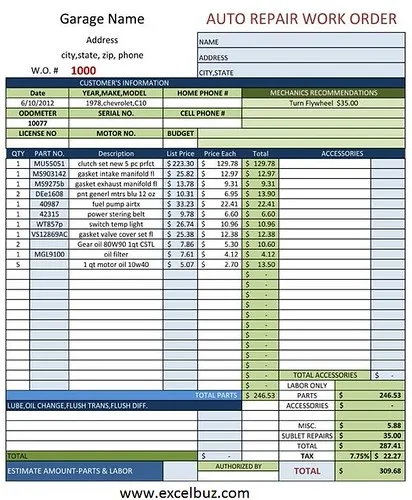
A clean estimate lists the labor line, the parts line, and any diagnostic or shop fee line separately. That makes it possible to see whether the quote is driven by hours, by parts pricing, or by extras. If all three are bundled into one “repair total,” ask for the itemized version before approval.
Parts are usually the easiest place to spot a markup. Consumables such as filters, brake pads, oil, and fluids should be priced close to OEM or house-brand shop pricing. Gaskets, sensors, and electronic modules can swing much harder. A quote that doubles the usual parts total deserves a second look.
Why the same repair costs more on some models
Ford sedans, SUVs, trucks, and EVs do not wear the same price tag in the service bay. Bigger trucks often need larger brake parts, more fluid, and more labor time. EV service can shift away from oil and exhaust work and toward brakes, cooling systems, and software-related checks.
Access matters as much as part size. A simple cabin filter on one model can be quick, while the same type of job on another Ford may require trim removal or more scan-tool time. That is why the same service can look cheap on a compact sedan and expensive on a full-size truck.
According to Ford Repair Costs 2026: Complete Guide by Service Type — Ford brake jobs commonly cost $230 to $540.
What should be itemized in a Ford service estimate?
A Ford estimate should separate labor, parts, diagnostics, shop supplies, and disposal fees so the customer can see what is fixed cost and what can be challenged. If the estimate is only one lump sum, ask for the line-by-line version. Hidden fees are where many bad quotes hide.
Labor line and flat-rate hours
The labor line should show hours multiplied by the shop’s labor rate. For example, if a repair is quoted at 1.5 hours, the estimate should show that time, the rate, and the total. If the quote shows only the final dollar figure, it is hard to tell whether the shop is charging for real work or padding the clock.
Check whether the hours match the actual job. A brake pad replacement should not be billed like a rotor, caliper, and fluid service unless those parts are actually included. If the labor line seems high, ask the service writer to point to the flat-rate guide time used for the estimate.
Parts line and markup clues
The parts line should list each part, quantity, and price. Pads, rotors, filters, gaskets, and fluids are normal items to see. If the shop uses genuine Ford parts, that can help with fit and consistency, and Ford parts are widely available at competitive prices. The issue is not “Ford parts” by itself, but the mark on top of them.
Look for duplicate charges too. A brake quote that lists pads, rotors, hardware, shop supplies, and brake cleaner is normal. A quote that charges for “service kit” and then also bills the same consumables again is harder to defend. Ask for the parts list with each item priced separately.
Diagnostic fee, shop supplies, and disposal fees
Diagnostic work should be a separate line when the problem is not obvious. Shop supplies and disposal fees are common, but they should stay small relative to the repair. If those fees creep upward, the quote needs an explanation. They should not be used to hide labor or parts inflation.
- Check the labor hours against the repair type.
- Compare parts pricing line by line with OEM or aftermarket alternatives.
- Look for diagnostics, shop supplies, and disposal fees as separate entries.
- Ask whether the estimate includes a flush, alignment, or other add-on.
- Approve work only after the shop explains any line that seems padded.
How much do common Ford repairs cost?

Common Ford services usually fall into three buckets: routine maintenance, brake work, and major mechanical repairs. Ford oil changes commonly cost $40 to $110. Ford brake jobs commonly cost $230 to $540. Ford transmission repairs commonly cost $1,350 to $4,510. The spread comes from model, parts type, and labor time.
Oil change cost breakdown
An oil change is mostly engine oil, filter, and labor. On many Ford models, it is the cheapest service on the menu, but it still varies by engine size, oil spec, and access. A turbo truck or SUV can use more oil than a small sedan, and that raises the parts line.
Routine interval context matters. A shop that recommends oil changes far more often than the owner’s manual calls for should explain why. Extra reminders are not the same as extra need. If the quote adds a tire rotation or cabin filter without asking, make sure those items are actually due.
Brake job cost breakdown
Brake work is often the best place to inspect labor versus parts because the split is visible. On a typical Ford brake job, pads and rotors make up a large chunk of the price, with labor taking the rest. Ford brake jobs commonly cost $230 to $540, depending on axle count, parts choice, and wear level.
If a quote includes pads only, ask whether rotors measure within spec. If it includes pads and rotors on both axles, the cost should rise fast. A low quote for a complete brake overhaul is a warning sign if it leaves out hardware, fluid, or machining that the job really needs.
Transmission repair cost breakdown
Transmission repair is the opposite of an oil change. It is often parts-heavy, scan-tool heavy, and labor heavy at the same time. Ford transmission repairs commonly cost $1,350 to $4,510 because the job may be a repair, rebuild, or full replacement, and each version changes the parts and labor mix.
Before approving transmission work, ask whether the estimate is for diagnosis only, an internal repair, a rebuild, or replacement. A diagnosis line should not be buried inside the repair total. If the shop cannot explain which path it is quoting, do not guess.
| Service | Typical labor share | Typical parts share | Common add-ons | Fair-price range | Red-flag threshold |
|---|---|---|---|---|---|
| Oil change | Moderate | High enough for oil and filter | Disposal fee, inspection | $40 to $110 | Extra fee lines that push it well above the expected range without a clear reason |
| Brake job | Moderate to high | Pads and rotors are major cost items | Shop supplies, brake fluid, hardware | $230 to $540 | Parts price that is far above similar OEM pricing or labor that is padded beyond the job scope |
| Transmission repair | High | Very high | Diagnostics, fluid, programming | $1,350 to $4,510 | Quote that does not say whether it is repair, rebuild, or replacement |
Why does a Ford dealer quote cost more than an independent shop?
A Ford dealer quote usually costs more because the hourly labor rate is higher, the shop is built around brand-specific tooling, and the front counter often follows stricter process steps. Independent shops experienced with Ford vehicles typically charge 25 to 40 percent less, but that does not mean they are always the better choice for every job.
Dealer labor rate versus independent labor rate
Ford dealerships charge $80 to $130 per hour in labor. An independent shop that works on Ford vehicles often comes in below that by 25 to 40 percent. That difference can save meaningful money on a brake job or oil change, and a lot of money on a transmission repair.
Dealer pricing is not always inflated for no reason. The dealer may use newer diagnostic gear, factory repair procedures, and genuine Ford parts. Still, if the job is routine maintenance, the lower labor rate at a good independent shop often makes more sense.
When Ford-trained experience matters
Factory experience matters more on software-heavy repairs, intermittent electrical faults, and warranty work. A dealer tech sees more brand-specific problems and may spot a pattern faster. That can shorten diagnosis time, which matters when the estimate starts with a scan, testing, and rechecks.
It also matters when the repair needs special programming or updates after parts are installed. In those cases, the dealer’s process can be worth the extra labor rate because a cheaper first repair can become a costly redo if the shop misses a required step.
When a local shop is enough for routine work
For oil changes, brake pads, tire rotations, batteries, and many fluid services, a good independent shop is often enough. Those jobs do not always need dealer access. Routine work is where the 25 to 40 percent labor discount can matter most, especially if the vehicle is out of warranty.
Ask whether the shop has real Ford experience, not just “works on all makes.” A local shop that sees F-150s, Escapes, Explorers, and Mustangs often can handle common maintenance without trouble. For ordinary services, that is usually enough.
How can you tell if a Ford repair quote is overpriced?
A Ford repair quote looks overpriced when labor hours are padded, diagnostics are vague, or parts are priced far above normal OEM replacement cost. Watch for bundled services that hide what you are paying for. The cleanest way to judge a quote is to separate labor, parts, and fees before comparing totals.
Red flags in diagnostics and flushes
Diagnostics should answer a complaint, not turn into a standing fee. A quote that stacks inspection, scan, testing, and “road test” charges without naming the issue is weak. Fluid flushes are another common add-on. If the work is not due by mileage, condition, or a specific failure, question it.
Be wary of flush packages sold as if they were mandatory with every repair. Coolant, brake, transmission, and power steering services all have different needs. A shop should be able to explain why each flush is needed now, not later.
Parts markup and duplicate labor charges
Parts markup is easiest to spot by comparing the part price with the type of part. Filters and pads should not carry luxury pricing. Transmission parts, sensors, and assemblies can be expensive, but the estimate should still make sense for the repair. If a quote doubles the expected parts line, ask why.
Duplicate labor charges are another problem. A repair may require removal of one component to reach another, but the labor should still be coherent. If the quote lists two separate labor operations that appear to cover the same access step, ask for the flat-rate breakdown.
Questions to ask before you approve work
Ask what failure the repair is fixing, how many labor hours the shop used, whether the parts are genuine Ford or aftermarket, and whether any fees are optional. If the service writer cannot answer those four points plainly, do not sign yet. The right estimate should survive line-by-line scrutiny.
How do Ford Mobile Service and Pickup & Delivery change the bill?
Ford Mobile Service can do oil changes, brakes, batteries, and tire rotations, while Ford Pickup & Delivery includes dealer pickup, service, and return. Both add convenience, but they can also affect the final cost through scheduling, travel time, and the type of job that can be done offsite or at the dealer.
Which jobs fit mobile service
Mobile service works best for straightforward maintenance and light repairs. Oil changes, brake work, batteries, and tire rotations are the clearest examples. Those jobs fit because the work is repeatable and the needed parts are easy to transport.
Mobile service is less useful for heavy diagnosis, major transmission work, or jobs that need a lift and more shop equipment. If the problem may require deep testing, the convenience can fade quickly because the tech may still need a follow-up dealer visit.
How pickup and delivery affects convenience and cost
Pickup and delivery changes the service model. The dealer picks up the vehicle, services it, and returns it. That can save time for the owner, especially if the repair would otherwise mean a full day at the shop. It is still dealer service, so the labor rate does not usually shrink.
Use it when time matters more than price. For a scheduled repair, the extra convenience can be worth paying for. For a simple oil change or battery swap, the added convenience may not justify paying dealer pricing if a nearby shop can do the same job cheaper.
Ford parts availability, Ford Rewards, and warranty impact
Ford parts are widely available at competitive prices, and Ford offers genuine parts and accessories through its official site. Ford Rewards earns points on Ford service, parts, and accessories. Warranty rules can also decide where you should go, because some repairs are easier to handle at a dealer.
Genuine Ford parts versus aftermarket parts
Genuine Ford parts usually offer the safest fit and compatibility path, especially on sensors, electrical parts, and model-specific pieces. Aftermarket parts can be cheaper and perfectly fine for routine wear items. The right choice depends on the job, the car’s age, and whether the vehicle is still under warranty.
For brakes, filters, and some fluids, aftermarket parts often make sense. For modules, calibration-sensitive parts, and components tied to warranty claims, genuine Ford parts can reduce risk. The estimate should tell you which kind is being used.
How Ford Rewards can offset service spend
Ford Rewards can lower the effective cost of service because points can be earned on Ford service, parts, and accessories. That does not change the sticker price on the estimate, but it can matter over time if the vehicle returns to the dealer for scheduled maintenance or repairs.
If a dealer quote is close to an independent shop quote, Rewards points may tilt the decision. Still, points should be a bonus, not the reason to approve an overpriced repair. The estimate must stand on its own.
When warranty rules change where you should go
Warranty work can push the decision toward the dealer, especially if the issue may become a claim. For out-of-warranty maintenance, the dealer is not always the best price. If the job is routine and the vehicle is older, an experienced independent shop is often enough.
Frequently asked questions
How much does Ford car service cost for labor and parts?
Ford service cost usually breaks into labor, parts, and fees. Ford dealerships charge $80 to $130 per hour in labor, while independent shops experienced with Ford vehicles typically charge 25 to 40 percent less. The total depends on model, repair type, region, and whether the job needs genuine Ford parts.
What is a fair labor rate for Ford repair?
A fair Ford labor rate is usually within the quoted dealer range of $80 to $130 per hour, with independent Ford-friendly shops typically below that by 25 to 40 percent. A fair quote also matches the correct flat-rate hours for the job, not just the local hourly price.
Why do Ford dealer quotes cost more than independent shops?
Dealer quotes usually cost more because the labor rate is higher and the shop is set up for factory-level procedures, scanning, and parts sourcing. Independent shops experienced with Ford vehicles often charge less. That price gap matters most on routine maintenance and multi-hour repairs.
Which service items usually make up the biggest part of a Ford bill?
Transmission work usually makes up the biggest part of a Ford bill because the parts and labor are both expensive. Brake jobs can also climb quickly when rotors are included. Oil changes are usually the smallest bill, unless the quote stacks extra fluids, inspections, or add-ons.
How can I tell if a Ford repair quote is overpriced?
Check for padded labor hours, inflated parts pricing, and vague diagnostic or shop supply fees. Ask for an itemized estimate that separates labor, parts, and fees. If the shop cannot explain each line in plain language, or if the total sits far above the expected range, question it before approval.
What should be itemized in a Ford service estimate?
A Ford service estimate should show labor hours and rate, each part and its price, diagnostic charges, shop supplies, and disposal fees. It should also state whether the parts are genuine Ford or aftermarket. A lump sum makes it hard to judge whether the quote is fair.
Products related to this article
Sponsored / affiliate links. As an Amazon Associate I earn from qualifying purchases. I may earn additional commission from eligible campaigns.