Ford Serpentine Belt Replacement Signs on Ford Cars
On Ford cars, replace the serpentine belt when you see cracking, glazing, frayed ribs, missing ribs, or repeated squeal that returns after a tension check; stop driving now if the belt is missing, slipping hard, or charging, steering, or coolant warnings appear. Ignore it and you can lose alternator output, power steering assist, A/C, and, on many Ford layouts, the water pump. This guide shows which symptoms point to belt wear, which point to a bad tensioner or pulley, and when to inspect now versus book service soon. Check the owner’s manual for your engine to confirm the exact belt path, the accessories driven by the belt, and the service interval, because those details vary by Ford layout.
Serpentine belt drives multiple Ford accessories


The serpentine belt is a single, ribbed belt loop that wraps accessory pulleys in one path. On many Ford engines it drives the alternator, power steering pump, water pump, and A/C compressor. Since one belt can turn several accessories at once, a slip or break can spread trouble fast.
Ford layouts vary by engine and model. That matters because the same noise can affect different accessories on different vehicles. A belt that slips on one Ford may mainly cause charging loss, while another layout may add steering effort or overheating risk.
Why accessory drive loss matters
The alternator keeps the battery charged. If the belt cannot drive it well, you may see a battery warning light, dimming headlights, or flickering interior lights. A failed belt can leave the battery too weak to keep the vehicle running for long.
The power steering system can also feel heavy if belt drive is lost on a hydraulic setup. On some engines, the water pump is belt-driven, so a belt problem can turn into an overheating problem, not just a noise problem.
What are the signs my Ford belt is wearing out?
Look for cracking, fraying, glazing, missing ribs, belt dust, or hard shiny rib faces first. Those are the clearest wear signs on Ford serpentine belts, and wear can show up before deep cracks are obvious. Age and mileage matter too, even if the belt still looks passable at a glance.
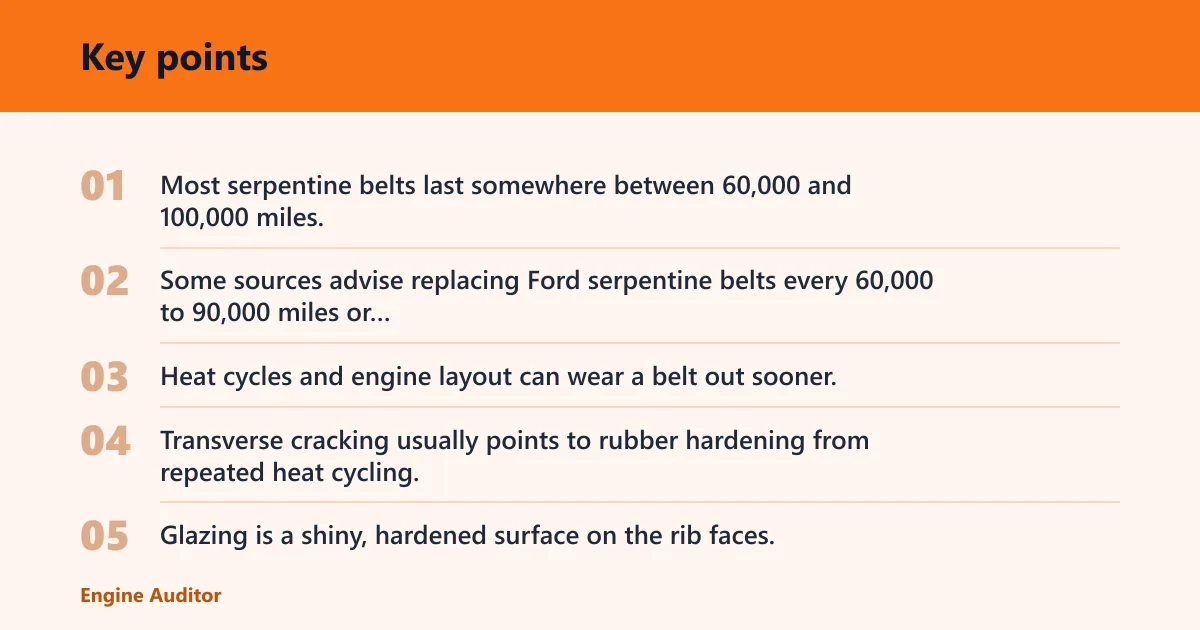
Most serpentine belts last somewhere between 60,000 and 100,000 miles. Some sources advise replacing Ford serpentine belts every 60,000 to 90,000 miles or every 5 to 7 years. That range is a guide, not a promise. Heat cycles and engine layout can wear a belt out sooner.
Cracking, fraying, glazing, and missing ribs
Transverse cracking usually points to rubber hardening from repeated heat cycling. Glazing is a shiny, hardened surface on the rib faces. Frayed edges and missing ribs mean the belt is no longer tracking or gripping as intended, and that is past the “keep an eye on it” stage.
Frayed edges, chunks missing, shiny glazed spots, deep cracks, and exposed cord are wear signs. If the ribs are damaged or the rubber surface looks polished and hard, replacement is the sensible move rather than more monitoring.
Age and mileage signs that matter
A belt can look acceptable and still lose grip from age. EPDM rubber hardens over time, so a belt may squeal before it shows obvious damage. That is why mileage and age need to be weighed against appearance, especially when the vehicle is past the common replacement window.
Say your Ford Escape has 84,000 miles and the belt still looks intact. If the ribs are shiny and the engine bay gives a cold-start squeal, the belt is not really “fine” just because it has no deep cracks yet. Condition and age are both part of the call.
Is the belt, tensioner, or pulley making the noise?
A squeal does not automatically mean the belt is the only problem. On Ford cars, a weak automatic tensioner or a worn idler pulley can make the same sound. VehicleRuns notes that squealing or slipping sounds often show up on cold starts or in wet weather, which can make diagnosis tricky.
If the sound changes with engine load, steering load, or electrical load, that is useful evidence. Cold-start squeal often points to belt grip loss. A steady chirp, whine, or belt flap can point more toward a pulley bearing or a weak tensioner than toward belt wear alone.
Cold-start squeal versus load-related squeal
A brief squeal at startup can happen when a worn belt slips for a moment. If the sound fades as the engine warms, the belt may be hardened or glazed. If the squeal returns when lights, rear defrost, or A/C are switched on, the belt may be slipping under added load.
If the sound gets louder at idle and then changes with throttle, inspect the tensioner and pulleys. A belt can be the victim, not the cause. That distinction keeps you from replacing the wrong part first.
What points to a weak tensioner or worn idler pulley
The tensioner should keep steady spring pressure on the belt. If it is weak, the belt may flutter, squeal, or track unevenly. The idler pulley should spin smoothly and stay straight. Wobble, roughness, or a gritty bearing feel are signs the pulley needs attention.
Checking the belt, tensioner, and pulleys together is the right order. Replacing only the belt while leaving a failing tensioner or noisy idler pulley in place can bring the noise back fast.
Ford serpentine belt decision table
This table helps you sort the symptom before you decide on the next step. If more than one row fits, use the highest urgency shown. When the urgent column says do not drive, the vehicle should be stopped and inspected before further use.
| Symptom | Most likely cause | Urgency | Do not drive? |
|---|---|---|---|
| Squeal on cold start | Glazed or hardened belt, or a tensioner that is losing grip | Inspect now | No, unless the squeal becomes constant |
| Squeal under load | Belt slip from wear, weak tensioner, or pulley drag | Inspect now | No, but avoid long trips |
| Glazing | Belt surface has hardened and lost traction | Replace soon | No, unless other warning lights appear |
| Cracked ribs | Belt age and heat cycling have damaged the rubber | Replace soon | No, if cracks are light; yes if ribs are missing |
| Battery light | Alternator drive loss from belt slip or failure | Stop driving now | Yes |
| Heavy steering | Belt slip affecting the power steering system on a belt-driven setup | Stop driving now | Yes |
| Overheating | Belt-driven water pump is not being driven properly | Stop driving now | Yes |
| Belt flap | Loose belt, weak tensioner, or pulley misalignment | Inspect now | Yes if the belt is close to coming off |
Can a bad belt cause a Ford to overheat, steer hard, or lose charging?
Yes. A bad serpentine belt can affect the alternator, power steering, A/C, and, on some Ford engines, the water pump. That is the reason the belt matters beyond convenience. If the belt drives the water pump, overheating can follow quickly.
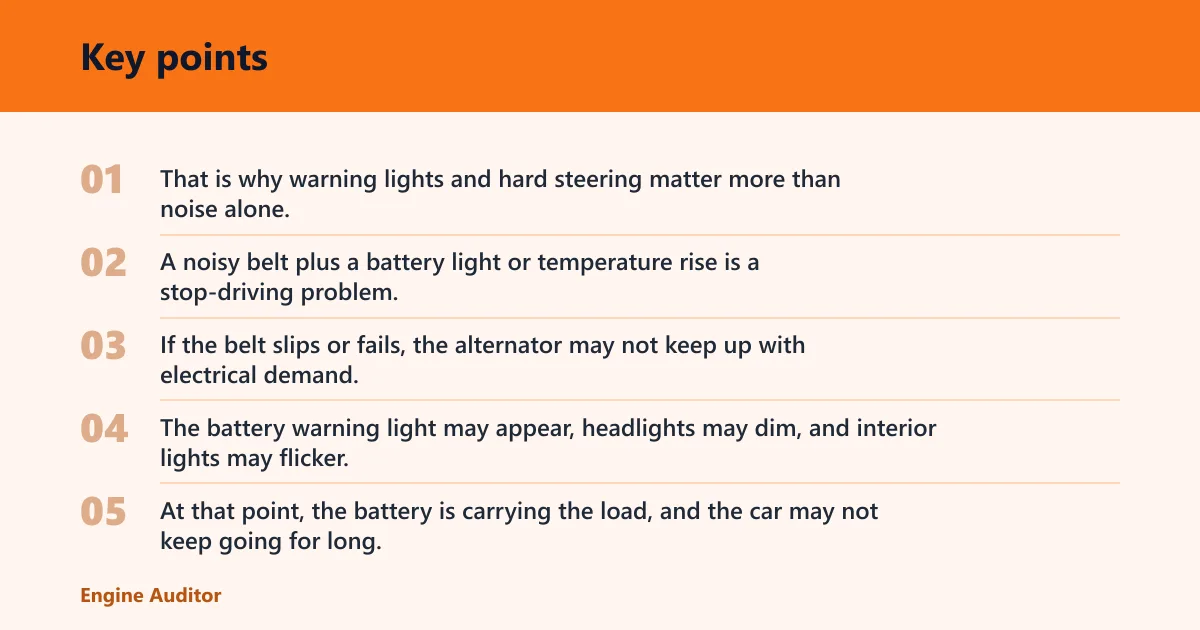
That is why warning lights and hard steering matter more than noise alone. A noisy belt is a service issue. A noisy belt plus a battery light or temperature rise is a stop-driving problem.
Battery light and alternator output loss
If the belt slips or fails, the alternator may not keep up with electrical demand. The battery warning light may appear, headlights may dim, and interior lights may flicker. At that point, the battery is carrying the load, and the car may not keep going for long.
Heavy steering on belt-driven systems
Some Ford models use hydraulic power steering that depends on belt drive. If the belt slips, steering effort can rise sharply at low speed. That can make parking, turning, or lane corrections harder and less predictable, so the vehicle should be stopped before the problem grows.
Water pump and overheating risk
Overheating can happen when the belt drives the water pump. If the temperature gauge climbs, shut the vehicle down and let it cool before any further diagnosis.
A/C performance loss before total failure
A slipping belt can also reduce A/C compressor drive. Cooling may weaken before the belt fails completely. That symptom is less urgent than overheating or charging loss, but it still points to a belt, tensioner, or pulley issue that should not be ignored for long.
How do I inspect the belt before I book service?
Start with a visual check of the belt itself, then move to the tensioner and idler pulley. Look for cracks, fraying, missing ribs, glazing, and belt dust. If the belt looks questionable, do not stop there. The belt, tensioner, and pulleys should be inspected together. Before touching any belt or pulley, turn the engine off and remove the key.
A common first-timer mistake is to glance at the top run of the belt and call it good. The edges, rib faces, and underside matter too. A belt can look fair on one side and be badly worn on the other.
- Inspect the ribbed face for cracks, missing ribs, glazing, or exposed cord.
- Check the edges for fraying, uneven wear, or signs the belt is walking off track.
- Look for belt dust around the pulleys. Excess dust can point to slip.
- Watch the tensioner at idle. A shaky arm or bouncing belt suggests weak spring pressure.
- Spin or inspect the idler pulley for wobble, roughness, or noise.
- If any warning light is on, or the belt is damaged, stop using the vehicle until it is checked.
Suppose a Ford Fusion gives a chirp only when the A/C is switched on at idle. If the belt looks shiny and the tensioner arm jitters, the belt may be slipping under load, but the tensioner may be part of the cause. That is the point of checking both pieces before ordering parts.
When should you replace a Ford serpentine belt?
Replace the belt now if it has cracks, glazing, fraying, missing ribs, or repeated squeal after the tension has been checked. If the belt only shows light age but no major damage, schedule service soon when it is about in the 60,000 to 100,000-mile range or near the 5 to 7 year mark.
That interval is a guide, not a law. If the belt is old, noisy, or brittle, condition should outweigh the calendar. Age and heat can matter before the mileage number does.
Why adjacent parts may need replacement too
Replacing only the belt can be short-sighted if the tensioner or idler pulley is weak. Those parts often wear in the same system, and labor overlaps. It is common to inspect them together so you do not pay twice for the same access work.
That does not mean every Ford needs all three parts at once. It means a belt job should include a close look at the tensioner and pulleys, because a new belt on a bad pulley will not solve the noise for long.
How much does it cost to replace a Ford serpentine belt?
Cost depends on the engine layout, parts access, and whether the tensioner or idler pulley is replaced at the same visit. A simple belt swap is usually less involved than a full accessory-drive repair, but prices vary enough that it is better to ask for a parts-and-labor quote for the exact Ford model. Ask for a written estimate that itemizes the belt, tensioner, idler pulley, and labor separately so you can compare a parts-only price with a shop quote.
If the estimate includes a tensioner or pulley, that is not necessarily upselling. Those parts are part of the same drive system, and replacing a weak component during the same service can prevent a return visit. Ask for the reason each part is recommended.
Frequently asked questions
What are the signs my Ford serpentine belt needs replacing?
Look for cracking, fraying, glazing, missing ribs, belt dust, and repeated squeal. Mileage and age still matter, especially after 60,000 to 100,000 miles.
Can a bad serpentine belt cause a Ford to overheat?
Yes. If the belt drives the water pump, a slip or failure can reduce coolant circulation and cause overheating. If the temperature rises, treat it as a stop-driving issue rather than a noise you can monitor for later.
How often should a Ford serpentine belt be replaced?
Most serpentine belts last somewhere between 60,000 and 100,000 miles. Replace sooner if the belt shows cracking, glazing, fraying, missing ribs, or repeated squeal.
What does a squealing noise under the hood mean on a Ford?
It often means the serpentine belt is slipping, especially on cold starts or in wet weather. But the tensioner or an idler pulley can also cause the same sound. If the squeal returns under electrical load or at idle, inspect the whole accessory drive, not just the belt.
Can I keep driving if my Ford serpentine belt is cracked?
Light surface cracking is a replacement sign, not a license to ignore it. If the cracks are deep, the ribs are missing, or the belt is also glazed or frayed, replace it soon. If a warning light, steering change, or heat rise appears, stop driving.
How do I tell if the belt or tensioner is causing the noise?
Use the sound and the belt movement together. A belt that squeals on cold start may be worn or glazed. A fluttering belt, bouncing tensioner arm, or rough pulley feel points more toward a weak tensioner or worn idler pulley. Inspect both before ordering parts.
Does a Ford serpentine belt also affect power steering and A/C?
Yes. A failing belt can cause loss of power steering or A/C performance. On some Ford engines it can also affect the water pump and alternator. That is why a belt noise can become a steering, cooling, or charging problem fast.
What happens if a serpentine belt snaps while driving?
The vehicle can lose alternator charging, power steering assist on some layouts, A/C, and possibly water pump drive. The battery warning light may come on, the steering may get heavy, and overheating can follow. If that happens, stop driving as soon as it is safe to do so.
Products related to this article
Sponsored / affiliate links. As an Amazon Associate I earn from qualifying purchases. I may earn additional commission from eligible campaigns.