Ford Brake Service Intervals: Pads, Rotors, and Fluid
Inspect Ford brakes at every oil change or tire rotation; replace pads near 3 mm, rotors at or below minimum thickness or with pedal pulsation, and brake fluid when the vehicle’s service schedule or test results call for it. Ignoring those signs can turn a cheap brake job into rotor replacement, longer stops, and higher repair costs. This guide shows you how to choose pads, rotors, fluid service, or a full inspection from the symptoms you feel, hear, and measure.
Brake service decision table
Start with the symptom, then confirm with a measurement. Ford says brake service intervals can vary by driving habits, operating conditions, and vehicle type, so the table below points you to the next check rather than a single mileage rule. If the symptom points to fluid or an electronic parking brake issue, do not guess.
| Symptom | Likely cause | Urgency | What to measure next | Likely fix |
|---|---|---|---|---|
| Squealing only at light pedal pressure | Wear indicators or pad material near end of life | Schedule soon | Pad thickness on inner and outer pads | Pads |
| Grinding sound | Pad backing plate contacting rotor | Urgent | Remaining pad material and rotor surface | Pads and likely rotors |
| Steering wheel shudder or brake pulsation | Rotor thickness variation, runout, or pad deposits | Urgent enough to inspect soon | Rotor thickness, runout, and surface condition | Rotors or full inspection |
| Soft or spongy pedal | Air, moisture-contaminated fluid, leak, or hydraulic fault | Urgent | Fluid level at MIN/MAX and fluid condition | Fluid or full inspection |
| Brake warning light or parking brake message | Fluid issue, sensor fault, electronic parking brake problem, or low pad warning | Urgent | Scan faults, inspect fluid, confirm rear brake service mode if needed | Full inspection |
| City driving, short trips, stop-and-go traffic | Heat buildup and frequent pad application | Monitor closely | Front and rear pad thickness, rotor surface, fluid condition | Pads and inspection |
| Towing or steep terrain | Higher brake temperature and faster wear | Schedule sooner than normal | Pad thickness, rotor thickness, caliper slide condition | Pads, rotors, or inspection |
| Wet-climate use | Corrosion, accelerated fluid moisture exposure, and uneven rotor surfaces | Inspect regularly | Rotor surface, fluid condition, brake hardware | Inspection and possibly fluid |
| Electronic parking brake vehicle with rear brake service warning | Service mode not set, rear brake wear, or system fault | Urgent for service work | Rear service mode status and rear pad thickness | Full inspection |
Say your F-150 starts squealing only when you back out of a parking space, then quiets down at speed. That pattern often points to pad wear indicators or thin pads, not an immediate hydraulic failure. Measure the pad thickness next, and inspect both inner and outer pads before you order parts.
Suppose a Fusion or Escape develops a steering wheel shake only under moderate braking from highway speed. That is not enough to blame the rotors alone. Check rotor thickness, surface scoring, and runout, because pad deposits and thickness variation can create the same pedal feel.
When do Ford brake pads need replacement?
Pad replacement depends on use, not a fixed Ford-wide mileage number. Most Ford brake pads last about 40,000 to 70,000 kilometers, but city traffic, towing, steep grades, wet roads, and winter use can shorten that range. Ford’s own guidance also points to routine inspection because symptoms may not always be obvious.
Use thickness, not mileage alone
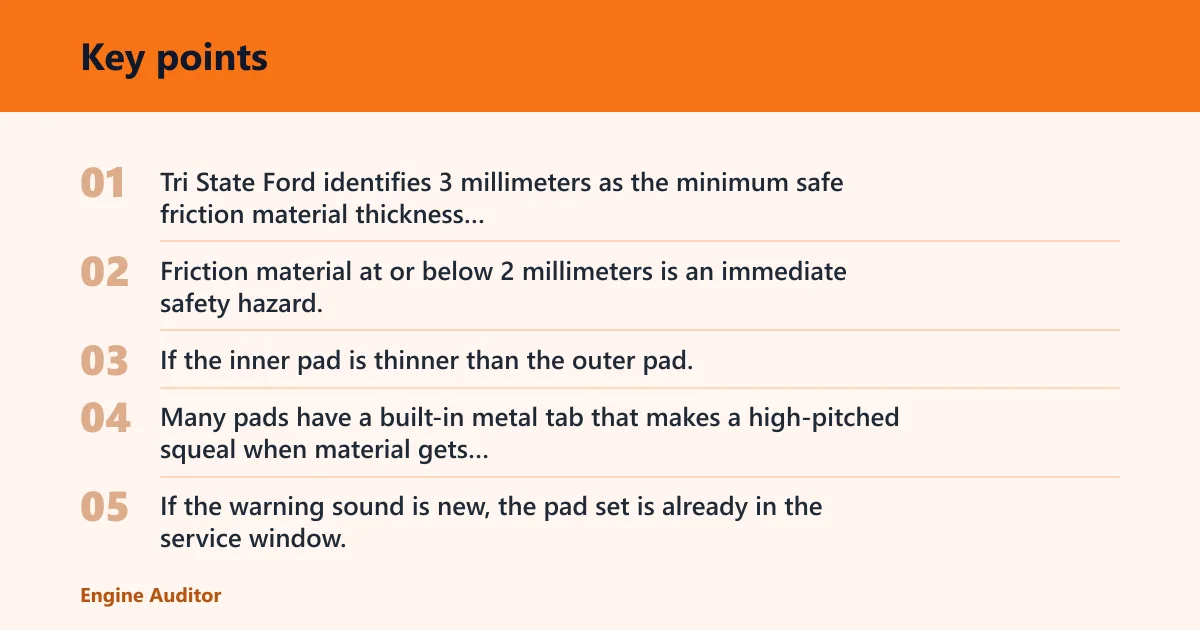
Tri State Ford identifies 3 millimeters as the minimum safe friction material thickness for standard pad replacement recommendations, and Ford mentions a Motorcraft warranty replacement threshold of less than three millimeters. Friction material at or below 2 millimeters is an immediate safety hazard. If the inner pad is thinner than the outer pad, that matters more than the odometer reading.
Inspect the wear indicators too. Many pads have a built-in metal tab that makes a high-pitched squeal when material gets low. If the warning sound is new, the pad set is already in the service window.
Check inner and outer pads separately
Inner and outer pads can wear at different rates. A sticking caliper slide, seized caliper piston, or hose restriction can leave one pad far thinner than the other. That is why a proper brake check should include both sides of the axle, not just a quick glance through a wheel.
How long do Ford rotors usually last?
Ford brake rotors usually last about 80,000 to 120,000 kilometres, but the actual life depends on load, terrain, and heat. Frequent stops, towing, and mountain driving shorten rotor life. Light suburban use can stretch it. Rotors often fail from condition before they fail from age alone.
Look for scoring, cracks, and heat damage
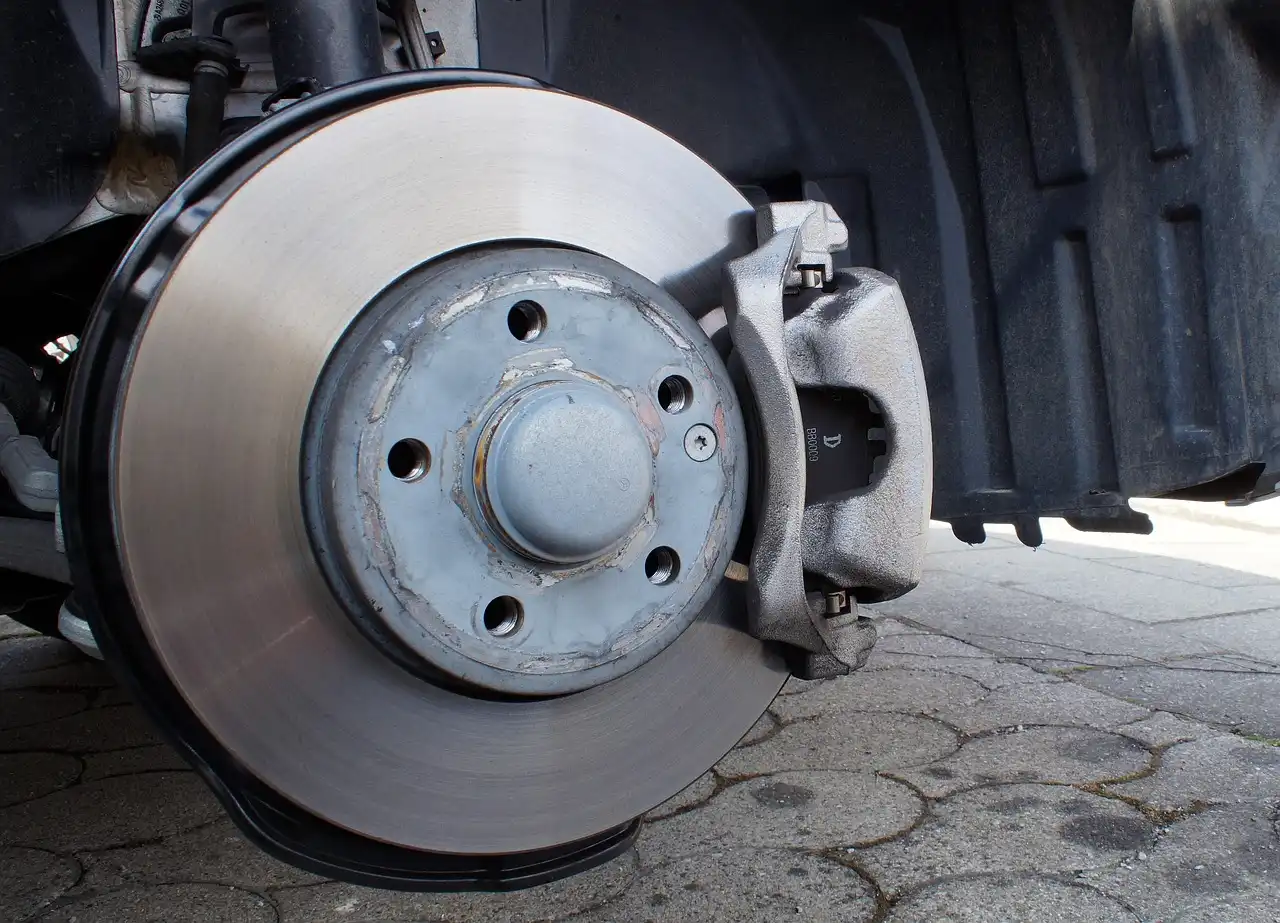
Ford technicians inspect rotors for rough spots during brake service. Add scoring, heat spots, rust ridges, and cracks to that list. If the braking surface is deeply grooved or has visible heat checking, resurfacing may not restore proper function. Thin rotors also leave less thermal reserve, which raises the chance of brake fade and pulsation.
When resurfacing is not enough
Resurfacing is only sensible when the rotor still stays above the discard limit after machining and the surface damage is minor. If a rotor is already near minimum thickness, has cracks, or still causes pulsation after proper correction, replacement is the safer call. Do not machine a rotor just to postpone a needed replacement.
When should Ford brake fluid be changed?
Brake fluid is hygroscopic, which means it absorbs moisture over time. That moisture lowers boiling resistance and can increase corrosion risk inside the hydraulic system, even if the pedal still feels normal. Ford fluid timing is model-specific, so verify the owner’s manual and the service schedule instead of using a single universal interval.
Check level and condition at the reservoir
Fluid should sit between the MIN and MAX marks on the reservoir. A level below MIN can point to pad wear or a leak; a level near MAX can overflow during service if the calipers are pushed back. Do not judge fluid health by level alone. Dark, cloudy, or contaminated fluid needs attention even when the pedal feels normal.
Use the correct Ford fluid spec
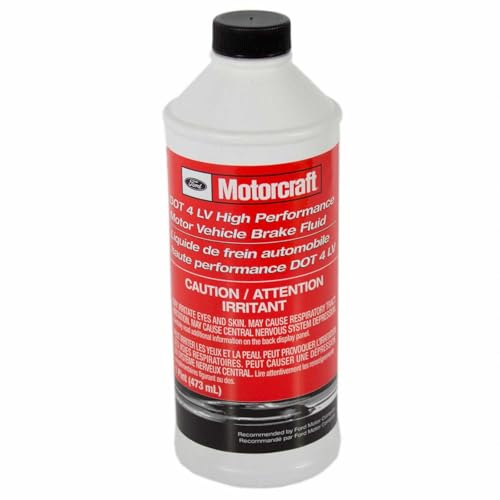
Ford brake fluid spec can vary by model and year, so confirm the exact requirement before service. Some vehicles call for low-viscosity DOT 4 LV, but only where the vehicle’s specification calls for it. Using the wrong fluid can create braking, ABS, or compatibility problems. That is a parts-bin mistake you do not want.
What warning signs mean your Ford needs brake service?
Grinding, squealing, shudder, pulsation, a soft pedal, or a warning light all justify a brake inspection. Some symptoms point to routine wear, while others point to urgent failure modes. If the pedal feels abnormal or the warning lamp appears, do not keep driving as if nothing changed.
Noise and wear indicators
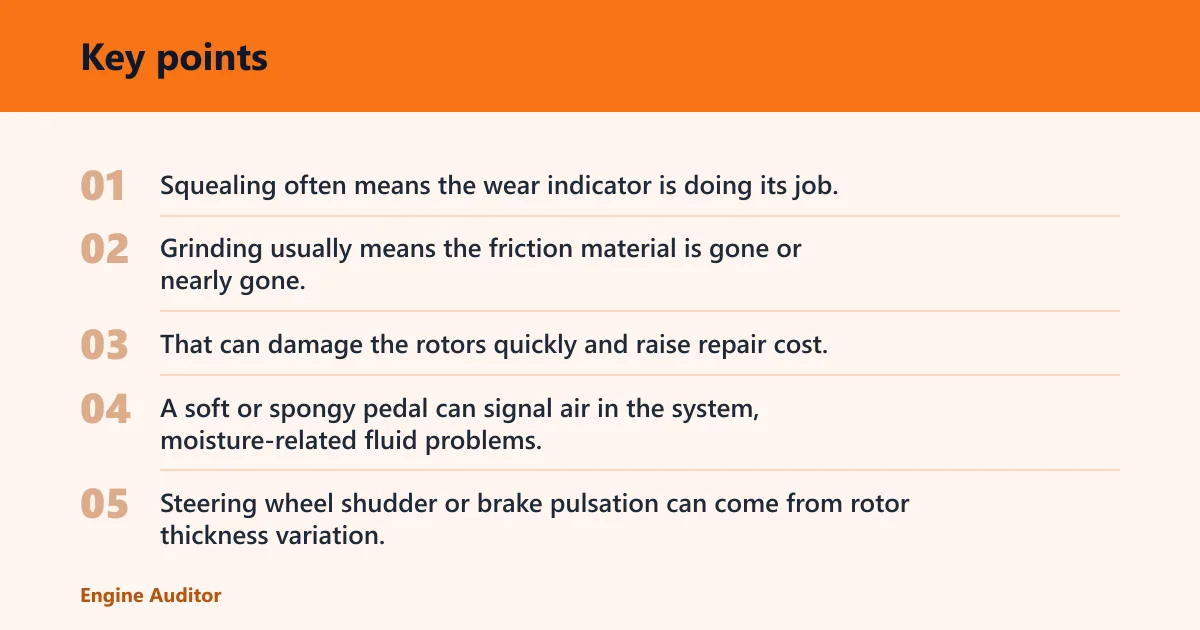
Squealing often means the wear indicator is doing its job, or the pads are getting thin enough to need service soon. Grinding is different. Grinding usually means the friction material is gone or nearly gone, and metal is contacting metal. That can damage the rotors quickly and raise repair cost.
Pedal feel, pulsation, and shudder
A soft or spongy pedal can signal air in the system, moisture-related fluid problems, a leak, or a hydraulic fault. Steering wheel shudder or brake pulsation can come from rotor thickness variation, runout, or pad deposits, not only from “warped rotors.” The symptom tells you where to inspect first, not the final diagnosis.
Pulling and warning lights
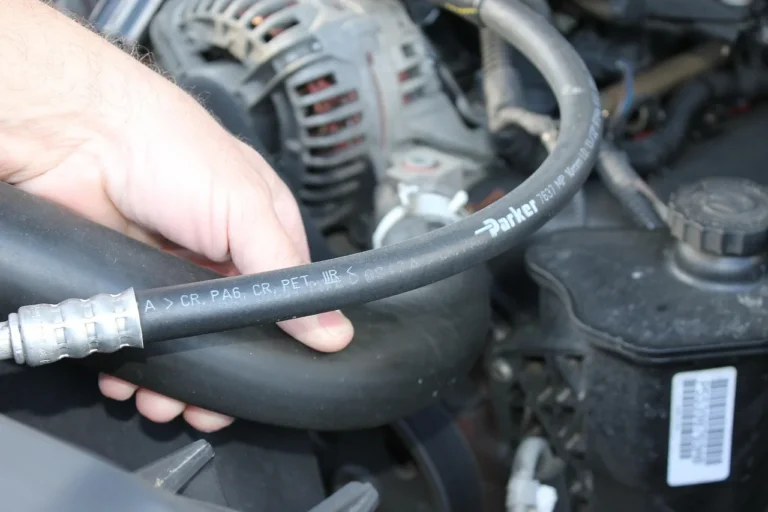
If the vehicle pulls to one side while braking, inspect calipers, hoses, slides, and pad wear before you blame the tires. A brake warning light or electronic parking brake message should generally prompt a full inspection. Those messages can point to fluid level, rear brake service mode, or a system fault.
What does a Ford brake inspection include?
Ford recommends routine brake inspections at a dealer because symptoms may not always be noticeable. Technicians check pad wear, inspect rotors for rough spots, and also evaluate calipers, hoses, and hardware. Fluid level and fluid condition should be part of the visit as well. Pads and rotors belong in the same inspection, because one worn part often exposes the other.
- Measure pad thickness on both inner and outer pads.
- Inspect rotor surface, thickness, and any scoring or cracks.
- Check caliper movement, slide pins, and hose condition.
- Confirm brake fluid level at MIN and MAX and assess fluid condition.
- Scan for warning lights or parking brake faults.
Inspection frequency depends on driving habits and conditions. For stop-and-go traffic, towing, wet roads, steep terrain, and winter temperatures, a brake check sooner than a normal commute schedule makes sense. Ford’s dealer guidance notes that those conditions increase braking demands.
Does towing or city driving wear Ford brakes faster?
Yes. Stop-and-go traffic creates repeated heat cycles and frequent pad application, which shortens pad life and can accelerate rotor wear. Towing and steep terrain add more heat and load, so the same brake parts can wear faster even if the odometer climbs slowly. Rear and front wear can also split unevenly depending on the vehicle and load.
Why front and rear wear can differ
Front brakes usually do more work in normal stopping, but rear brakes can wear faster on some trucks with heavy loads, trailer use, or an electronic parking brake system that changes rear service procedure. That is why a one-axle look is not enough. If one axle is much thinner than the other, inspect the caliper hardware and braking balance.
A common first-timer mistake is replacing only the front pads on a vehicle that tows every weekend, then finding the rear brakes were the real bottleneck. The result is uneven braking, wasted labor, and a second repair visit. Measure both axles before you buy parts.
Frequently asked questions
How often should Ford brake pads be replaced?
There is no universal Ford pad interval. Ford says brake service intervals vary by driving habits, operating conditions, and vehicle type. A dealer article puts many pads in the 40,000 to 70,000 kilometer range, but city traffic, towing, steep terrain, and winter use can shorten that. Measure thickness first.
What are the warning signs my Ford brakes need service?
Grinding, squealing, pulsation, steering wheel shudder, a soft pedal, pulling, or a brake warning light all mean you should inspect the system. Squealing can mean pad wear; grinding is more urgent. Pulsation can come from rotor issues or pad deposits, so measure before you replace parts.
Can I replace pads without replacing rotors on a Ford?
Yes, if the rotors are still above minimum thickness, are not deeply scored or cracked, and do not cause pulsation or runout concerns. Pads and rotors should be inspected together. If the rotors are near the discard limit or already damaged, replacing pads alone usually costs more later.
What brake thickness is considered unsafe on a Ford?
Tri State Ford identifies 3 millimeters as the minimum safe friction material thickness for standard pad replacement recommendations, and friction material at or below 2 millimeters is an immediate safety hazard. For rotors, use the vehicle’s discard limit rather than a universal number. Measure both sides of the axle.
Should Ford brake fluid be checked even if the pedal feels normal?
Yes. Ford technicians inspect brake fluid during routine maintenance visits, and Ford recommends routine brake inspections because symptoms may not always be noticeable. Fluid can absorb moisture before the pedal changes. Check the reservoir level and condition, and confirm the correct fluid spec for the exact model and year.
Products related to this article
Sponsored / affiliate links. As an Amazon Associate I earn from qualifying purchases. I may earn additional commission from eligible campaigns.