Car Lights Guide: Types, Meanings and Common Fixes
On most dashboards, red means a system can damage the car or cut braking assist if you keep driving, amber means book time to inspect it soon, and green or blue usually means the system is working as intended; if a red oil, brake, temperature, or charging light stays on while driving, get to the shoulder or the next safe turnout and shut the engine off. That stop-now advice is consistent with OEM owner’s manuals and roadside guidance from AAA and the AA for oil-pressure, brake-system, overheating, and charging warnings. Ignore the wrong light and you can turn a $10 bulb or sensor check into brake failure, a cooked engine, or a no-start tow. This guide sorts dashboard, exterior, and interior lights by meaning, likely cause, driving risk, and the cheapest first fix.
How to use this car lights guide


Start with color. Then decide whether the light warns of a fault, shows a normal status, or points to an actual lighting failure such as a blown bulb or bad fuse. That split matters because the same dash area can report engine, brake, body, and lighting problems with very different risk.
Many pages blur three separate questions:
- What does the light mean right now?
- Which system usually failed?
- What is the cheapest first check before parts replacement?
This guide keeps those questions separate. A battery light, for example, points to a charging problem, not automatically a bad battery. A brake warning may mean the parking brake is still on, or it may mean low fluid or a hydraulic fault. A headlight issue may have nothing to do with the dash symbol at all.
Use symptoms with the symbol. If lights dim, the steering gets heavy, and multiple warnings appear together, suspect low system voltage before blaming each light one by one. In the bay, that is one of the first things I check: with the engine off, a healthy battery is typically about 12.6 volts; much below about 12.2 volts means it is already significantly discharged, and a running charging system usually sits around 13.5 to 14.8 volts depending on load and strategy. If the symbol or wording differs from what appears here, check the owner’s manual against the exact icon on your cluster, because symbols vary by make and model.
If you are chasing a related problem, these guides pair well with this one: battery problems, OBD2 code guide, TPMS reset, brake fluid warning, and check-engine-light causes.
What do car light colors mean?

Color is the fastest first filter. Red dashboard warnings mean stop safely and get immediate attention. Yellow or amber dashboard warnings generally mean service soon. Green dashboard lights indicate active systems. Blue dashboard lights are grouped with other non-warning indicator colors. White or gray lights are often informational rather than fault warnings.
Red lights
Red is the serious one. Factually, red dashboard warnings mean stop safely and get immediate attention. In practice, I treat brake, oil pressure, overheating, and charging warnings as pull-over-now lights if they stay on while driving, which matches the wording used in many OEM manuals and roadside-service guidance.
Some red lights still need context. A seat belt reminder matters, but it is different from a red oil pressure warning. Pair color with system and symptom instead of reacting to color alone.
Amber or yellow lights
Yellow or amber dashboard warnings generally mean service soon. That does not make every amber light equally safe. An amber washer-fluid reminder is minor. An amber check engine light with rough running, an ABS light on wet roads, or a traction-control fault in snow can change the driving risk quickly.
Green, blue, white, and gray lights
Green dashboard lights indicate active systems. Cruise control, turn signals, and ready or eco indicators usually fall here. Blue dashboard lights are grouped with other non-warning indicator colors, and the blue headlight symbol is commonly used for high beams active in OEM clusters.
White or gray lights often report settings, menus, or system availability. They are usually informational. They can still matter if paired with a message center warning.
Is it a warning light, an indicator light, or a failed light?
A warning light reports a fault or unsafe condition. An indicator light shows a system is on or a mode is active. A failed light is an actual hardware problem in headlights, brake lights, tail lights, interior lamps, or dash illumination, usually caused by a bulb, fuse, switch, wiring fault, relay, or control module issue.
Warning lights
These report trouble. Common examples include check engine, brake, ABS, battery, coolant temperature, TPMS, oil pressure, SRS, and power steering. The light is the message, not the failed part. A battery symbol points to charging trouble. OEM service information, Bosch diagnostic training, and Autel technical material all make the same distinction: the warning identifies the monitored system, while testing still has to prove whether the fault is mechanical, electrical, hydraulic, or communication-related.
Indicator lights
These are usually normal. High beam, turn signal, cruise control, fog light, and some four-wheel-drive status lights are there to confirm a system is active. The blue headlight icon, for example, is a standard high-beam status indication rather than a fault on many dashboards.
Failed lights
These are the actual lamps on the vehicle or in the cabin. If one headlight is out, think bulb first. If both low beams quit together, look harder at a fuse, relay, switch, wiring feed, or body control module. If dash illumination is dark but warning symbols still work, the dimmer setting or an illumination fuse is often the first cheap check.
Which car warning lights mean stop driving immediately?
Brake, oil pressure, overheating, and active charging warnings are the main stop-now lights if they stay on while driving. A flashing check engine light moves into the same urgent category, because active misfire can dump raw fuel into the catalytic converter and ruin it fast; SAE and OEM service literature consistently treat catalyst-damaging misfire as an immediate-risk condition. Pull over safely, shut the engine off if needed, and avoid driving farther than required to reach a safe spot.
Pull over now versus limp to a safer spot
If the brake pedal changes, steam appears, the engine temperature climbs, or headlights begin dimming with a battery light on, stop as soon as it is safe. If traffic makes an instant stop dangerous, move only far enough to reach a shoulder, lot, or exit.
When towing is the safer call
Towing makes sense when the red brake light stays on with low fluid, the oil pressure light appears with engine noise, the engine overheats, the steering becomes hard, or the charging system is failing badly enough that the car may stall. A short drive can turn a manageable repair into a damaged engine, dead battery, or lost braking assist.
Decision table: 15 common car lights, meanings, and first fixes
How to read the table
The table separates meaning from likely failure source and the cheapest first home check. I also added how the icon is usually drawn, whether a flashing light changes urgency, and whether I would personally drive it to the next errand, drive only to a shop, or stop immediately. Repair ranges are broad estimates that change with make, model, labor rate, and whether diagnosis finds a bulb, fuse, sensor, wiring issue, or module fault instead of a simple part replacement.
| Symbol | Exact symbol description | Color | Likely system | Flash or solid meaning | Safest action | First home check | Common repair range | Drive short-term? |
|---|---|---|---|---|---|---|---|---|
| Check engine | Engine outline or text such as “CHECK ENGINE” or “MIL” | Amber | Engine/emissions | Solid usually means a stored emissions/powertrain fault; flashing commonly indicates catalyst-damaging misfire | Scan soon; stop if flashing or running rough | Tighten gas cap, note symptoms, check battery voltage | $0-$1,500+ | Usually yes if solid and driving normally; no if flashing, shaking, or lacking power |
| Brake warning | Circle with “!” or “P” in parentheses, or the word “BRAKE” / “BRAKES” | Red | Brake hydraulic/parking brake | Usually solid; if paired with a flashing message on some models, treat as severe brake-system warning | Stop safely; do not continue if pedal feels wrong | Confirm parking brake fully released; check brake fluid level | $0-$900+ | Usually no; only move a short distance if the pedal feels normal and the parking brake was the cause |
| ABS | ABS letters inside a circle or horseshoe-style brake icon | Amber | Anti-lock braking | Usually solid for stored ABS fault; flashing is less common and model-specific | Drive cautiously; schedule diagnosis | Check wheel area for damaged sensor wire; scan with full-system tool | $100-$800+ | Usually yes, but no ABS function; leave extra stopping distance |
| Battery/charging | Battery outline with plus and minus symbols | Red | Alternator, belt, wiring, battery connection | Usually solid while charging system is not maintaining voltage; flicker often points to loose belt or intermittent connection | Reduce electrical load and stop soon | Inspect belt and battery terminals | $0-$1,200+ | Only briefly if voltage is holding; not safe once lights dim, steering assist drops, or voltage falls toward battery-only levels |
| Coolant temperature | Thermometer over waves | Blue or red | Cooling system | Blue usually means cold engine on startup; red solid means overheating or high coolant temperature; a flashing coolant warning on some cars can indicate low level | Blue: normal cold indicator; red: pull over and shut down | Check coolant level only after cooling down | $0-$1,500+ | Blue yes; red no |
| TPMS | Horseshoe-shaped tire cross-section with “!” inside | Amber | Tire pressure/sensor | Solid usually means one or more tires are low; flashing first and then solid often means sensor, receiver, or relearn fault | Slow down if tire feels low; inflate and recheck | Set all four tires to door-sticker pressure | $0-$250 | Usually yes if tire is not damaged; no if a tire is visibly low, hot, or losing pressure quickly |
| Oil pressure | Oil can symbol, sometimes with a drip | Red | Lubrication system | Solid means low oil pressure or pressure-monitoring fault; if it flickers hot at idle, I still treat it seriously until tested with a mechanical gauge | Shut engine off immediately | Check oil level after stopping safely | $0-$2,500+ | No |
| SRS/airbag | Seated person with a circle in front, or “SRS” / “AIRBAG” text | Amber or red | Airbag/restraint system | Usually solid for a stored restraint fault; flashing on some models can identify a current fault sequence | Drive cautiously; repair soon | Look for under-seat connector issues if recently moved seats | $100-$1,500+ | Usually yes, but airbags may be disabled |
| Traction/stability control | Car with wavy skid marks underneath | Amber | Wheel speed, yaw, stability control | Flashing often means the system is actively intervening; solid usually means a fault or the system is switched off | Drive carefully, especially in rain or snow | Check for low tire pressure; scan ABS/stability module | $0-$900+ | Usually yes; be more cautious on slippery roads |
| Power steering | Steering wheel icon, sometimes with “!” | Red or amber | Electric or hydraulic steering assist | Solid generally means reduced or lost assist; intermittent or flashing behavior can follow low voltage on electric systems | Stop if steering becomes very heavy | Check belt on hydraulic systems; inspect fluid if applicable | $80-$1,800+ | Sometimes, only if steering remains controllable and traffic conditions are favorable |
| Low fuel | Fuel pump icon, sometimes with arrow to filler side | Amber | Fuel level | Usually solid; flashing on some models can indicate very low fuel or gauge fault | Refuel soon | Confirm gauge behavior is normal | $0-$600+ | Yes, briefly |
| Washer fluid | Windshield with spray arcs or dotted spray lines | Amber | Washer reservoir/level sensor | Usually solid for low level; occasional false warnings come from contaminated level sensors | Refill when convenient | Top off washer fluid | $0-$120 | Yes |
| High beam | Blue headlamp symbol with straight horizontal beams | Blue | Headlight status | Solid means high beams are on; flashing is normal when you pull the stalk for pass/flash-to-pass | No repair needed unless beams will not switch off | Test stalk switch and dash indicator response | $0-$400+ | Yes |
| Cruise control | Speedometer-style icon, arrow, or “CRUISE” text depending on make | Green or white | Driver-assist status | Solid usually means the system is on or set; flashing may indicate a canceled or unavailable condition on some vehicles | Normal indicator | Turn system off if unexpected | $0-$500+ | Yes |
| Door-ajar or master warning/car symbol | Top-view car with open doors, side-view car icon, or master warning triangle with message | Red, amber, or white | Body, security, door switch, or paired warning system | Solid usually means a door, hatch, or paired warning remains active; flashing may indicate security/immobilizer behavior on some vehicles | Read message center; verify doors and trunk closed | Check all latches and visible switch areas | $0-$700+ | Usually yes, depends on paired warning |
What does the check engine light mean, and when is it serious?
The check engine light covers many possible causes, from a loose gas cap to misfire or catalytic-converter trouble. A solid light usually allows cautious short-term driving if the car runs normally. A flashing light is more serious; OEM manuals, Bosch training material, and AAA guidance all treat a flashing MIL as an urgent fault because active misfire can overheat and damage the catalytic converter. For a generic consumer explainer, see (wikihow.com), but for diagnosis I rely on the scan data, fuel-trim behavior, and misfire counters rather than the icon alone.
Solid versus flashing
A solid light often points to an emissions or sensor problem. A flashing light raises concern for active misfire or another condition that can damage the catalytic converter. If it flashes, avoid continued driving except to reach a safer stopping point.
Cheapest first checks
Start with the gas cap. Make sure it is tight and sealing. Then look for obvious split intake hoses, disconnected vacuum lines, rough idle, fuel smell, or recent low-voltage events from a weak battery. If the car runs badly, do not keep guessing. I also check whether the battery dropped low enough during cranking to set nonsense codes, because a borderline battery can trigger lean, throttle, and communication faults that disappear once voltage is stabilized.
When a scanner helps
A basic OBD2 reader is useful here. It can usually pull powertrain trouble codes for engine and emissions faults. That gives direction. It does not confirm the failed part by itself, and it does not replace smoke testing, live data, or proper circuit checks when the fault is less obvious. For example, a P0171 lean code does not mean “replace oxygen sensor” by default; I want fuel trims, MAF data, and a quick intake leak check before parts go on. If you need a code-by-code starting point, use this OBD2 code guide.
Brake, ABS, TPMS, and airbag lights: what to do next
Brake-related and safety-system lights need triage, not a one-size-fits-all answer. A red brake light can mean stop now. An ABS light usually means normal braking remains but anti-lock function may be gone. TPMS often starts with air pressure. An SRS light can mean airbags or seat-belt pretensioners may not work properly.
What should I do if my brake warning light comes on?
First, confirm the parking brake is fully released. If the light stays on, check brake fluid level if it can be done safely. If the pedal feels soft, travel increases, or fluid is low, stop driving. That is straight out of common OEM owner’s manuals, and it lines up with what I see in the shop: a low reservoir often means worn pads, an external leak, or both. If you need a deeper step-by-step, go to the brake fluid warning guide.
ABS and traction-control lights
If ABS is on, the car will often still brake normally in dry conditions, but wheel lockup control may be lost in a hard stop. If the traction or stability light stays on, extra skid control may be unavailable. Basic code readers usually cannot read these systems. Bosch and Autel documentation both separate generic OBD-II powertrain access from full-system diagnostics, which is why a parts-store engine-code scan often misses the real cause.
One common repair scenario: the customer comes in with ABS, traction, and sometimes steering-angle or lane-assist warnings all at once. The first check is not random parts replacement. I look at live wheel-speed data and inspect the wheel-end harnesses. Many times, one erratic wheel-speed sensor or damaged tone ring is enough to trigger the whole cluster.
TPMS and SRS
TPMS is often simple. Seasonal temperature swings can drop pressure enough to trigger the light. Inflate all tires to the door-jamb specification, then drive and see whether it clears. If one tire keeps dropping, look for a puncture. If the light flashes before staying on, a sensor or relearn issue is more likely. A handheld tire gauge still beats guessing, and I prefer checking pressures cold in the morning.
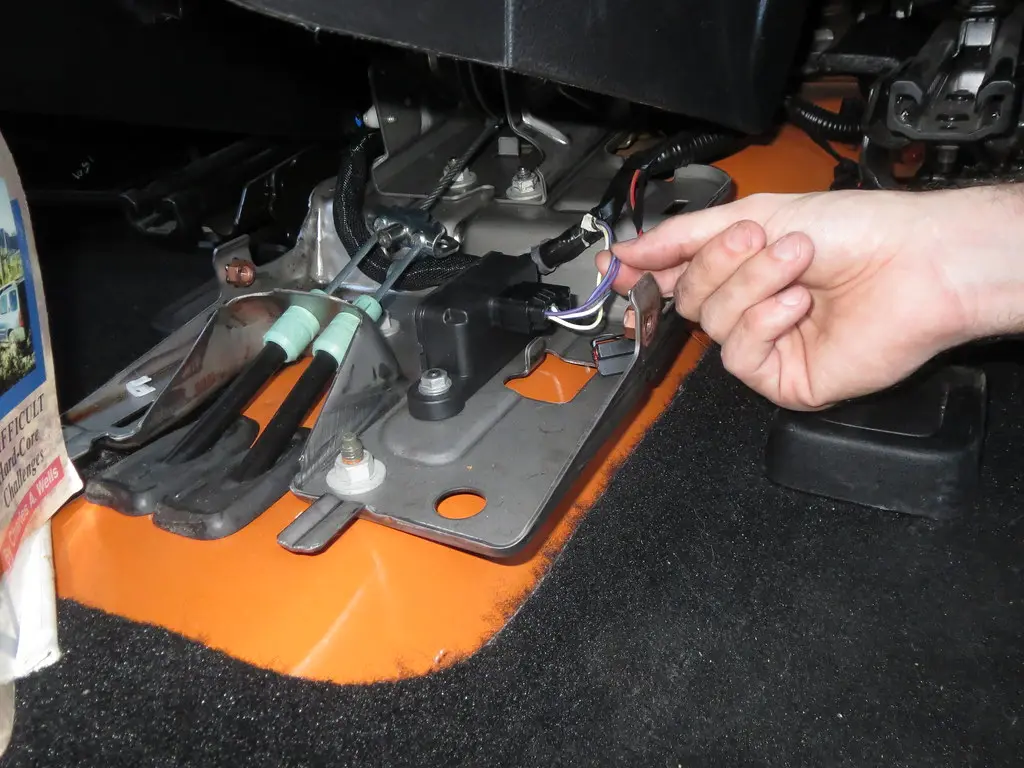
An SRS or airbag light is different. It may disable part or all of the restraint system until repaired. That does not always make the car undriveable, but it does change crash protection. Another real-world pattern is an airbag light that appears after the seat was moved fully back or something was shoved under it; before replacing parts, I inspect for loose under-seat connectors or harness strain, then scan the restraint module with a tool that can actually read SRS codes. For relearn basics after correcting pressure, see TPMS reset.
Battery, coolant, and multiple lights at once
A battery light does not prove the battery itself is bad, and a coolant light can mean very different things depending on color. When several lights appear together, low system voltage, a weak battery, charging failure, wheel-speed faults, module communication issues, or water intrusion are often behind the pileup.
Charging light diagnosis
Start with battery terminals. Look for looseness, white or green corrosion, or a cracked terminal clamp. Then inspect the belt that drives the alternator where applicable. If lights dim, blower speed changes, or the dash begins flickering, the vehicle may be running on battery power alone. On a quick triage, I want to know resting voltage, charging voltage, and voltage drop at the terminals under load before I condemn the alternator. A bad battery can mimic an alternator problem; a bad alternator can cook a battery. If you are sorting those two apart, this page on battery problems helps.
Coolant light diagnosis
A blue coolant-temperature light is often normal after startup on vehicles that use it. A red coolant warning is different and can point to overheating or low coolant. If red appears while driving, pull over, shut down, and let the engine cool before checking anything near the reservoir or cap. I do not open a hot cooling system. Once cool, I check level, obvious leaks, fan operation, and whether the upper hose got rock-hard from overheating.
Why multiple dashboard lights are on at the same time
Low voltage confuses modules. One failing alternator, weak battery, poor ground, or loose connection can trigger engine, ABS, steering, airbag, and body warnings together. A bad wheel-speed sensor can also light up ABS, traction, and stability systems at once. Water intrusion and network communication faults can do the same. Diagnose the shared cause first.
A third shop scenario I see a lot: the car arrives with a battery light, power steering warning, ABS light, and transmission complaints all at once. Instead of chasing each code, I check charging voltage first. More than once, the real fix has been a slipping belt, failing alternator, or corroded main ground, not four separate modules.
Headlights, brake lights, interior lights, and dash lights that fail
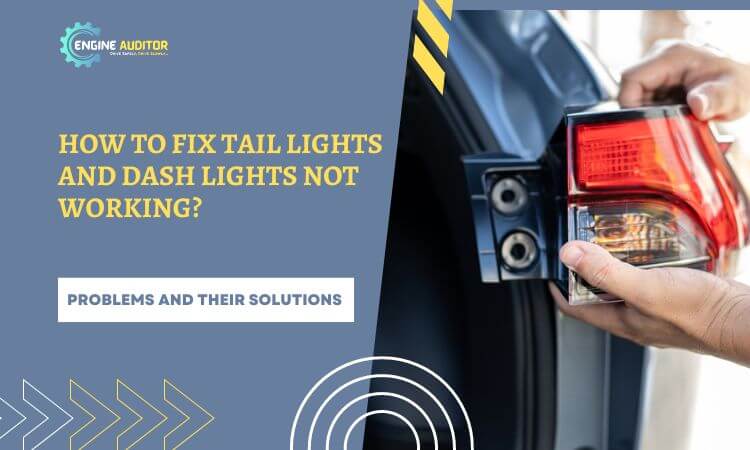
Actual lighting faults follow a different path from dashboard warnings. For one dead lamp, start at the bulb. For both sides of the same circuit, check fuse, relay, switch, power feed, ground, and body control module. Dim, flickering, or stuck-on lights often point to voltage, ground, or switch problems rather than a simple bulb.
Exterior light fault tree
If one headlight, brake light, or tail light is out, inspect the bulb first. If the bulb looks good or both sides are out, check the fuse. If the fuse is good, test whether power reaches the socket. Then move upstream to the switch, relay, wiring break, poor ground, or body control module.
Brake lights deserve one extra branch. If both brake lights fail but the high-mounted center brake light still works, suspect the left/right bulb circuit or body wiring. If none work, the brake-pedal switch or fuse jumps higher on the suspect list.
Dim, flickering, or intermittent lights
Dim lights often track back to low voltage, poor grounds, or aged bulbs. Flickering lights often point to charging swings, loose connectors, or a failing switch. Intermittent dash backlighting can come from the dimmer wheel, a cluster solder fault, or a body module issue on vehicles that route illumination through networked modules. A crisp clue here is whether brightness changes with engine speed or blower load; if it does, I start thinking voltage drop or charging ripple before I blame the lamp itself.
Lights stuck on after shutdown
Interior lights that stay on often come from a door-ajar switch, latch sensor, dimmer setting, or body module delay fault. Headlights that stay on can be a stuck relay, failed switch, or auto-light feature issue. Before replacing parts, confirm no door is slightly open and the dome-light override is not switched on.
Do you need a scanner to reset dashboard lights?
Sometimes no, often yes, but diagnosis comes first. Some lights turn off on their own after the condition is corrected, such as TPMS after inflation or a check engine light after a gas-cap issue. Others store faults that need a scanner, and clearing codes without fixing the cause usually brings the light back.
What a basic scanner can and cannot do
A basic OBD2 reader is mainly for engine and emissions codes. It is useful for a check engine light. It usually cannot access ABS, SRS, TPMS, body, or stability modules on most vehicles. Bosch and Autel technical docs make this limitation clear: generic OBD-II covers standardized emissions data, while many chassis, body, and manufacturer-specific functions require enhanced access. That is why a cheap scanner can show “no codes” while the dash still has ABS or airbag lights on.
Lights that may clear on their own
TPMS may clear after pressures are corrected and the vehicle is driven. A check engine light from a loose gas cap may go away after several normal drive cycles. Some battery or voltage-related warnings disappear once charging is restored. Others stay stored until a module sees a full self-test pass or codes are manually cleared.
Why the owner’s manual still matters
Vehicle-specific wording, symbol shape, and system behavior vary more than most drivers expect. That is not just a legal disclaimer; it changes diagnosis. On one model, a flashing TPMS light means a sensor problem. On another, a master warning triangle sends you to a message center for the real fault. The owner’s manual is still the tie-breaker for exact symbol meaning, while service information is the tie-breaker for exact testing.
Frequently asked questions
Can I drive with an amber warning light on?
Sometimes. Amber usually means service soon, but risk depends on the system and symptoms. An amber washer-fluid or low-fuel light is minor. An amber check engine light with rough running, or an ABS or stability light in bad weather, can change the safety picture enough to justify immediate diagnosis.
How do I tell the difference between a warning light and an indicator light?
Warning lights report faults or unsafe conditions, while indicator lights confirm a system is active. Color helps, but meaning matters more. Green and blue are often status lights. Red and amber usually need attention. If the symbol is tied to a failed lamp, test the actual light circuit separately.
Which dashboard lights are normal status lights?
High beam, turn signal, cruise control, fog light, and some drive-mode or four-wheel-drive indicators are commonly normal status lights. Green dashboard lights indicate active systems, and blue dashboard lights are grouped with other non-warning indicator colors. If one stays on unexpectedly, check the switch before chasing faults.
What does a flashing check engine light mean?
A flashing check engine light is treated as more urgent than a solid one. In real terms, that often points to active misfire or another condition that can damage the catalytic converter, so I would avoid driving any farther than needed to reach a safe place. If you want the common root causes, start with check-engine-light causes.
Why are multiple dashboard lights on at the same time?
Multiple lights often come from one shared cause rather than several unrelated failures. Low system voltage, a weak battery, alternator trouble, wheel-speed sensor faults, communication errors between modules, or water intrusion can trigger clusters of warnings. Start with charging voltage and shared inputs before replacing parts.
What does it mean when the car symbol lights up on the dash?
The car symbol is one of the least consistent icons across brands. It can mean security, door or trunk status, traction control, collision-system status, or a master warning paired with a text message. Read the message center and owner’s manual, then diagnose the paired system rather than the car outline itself.
Products related to this article
Sponsored / affiliate links. As an Amazon Associate I earn from qualifying purchases. I may earn additional commission from eligible campaigns.