Car Light Meanings by Color: Red, Amber and Blue
Red usually means a stop-now dashboard warning or an emergency vehicle signal that demands space, amber usually means a caution or service item that needs prompt attention, and blue usually means a status light inside the car or an authorized vehicle outside it. If you ignore the color, you can end up with a breakdown, a ticket, or a crash. This guide splits red, amber, and blue by where the light appears on the car and gives the exact action to take.
Red, amber and blue at a glance
The fastest way to read a light is by context first. A red light on the dashboard is a stop-now warning; amber usually means caution or service; blue usually means information inside the car or authority outside it. Color helps, but the symbol, flash pattern, and location decide the next move.
Inside the cabin, dashboard warning lights often use a color system used by many vehicle manufacturers. In that system, red typically means stop now, amber or orange usually means service or caution, green means active, and blue is often informational. Outside the vehicle, the same colors can mean something else entirely.
That is why you should not treat a tail lamp, a police light bar, and a warning icon as the same thing. The driver’s response changes with the context.
How context changes the meaning
Dashboard lights are about vehicle health and driver action. Exterior lights are about road communication. Emergency vehicle lights are about authority, right of way, and scene management. A blue dashboard icon can be harmless; a blue light outside the car can demand immediate lane change or yielding, depending on local law and the vehicle involved.
Picture a compact SUV showing a red oil-pressure symbol on the cluster at idle. That is not a “watch it later” signal. By contrast, a blue indicator on the dash for high beams is informational, but the same color in a light bar on the shoulder may mean a police vehicle or another authorized unit.
Red light meanings
Red is the urgent color. On the dashboard, it means a critical condition or a stop-now warning. Outside the car, red may be part of a vehicle’s rear lighting, but that does not tell you to stop unless the situation is a traffic-control or emergency context. When red is used on an emergency vehicle, it signals urgency and the need for other drivers to move out of the way.
Dashboard red warnings that need immediate action
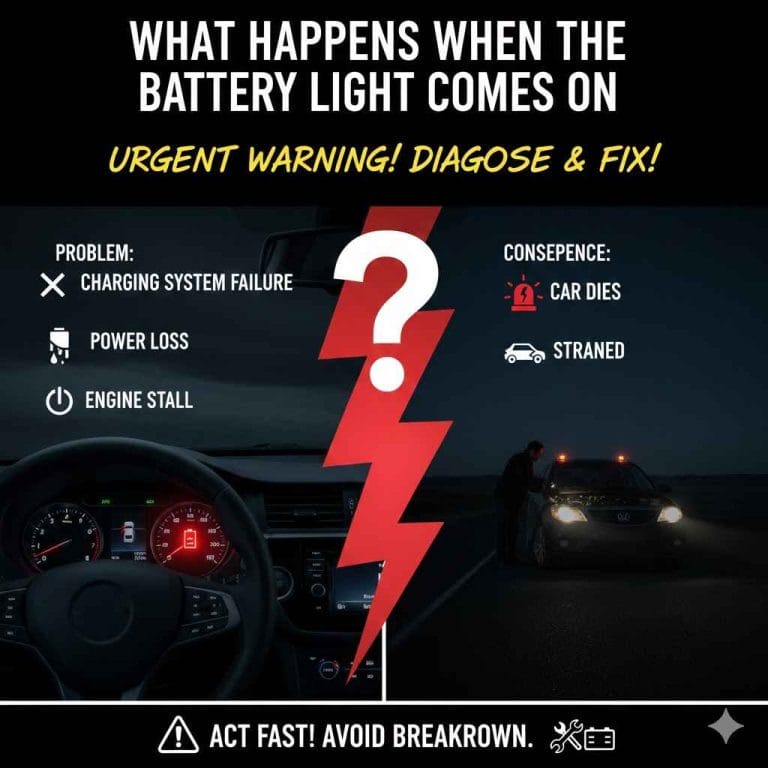
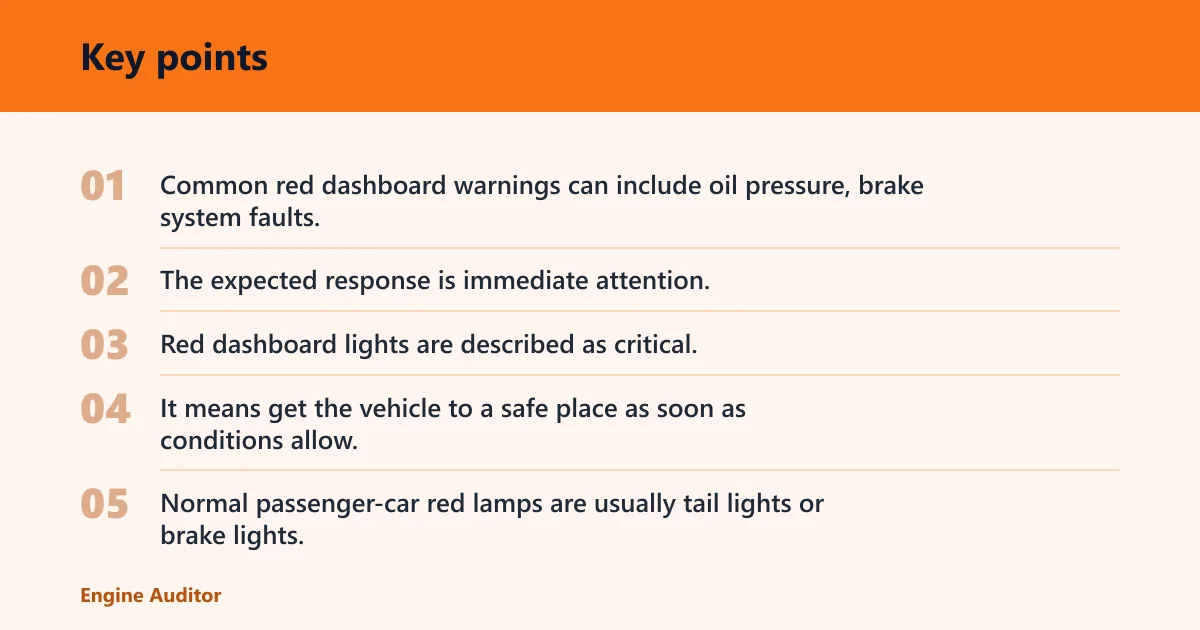
Common red dashboard warnings can include oil pressure, brake system faults, coolant temperature, and other critical alerts. The expected response is immediate attention, not “later today.” If the engine is overheating, oil pressure is low, or the brake warning stays lit, continuing to drive can turn a repair into a breakdown.
Red dashboard lights are described as critical, with the action time “Stop now.” That does not always mean slam on the brakes in traffic. It means get the vehicle to a safe place as soon as conditions allow, then shut down or follow the manual for that fault.
Exterior red lights and what they usually mean
Normal passenger-car red lamps are usually tail lights or brake lights. Tail lights do not mean the car ahead must stop for you. Brake lights simply show that the driver is slowing or stopping. Read the road, not the color alone.
A flashing or solid red outside the car means different things depending on the vehicle and the law. On a tow truck or emergency vehicle, red can be part of the light package. On a normal car, it is usually just rear lighting or braking. Do not treat every red exterior lamp as a hazard cue for yourself.
When red means emergency vehicle, not your car
Emergency vehicles commonly use red, blue, amber, and white lights. Red is primarily used by fire trucks, ambulances, and other emergency medical vehicles. In that setting, red is not a dashboard fault code; it is a roadside signal that other drivers should yield.
When you see a red emergency light behind you, the next move is to check mirrors, signal, and create space as safely and promptly as possible. Do not stop in a travel lane unless traffic conditions force it.
Amber light meanings
Amber usually means caution or service. It is less urgent than red, but it still matters. On the dashboard, amber often gives you hours to days rather than seconds to react. Outside the car, amber is common on slow-moving vehicles, tow trucks, and construction equipment.
Why amber usually means caution or service
Amber covers service needs. It often signals that something should be checked soon rather than immediately. That includes warnings related to ABS, TPMS, the check engine light, and traction-related systems. You can usually keep driving for a short time, but you should not ignore it.
The key is to separate “less urgent than red” from “safe to ignore.” Amber is the middle ground. It asks for diagnosis, planning, and attention before the problem grows.
Common amber dashboard warnings
Amber or orange dashboard lights are described as important, with action time “Hours–days.” That fits many common alerts: tire pressure, engine management faults, ABS warnings, and traction-control messages. The vehicle may still be driveable, but some safety or emissions function may be degraded.
Say your sedan shows an amber TPMS icon after a cold morning. The right next move is to check tire pressures before driving far, because low pressure can affect handling and tire wear. A steady amber check engine light usually calls for a scan and repair planning, not panic.
Exterior amber lights and roadside signals
Outside the vehicle, amber is widely used for warning and visibility. Slow-moving vehicles, tow trucks, and construction equipment often use amber lamps because the signal is caution, not command. Many passenger cars also use amber turn signals and hazard flashers, though hazard systems are usually amber or the same color as the turn signals, not red.
Flashing amber usually matters more than solid amber. Flashing often means temporary hazard, lane change intent, or work-zone warning. Solid amber can mean a steady marker or auxiliary lamp. Again, the symbol and the vehicle type matter.
Blue light meanings
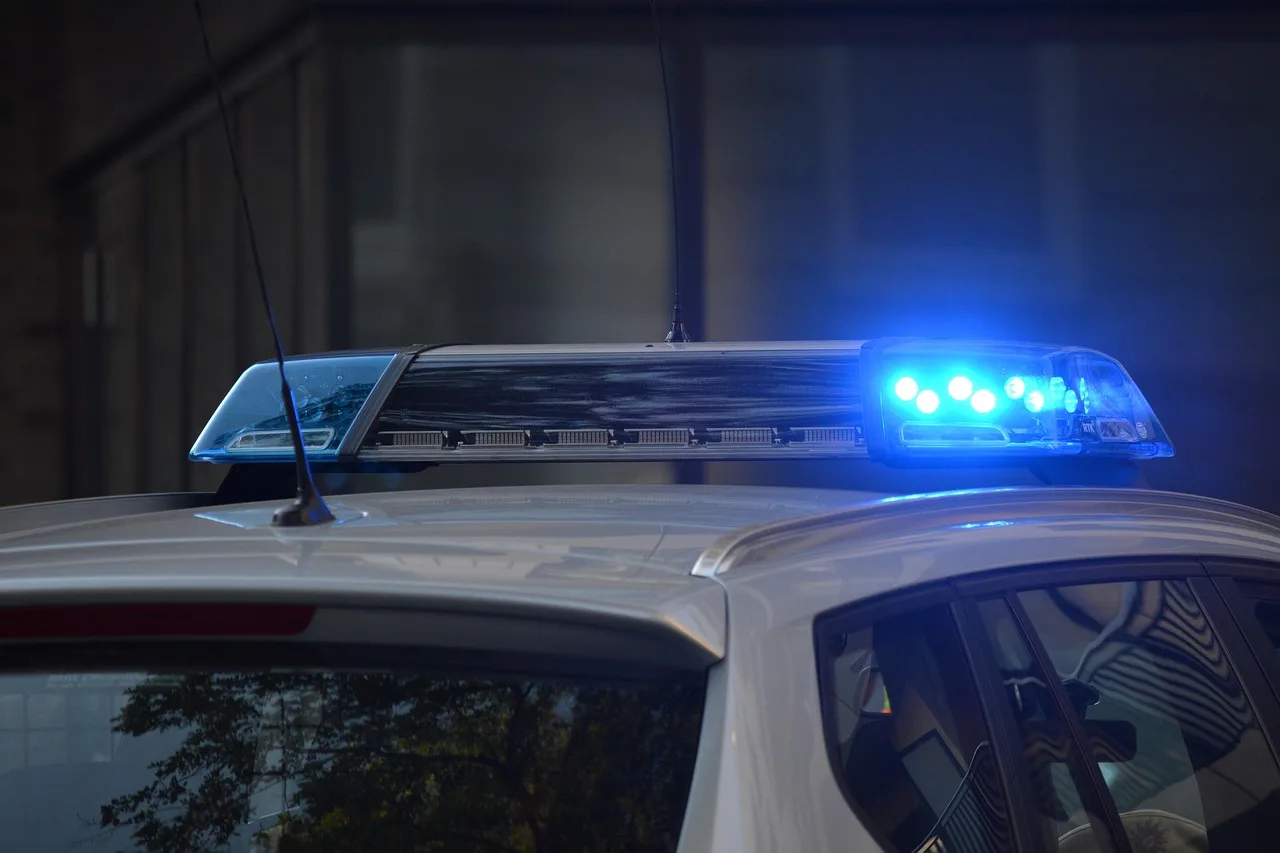
Blue is narrow in ordinary driving. On many dashboards, it is informational, and one common use is the high-beam indicator. Outside the car, blue is often tied to police vehicles or other authorized emergency use. It is not a general warning color for normal passenger cars.
Blue on the dashboard, including high beams
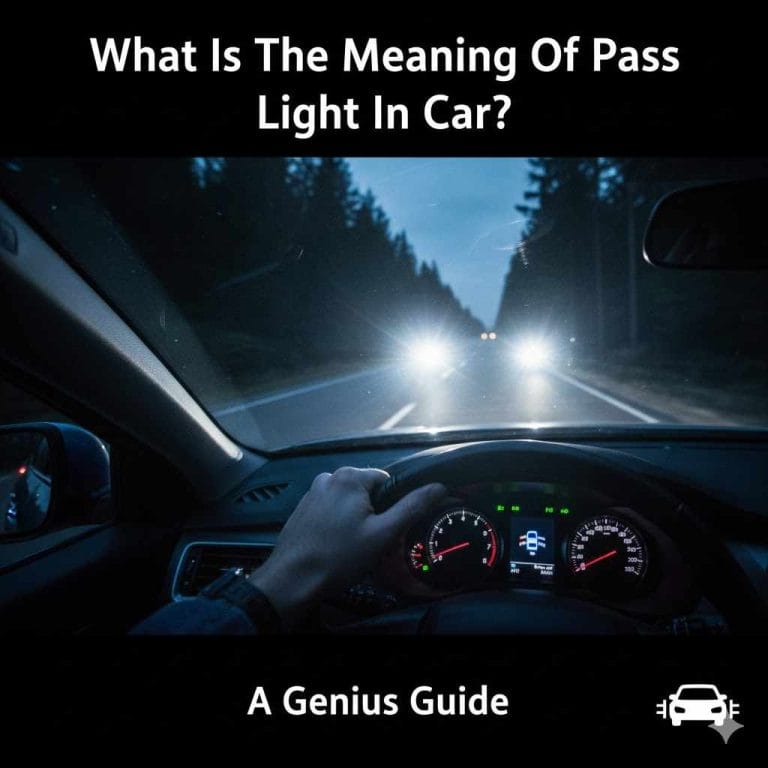
Blue dashboard lights are described as informational and requiring no immediate action. A common example is a high-beam indicator. If that icon is on, the next move is simple: switch to low beams when another driver is approaching or when road conditions call for it.
Blue on the dash is not usually a fault signal. It is a status signal. If the symbol is unclear, check the owner’s manual, because some vehicles use blue for a specific function rather than a warning.
Blue on emergency vehicles and authorized use
Blue denotes authority and the need to clear traffic. It is most commonly seen on police vehicles, though state and local rules control when and where it is legal. Emergency vehicle lighting often combines red, blue, amber, and white, and the mix can vary by vehicle type and jurisdiction.
Do not assume blue means the same thing everywhere. In some states, blue is reserved for specific services. In others, its use is tied to particular vehicle classes or response roles. The legal meaning comes from local rules, not the color alone.
Why blue is not a general passenger-car warning color
Blue is often misunderstood because it can mean two different things: information inside the car or authority outside it. It is not a general “your car has a problem” color. If you see blue on a normal passenger car’s exterior, check whether it is an aftermarket light, a decorative lamp, or something that may be restricted by law.
A common first-timer mistake is to spot a steady blue lamp on a parked vehicle and assume it is just decorative lighting. If the blue light is in a roof bar or grille-mounted array, treat it as an authorized emergency or service vehicle until proven otherwise.
Car light decision table
This table gives the quickest possible read: color first, then context, then action. Use the symbol and flash pattern as a second check, not a replacement for the color.
| Color | Context | Likely meaning and immediate driver action |
|---|---|---|
| Red | Dashboard light | Critical or stop-now warning. Immediate action required: pull over safely, check the fault, and stop driving if the manual or warning text says to stop now. |
| Red | Exterior vehicle light | Usually tail lights, brake lights, or emergency vehicle lighting. Immediate action: do not stop just because you see a red rear lamp; respond to the traffic situation and yield only when the vehicle is clearly an emergency unit. |
| Red | Emergency vehicle | Urgency signal on fire trucks, ambulances, and similar units. Immediate action: yield, move over if safe, and clear the lane. |
| Amber | Dashboard light | Caution or service needed. Immediate action: schedule diagnosis soon, check pressures or fluids if relevant, and continue only if the vehicle remains safe to drive. |
| Amber | Exterior vehicle light | Warning, visibility, or slow-moving signal. Immediate action: interpret it as a caution cue, especially around tow trucks, work zones, or vehicles moving slowly. |
| Amber | Emergency vehicle | Often used as part of warning lighting or scene control. Immediate action: slow down, watch for workers or obstructions, and follow posted directions. |
| Blue | Dashboard light | Usually informational, such as high beams. Immediate action: no repair urgency unless the symbol or manual says otherwise. |
| Blue | Exterior vehicle light | Often associated with police or authorized emergency use. Immediate action: check mirrors, yield if required, and comply with local law. |
| Blue | Emergency vehicle | Authority signal that may mean the road should be cleared. Immediate action: move aside safely and do not block the vehicle’s path. |
Red versus amber versus blue urgency checklist
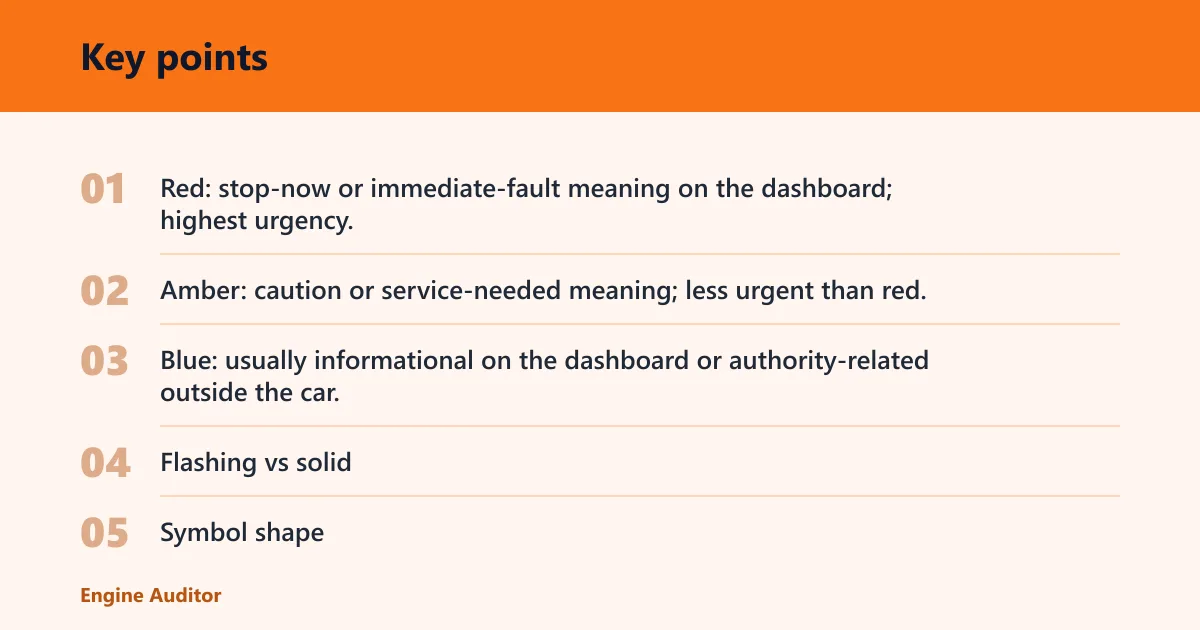
- Red: stop-now or immediate-fault meaning on the dashboard; highest urgency.
- Amber: caution or service-needed meaning; less urgent than red, but still needs prompt attention.
- Blue: usually informational on the dashboard or authority-related outside the car; urgency depends on context.
- Flashing vs solid: a flashing light can carry a different meaning from a steady one, so check both the pattern and the symbol.
- Symbol shape: the icon matters as much as the color; use the owner’s manual when the shape is unfamiliar.
What to do when the color is unclear
If you cannot identify the symbol, slow down, scan the instrument cluster or the vehicle ahead, and check the owner’s manual. Treat red as urgent until identified. Do not guess based on color alone, because mixed-color light bars, tinted LEDs, and unusual symbol shapes can be misleading.
Check the symbol, not color alone
Color gives the first clue. The symbol gives the actual instruction. A red circle, a red thermometer, and a red brake icon do not mean the same thing, even though they all demand fast action. An amber engine icon and an amber tire-pressure icon are both cautionary, but they point to different problems.
If the symbol is unreadable at night or the lens looks white-blue to the eye, use the dashboard label, the manual, or the vehicle’s lighting location to identify it. Do not assume a color shift means a different function.
Use the owner’s manual and vehicle label
The owner’s manual is the correct source for model-specific meanings. Some cars use more icons than others, and some warnings are linked to driver-assistance systems, emissions systems, or tire monitoring. If the manual says a red warning requires stopping, follow that instruction.
Suppose a crossover shows an amber icon you cannot name while the car still drives normally. The right next move is to note the symbol, read the manual later the same day, and plan a scan if it is a check-engine or brake-related message.
Treat red as urgent until identified
When in doubt, red gets priority. That is the safest rule for a driver who cannot identify a warning in real time. Amber can often wait until the next service window. Blue usually does not call for mechanical action unless the symbol or local law says otherwise.
Do not continue driving with an unidentified red warning if the vehicle shows signs of overheating, low oil pressure, or brake trouble. Pull over safely and verify the fault before you go farther.
Frequently asked questions
What do red, amber and blue car lights mean?
Red usually means a stop-now dashboard warning or an emergency vehicle signal that needs space, amber means caution or service soon, and blue usually means a high-priority police or emergency vehicle ahead or behind. Inside the car, blue may also indicate high beams. The meaning depends on where the light appears and what symbol it uses.
When is a red light on a car an emergency?
A red light is an emergency when it is a dashboard warning for oil pressure, brakes, temperature, or another critical system. It is also urgent when it belongs to an emergency vehicle behind or beside you. On a normal car’s rear lights, red usually just means tail lights or braking.
What does an amber car light usually indicate?
Amber usually means caution or service needed. On the dashboard, it often points to issues such as TPMS, ABS, traction control, or the check engine light. Outside the car, amber often marks slow-moving vehicles, tow trucks, or work-zone equipment. It is less urgent than red, but not ignorable.
What does a blue light mean on a car dashboard or vehicle?
On the dashboard, blue is usually informational, with high beams being the common example. Outside the car, blue is often tied to police or other authorized emergency use. It is not a general warning color for normal passenger cars, so context and local law matter.
Are blue lights legal on normal cars?
Not always. Laws vary by state and by vehicle type, and many places restrict blue exterior lighting to specific services or authorized vehicles. A blue dashboard icon is different from an exterior blue lamp. If you are unsure, check local law and the vehicle’s equipment rules before using it on the road.
How urgent is a red warning light compared with amber?
Red is the highest urgency. It usually means stop now or deal with a critical fault immediately. Amber is less urgent and usually means service is needed within hours to days. If you cannot identify the warning, treat red as immediate and amber as prompt but not panic-level.
What should I do if I see a light color but can’t identify the symbol?
Slow down, check the symbol, and consult the owner’s manual as soon as you can. If the light is red, treat it as urgent until you know otherwise. If the light is amber, schedule diagnosis soon. If the light is blue, confirm whether it is a status indicator or an external authority light.
Do light color meanings vary by vehicle type or state?
Yes. Emergency vehicle lighting can vary by vehicle type, job role, and state law. Red, blue, amber, and white may be used in different combinations, and blue is especially regulated in many places. Passenger-car dashboard conventions are more consistent, but even there, the symbol and manual still matter.
Products related to this article
Sponsored / affiliate links. As an Amazon Associate I earn from qualifying purchases. I may earn additional commission from eligible campaigns.