Car exterior lights explained: headlights to taillights
Car exterior lights are the lighting and signaling units around a vehicle: headlights, parking or position lights, daytime running lights, turn signals, hazard lights, fog lights, side markers, brake lights, taillights, reverse lights, and license plate lights. Miss one, and you risk poor visibility, traffic stops, or a rear-end crash. This guide explains what each light does, where it usually sits on the car, and how to check it from outside.
What are the exterior lights on a car called?


Exterior lights are usually grouped by job first, then by where they sit on the vehicle. Headlights light the road ahead, taillights mark the rear, brake lights warn of slowing, turn signals communicate direction, and auxiliary lights such as fog lights, side markers, and identification lamps add visibility in specific situations.
Main light groups drivers need to know
The names vary by market and vehicle class, but the core jobs stay the same. On a standard sedan, you will usually see the front headlamp housings, rear lamp clusters, side marker lamps near the corners, and sometimes separate fog lamps in the lower front bumper. Trucks and tall vehicles may add roof or cab-mounted lights.
How housings and functions differ
A housing is the visible shell. A function is the task performed by the bulb, LED module, or reflector inside it. That difference matters on cars with combined rear clusters, where taillights, rear turn signals, and brake lights can share the same rear light housing. One lens can contain several separate jobs.
Headlights: what they do and when to use each beam
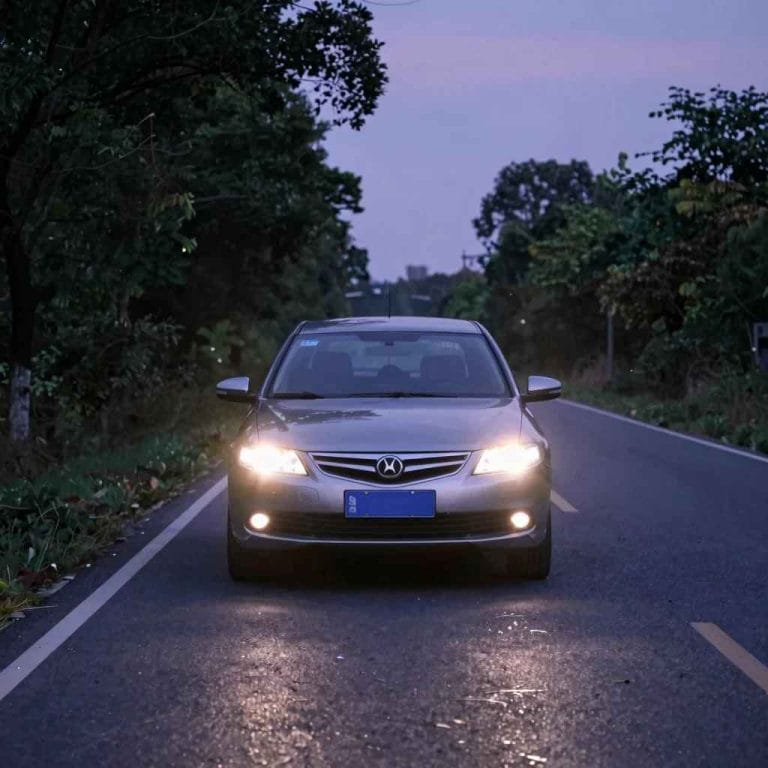
Headlights have low-beam and high-beam settings. Low beams typically light 200 to 300 feet ahead and are the default for night driving and poor visibility. High beams can reach as far as 500 feet, but you should switch them off when oncoming drivers or traffic ahead would be affected.
Headlights also come in several light-source types. Halogen is the older, common setup. HID headlights are also known as xenon lights. LED headlights are more compact, last longer, and use less power than HIDs. Laser headlights use mirrors and blue laser light with yellow phosphorus, usually in high-end systems.
Most cars switch headlights on with a stalk on the steering column or a dash knob. The exact labels vary: off, auto, parking lights, and headlamps are common. On vehicles with an auto setting, the car decides when to turn them on based on ambient light.
How do taillights and brake lights differ?
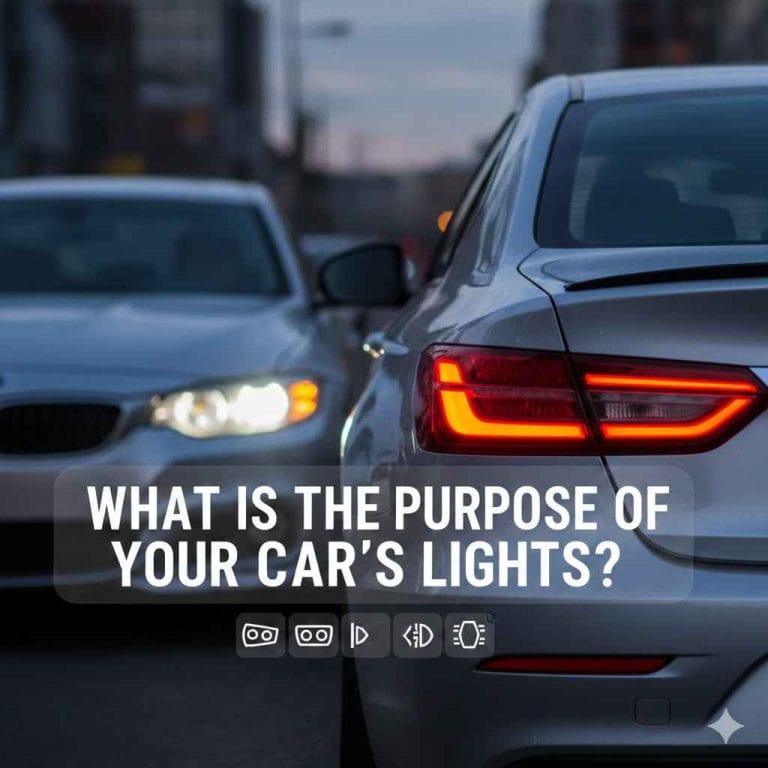
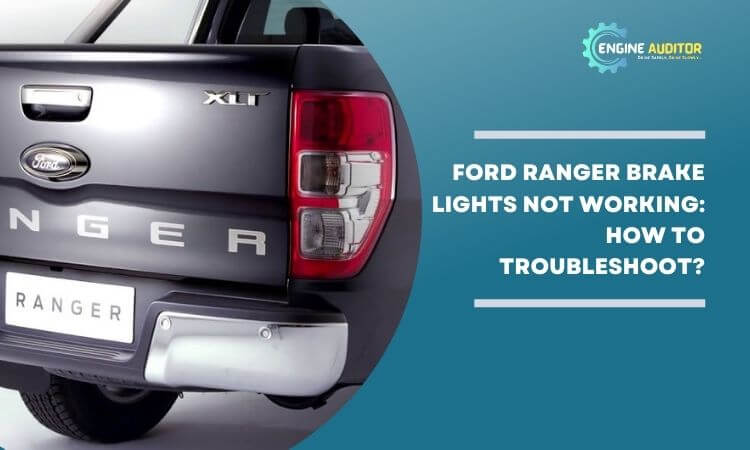
Taillights are the steady red lights at the rear that help other drivers see the vehicle from behind, and they turn on with the headlights. Brake lights are brighter red rear lights that come on when the brake pedal is pressed. On many vehicles, rear turn signals sit in the same housing.
Rear running lights and red rear visibility
Taillights are not the same as brake lights. Taillights glow whenever the headlamps are on, so the car stays visible in darkness and poor weather. They are normally dimmer than brake lights and are meant for presence, not warning.
Why brake lights get brighter
Brake lights must stand out from taillights so following drivers can tell the car is slowing or stopping. That brightness change is the signal. If the rear lights stay dim even while the brake pedal is pressed, the issue may be a bad bulb, LED module, wiring fault, or a failed lamp circuit.
How rear turn signals may sit inside the same cluster
Many rear clusters combine taillight, brake light, and rear turn signal functions. That layout saves space, but it can hide a fault. A turn signal may flash normally while the brake section in the same cluster is dead, so check each function separately from outside the car.
Picture a sedan with one rear cluster that includes a red running light, a brighter brake segment, and an amber or red blinker. A quick walk-around at night shows whether each section is doing the right job. In daylight, the brake light may be harder to judge, so a helper or a reflective surface helps.
Which car lights come on automatically when I start the vehicle?
Daytime running lights usually come on automatically when the car starts or shifts into drive. They are dimmer than headlights and are used for daytime visibility, not full road illumination. On some cars, other lights such as auto headlamps may also activate based on the lighting control setting.
Daytime running lights and what they are for
DRLs are front-facing lights designed to make the vehicle easier to notice in daylight. They do not replace headlights at night. If the car relies on automatic lighting, the headlamps should still come on when conditions get dark enough, but that behavior depends on the vehicle.
Automatic lighting logic versus driver-controlled lighting
Some vehicles turn on only DRLs at startup. Others may also activate side markers or parking lamps depending on the switch position. Older cars often require the driver to move the stalk or dash knob manually. Newer LED-equipped vehicles may also use separate modules for DRL and headlamp operation.
What to expect on newer cars versus older cars
Modern vehicles are more likely to blend functions across modules, while older halogen cars often have a simpler bulb-per-function layout. That matters during inspection. If one side is dimmer on a newer LED car, the problem may be a module fault rather than a single replaceable bulb.
What are fog lights used for on a car?
Fog lights are low-mounted front lamps used in fog, heavy rain, snow, or spray when normal headlights may reflect back toward the driver. They sit low on the front of the car and are usually controlled by a lens or wavy-line icon on the switch or stalk.
Fog lights: low mounting and poor-weather use
The low position helps aim light beneath glare and near the road surface. That makes fog lights useful when visibility is poor, but not as a general night-driving aid. If they are used in clear weather, they can add glare without adding real benefit.
Side marker lights: amber front and red rear
Side marker lights help other drivers judge the vehicle’s width and length from the side. They are amber at the front and red at the back. On many cars, they turn on with the headlights, though the exact behavior varies by market and model year.
Identification lamps on wide vehicles
Identification lamps are amber lamps mounted high on the roof or top-front area of wide vehicles. They are required on vehicles over 80 inches wide. You will see them more often on large trucks and buses than on a standard sedan.
How turn signals fit into the exterior light layout
Turn signals tell other road users where the vehicle is going. The driver moves the steering-column stalk up for right and down for left, and the lamps blink to signal a turn or lane change. The front and rear signals are often integrated into the same light assemblies as other lamps.
Left and right stalk actions
The stalk direction is simple, but the result can be easy to miss if a bulb has failed. A front signal may flash while the rear one on the same side is dark, or the reverse. That is why a walk-around check matters after any bulb replacement or electrical repair.
Blinking pattern and driver communication
Turn signals communicate intent, not status. A steady light usually points to a fault, while a normal blink suggests the circuit is working. Fast flashing, slow flashing, or a single side that dims can mean a failed bulb, reduced LED output, or a poor connection.
Suppose the left rear signal flashes faster than the right after a bulb change. That often means the car is seeing a load mismatch or a lamp on that side is not drawing power as expected. The outside symptom tells you where to look before opening trim panels.
Driver-facing exterior light map and quick check list
Think of the car in zones: front, side, and rear. On a standard sedan, the front zone includes headlights, DRLs, front turn signals, fog lights, and front side markers. The side zone includes side marker lights and mirror or fender repeaters on some vehicles. The rear zone includes taillights, brake lights, rear turn signals, and often reverse lights.
Front, side, and rear light positions on a standard sedan
| Vehicle area | Common lights | Normal job | What you should see from outside |
|---|---|---|---|
| Front | Headlights, DRLs, fog lights, front turn signals, front side markers | Road illumination and front visibility | White or amber light at the corners and lamp centerline |
| Side | Side marker lights, repeater signals on some vehicles | Side profile visibility | Amber in front, red near the rear |
| Rear | Taillights, brake lights, rear turn signals, reverse lights | Rear visibility and signaling | Red running lights, brighter brake lamps, blinking turn signals |
What should happen when parked, at night, braking, and signaling
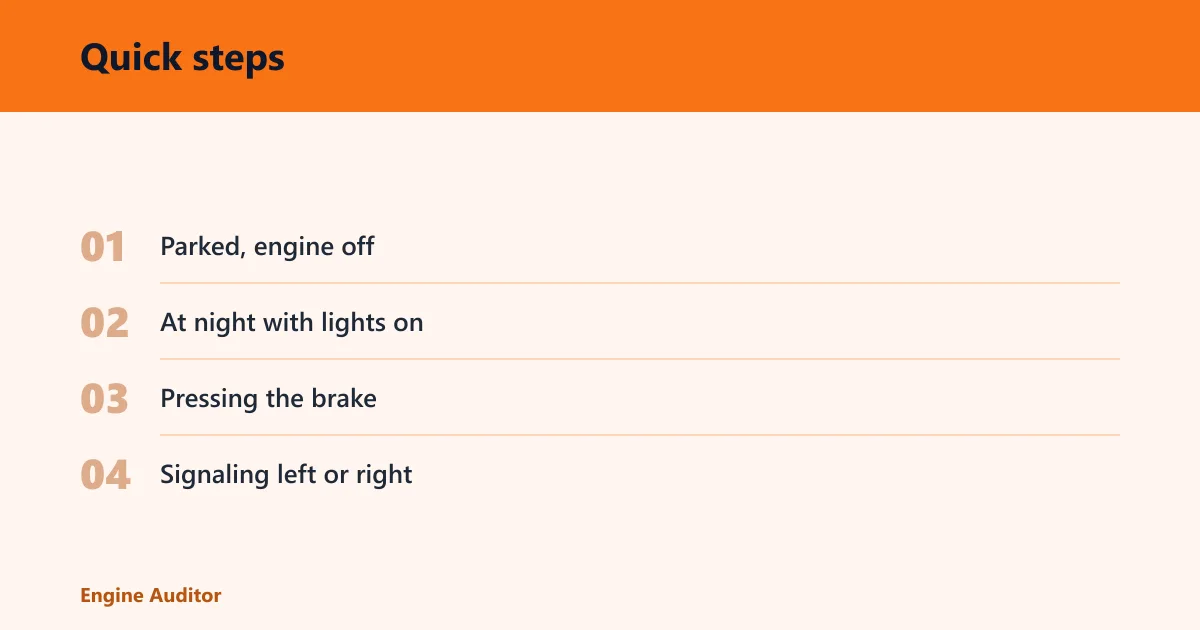
- Parked, engine off: No running lights unless parking lamps are switched on.
- At night with lights on: Headlights and taillights should be on together; side markers often light too.
- Pressing the brake: Rear brake lights should brighten immediately above taillight level.
- Signaling left or right: Front and rear lamps on that side should blink in sync.
Simple outside-the-car checks in daylight and after dark
In daylight, look for cracks, condensation, uneven lens color, and one side that appears dimmer than the other. After dark, check the light spread on a wall or garage door, then walk around the vehicle to confirm each lamp functions separately. A helper makes brake and reverse checks easier.
Common failure symptoms: dimming, flicker, and partial outages
One-side dimming often points to a failing bulb, corroded connector, or weak ground. Flicker can suggest a loose connection or module issue. Partial cluster outages are common on combined rear lights, where one section still works and another does not. That pattern helps separate a bulb fault from a housing or wiring problem.
Frequently asked questions
What is the difference between headlights, taillights, and brake lights?
Headlights light the road ahead. Taillights glow red at the rear whenever the headlamps are on, so the car is visible from behind. Brake lights are brighter rear lights that come on when the brake pedal is pressed, warning drivers that the vehicle is slowing or stopping.
When should I use low beams versus high beams?
Use low beams for normal night driving and poor visibility. They typically illuminate 200 to 300 feet ahead. High beams can reach as far as 500 feet, but they should be switched off when oncoming traffic is present or when you are following another vehicle closely.
What are daytime running lights and do they stay on all the time?
Daytime running lights are front lights that turn on automatically when the car starts or shifts into drive. They are dimmer than headlights and help with daytime visibility. They do not replace headlights at night, and their exact behavior depends on the vehicle’s lighting logic.
How do turn signals fit into the taillight assembly?
Many cars place the rear turn signal inside the same taillight housing as the taillight and brake light. That means one lens can contain several separate functions. If a signal flashes but the brake section in the same cluster stays dark, the fault may be isolated to that segment.
Why are some rear lights brighter when I press the brake?
Those are brake lights. They are designed to be brighter than taillights so following drivers can instantly tell that the vehicle is slowing or stopping. If the brightness does not change when the pedal is pressed, check the bulb, LED module, connector, or brake-light switch circuit.
Products related to this article
Sponsored / affiliate links. As an Amazon Associate I earn from qualifying purchases. I may earn additional commission from eligible campaigns.