Car Headlight Not Working On One Side? Here’S The Fix
When one headlight goes out, it can be confusing. You might wonder if it’s a simple fix or something more serious. There are several reasons why a single headlight might stop working.
Understanding these common causes is the first step to getting your car back to normal. We’ll explore these reasons in detail.
The most common reasons one car headlight isn’t working are a burnt-out bulb, a blown fuse, or an issue with the wiring. Sometimes, the problem can be a faulty headlight switch or even a problem with the car’s computer system.
Let’s dive into what could be causing this issue for your car. It’s usually something that can be fixed with a little patience and the right knowledge. We’ll break down each possibility so you can figure out what’s going on with your car’s light.
Understanding Headlight Systems
Your car’s headlights are crucial for safe driving. They light up the road ahead. They also make your car visible to others.

TIRARP
TIRARP H11 Headlight Bulbs, 2Pcs 12V 55W…
- ⭐【Super Bright H11 Bulbs】Our H11 headlight bulbs deliver over 1000LM brightness and a 3800K color temperature, ensuring optimal vi…
- ⚡【Long-Lasting】With a lifespan of up to 1000 hours—twice as long as standard OEM bulbs—our H11 halogen bulbs won’t trigger CANBus…
- 💎【Easy Installation & Durable Design】These H11 headlight bulbs feature hassle-free, plug-and-play installation—simply follow the i…
As an Amazon Associate I earn from qualifying purchases.
The system involves several parts working together. There’s the bulb itself. There’s also a fuse that protects the circuit.
Wiring connects everything. A switch turns the lights on and off.
Modern cars have complex electrical systems. This means more things can go wrong. But for a single headlight issue, the causes are often quite straightforward.
Knowing how the basic system works helps you understand the problem. It also helps you know what to look for.
The headlight bulb is the part that makes the light. It has a filament inside. When electricity flows through the filament, it gets hot and glows.
This is what produces light. Bulbs don’t last forever. They burn out over time.
This is one of the most frequent reasons for a single headlight failing.
The fuse is like a safety guard for the electrical circuit. Each headlight usually has its own fuse, or they might share a fuse with other lights. If there’s a surge of electricity, the fuse blows.
This stops the flow of power and protects the rest of the system. A blown fuse means no power gets to the bulb.
Wiring connects the battery, the fuse, the switch, and the headlight bulb. If there’s a break in the wire or a loose connection, the bulb won’t get power. Corrosion on the connectors can also block the electricity.
This is less common than a bulb failure but can happen.
The headlight switch on your dashboard tells the car’s computer when to turn the headlights on. If this switch malfunctions, it might not send the signal to one of the headlights. This is a less common but possible cause for a single headlight outage.

My Own Headlight Scare
I remember one chilly evening, just as dusk was settling in, I was on my way home from a client meeting. The city streets were starting to glow with streetlights, but I always rely on my headlights. As I pulled away from a stop sign, I glanced at my car’s dash and then ahead.
Something felt off. My trusty sedan had two eyes, but only one was shining brightly. My heart sank a little.
I immediately thought, “Great, now what?”
I pulled over safely into a well-lit parking lot. My mind raced through the possibilities. Was it just a bulb?
Or was this something more complicated, meaning a trip to the mechanic and a hefty bill? I felt a pang of worry, not just about the cost, but about driving home. The road ahead seemed much darker with only one beam of light guiding me.
It made me feel vulnerable. I remembered a similar situation my friend had last year, where it was a simple fix. That gave me a sliver of hope.
I took a deep breath and decided to investigate before calling for help.
Common Culprit #1: The Burnt-Out Bulb
This is by far the most common reason one headlight stops working. Think of your headlight bulbs like light bulbs in your house. They have a limited lifespan.
Over time, the filament inside them degrades and eventually breaks. When that happens, the bulb can no longer light up.
Signs of a burnt-out bulb:
- The light simply goes out.
- Sometimes, you might notice the light flickering before it goes out completely.
- If your car has an indicator light on the dashboard for a burnt-out bulb, it might light up.
What kind of bulbs?
Cars use different types of bulbs. The most common are halogen bulbs. These are like traditional incandescent bulbs.
Newer cars often use HID (High-Intensity Discharge) bulbs or LED (Light Emitting Diode) bulbs. LED and HID bulbs tend to last much longer than halogen bulbs. But even they can fail.
Replacing a halogen bulb is usually a DIY job for most car owners. You can often find the replacement bulb at an auto parts store. The process involves opening the hood and locating the headlight assembly.
Then, you’ll need to disconnect the old bulb and install the new one. Instructions are usually found in your car’s owner’s manual.
HID and LED bulbs can be more complex and expensive to replace. Sometimes, the entire headlight unit might need to be replaced if an LED fails. It’s important to know what type of bulb your car uses before you buy a replacement.
Experience check: I’ve changed more halogen bulbs than I can count on my old cars. It’s a satisfying feeling when you fix it yourself. You save money and learn a bit more about your car.
The trick is often finding the right bulb type. My old Honda Civic used a specific H4 bulb. The owner’s manual was my best friend for that.
Headlight Bulb Types: A Quick Look
Halogen: Most common, least expensive, shorter lifespan.
HID (Xenon): Brighter, longer lasting, more expensive. Require ballast.
LED: Very long life, energy efficient, can be integrated into headlight units.
Common Culprit #2: The Blown Fuse
Every electrical component in your car has a fuse to protect it. The headlight system is no different. Your car’s fuse box usually has multiple fuses for different systems.
Each headlight might have its own fuse, or they might share a fuse. Sometimes, the low beam and high beam have separate fuses.
Why fuses blow:
- A power surge can cause a fuse to blow.
- A short circuit in the wiring can overload the fuse.
- Sometimes, a faulty bulb can draw too much power, blowing the fuse.
How to check a fuse:
Your car’s owner’s manual will show you where the fuse boxes are. There’s usually one under the dashboard and one in the engine bay. The manual will also have a diagram of the fuse box.
It will label each fuse and what it controls. You’ll need to find the fuse(s) for your headlights.
You can often tell if a fuse is blown by looking at it. Most fuses have a small metal wire inside. If this wire is broken or melted, the fuse is blown.
You can also use a fuse tester tool, which is very accurate. Or, you can swap a suspected blown fuse with a known good fuse of the same amperage rating from a non-critical system (like the radio fuse, if it’s the same rating).
Replacing a fuse:
If you find a blown fuse, you need to
Experience check: I once had a taillight go out. It turned out to be a blown fuse. The fuse box was a bit tricky to get to, tucked under the steering wheel.
I had to get down on the floor to see it clearly. But once I found the right fuse and
Fuse Box Basics
Location: Usually under the dashboard or in the engine compartment.
Diagram: Your owner’s manual shows which fuse is which.
Checking: Look for a broken wire inside the fuse. A tester is best.
Replacement: Always use the same amperage rating.
Common Culprit #3: Wiring and Connection Issues
The wires that carry electricity to your headlights can sometimes have problems. This is less common than a burnt-out bulb or a blown fuse, but it does happen.
What can go wrong with wiring?
- Corrosion: The connectors where the wires attach to the bulb or the car’s harness can corrode. This is especially true in areas with high humidity or road salt. Corrosion creates resistance, preventing electricity from flowing properly.
- Loose connections: Wires can become loose over time. This can be due to vibrations from driving. A loose connection means the electrical signal is interrupted.
- Damaged wires: Wires can be chewed by rodents. They can also be rubbed raw by parts of the car’s body or engine. This can cause short circuits or breaks in the wire.
How to check wiring:
This can be trickier to diagnose. You’ll need to visually inspect the wiring harness connected to the headlight assembly. Look for any signs of damage, fraying, or corrosion.
Check that the connectors are securely plugged in.
If you suspect a wiring issue, it might be best to consult a mechanic. They have the tools and expertise to test the voltage at different points in the circuit. They can pinpoint exactly where the problem lies.
Experience check: I had a friend whose car had a constant electrical gremlin. It turned out that a bundle of wires running near the wheel well had been rubbing against the tire. Over time, it had worn through the insulation on a few wires, causing all sorts of weird issues, including one headlight that would randomly go out.
It required some careful splicing and re-wrapping to fix.
Wiring Inspection Checklist
Visual Check: Look for obvious damage.
Corrosion: Inspect connectors for a greenish or whitish powder.
Security: Make sure all connections are tight.
Rodent Damage: Check for gnaw marks.
Less Common but Possible Causes
While bulbs, fuses, and wiring are the most frequent culprits, other issues can also cause a single headlight to fail.
Faulty Headlight Switch or Relay
The switch you use to turn on your headlights sends a signal to the car’s system. If this switch is faulty, it might not be sending the correct signal to one of the headlights. Similarly, relays are electrical switches that use a low-current signal to control a high-current circuit, like your headlights.
A faulty relay can prevent power from reaching one headlight.
Diagnosing these requires more specialized knowledge and testing equipment. Often, this is a job for a professional mechanic.
Computer System Glitches
Modern cars have computers that control many functions, including lighting. Sometimes, a glitch in the car’s body control module (BCM) or another computer can cause a headlight to turn off. These are often temporary issues that might resolve themselves after the car is turned off and restarted.
If this is a recurring problem, it will likely need to be diagnosed by a dealership or a mechanic with advanced diagnostic tools.
Experience check: My neighbor’s luxury car had a similar issue. One of his LED headlights wouldn’t turn on. He took it to the dealership, and they told him it was a software issue with the car’s main computer.
They had to perform an update. It was a bit baffling to me that software could affect a headlight, but that’s how complex cars are getting.
Damaged Headlight Assembly
While unlikely to cause just one bulb to fail, a severely damaged headlight assembly could have internal wiring issues that lead to a light outage. If you’ve recently been in a minor collision or hit a large pothole, this could be a possibility.
When Is It Just a Bulb and When Should You Worry?
Most of the time, a single headlight going out is a simple fix. It’s usually the bulb. This is because bulbs have a finite lifespan.
They are designed to burn out eventually.
When it’s likely just the bulb:
- The light just stopped working suddenly.
- The other headlight is working fine.
- There are no other electrical issues in the car.
When to worry or seek professional help:
- Multiple lights are out: If you have both headlights out, or several other lights on the car are also not working, it points to a larger electrical problem, like a blown main fuse or a wiring issue.
- Flickering or dimming: If the light flickers or is very dim before going out, it could still be a bulb, but it could also be a sign of a failing connection or alternator problem.
- Smell of burning: If you smell burning plastic or electrical components, turn off the car immediately and do not drive it. This indicates a serious electrical fault.
- Other electrical problems: If your radio, power windows, or dashboard lights are also acting strange, it suggests a general electrical system issue.
- You’re not comfortable: If you’re not comfortable working on cars or can’t identify the problem, it’s always safest to take it to a qualified mechanic.
Real-world context: In places like California or Arizona, where it’s sunny year-round, the wear and tear on headlight bulbs might be different than in Michigan where they are used every day in winter darkness. However, the fundamental causes remain the same.
Simple Checks You Can Do Yourself
Before you panic or rush to a mechanic, there are a few simple checks you can perform right at home.
1. Check the Bulb Type and Condition
The easiest thing to do is to confirm the bulb is the issue. If you can access the back of the headlight assembly, you can often see the bulb. For halogen bulbs, you can sometimes see if the filament is broken.
Many cars have removable dust covers that give you access.
2. Consult Your Owner’s Manual
Your owner’s manual is your best friend for car maintenance. It will tell you:
- The exact type of bulb your car needs.
- Where the fuse box is located.
- Which fuses control the headlights.
- Basic instructions for changing a bulb or fuse.
3. Inspect the Fuse Box
As mentioned before, locate your fuse box. Use the diagram in your manual to find the headlight fuses. Pull out the relevant fuse and check if the wire inside is broken.
If it is,
DIY Headlight Check Steps
Step 1: Identify the bulb type (check manual).
Step 2: Locate fuse box (check manual).
Step 3: Find headlight fuse(s) and inspect.
Step 4:
Step 5: If fuse is okay, check bulb access (if comfortable).
Replacing a Headlight Bulb (If You’re Comfortable)
If you’ve determined it’s likely a burnt-out bulb and you feel up to the task, here’s a general guide. Always refer to your owner’s manual for specific instructions for your car model.
Step 1: Get the Right Bulb
Go to an auto parts store or look online. You need the correct bulb number. For example, it might be a H11, 9006, or H7 bulb.
Your manual will specify.
Step 2: Locate the Headlight Assembly
Open your car’s hood. The headlight assemblies are at the front of the car. You’ll need to access the back of the assembly where the wires connect.
Step 3: Access the Bulb
This varies greatly by car. Some cars have easy access. Others require removing the battery, air filter box, or even the entire headlight assembly.
There might be a plastic cover you need to remove. Gently twist and pull the bulb socket out.
Step 4: Replace the Bulb
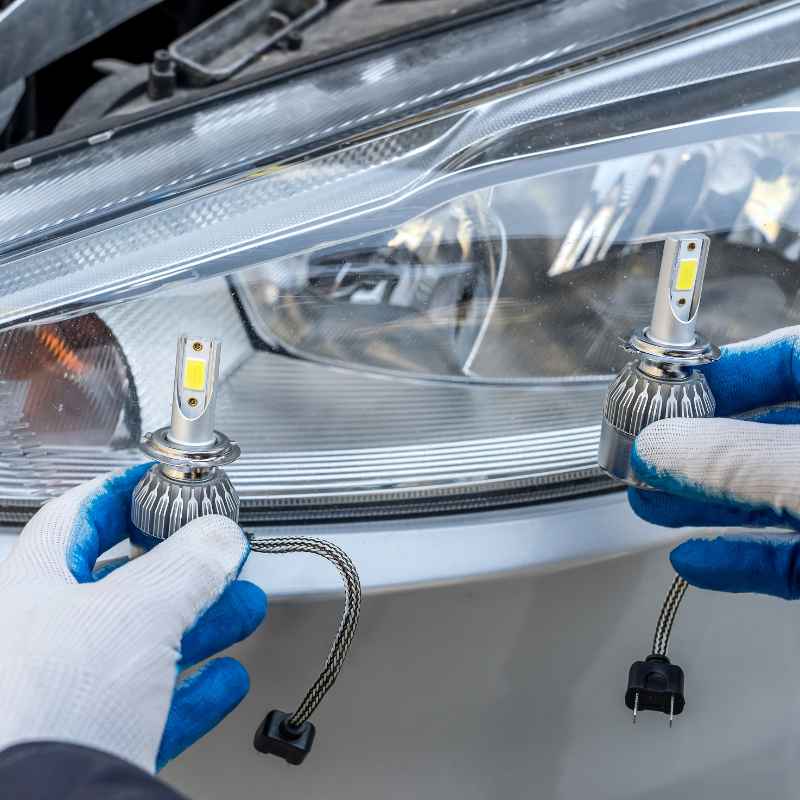
Important: Do NOT touch the glass part of a new halogen bulb with your bare fingers. The oils from your skin can cause hot spots and shorten the bulb’s life. Use a clean cloth or glove.
Carefully insert the new bulb into the socket. Ensure it’s seated correctly.
Step 5: Reconnect and Test
Plug the electrical connector back into the new bulb. Replace any covers you removed. Turn on your headlights to test the new bulb.
If it works, great job!
Experience check: On my old Toyota Camry, changing the headlight bulb was surprisingly easy. I just had to lift a flap at the back of the engine bay and twist a knob. On my current SUV, it’s much tighter quarters.
I had to remove a few clips and maneuver my hand in at a weird angle. It took longer than expected, but it was still doable. Always wear gloves for this step, especially with halogen bulbs!
When to Call a Professional
While many headlight issues are DIY-friendly, there are times when it’s best to seek professional help.
- If you’re unsure: If you can’t identify the problem or aren’t comfortable with the repair, a mechanic can diagnose and fix it quickly.
- Complex systems: If your car has HID or LED headlights, or a very complex electrical system, professional diagnosis is often needed.
- Wiring issues: Diagnosing and repairing wiring problems can be intricate and time-consuming.
- Persistent problems: If you’ve replaced a bulb or fuse and the issue returns, there’s likely a deeper problem that needs expert attention.
- Safety concerns: Headlights are critical for safety. If you have any doubts about your ability to fix the problem correctly, let a pro handle it.
Authoritative source: Consumer Reports often highlights the importance of proper vehicle maintenance and suggests seeking professional help for complex electrical issues to ensure safety and prevent further damage.

Frequently Asked Questions About Car Headlights
What should I do if my car’s headlight goes out while driving at night?
First, stay calm. If possible and safe, pull over to the side of the road. Turn on your hazard lights.
If you can identify it’s just a bulb issue and have a spare, and it’s safe to change it, do so. Otherwise, call for roadside assistance or a tow truck. Do not continue driving with one headlight if it impairs your vision or makes you unsafe.
Can a bad alternator cause a headlight to go out?
Yes, a failing alternator can cause a variety of electrical problems, including dimming or flickering lights, or lights going out completely. The alternator charges your car’s battery and powers the electrical system when the engine is running. If it’s not working correctly, the entire electrical system can be affected.
How often should I replace my headlight bulbs?
Halogen headlight bulbs typically last between 400 and 1,000 hours of use. It’s a good idea to replace them every few years, or when you notice them dimming. For HID and LED lights, they can last much longer, sometimes the life of the car, but they can still fail.
What’s the difference between low beam and high beam headlights?
Low beams are used for normal driving and are aimed downwards to illuminate the road ahead without blinding oncoming drivers. High beams (or ‘brights’) are more powerful and are aimed higher and further down the road, used when there’s no other traffic and you need to see more.
My car has automatic headlights. What happens if one side stops working?
Even with automatic headlights, the underlying system is the same. A burnt-out bulb, blown fuse, or wiring issue can still cause one headlight to go out. The automatic system simply controls when the lights turn on and off based on ambient light conditions.
Is it illegal to drive with one headlight out?
Yes, in most U.S. states and many other countries, it is illegal to drive with a burnt-out headlight. Law enforcement can pull you over and issue a ticket.
It’s also a significant safety risk, as it reduces your visibility to others and your ability to see the road.
Conclusion
Dealing with a car headlight that’s not working on one side can be frustrating. But more often than not, it’s a problem you can solve yourself. By understanding the common causes—burnt-out bulbs, blown fuses, and wiring issues—you can take the right steps.
Always prioritize safety and don’t hesitate to call a professional if you’re unsure.
See also why do car lights stop flashing causes and quick fixes.
Related pick: Check today's price on Amazon See also car lights not working on low beam fix it step by step.