Car Light Symbols Explained: What Each Means
Decode car light symbols in three steps: check color, read the icon shape, then judge the driving context; red means stop or act now, amber means caution and a prompt check, and blue or green usually indicate normal system status. Misreading a dash light can turn a small service issue into a breakdown, engine damage, or a safety risk. This guide explains the common symbol groups and gives fast next steps for everyday drivers.
How to decode color, icon, and context to gauge urgency
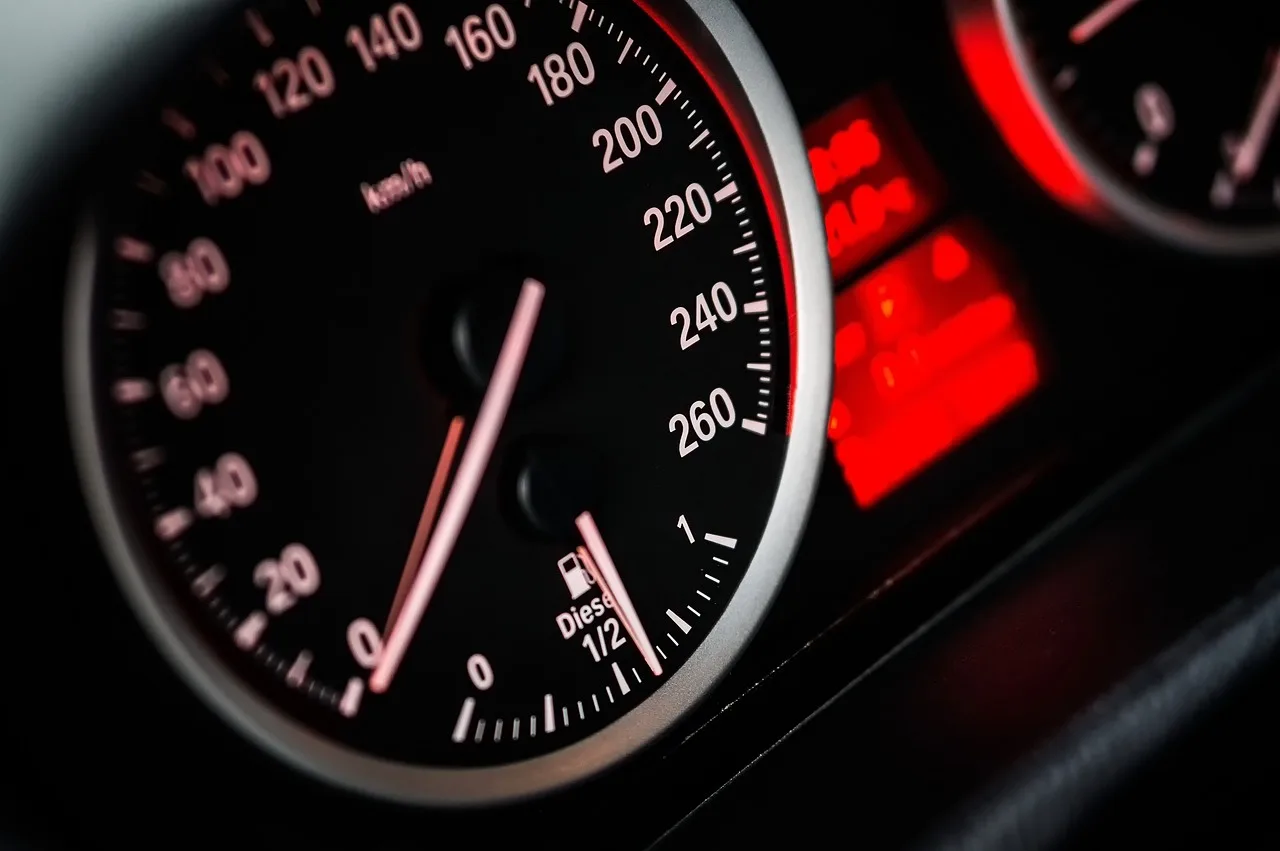
Car light symbols are dashboard indicators that tell you whether a system is active, needs attention, or needs immediate action. The fastest way to read them is to treat color first, icon shape second, and the vehicle’s behavior third. That order separates a normal lighting status from a fault warning in seconds.
Read the color first
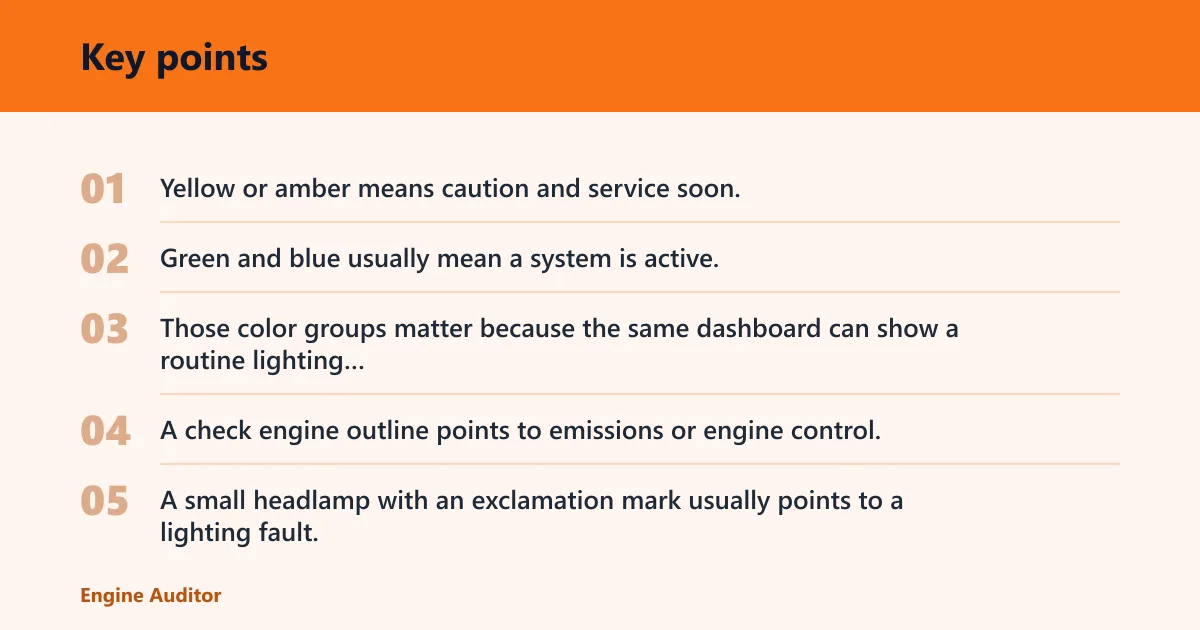
Red means immediate action. Yellow or amber means caution and service soon. Green and blue usually mean a system is active, while white is informational rather than urgent. Those color groups matter because the same dashboard can show a routine lighting indicator and a serious engine warning side by side.
Read the icon shape next
The icon tells you which system is involved. A check engine outline points to emissions or engine control. A battery symbol points to charging. A beam with wavy lines points to fog lights. A small headlamp with an exclamation mark usually points to a lighting fault, often a bulb or circuit issue.
Use the driving context to judge urgency
A symbol means less if you do not pair it with what the vehicle is doing right now. A red oil pressure light at idle is urgent even if the car still sounds smooth. A green headlamp icon on a dark road is normal. A yellow check engine light after a rough fuel fill-up may be less urgent than a red brake warning during braking.
What do the red, yellow and green car light symbols mean?
Red symbols call for immediate action, yellow or amber symbols mean caution and service soon, and green or blue symbols usually show that a function is active. White symbols are informational. That color split is the fastest filter you can use before reading the icon itself.
Red lights that call for immediate action
Red warnings include the brake system warning, engine oil pressure warning, and coolant temperature warning. A red brake light can mean low fluid or hydraulic failure; if it comes on while driving, pull over immediately. A red oil pressure light means shut the engine off at once. A red temperature warning means the engine may be overheating.
Yellow or amber lights that need caution
Amber lights often mean the vehicle still moves, but something needs attention soon. The malfunction indicator lamp is the best-known example. The battery charging light can appear amber or red on some vehicles, and it may point to alternator, belt, or battery trouble. Do not assume every amber light is equal.
Green, blue and white lights that are informational
Green and blue lights usually show that a system is active, not failing. The high beam indicator is often blue. Daytime running lights are usually white or green depending on the dash design, and they show that low-intensity lights are on. White symbols are informational and usually not urgent warnings.
Which warning lights mean stop now?
The main stop-now lights are the oil pressure warning, brake system warning, coolant temperature warning, and in many cases a severe battery charging fault. Those signals point to damage or loss of braking, cooling, or lubrication. If a red warning appears while driving, your next move is to get the vehicle safely out of traffic.
Oil pressure warning
An engine oil pressure warning means oil pressure is too low. Shut the engine off immediately. Low oil pressure can destroy an engine quickly, so this is not a “keep going and see” light. If the warning appears after a hard turn, braking, or climbing a hill, do not assume it is harmless.
Brake system warning
A brake system warning can mean low brake fluid, worn pads, or hydraulic failure. Check whether the parking brake is still engaged first. If it is not the parking brake and the warning stays on while you drive, pull over immediately. A brake fault can change pedal feel fast and can reduce stopping power.
Coolant temperature warning
A coolant temperature warning means the engine may be overheating. Pull over, shut down, and let the engine cool before opening anything in the cooling system. The guide says to wait at least 20 minutes before checking coolant. Never open a hot radiator cap; pressure can cause burns.
Battery charging warning
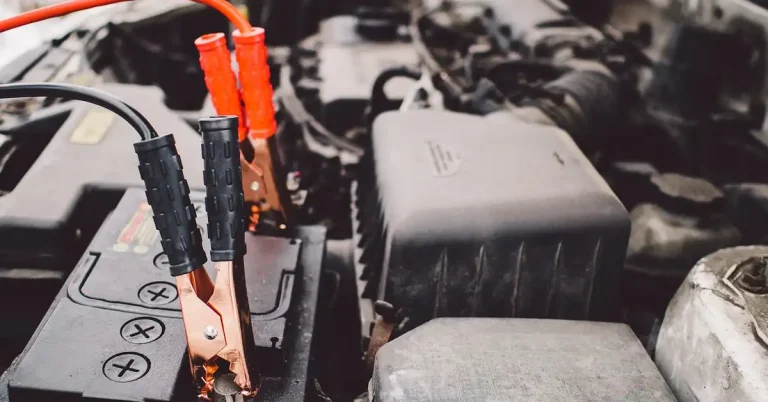
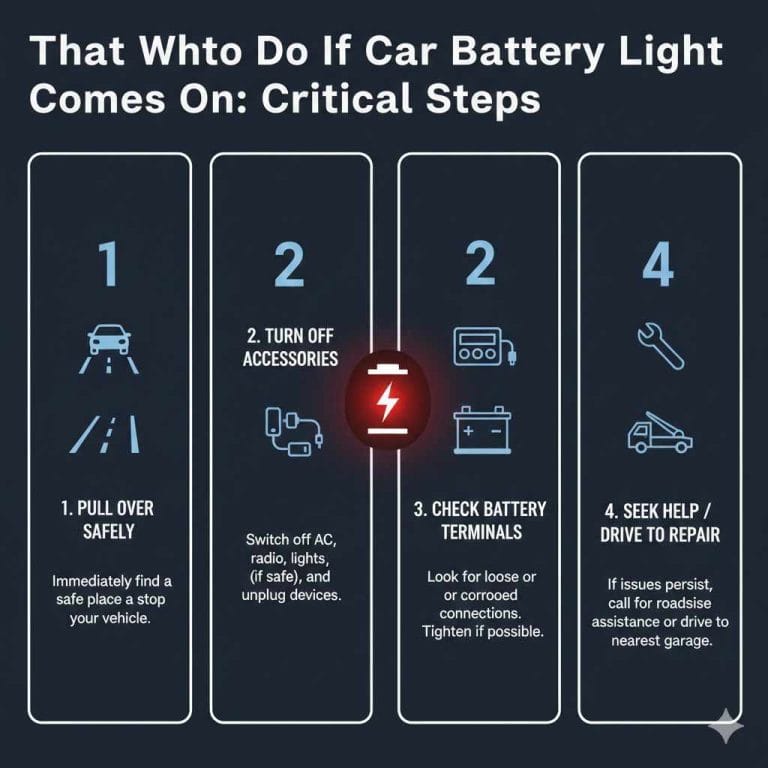
The battery charging warning points to a charging system fault, often an alternator issue, a loose belt, or a dead battery. If the engine is already running and the warning stays on, the vehicle may continue only for a short distance before voltage drops further. Turn off nonessential electrical loads and head for a safe stop.
Why is my check engine light on but the car seems fine?
A check engine light can come on even when the car still drives normally because the problem may be small at first, or the fault may affect emissions rather than immediate drivability. A loose gas cap is a common cause. A flashing light is more serious than a solid light.
Solid versus flashing
A solid check engine light usually means the vehicle has stored a fault and should be checked soon. A flashing check engine light is often treated differently; it can indicate a misfire that may damage the catalytic converter. That is not a light to ignore just because the car still moves.
Loose gas cap, misfire and catalyst risk
A loose or poorly sealed gas cap can trigger a check engine light after refueling. Tighten it until it clicks, then allow time for the system to recheck. If the light flashes, a misfire becomes a stronger concern, and continued driving can overheat or damage the catalytic converter.
Say your sedan starts normally, idles smoothly, and shows a solid check engine light after a fuel stop. Tightening the gas cap may solve it. Suppose the same car later begins to shake at idle and the check engine light flashes; that combination needs faster attention because a misfire can cause converter damage.
What to do if the car still feels normal
If the car still drives normally and the check engine light is solid, reduce heavy loads and book service soon. If the light flashes, slow down and stop driving as soon as it is safe. Normal-feeling driving does not cancel a fault code, and it does not rule out a worsening problem.
Exterior light symbols
Exterior lighting symbols are not the same as fault warnings. Some show that headlights, fog lights, or daytime running lights are on. Others, like a headlamp icon with an exclamation mark, warn of a lighting failure. Reading the icon shape is the only reliable way to tell the difference.
High beam symbol
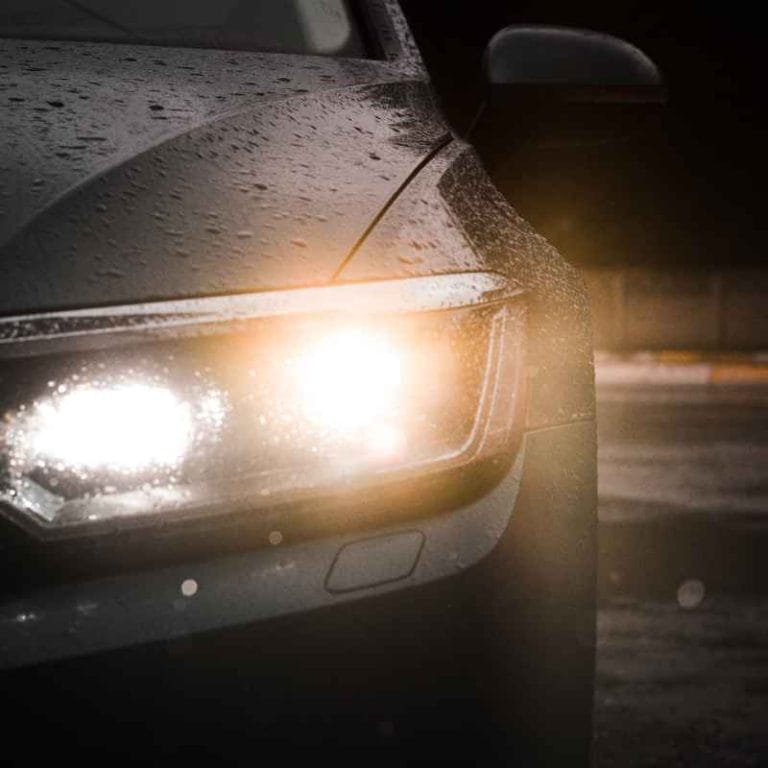
The high beam symbol is an upward-pointing light beam icon. It tells you the high beams are on. Turn them off when approaching oncoming vehicles or following traffic. High beams can reduce visibility for other drivers even when the road ahead feels dark to you.
Fog light symbol
The fog light symbol uses a beam icon with wavy lines below it. Front fog and rear fog symbols can differ slightly by vehicle, but both are generally used for fog lamps rather than a fault warning. Use them only in low-visibility conditions such as heavy fog, not as everyday driving lights.
Daytime running lights
Daytime running lights are low-intensity lights that automatically turn on when the vehicle is started. They help the car be seen in daytime conditions, but they are not full headlights. If visibility drops enough that you need real headlight output, DRL is not enough on its own.
Headlight fault symbol
A headlight warning symbol may show a headlamp icon with an exclamation mark. That often points to a burned-out bulb or a headlight circuit fault. The lights may still work on one side, but the warning means the system has detected a problem that deserves a quick check.
A common first-timer mistake is to see a blue high beam icon and assume it is a warning. It is usually only a status light. The real warning is the headlight symbol with an exclamation mark, which points to a bulb or circuit fault rather than a driving mode.
Light symbols quick table
Use this quick decoder when more than one symbol appears. Read the color first, then match the icon, then decide whether the vehicle can be driven safely or should be stopped. If two lights conflict, trust the more urgent color and the safety-related system.
| Icon description | Color | Urgency | Likely cause | First safe action |
|---|---|---|---|---|
| Check engine outline | Yellow/amber | Caution | Loose gas cap, sensor fault, misfire | Check the gas cap; book service soon |
| Check engine outline flashing | Yellow/amber | High urgency | Misfire, catalytic converter risk | Slow down and stop driving when safe |
| Battery symbol | Red or amber | Urgent | Alternator, belt, or battery fault | Reduce electrical load and head to a safe stop |
| Oil can symbol | Red | Stop now | Oil pressure too low | Shut the engine off immediately |
| Thermometer or heat waves | Red | Stop now | Engine overheating | Pull over and let it cool |
| Brake circle with exclamation mark | Red | Stop now | Parking brake engaged, low fluid, hydraulic failure | Check the parking brake; if still on, stop driving |
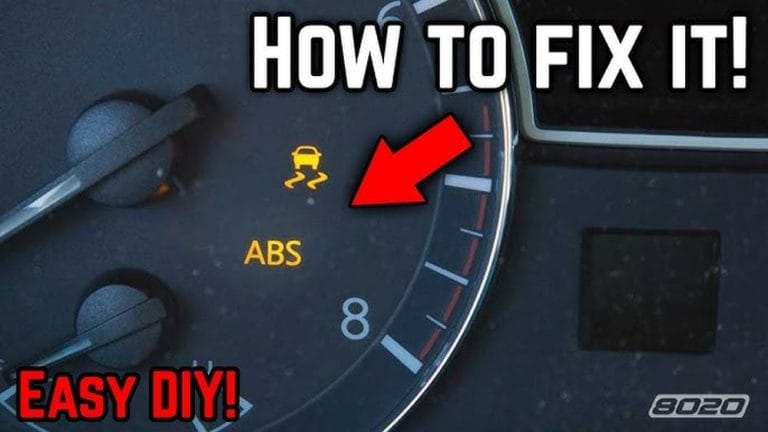
| ABS circle | Yellow/amber | Caution | Anti-lock brake fault | Drive carefully and service soon |
| Upward beam icon | Blue | Informational | High beams active | Turn off for oncoming or following traffic |
| Beam with wavy lines below | Green or amber | Informational | Fog lights active | Use only in low visibility |
| Headlight with exclamation mark | Yellow/amber | Caution | Burned-out bulb, circuit fault | Inspect lamps and wiring soon |
| Headlights with “A” or auto symbol | White | Informational | Automatic headlight mode | Confirm the lamps match road conditions |
| DRL icon | White or green | Informational | Daytime running lights active | Use full headlights if visibility drops |
| Washer fluid icon | Yellow/amber | Caution | Low washer fluid | Top up soon |
| Tire pressure symbol | Yellow/amber | Caution | Low tire pressure or TPMS fault | Check tires visually and set pressures correctly |
| Airbag symbol | Red or amber | Urgent | Supplemental restraint fault | Get the vehicle inspected soon |
What to do in the next 60 seconds
- Look at the color first. Red means immediate action.
- Identify the icon shape. Oil, brake, battery, heat, beam, or engine?
- Check whether the symbol is a warning or a normal light-mode indicator.
- If the brake warning is on, confirm the parking brake is fully released.
- If the oil pressure light is on, shut the engine off at once.
- If the temperature warning is on, pull over and let the engine cool.
- If the battery charging light is on, switch off nonessential electrical loads.
- If the check engine light is flashing, avoid further driving if possible.
- If several lights appear after startup, see whether they clear after the self-check.
- Check the owner’s manual for the exact symbol if the icon is unfamiliar.
Are car light symbols the same on every car?
No. Most manufacturers use the same basic color logic and many of the same icon shapes, but symbols still vary by make and model. A check engine light, oil light, or high beam indicator may look slightly different, and some vehicles add extra icons for trims, lighting packages, or driver-assist systems.
Common patterns across makes
Red still means urgent, amber still means caution, and green or blue still usually mean active status. Oil, battery, brake, temperature, fog light, and high beam icons also follow familiar patterns. That consistency is why quick recognition works, even when the exact drawing changes.
Where variation usually appears
Variation shows up in the details: a headlamp outline, an exclamation point, a curved beam, or a small text label may differ. Some cars use white informational icons more often than others. Hybrid and electric models may also add symbols for battery or charging systems that do not appear on older cars.
Why the owner’s manual still matters
The manual is still the final check for a symbol you do not recognize. It tells you whether a light is a warning, a status indicator, or a vehicle-specific reminder. Use the manual after you have already sorted the color, icon shape, and driving context, not before.
Frequently asked questions
What do car light symbols mean?
Car light symbols tell you whether a system is active, needs attention, or needs immediate action. Start with the color, then read the icon shape, then judge the driving context. That order helps you separate a normal lighting indicator from a warning that needs a stop or service.
Which dashboard warning lights mean stop driving immediately?
The oil pressure warning, brake system warning, and coolant temperature warning are the clearest stop-now lights. A flashing check engine light also deserves urgent attention because it can signal a misfire and converter damage. If a red warning stays on, pull over safely instead of trying to finish the trip.
What does the headlight symbol with an exclamation mark mean?
That symbol usually points to a lighting fault, often a burned-out bulb or a headlight circuit problem. It is different from a high beam indicator. The car may still have light on one side, but the warning means you should inspect the lamps and wiring soon.
What does the DRL light mean on my dashboard?
DRL means daytime running lights are on. They turn on automatically when the vehicle starts and help the car be seen in daytime conditions. They are not full headlights, so they do not replace low beams when visibility drops, such as at dusk, in rain, or in fog.
Products related to this article
Sponsored / affiliate links. As an Amazon Associate I earn from qualifying purchases. I may earn additional commission from eligible campaigns.