Projector headlights vs reflector headlights: differences
Projector headlights tend to make a tighter cutoff and often throw less glare; reflector housings are usually simpler and cheaper, but the beam is broader and can be more sensitive to bulb choice. I pick projector units for dark roads or for an LED or HID upgrade done correctly. Wrong housing choice can waste money, blind other drivers, and still leave you struggling to see rain-slick pavement.
This guide is part of our Car lights guide: types, meanings and fixes series.
Projector headlights vs reflector headlights: the real trade-off
The core trade-off is beam control versus simplicity. Projectors put light where the driver needs it, with less stray glare; reflectors cost less and are easier to live with, but they depend more on the bulb and aim being right.
| Decision factor | Projector headlights | Reflector headlights: key differences | Winner |
|---|---|---|---|
| Beam control | Sharp cutoff, focused beam pattern, better light control | Wider but less controlled spread, more open projection | Projector headlights |
| Glare control | Usually reduced glare when optics and aim are correct | More glare risk, especially with the wrong bulb type | Projector headlights |
| Replacement cost | Higher cost, more complex construction | Lower cost, simpler design | Reflector headlights |
| Bulb upgrade tolerance | Can adopt halogen, HID, and LED bulbs, but only when the housing is designed for them | Best with halogen bulbs; LED swaps often scatter light if the housing was not designed for them | Projector headlights |
| Alignment ease | More sensitive to aim, cutoff height, and housing condition | Usually easier to set, though still depends on correct installation | Reflector headlights |
Beam control
Projector headlamps use a reflector component plus a clear lens to focus light, and that optics package produces a sharp, more controlled light beam. Reflector headlights use a bulb and a parabolic-shaped reflector, so the beam tends to spread wider with less precise edge control.
That difference matters most on real roads. A controlled cutoff keeps light on the lane and out of oncoming traffic, while a looser beam can waste light above the horizon or across the shoulders.
Glare control
Projector headlights usually reduce glare better because a shutter or cutoff shield makes a sharp cutoff and sends light downward. That is the main reason I prefer them in heavy traffic or when I do not want to flood other lanes.
Reflector headlights can create glare and blind oncoming drivers if the bulb, aim, or housing shape is off. The housing is simple, but that simplicity does not protect anyone from a bad beam pattern.
Replacement cost
Reflector headlights are lower cost than projectors, and that shows up in both the assembly price and the replacement process. They are also an older vehicle headlight technology, which keeps parts common on older and budget vehicles.
Projector headlights are more complex construction, so the bill usually rises when the lens, shutter, bowl, or seal has to be replaced as an assembly rather than as one small component.
How projector headlights work
Projector headlights use a reflector bowl, a clear front lens, and a cutoff shield or shutter to help form a focused beam. Light from the bulb is collected, shaped, and pushed through the lens in a way that makes the beam pattern tighter and easier to aim.
Clear lens, reflector bowl, and focal point
The lens is not decorative. It helps shape the beam leaving the housing, while the reflector bowl geometry places the light at the correct focal point so the output stays concentrated instead of spraying everywhere.
That is why projector headlamps are described as a reflector component plus a clear lens, rather than just a bulb in a shell.
Cutoff shield or shutter
A projector headlight uses a shutter or cutoff shield. The shutter makes a sharp cutoff to avoid blinding other drivers and to keep the beam aimed lower on the road surface where it can help the driver most.
This cutoff also reduces wasted foreground glare. Too much light right in front of the hood can make distant objects harder to read, especially in rain.
Why projectors often pair with HID or LED bulbs
Projector headlights are listed with LED or HID as best bulb types because the housing can manage a brighter source more cleanly when the optics are matched to it. Projector headlamps can adopt halogen, HID, and LED bulbs, but that only works well when the fitment is correct.
A bulb swap is not a free upgrade. If the light source does not sit where the reflector bowl expects it, the cutoff gets messy and the road output can get worse.

How reflector headlights work
Reflector headlights use a bulb and a parabolic-shaped reflector to project light forward. The design is simpler, the parts count is lower, and the beam usually spreads wider with less control than a projector setup.
Parabolic reflector bowl and open beam projection
The reflector bowl in reflector headlights is a hollow hemisphere shape, and the light is bounced outward without a dedicated shutter. That makes the housing easy to build and cheap to replace, but it gives the beam less precision.
Reflector headlamps have two main components, and that simplicity is part of the reason they remain common.
Why the beam is wider but less controlled
The wider spread can help fill in the sides of the road, but it also makes glare control harder. When the beam is not tightly cut off, more light can leak upward or scatter into other drivers’ eyes.
On clean, dry pavement, that can still look bright. In real traffic, it is the control of the beam that matters more than the raw glow.
Why this design is common on older and budget vehicles
Reflector headlights are described as older vehicle headlight technology, and they stayed popular because they are cheaper to make and cheaper to replace. For many cars, the price and simplicity fit the vehicle’s intended market better than a more complex projector assembly.
That does not make them bad. It makes them a practical choice when cost and serviceability matter more than precision optics.
Which one gives better night visibility?
Projector headlights usually deliver better night visibility when the housing is intact and aimed properly, because the focused beam pattern puts more usable light on the road. Reflector headlights can still light the road well, but the wider beam is less controlled and more sensitive to bulb choice and alignment.
Dry roads
On dry pavement, a projector’s sharp cutoff often makes lane markings, signs, and distant hazards easier to separate from the background. The beam stays organized, so more of the output reaches the area the driver actually scans.
Reflectors can seem bright at first glance, but brightness alone is not the same as useful road illumination.
Wet-weather visibility
Wet-weather performance is where beam shape becomes obvious. Rain-soaked pavement reflects light back at the driver, so housings with too much foreground spill can wash out contrast and make the road look flat.
Projectors usually do better because the cutoff keeps stray light lower and tighter. Reflectors can work, but the broader spread is easier to lose in reflections and glare off the road surface.
Glare impact on other drivers
Projector headlights reduce glare for other drivers when the optics are correct. The cutoff shield keeps light away from the horizon line, which is where oncoming traffic sits.
Reflector headlights are more likely to dazzle traffic if a bulb upgrade changes the filament position or light source shape. That is where a cheap swap often creates a night-driving problem instead of fixing one.
Can you put LED bulbs in reflector headlights?
Sometimes yes, but fitment matters more than bulb brightness. An LED bulb in a reflector housing that was built for halogen often scatters light, reduces usable road illumination, and increases glare instead of improving visibility.
Why fitment matters more than bulb brightness
Headlight bulb types behave differently. Halogen bulbs have a filament position that many reflector housings were designed around, HID bulbs create a different light source shape, and LED bulbs add another mismatch if the housing was not built for them.
A reflector can throw a lot of light, but if the source is in the wrong place, that light is wasted.
When LED swaps can scatter light and add glare
LED swaps often look attractive because the output seems whiter and newer. In a reflector housing, that can backfire by flattening the beam pattern, filling the foreground with stray light, and throwing more glare into oncoming lanes.
The problem is not the LED itself. The problem is the optical design around it.
How halogen, HID, and LED behave differently in each housing
Projector headlights are listed with LED or HID as best bulb types, and they can also accept halogen in some designs. Reflector headlights are listed with halogen as the best bulb type because the bowl geometry usually matches that source best.
If the vehicle’s factory headlamp housing was built for halogen, a swap to HID or LED should be treated as a fitment question, not a power upgrade.
Projector low beams and reflector high beams: why cars mix them
Many vehicles use projector low beams and reflector high beams because the two jobs are different. Low beams need a hard cutoff and strong glare control; high beams need more open distance lighting, where a broader pattern can help.
Low-beam versus high-beam split
Low beams are meant to work near traffic, so the cutoff shield matters. High beams are meant for empty roads, so a less constrained beam can stretch farther without bothering other drivers.
That split explains why a factory headlamp assembly may combine both designs in one front end.
What to check in a factory headlamp assembly
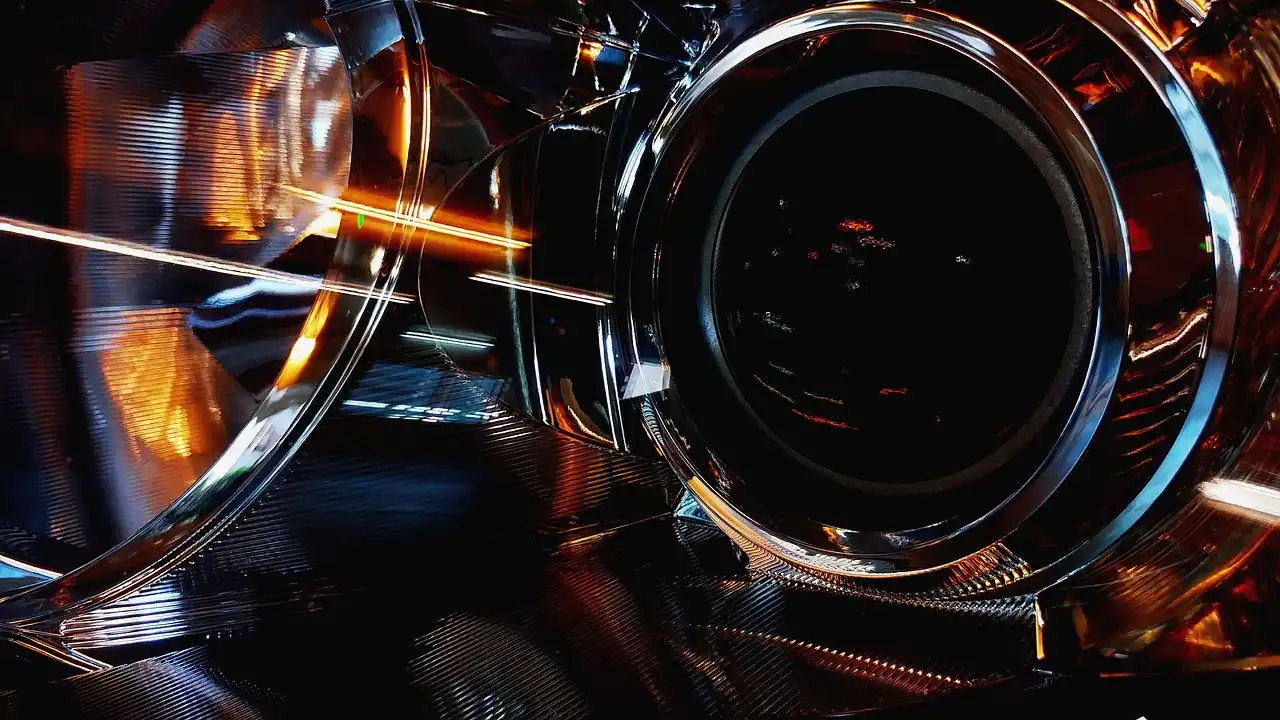
Look at the lens shape, the bulb access, and whether each side of the assembly has a distinct optic. A projector low beam will usually show a round lens behind the outer cover, while a reflector high beam often looks more open and mirrored inside.
On used cars, that matters because a previous owner may have changed only one side or installed the wrong bulb in the wrong chamber.
How do I know if my car has projector or reflector headlights?
The quickest way is to look through the front lens and identify the optic. A projector setup usually has a round clear lens in front of the bulb, while a reflector setup looks open and mirror-like inside. If the car has separate low and high beams, each side may use a different design.
Practical identification checklist
- Look for a clear round lens inside the housing; that usually indicates a projector.
- Look for a mirrored bowl with an exposed bulb area; that usually indicates a reflector.
- Check whether the low beam and high beam are separate chambers.
- Inspect the bulb access point from the rear of the lamp.
- Confirm whether the assembly appears factory-built or modified after purchase.
Used-car shopping clues
Used cars are where mixed parts show up most often. A clean projector on one side and a patched reflector on the other can tell you a repair happened after a collision, and that means alignment should be checked carefully.
If the beam looks hazy, crooked, or too high, the housing may not be the only problem. Mounting tabs, bulbs, and aim all matter.
Choose projector headlights if… / choose reflector headlights if…
For daily drivers, projector headlights are the better pick if glare control, wet-road visibility, and upgrade discipline matter more than purchase price. Reflector headlights are the better pick if the goal is low cost, simple replacement, and keeping the car close to its original design.
Choose projector headlights if
Choose projectors if you drive unlit roads, care about a sharp cutoff, or want a factory-style LED or HID setup that is matched to the optics. They also make sense if you regularly drive in traffic and want less chance of blinding others.
Projectors are the stronger choice when the goal is road use, not appearance.
Choose reflector headlights if
Choose reflectors if replacement cost matters most, if the car was designed around halogen bulbs, or if you want the easiest path back to stock performance. They also fit older and budget vehicles well when the original setup is already decent.
They are the cheaper part. Sometimes that is the correct answer.
Real-world decision checklist
Score each item as pass or fail for the housing you are considering.
- Glare control: pass if the beam has a clean cutoff and stays below oncoming eye level.
- Wet-road performance: pass if the beam keeps contrast on rain-slick pavement without heavy foreground spill.
- Bulb upgrade compatibility: pass only if the housing was designed for the bulb type you plan to use.
- Replacement cost: pass if the assembly price and labor fit the car’s value.
- Ease of alignment: pass if the housing can be aimed accurately after repair.
Daily-driver recommendation: projectors pass more often for drivers who need better beam control and safer upgrades. Reflectors pass when budget and simple service matter more, and the car will stay on halogen bulbs.
Frequently asked questions
What is the difference between projector headlights and reflector headlights?
Projector headlights use a clear lens, a reflector bowl, and a cutoff shield or shutter to make a focused beam with a sharp cutoff. Reflector headlights use a bulb and a parabolic-shaped reflector with a wider, less controlled spread. The projector design usually manages glare better.
Are projector headlights better than reflector headlights?
Projectors are better when the goal is beam control, lower glare, and cleaner night visibility. Reflectors are better when the priority is lower cost, simpler replacement, and staying close to a halogen-based factory setup. The better choice depends on use, not fashion.
Do projector headlights reduce glare for other drivers?
Yes, when the optics are correct and the lights are aimed properly. The shutter makes a sharp cutoff that keeps light below the eye line of oncoming traffic. If the housing is damaged or misaligned, even a projector can throw too much stray light.
Which headlight type is cheaper to replace?
Reflector headlights are cheaper to replace. They are simpler in construction, lower cost than projectors, and often easier to source for older and budget vehicles. Projector assemblies usually cost more because the optics, shutter, lens, and housing are more complex.
Products related to this article
Sponsored / affiliate links. As an Amazon Associate I earn from qualifying purchases. I may earn additional commission from eligible campaigns.