LED vs HID headlights: what drivers should know first
LED makes sense only when the housing was built for it. If the car already has factory HID projectors, keep HID, and pick HID over a cheap LED retrofit when beam control matters more than peak output. Bad swaps throw glare, weaken road edges, and waste money on bulbs, ballasts, or full housings. This guide compares fit, beam pattern, weather use, lifespan, and repair cost so you can choose the right setup for your car.
LED vs HID headlights: the real trade-off
| Decision factor | LED | HID headlights: what drivers should know | Winner |
|---|---|---|---|
| Beam quality in the right housing | Strong when the optics were engineered around the LED emitter | Strong in good projector housings; less happy in poor reflector swaps | Tie |
| Glare risk in retrofit form | High when a bulb is dropped into the wrong reflector or projector | High when the ballast, bulb, or projector match is wrong, but factory HID usually controls glare well | HID headlights: what drivers should know |
| Wet-weather visibility | Depends on color temperature and cutoff; cooler white can scatter more | Often easier to tune for a warmer factory look in rain and fog | HID headlights: what drivers should know |
| Repair path and cost | Sealed assemblies can make a failure expensive | Bulb and ballast parts are often separate, so repairs can be more modular | HID headlights: what drivers should know |
| Compatibility with common housing types | Best when factory LED or LED-designed projector optics are already present | Best in factory HID projectors; less tolerant of improvised swaps | HID headlights: what drivers should know |
Beam quality is mostly an optics problem
LED and HID both look excellent when the housing was designed around the source. The label on the bulb matters less than the cutoff, reflector shape, and projector lens that decide where the light lands and how much spills into oncoming traffic.
Glare risk rises when the source and housing disagree
Cheap retrofits often put a different light source where the optics expect another arc position or emitter shape. That mismatch raises glare and can make the foreground look bright while the road ahead gets worse.
Weather use depends on color and pattern, not hype
Cooler blue-white light can bounce back harder in rain, fog, and snow. A well-controlled beam with a warmer factory tint usually reads better to the eye in bad weather than a bluer setup with a sloppy cutoff.
According to LED Headlights vs HID Headlights: Which Is Better for Brightness … — LED headlights are commonly tuned around 4000K to 6000K.
How LED and HID headlights work
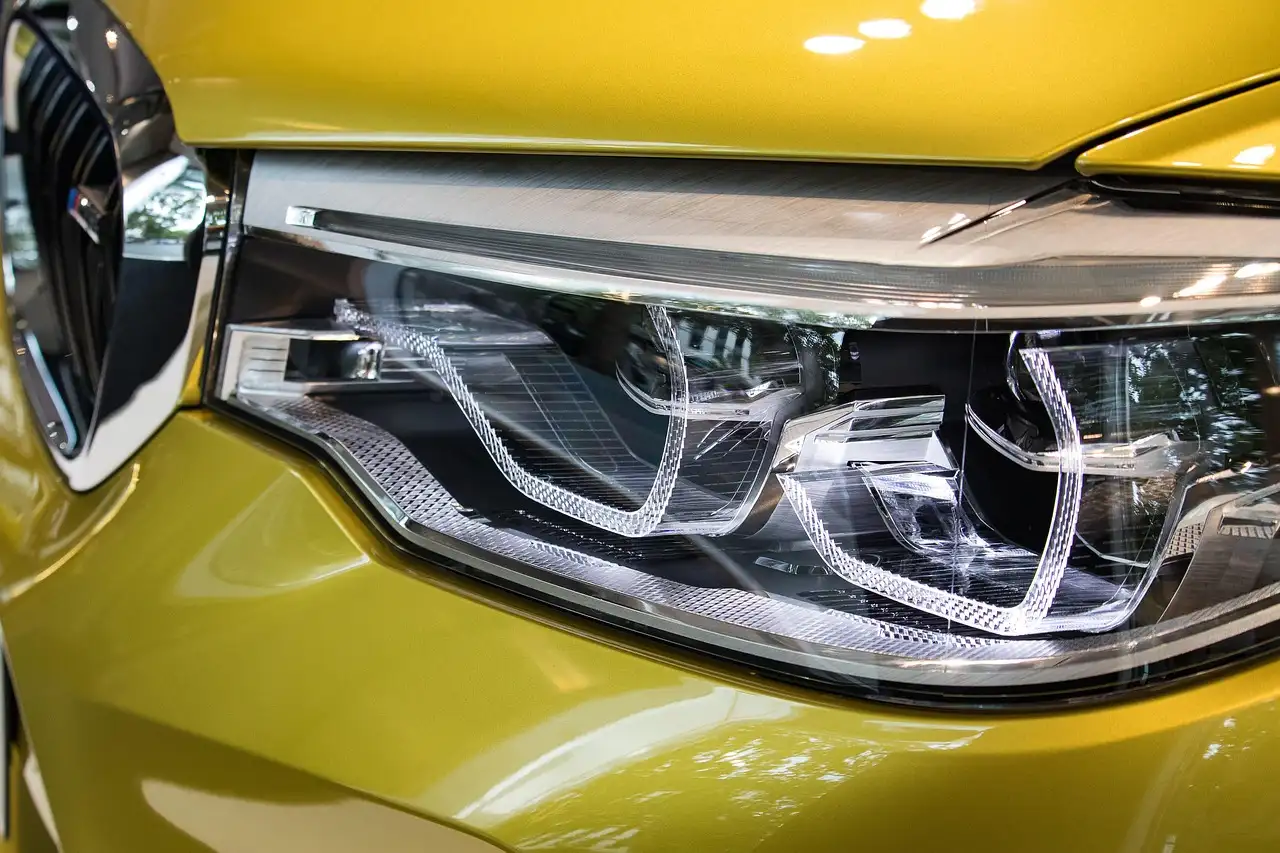
LED: semiconductor light, instant output, heat management
LED headlights use semiconductor-based light sources with lower power draw than many HID systems. They reach full brightness right away, which helps in stop-and-go use, flashing, and short trips where a driver wants full output the moment the lamps come on.
That speed comes with thermal demands. The light source itself is efficient, but the assembly still needs a heat sink or active cooling. If heat is not moved away well, useful life drops and output can sag over time.
HID: arc-based light, ballast, and warm-up
HID headlights use an electrical arc inside a xenon-filled bulb. The system needs a ballast to regulate voltage and start the arc, and that ballast becomes a common failure point in older cars and aftermarket conversions.
HID lamps need a brief warm-up period before peak brightness. That matters in daily driving because the first minute after startup often looks dimmer than the same system after it settles.
Why warm-up changes daily use
An HID that starts every morning on a short city commute spends more of its life outside peak output. An LED reaches full brightness at once, so there is no waiting for the light to stabilize. That does not make LED better in every car, but it does change how the system behaves in traffic and on cold starts.
Which headlight gives the better beam pattern?
The better beam pattern is the one that puts light on the road without throwing stray light into other drivers’ eyes. Factory LED and factory HID can both do that well, but only when the housing, lens, and emitter or arc position were engineered together.
Cutoff control and glare control
A clean cutoff keeps the upper beam edge sharp. That matters more than raw output because a messy pattern can look bright while performing worse at distance and creating more glare.
Reflector housing versus projector housing
Projector housings often control light better because the lens and shield help shape the beam. Reflector housings are more sensitive to the exact light source position, so a bulb swap that seems simple can wreck the pattern.
That is why factory HID often still looks excellent in older projector setups. The hardware was built to handle the arc source, ballast, and shield geometry. A random LED bulb in that same housing is a different story.
Road light versus foreground spill
Some lights make the pavement right in front of the car look bright but do little for distance vision. Good road lighting pushes useful light farther ahead while keeping foreground spill under control. That balance matters more than a showroom-style hotspot.
Are LED headlights better than HID headlights in rain, fog, and snow?
Neither source wins everywhere in bad weather, but a warmer, well-controlled beam usually helps more than a bluer, harsher one. Factory HID often has the edge in older projector housings because its output can be tuned to a softer white that cuts glare in wet air.
Color temperature and visibility in bad weather
LED headlights are commonly tuned around 4000K to 6000K. That range is normal for many factory systems, but the cooler end can look whiter and harsher when fog, rain, or snow is reflecting light back at the windshield.
Color temperature matters because the eye reads contrast, not just brightness. A bluer lamp can feel brighter at first glance while making the scene flatter in poor weather.
When a warmer factory HID setup can be the safer pick
A good HID projector with a sensible color point and a tight cutoff often gives calmer wet-weather performance than a mismatched LED retrofit. The reason is simple: control beats raw output when water droplets are part of the beam path.
Repair cost, lifespan, and failure modes
LEDs often dim over time rather than burning out all at once. HID bulbs can dim too, and they may shift color as they age. The real difference is how the car is built around the lamp, because that decides whether a failure is a cheap part swap or a larger assembly replacement.
LED failure often means assembly work
Many LED headlights are built into sealed assemblies. When one section fails, the repair may involve the whole unit, not just the emitter. That can turn a simple lighting issue into a higher repair bill.
HID failure often means bulb, ballast, or igniter work
HID systems split the job across parts. The bulb can age out, the ballast can fail, and the igniter path can create its own diagnostic headache. The advantage is modular repair; the downside is more parts that can stop the system.
What usually fails first
In the field, a dim HID often points to the bulb or ballast path. A weak LED often points to thermal stress, driver electronics, or a sealed-assembly problem. Heat management matters here because higher operating temperature shortens useful life.
Decision matrix: factory LED, factory HID, and retrofit options
This matrix separates factory-engineered systems from retrofit bulbs. That distinction matters because a factory LED headlamp and a drop-in LED bulb behave very differently, even if both use the same light source type.
| Option | Beam quality | Glare risk | Wet-weather visibility | Repair cost | Compatibility | Best fit |
|---|---|---|---|---|---|---|
| Factory LED | High | Low when original optics are intact | Medium to high | Medium to high | High in factory LED housings | Late-model cars built around LED optics |
| Factory HID | High in projector housings | Low to medium | High in well-tuned projectors | Medium | High in factory HID projectors | Older projectors already designed for HID |
| Retrofit LED bulb | Medium to low | High in many reflector housings | Medium to low | Low upfront, mixed later | Low unless the housing was built for it | Limited cases with proper optics |
| Retrofit HID kit | Medium to low | High without a proper projector and ballast match | Medium | Low upfront, mixed later | Low in most reflector housings | Rarely the best choice |
Factory LED
Factory LED tends to work best when the lamp was designed around the emitter geometry and thermal load. Consumer Reports said 86% of tested 2019 models had LEDs, and Consumer Reports also found LEDs do not always outperform halogen or HID in illumination. That gap is usually about optics, not the light source name. (consumerreports.org)
Factory HID
Factory HID still makes sense in a good projector housing. The bulb, ballast, and shield geometry were built to work together, so the system can deliver stable road lighting with manageable glare and straightforward part replacement.
Retrofit LED and retrofit HID
Retrofits are where most headaches start. If the housing was not designed for the source, you can get glare, poor cutoff, or a beam that looks bright on a wall and weak on the road. A cheap bulb swap can cost more later when the owner has to undo the damage.
Choose LED headlights if… / Choose HID headlights if…
Choose LED headlights if your car already has a factory LED assembly, the optics were built for LED, and you want instant full output with lower power draw. Choose HID headlights if you already have a good factory HID projector, want a clean beam with a known repair path, and do not want to gamble on a retrofit that may create glare.
Choose LED headlights if…
- Your vehicle came with factory LED lamps or a true LED-designed projector.
- You want instant brightness at startup.
- You are replacing a sealed unit and accept the higher assembly cost if it fails.
- The housing, cooling, and driver electronics are already matched to LED.
Choose HID headlights if…
- Your car already has a strong factory HID projector system.
- You want a modular repair path with bulb and ballast replacement.
- You drive often in rain, fog, or snow and want a calmer white beam.
- You want to avoid a risky bulb swap in a housing that was not built for LED.
Stay with the factory architecture when…
If the housing, ballast, or assembly design already fits the car, staying with the factory setup is usually the safest move. The right answer is rarely “the brighter bulb.” It is the setup that keeps cutoff sharp, glare low, and repairs predictable.
How to decide whether your car should stay HID or convert to LED
- Check whether the car has a reflector or projector housing.
- Confirm whether the current system is factory HID, factory LED, or a previous retrofit.
- Inspect the cutoff at a wall at night; a clean step line is a good sign.
- Look for ballast, driver, heat sink, or fan packaging space.
- Ask whether the existing housing was designed for the source you want to install.
- Compare the likely repair path: bulb and ballast changes, or sealed assembly replacement.
- Keep the factory system if the new plan would create glare or require major rewiring.
Frequently asked questions
Are LED headlights better than HID headlights?
LED is better when the housing was designed for LED and you want instant output with lower power draw. HID is better when the car already has a good factory projector and you want a proven beam pattern with modular parts. The housing decides more than the label on the bulb.
Which lasts longer, LED or HID headlights?
LEDs often last longer in normal use, but some LED failures seem to come from the assembly rather than the light source alone. HID bulbs can dim and shift color, and the ballast adds another failure point. So the longer life advantage belongs to LED, while the easier repair path often belongs to HID.
Do LED headlights use less power than HID headlights?
Yes. LED headlights use semiconductor light sources with lower power draw, and Consumer Reports says LED headlights use less energy and run cooler. That said, lower power does not guarantee better road lighting if the optics are poor or the retrofit is mismatched.
Are HID headlights brighter than LED headlights?
Neither technology is always brighter in the real world. Consumer Reports found LEDs do not always outperform halogen or HID in illumination, which is a good reminder that beam pattern and housing design matter more than a simple brightness claim. A well-made HID projector can outdrive a poor LED swap.
Which is better in rain, fog, and snow: LED or HID?
HID often has the edge in factory projector housings because the beam can be tuned warmer and calmer in wet air. Cooler white LED light can reflect back harder in rain and fog if the cutoff is loose or the color temperature is too blue. Pattern control still matters most.
Can I replace HID headlights with LED bulbs?
Sometimes, but not safely in every housing. A direct LED bulb swap can upset the reflector or projector optics, create glare, and make the beam worse even if the wall output looks bright. If the car has factory HID projectors, keeping HID is often the cleaner choice unless a proper LED assembly exists.
Why do some LED headlights cause glare?
Glare usually comes from a mismatch between the LED emitter and the housing geometry. If the reflector or projector was built for a different light source, the cutoff can break down and send light upward. That is why factory LED systems can look excellent while cheap retrofits blind other drivers.
Are aftermarket LED or HID kits legal and safe?
Some are sold for off-road or limited use, but legality and safety depend on the housing, beam pattern, and local rules. If the kit creates glare or uses a source the housing was not designed for, it is a poor road choice even if it powers on. Factory-engineered systems are usually the safer path.
What is the difference between LED and xenon headlights?
“Xenon” usually refers to HID headlights, which use an electrical arc inside a xenon-filled bulb and need a ballast. LED headlights use semiconductor light sources instead. The difference matters because the optics, warm-up behavior, and repair parts are not the same.
Products related to this article
Sponsored / affiliate links. As an Amazon Associate I earn from qualifying purchases. I may earn additional commission from eligible campaigns.