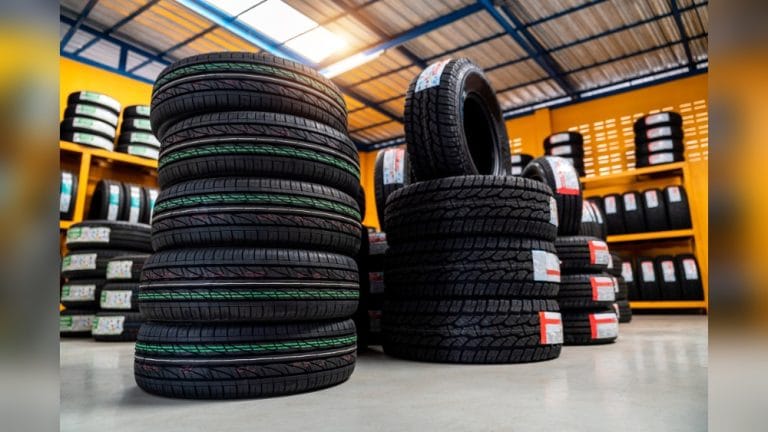
What Should Your Car Tire Pressure Be? Find The Right Psi
It’s a common question, and one that often gets overlooked: What should your car tire pressure be? You see those numbers on the tire sidewall, and maybe you’ve heard general advice, but knowing the exact right amount for your car can feel a little fuzzy. This matters more than you might think.
Too low, and you risk a blowout or bad gas mileage. Too high, and your ride gets bumpy and your tires wear out faster.
We’ll dive into how to find that sweet spot, why it’s so important for your safety and your wallet, and what all those numbers and symbols mean. Let’s get your tires feeling just right!
Your car’s ideal tire pressure is typically found on a sticker inside the driver’s side doorjamb or in your owner’s manual. It’s usually around 30-35 PSI for most passenger cars. This pressure ensures optimal handling, safety, and tire wear.
Always use the vehicle manufacturer’s recommended PSI, not the maximum PSI listed on the tire itself.
Understanding Your Car’s Tire Pressure
Your car’s tire pressure is measured in pounds per square inch (PSI). This number tells you how much air is inside your tires. It’s like the blood pressure for your car’s wheels.
Keeping it at the right level is super important. It affects how your car drives, how safe it is, and how much gas you use.
When tires are properly inflated, they sit flat on the road. This means the whole tire tread touches the ground evenly. This contact patch is key.
It’s where your car grips the road for steering, braking, and moving forward. If the pressure is off, this contact patch changes.
Too little air, and the tire sags. The edges of the tread might hit the road harder than the middle. This can make the tire overheat.
It also makes steering feel sluggish. Plus, the tire can flex too much, which can lead to a blowout. This is a scary situation, especially at highway speeds.
We’ve all heard stories, and nobody wants that to happen.
On the flip side, too much air makes the tire stiff. The middle of the tread might press harder on the road than the sides. This can cause the center of the tire to wear out too fast.
It also means you have less grip. Your ride will feel bumpier. Big bumps will feel even bigger.
The number you’re looking for isn’t usually on the tire itself. That number is the maximum pressure the tire can handle. You need the recommended pressure for your specific car.
The car makers figure out the best balance for your car’s weight and how it’s built. This is usually set by the engineers.
Finding the Right PSI for Your Vehicle
So, where do you find this magical number for your car? It’s simpler than you think. Most cars have a sticker located in one of a few key spots.
The most common place is on the driver’s side doorjamb. Open your driver’s door, and look down along the frame where the door latches.
You might also find this sticker inside the fuel filler door. Some older cars or different models might have it in the glove compartment. If you can’t find a sticker, your car’s owner’s manual is the next best place.
It will have a section on tires and maintenance.
This sticker is often called the “tire and loading information” label. It lists the recommended cold tire inflation pressure for your front and rear tires. Sometimes, it also tells you the recommended size for your tires.
Always look for the PSI (pounds per square inch). This is the number you need.
It’s important to check the pressure when the tires are cold. “Cold” means the car hasn’t been driven for at least three hours. Driving heats up the tires.
This makes the air inside expand. So, the pressure reading will be higher than it should be. Checking them first thing in the morning is usually best.
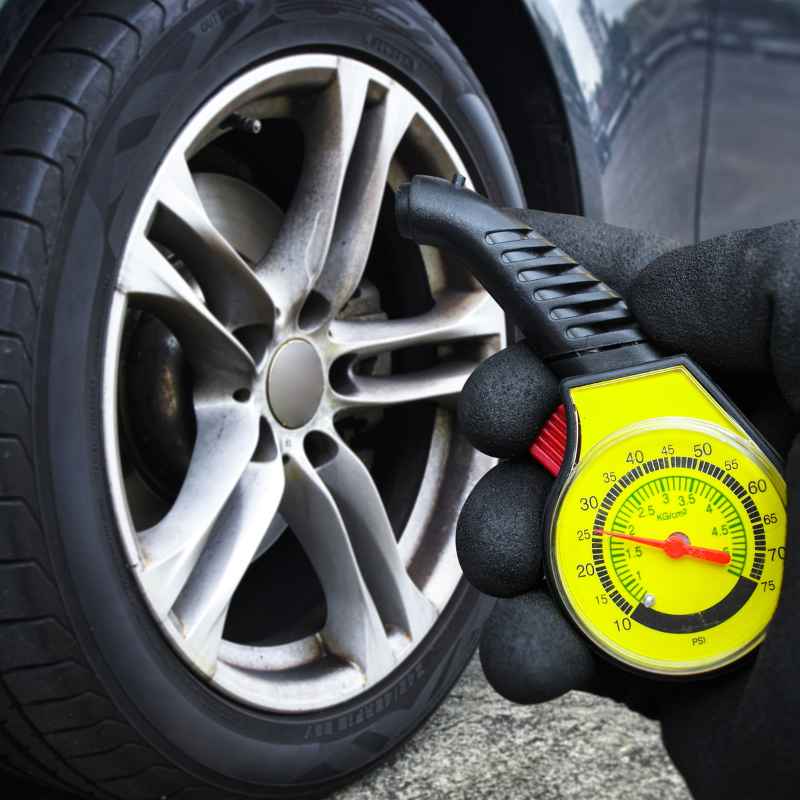
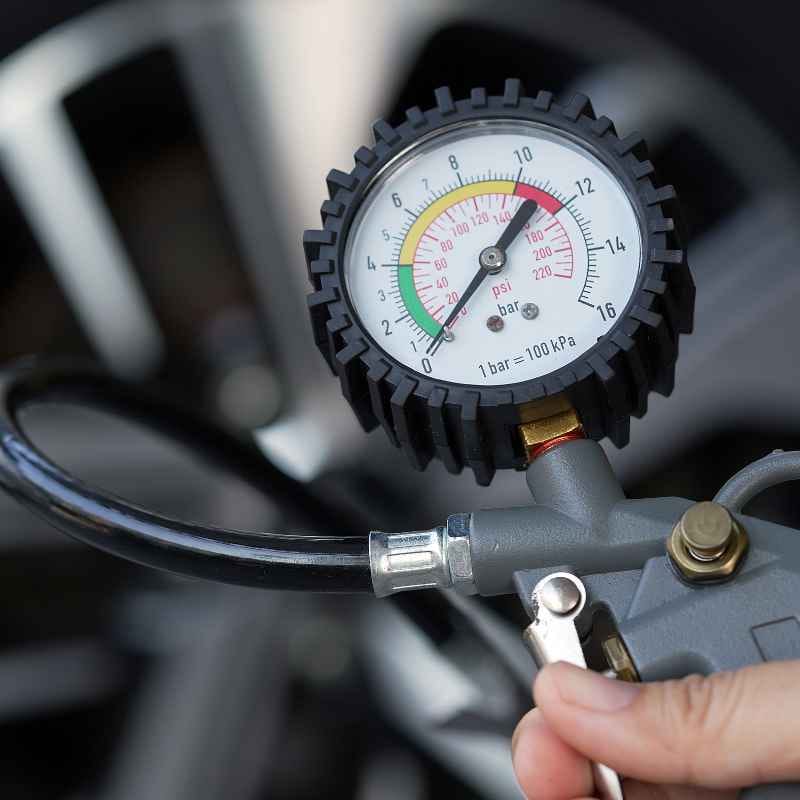
You’ll need a tire pressure gauge. These are inexpensive and can be found at auto parts stores or even some gas stations. They come in digital and analog (dial) versions.
Both work well. Just screw the gauge onto the tire valve stem. You’ll see a reading right away.
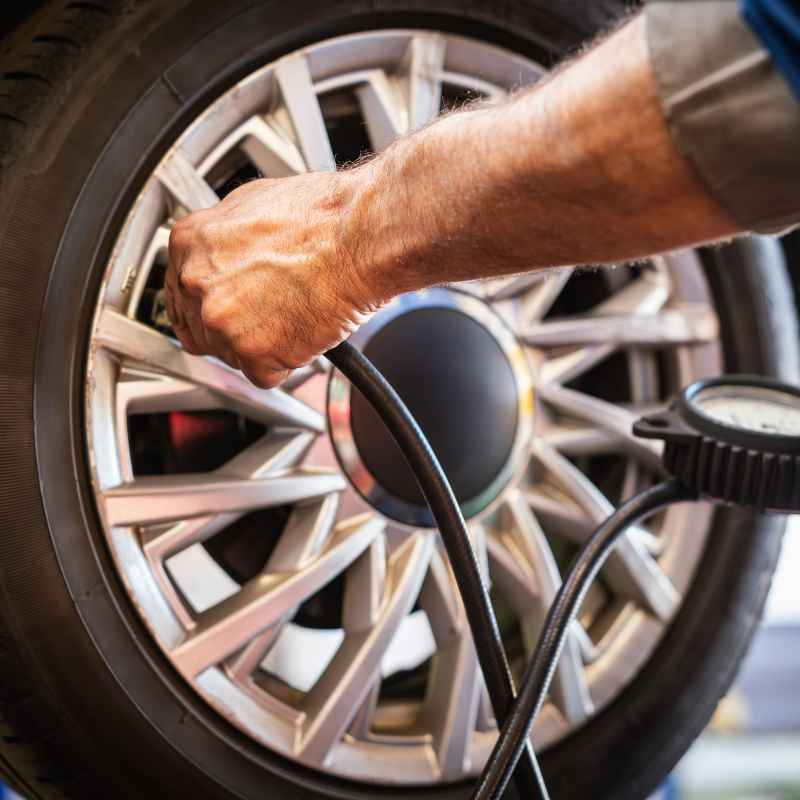
If the reading is lower than recommended, you’ll need to add air. Most gas stations have air pumps. You can also buy a small portable air compressor for your car.
If the reading is higher, you can release air by pressing down on the little pin inside the valve stem. Do this in short bursts until you reach the correct PSI.
Remember, front and rear tires might need different pressures. Always check both. Also, if you have a spare tire, it might need a different pressure too.
Check your manual or the sticker for that. It’s usually higher.
I remember one time I was heading out on a long road trip. My car felt a little… off. The steering seemed a bit loose, and I felt like I was correcting more often than usual.
I just shrugged it off, thinking maybe I was tired. I got to the first gas stop and decided to check my tires, just in case. I was shocked.
My front tires were way low. Like, dangerously low. I must have hit a nail or something earlier and didn’t even notice.
That feeling of relief when I aired them up and the car felt solid again was immense. It really hammered home how much tire pressure affects the drive and, more importantly, my safety.
Why Checking Tire Pressure Matters
Safety First: Properly inflated tires provide better grip. This helps you steer and brake effectively. Underinflated tires can overheat, increasing the risk of a blowout, especially at higher speeds.
They can also lead to hydroplaning in wet conditions.
Fuel Economy: When tires are underinflated, they create more friction with the road. This makes your engine work harder to move the car. More effort means more fuel used.
Saving a few PSI can actually save you money at the pump.
Tire Lifespan: Correct pressure ensures even wear across the tire tread. Uneven wear due to incorrect pressure means you’ll need to replace your tires sooner. This saves you money in the long run.
It’s a simple step for a big impact.
What Does PSI Mean? And Other Tire Markings
Let’s break down some of those numbers you see. PSI stands for Pounds per Square Inch. It’s the standard measurement for air pressure.
Your car’s recommended PSI will be a specific number, like 32 PSI or 35 PSI.
Now, about those numbers on the tire sidewall. You’ll see things like P215/65R15 95H. What does that mean?
- P: This means it’s a P-metric tire, designed for passenger cars.
- 215: This is the tire’s width in millimeters. It measures from sidewall to sidewall.
- 65: This is the aspect ratio. It’s the tire’s height as a percentage of its width. So, 65 means the height is 65% of 215mm.
- R: This indicates the tire is a radial-ply construction. This is standard for almost all car tires today.
- 15: This is the wheel diameter in inches. It’s the size of the rim the tire fits onto.
- 95H: This is the load index and speed rating. The 95 means the tire can support a certain weight. The H means it’s rated for a certain maximum speed.
Then, you might see a number like MAX. INFLATION 44 PSI. This is crucial: this is NOT your car’s recommended tire pressure.
This is the maximum pressure the tire can safely hold. Filling your tires to this maximum will likely make your ride too stiff and cause uneven wear. Always use the pressure recommended by your car manufacturer.
You might also see numbers related to treadwear, temperature resistance, and traction. These are ratings that help you understand the tire’s performance characteristics. But for daily driving and safety, the PSI is your main focus.
I remember a conversation with a neighbor who was complaining about his car always pulling to one side. He was sure something was wrong with the steering. We got talking, and I asked him about his tire pressure.
He just said, “Oh, I just fill them up till they look hard.” That was his system. I gently suggested he find his doorjamb sticker and check the recommended PSI. The next week, he told me his car drove like new.
He’d been driving with uneven tire pressure for months, causing the car to pull. It was such a simple fix, but he never would have thought of it.
Tire Pressure vs. Temperature
How it works: Air expands when it’s warm and contracts when it’s cold. This is basic science! For every 10°F (about 5.6°C) change in temperature, tire pressure changes by about 1 PSI.
Seasonal changes: In winter, as temperatures drop, your tire pressure will naturally go down. In summer, as temperatures rise, it will go up. You might need to add air in the colder months and possibly release a little in the warmer months.
Impact on driving: This is why checking your tires regularly, especially when seasons change, is so important. A significant temperature drop can mean your tires are significantly underinflated without you realizing it. It’s good practice to check your PSI at least once a month.
When Is Tire Pressure “Normal” vs. “Concerning”?
We’ve talked about the manufacturer’s recommended PSI. This is your target. But what if your tires are a little off?
When should you start to worry?
Generally, being within 1-2 PSI of the recommended pressure is perfectly fine. Tires can fluctuate a bit. The key is to aim for the number on the doorjamb sticker.
When it’s normal:
- Your tires are within 1-2 PSI of the recommended cold inflation pressure.
- Your car handles smoothly and evenly.
- You don’t hear any strange noises or feel vibrations.
- Your tires show even wear across the tread.
When to worry:
- Significant Drop: If your tires are more than 3-5 PSI below the recommended pressure, it’s time to add air. This is especially true if the drop happened quickly, which could indicate a leak.
- Vibrations or Pulling: If you feel your car vibrating or pulling to one side while driving, it’s a strong sign of an issue. This could be underinflated tires, unevenly inflated tires, or a more serious alignment problem.
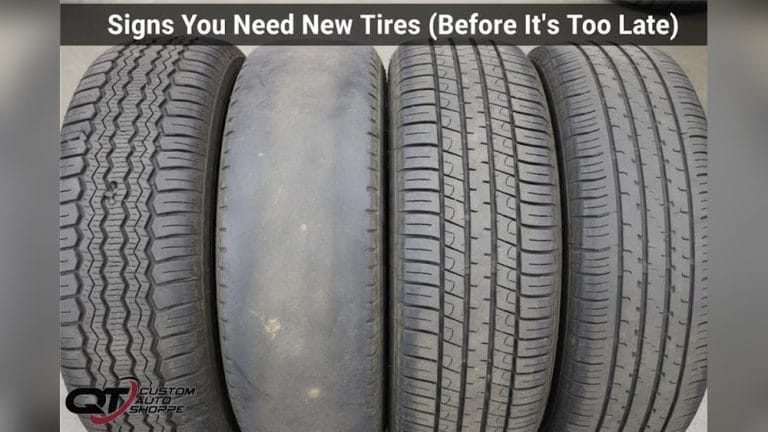
- Uneven Wear: If you notice the edges of your tires wearing faster than the middle (underinflated), or the middle wearing faster than the edges (overinflated), this is a red flag.
- Visible Sagging: If your tires look visibly deflated or saggy, they are definitely too low. Don’t drive on severely underinflated tires.
- Sudden Pressure Loss: If you check your tires and one is suddenly much lower than the others, you likely have a leak.
I learned this the hard way after a minor fender bender. It wasn’t my fault; someone backed into my car. The initial damage seemed small, just cosmetic.
But afterwards, I noticed my steering felt a bit off. Then, I started seeing the front passenger tire looked a little lower than the others. I didn’t think much of it, figuring it was unrelated.
But a week later, driving home from work, I felt a very distinct shimmy. I pulled over immediately. The tire was almost completely flat.
It turned out the impact, even though minor, had caused a slow leak in the tire’s sidewall. If I hadn’t been paying attention to those subtle signs – the steering, the slight visual difference – I could have had a much bigger problem, maybe even a blowout.
Quick Check: The Penny Test
What it is: A simple way to see if your tires have enough tread depth. While not directly related to pressure, it’s a good tire health check.
How to do it: Take a penny. Stick it into the deepest part of your tire’s tread with Lincoln’s head facing you. If you can see the top of Lincoln’s head, your tread is too low and it’s time for new tires.
Why it’s important: Sufficient tread depth is crucial for grip, especially in wet or snowy conditions. Low tread can be as dangerous as incorrect tire pressure.
Tips for Maintaining Correct Tire Pressure
Keeping your tires properly inflated is an ongoing task. It’s not a one-time fix. Here are some easy tips to make sure your tires stay at the right PSI.
1. Check Monthly: Make it a habit to check your tire pressure at least once a month. This is the most important tip.
Tire pressure naturally decreases over time, even without leaks.
2. Check When Cold: Always check your tires in the morning, before you’ve driven anywhere, or after the car has been parked for at least three hours. This gives you the most accurate reading.
3. Use a Reliable Gauge: Invest in a good quality tire pressure gauge. They aren’t expensive.
A digital gauge can be easier to read for some people.
4. Know Your Numbers: Keep the recommended PSI for your car handy. You can find it on the driver’s side doorjamb, fuel door, glove box, or in your owner’s manual.
5. Adjust for Load: If you’re carrying heavy loads or towing a trailer, you might need to adjust your tire pressure. Check your owner’s manual for guidance on this.
Sometimes, the recommended pressure will increase slightly for heavier loads.
6. Don’t Forget the Spare: Your spare tire needs air too! Check its pressure regularly.
A flat spare tire is no help at all. The recommended PSI for a spare is often higher than for your regular tires.
7. Watch for Temperature Swings: Pay extra attention to your tire pressure during significant temperature changes, like the shift from fall to winter or winter to spring. Your pressure can drop or rise noticeably.
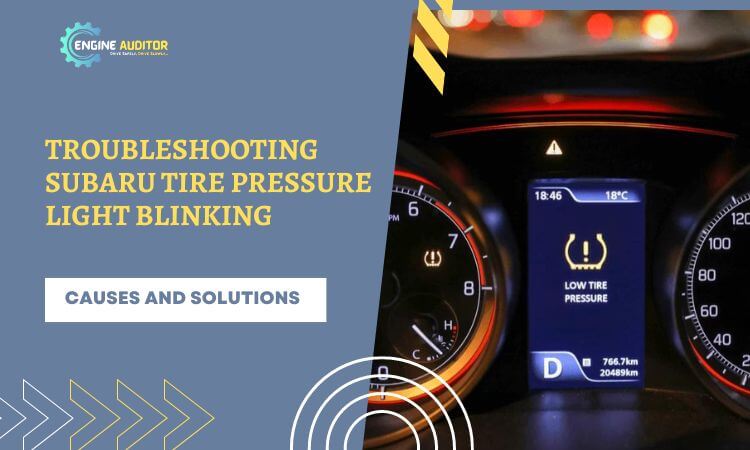
8. Consider Tire Pressure Monitoring Systems (TPMS): Most modern cars have a TPMS. This system alerts you when a tire is significantly underinflated.
While helpful, it’s still important to check manually, as TPMS often only alerts you when pressure is very low.
I once forgot to check my tires for about two months. It was during a very cold spell in January. My car started feeling sluggish, and I just thought it was the cold affecting the battery or something.
Then, one morning, I noticed the TPMS light blinked on. I went out to check, and sure enough, all my tires were several PSI lower than they should have been. Adding air immediately made the car feel so much better.
It’s a good reminder that even with the fancy warning lights, a manual check is your best bet.
Quick Scan: Tire Pressure Check Steps
Step 1: Park your car on a level surface.
Step 2: Ensure tires are cold (not driven for 3+ hours).
Step 3: Locate your car’s recommended PSI sticker.
Step 4: Unscrew the valve cap from one tire.
Step 5: Press your tire gauge firmly onto the valve stem.
Step 6: Read the PSI. Add or release air as needed to match the recommended PSI.
Step 7: Replace the valve cap.
Step 8: Repeat for all tires, including the spare.
Frequently Asked Questions About Tire Pressure
What is the normal tire pressure for a car?
The normal tire pressure for most passenger cars is usually between 30 and 35 PSI (pounds per square inch). However, it’s essential to check the sticker on your driver’s side doorjamb or your owner’s manual for your specific vehicle’s recommended pressure.
Can I just use the PSI number on the tire sidewall?
No, you should not use the PSI number on the tire sidewall. That number is the maximum inflation pressure the tire can safely hold, not the recommended pressure for your vehicle. Always use the pressure recommended by your car manufacturer.
How often should I check my tire pressure?
It’s recommended to check your tire pressure at least once a month and before any long road trips. You should also check it if you notice a significant drop in temperature.
What happens if my tire pressure is too low?
Low tire pressure can lead to poor handling, increased tire wear, reduced fuel efficiency, and a higher risk of tire failure or blowout due to overheating. It makes your tires flex too much.
What happens if my tire pressure is too high?
Overinflated tires can cause a harsher ride, reduced traction because less of the tire is in contact with the road, and uneven tire wear (typically in the center of the tread). They can also be more prone to damage from impacts.
Do I need to check tire pressure when tires are hot or cold?
You should always check your tire pressure when the tires are cold. This means the car has been sitting for at least three hours or driven for less than a mile at moderate speed. Driving heats up the tires, causing the air inside to expand, which will give you a falsely high reading.
My car has a TPMS. Is that enough?
A Tire Pressure Monitoring System (TPMS) is a great safety feature and will alert you when a tire is significantly underinflated. However, it’s still a good idea to manually check your tire pressure regularly. TPMS systems often only activate when the pressure is quite low, and they don’t necessarily tell you the exact PSI.
The Bottom Line on Tire Pressure
Getting your car’s tire pressure right is a small task with big rewards. It’s a simple step that boosts your safety, saves you money on gas and tire replacements, and makes your car drive better. Remember to always use your car’s recommended PSI, check when tires are cold, and do it at least once a month.
By taking just a few minutes each month, you can ensure your tires are working their best for you. Happy driving!
See also how much car tyre pressure do you actually need . See also when should you replace car tires don’t wait too long.
Products related to this article
Sponsored / affiliate links. As an Amazon Associate I earn from qualifying purchases. I may earn additional commission from eligible campaigns.