Best Way to Compare Car Rental Prices and Save Money
Finding a great deal on a rental car can feel tricky sometimes, especially if you’re new to it. There are so many different companies and prices can change a lot. But don’t worry!
It’s easier than you think to figure out the Best Way to Compare Car Rental Prices and Save Money. We’ll walk you through it step-by-step so you can get a good deal without any fuss. Get ready to learn how to find the cheapest car for your next trip.
Finding the Best Way to Compare Car Rental Prices
This section will show you the smartest ways to shop around for a rental car. We’ll talk about why comparing prices is so important and how doing it right saves you money. You’ll learn how to spot hidden fees and understand what makes one deal better than another.

SignMission
72" CAR Rental Banner Sign auto Rent…
- Banner Size: 24" x 72"
- Indoor/Outdoor Use – Our Banners are durable, made from heavy duty 13oz. outdoor vinyl and our inks are rated for 5+years of outdo…
- Quick & Easy Mount – This Banner comes with Grommets to make it easy to hang and start advertising in minutes
As an Amazon Associate I earn from qualifying purchases.
We aim to make this process simple and clear so you can feel confident in your choice.
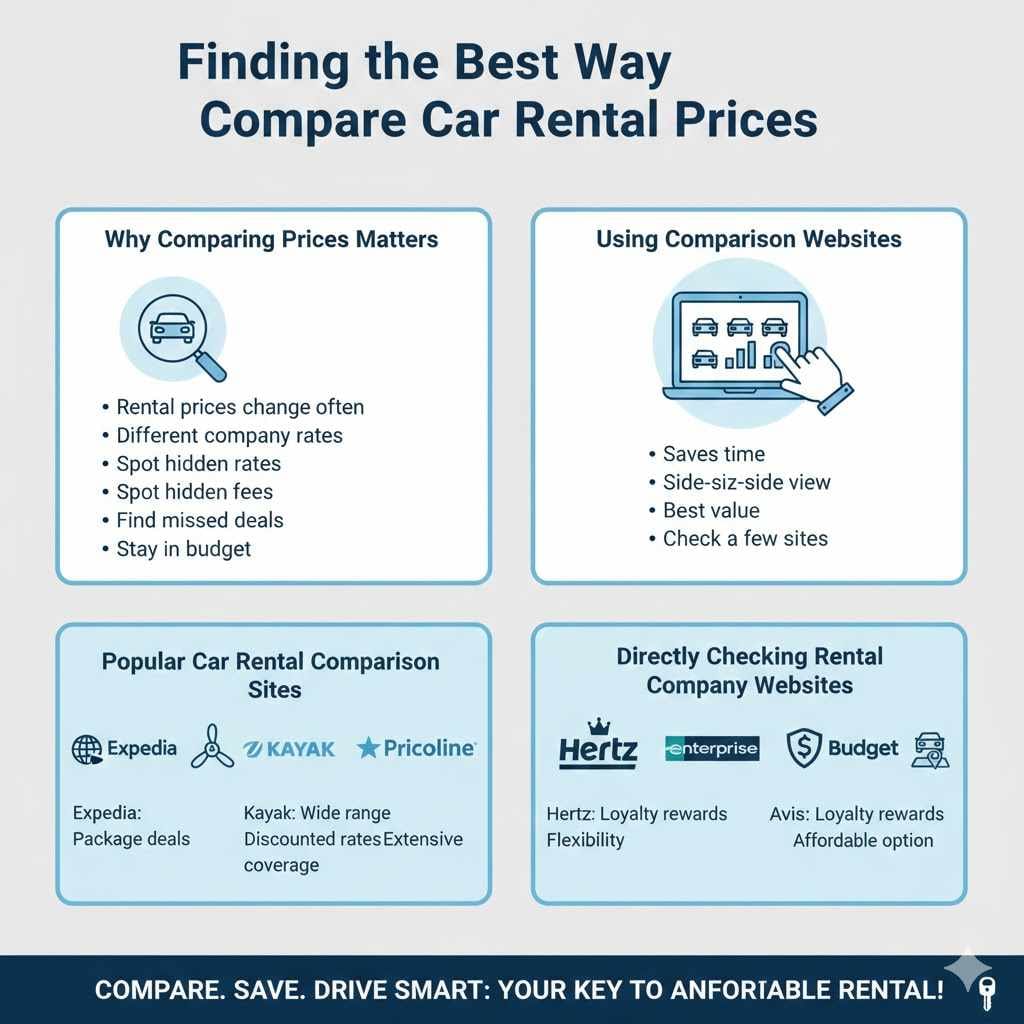
Why Comparing Prices Matters
Rental car prices can change a lot from day to day and even hour to hour. Different companies also have different pricing structures. What looks like a cheap car at first might have extra charges later.
By comparing prices, you make sure you’re not overpaying. You can find deals you might have missed. This helps you stay within your budget for your trip.
Using Comparison Websites
Websites that compare car rentals are super helpful. They show you prices from many companies all in one place. This saves you a lot of time.
These sites let you see different car types and prices side-by-side. You can easily see which company offers the best value. Remember to check a few different comparison sites too, as they might show slightly different deals.
Popular Car Rental Comparison Sites
- Expedia is a well-known travel site that also compares car rentals. It often has good package deals.
- Kayak searches many sites at once to find the best prices. It’s great for seeing a wide range of options.
- Priceline is famous for its “Name Your Own Price” feature, but it also has standard booking options. It can sometimes offer deeply discounted rates.
- Rentalcars.com specializes in car rentals and works with many local and international providers. It’s known for its extensive coverage.
Directly Checking Rental Company Websites
Even with comparison sites, it’s often smart to check the rental companies’ own websites. Sometimes they have special deals or loyalty programs that aren’t shown elsewhere.
This is especially true if you are part of a frequent renter program. These programs can give you discounts or other perks.
Major Car Rental Companies
- Hertz is a global company with a wide selection of vehicles. They often have deals for members.
- Avis is another major player known for good customer service. They also offer loyalty rewards.
- Enterprise has a large network and is known for its flexibility. They sometimes have special promotions.
- Budget is often a more affordable option, living up to its name. They have frequent sales.
The Best Way to Compare Car Rental Prices and Save Money On Your Booking
This section focuses on the actual booking process and how to get the most savings. We’ll cover when to book, what to look for in a rental agreement, and how to avoid extra costs that can add up. Following these tips will help you secure the best possible deal for your rental car.
When to Book Your Rental Car
Booking early is usually the best strategy for saving money. Prices tend to go up as the rental date gets closer, especially during busy travel seasons.
If your plans are firm, booking several weeks or even months in advance can lock in a lower rate. This gives you peace of mind too.
Booking Timeline Advice
- Book 2-4 Weeks Ahead for Domestic Travel: For trips within your country, this timeframe often yields good prices. It’s enough time to see deals but not so far out that prices might be higher.
- Book 4-8 Weeks Ahead for International Travel: When traveling abroad, more lead time is usually beneficial. This accounts for more variable pricing and potential currency exchange fluctuations.
- Be Flexible with Dates if Possible: If your travel dates are flexible, try searching for rentals on different days of the week or month. Mid-week rentals are often cheaper than weekend rentals.
Understanding Rental Rates and Fees
The price you see first is often just the base rate. There can be many additional fees and taxes that increase the total cost. It’s important to know what these are.
Look closely at the breakdown of the total price. This includes things like airport surcharges, vehicle licensing fees, and sometimes even state or local taxes.
Common Rental Car Fees
- Airport Concession Fee: If you pick up your car at an airport, there’s often a fee charged by the airport. This fee helps the rental company pay for its space at the airport.
- Vehicle License Fee: This fee covers the cost of vehicle registration and licensing for the rental company. It’s a standard charge, though the amount can vary by location.
- Taxes: Various state, local, and sometimes city taxes apply to rental car fees. These are government-imposed charges.
- One-Way Fees: If you drop the car off at a different location than where you picked it up, you will likely pay a one-way fee. This fee covers the cost of returning the car to its original location.
Insurance and Add-Ons
Rental companies will offer you insurance and extra services. These can significantly increase the cost. Think carefully about what you really need.
Many car insurance policies and credit cards already provide rental car coverage. Check your existing policies before agreeing to buy extra insurance.
Types of Add-Ons to Consider
- Collision Damage Waiver (CDW) / Loss Damage Waiver (LDW): This is not insurance, but a waiver that releases you from financial responsibility for damage to the rental car. It can be expensive. Check if your personal insurance or credit card covers this.
- Supplemental Liability Insurance (SLI): This provides additional liability coverage beyond what your personal auto insurance offers. It’s often a good idea if your existing coverage is low.
- Personal Accident Insurance (PAI): This covers medical expenses for you and your passengers in case of an accident. It’s similar to travel insurance for accidents.
- GPS Navigation System: While convenient, most people now use their smartphones for navigation. Renting a GPS is usually unnecessary and costly.
- Satellite Radio / Entertainment Systems: Similar to GPS, these are nice to have but can be skipped to save money. Your phone can stream music and podcasts.
Tips for the Best Way to Compare Car Rental Prices and Save More
Beyond just comparing prices, there are smart strategies you can use to ensure you’re getting the absolute best deal. These involve looking at the car itself, where you pick it up, and using discounts. Small changes can lead to big savings.
Choosing the Right Car Size
Don’t rent a car that’s bigger than you need. A large SUV might seem nice, but it will likely cost more to rent and use more fuel.
Think about how many people and how much luggage you will have. A compact or mid-size car is often perfectly fine for most travelers.
Car Size Considerations
- Economy/Compact Cars: Best for 1-2 people with minimal luggage. They are the most fuel-efficient and cheapest to rent.
- Mid-Size Cars: Good for 2-4 people with a couple of bags. Offers a bit more comfort and space than compacts.
- Full-Size Cars: Suitable for 4-5 people with moderate luggage. Provides more legroom and a smoother ride.
- SUVs/Trucks: Needed for larger groups, lots of gear, or off-road driving. They are the most expensive to rent and least fuel-efficient.
Picking Up and Dropping Off Smartly
Where you pick up and drop off your car can impact the price. Airport locations are usually more convenient but often more expensive.
Sometimes, renting from an off-airport location can save you money. You might need to take a taxi or rideshare to get there, but the savings on the rental itself can be worth it.
Pickup/Drop-off Strategies
- Off-Airport Locations: Research rental agencies located a few miles away from major airports. These often have lower overhead costs and pass those savings to you. Factor in the cost and time of transportation to these locations.
- Return to Original Location: As mentioned, returning the car to a different location usually incurs a steep one-way fee. Always try to return the car where you picked it up if possible.
- Check Return Times Carefully: Rental companies often charge for a full day if you return the car even a few hours late. Be aware of the exact return time and plan accordingly.
Leveraging Discounts and Loyalty Programs
Always look for discounts! Many organizations and memberships offer special rates. Loyalty programs are also a great way to save over time.
This includes things like AAA, AARP, or memberships with professional organizations. Even credit card rewards programs sometimes offer car rental discounts.
Types of Discounts and Programs
- Membership Discounts: Organizations like AAA, AARP, and Costco often have partnerships with car rental companies that provide discounted rates. Check their member benefits pages.
- Corporate Codes: If your employer has a corporate travel agreement with a rental company, you might be able to use that code for savings, even for personal travel.
- Credit Card Rewards: Some credit cards offer travel rewards, points, or specific discounts with certain rental agencies. Always check your card’s benefits before booking.
- Loyalty Programs: Signing up for free loyalty programs with major rental companies (e.g., Hertz Gold Plus Rewards, Avis Preferred) can earn you points, faster rentals, and exclusive member discounts over time.
Example Scenario: A Family Trip to Florida
Imagine a family of four planning a week-long trip to Orlando, Florida. They need a car that can fit two adults, two children, and their luggage.
They start by checking a comparison site like Kayak. They see a mid-size car for $45 per day from Avis at the airport. The total comes to $315 plus taxes and fees, which adds another $70, making it $385.
Then, they check Budget’s website directly. They have a discount code for members of their travel club (free to join) that takes 15% off. They also find a rental location just 10 minutes from the airport.
The mid-size car at the off-airport location is $40 per day. After the 15% discount, it’s $34 per day, totaling $238 for the week. With estimated taxes and fees of $50, the final cost is $288.
By comparing, using a discount code, and choosing an off-airport location, they saved $97 on their rental car.
Understanding Car Rental Insurance In-Depth
This section goes deep into the different types of insurance offered by car rental companies. We will explain what each one covers, why you might need it, and when you can safely skip it. Making informed decisions about insurance can save you a lot of money and protect you from unexpected costs.
Collision Damage Waiver (CDW) / Loss Damage Waiver (LDW) Explained
CDW and LDW are often presented as insurance, but they are technically waivers. When you buy a CDW/LDW, you are essentially agreeing to pay a daily fee to waive your responsibility for any damage or theft of the rental car.
The amount you are responsible for is typically zero or a small deductible. Without it, you could be liable for the full repair cost of the vehicle, which can be thousands of dollars.
Key Points About CDW/LDW
- Costly Daily Fees: These waivers can cost anywhere from $10 to $30 per day, significantly increasing your rental price.
- Not True Insurance: It’s important to remember that this is not an insurance policy. It’s a waiver from the rental company.
- Credit Card Coverage: Many credit cards offer secondary or even primary rental car insurance when you use the card to pay for the rental. Always check your card’s benefits guide before renting.
- Personal Auto Insurance: Your own car insurance policy might extend to rental cars. Contact your insurance provider to understand your coverage limits.
Supplemental Liability Insurance (SLI) Details
SLI provides additional liability coverage above and beyond what your personal auto insurance offers. This coverage typically protects you against third-party claims for bodily injury or property damage caused by the rental car.
If you are involved in an accident where you are at fault, and the damages exceed your personal liability limits, SLI can provide a financial safety net.
When SLI is Important
- Low Personal Liability Limits: If your personal auto insurance policy has low liability limits, SLI can offer crucial extra protection.
- International Travel: In some countries, local liability laws might be different or more stringent. SLI can help ensure adequate coverage.
- Rental Company’s Liability: Without sufficient liability coverage, you could be personally responsible for substantial claims against the rental company if an accident occurs.
- Peace of Mind: For some renters, the cost of SLI is a small price to pay for the peace of mind that comes with knowing they are well-covered in case of a serious accident.
Personal Accident Insurance (PAI) and Personal Effects Coverage (PEC)
PAI offers medical coverage for the renter and passengers in the event of an accident. It typically covers ambulance fees, emergency room visits, and other medical expenses. PEC covers loss or damage to personal belongings inside the rental car, up to a certain limit.
These are often bundled together by rental companies. However, many travelers already have health insurance and homeowners/renters insurance that covers personal belongings.
Evaluating PAI and PEC
- Health Insurance First: If you have comprehensive health insurance, your medical bills from an accident will likely be covered. PAI might be redundant.
- Homeowners/Renters Insurance: Your existing insurance policy for your home usually extends to cover your belongings even when you are traveling. Check your policy details.
- Limited Benefits: The coverage limits for PAI and PEC are often relatively low. You might not get full compensation for significant losses.
- Cost vs. Need: Weigh the daily cost of PAI/PEC against the potential benefits and your existing coverage to decide if it’s necessary for your trip.
Understanding the Rental Agreement’s Fine Print
The rental agreement is a legally binding contract. It’s essential to read it carefully, especially the sections on insurance, fees, and responsibilities.
Many problems arise because renters didn’t understand what they agreed to. Pay close attention to what is covered and what is not.
Crucial Agreement Clauses
- Prohibited Use of Vehicle: This section outlines activities that will void your rental agreement and insurance coverage, such as driving under the influence, racing, or towing.
- Mileage Restrictions: While most rentals have unlimited mileage, some may have limits. Exceeding them can result in significant charges.
- Fuel Policy: Understand the fuel policy (e.g., “Full to Full,” “Pre-purchase,” “Return Empty”). Returning the car with less fuel than required by the policy can lead to expensive refueling charges by the rental company.
- Damage Reporting Procedure: The agreement will specify how to report any damage to the vehicle. Failing to follow these procedures can impact your liability.
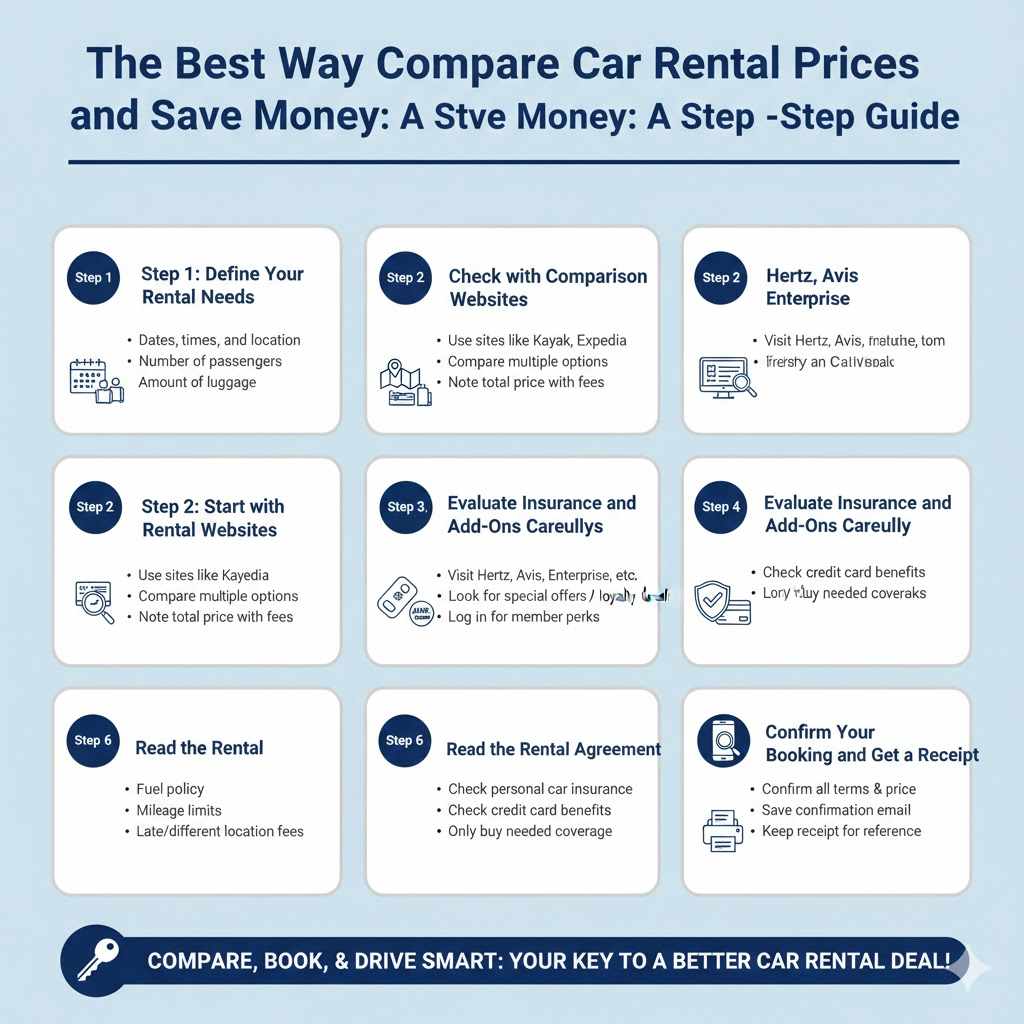
The Best Way to Compare Car Rental Prices and Save Money: A Step-by-Step Guide
This guide provides a clear, actionable plan to help you find the best car rental deals. By following these steps, you can efficiently compare options, avoid unnecessary costs, and ensure you get a rental car that fits your needs and budget.
Step 1: Define Your Rental Needs
Before you start searching, know exactly what you need. This includes the dates and times of pickup and return, the location, the number of passengers, and the amount of luggage.
Having these details clear will help you filter searches and avoid wasting time looking at unsuitable options. It also prevents impulse decisions that might cost more.
Step 2: Start with Comparison Websites
Use several reputable car rental comparison websites to get a broad overview of available prices. Enter your trip details and note down a few of the best options.
Don’t just pick the first cheap option. Look at the total price including all estimated fees and taxes.
Step 3: Check Direct Rental Company Websites
Visit the websites of the rental companies that appeared in your comparison search. Look for any special offers, discounts, or loyalty program benefits that might not be shown on comparison sites.
If you are part of a frequent renter program, log in to see if your membership offers better rates or perks.
Step 4: Evaluate Insurance and Add-Ons Carefully
Review all insurance options and add-ons presented. Check your personal car insurance policy and your credit card benefits to see what coverage you already have.
Only purchase additional coverage if it fills a gap in your existing protection or provides essential peace of mind.
Step 5: Read the Rental Agreement
Before confirming your booking, read the rental agreement carefully. Pay special attention to the fuel policy, mileage limits, and any fees for returning the car late or at a different location.
If anything is unclear, ask the rental company for clarification before you book.
Step 6: Confirm Your Booking and Get a Receipt
Once you are satisfied with all the terms and the price, confirm your booking. Save a copy of your confirmation email and any booking receipt.
This documentation is important for reference and in case of any discrepancies when you pick up or return the car.
Frequently Asked Questions
Question: How far in advance should I book a rental car to get the best price?
Answer: For domestic travel, booking 2-4 weeks in advance is generally good. For international trips, aim for 4-8 weeks ahead. Booking early helps secure lower rates, especially during peak seasons.
Question: Are airport rental locations always more expensive than off-airport ones?
Answer: Yes, airport locations usually have higher fees due to airport concessions. Renting from a nearby off-airport location can often be cheaper, but remember to factor in the cost of getting to that location.
Question: Should I always buy the extra insurance offered by the rental company?
Answer: Not necessarily. Check if your personal car insurance or credit card already provides rental car coverage. Only buy extra insurance if it fills a specific gap in your existing protection.
Question: What is a one-way fee for car rentals?
Answer: A one-way fee is charged when you pick up a rental car in one location and return it to a different one. This fee covers the cost of getting the car back to its original location.
Question: Can I use discount codes from my job or membership on rental cars?
Answer: Yes, many companies and organizations offer corporate or member discounts. Always check if you qualify for any discounts through your employer, AAA, AARP, or other memberships before booking.
Summary
Discovering the Best Way to Compare Car Rental Prices and Save Money involves smart shopping. Use comparison sites and company websites. Book early and understand all fees.
Carefully choose insurance and add-ons. By following these steps, you can confidently find a great rental car deal and keep more money for your travels.
Related pick: Check today's price on Amazon
Products related to this article
Sponsored / affiliate links. As an Amazon Associate I earn from qualifying purchases. I may earn additional commission from eligible campaigns.