How Often Should You Rotate Car Tires For Maximum Life?
The general rule is to rotate your car tires every 5,000 to 8,000 miles. However, checking your vehicle’s owner’s manual is the best way to find the exact recommendation for your car. Tire rotation helps ensure even wear, extending tire life and improving driving safety.
Understanding Tire Rotation
Tire rotation is a simple car maintenance task. It involves moving your car’s tires from one position to another. Usually, this means swapping front tires with rear tires.
It can also mean side-to-side swaps. This seems like a small job. But it makes a big difference over time.
Your tires don’t wear evenly on their own.
Front tires often wear faster. This is because they do more work. They handle steering.
They also bear the brunt of braking. Rear tires might wear slower. They mostly just roll along.
Without rotation, the front tires will wear out much sooner than the rear ones. This means you might need to buy new tires sooner than you expect.
The goal is to make all four tires wear down at about the same rate. This maximizes their total lifespan. It also helps maintain consistent traction and handling.
Think of it like rotating the tires on your bike. It helps them last longer and work better.

Why Even Tire Wear Matters
Even tire wear is important for several reasons. First, it saves you money. When tires wear evenly, they last longer.
You won’t need to replace them as often. This is a direct financial benefit. Buying new tires can be a big expense.
Making them last longer stretches your budget.
Second, it improves your car’s safety. Tires with uneven wear can affect how your car handles. Worn front tires can lead to understeer.
This is when the car wants to go straight, even when you turn the wheel. Worn rear tires can lead to oversteer. This is when the rear of the car slides out.
Both are dangerous situations.
Consistent tread depth across all four tires ensures predictable handling. This is vital in tricky driving conditions. Think about rain, snow, or sudden stops.
Good traction can make all the difference. It helps you stay in control of your vehicle.
Third, it can improve fuel economy. Tires that are properly inflated and wearing evenly offer less rolling resistance. Less resistance means your engine works less.
This uses less gas. It’s a small factor, but it adds up. Over the life of a set of tires, these savings can be noticeable.
Finally, it can improve ride comfort. Tires that are wearing unevenly can sometimes cause vibrations. This can make your ride less smooth.
Rotating them helps keep the ride quality consistent and pleasant.
How Often Should You Rotate Car Tires?
The most common recommendation is to rotate your car tires every 5,000 to 8,000 miles. This range is a good general guideline for most vehicles. Many tire shops and mechanics suggest this interval.
It strikes a good balance between proactive maintenance and necessity.
However, this is not a hard and fast rule for every single car. The absolute best source of information is your vehicle’s owner’s manual. Car manufacturers design their vehicles with specific needs in mind.
The manual will tell you the exact mileage interval they recommend for tire rotation. It might also suggest a time-based interval, like every six months, if you don’t drive many miles.
Consider your driving habits too. If you do a lot of heavy acceleration or braking, your tires might wear faster. If you often drive on rough roads or in harsh weather, this can also speed up wear.
In these cases, you might want to rotate them a bit sooner than the standard recommendation.
Some people prefer to rotate tires with every oil change. This makes it easy to remember. If your oil change interval is around 5,000 miles, this works out perfectly.
It’s a good way to ensure you don’t forget.
Always check your tires for signs of uneven wear. This is a more immediate indicator. If you notice one part of a tire is more worn than another, it’s time for a rotation.
Don’t wait for the mileage to hit.
If you drive a performance car or a vehicle with a unique drivetrain (like front-wheel drive, rear-wheel drive, or all-wheel drive), the rotation pattern might be different. The owner’s manual will detail this. Some cars need specific rotation patterns to ensure even wear across all tires.
Signs Your Tires Need Rotating
Besides hitting a mileage marker, there are physical signs that tell you it’s time to rotate your tires. Paying attention to these signs can save your tires from premature wear. It ensures your car stays safe on the road.
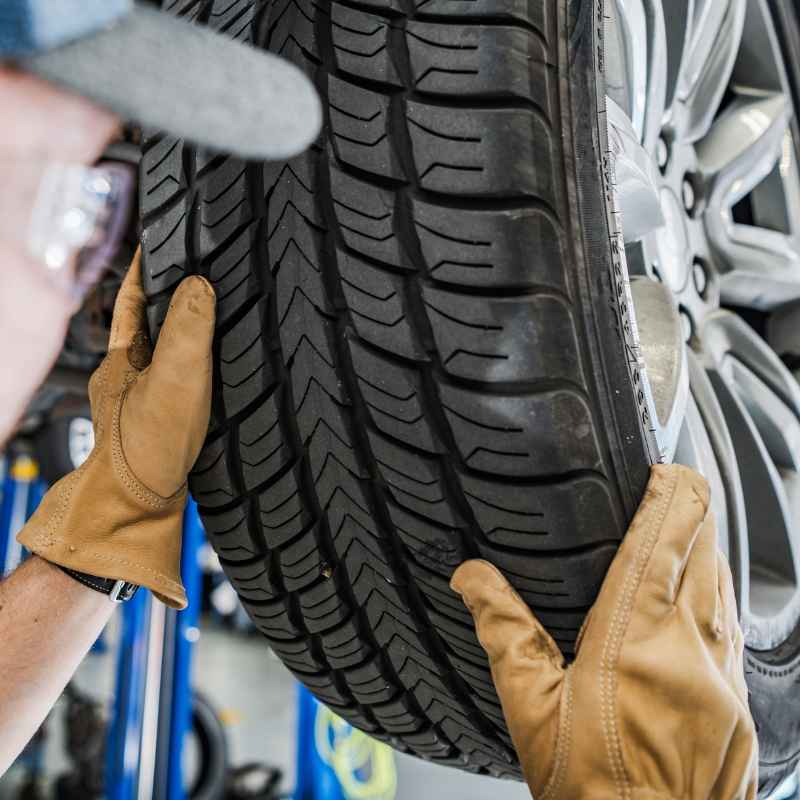
One of the most obvious signs is uneven wear patterns. Look closely at the tread on all four tires. Do you see more wear on the edges?
Or more wear in the center? Perhaps one side of a tire is much smoother than the other. This is a clear signal that rotation is needed.
It means the tires are not wearing evenly.
You might also notice a difference in tread depth between the front and rear tires. Grab a tread depth gauge. Measure the deepest part of the tread on a front tire and a rear tire.
If there’s a significant difference, it’s time to swap them.
Another sign is vibration. If you start feeling vibrations in the steering wheel, or through the seat, it could be related to tire wear. Unevenly worn tires can cause balance issues.
These issues lead to shaking or wobbling, especially at higher speeds. Rotation can help address this, though sometimes balancing is also needed.
Handling changes can also indicate a need for rotation. Does your car pull to one side when you drive on a flat road? This could be due to uneven tire wear or alignment issues.
While alignment is a separate problem, tire rotation can help manage the wear caused by it.
Listen to your tires too. Sometimes, unevenly worn tires can start to make a humming or thumping noise. This noise can change with speed.
It’s your car’s way of telling you something is off with the tires.
If you’ve recently
Tire Wear Patterns to Watch For
Center Wear: This usually means your tires are over-inflated. The middle of the tire carries more load. Fix: Check tire pressure and adjust to the recommended level.
This is found on a sticker inside your driver’s side door jamb.
Edge Wear (Shoulder Wear): This often means your tires are under-inflated. The edges carry more of the load. Fix: Check and inflate tires to the correct pressure.
Also, consider if you are taking turns too sharply.
Feathering: This is when the tread blocks are worn smooth on one side and sharp on the other. It often points to alignment issues or the need for rotation.
Cupping or Scalloping: These are irregular wear patterns that look like dips or patches. They can be caused by worn suspension parts or improper tire balancing. Rotation is still good, but investigate suspension too.
Tire Rotation Patterns
There are several ways to rotate tires. The best pattern depends on your vehicle’s drivetrain (front-wheel drive, rear-wheel drive, all-wheel drive) and tire type (directional or non-directional). Your owner’s manual is the best guide for the correct pattern.
Here are some common patterns:
- Forward Cross (Front-Wheel Drive): Move the front tires straight to the rear. Move the rear tires to the opposite front corners. This is for non-directional tires.
- Rearward Cross (Rear-Wheel Drive/All-Wheel Drive): Move the rear tires straight to the front. Move the front tires to the opposite rear corners. This is also for non-directional tires.
- X-Pattern (All-Wheel Drive/Non-Directional Tires): Swap front tires with rear tires on the opposite sides. This is a common pattern for many vehicles.
- Directional Tires: These tires have a specific rotation direction molded into the sidewall. They can only be moved front-to-back on the same side of the car. They cannot be swapped side-to-side.
- Staggered Wheels: Some cars have different sized wheels or tires on the front and rear. In this case, tires cannot be rotated between the front and rear axles. They can only be rotated side-to-side if the tires are the same size.
Key Takeaway: Always consult your owner’s manual. Using the wrong pattern can cause problems or not achieve even wear.
Can You Rotate Tires Yourself?
Yes, many car owners can rotate their own tires. It’s a relatively simple DIY task. However, it requires the right tools and some mechanical knowledge.
Safety is paramount when working on your car.
Tools you’ll need:
- A reliable jack
- Jack stands (very important for safety!)
- A lug wrench or socket set that fits your lug nuts
- A torque wrench (to tighten lug nuts to the correct spec – skipping this is how a tire can come off while driving)
- Wheel chocks (to prevent the car from rolling)
- Gloves (optional, but recommended)
Steps for DIY Tire Rotation:
- Park on a level surface. Engage the parking brake.
- Place wheel chocks behind the wheels that will remain on the ground.
- Loosen the lug nuts on all four wheels. Turn them counter-clockwise. Do not remove them yet. Just loosen them about a half turn.
- Lift one wheel with the jack. Place a jack stand securely under the vehicle’s frame or designated lift point. Lower the car onto the jack stand. Never work under a car supported only by a jack.
- Remove the lug nuts and the wheel.
- Repeat for the other three wheels, always using jack stands.
- Move the tires to their new positions according to the correct rotation pattern.
- Reinstall the wheels. Hand-tighten the lug nuts.
- Lower the car gently off the jack stands.
- Tighten the lug nuts using the torque wrench. Tighten them in a star pattern. This ensures the wheel is seated evenly. Refer to your owner’s manual for the correct torque specification.
- After driving a short distance (about 50 miles), re-check the lug nut torque.
If you’re not comfortable with any of these steps, or if you don’t have the right tools, it’s best to have a professional do it. Tire shops and mechanics perform this service routinely.
DIY Tire Rotation Checklist
Safety First: Always use jack stands. Never rely solely on a jack. Ensure the car is on a level surface.
Tools Needed: Jack, jack stands, lug wrench, torque wrench, wheel chocks.
Know Your Pattern: Consult your owner’s manual for the correct rotation pattern (e.g., forward cross, x-pattern).
Torque is Key: Overtightening or undertightening lug nuts can be dangerous. Use a torque wrench.
Follow-Up: Re-torque lug nuts after about 50 miles.
When to Get Professional Help
While DIY rotation is possible, there are times when professional help is wise. If you’re unsure about the process, don’t attempt it. A mistake could lead to serious injury or damage to your vehicle.
You should also seek professional help if you notice other issues when rotating your tires. This includes signs of:
- Bent rims
- Damaged tires (cuts, bulges, cracks)
- Brake problems
- Suspension issues
Mechanics are trained to spot these problems. They have the equipment to diagnose and fix them. Many tire shops offer free or low-cost tire rotation services, especially if you bought your tires from them.
It’s often a good idea to combine tire rotation with other maintenance, like oil changes or brake checks.
Impact of Tire Type on Rotation
The type of tires your car uses plays a role in how they should be rotated. Most passenger cars use all-season tires that are non-directional. These are the easiest to rotate.
Non-Directional Tires: These tires can be mounted on either side of the car. They can also be mounted on front or rear wheels. This allows for more rotation pattern options, like the forward cross or x-pattern.
Directional Tires: These tires have a specific tread pattern designed to rotate in only one direction. Look for an arrow on the sidewall indicating the direction of rotation. Directional tires can only be moved from the front to the back on the same side of the car.
They cannot be switched from the left side to the right side.
Asymmetrical Tires: These tires have different tread patterns on the inside and outside edges. They must be mounted on the wheel with the “outside” facing outwards. They can be rotated front-to-back on the same side of the car or, if the tread pattern allows, side-to-side.
Always check the sidewall for markings like “outside.”
Performance Tires: Some performance cars use tires that are wider in the rear than the front. These are often called staggered setups. In these cases, you cannot rotate tires between the front and rear axles because the sizes are different.
You can only rotate them side-to-side if the tires on that axle are the same size and non-directional.
All-Wheel Drive (AWD) Systems: AWD vehicles often benefit most from regular tire rotations. This helps maintain consistent traction and prevents the drivetrain from being stressed by uneven tire wear. Some AWD systems are more sensitive to tire wear differences than others.
Always check your owner’s manual for AWD-specific recommendations.
Tire Rotation and Wheel Alignment
It’s important to understand the difference between tire rotation and wheel alignment. While both relate to your tires and wheels, they address different issues.
Tire Rotation: This is about moving tires to promote even wear across all four. It helps tires last longer and maintains consistent handling. It primarily addresses the wear on the tire itself.
Wheel Alignment: This refers to the angles of your wheels. These angles affect how your tires roll on the road. If your wheels are out of alignment, they can cause tires to wear unevenly and prematurely.
They can also cause your car to pull to one side.
Relationship: While rotation moves tires around, alignment ensures the wheels are pointing in the right direction. If your car is pulling to one side, and you rotate the tires, the pulling might continue. This is because the underlying alignment issue hasn’t been fixed.
When to Check Alignment:
- After hitting a pothole or curb
- If you notice uneven tire wear patterns
- If your car pulls to one side
- If your steering wheel is not centered when driving straight
- After replacing steering or suspension parts
It’s a good idea to have your alignment checked periodically, especially if you notice any of these signs. Some mechanics recommend checking alignment when you rotate your tires. This can be a proactive way to catch potential problems early.
The Cost of Tire Rotation
The cost of tire rotation can vary. If you do it yourself, the cost is zero, aside from the initial investment in tools. If you take your car to a professional, the price is typically quite low.
Independent Shops: Many independent repair shops charge between $20 and $50 for a tire rotation. Some may offer it as a free service if you’ve purchased tires from them or if you’re having other work done.
Tire Retailers: Major tire chains often include free tire rotations for the life of the tires when you buy from them. This can be a significant saving over time.
Dealerships: Car dealerships might charge a bit more, perhaps $30 to $75, for a tire rotation. However, they are also very familiar with your specific vehicle model.
Bundled Services: Sometimes, tire rotation is bundled with other services like balancing or an oil change. Check for package deals. Balancing ensures that the weight of the tire and wheel is evenly distributed.
This prevents vibrations and further uneven wear. It’s often recommended to balance tires when they are mounted on the rim, and again if you notice vibrations.
Considering how much new tires cost, a small investment in regular rotation is well worth it. It’s one of the most cost-effective maintenance tasks you can perform to extend tire life.
What This Means for Your Car
Understanding how and when to rotate your tires directly impacts your car’s well-being. It’s not just about making tires look good; it’s about performance, safety, and economy.
For Your Tires: The most direct impact is on tire longevity. Regular rotations can add thousands of miles to the life of your tires. This means you’ll spend less money on replacements.
It ensures the tread wears down evenly, maximizing the use of the rubber.
For Your Safety: Consistent tread depth means consistent grip. This is crucial for braking, cornering, and driving in wet or slippery conditions. Uneven wear can lead to unpredictable handling, making sudden maneuvers more dangerous.
For Your Wallet: Beyond saving on tire purchases, even tire wear can slightly improve fuel efficiency. Reducing rolling resistance means your engine doesn’t have to work as hard. Over the year, this can translate to a small but noticeable fuel saving.
For Your Car’s Ride: Evenly worn tires contribute to a smoother, quieter ride. You’re less likely to experience vibrations or distracting noises caused by uneven tread wear.
For Your Vehicle’s Systems: Consistent tire wear helps maintain proper load distribution on your suspension and drivetrain components. While the effect might be small, it contributes to the overall health of your vehicle’s mechanical parts.
When Is Tire Rotation Not Enough?
While tire rotation is incredibly beneficial, it’s not a magic fix for all tire-related problems. There are situations where rotation alone won’t solve the issue or where other maintenance is more critical.
Severe Uneven Wear: If you have significant wear on one part of a tire (like a bald edge or a worn patch), rotation might not fully correct the problem. This type of wear is often caused by deeper issues like poor alignment, bent suspension components, or severely under-inflated tires.
Tire Damage: Rotation does not repair cuts, bulges, cracks, or punctures in tires. If you find any of these, the tire needs inspection by a professional. It might need patching, repair, or replacement.
Improper Tire Inflation: While rotation helps with wear, it doesn’t fix chronic under-inflation or over-inflation. Always maintain the correct tire pressure. This is found on your vehicle’s door jamb sticker.
Worn-Out Tires: Even with perfect rotation, tires have a lifespan based on their tread depth and age. If your tires are worn down to the wear bars or are several years old, they need replacement, regardless of rotation history.
Suspension and Steering Problems: Issues like worn shock absorbers, ball joints, or tie rods will cause abnormal tire wear that rotation can’t fix. These components need to be repaired or replaced.
Vehicle Performance Issues: If your car is pulling, vibrating excessively, or handling poorly, and rotation doesn’t help, it’s time for a thorough inspection of alignment, suspension, and steering components.

Frequent Questions About Tire Rotation
How often should I rotate my car tires?
Generally, you should rotate your car tires every 5,000 to 8,000 miles. However, always check your vehicle’s owner’s manual for the manufacturer’s specific recommendation, as this can vary between car models and driving conditions.
What happens if I don’t rotate my tires?
If you don’t rotate your tires, they will likely wear unevenly. Front tires often wear out faster than rear tires. This leads to reduced tire life, poorer handling, and can compromise your vehicle’s safety, especially in challenging driving situations.
Can I rotate my own tires?
Yes, you can rotate your own tires if you have the necessary tools (jack, jack stands, lug wrench, torque wrench, wheel chocks) and understand the correct procedure and safety precautions. If you’re not comfortable, a professional service is recommended.
What is the best tire rotation pattern?
The best tire rotation pattern depends on your vehicle’s drivetrain (FWD, RWD, AWD) and tire type (directional, non-directional). Common patterns include forward cross, rearward cross, and x-pattern. Always refer to your owner’s manual for the correct pattern for your specific car.
Do I need to balance my tires when I rotate them?
It’s not always required, but it’s often a good idea. Tire balancing ensures even weight distribution around the wheel, which prevents vibrations and further uneven wear. Many tire shops offer balancing with rotation for a small additional fee.
How do I know if my tires need rotating?
Look for signs of uneven wear (more wear on edges or center), a noticeable difference in tread depth between front and rear tires, vibrations felt while driving, or your car pulling to one side. These are indicators that rotation is needed.
Does tire rotation affect my car’s alignment?
Tire rotation itself does not affect wheel alignment. However, if you notice your car pulling to one side after rotation, it may indicate an underlying alignment issue that needs to be addressed. It’s good practice to check alignment if you see persistent uneven wear.
Conclusion
Keeping up with tire rotation is a simple step. It makes a big impact. It saves you money.
It keeps you safer on the road. Aim for that 5,000 to 8,000-mile mark. Or use your owner’s manual.
Watch for those wear signs. Your tires will thank you.
Products related to this article
Sponsored / affiliate links. As an Amazon Associate I earn from qualifying purchases. I may earn additional commission from eligible campaigns.