What Is Car Tire Rotation And Why Does It Matter?
Every car owner wants their vehicle to run safely, efficiently, and last as long as possible. Yet, one of the most overlooked aspects of vehicle maintenance is car tire rotation. Despite its crucial role in ensuring performance and safety, many drivers neglect this simple procedure, either due to lack of awareness or misconceptions about its benefits. With tire replacement costs rising and road safety always a concern, understanding tire rotation is more important than ever.
Car tire rotation is more than just swapping tires from front to back. It’s a strategic process that optimizes tire wear, improves handling, and can even impact fuel efficiency. Whether you drive a sedan, SUV, or truck, regularly rotating your tires can save you money, reduce risks, and enhance your overall driving experience.
In this article, we’ll delve deep into what tire rotation is, why it matters, how it’s done, and the tangible benefits it brings. We’ll also address common myths, provide data-driven comparisons, and answer key questions to ensure you have the authoritative knowledge needed for proper tire care.
Key Takeaways
- Car tire rotation redistributes tire positions to promote even tread wear and extend tire lifespan.
- Regular tire rotation improves vehicle safety, handling, and fuel efficiency.
- The recommended interval for tire rotation is every 5,000 to 8,000 miles, but this can vary by vehicle and driving conditions.
- Tire rotation patterns depend on vehicle drivetrain (FWD, RWD, AWD) and tire type.
- Neglecting tire rotation can lead to premature tire replacement, reduced performance, and increased risk of accidents.
- Professional service or DIY tire rotation are both viable, but proper pattern and torque are critical.
Credit: www.tiresplus.com
Understanding Car Tire Rotation
Car tire rotation is a systematic process where the positions of a vehicle’s tires are changed according to specific patterns. This maintenance task is vital for ensuring even tire wear, which directly impacts vehicle safety, performance, and longevity.
What Is Tire Rotation?
Tire rotation involves moving tires from one location on the vehicle to another, such as from front to rear or side to side. The primary goal is to balance tread wear among all tires, as each tire experiences different forces depending on its position.
- Front tires on front-wheel-drive vehicles tend to wear faster due to steering and power delivery.
- Rear tires on rear-wheel-drive vehicles experience more force during acceleration.
By rotating tires, you ensure that each tire spends time in every position, evening out wear and maximizing their lifespan. This equalization is especially important because tires with uneven wear patterns can develop cupping, excessive noise, and unpredictable handling—problems that can be difficult and expensive to remedy if left unchecked.
Additionally, tire rotation helps maintain the optimal contact patch for each tire. As tires wear, their ability to grip the road surface changes, which can affect braking and cornering. By periodically switching their positions, you allow each tire to “share the load” and wear more uniformly.
Why Is Tire Rotation Necessary?
Tire rotation is necessary because:
- Uneven wear: Tires in different positions wear at varying rates due to weight distribution, steering, and braking forces. For example, in a typical front-wheel-drive car, the front tires bear about 60% of the weight and handle the majority of braking, leading to accelerated wear compared to the rear tires.
- Safety: Uneven tire tread can reduce traction, especially in wet or slippery conditions. Deep tread is vital for channeling water away and preventing hydroplaning.
- Cost savings: Rotating tires extends their usable life, reducing the frequency and expense of replacements. This simple maintenance can add thousands of extra miles to your tire set.
- Performance: Even tread promotes consistent handling and ride quality. Unevenly worn tires can cause vibrations, steering pull, or unpredictable responses during emergency maneuvers.
Additionally, tire rotation allows for regular inspection of the tires for damage, embedded objects, or early signs of alignment or suspension issues. Finding these problems early can prevent bigger, costlier repairs down the road.
How Tire Rotation Differs From Other Maintenance
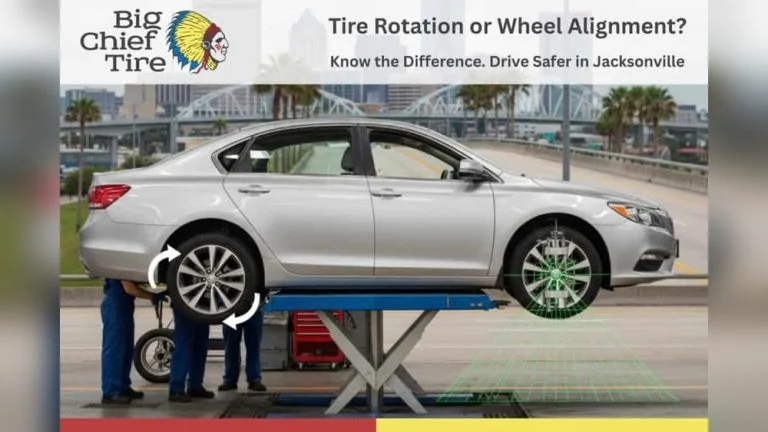
Unlike tire balancing or alignment, which address vibration or wheel angles, tire rotation is solely about redistributing tire positions. It is a preventative maintenance procedure that complements other tire care tasks.
- Balancing ensures that the tire and wheel assembly spins smoothly at high speeds by correcting weight imbalances.
- Alignment adjusts the angles of the wheels so they are parallel to each other and perpendicular to the ground, improving handling and preventing rapid wear.
Tire rotation should be seen as part of a holistic tire maintenance routine. While balancing and alignment solve specific problems, regular rotation prevents uneven wear before it starts.
The Science Behind Tire Wear
Tire wear is influenced by:
- Vehicle weight distribution: Heavier vehicles and those with a forward or rearward bias will naturally cause more wear on certain tires.
- Driving habits (aggressive braking, cornering): Hard braking and fast cornering increase stress on tires, as does frequent driving on rough or unpaved roads.
- Road conditions: Potholes, debris, and rough surfaces can accelerate wear or cause localized tire damage.
- Tire type and tread design: Performance tires may wear faster, while all-season or touring tires often have longer tread life.
Studies from the National Highway Traffic Safety Administration show that tires with uneven tread are up to 27% more likely to fail, increasing the risk of accidents. Regular rotation helps mitigate these risks by ensuring that no single tire is overburdened or worn out before the others.
Furthermore, uneven wear can lead to increased rolling resistance, which negatively impacts fuel efficiency and increases emissions—a concern for both individual drivers and fleet operators focused on sustainability.
Credit: postletire.com
Tire Rotation Patterns And Methods
The method of tire rotation depends on several factors: vehicle drivetrain, tire type, and whether the tires are directional or non-directional.
Standard Tire Rotation Patterns
There are several common rotation patterns:
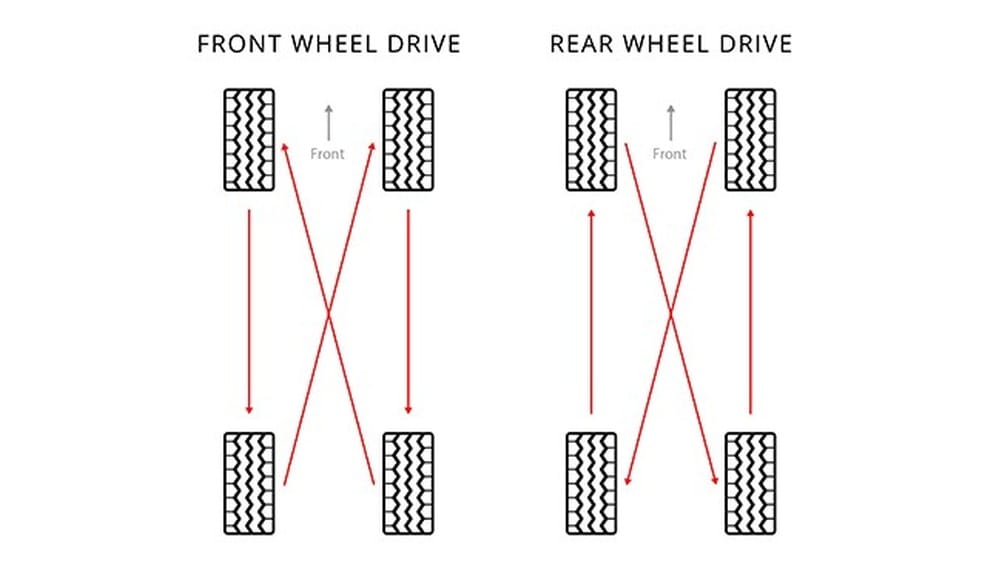
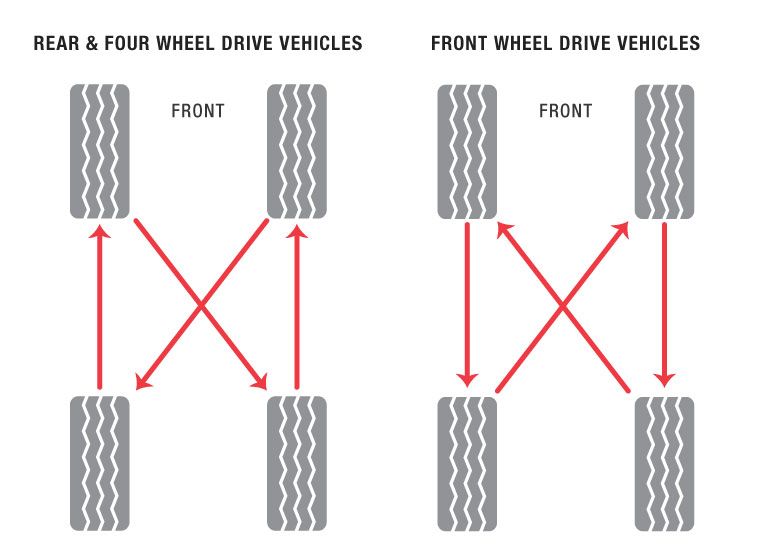
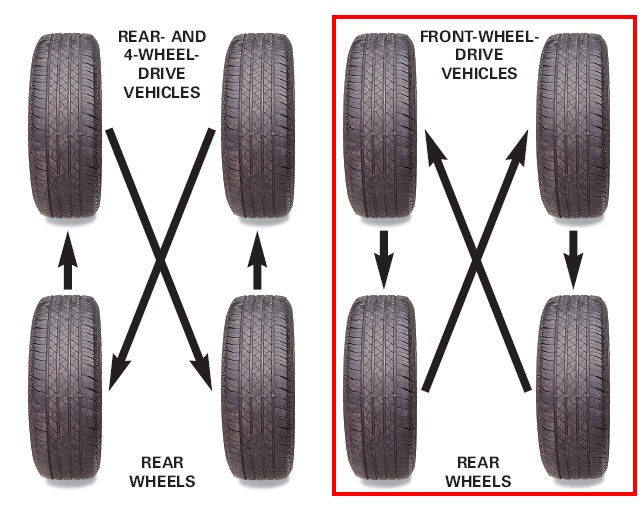
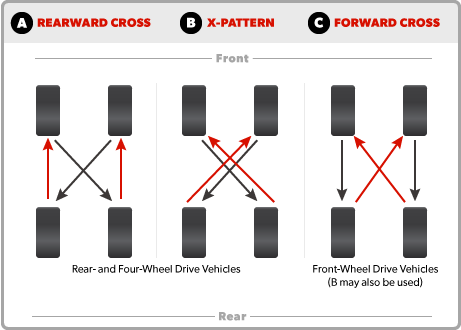
- Forward Cross: For front-wheel-drive vehicles; front tires move to rear, rear tires cross to front. This pattern helps balance the increased wear on the front tires by allowing the rear tires to take on some of the wear, while the previously worn front tires move to the rear.
- Rearward Cross: For rear-wheel-drive and four-wheel-drive vehicles; rear tires move to front, front tires cross to rear. This pattern is the opposite of the forward cross and is designed to address the heavier wear that often occurs on the rear tires in these drivetrains.
- X-Pattern: All tires swap diagonally; used for all vehicles. The X-pattern is a universal method, especially effective if all four tires are the same size and non-directional.
Other less common patterns include the side-to-side for vehicles with staggered wheel sizes (different sizes front and rear), and the front-to-back for directional tires. Always refer to the manufacturer’s recommendations, as some vehicles—such as certain sports cars or luxury SUVs—may have specific requirements.
Directional Vs. Non-directional Tires
- Directional tires have tread designed to rotate in one direction. They can only be swapped front to back, not side to side. Attempting to switch sides will cause the tread to face the wrong direction, reducing wet-weather performance and increasing wear.
- Non-directional tires can be rotated in any pattern. These tires typically have symmetrical tread patterns that perform equally well regardless of mounting direction.
Specialty vehicles or performance cars with staggered setups (wider rear tires) may have more limited rotation options, sometimes requiring only side-to-side swaps or no rotation at all if tire sizes are unique to each axle.
Comparison Table: Rotation Patterns By Drivetrain
| Drivetrain | Recommended Pattern | Benefits |
|---|---|---|
| Front-Wheel Drive (FWD) | Forward Cross | Balances wear on front tires |
| Rear-Wheel Drive (RWD) | Rearward Cross | Balances wear on rear tires |
| All-Wheel Drive (AWD) | X-Pattern | Even wear across all tires |
| Directional Tires | Front to Rear | Maintains tread direction |
How Often Should Tires Be Rotated?
Most manufacturers recommend tire rotation every 5,000 to 8,000 miles, or at every oil change. However, this interval may vary based on:
- Driving habits: Frequent highway driving may extend intervals, while urban stop-and-go traffic may require more frequent rotation.
- Road conditions: Regular exposure to harsh conditions, such as gravel, potholes, or extreme temperatures, warrants more frequent checks and rotation.
- Vehicle type: Heavier vehicles or those with performance-oriented setups may need more frequent attention.
Consult your owner’s manual or check guidelines from the Tire Rack for specific recommendations. Some modern vehicles with built-in maintenance reminders or tire pressure monitoring systems (TPMS) will alert you when it’s time for service.
Signs Your Tires Need Rotation
Watch for these indicators:
- Uneven tread wear: Inspect each tire for differences in tread depth across the set.
- Vibration or noise: Unusual vibrations or increased road noise may signal uneven wear.
- Reduced handling or traction: If your car feels less stable or responsive, especially in wet conditions, uneven tires could be to blame.
- Visible tread differences between tires: Tread depth gauges or simple visual checks can reveal disparities.
Proactive rotation can prevent these symptoms from developing and help maintain a smooth, safe ride.
Credit: www.tirerack.com
The Benefits Of Regular Tire Rotation
Rotating your tires isn’t just about prolonging their life—it delivers multiple performance and safety advantages.
Increased Tire Lifespan
Evenly worn tires last longer. According to the Consumer Reports, regular rotation can extend tire life by up to 25%.
- Cost savings: Less frequent replacements. For example, if a set of tires lasts 50,000 miles instead of 40,000, you could avoid buying an extra set over the life of your car.
- Environmental benefits: Fewer discarded tires mean less environmental waste. Extending tire life reduces landfill impact and the need for raw materials in manufacturing new tires.
Enhanced Vehicle Safety
Even tread depth ensures maximum grip and reduces the risk of blowouts, hydroplaning, or skidding. The Tire Safety Group notes that uneven tires are a leading cause of loss of control accidents.
For instance, during emergency braking, a vehicle with evenly worn tires is more likely to stop in a straight line rather than pulling to one side. This predictability is crucial for avoiding collisions, especially in adverse weather.
Improved Handling And Performance
Balanced tires maintain optimal handling, especially during cornering or braking. This is critical for high-performance vehicles and those driving in challenging conditions.
- Cornering: Even tires distribute grip evenly, making turns safer and more predictable.
- Braking: Consistent tread ensures all tires contribute equally, shortening stopping distances.
- Ride comfort: Balanced wear reduces vibrations and noise, leading to a quieter, smoother ride.
Better Fuel Efficiency
Uneven tires create rolling resistance, making the engine work harder and burning more fuel. Regular rotation can improve fuel economy by up to 3%, according to a study from the EPA.
While a 3% improvement may seem modest, over tens of thousands of miles, it adds up to significant savings and reduced emissions—a win for both your wallet and the environment.
Warranty Compliance
Many tire warranties require documented rotations. Failing to rotate can void your warranty, costing you hundreds in potential replacement costs.
Manufacturers may request maintenance records for warranty claims, so always keep receipts or logs of your rotations. This documentation can also be helpful when selling your vehicle, as it demonstrates diligent maintenance to prospective buyers.
How Tire Rotation Impacts Cost And Value
Understanding the financial implications of tire rotation is essential for both individual drivers and fleet managers.
Cost Of Tire Rotation
- DIY rotation: Minimal cost, requires tools and knowledge. Investment in a quality jack, stands, and torque wrench pays for itself over time.
- Professional service: $20–$50 per rotation at most service centers. Some shops offer free rotation with tire purchase or as part of a maintenance package.
Compared to the average cost of tire replacement ($150–$250 per tire), regular rotation is a cost-effective investment. Delaying or skipping rotations can lead to replacing only the most worn tires, resulting in mismatched tread and compromised performance.
Data Table: Tire Rotation Vs. Replacement Costs
| Maintenance Type | Average Cost | Frequency | Annual Savings |
|---|---|---|---|
| Tire Rotation | $30 | Twice/year | $0 (prevention) |
| Tire Replacement | $200/tire | Every 2–4 years | $400–$800 |
| Skipped Rotation | $0 | N/A | +$200/year (due to premature wear) |
Value Over Time
- Fleet vehicles: Proper rotation can save thousands annually by reducing the frequency of expensive tire replacements and minimizing downtime for repairs.
- Individual owners: Extends tire life, preserves resale value, and provides peace of mind by lowering the likelihood of sudden tire failures.
Real-world Example: Fleet Management
A delivery company with a fleet of 50 vans implemented strict tire rotation schedules. Over two years, their tire replacement costs dropped by 18%, and downtime due to tire failures decreased by 24%. This resulted in substantial savings and improved operational reliability.
Additionally, the company observed fewer roadside breakdowns, which not only reduced repair costs but also enhanced customer satisfaction due to more reliable delivery times.
Tire Rotation: Step-by-step Process
Whether performed professionally or as a DIY task, tire rotation follows a systematic procedure.
Preparation
- Consult the owner’s manual for recommended rotation pattern. Some vehicles have unique requirements due to tire size or drivetrain.
- Gather tools: Jack, lug wrench, torque wrench, wheel chocks. A set of jack stands is essential for safety.
- Check tire type: Directional vs. non-directional, staggered setups. Mark tires with chalk to remember their original positions, especially helpful for beginners.
Execution
- Loosen lug nuts before lifting the vehicle. This prevents spinning the wheels while trying to break the nuts loose.
- Lift car safely using a jack and secure with stands. Never rely solely on a jack; always use stands for safety.
- Remove tires and swap positions according to pattern. Place the tires in the correct new positions, using your reference marks if needed.
- Reinstall tires and hand-tighten lug nuts. Tighten in a star pattern to ensure even pressure.
- Lower vehicle and torque lug nuts to manufacturer specification. Use a torque wrench to avoid over- or under-tightening, which can cause wheel or brake damage.
Post-rotation Checks
- Check tire pressure and adjust as needed. Each tire position may require a different PSI, especially in vehicles with staggered setups.
- Inspect tread depth for abnormalities. Use a tread depth gauge to ensure all tires are within safe limits.
- Reset TPMS sensors if equipped. Some vehicles require manual reset after tire rotation to avoid warning lights.
Common Mistakes To Avoid
- Using incorrect rotation pattern for your vehicle type or tire style.
- Failing to torque lug nuts properly—over-tightening can warp rotors, while under-tightening can cause wheels to come loose.
- Ignoring tire pressure after rotation, leading to uneven wear or poor handling.
- Neglecting to check for tire damage, nails, or sidewall cracks during the process.
Professional Vs. Diy Rotation
While many drivers perform rotations themselves, professional service guarantees proper pattern, torque, and inspection. Most shops include tire rotation in routine maintenance packages, and technicians are trained to spot early signs of alignment or suspension problems.
Tire Rotation Myths And Misconceptions
Misinformation about tire rotation can lead to neglect or improper practice. Let’s dispel some common myths.
Myth 1: All Tires Wear Evenly
Fact: Front tires on FWD vehicles wear faster due to steering and braking forces. Rear tires on RWD vehicles handle acceleration. Even AWD vehicles can have uneven wear due to torque distribution differences.
Myth 2: Rotation Isn’t Needed With New Cars
Fact: New vehicles still require rotation. In fact, some new cars have more aggressive weight distribution, increasing the need. Skipping rotation in the early years can shorten the life of OEM tires and impact warranty eligibility.
Myth 3: Rotation Only Matters For High-performance Vehicles
Fact: All vehicles benefit, from economy sedans to SUVs and trucks. Even light use can create uneven wear due to road camber and load differences.
Myth 4: Tire Rotation Voids Warranty
Fact: Most warranties require rotation. Keeping records is crucial for claims. Always check your tire manufacturer’s warranty policy and log each rotation.
Myth 5: Directional Tires Can Be Rotated Side-to-side
Fact: Directional tires must retain their rolling direction; only front-to-back swaps are appropriate. Side-to-side rotation can compromise wet weather traction and tire integrity.
Case Study: Neglecting Rotation
A family SUV driven mostly in urban conditions skipped tire rotation for 24,000 miles. The front tires wore down to 3/32” tread, while the rear remained at 7/32”. This led to reduced braking performance and required premature replacement of two tires—costing $400 more than if rotation had been performed.
In addition, the mismatched tread depths caused increased road noise and reduced ride comfort, issues that could have been easily avoided with regular rotation.
Tire Rotation And Seasonal Considerations
Seasonal changes affect tire wear and rotation needs. Here’s what you need to know.
Winter Tires
- Winter tires should be rotated just like standard tires. Winter tread compounds and patterns can wear quickly if left in the same position.
- Ensures even wear for optimal traction in icy conditions. Consistent tread depth is crucial for gripping snow and ice.
All-season Tires
- Rotation maintains performance throughout temperature fluctuations. Heat and cold can affect rubber hardness and tread wear rates.
- Prevents uneven wear from summer heat and winter cold, which can cause certain tires to degrade faster depending on their position.
Regional Effects
- In northern climates, road salt and potholes increase wear. Salt can accelerate rubber degradation and potholes can cause alignment or suspension issues that lead to uneven wear.
- In southern regions, heat accelerates tread degradation. High temperatures can soften rubber, making it more susceptible to rapid wear and blowouts.
Example: Seasonal Rotation Strategy
A driver in Minnesota rotates their winter tires every 5,000 miles during snow season, then switches to all-season tires and continues rotation. This strategy maximizes tire life and safety year-round.
Additionally, rotating before and after seasonal tire changes provides an excellent opportunity to inspect tires for damage and ensure balanced wear across the set.
How Tire Rotation Impacts Vehicle Performance
Tire rotation affects more than just tread life—it influences several aspects of vehicle performance.
Handling And Stability
Even tire wear ensures predictable handling. Uneven tires can cause pulling, vibration, or loss of traction during turns. Consistent tread depths on all corners make the car’s responses to steering input smoother and more predictable, which is especially important for emergency maneuvers.
Braking Distance
Worn tires increase stopping distance. By rotating, you maintain consistent tread depth, ensuring optimal braking. In emergency situations, even a few feet can make the difference between a near-miss and a collision.
Ride Quality
Balanced tires reduce road noise and vibration, leading to a smoother ride. Drivers often notice less cabin noise and fewer vibrations after a proper rotation, especially if previously worn tires were causing steering wheel shake.
Data Table: Tire Performance Before And After Rotation
| Metric | Before Rotation | After Rotation | Improvement |
|---|---|---|---|
| Tread Depth Variation | 4/32” (front), 8/32” (rear) | 6/32” all tires | Even wear |
| Braking Distance (60-0 mph) | 145 ft | 132 ft | 13 ft reduction |
| Fuel Economy | 24 mpg | 24.7 mpg | +2.9% |
Example: Performance After Rotation
A sports sedan owner noticed improved cornering and reduced vibration after a professional tire rotation. The mechanic also identified a slow leak, preventing potential blowout.
The owner also reported a quieter cabin and more stable feel at highway speeds, demonstrating that even minor maintenance can have a significant impact on both comfort and safety.
Choosing Professional Vs. Diy Tire Rotation
Deciding between professional service and DIY depends on your expertise, tools, and time.
Professional Tire Rotation
- Advantages: Expertise, inspection, proper torque, warranty documentation
- Disadvantages: Cost ($20–$50), scheduling
Professional service centers often combine rotation with balancing and inspection. Technicians check for uneven wear, damage, and alignment issues. Many also check brake pads, rotors, and suspension components, providing additional value during a routine visit.
Diy Tire Rotation
- Advantages: Cost savings, flexibility, ability to inspect tires and brakes yourself.
- Disadvantages: Requires tools, knowledge, risk of errors
DIY rotation is feasible for mechanically inclined drivers. However, improper torque or pattern can compromise safety. Always use a calibrated torque wrench and double-check the recommended rotation method for your vehicle.
Step-by-step Diy Guide
- Park on a level surface and apply parking brake.
- Loosen lug nuts before jacking up the car.
- Use a jack and stands to lift the vehicle.
- Follow the correct rotation pattern for your vehicle.
- Tighten lug nuts in a star pattern and torque to spec.
- Check tire pressures and reset TPMS sensors if necessary.
- Inspect tires for embedded objects, cracks, or bulges.
When To Choose Professional Service
- If tires are staggered (different sizes front/rear)
- If tires are directional
- If you lack proper tools or experience
- If you want a full inspection of brakes and suspension
External Resource
For a detailed visual guide, see Wikipedia: Tire rotation.
Frequently Asked Questions
What Is The Main Purpose Of Car Tire Rotation?
The main purpose of car tire rotation is to ensure even tread wear across all tires. By periodically changing tire positions, you reduce the risk of premature tire replacement, improve vehicle safety, and enhance performance.
How Often Should I Rotate My Tires?
Most experts recommend rotating tires every 5,000 to 8,000 miles, or at every oil change. However, this interval can vary based on driving habits, vehicle type, and tire model. Always consult your owner’s manual for specific guidance.
Can I Rotate Tires Myself, Or Should I Visit A Professional?
Both options are viable. DIY rotation saves money but requires proper tools and knowledge. Professional service ensures correct pattern, torque, and inspection. Vehicles with directional or staggered tires should be rotated by professionals.
Does Tire Rotation Affect Alignment Or Balancing?
Tire rotation does not directly affect wheel alignment or balancing. However, it is often combined with these services during professional maintenance. If you notice vibration or pulling after rotation, consult a technician.
Will Tire Rotation Void My Warranty?
No, in fact, many tire warranties require regular rotation and documentation. Neglecting rotation can void your warranty. Always keep records of maintenance for warranty claims.
What If My Tires Are Already Unevenly Worn?
If you notice significant differences in tread depth, consult a professional. They can check for alignment or suspension issues and advise whether rotation or replacement is the best solution. Sometimes, severely worn tires may be unsafe to rotate and should be replaced.
Final Thoughts
Proper car tire rotation is a simple yet powerful tool for maximizing tire life, improving safety, and enhancing vehicle performance. By understanding the science, patterns, and benefits behind tire rotation—and committing to a regular schedule—you protect your investment and ensure a smoother, safer driving experience. Whether you choose professional service or a DIY approach, make tire rotation a cornerstone of your maintenance routine. For more authoritative information, consult resources like the AAA Auto Repair Guide and your vehicle’s manual. Safe travels and happy motoring!
Products related to this article
Sponsored / affiliate links. As an Amazon Associate I earn from qualifying purchases. I may earn additional commission from eligible campaigns.