Can A Bad Tire Cause Your Car To Pull? Find Out Now
It’s one of those nagging feelings you get when driving. You’re holding the steering wheel, but the car seems to have a mind of its own. It wants to drift to one side.
You gently correct it, but then it wants to drift the other way. This can be really frustrating, especially on a long drive. You start to wonder, “What is going on with my car?” It’s easy to blame a lot of things, but one of the most common culprits is often overlooked.
A bad tire is a very common reason why a car might pull to one side. This can happen due to uneven wear, different tire pressures, or damage to the tire itself. Checking your tires is a crucial first step if your car pulls.
Understanding How Tires Affect Your Car’s Direction
Think about your tires. They are the only things touching the road. They grip the pavement to help you steer, stop, and go.
When all four tires are working right, they help your car go straight. They provide equal grip on both sides. This balance is key.
When something is off with just one tire, or even a pair, that balance can be broken.
This imbalance makes one side of your car have more or less grip than the other. Imagine trying to walk with one shoe much tighter than the other. You’d probably lean one way to try and balance.
Your car does something similar. The steering system tries to fight this pull, but if the tire issue is strong enough, you’ll feel it tugging.
This pulling feeling can feel different. Sometimes it’s a gentle drift. Other times, it’s a strong tug that makes it hard to keep the wheel straight.
It’s important to pay attention to how it feels. This can give you clues about what might be wrong. Even small differences matter here.
Your car relies on its tires to be consistent.
My Own “Car Pull” Scare
I remember this one time, about three years ago. I had just driven back from visiting family out of state. It was late, and I was tired.
As I got onto the highway for the last stretch home, I noticed it. My steering wheel felt… lazy. I’d let go for a second, and the car would start a slow drift to the right.
At first, I thought I was just tired and imagining it. But the longer I drove, the more I felt it.
It wasn’t a sharp tug, but a persistent lean. I gripped the wheel tighter, feeling a knot of worry in my stomach. My mind raced through all the possibilities: alignment, suspension, maybe even something serious.
I pulled over at a rest stop, my heart pounding a little. I got out and walked around the car, looking at all four tires in the dim light. One tire looked a little flatter than the others.
It was the front right one. I didn’t have a tire gauge with me, so I just pushed on it. It felt soft.
That simple visual check and touch told me a lot. I decided to take it easy and drive straight to a 24-hour tire shop. They confirmed it.
The tire had a slow leak. It wasn’t completely flat, but it was low enough to mess with the car’s balance and make it pull. That experience really taught me how much a single tire can affect the whole car.
It was a good reminder to trust my instincts and check the simple things first.
Common Tire Wear Patterns and Their Effects
Even Tread Wear: This is what you want! It means the tire is wearing down smoothly across the entire surface. Your car should drive straight.
Feathering: This is when the tread edges feel rough in one direction. It’s like a bird’s feather. This often means the alignment is off.
Cupping or Scalloping: These are bald spots that appear in a circular pattern. This usually points to a suspension problem, like worn shocks or struts.
One-Sided Wear: If only one edge of the tire is worn more than the other, it strongly suggests an alignment issue.
Why Tires Make Your Car Pull: Deeper Dives
Let’s break down the main reasons a tire can cause your car to pull. It’s not just one thing. It’s a few different possibilities that all lead to the same result: your car steering itself.
Uneven Tire Wear
This is probably the most common cause after pressure issues. When tires don’t wear evenly, they don’t grip the road the same way. Imagine a brand new tire.
It’s perfectly round and has a smooth, even surface. As you drive, this surface wears down.
If your car’s alignment is off, or if your wheels aren’t balanced, one part of the tire will wear down faster than the rest. For example, if the front right tire is worn more on the inside edge, it might have less grip on that side. The left side of the car, with its better-gripped tire, will then pull the car towards it.
This uneven wear creates an invisible slope on the tire’s surface. The car follows this slope. It’s like trying to roll a ball on a ramp; it will always go down the slope.
Your tires can act like these ramps if they are worn unevenly.
It’s not always obvious. Sometimes the wear is subtle. You might not see it just by looking.
You have to feel the edge of the tread. Run your hand across it. Does it feel smooth in one direction and rough like sandpaper in the other?
That’s a sign of feathering, which is a type of uneven wear.
Tire Pressure: The Simple Fix You Can’t Ignore
What is Tire Pressure? It’s the amount of air in your tire. It keeps the tire firm and helps it grip the road.
Why it Matters: If one tire has much less air than the others, it will be softer. This softer tire will deform more on the road. This changes how it grips.
The car will pull towards the side with the lower pressure.
Recommended Pressure: You can find the correct tire pressure on a sticker inside your driver’s side door jam. It’s also in your car’s owner’s manual.
Checking is Easy: Get a simple tire pressure gauge. It costs only a few dollars. Check your tires when they are cold (before you drive much).
Tire Pressure Imbalance
This is so simple, it’s often overlooked. Every tire on your car needs to have the correct amount of air. This is usually listed on a sticker on the driver’s doorjamb or in your owner’s manual.
If one tire has significantly less air pressure than the others, it becomes softer.
A softer tire has a different shape on the road. It has more “give.” This means it doesn’t roll as freely. The car will naturally want to steer toward the side with the softer tire.
It’s like pushing a shopping cart with one wobbly wheel; it always pulls to that side.
This is also why you might notice your car pulling after a very cold night. Cold air is less dense. If your tires were filled on a warm day, the cold air can cause the pressure to drop.
This drop can be enough to make your car pull. The opposite can happen if you fill them on a very hot day.
It’s easy to check. You just need a simple tire pressure gauge. Most auto parts stores sell them for a few dollars.
It’s a good habit to check your tire pressure at least once a month. Do it when the tires are cold for the most accurate reading. Make sure all four tires have the same pressure, or at least very close to it.
Damaged Tires
Sometimes, a tire can be damaged in a way that isn’t immediately obvious. A puncture might let air out slowly, as we discussed. But other damage can affect how the tire functions.
Things like hitting a pothole hard can damage the internal structure of the tire. This is called a “bubble” or “sidewall bulge.” It looks like a swollen spot on the side of the tire. This means the tire is no longer safe to use and can cause pulling.
Even without a visible bubble, internal damage can occur. This can make the tire “unbalanced” in a different way. It affects how the tire rolls.
It might not be perfectly round anymore. When it doesn’t roll straight, it can pull your car.
Another type of damage is a “separation.” This is when layers of the tire start to come apart. This is very dangerous. It can cause a blowout.
But before that, it can certainly make the tire behave strangely, leading to pulling.
If you hit something hard, like a curb or a large pothole, it’s always a good idea to inspect your tires. Look for any weird bulges, cuts, or anything that looks out of place.
What to Look For When Inspecting Tires
Visual Check: Walk around your car. Look at each tire from all angles. Are any obviously flat or low on air?
Sidewall: Check the sides of the tires for any cuts, bulges, or cracks. A bulge means the tire is damaged internally and needs immediate replacement.
Tread Depth: You can use a tire tread depth gauge or a penny. Put a penny into the deepest part of the tread with Lincoln’s head facing down. If you can see the top of Lincoln’s head, your tread is too low and needs replacing.
Uneven Wear: Feel the tread with your fingers. Does it feel smooth all the way across? Or is one edge more worn than the other?
Does it feel “feathered” (like sandpaper in one direction)?
Tire Age and Condition
Tires don’t last forever, even if they have plenty of tread left. Rubber gets old. It can become hard and brittle.
This means it doesn’t grip the road as well as it should. An old, stiff tire might not flex properly, leading to less traction on one side.
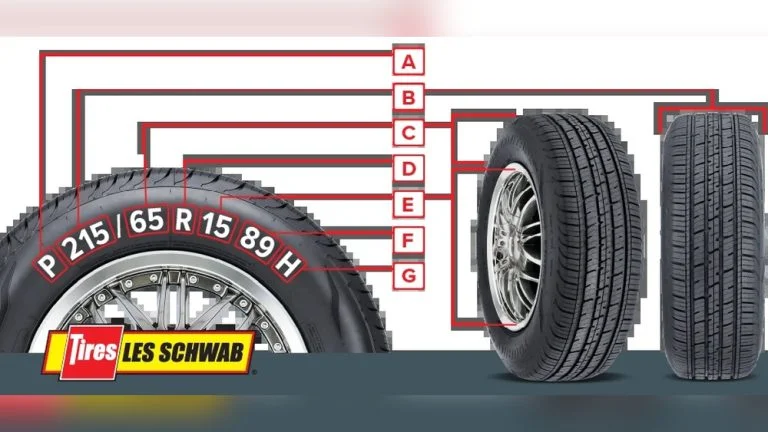
Most tires have a date code on the sidewall. It looks like four numbers, like “3219.” The first two numbers (32) mean the 32nd week of the year. The last two numbers (19) mean the year 2019.
So, this tire was made in late 2019.
As a general rule, tires older than 6 years should be inspected carefully. Tires older than 10 years should likely be replaced, even if they look good. The rubber degrades over time, becoming less flexible and more prone to failure.
This degradation can affect its grip and contribute to pulling.
Think about it like an old rubber band. A new one is stretchy and strong. An old one is brittle and snaps easily.
Old tires can behave similarly on the road. They lose their ability to grip effectively and consistently. This can lead to your car drifting.
Other Factors That Might Cause Pulling (But Start with Tires!)
While tires are a major suspect, it’s good to know that other things can also make a car pull. However, always check your tires first. They are the easiest and often cheapest fix.
Wheel Alignment
This is the angle at which your wheels are set. If your alignment is off, your wheels aren’t pointing perfectly straight down the road. They might be angled slightly inward or outward.
This makes the tires scrub against the road.
When this happens, it wears down your tires unevenly. As we’ve seen, uneven tire wear causes pulling. So, alignment issues often manifest as tire problems first.
You might hear a humming noise or feel vibrations.
An alignment shop can adjust these angles. It’s a standard service. If your car pulls and your tires look fine, alignment is the next big thing to check.
Myth vs. Reality: Tire Pulling
Myth: My car pulls because the steering wheel is loose.
Reality: A loose steering wheel can make it feel like the car is pulling, but it’s often a sign of wear in the steering system itself, not the primary cause of the pull. Tire issues are more common.
Myth: Only brand-new tires can cause pulling.
Reality: Old, worn, or under-inflated tires are just as likely, if not more likely, to cause pulling.
Myth: If the tire looks okay, it can’t be the cause.
Reality: Internal damage or subtle wear patterns can affect tire performance without being obvious at a glance.
Brake Issues
Sometimes, a sticking brake caliper can cause one wheel to drag. This is like having the brake slightly applied to just one wheel. This friction will definitely make the car pull to that side.
You might also notice a burning smell if a brake is sticking. Or you might feel the wheel hub getting unusually hot. This is a more serious mechanical issue that needs immediate attention from a mechanic.
This isn’t usually something that happens suddenly without other signs. You’d likely have felt some dragging or braking resistance before it became a consistent pull. But it’s worth mentioning as a possibility.
Suspension Problems
Components like ball joints, tie rods, or worn control arm bushings are part of your car’s suspension. If these parts are loose or worn, they can allow your wheels to move around more than they should.
This extra movement can make your steering feel vague. It can also contribute to uneven tire wear, which, as we know, causes pulling. Think of it like wobbly legs on a table; it makes everything unstable.
Suspension issues are often accompanied by clunking noises when you go over bumps. They can also make your steering feel loose or imprecise.
Quick Scan: Is It Your Tires?
Check Tire Pressure: Use a gauge. Is it low on one side? (Fix: Inflate)
Visual Inspection: Look for bulges, cuts, or obvious wear. (Fix: Replace tire)
Feel the Tread: Run your hand across. Is it rough in one direction? (Fix: Inspect alignment/balance)
Tire Age: Check the date code. Is it over 6-10 years old? (Fix: Replace tires)
What This Means for You: Knowing When to Worry
So, when should you really start to worry about your car pulling? Most of the time, it’s a sign that something needs attention. But some things are more urgent than others.
When it’s Normal (or Less Concerning)
A very slight drift that you can easily correct might just be road crown. Roads are often built with a slight slope to help water drain off. This “crown” can make cars naturally drift slightly to one side.
If it’s minor and easily corrected, it’s probably okay.
Also, a temporary pull right after hitting a significant pothole might just be the tires getting temporarily out of balance. If the pulling stops after a short distance, it might have been a momentary issue.
Feeling a slight pull when you brake hard can sometimes be normal if one set of brakes is slightly stronger than the other. But this should be very minor.
When to Worry (and What to Check Immediately)
Sudden, strong pull: If your car suddenly starts pulling hard to one side, especially after hitting something, stop and check your tires immediately. This could be a sign of serious tire damage or a mechanical failure.
Consistent, hard-to-correct pull: If you’re fighting the steering wheel to keep your car going straight, this is a significant issue. Don’t ignore it. It means your car’s stability is compromised.
Pulling combined with noise or vibration: If the pulling is accompanied by grinding noises, thumping, or strong vibrations, it could be a serious mechanical or brake problem. Get it checked right away.
Uneven tire wear that’s visible: If you see bald spots or significant wear on one part of a tire, it’s a sign of an underlying problem that needs fixing. This will only get worse.
Low tire pressure that won’t stay up: If you have to constantly add air to a tire, it has a leak. Driving on a badly under-inflated tire is dangerous. It can cause overheating and blowouts.
Pulling when turning: If your car pulls more when you turn one way than the other, it can point to specific issues like a sticking brake caliper on that side or an alignment problem.
In general, if the pulling is strong, sudden, or getting worse, it’s a sign you need to have it looked at by a qualified mechanic. Safety comes first.
Quick Fixes & Tips for Tire-Related Pulling
Here are some simple things you can do yourself:
- Check and adjust tire pressure: This is the easiest fix. Use a reliable gauge and fill all tires to the recommended pressure found on your car’s doorjamb sticker. Check them when cold.
- Inspect your tires: Look for any obvious damage like cuts, bulges, or uneven wear. Feel the tread for feathering.
- Rotate your tires: If you notice uneven wear developing, tire rotation can help even it out. This should be done according to your car manufacturer’s recommendations, usually every 5,000-7,500 miles.
- Consider tire balance: If your tires are wearing evenly but the pull persists, or if you feel vibrations, your tires might need to be balanced. This is done at a tire shop.
- Get an alignment check: If tire pressure and balance are fine, and you see uneven wear, an alignment check is the next logical step.
Remember, these are mostly preventative or diagnostic steps. If you find a significant problem, like a damaged tire or a consistent leak, replacement or professional repair is necessary.
Frequent Questions About Car Pulling and Tires
Can a flat tire cause my car to pull?
Yes, a flat tire or a severely under-inflated tire will absolutely cause your car to pull. The tire loses its proper shape and grip on the road, and the car will drift strongly towards the side with the flat. It’s also very dangerous to drive on a flat tire.
How often should I check my tire pressure?
It’s recommended to check your tire pressure at least once a month. You should also check it before any long trips. Remember to check them when the tires are cold, meaning the car hasn’t been driven for at least three hours.
My car pulls to the left. What could it be?
If your car pulls to the left, common causes include lower tire pressure on the left side, uneven wear on the left tires, a sticking brake caliper on the left side, or a wheel alignment issue that pulls to the left. Always start by checking the tire pressure on the left side.
Can just one bad tire cause pulling?
Yes, absolutely. Even if the other three tires are perfect, a single tire with significantly different pressure, uneven wear, or damage can create enough imbalance to make your car pull noticeably to one side.
What does road crown mean for my car pulling?
Road crown is the slight slope built into most roads to allow water drainage. This slope can cause a gentle, natural pull to the right in most areas. If your car pulls slightly to the right and it’s easily corrected, it’s likely just the road crown and not a tire problem.
How can I tell if it’s alignment or tire wear?
If your tires show signs of wear on only one edge (inside or outside) or have a feathering pattern, it strongly suggests an alignment issue. If the tires look good and wear evenly, but the car still pulls, it’s more likely a tire pressure difference, a damaged tire, or a brake issue.
Conclusion: Trust Your Tires, Trust Your Car
That feeling of your car pulling is your car talking to you. It’s letting you know something isn’t quite right. While many things can cause this, your tires are the most frequent and often simplest explanation.
They are your car’s connection to the road.
By understanding how tire pressure, wear, and condition affect your car’s balance, you can be a more informed driver. Regular checks can prevent bigger problems down the road. So next time your car drifts, start with a simple check of your tires.
You might be surprised how easy it is to find the answer.
See also how a car tyre inflator works simple guide for drivers . See also car tire decorations for cupcakes creative ideas that wow.
Products related to this article
Sponsored / affiliate links. As an Amazon Associate I earn from qualifying purchases. I may earn additional commission from eligible campaigns.