When Do Car Tires Need to Be Replaced (DIY Guide + Cost)
It’s a question many of us ask ourselves: “When is it really time to get new tires?” Tires are a critical part of your car’s safety. They connect you to the road. Worn-out tires can make driving dangerous.
They can affect how your car handles and stops. Knowing when to replace them is key to staying safe. This guide will help you understand the signs and make smart choices.
The most common reasons to replace car tires are worn-out tread, age, and damage. Checking your tires regularly for these issues helps ensure your car is safe to drive.
Understanding Tire Wear and Tear
Your tires work hard every day. They deal with the road, weather, and your driving. Over time, this takes a toll.
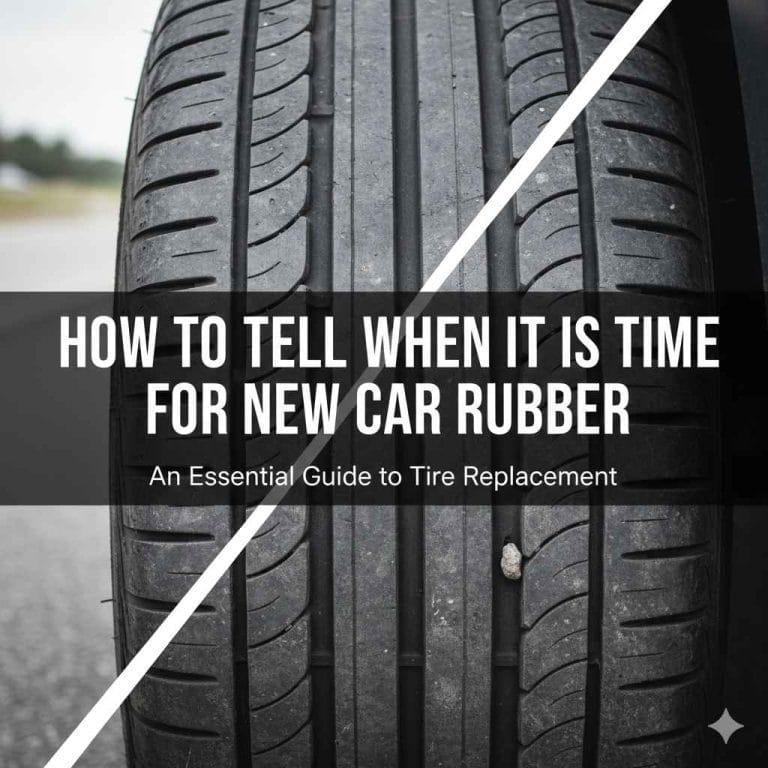
The part that touches the road is called the tread. This tread is what gives your tires grip. It helps you steer, brake, and keep control.
As you drive, this tread wears down. It gets thinner and thinner.
Think of it like the sole of your shoe. The more you walk, the flatter the sole gets. Tire tread works the same way.
When the tread gets too low, the tire can’t grip the road as well. This is especially true when the road is wet. Water can get trapped under the tire.
This makes your car slide. It’s called hydroplaning. You lose control easily.
The legal limit for tire tread depth is usually 2/32 of an inch. Many tire shops will suggest replacing tires when they reach 4/32 of an inch. This is because grip starts to decrease before you hit the legal limit.
It’s about safety, not just the law. Lower tread means longer stopping distances. This can be very dangerous in an emergency.
Always pay attention to how your tires look and feel.
Checking Tire Tread Depth
Use a Penny: A simple way to check is with a penny. Find Lincoln’s head on a penny. Stick the penny head-first into a few tire grooves.
If you can see all of Lincoln’s head, your tread is likely too low. You should consider replacing your tires soon.
Use a Tread Depth Gauge: For a more precise measurement, use a tread depth gauge. These are small, inexpensive tools. They give you an exact reading in millimeters or 32nds of an inch.
Most auto parts stores sell them.
The Impact of Tire Age
Tires don’t just wear out from use. They also age over time. Even if you don’t drive much, the rubber in your tires breaks down.
This happens because of exposure to oxygen and sunlight. Heat also speeds up this process. This makes the rubber brittle and weak.
Brittle tires are more likely to crack. They can also develop bulges. These are serious problems.
A cracked or bulging tire is a hazard. It could fail suddenly while you’re driving. This is a very dangerous situation.
It can lead to a loss of control.
Most tire manufacturers recommend replacing tires after 6 to 10 years. This timeline starts from the date the tire was manufactured. It’s not when you bought them.
You can find the manufacturing date on the tire’s sidewall. Look for a four-digit number in the DOT code. The first two digits are the week of manufacture.
The last two digits are the year.
For example, a DOT code ending in “2318” means the tire was made in the 23rd week of 2018. So, if it’s now 2024, that tire is 6 years old. Even if the tread looks good, the rubber might be old and unsafe.
This is why regular inspections are important. Don’t just look at the tread; check the sidewalls too.
Understanding Tire Sidewalls
DOT Code: This is a series of numbers and letters. It tells you where and when the tire was made. The last four digits are key for age: WWYY (Week-Year).
Sidewall Cracks: Look closely at the tire’s side. Do you see small cracks? These can be a sign of aging rubber.
They might look minor, but they weaken the tire.
Signs of Tire Damage
Damage can happen to tires in many ways. Driving over sharp objects like nails or glass can cause punctures. Hitting a pothole can damage the tire’s internal structure.
Even parking too close to a curb can scrape the sidewall.
Punctures are the most common type of damage. Small punctures might be repairable. This is if they are in the main tread area and not too large.
However, sidewall punctures are almost never repairable. The sidewall is flexible. It needs to be able to bend as the tire rotates.
A puncture there creates a weak spot.
You might also see bulges or blisters on the tire. These often happen after hitting something hard. They show that the internal layers of the tire have been damaged.
These bulges are very dangerous. They mean the tire could fail at any moment. It’s like a weak spot in a balloon.
It’s more likely to burst.
Uneven wear is another sign of damage or other problems. If one side of the tire is more worn than the other, or if you see bald spots, something is wrong. This could be an alignment issue.
It could also be an underinflation or overinflation problem. Or, it might point to internal tire damage. In any case, uneven wear means the tire isn’t safe.
Quick Scan for Damage
Visual Check: Walk around your car. Look at all four tires. Do you see any obvious cuts, bulges, or objects stuck in them?
Feel the Sidewall: Gently run your hand along the sidewall. Can you feel any cuts or nicks? Be careful not to cut yourself.
Personal Experience: The Day I Almost Didn’t See It
I remember one brisk autumn evening. I was driving home from a client meeting. The sun had already set, and it was getting dark fast.
I had a long drive ahead. My mind was on emails I needed to answer. My car was making a very faint, rhythmic thumping sound.
At first, I ignored it. I thought it was just the road surface.
But the sound grew slightly louder. It was still subtle. I fiddled with the radio, trying to drown it out.
Then, I noticed a slight pull to the right. My steering felt a bit off. That’s when a little alarm bell went off in my head.
I pulled over to a well-lit gas station. My heart started to race a bit. I got out and walked around the car.
There it was. The rear passenger-side tire looked a little flat. It wasn’t completely flat, but it was definitely lower than the others.
Looking closer, I saw a small, dark object stuck right in the middle of the tread. It looked like a screw. The thumping was the tire hitting the ground unevenly as it deflated.
I felt a wave of panic. If I had driven much further, I could have had a blowout. It was a stark reminder: never ignore unusual sounds or feelings from your car.
A quick stop could have saved me a lot of trouble, or worse.
Factors Affecting Tire Lifespan
Several things influence how long your tires will last. It’s not just about mileage. Your driving habits play a big role.
How you corner, brake, and accelerate all impact wear. Aggressive driving wears tires down faster.
The type of driving you do matters too. Lots of highway miles are generally easier on tires than stop-and-go city driving. Frequent hard braking and acceleration in the city put more stress on the tread.
If you often drive on rough roads or gravel, that also speeds up wear.
The condition of your car’s suspension and alignment is also critical. If your wheels are out of alignment, your tires won’t roll straight. They will drag and scrub against the road.
This causes very rapid and uneven wear. Imagine trying to push a shopping cart with a wonky wheel. It’s hard to steer, and the wheel wears down unevenly.
Proper tire inflation is another big factor. Underinflated tires flex too much. This creates excess heat.
It causes the shoulders of the tire to wear down faster. Overinflated tires have less contact with the road. The center of the tread wears out much faster.
Keeping tires at the recommended pressure, found on your driver’s side doorjamb sticker, is vital.
Inflation Matters: Quick Facts
Underinflation: Causes tire edges (shoulders) to wear faster. Increases fuel consumption.
Overinflation: Causes the center of the tire to wear faster. Reduces ride comfort.
Recommended Pressure: Found on a sticker inside your driver’s door jamb. Check it when tires are cold.
When Is It Time for New Tires? A Checklist
So, how do you know for sure when it’s time? It’s a combination of factors. Here’s a simple checklist to help you decide:
- Tread Depth: If your tread is below 4/32 of an inch (use the penny test, or a gauge for accuracy), it’s time to think about new tires. If you can see Lincoln’s whole head when the penny is inserted upside down, replace them.
- Age: If your tires are 6 years old or older, inspect them very carefully for cracks or brittleness. If they are 10 years old, it’s strongly recommended to replace them, regardless of tread depth.
- Visible Damage: Do you see any cuts, bulges, cracks, or blisters on the sidewall or tread? Any of these usually means the tire needs immediate replacement.
- Uneven Wear: If one tire is significantly more worn than another, or if there are bald spots, this indicates an underlying problem. Even if the tread isn’t fully worn, the tire might need replacing, and you’ll need to fix the cause of the uneven wear (like alignment).
- Performance Issues: If your car is handling poorly, vibrating excessively, or the tires are making strange noises, it could be a sign of tire wear or damage.
Your Tire Replacement Checklist
Tread Depth: Penny test or gauge reading less than 4/32″.
Tire Age: 6+ years old, inspect closely. 10+ years old, replace.
Damage: Any bulges, deep cuts, or cracks.
Wear Pattern: Uneven wear across or between tires.
Vehicle Feel: Vibrations, pulling, or strange noises.
Real-World Scenarios: What to Look For
Let’s imagine some common situations. This helps you see what to look for in your own car.
Scenario 1: The Long Commuter. Sarah drives 60 miles round trip every day. Her tires have seen a lot of highway miles. They still look pretty good.
But she’s approaching the 5-year mark on her tires. She notices the tread feels a bit harder than it used to. She uses the penny test and sees Lincoln’s head is about halfway visible.
The date code shows they are 5 years old. She decides to replace them soon for peace of mind, even though the tread isn’t totally gone.
Scenario 2: The Weekend Warrior. Mark loves taking his SUV off-road on weekends. He’s had a few close calls with sharp rocks. He notices a small nick on the sidewall of one of his rear tires.
It’s not deep, but it’s visible. He also sees that one front tire is worn more on the inside edge. He checks the date code and sees the tires are 4 years old.
He knows the nick is a risk. The uneven wear means his alignment is likely off. He decides to get new tires and get his alignment checked.
Scenario 3: The City Dweller. Maria drives mostly in the city. Her car sees a lot of stop-and-go traffic. She often parks on the street.
She notices her tires look a bit low on tread. She uses a tread depth gauge and finds one tire is at 3/32″. Another is at 5/32″.
She also sees a small puncture mark from a nail on one tire. It looks sealed from the outside. She decides to replace the one at 3/32″ immediately.
She’ll get the other one checked for repairability. She also plans to check her tire pressure more often.
Common Tire Problems & What They Mean
Worn Tread: Reduced grip, longer stopping distance, risk of hydroplaning.
Aging Rubber: Becomes brittle, prone to cracking and blowouts.
Sidewall Damage: Punctures or cuts in the sidewall are very dangerous.
Uneven Wear: Usually indicates alignment, inflation, or suspension issues.
What This Means for You
Understanding when to replace tires is about safety and saving money. Waiting too long can lead to accidents. Accidents can cause injury and expensive car repairs.
Replacing tires before they are completely worn can also save you money.
You might think new tires are expensive. And they are an investment. But consider the cost of an accident.
Or the cost of replacing a rim damaged by a tire blowout. Replacing tires at the right time is preventative maintenance. It keeps your car running safely and reliably.
When you buy new tires, choose wisely. Consider your driving style and conditions. Look for tires that offer good grip in both wet and dry weather.
If you live in an area with snow, consider all-season or winter tires. Always buy a set of four matching tires for the best performance and handling. Mixing different tire types can create imbalances.
When to Worry About Your Tires
Tread below 2/32″: This is the legal limit and very unsafe.
Visible Bulges or Blisters: This means the tire is structurally compromised.
Sidewall Cuts Deeper Than a Feather: These can easily lead to a blowout.
Sudden Loss of Air Pressure: Indicates a puncture or leak that needs immediate attention.
Quick Tips for Tire Care
Taking care of your tires can extend their life and improve safety. Here are a few simple things you can do:
- Check tire pressure weekly. Use a reliable gauge. Make sure they are at the PSI recommended by your car manufacturer.
- Inspect tread depth regularly. Use the penny test or a gauge. Do this at least once a month.
- Rotate your tires. Follow your car manufacturer’s recommendation for rotation intervals. This helps them wear more evenly.
- Get your alignment checked. Do this if you notice uneven wear or if your car pulls to one side.
- Avoid harsh driving. Drive smoothly. Avoid hard braking and fast cornering when possible.
- Look for damage. Make it a habit to glance at your tires for any obvious problems.
Frequently Asked Questions
How often should I rotate my tires?
Most experts recommend rotating your tires every 5,000 to 7,500 miles. This is often done with oil changes. Check your car’s owner’s manual for the exact recommendation.
Rotation helps ensure even wear across all tires.
Can I just replace two tires instead of four?
While you can
How can I find the manufacturing date of my tires?
Look for the DOT code on the tire’s sidewall. It’s a series of letters and numbers. The last four digits are the date of manufacture.
For example, “2522” means the tire was made in the 25th week of 2022.
What is the difference between all-season and summer tires?
All-season tires are designed for a wide range of temperatures and conditions. They offer a balance of performance in dry, wet, and light snow. Summer tires are optimized for warmer temperatures.
They provide excellent grip and handling on dry and wet roads. They are not suitable for cold weather or snow.
My tires look okay, but they are 7 years old. Should I replace them?
Yes, it is highly recommended. Tire rubber degrades over time, regardless of tread wear. After about 6 years, the risk of dry rot, cracking, and structural failure increases significantly.
Replacing them ensures safety, even if the tread looks good.
What does “run-flat” mean for tires?
Run-flat tires have reinforced sidewalls. They can support the vehicle’s weight for a limited distance and speed after losing all air pressure. This allows you to drive to a repair shop without stopping immediately.
They are generally more expensive and can offer a harsher ride.
Conclusion
Keeping your tires in good shape is a vital part of car ownership. Regularly checking tread depth, looking for age-related wear, and inspecting for damage are essential steps. These simple habits help ensure your safety on the road.
Knowing when it’s time for new tires protects you, your passengers, and other drivers.
See also do tires really make a difference in car performance .