Transmission Control Module Failure Signs in Automatic Cars
Transmission control module failure is likely when an automatic car has repeated harsh, delayed, or stuck shifts plus limp mode or U-codes after fluid level, battery voltage, and wiring checks pass. Ignoring that pattern can lead to needless parts replacement and a no-drive or stuck-gear condition. This guide separates TCM failure signs from fluid, solenoid, sensor, wiring, and low-voltage faults so you replace the right part first.
How TCM failure shows up

A bad transmission control module usually shows a pattern, not one isolated symptom. Delayed engagement, harsh or erratic shifting, slipping that comes and goes, or a transmission that stays in one gear can point to the module, but the same symptoms can also come from fluid, solenoids, sensors, or power supply faults.
Electronic faults can stop a transmission as quickly as worn parts can. That is why diagnosis has to separate control faults from mechanical damage before you replace anything. The scan tool, fluid check, and voltage check usually give the first clues.
Delayed shifts and delayed engagement
When the car hesitates before moving after you select Drive or Reverse, the TCM may be sending the wrong command, receiving bad sensor input, or losing power at the wrong moment. Delayed engagement can also come from low fluid, worn clutches, a failing solenoid, or cold, degraded fluid that changes hydraulic response.
Harsh or erratic shifting
Hard upshifts, random downshifts, or shift timing that changes from one drive cycle to the next can fit a TCM fault, especially if the problem is intermittent or shows up after heat builds. But the same pattern can come from low battery voltage, a loose ground, a bad shift solenoid, or a valve body issue.
Slipping gears and wrong-gear behavior
If engine speed rises while road speed does not, or the transmission feels like it selects the wrong gear, the module may be mismanaging line pressure or shift timing. Major slippage also raises the chance of internal wear, which is why the transmission itself must be separated from the control module before any replacement decision.
Limp mode and no-upshift behavior
Limp mode is a protective strategy, and an automatic car may stay in one gear to limit damage after a fault is detected. A TCM problem can trigger that response, but so can hydraulic faults, sensor failures, low voltage, or communication errors that keep the module from trusting its inputs.
Say your sedan shifts normally when cold, then after 20 minutes it starts holding second gear and finally drops into limp mode. That heat-related pattern points away from a single mechanical failure and toward an electrical, connector, or solenoid fault that changes as temperature rises.
What warning lights and codes can point to the TCM?
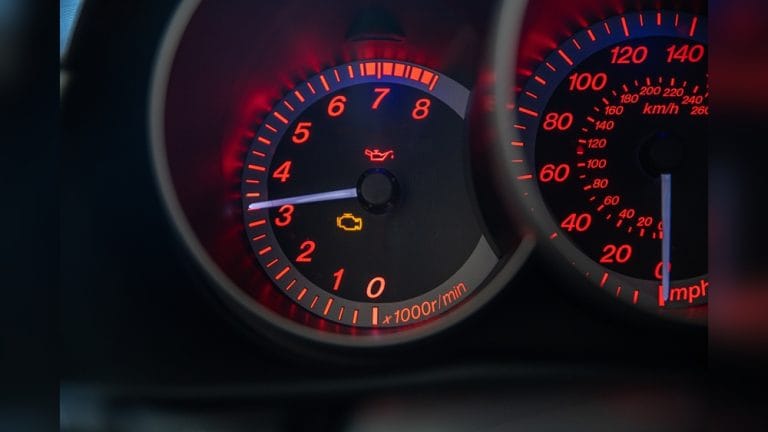
A transmission warning light or check engine light means the powertrain has stored a fault, but it does not prove the TCM is bad. You need code confirmation, because the same light can come from transmission performance codes, communication faults, power-supply problems, or sensor faults that only look like module failure at the dash.
Powertrain and transmission warnings
Common warning lamps include a transmission warning, a generic malfunction indicator lamp, or a powertrain warning on the cluster. If the light appears with limp mode, delayed shifts, or no-upshift behavior, the fault is more serious, but the code family still matters before anyone replaces the module.
Communication and power-supply code families
Codes in the U-code family often point to communication errors between modules, while P07xx-style transmission codes can point to performance issues, solenoid issues, pressure control concerns, or gear ratio faults. Power-supply codes, low-voltage codes, and module communication codes make a TCM or wiring issue more plausible than a purely mechanical one.
An OBD2 scanner is a first tool to use before replacing parts, but many basic scanners may not access manufacturer-specific transmission data or every TCM code. If the scanner cannot read transmission module codes, freeze-frame data, or live transmission values, the diagnosis is incomplete.
Why a scan is needed before part replacement
A scan can show whether the TCM is missing from the network, reporting low voltage, or reacting to a sensor signal it does not trust. It can also help separate a control fault from a mechanical fault. Without that step, a transmission can be condemned when the real problem is a bad connector, blown fuse, or failing solenoid.
Transmission control module failure matrix
This decision table is meant to separate a likely module problem from lookalikes. Use it with a scan tool, fluid check, and voltage check; do not treat one symptom as proof by itself.
| Symptom | Most likely TCM clues | Common lookalikes | First checks |
|---|---|---|---|
| Delayed shifts | Stored transmission performance codes, delayed gear change only after warm-up, repeated faults after clearing | Low or degraded fluid, worn clutches, sticking solenoid, valve body wear | Check fluid level and odor, scan for P07xx and U-codes, inspect battery voltage |
| Harsh shifts | Shift timing changes with load or temperature, codes tied to module communication or pressure control | Bad solenoid, throttle or speed sensor fault, low voltage, poor ground | Scan live data if available, check charging system, inspect connectors and grounds |
| Limp mode | One-gear operation after module faults, transmission warning light with communication loss | Hydraulic fault, sensor failure, failed solenoid, severe fluid issue | Read codes before clearing them, check fluid condition, verify module power and ground |
| Intermittent failure | Problem appears with heat, bumps, rain, or after starting; codes return after clearing | Loose connector, bad ground, chafed wire bundle, weak battery, failing sensor | Wiggle-test wire bundle gently during inspection, check fuse and connector fit, test voltage drop at power and ground points |
| No communication | TCM not reachable on the scan tool, multiple communication codes, missing data stream | Blown fuse, bad ground, open power feed, network wiring fault, scan tool limit | Confirm scan tool can access the module, check power supply and grounds, inspect wire damage |
| Warning light only | Stored code with no obvious drive change, often an early electronic fault | Sensor code, low voltage event, pending transmission fault, loose connector | Scan codes before clearing, check battery and charging voltage, review freeze-frame data |
Could low voltage be the real cause?
Yes. Low battery voltage can cause transmission control problems, false warnings, and communication errors that may look like a bad module. A weak battery, failing alternator, bad ground, or loose connector can interrupt module power long enough to set codes or trigger limp mode.
Battery voltage and charging system checks
Start with battery condition, charging output, and cranking voltage if the vehicle is hard to start or the warning appears after a weak battery event. If the electrical supply is unstable, the TCM may stop communicating or make poor shift decisions. Fixing voltage problems first prevents misdiagnosis.
Bad grounds and loose connectors
A bad ground can cause the same symptoms as a bad module, especially if the fault comes and goes with road vibration or moisture. Loose pins, corroded terminals, or water intrusion at the TCM connector can interrupt power or communication without leaving a permanent no-start symptom.
Suppose the battery was replaced last week and the car now flashes a transmission warning while shifting normally most of the time. That sequence points first to supply voltage or a disturbed connector, not to a failed TCM that suddenly died on its own.
Why low voltage can mimic module failure
The module needs stable voltage to process sensor input and command shift solenoids. If voltage drops, the TCM may store U-codes, command fail-safe operation, or lose communication with other controllers. That is why battery and charging checks belong before module replacement.
How do you tell the TCM from the transmission itself?
Look for whether the problem stays electronic or starts to look hydraulic and mechanical. A TCM fault is more likely when codes point to communication, power, or control logic, while the transmission itself is more likely when fluid condition is poor, slippage is severe, or the same mechanical symptom persists with good power and known-good inputs.
When fluid condition points away from the module
Low fluid, burnt odor, dark color, or leaks can mimic TCM failure because they change line pressure and shift quality. Fluid flushes are described as preventative maintenance, not a cure for severe internal damage. If fluid is badly degraded, the next step is diagnosis of the transmission hardware, not a module guess.
When solenoids or valve body faults fit better
Bad solenoids can look like bad TCM symptoms because both can cause harsh shifts, delayed engagement, or limp mode. The distinction matters: a targeted solenoid or valve body repair may solve an isolated fault, while a module replacement will not fix a stuck hydraulic circuit. Many modern transmissions need model-specific testing here, because blanket resistance checks can mislead.
When sensors or wiring are more likely
Speed sensor, range sensor, or input-related codes often point away from the module and toward the signal the module is receiving. Intermittent failures that happen after hitting bumps, during rain, or only when hot often suggest wiring, connector, or ground faults rather than internal module damage.
What should you check before replacing anything?
Check the basics in order: fluid condition, scan data, power supply, and wiring. That sequence helps separate isolated repair needs from a failed module and prevents replacing a TCM when the real issue is low voltage, a bad solenoid, or transmission wear.
- Check transmission fluid level, color, odor, and leaks. Burnt smell, dark fluid, or a low level can create shift problems that look electronic.
- Scan for stored, pending, and history codes. Focus on U-codes, power-supply codes, sensor codes, and transmission performance codes.
- Verify battery voltage and charging output. A weak supply can trigger false transmission warnings or communication faults.
- Inspect the TCM fuse, grounds, and connectors. Look for corrosion, water entry, loose pins, or wire damage.
- Confirm whether the scanner can actually talk to the transmission module. Basic OBD2 tools may miss manufacturer-specific data.
- Only after those checks, compare the symptom pattern with known TCM, solenoid, sensor, or internal transmission faults.
Repair versus replacement depends on what the checks show. Component repairs can target isolated issues like a failed sensor or a leak. Transmission replacement is reserved for severe internal damage and major slippage. A TCM replacement may need programming after installation, so swapping the module without confirming the fault can create a new problem.
Frequently asked questions
What are the signs of a bad transmission control module?
Common signs include harsh or delayed shifts, limp mode, intermittent wrong-gear behavior, transmission warning lights, and communication codes. The pattern becomes more suspicious if fluid level is correct, voltage is stable, and wiring checks pass, yet the fault returns after clearing.
Can a bad TCM cause limp mode in an automatic car?
Yes. A bad TCM can trigger limp mode if it loses sensor input, communication, or power, or if it detects a fault that could damage the transmission. Limp mode can also come from hydraulic or sensor faults, so the code family matters.
Is it safe to drive with transmission control module failure signs?
Usually not for long. You may lose shift quality, get stuck in one gear, or worsen an existing fault if the transmission keeps operating with bad control data. Short, careful driving to a repair facility is one thing; normal driving while guessing is another.
What warning lights come on when the transmission control module fails?
A transmission warning lamp, check engine light, or powertrain warning may appear. The light alone does not prove module failure. Read the codes first, because the same lamp can mean a communication error, sensor fault, low voltage event, or transmission performance issue.
How do you tell if the TCM or transmission itself is bad?
Start with codes, then fluid, then voltage. If U-codes, power-supply faults, or module communication problems appear, the TCM or its wiring moves higher on the list. If fluid is burnt, slipping is severe, or the fault stays mechanical, the transmission itself is more likely.
Can a TCM problem be fixed with a reset or does it need programming?
Sometimes a reset clears a temporary fault, but it does not fix a failed module, a bad ground, or a damaged wire bundle. Many replacement modules need programming or relearning so the transmission can shift correctly. If the same code returns, replacement without diagnosis is usually the wrong move.
Products related to this article
Sponsored / affiliate links. As an Amazon Associate I earn from qualifying purchases. I may earn additional commission from eligible campaigns.