Transmission control module repair vs replacement guide
If diagnostics point to the TCM and the rest of the transmission still tests healthy, it often makes sense to start with repair or reprogramming; replacement is generally the better option after clear internal failure or water damage. I have seen bad calls waste money on a module and still leave the car needing a transmission rebuild. This guide walks through the test order, repair-versus-replace calls, and when to stop spending and sell the car.
Transmission control module repair vs replacement: the trade-off
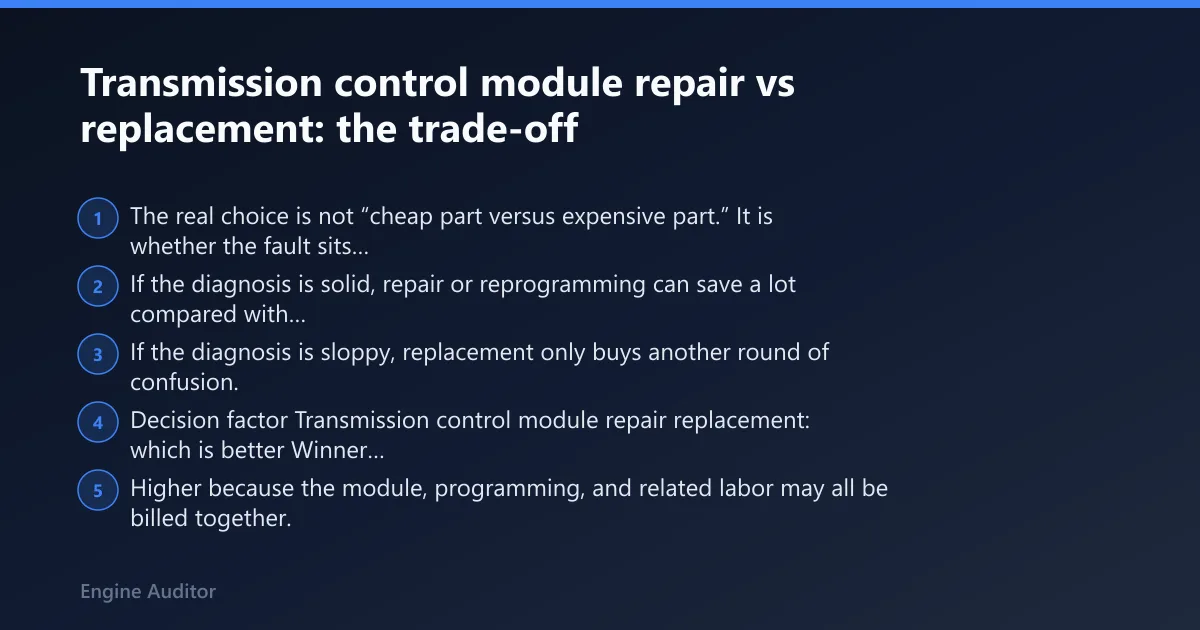


The real choice is not “cheap part versus expensive part.” It is whether the fault sits in the module, the wiring and power feed around it, or the transmission hardware it controls. If the diagnosis is solid, repair or reprogramming can save a lot compared with replacement. If the diagnosis is sloppy, replacement only buys another round of confusion.
| Decision factor | Transmission control module repair | replacement: which is better | Winner |
|---|---|---|---|
| Upfront cost | Usually lower when the fault is isolated to a connector, circuit, solder issue, or programming problem. | Higher because the module, programming, and related labor may all be billed together. | Transmission control module repair |
| Risk of missing the real problem | Higher if the transmission has internal wear or the wiring fault was never proven. | Lower only when the old module has been confirmed bad after power, ground, and communication checks. | replacement: which is better |
| Best fit for intermittent faults | Good when codes and symptoms point to communication loss, voltage drop, or a known repairable circuit issue. | Better when the module is water-damaged, physically failed, or will not accept programming. | Transmission control module repair |
| Durability after the fix | Strong if the root cause is corrected, but weak if the module was only a symptom of a bigger fault. | Stronger when a confirmed failed module is replaced and programmed correctly. | replacement: which is better |
Upfront cost
Repair often costs less when the issue is limited to one part of the module. I have seen a repair quote differ from replacement by $3,000 or more, so the first job is to prove that the module is actually the failed part and not just the messenger.
Risk of missing the real problem
Replacement helps only after the diagnosis has narrowed the fault. If low voltage, bad grounds, damaged wiring, or internal transmission wear are still in play, a new module can leave the complaint unchanged and the bill larger.
Best fit for intermittent faults
Repair is often the first pass for intermittent communication faults and connector damage. Replacement fits better when the module is physically damaged, contaminated, or unable to complete programming.
Durability after the fix
A corrected repair can last well, but only if the repair addressed the failure mode that started the problem. A properly replaced module can be the cleaner long-term answer when the old one has clearly failed electrically.
According to Transmission Repair vs Replace: How to Decide (2026) — A repair quote can differ from replacement by $3,000 or more.
What a TCM does and why it gets blamed
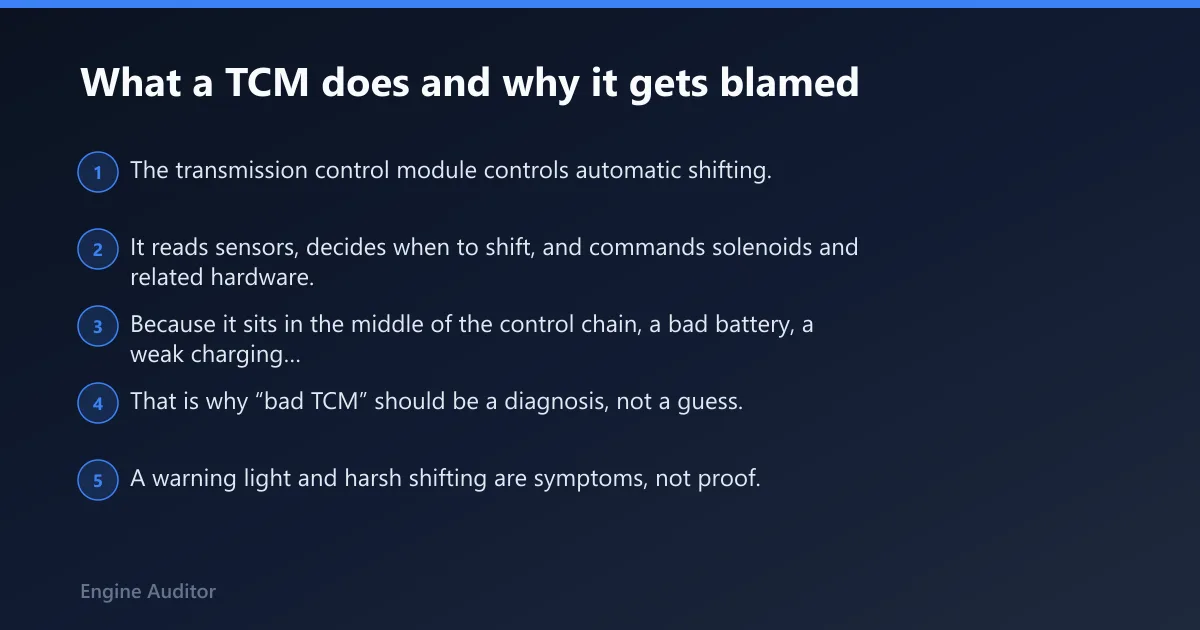
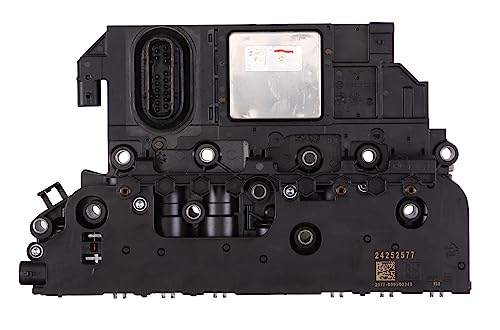
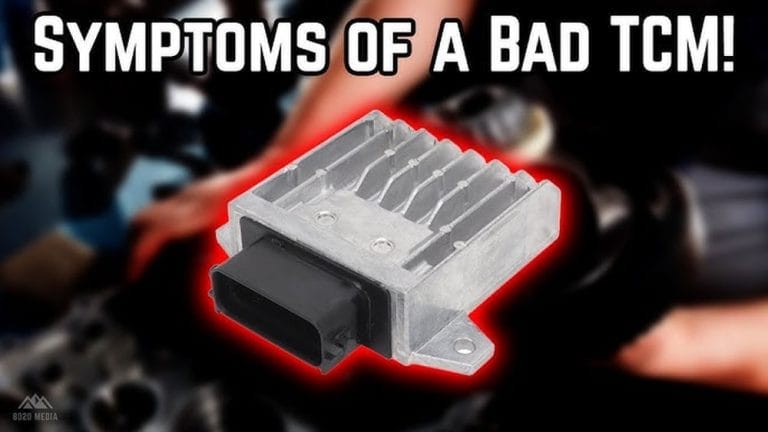
The transmission control module controls automatic shifting. It reads sensors, decides when to shift, and commands solenoids and related hardware. Because it sits in the middle of the control chain, a bad battery, a weak charging system, a corroded connector, or a failing valve body can all make the module look guilty.
That is why “bad TCM” should be a diagnosis, not a guess. A warning light and harsh shifting are symptoms, not proof.
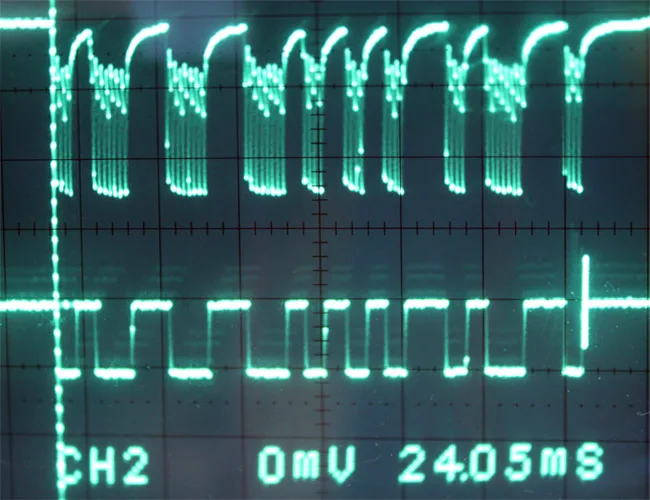
How do you tell a TCM problem from a transmission problem?
A module problem usually shows up as communication faults, erratic shifting after a voltage event, or codes that point to electrical control loss rather than internal gear damage. A transmission problem usually brings fluid complaints, slipping under load, metal in the pan, or codes that keep returning after power and wiring tests pass.
Scan codes and live data that point to the module
An OBD2 scan is often the starting point. Codes that point to communication loss, sensor correlation issues, or module power supply problems deserve a wiring and voltage check before anyone orders parts.
Voltage history and charging-system checks
Low battery voltage can trigger transmission problems and false module blame. If the battery has been weak, jump-started, or paired with a charging problem, the TCM may be reacting to bad input rather than failing on its own.
Symptoms that point more to solenoids, valve body, or internal wear
Shift solenoids can cause shifting complaints that look like module failure. A valve body can mimic the same pattern. If the transmission slips, bangs, or loses gear engagement after fluid and electrical checks, internal wear moves higher on the list.
What should a shop confirm before condemning the TCM?
A shop should prove power, ground, communication, and fluid condition before replacing a module. If those checks are skipped, the car can leave with the same complaint and a bigger invoice. The clean path is diagnostic first, parts second.
OBD2 scan and code interpretation
The scan should identify which codes are present, whether they are current or stored, and whether they return after a clear-and-road-test cycle. One code is not enough by itself. Repeating codes matter more than a single snapshot.
Fluid level and condition
Fluid should be checked before any expensive call is made. Burnt odor, metal debris, or low level shifts the odds away from a module-only fix and toward a transmission issue that deserves deeper inspection.
Communication faults, grounds, and wiring checks
The harness, connectors, grounds, and power feeds should be tested under load. A corroded connector or broken ground can imitate module failure well enough to fool a quick scan.
When a reset or reflash is worth trying
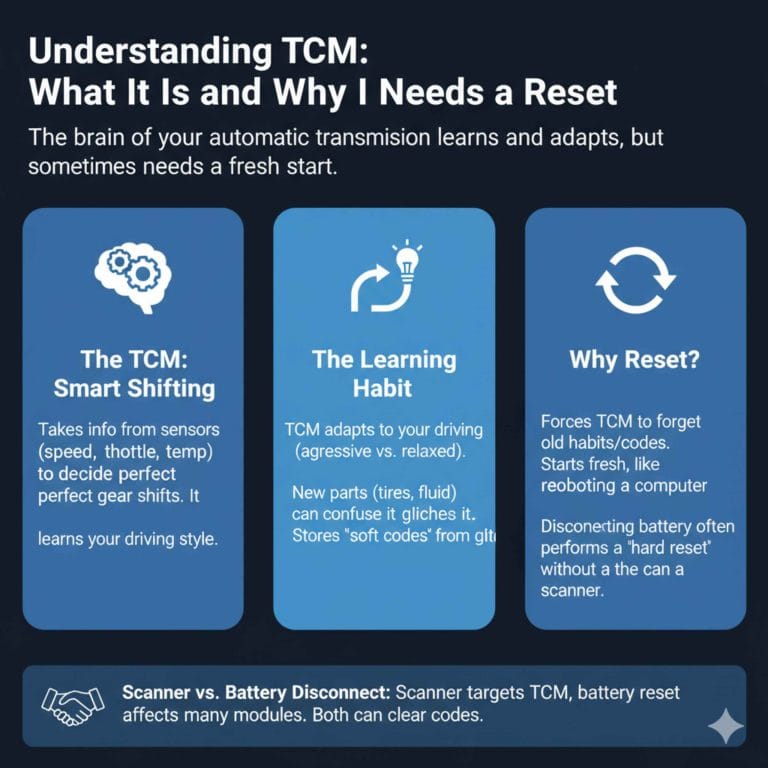
A reset or reflash is worth trying when the module is still communicating, no hard internal failure is present, and the complaint began after low voltage or software-related service. It is not a cure for a burned circuit or a mechanically damaged transmission.
Side-by-side: repair, reprogram, replace, rebuild, or swap the transmission

The better answer depends on failure scope. If the fault is narrow, a module repair or reprogramming can be enough. If the fault is broad or the transmission itself is damaged, the decision shifts to replacement, rebuild, used transmission, or remanufactured transmission based on vehicle value and risk tolerance.
| Option | What it fits | Typical cost range | Risk level | Winner |
|---|---|---|---|---|
| TCM repair | Isolated electrical fault, connector damage, solenoid-related control issue | Lower than replacement; diagnostic and labor still matter | Moderate | Lowest cost when diagnosis is solid |
| Reprogramming or reset | Module still communicates; complaint followed low voltage or software event | Usually lower than parts replacement | Low to moderate | Best first attempt on a live module |
| Module replacement | Water damage, internal module failure, no reliable recovery after checks | Higher than repair | Moderate | Most decisive module fix |
| Rebuild / used / remanufactured transmission | Internal transmission damage, repeated hard faults, metal debris, slipping | Used transmission: $1,200 to $3,000; rebuild: $2,500 to $4,500; remanufactured transmission: $3,000 to $5,500 | Used is highest, remanufactured is lower | Remanufactured transmission for value and warranty |
TCM repair and component-level fixes
Targeted repair makes sense when the evidence points to one component. That can include the module itself, a damaged connector, or a related circuit issue. Shift solenoid repairs also land here when the fault is clearly localized.
Programming or reset only
Programming can solve a complaint when the module is alive but out of sync. This is often the cheapest clean fix. It is also the easiest one to overuse, so it should come after voltage and wiring checks, not before them.
Replace the module
Replacement is the right move when the module has internal failure, water damage, or will not hold communication after the system checks out. A replacement TCM may still need programming after installation.
Rebuild, used transmission, or remanufactured transmission
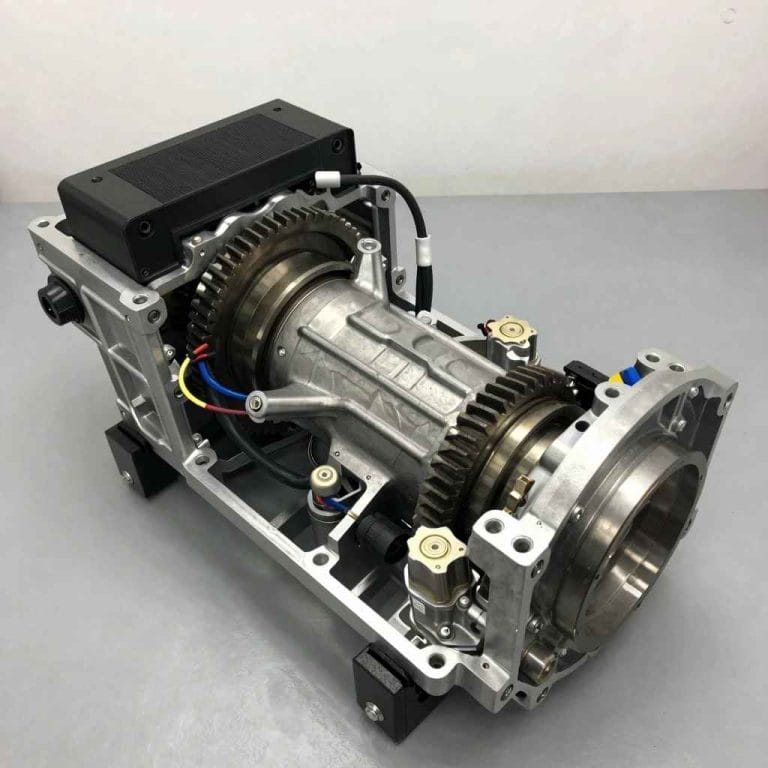
A rebuild makes sense after severe internal damage. A remanufactured transmission is factory-built to original specs and typically carries a 2 to 3-year warranty, which often lowers risk compared with a used unit. Used transmissions are cheaper, usually carry a 30 to 90 day warranty, and arrive with unknown mileage history.
When is a TCM repair cheaper than replacement?
Repair is cheaper when the fault is isolated, repeatable, and proven. If the module still powers up, the harness checks out, and the complaint is tied to one failed circuit or one related part, repair usually beats replacement on cost and downtime.
Isolated electrical fault or damaged connector
A cracked connector, pin fit problem, or corroded terminal often repairs cleanly. That is not the same as a module with internal failure. One needs bench-level correction; the other needs replacement.
Shift solenoid or related component fault
Shift solenoids can be mistaken for a failed TCM because the symptoms overlap. If the code path points to the solenoid and the rest of the control system tests healthy, the cheaper targeted repair is usually the better call.
Cases where programming solves the issue
Programming is enough when the module is functional but needs calibration, adaptation, or a software update after service. It is not a magic reset for worn clutches, burnt fluid, or broken internal parts.
Choose TCM repair, reprogramming, replacement, rebuild, or a different car if…
The right choice follows the diagnosis ladder. Confirm the module, confirm the wiring, then match the fix to the failure scope and the car’s value. The wrong order wastes money fast.
Choose TCM repair if…
The car shows module-related codes, the module still communicates, voltage history is clean or corrected, and the failure traces to one repairable circuit, connector, or related component such as a shift solenoid. Repair also fits lower-value cars when the problem is narrow.
Choose reprogramming if…
The complaint started after battery work, a low-voltage event, or a software-related service, and the module passes power and communication checks. Reprogramming is the smallest bet, so it belongs early when the module is still alive.
Choose replacement if…
The module has water damage, internal electronic failure, repeated communication loss, or will not accept programming after the rest of the system checks out. Replacement is also the better call when a repaired unit would still leave a poor warranty or repeat-failure risk.
Choose rebuild, used, remanufactured, or stop spending if…
If the transmission has slipping, metal contamination, or repeated hard codes after electrical checks pass, stop chasing the TCM. A rebuild or remanufactured transmission may be the better value. A used unit can be the budget play, but it is the riskier one. If repair cost approaches vehicle value, walk away.
Decision matrix: symptom pattern, codes, voltage history, and vehicle value
This is the shop-facing filter. If the answer in one column keeps pointing away from the module, stop spending on module parts. If several columns point at the module, repair or reprogramming usually comes first.
| Symptom and test pattern | OBD2 / transmission codes | Voltage history | Vehicle value | Best action |
|---|---|---|---|---|
| Intermittent shifting, communication dropouts, no metal in fluid | Module or communication codes that return after clear-and-test | Past low-battery event or weak charging corrected now | Moderate to high | Reprogram, then repair if needed |
| One bad connector, pin corrosion, or broken ground | Electrical control codes, not internal failure codes | Voltage stable during testing | Any value where repair cost stays below replacement gap | Repair |
| Module will not communicate, water intrusion present | Multiple communication faults, no clean response from scan tool | Unknown or poor voltage history | High enough to justify downtime | Replace module |
| Slipping, burnt fluid, debris, repeated hard faults after checks | Codes persist after electrical diagnostics | Voltage checks pass | Low value or repair exceeds car worth | Stop and inspect the transmission |
| Transmission already near end-of-life, repair quote climbs fast | Mixed codes with mechanical symptoms | No clear voltage cause | Low value | Used or remanufactured transmission, or stop spending |
What should I ask a shop before approving TCM repair or replacement?
Ask what codes were found, whether they are current or stored, what voltage tests were done, and whether the wiring and grounds passed under load. Also ask whether the fluid was checked, whether the module can still communicate, and what part of the diagnosis proves the TCM is the cause.
Ask for the warranty in writing. Reputable shops should offer a 12 to 24-month warranty in writing, and tow coverage can matter if the car breaks down again. For transmission work, warranty details separate a decent estimate from a risky one.
Frequently asked questions
Is it cheaper to repair a transmission control module or replace it?
Repair is usually cheaper when the fault is limited to a connector, circuit, or one related component. Replacement costs more because the module and programming are added on top of labor. If the diagnostic path is weak, the cheaper quote can still become the expensive mistake.
When does a transmission control module need replacement instead of repair?
Replacement makes sense after water damage, confirmed internal module failure, or repeated communication loss after power, ground, and wiring checks pass. If the module will not accept programming or never comes back online reliably, replacement is usually the cleaner fix.
Can a bad TCM be fixed with programming or reset instead of parts?
Yes, sometimes. Programming or reset can help when the module still communicates and the problem began after low voltage or a software event. It will not fix burnt clutches, damaged solenoids, or a failed internal circuit.
How much should TCM-related repair work cost compared with a replacement?
Cost depends on how deep the fault runs. A repair or reprogramming is often far below replacement, and the gap can be thousands of dollars. If the quote starts near transmission replacement money, the diagnosis should be rechecked before approving parts.
What signs point to a TCM problem versus a transmission problem?
A TCM problem usually shows electrical codes, communication loss, or symptoms that began after voltage trouble. A transmission problem more often brings slipping, burnt fluid, debris, or repeated faults that stay after wiring and power tests pass. The scan tool and fluid tell the story first.
When is a used or remanufactured transmission a better choice than repairing the module?
Choose a transmission swap when the hardware is already damaged, slipping, or contaminated, and module tests do not explain the complaint. A remanufactured transmission is usually the safer value than a used one because it is factory-built to original specs and typically carries a longer warranty.
What should I ask a shop before approving TCM repair or replacement?
Ask which codes are current, what voltage and charging tests were done, whether the harness and grounds passed, and whether fluid condition supports a module-only fix. Also ask for the written warranty and whether programming is included, because those details change the real cost.
How do I know if the warning is a module issue, solenoid issue, or valve body issue?
Use the codes, live data, and symptom pattern together. A module issue usually shows communication or control faults. A solenoid issue often creates shifting complaints with a narrow code set. A valve body fault can mimic both, so it should stay in the differential if the scan and voltage history do not point clearly elsewhere.
Products related to this article
Sponsored / affiliate links. As an Amazon Associate I earn from qualifying purchases. I may earn additional commission from eligible campaigns.