How Much Does A Transmission Usually Cost To Replace?
The typical cost to
Understanding Transmission Replacement Costs
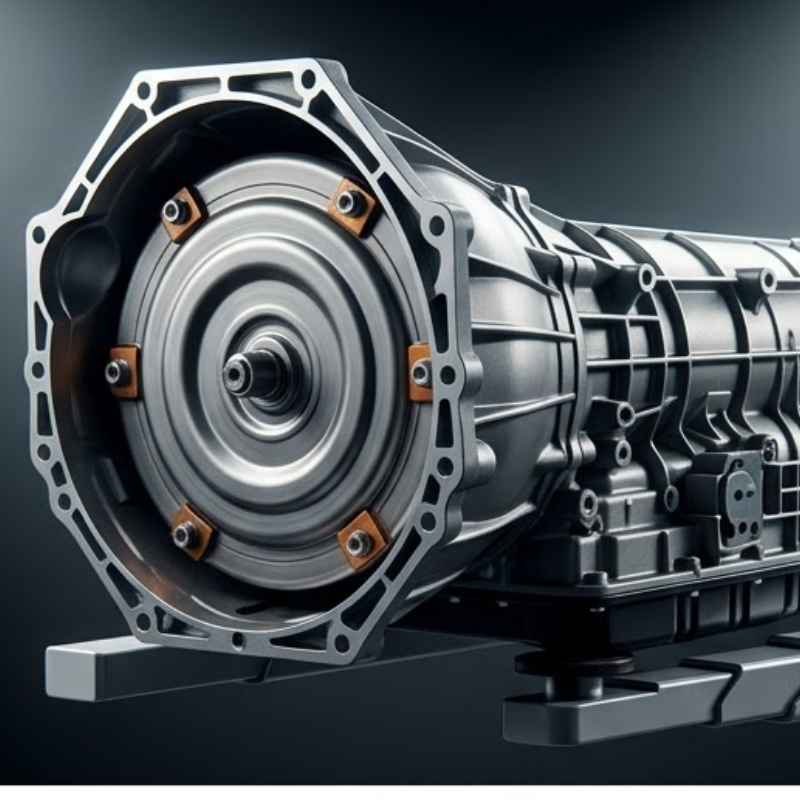
Your car’s transmission is a complex system. It’s vital for making your wheels turn. It lets your engine run at its best speed.
When it breaks, your car often won’t move at all. This makes fixing it a top priority. But the price tag can make your eyes water.
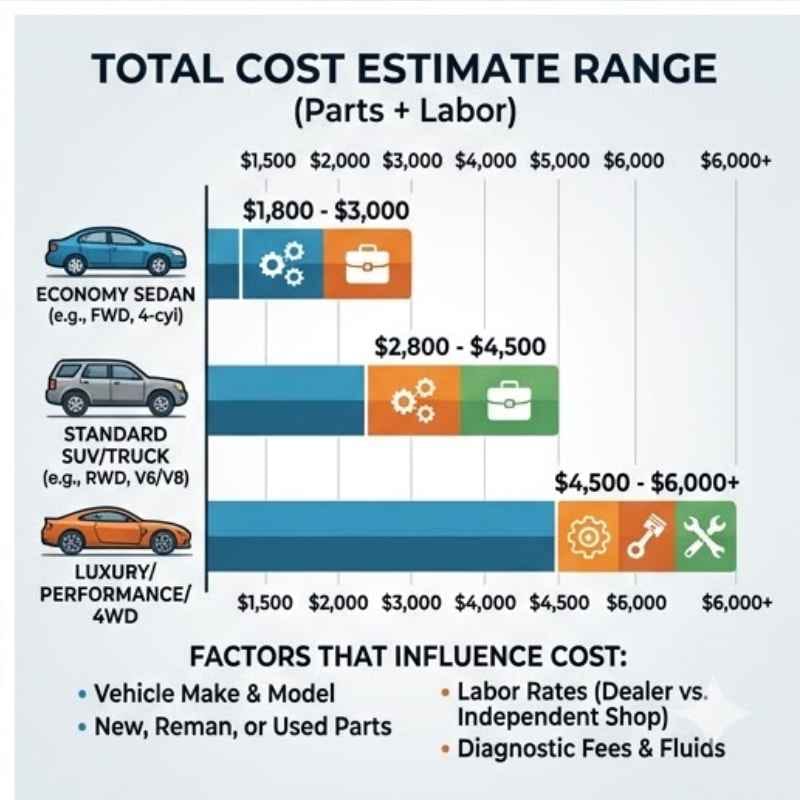
Several things push the price up or down. Think about the car you drive. A luxury car or a heavy-duty truck will cost more to fix.
Their parts are often special. They might be harder to find. This means more money for shops to spend.
Why the Big Price Swing?
It’s not just one thing. It’s a mix of factors. These all add up to the final number you see on the bill.
Let’s look at them one by one.
My Own Transmission Scare
I remember one time, I was driving home from a friend’s house. It was late, maybe 10 PM. The road was quiet, just a few streetlights.
Suddenly, my car started making this weird whirring noise. It wasn’t loud, but it was definitely wrong. Then, I felt a jolt.
My car wouldn’t shift gears properly. Panic set in. My mind immediately went to the worst-case scenario: a massive repair bill.
I pulled over, heart pounding. I pictured my savings draining away. I felt a knot of dread tighten in my stomach.
I just wanted to get home. I managed to limp the car the last few miles, but it felt like driving a truck. I spent a sleepless night worrying about the cost.
Types of Transmissions and Their Costs
The type of transmission your car has plays a big role. There are two main kinds: automatic and manual. You might also hear about Continuously Variable Transmissions (CVTs).
Automatic Transmissions
Automatic transmissions are the most common in modern cars. They shift gears for you. This makes driving easier.
Because they are more complex, they usually cost more to replace. They have many parts, like torque converters, valve bodies, and clutches. If one part fails, it can affect the whole unit.
The complexity means more labor time for mechanics. It also means more expensive parts. A new automatic transmission can be a significant investment.
This is often the highest price point for a replacement.
Automatic Transmission Breakdown
Torque Converter: Connects engine to transmission. Acts like a clutch. ($300 – $1,000+)
Valve Body: Controls fluid flow. Directs gear changes. ($200 – $800+)
Clutches/Bands: Engage different gears. Wear out over time. ($100 – $500+)
Internal Sensors: Monitor speed and pressure. ($50 – $200+)
Manual Transmissions
Manual transmissions, or stick shifts, are simpler. They have fewer moving parts. You control the gear changes yourself with a clutch pedal and a gear stick.
Because they are less complex, they are typically cheaper to replace than automatics. The main parts are the clutch, flywheel, and gears.
While the transmission unit itself might be less, a clutch replacement can still be costly due to labor. However, a full manual transmission swap usually falls on the lower end of the overall replacement cost spectrum.
Manual Transmission Components
Clutch Kit: Includes clutch disc, pressure plate, and release bearing. ($200 – $600+ for parts)
Flywheel: Connects to engine crankshaft. ($100 – $300+)
Gears/Shafts: The core of the transmission. ($300 – $1,000+ for a whole unit)
Continuously Variable Transmissions (CVTs)
CVTs are a bit different. They don’t have fixed gears like traditional automatics or manuals. Instead, they use belts and pulleys to change ratios smoothly.
This can lead to better fuel economy. However, CVTs can be very expensive to repair or replace. They are often highly specialized.
The technology in CVTs is newer and can be more prone to specific issues. Finding parts can also be harder, driving up the cost. If your car has a CVT, be prepared for potentially higher repair bills.
CVT Considerations
Belt or Chain: The main component for ratio changes. Can be costly to replace. ($400 – $1,200+)
Pulleys: Adjust the belt tension. ($200 – $700+)
Specialized Fluid: CVTs often need specific, expensive fluids. ($100 – $300+ for fluid and filter)
New vs. Rebuilt vs. Used Transmissions
When you need a new transmission, you have choices. You can get a brand-new one, a rebuilt one, or a used one. Each has its own price and pros and cons.
New Transmissions
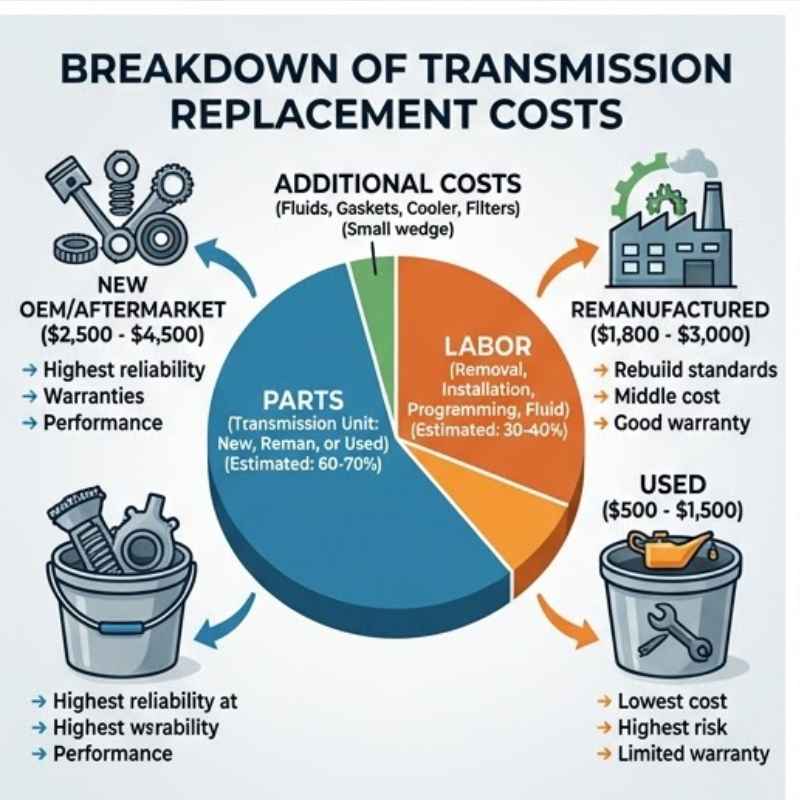
A brand-new transmission is just that – new from the factory. It’s the most expensive option. But it also comes with the longest warranty.
You get peace of mind knowing it’s never been used before. For high-end vehicles or if you plan to keep your car for a very long time, this might be the best choice.
Pros: Longest warranty, highest reliability, peace of mind.
Cons: Most expensive option.
Cost: Often $3,000 – $7,000+ for the unit alone.
Rebuilt Transmissions
A rebuilt transmission is one that has been taken apart. All worn-out parts are replaced. Then, it’s put back together and tested.
It’s like new, but it started as an old transmission. This is often a good middle ground. You save money compared to new, but you still get a good warranty.
Rebuilders usually offer warranties of 1-3 years. This shows they stand behind their work. It’s a popular choice for many car owners looking to balance cost and reliability.
Pros: Good balance of cost and reliability, often good warranties.
Cons: Quality can vary by rebuilder.
Cost: Typically $2,000 – $5,000+ for the unit and labor.
Rebuilt Transmission: What to Ask
Who rebuilt it? Is it a reputable shop?
What parts were replaced? Were critical components like clutches and seals renewed?
What is the warranty? How long is it good for? What does it cover?
Used Transmissions
A used transmission comes from a salvage yard or a vehicle that was wrecked. It’s the cheapest option. However, it comes with the most risk.
You don’t always know its history. It might have problems you can’t see. Warranties are often very short, maybe 30-90 days, or even non-existent.
If you choose a used transmission, try to get one from a reputable salvage yard. Ask if they offer any kind of guarantee. Sometimes, mechanics can test a used transmission before installing it.
This can give you more confidence.
Pros: Lowest initial cost.
Cons: Highest risk, shortest or no warranty, unknown history.
Cost: $500 – $2,000+ for the unit and labor (highly variable).
Labor Costs Add Up
Replacing a transmission isn’t a quick job. It takes a lot of time. Mechanics need to lift the car.
They have to disconnect the drive shaft, exhaust, and other parts. Then, they lower the old transmission and hoist the new one in. It’s heavy, dirty work.
Labor rates vary by location and by shop. Big dealerships often charge more than independent mechanics. A general rule is that labor can make up 40-60% of the total cost.
This is because transmissions are complex and time-consuming to swap.
Expect labor to take anywhere from 6 to 12 hours. Some complex jobs can even take longer. This is why getting a detailed estimate is crucial.
Always ask for a breakdown of parts and labor costs.
Labor Cost Factors
Hourly Rate: Varies by region and shop expertise. ($80 – $150+ per hour)
Estimated Time: How long the shop expects the job to take. (6-12+ hours)
Vehicle Complexity: Some cars are harder to work on than others. This adds time.
Vehicle Make and Model Impact
The car you drive makes a big difference. Some cars are designed to be easier to service. Others are built with parts packed in very tightly.
This makes everything harder to access.
Common vs. Rare Vehicles
For common cars like a Honda Civic or a Ford F-150, parts are usually readily available. Mechanics have likely worked on them many times. This means faster service and potentially lower costs.
They know the quirks and common problems.
For rarer or luxury vehicles, like a European sports car or an exotic SUV, parts can be scarce and expensive. You might need to order them from overseas. The mechanics might also need special tools or training.
This adds to the overall expense.
Four-Wheel Drive (4WD) / All-Wheel Drive (AWD)
Cars with 4WD or AWD systems often have more complex drivetrains. This means extra components like transfer cases and extra driveshafts. Removing and reinstalling these adds more labor time.
It also means more parts could be involved in the repair. So, a 4WD or AWD transmission replacement will generally cost more than a 2WD version of the same car.
Other Costs to Consider
The transmission itself and the labor are the big ticket items. But there are a few other smaller costs that can add up. Don’t forget these when budgeting.
Transmission Fluid and Filter
Every time a transmission is replaced, new fluid is essential. The type of fluid can also be expensive, especially for modern cars or CVTs. Many shops will also replace the transmission filter at the same time.
This is good practice.
Cost: $50 – $300+, depending on fluid type and quantity.
Mounts and Seals
As the transmission is removed, it’s a good time to replace worn-out mounts. These hold the transmission in place. They can cause vibrations if they’re broken.
Seals and gaskets are also often replaced to prevent leaks. These are usually small costs but are important for a complete repair.
Cost: $50 – $250+ for related seals and mounts.
Diagnostic Fees
Before any work starts, a mechanic needs to figure out what’s wrong. Diagnostic fees cover their time to pinpoint the transmission issue. This can range from an hour of labor to a more in-depth electronic scan.
Some shops will waive the diagnostic fee if you do the repair with them.
Cost: $75 – $200+ (sometimes credited towards repair).
Towing Costs
If your car won’t move, you’ll need to get it to a repair shop. Towing can add a significant amount to your bill. Prices depend on the distance and the type of tow truck needed.
Cost: $100 – $400+
Budgeting for Hidden Costs
Fluid & Filter: Always a must. Don’t skip this.
Seals & Mounts: Good preventative maintenance.
Diagnostics: Essential to confirm the problem.
Towing: Factor this in if your car is immobile.
Taxes & Fees: Don’t forget these!
They can add 5-10%.
Repair vs. Replace: A Tough Decision
Sometimes, a transmission doesn’t need a full replacement. It might just need a repair. This is often much cheaper.
But deciding which is best can be tricky.
When Repair Might Be Possible
Minor issues can sometimes be fixed without a full swap. This could involve replacing a faulty sensor, a damaged solenoid, or a worn clutch pack. If the internal damage is limited, a skilled mechanic might be able to rebuild only the affected parts.
A good mechanic will diagnose the exact problem. They can then give you options: repair or replace. If the repair cost is less than 50-60% of a replacement cost, it might be worth considering.
But, you need to trust the mechanic’s judgment.
Signs a Full Replacement is Likely Needed
If there’s significant internal damage, like stripped gears, a cracked housing, or widespread clutch failure, a full replacement is usually the only way to go. These kinds of problems are often too extensive and costly to repair piece by piece.
Another factor is the age and mileage of your car. If your car is very old or has high mileage, pouring thousands into repairing its transmission might not be the best investment. You might face other expensive repairs soon.
Repair vs. Replace Checklist
Damage Severity: Minor parts vs. widespread internal failure.
Cost Comparison: Repair cost vs. 50-60% of replacement cost.
Vehicle Age & Mileage: Is it worth investing more in an older car?
Warranty on Repair: Does the mechanic offer a guarantee on the repair work?
Finding a Trustworthy Mechanic
When facing a big repair like this, trust is key. You need a mechanic who is honest and skilled. Here’s how to find one:
Do Your Homework
Ask friends, family, or colleagues for recommendations. Look for shops that specialize in transmissions. Check online reviews on sites like Google, Yelp, or the Better Business Bureau.
Get Multiple Quotes
Don’t settle for the first quote you get. Visit at least two or three reputable shops. Compare their estimates.
Make sure they are all quoting for a similar type of transmission (new, rebuilt, or used) and covering the same work.
Ask Questions
A good mechanic will be happy to explain the problem and the proposed solution. Ask about the warranty on parts and labor. Understand what is and isn’t covered.
I always ask about their experience with my specific car make and model. If they seem hesitant or dismissive, it’s a red flag. It’s better to walk away and find someone else.
Real-World Scenarios and Costs
Let’s look at some common situations to give you a clearer picture of what people actually pay.
Scenario 1: The Budget-Conscious Owner
Sarah drives a 2010 Toyota Camry with 150,000 miles. Her automatic transmission started slipping badly. She can’t afford a new car right now.
She gets quotes:
- Shop A (Dealer): New transmission: $5,500. Rebuilt: $4,000.
- Shop B (Independent Transmission Specialist): Rebuilt: $3,500. Used: $2,500 (90-day warranty).
- Shop C (General Mechanic): Used transmission: $2,000 (30-day warranty).
Sarah decides on Shop B’s rebuilt option. It offers a good balance of cost, warranty, and specialization. Total Cost: $3,500.
Scenario 2: The Practical Family Car Owner
Mark has a 2015 Honda CR-V with 100,000 miles. The transmission is making a grinding noise. He wants reliability.
His quotes are:
- Shop A (Dealer): New transmission: $6,000.
- Shop B (Transmission Shop): Rebuilt transmission with 2-year warranty: $4,200.
- Shop C (Independent Shop): Rebuilt transmission with 1-year warranty: $3,800.
Mark chooses Shop C for a better price with a solid warranty. Total Cost: $3,800.
Scenario 3: The Luxury Car Owner
Jessica owns a 2018 BMW X5. The transmission warning light came on. She expects top-quality service.
Her quotes are:
- Shop A (BMW Dealer): New transmission: $8,500.
- Shop B (European Specialist): Rebuilt transmission: $6,500 (3-year warranty).
- Shop C (General Shop): Unsure if they can handle this complex transmission.
Jessica goes with the European specialist. She trusts their expertise with her car’s complex systems. Total Cost: $6,500.
Cost Snapshot
Economy Car (Used Unit): $2,000 – $3,000
Mid-Range Car (Rebuilt Unit): $3,000 – $4,500
Luxury/Performance Car (New/Rebuilt): $5,000 – $8,000+
Preventative Maintenance: Can It Help?
Can you avoid a costly transmission replacement? Sometimes, yes. Regular maintenance is key.
It can catch problems early and keep your transmission running smoothly.
Regular Fluid Checks and Changes
Transmission fluid is the lifeblood of your transmission. It cools, lubricates, and cleans. Over time, it breaks down.
It can also get dirty with metal shavings from wear. Checking the fluid level and condition regularly is important.
Follow your car’s maintenance schedule for fluid changes. This is often recommended every 30,000 to 60,000 miles. Some manufacturers say their “lifetime” fluid doesn’t need changing, but many mechanics disagree.
Changing it can extend the life of your transmission.
Addressing Warning Signs Promptly
Don’t ignore strange noises, smells, or shifting problems. These are often early warnings. A slipping transmission, rough shifting, or a burning smell could mean a small issue is developing.
Addressing it quickly can prevent a minor repair from becoming a major replacement.
The sooner you get a problem checked, the better. It might save you thousands of dollars. Think of it like going to the doctor for a small ache before it becomes a serious illness.
What This Means for You
So, how much does a transmission usually cost to replace? It’s a wide range, but understanding the factors helps. A brand-new automatic transmission for a common car could be $4,000-$6,000, including labor.
A used manual transmission for an older vehicle might be under $2,000.
When is it normal to see high costs? For newer, luxury, or performance vehicles. Especially those with complex automatic or CVT transmissions.
When should you worry about the cost? If the quote is way higher than average for your car type, or if the shop can’t give you a clear breakdown.
Simple checks you can do: Is the fluid level correct and clean? Are there any warning lights on the dashboard? Does the transmission shift smoothly without clunks or delays?
If you answer yes to these, your transmission is likely healthy.
Quick Tips for Managing Transmission Costs
If you’re facing a transmission repair, here are a few tips:
- Get an Itemized Estimate: Make sure the quote details parts, labor, and any other charges.
- Ask About Warranties: Understand the coverage on both the transmission unit and the labor.
- Consider a Rebuilt Unit: It’s often the best value.
- Negotiate (Sometimes): For labor costs, there might be a little wiggle room, especially at independent shops.
- Look for Specials: Some shops offer discounts or service specials.
Frequently Asked Questions About Transmission Replacement Costs
What is the cheapest way to replace a transmission?
The cheapest way is usually to find a used transmission from a salvage yard. However, this comes with the highest risk as the transmission’s history is unknown and warranties are often very short or nonexistent. It’s crucial to get it from a reputable source if you choose this route.
How long does a transmission replacement take?
A transmission replacement typically takes between 6 to 12 hours of labor. However, this can vary based on the vehicle’s complexity and the shop’s workflow. Many shops will keep your car for 1 to 3 days to ensure the job is done correctly and all systems are checked.
Can a mechanic rebuild my transmission instead of replacing it?
Yes, in many cases, a mechanic can rebuild your existing transmission. This involves taking it apart, replacing worn or damaged parts, and reassembling it. A rebuild is often cheaper than a full replacement, but it depends heavily on the extent of the internal damage.
Always get a clear estimate for both options.
Are transmission repairs covered by car insurance?
Generally, standard car insurance policies do not cover mechanical breakdowns like transmission failure. Insurance typically covers damage from accidents, theft, or vandalism. Some extended warranties or specific mechanical breakdown insurance policies might cover transmission repairs, but this is not part of a typical auto insurance plan.
How do I know if my transmission needs replacing?
Signs include slipping gears, delayed or rough shifting, strange noises (grinding, whining), a burning smell, or fluid leaks. If your car won’t move or you notice any of these symptoms, it’s best to have it inspected by a mechanic immediately to determine the severity of the problem.
What is the average lifespan of a car transmission?
The average lifespan of a car transmission is often cited as around 100,000 to 200,000 miles. However, this can vary greatly depending on the vehicle’s maintenance history, driving habits, and the type of transmission. Regular fluid changes and addressing minor issues promptly can help extend its life.
Final Thoughts
Replacing a car transmission is a significant expense. Knowing the factors that influence cost, from your car’s make to the type of transmission, empowers you. Always seek reputable mechanics and compare quotes carefully.
With a little research, you can navigate this repair with more confidence and find the best solution for your budget and your car.
See also is transmission software safe to use on your pc in 2026 . See also can you reset a transmission control module here’s how.
Products related to this article
Sponsored / affiliate links. As an Amazon Associate I earn from qualifying purchases. I may earn additional commission from eligible campaigns.