Transmission Control Codes Explained: Common Meanings
Common transmission control codes usually start with P07xx or P17xx and point to a sensor, solenoid, circuit, or ratio fault; they identify the system, not the failed part. Ignore them or replace parts first, and you can waste money while the real fault, such as low fluid, wiring damage, or a stuck valve body, stays in place. This guide groups the common codes by system, explains what each code can and cannot prove, and shows the next test to run before parts replacement.
How transmission control codes are read

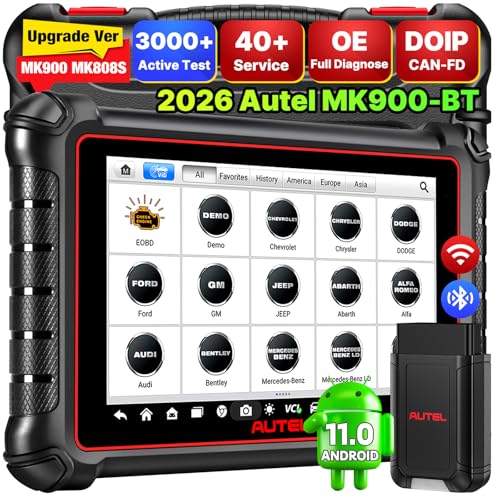

OBD-II scan tools read powertrain trouble codes from the vehicle, and codes that start with P0 are generic across brands while P1 codes are generally manufacturer-specific. That matters because a basic reader may show only engine-side information, while the transmission control module can store more detailed faults that need a module-capable scan tool.
What the TCM actually watches
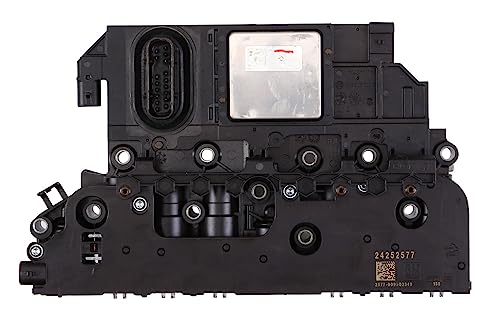
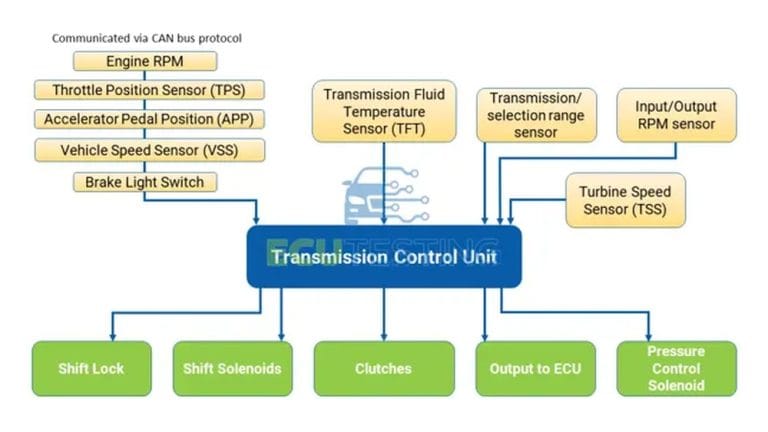
The Transmission Control Module monitors sensors, solenoids, and shift behavior. It stores codes when inputs or outputs move outside expected limits. On some vehicles the TCM is separate; on others it is built into the engine computer, so the code may sit in the same housing but still need direct transmission-module access for full data.
Why a code is only a starting point
A code tells you where the control system noticed a problem, not which part is guilty. A bad speed sensor, damaged wiring, low fluid, or a sticky valve body can all trigger similar complaints. Start by matching the code family to the symptom, then verify the circuit, fluid, and live data before replacing parts.
What P0700 means on your car
P0700 means the TCM has detected a problem somewhere and asked for attention, but it is not the root cause. It is a flag code, not a repair order. You need a transmission-capable scan tool to pull the module-specific code that explains what actually failed.
Why P0700 is not the diagnosis
P0700 only says the transmission controller has stored a fault. Do not stop there. You must scan the TCM directly to find the specific code. On many vehicles, a basic code reader will show P0700 and stop there, which hides the real clue until you read the transmission module.
How urgent P0700
Urgency depends on what the transmission is doing. If the vehicle has entered limp mode or is stuck in one gear, the system may be protecting itself from further damage. If the car still shifts normally, P0700 still needs diagnosis, but it is less urgent than an overheat or ratio-mismatch code.
Common transmission codes explained
The most common codes do not mean the same thing. Sensor codes usually point to a signal problem, ratio codes point to a mismatch between expected and actual gear behavior, and solenoid codes point to a control problem in the hydraulic system. That split helps you test the right circuit first.
P0715 and P0720: speed sensor faults
P0715 is an input or turbine speed sensor circuit code, and P0720 is an output speed sensor circuit malfunction code. The input sensor helps the TCM time shifts and judge gear changes. The output sensor helps the module compare expected and actual gear ratio. Bad signals can cause harsh, erratic, or delayed shifting.
P0730: incorrect gear ratio
P0730 indicates an incorrect gear ratio. That can happen with low fluid, clutch slip, or a sensor problem. P0731 through P0736 point to gear-specific ratio problems. A ratio code can mean internal slip, but it can also come from a bad speed signal or a hydraulic issue that prevents full apply pressure.
P0740 and P0741: torque converter clutch faults
P0740 is a torque converter clutch circuit malfunction code. P0741 means the torque converter clutch is stuck off or slipping. Common causes include a failed solenoid, wiring damage, valve body trouble, or wear in the converter itself. These codes often show up as shudder, poor highway efficiency, or unstable lockup behavior.
P0750 to P0770: shift solenoid faults
P0750 points to a shift solenoid A malfunction, and the P0750 to P0770 range covers solenoid-specific transmission shift faults. The fault may be in the solenoid, the wiring, sticky fluid, or the valve body. Do not assume the transmission is worn out just because a solenoid code appears.
P0218 and temperature faults
P0218 means the transmission is overheating. Temperature-related codes can also come from low fluid, restricted cooling, or a bad transmission fluid temperature sensor. Heat changes pressure and clutch behavior, so an overheat code often comes with slipping, delayed engagement, or reduced power.
What the code families can and cannot prove
Sensor codes, solenoid codes, ratio codes, and temperature codes each point in a different direction. None of them proves internal damage by itself. The code tells you what the TCM saw. Your job is to decide whether that reading came from a failed part, a wiring fault, bad fluid, or actual clutch slip.
Communication faults versus mechanical faults
Some codes are closer to a communication problem than a hard mechanical failure. If the TCM cannot trust an input, it may default to a protective strategy and limit shifts. That is why a car can feel stuck in one gear while the fault is still electrical, not mechanical.
When ratio codes point deeper
A ratio code becomes more serious when the fluid is dark, smells burnt, or the vehicle flares between gears. Picture a sedan that shifts into third, then the engine revs rise without a matching road-speed increase. That points toward slip, but the slip may come from fluid, pressure control, or worn clutch packs.
Temperature and module faults that mimic damage
Transmission fluid temperature sensor faults can mislead diagnosis because the module may change shift strategy when it thinks the unit is too hot. That can feel like a failing transmission. Low fluid or cooling trouble can trigger the code and the bad shift pattern at the same time.
Transmission control code triage table
This table groups several common codes by fault family. Use it as a triage map, not a parts list. The first check should match the family before you replace anything.
| Code | Fault family | What it usually means | How urgent it is | What to check first | When it points to internal damage |
|---|---|---|---|---|---|
| P0700 | Flag code | The TCM has stored a fault elsewhere | Moderate to high | Scan the TCM directly for the specific code | Only after the underlying code and live data point there |
| P0706 | Sensor code | Transmission range sensor circuit range/performance fault | Moderate | Shifter position data, connector condition, wiring | Usually not first; often electrical or adjustment related |
| P0715 | Sensor code | Input or turbine speed sensor circuit fault | Moderate | Sensor signal, connector, harness, live speed data | Rarely first; internal damage is not the default assumption |
| P0720 | Sensor code | Output speed sensor circuit malfunction | Moderate | Output speed signal and wiring | If the signal is valid but ratio still fails, slip becomes more likely |
| P0730 | Ratio code | Incorrect gear ratio | High | Fluid level, fluid condition, speed sensors, road-test data | Yes, if ratio error persists with correct fluid and valid sensor signals |
| P0740 | TCC code | Torque converter clutch circuit malfunction | Moderate to high | Wiring, solenoid control, valve body function | If lockup control is commanded correctly but never responds |
| P0741 | TCC code | Torque converter clutch is stuck off or slipping | High | Fluid condition, TCC command data, valve body, converter | Yes, if the clutch slips under command with good fluid and control data |
| P0750 | Solenoid code | Shift solenoid A malfunction | Moderate | Solenoid circuit, connector, fluid condition | Only after electrical and hydraulic checks fail |
| P0776 | Solenoid/pressure control code | Often points to a pressure control solenoid performance fault on many vehicles | Moderate to high | Line pressure control, fluid condition, wiring, valve body | If commanded pressure does not change and other causes are ruled out |
| P0218 | Temperature code | The transmission is overheating | High | Fluid level, cooler flow, debris, towing load, temp sensor data | If overheating returns after the cooling problem is fixed |
What to check first after a code
Start with the simplest evidence. Check fluid level, color, and odor, then confirm whether your transmission uses a sealed or temperature-dependent fill procedure. Many modern units do. A cold or rushed check can mislead you, so use the service procedure for that vehicle.
Fluid clues that matter
Bright red fluid with no burnt smell is more reassuring than dark brown fluid with a sharp odor. Low fluid can trigger ratio, shift, and temperature codes. Burnt fluid suggests heat or clutch wear, which makes internal damage more likely, but it still does not prove a rebuild is needed.
Basic wiring checks
Look at the connector at the transmission, the speed sensors, and any exposed harness sections. Pulling a solenoid or sensor code with a damaged connector is common. Corrosion, broken locks, oil in the connector, and rubbed-through wiring can all imitate a bad component.
What live data can tell you
A transmission-capable scan tool can show input speed, output speed, gear command, and sometimes solenoid state. If the input speed reads normally but the output speed does not change as expected, the TCM may be seeing a real ratio problem. If the data is absent or erratic, the fault may be electrical.
Simple triage order
- Read the transmission module, not only the engine computer.
- Record all codes and freeze-frame data.
- Check fluid level, color, and odor using the correct procedure.
- Inspect connectors and harnesses at the transmission.
- Compare live input speed, output speed, and commanded gear.
- Only then decide whether the fault is sensor, solenoid, cooling, or internal.
Suppose a crossover shows P0700 and P0741 after a highway trip, but the fluid is full and smells normal. That combination pushes diagnosis toward TCC control, wiring, or valve body problems before any talk of a rebuild. If the same car also shows P0218, heat becomes part of the fault tree immediately.
Can you keep driving?
You may be able to drive short distances with some transmission codes, but not all codes deserve the same patience. Overheat and ratio-mismatch faults are more urgent than a single sensor code. If the car is in limp mode, the system is already protecting itself and should be checked soon.
When driving is a bad idea
Do not keep driving if the transmission is overheating, slipping badly, or refusing to shift. Forcing the issue can turn a repairable problem into clutch or converter damage. If the car only has one gear and a warning lamp, that is the transmission’s way of asking for reduced load.
When short-distance driving may be less risky
A brief trip to a repair shop may be reasonable when the code is a sensor or communication fault and the vehicle still shifts predictably. Keep the route short, avoid heavy throttle, and stop if the shifting worsens. A common first-timer mistake is treating every code as equal urgency.
Frequently asked questions
What does P0700 mean on my car?
P0700 means the transmission control module has detected a fault and stored a flag code. It does not name the broken part. You need a scan tool that can read the transmission module directly to find the code that explains the real problem.
What do the most common transmission codes mean?
The most common codes usually fall into sensor, ratio, solenoid, torque converter clutch, and temperature families.
Is P0700 a serious transmission problem?
P0700 is serious enough to take seriously, but not because it names the fault. It tells you there is a transmission problem stored elsewhere. If the car is in limp mode, shifting harshly, or stuck in one gear, treat it as urgent.
What causes a P0741 code?
P0741 means the torque converter clutch is stuck off or slipping. Common causes include a faulty solenoid, wiring damage, a valve body problem, or wear in the converter itself. Low or burned fluid can also push the system into that fault pattern.
What should I check first when I get a transmission code?
Check fluid level, fluid color, and odor first, then confirm whether the vehicle needs a temperature-based or sealed transmission fluid procedure. After that, inspect connectors and wiring, and read the transmission module with a scan tool that can access more than engine codes.
Do transmission codes always mean I need a rebuild?
No. Many transmission codes come from sensors, solenoids, wiring, fluid condition, or cooling faults. A rebuild becomes more likely only after valid sensor data, correct fluid level, and proper control commands still leave you with ratio error, slip, or pressure loss.
Products related to this article
Sponsored / affiliate links. As an Amazon Associate I earn from qualifying purchases. I may earn additional commission from eligible campaigns.