Transmission Control Solenoid Symptoms and Fixes
Transmission control solenoid symptoms and fixes usually come down to one rule: check fluid level and wiring first, then use the code to separate shift, pressure, and TCC solenoid faults from a bad TCM. Skip that order and you can chase harsh shifts, no-drive complaints, the wrong parts, and an unnecessary transmission teardown. This guide maps symptoms to codes, then to the next test and repair.
Understanding solenoid functions and differences
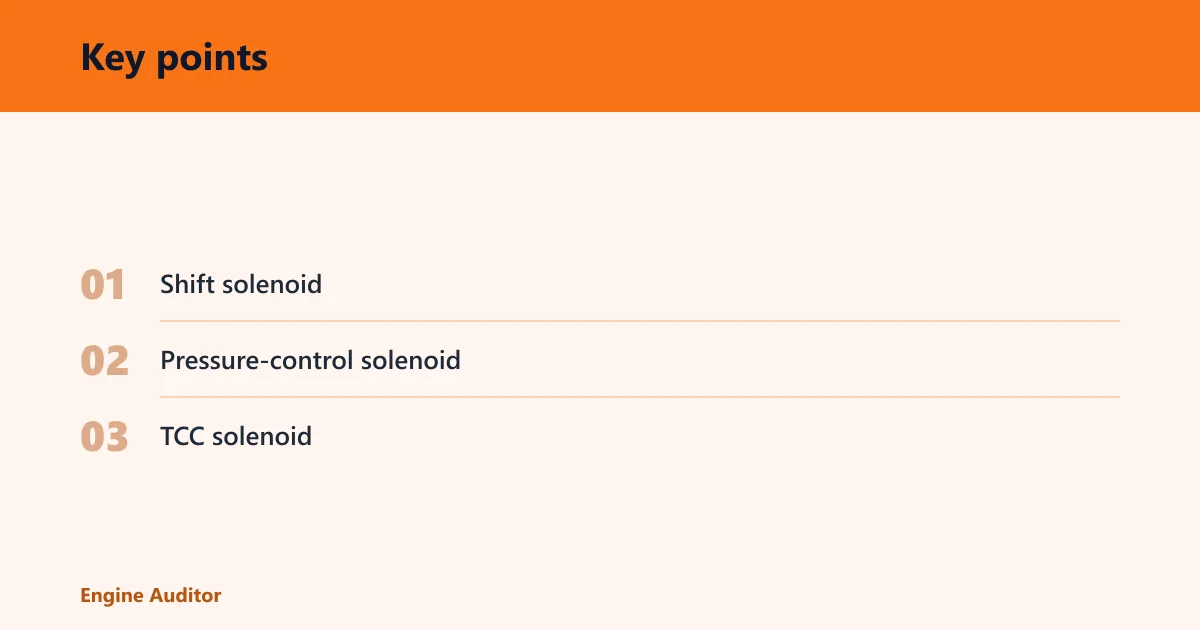


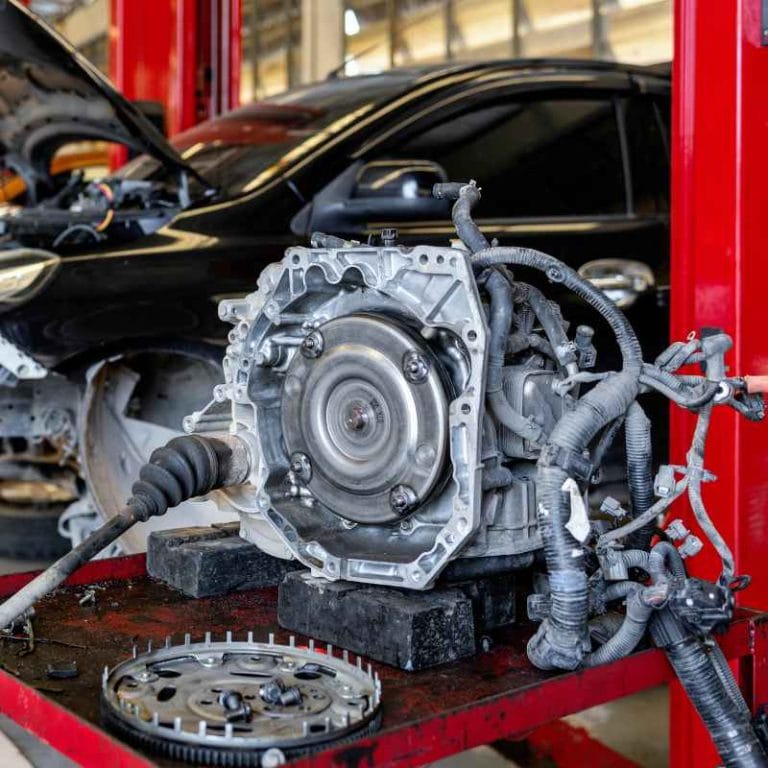
A transmission control solenoid is an electro-hydraulic valve inside or on the transmission that routes pressurized fluid. Modern automatic transmissions use several solenoids, including shift, pressure-control, and TCC solenoids. Together they control shift timing, line pressure, and torque-converter clutch operation.
That split matters because the symptom pattern changes with the circuit type. A shift solenoid affects gear changes. A pressure-control solenoid regulates line pressure. A TCC solenoid controls lockup. Each one can fail electrically, such as an open or short, or stick mechanically because of wear, debris, or varnish.
How the main solenoids differ
- Shift solenoid: Commands gear changes and can cause harsh, delayed, or missing shifts.
- Pressure-control solenoid: Regulates line pressure and can cause harsh or slipping shifts.
- TCC solenoid: Controls torque-converter lockup and can cause shudder or stalling at stops.
Picture a car that shifts normally when cold, then starts flaring between 2nd and 3rd after 20 minutes of driving. That pattern points away from a random “transmission problem” and toward a heat-sensitive solenoid, wiring fault, or fluid issue that changes with temperature.
What are the symptoms of a bad solenoid?
A bad transmission solenoid can cause harsh shifts, delayed engagement, missed shifts, slipping, flare, shudder, stalling at stops, warning lights, and limp mode. The exact symptom depends on which solenoid is affected and whether the fault is electrical, mechanical, or related to the transmission control module.
Shift-solenoid symptoms
Shift-solenoid problems usually show up as wrong-gear behavior, delayed shifts, or no upshift/downshift when expected. You may also see harsh gear changes if the solenoid is sticking or if the circuit drops out intermittently. Common codes include P0751, P0753, and P0758.
Pressure-control symptoms
Pressure-control faults tend to cause harsh shifts, slipping, or both. If line pressure is too low, the transmission may flare between gears or feel lazy on takeoff. If pressure is too high, shifts can feel like a bang. Common pressure-control fault codes can include P0746, P0747, P0776, and P0796.
TCC symptoms
TCC solenoid problems often show up as shudder at cruise, a stall or near-stall at stops, or a complaint that the engine feels loaded when coming to a stop. P0740 and P0741 are common codes in this cluster.
A common first-timer mistake is replacing a shift solenoid after seeing a harsh shift, then finding the real fault was a loose case connector with transmission fluid in the plug. The symptom looked like a bad solenoid. The failure path was electrical.
Transmission solenoid diagnosis matrix
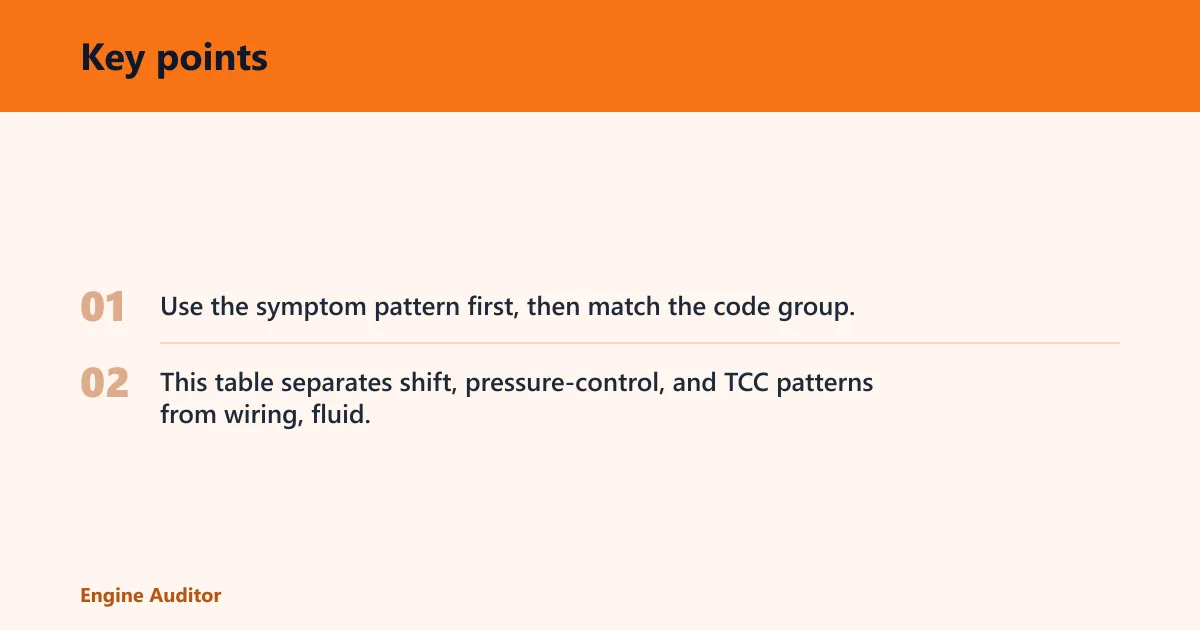
Use the symptom pattern first, then match the code group, then test the circuit before replacing parts. This table separates shift, pressure-control, and TCC patterns from wiring, fluid, and TCM issues.
| Symptom pattern | Likely solenoid type | Common codes | First test | Likely repair path |
|---|---|---|---|---|
| Intermittent cold-only fault | Shift solenoid or wiring/connector | P0751, P0753, P0758 | Check fluid level, then wiggle-test the transmission wiring and case connector with an OBD2 scan tool watching live data | Repair corroded connector, loose pins, or damaged wiring; replace the solenoid only if command and power are correct |
| Hot-only fault after warm-up | Pressure-control solenoid or fluid issue | P0746, P0747, P0776, P0796 | Check fluid condition and temperature-sensitive symptom change, then verify line-pressure command and response | Service fluid if contaminated, then test the circuit and replace the solenoid or pack if the control signal and hydraulics disagree |
| Limp mode | TCM, wiring, or major solenoid fault | P0700 plus sub-codes, or P0751/P0746/P0740 family codes | Read transmission sub-codes first, then confirm power, grounds, and continuity to the transmission connector | Fix wiring or TCM faults first; replace the failed solenoid only after the command path is confirmed |
| Shudder or stall at stops | TCC solenoid | P0740, P0741 | Command TCC on and off with a bidirectional scan tool and watch for lockup response | Check fluid and valve-body operation, then repair the TCC circuit or solenoid if it does not release correctly |
| Harsh shifts | Pressure-control solenoid, then shift solenoid | P0746, P0747, P0776, P0796, or P0751/P0753/P0758 | Compare commanded pressure or shift state to actual behavior | Repair the pressure-control circuit if line pressure is wrong; move to shift-solenoid testing if pressure is normal |
What codes point to each solenoid type?
Codes help narrow the circuit, but they do not prove the solenoid itself has failed. TCC-related codes include P0740 and P0741. P0700 means the TCM has requested attention and usually needs sub-codes to identify the actual fault.
Read the code group before replacing parts
P0700 is a broad transmission control system malfunction code. It means the transmission control module has stored or requested another code. That makes it a starting point, not a repair instruction. Read the sub-codes before you touch the transmission.
- Scan all modules, not just the engine computer.
- Record the exact transmission code and freeze-frame data.
- Match the code to the symptom pattern and temperature condition.
- Check fluid, connector fit, and wiring condition.
- Use bidirectional commands if the scan tool supports them.
Check fluid, connector, and wiring first
Low, dirty, or burnt fluid can mimic solenoid failure, and fluid temperature matters on some vehicles. Start with the fluid level and condition before any parts purchase. Then inspect the transmission wiring and case connector, because they are common failure points for intermittent symptoms. They can corrode, loosen, or short.
Why temperature is a clue
Cold-only faults often point to a marginal electrical connection, sticky valve, or solenoid coil that changes resistance with temperature. Hot-only faults often point to a worn solenoid, thinning fluid, or a circuit that fails once heat expands the connector or changes pressure. That is why “only after 20 minutes” matters.
What to inspect
- Fluid level at the correct temperature and procedure for that model.
- Fluid color and odor, especially dark or burnt fluid.
- Transmission case connector pins for corrosion, bent terminals, or ATF intrusion.
- Wiring routing for rub-through near the transmission and engine bay.
- Grounds and power feeds to the transmission control circuit.
Suppose a sedan shows P0741 and a shudder only after highway driving. If the fluid is dark and the connector has oil intrusion, the first repair path is not a new TCC solenoid. It is fluid service, connector repair, and a retest with scan data.
Can a bad solenoid cause limp mode?
Yes. A bad solenoid can trigger limp mode, but so can wiring faults and a failing TCM. Limp mode is a fail-safe state that often locks the transmission in 2nd or 3rd gear to protect the drivetrain. The point is to limit damage, not to identify the exact failed part.
Why the TCM matters
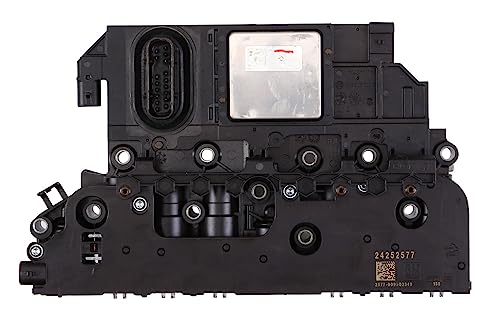
The transmission control module is the computer that commands shifting. A failing TCM can cause limp mode, no shifts, harsh slams, and ghost codes. It may also request P0700. If the module cannot trust sensor input or its own output circuits, it may shut down normal shift logic.
When limp mode points away from the solenoid
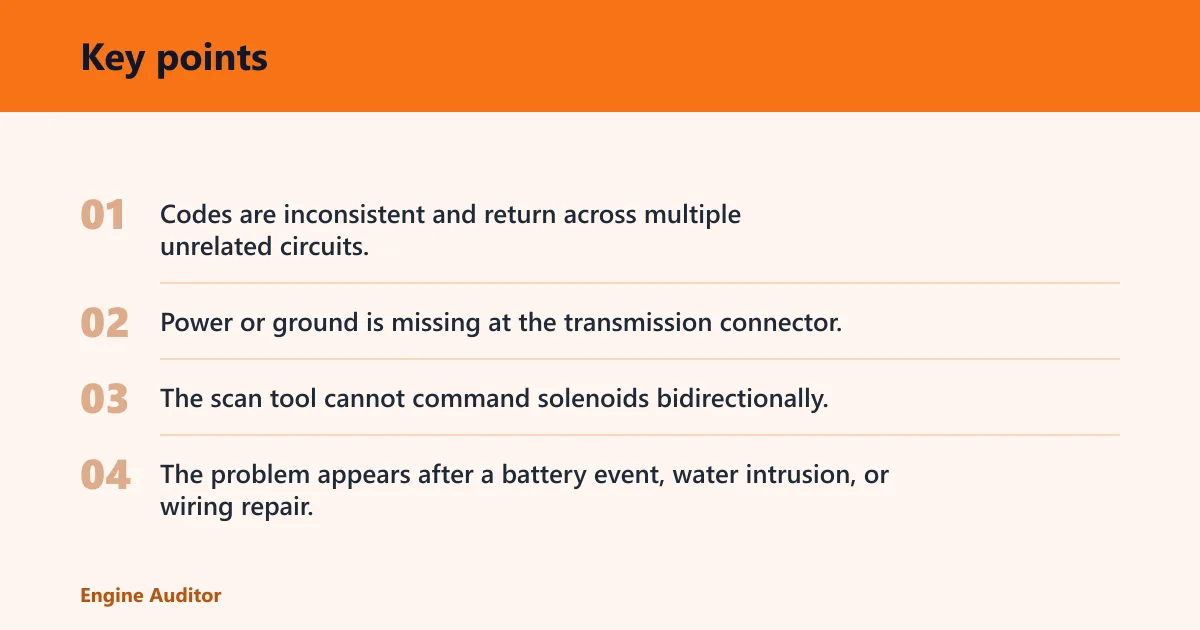
- Codes are inconsistent and return across multiple unrelated circuits.
- Power or ground is missing at the transmission connector.
- The scan tool cannot command solenoids bidirectionally.
- The problem appears after a battery event, water intrusion, or wiring repair.
Solenoid, wiring, or TCM problem?
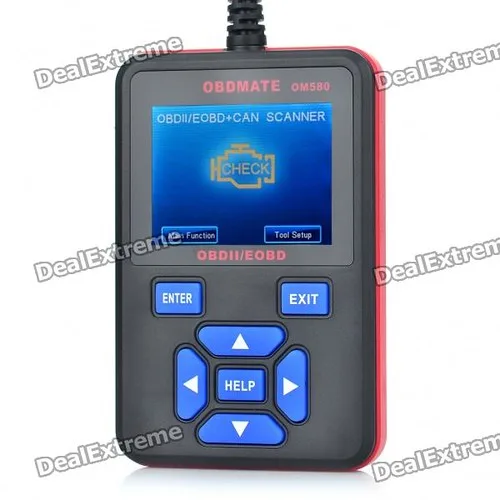
Use scan-tool data, electrical checks, and command tests to separate a failed solenoid from a wiring or TCM problem. An OBD2 scan tool reads transmission codes and can confirm electrical faults. A bidirectional tool can command solenoids on and off so you can compare commanded state with actual response.
Decision path
- Read the full code set, including P0700 sub-codes.
- Check fluid level and condition.
- Inspect the wiring and case connector for corrosion, looseness, or shorts.
- Measure resistance and continuity at the transmission connector.
- Use bidirectional commands to see whether the solenoid responds.
- If the solenoid responds electrically but the symptom remains, suspect a sticking valve, pressure problem, or internal hydraulic fault.
- If command output is absent despite good wiring and power, suspect the TCM.
Electrical versus hydraulic failure
An electrical fault shows up as an open circuit, short, or a solenoid that will not respond to a command. A hydraulic or mechanical fault shows up when the solenoid is commanded correctly but the transmission still shifts wrong because the valve sticks, pressure is off, or fluid quality is poor. Both can produce the same road feel.
Replacement cost and repair path
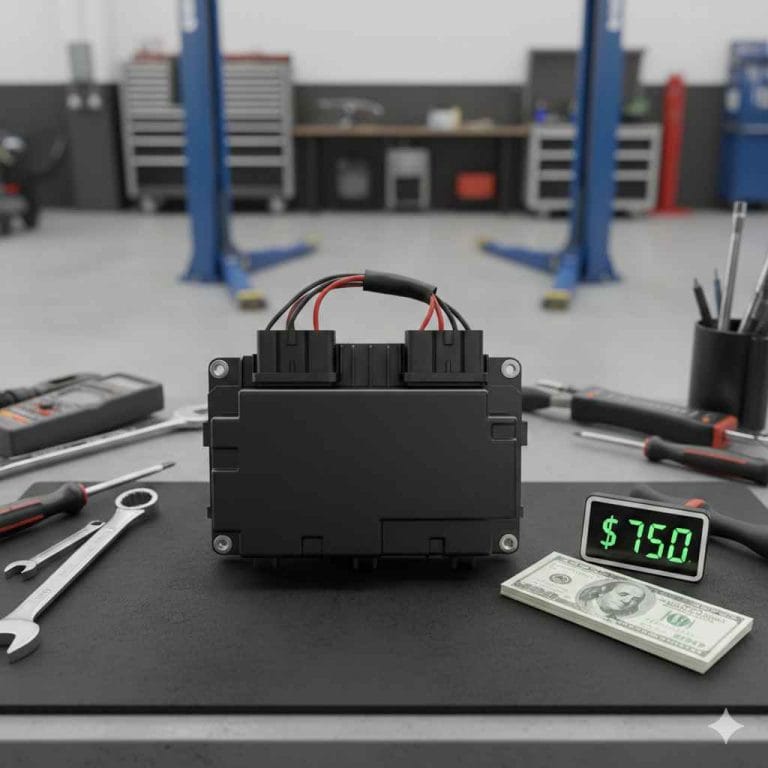
Cost depends on access, the number of solenoids involved, and whether the part is separate or built into the valve body. A single pan-accessible shift solenoid can cost $20-$80 in parts, with a shop total of $250-$500. A full solenoid pack can cost $120-$350 in parts, with a shop total of $400-$900. A solenoid integrated in a valve body can cost $200-$600 in parts, with a shop total of $700-$1,400.
Why labor changes the bill
Pan-accessible parts usually take less time because the pan comes off and the solenoid is reachable without major disassembly. A valve-body-integrated unit raises labor because the technician has to remove and service more internal components, then verify seals, clearances, and fluid fill. Programming or relearn time can add still more labor.
When to replace one solenoid versus the pack
- Replace one solenoid when the code points to a single circuit, the wiring checks out, and the fault is isolated.
- Replace the pack when multiple solenoids share the same carrier, or when wear affects the whole assembly.
- Repair the wiring first when the symptom is intermittent and heat or movement changes the fault.
Some vehicles need a relearn or programming step after repair. That is common after solenoid, valve body, or TCM service because the module may need to adapt shift timing and pressure control again.
Frequently asked questions
What does a transmission control solenoid do?
It is an electrically controlled valve that routes pressurized transmission fluid. Depending on the circuit, it changes shift timing, line pressure, or torque-converter clutch operation. That is why one failed solenoid can cause harsh shifts, while another can cause shudder or stall behavior.
What are the symptoms of a bad transmission control solenoid?
Common symptoms include harsh shifts, delayed engagement, missing shifts, slipping, flare, shudder, warning lights, and limp mode. The pattern matters. Shift-solenoid faults usually affect gear changes, pressure-control faults affect shift feel, and TCC faults often show up during lockup or at stops.
How can I tell if it’s a solenoid, wiring issue, or TCM problem?
Start with the codes, then inspect fluid, connector fit, and wiring condition. If the wiring checks out, use a bidirectional scan tool to command the solenoid. If the command works but the symptom does not, suspect a hydraulic or mechanical fault. If commands are missing, suspect the TCM or its feeds.
What codes point to a failed shift or pressure-control solenoid?
P0700 is a general transmission control system malfunction request and usually means you still need the actual transmission sub-codes before deciding what failed.
Can low fluid cause transmission solenoid symptoms?
Low, dirty, or burnt fluid can sometimes mimic a bad solenoid by changing line pressure and shift quality. Fluid temperature matters too, because some complaints only appear hot or cold. Check the fluid level and condition before replacing any solenoid, connector, or module.
Products related to this article
Sponsored / affiliate links. As an Amazon Associate I earn from qualifying purchases. I may earn additional commission from eligible campaigns.