Why Won’t My Car Lights Turn Off? Here’s What to Check
Why won’t my car lights turn off? This is a surprisingly common and frustrating issue that can leave you with a dead battery and a car that refuses to start in the morning. If you already left them on and drained the battery, see our guide on what happens when car lights are left on. Whether it’s the headlights, interior dome light, or taillights, a light that stays on usually points to a specific electrical fault.
In this guide, we will walk you through the six most common reasons your car lights stay on. You will learn how to diagnose each problem yourself and what it takes to fix it, potentially saving you a costly tow or an unnecessary trip to the mechanic.
Simply put, the most common reason your car lights won’t turn off is a faulty headlight switch, a stuck relay, or a door jamb switch stuck in the pressed position. Checking the autolamp sensor setting first, then swapping the relay in the fuse box, will solve the vast majority of cases before you need professional help.
Key Takeaways
Best Parasitic Draw Test Tool Pick
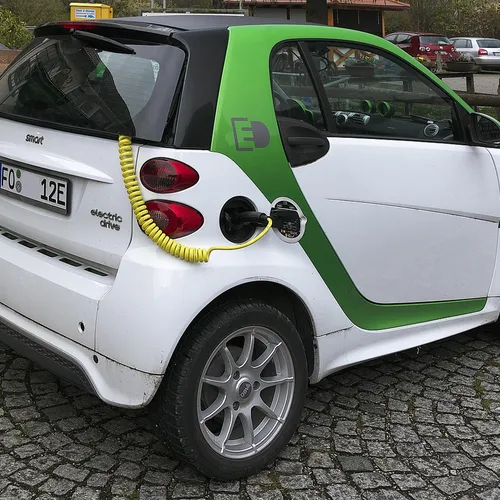
Innova 3340 Multimeter – $29.99
The exact tool this guide’s parasitic draw test walks you through, set to the Amps setting to read the drain.
- Best for: Reading the 0.05A threshold this guide uses to confirm a real parasitic drain
- Why we picked it: Has a dedicated 10A port for this exact bridging test
- Main drawback: Takes 2-3 minutes per reading as this guide notes, be patient
Compare more diagnosis essentials
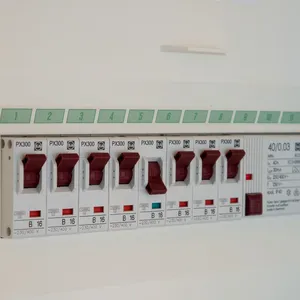 Option 1 Fuse Kit w/ Tester – $9.99
|
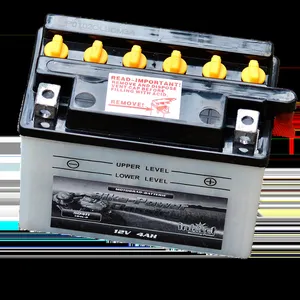
 Option 2 Battery Service Kit – $14.99
|
 Option 3 Circuit Tester Probe – $16.99
|
As an Amazon Associate we earn from qualifying purchases.
- Faulty headlight switches and autolamp sensors are the top reason headlights stay on after parking.
- A stuck relay can bypass the switch entirely, keeping lights powered even with the key removed.
- Interior lights that stay on are almost always caused by a door jamb switch that isn’t fully releasing.
- Parasitic battery drain from stuck lights can kill a fully charged battery in under 4 hours.
- Performing a simple relay swap test can confirm if the electrical circuit is the source of the problem.
1. Faulty Headlight Switch or Autolamp Sensor
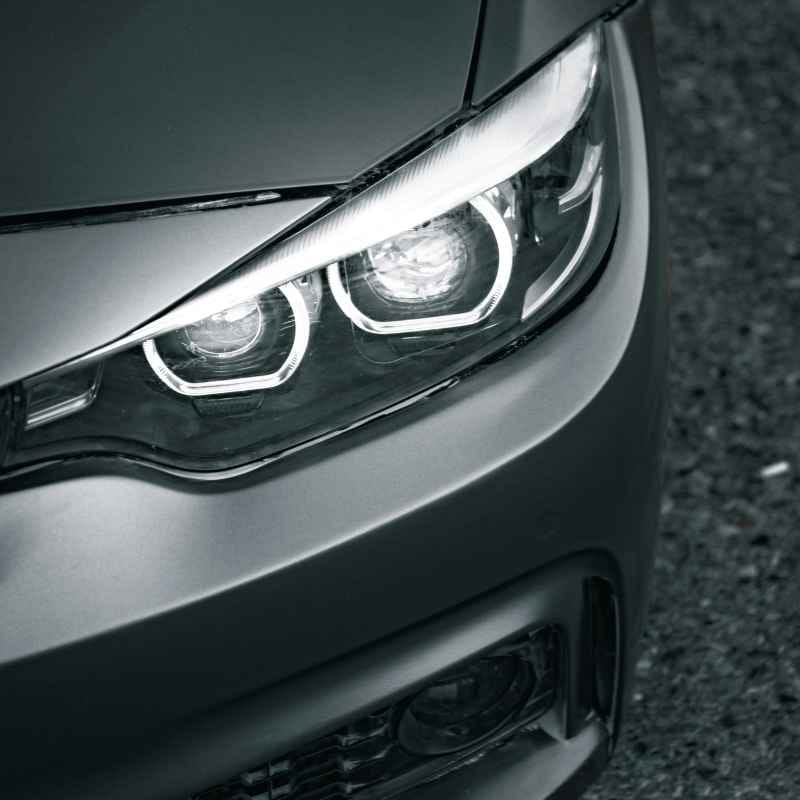
The most common reason your car lights won’t turn off is a headlight switch that has failed in the “on” position. On modern vehicles, this is often combined with an autolamp sensor that automatically turns the lights on when it gets dark. If this sensor malfunctions or is blocked, the system will keep the lights on permanently.
You can test this quickly by rotating the headlight knob to the “Off” position while the car is running. If the lights turn off, the issue is likely with the automatic light sensor rather than the switch itself. If they stay on, the internal contacts of the switch are likely welded or shorted.
Signs of a Failing Autolamp Sensor
- Headlights stay on for hours after you park in a garage.
- Lights flicker on and off when driving under bridges.
- The dashboard lights are dimmer than normal during the day.
- Covering the sensor on the dashboard (near the windshield) does not turn the lights on manually.
Tip: If your car has a “Lights Off” warning chime that suddenly stopped working, this is a strong indicator that the headlight switch module itself is failing and needs replacement.
According to a study by the Car Care Council, faulty electrical switches are one of the top ten reasons for roadside breakdowns. Replacing a headlight switch is generally straightforward. The part itself is often between $40 and $150, depending on your vehicle’s make and model, and can usually be swapped without specialized tools.
2. Defective Headlight Relay Stuck in the “On” Position
A relay is an electromagnetic switch that uses a small electric current to turn on a larger current. When a relay fails, it can get stuck in the closed (on) position. This means that even if you turn the headlight switch off, the power supply to the lights remains active.
Finding a stuck relay is one of the easiest diagnoses you can do yourself. Most cars have a clearly marked fuse box under the hood or inside the dashboard. The owner’s manual will show you exactly which relay controls the headlights.
| Symptom | Likely Cause | Ease of Fix |
|---|---|---|
| Headlights stay on with key removed | Stuck Headlight Relay | Easy (Swap Test) |
| Headlights flicker while driving | Failing Relay or Alternator | Moderate |
| No headlights at all | Blown Fuse or Open Relay | Easy |
To test a relay, simply find an identical relay in the same fuse box (the horn or fog light relay is usually the same type). Swap them. If your headlights finally turn off, and the horn doesn’t work, you have confirmed a bad headlight relay.
A replacement relay typically costs between $10 and $30.
Warning: Never bypass a relay using a paperclip or jumper wire. This bypasses the safety fuse and can cause the wiring harness to melt and potentially catch fire.
3. Stuck or Faulty Door Jamb Switch
If your interior dome lights, vanity lights, or “lights on” chime are staying on, the culprit is almost always a door jamb switch. This is a small plunger-style button located on the door frame that gets pushed in when the door closes. Over time, these switches can stick due to dirt, corrosion, or worn-out springs.
You can diagnose this immediately by pressing each door jamb switch manually with your finger. When you press the switch, the interior light should turn off. If it doesn’t, the switch is likely faulty or the wiring to it is shorted.
How to Fix a Stuck Door Jamb Switch
- Locate the switches: Open each door and look for a small rubber or plastic button on the metal door frame.
- Manual test: Press the plunger with your finger. If the light goes out, clean the plunger with electronic contact cleaner.
- Visual inspection: Check for broken wires or excessive rust around the switch mounting hole.
- Replacement: Most door jamb switches simply unscrew from the frame and unplug. A replacement switch costs around $5 to $15.
Important: On many modern cars, the door switch function is integrated into the latch assembly inside the door. If the interior light doesn’t respond to the manual press test, the issue might be a failed latch actuator, which is more expensive to replace.
According to automotive repair data, door jamb switches are one of the cheapest and easiest components to replace on any vehicle. Ignoring a stuck interior light can drain your battery quickly. A single 10-watt dome light bulb can draw enough power to drain a standard car battery in under 24 hours.
4. Issues with the Daytime Running Lights (DRL) Module
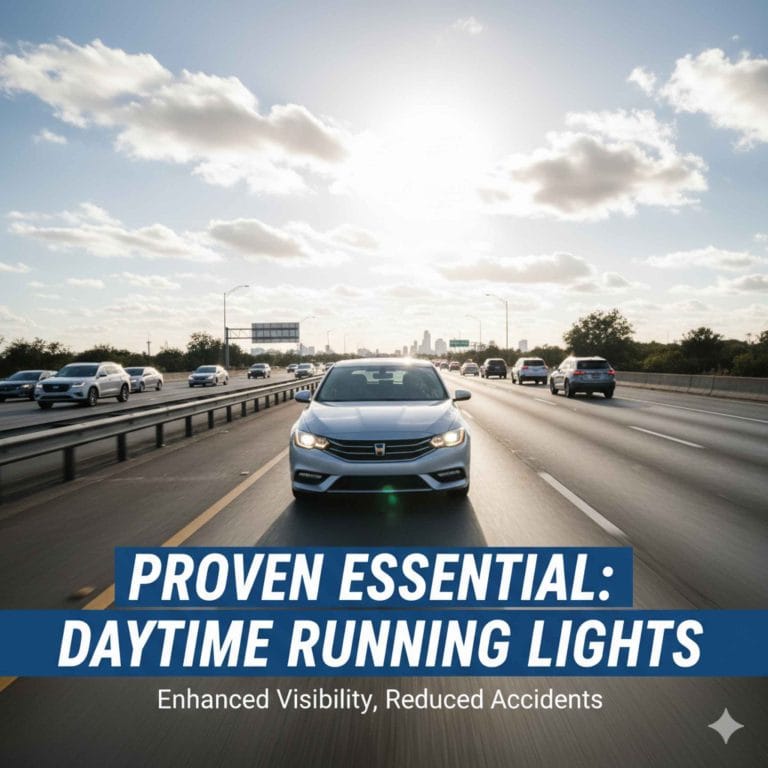
Daytime Running Lights (DRLs) are designed to automatically turn on when the engine is running. However, a malfunctioning DRL module can cause them to stay on even after the engine is shut off. This is particularly common in colder climates where DRLs are mandated by law.
One quirky but common issue with DRLs is the parking brake sensor. On many vehicles, the DRL system is designed to turn off when the parking brake is engaged. If the sensor that detects your parking brake is faulty or misadjusted, the engine computer may think the brake is off and keep the DRLs lit.
Common DRL Module Problems
- Parking brake sensor: Make sure the parking brake is fully released. Sometimes even a quarter-inch of play left in the pedal can keep the sensor active.
- Failed DRL resistor: Some cars use a resistor block to dim the high-beams for DRL function. If it shorts, the lights stay on.
- Software glitch: Some newer vehicles require a Body Control Module (BCM) software update to fix DRL timing issues. This is a dealer-level fix.
If you suspect the DRL module, try starting your car, engaging the parking brake, and then turning the engine off. If the lights turn off, you have likely found the root cause. Replacing a DRL module usually involves accessing a small black box near the fuse box, and the part typically costs between $50 and $100.
5. Problems with the Brake Light Stopper Switch
Brake lights that stay on are a serious safety hazard and a common issue on many imported vehicles. The problem often isn’t the switch itself, but a small piece of rubber that presses against it. This rubber stopper pad is mounted on the brake pedal arm.
Over time, the rubber becomes brittle and crumbles away.
When the stopper pad falls off, the brake pedal arm no longer fully depresses the switch plunger. The switch stays in the “on” position, keeping your brake lights lit at all times, even when the car is parked and locked.
Diagnosing a Brake Light Switch Issue
- Walk behind your car and look at the brake lights. Are they on without anyone touching the pedal?
- Open the driver’s side floorboard and look up at the brake pedal arm.
- Find the white or clear plastic switch the pedal presses against.
- Check for a missing rubber pad on the pedal arm. If you see a bare metal hole, the pad has disintegrated.
Tip: This is a $10 fix. You can buy a universal rubber stopper pad kit at any auto parts store. Simply push the new pad into the hole on the pedal arm. It will hold the switch correctly and your brake lights will function normally again.
Auto repair shops report that this is one of the most commonly overlooked causes of a dead battery. A driver arrives saying “my battery keeps dying,” but the real issue is the brake lights staying on all night. Checking this stopper pad should be the first thing you do if your battery dies repeatedly.
6. Aftermarket Installations and Wiring Shorts
Aftermarket accessories are a common source of electrical gremlins. Remote starters, alarm systems, trailer hitches, and aftermarket stereos are frequently wired into existing car circuits. If these installations were done poorly, or if the wiring has degraded over time, they can backfeed power into the lighting circuits.
For example, a poorly wired trailer hitch connector can cause a short between the running light circuit and the brake light circuit. This will make it appear as though your tail lights are stuck on. Similarly, an aftermarket stereo that is wired to the wrong “illumination” wire can keep your dashboard and ambient lights on permanently.
Common Aftermarket Wiring Problems
- Trailer connectors: Corrosion or moisture inside the 4-pin or 7-pin connector can bridge the pins, keeping taillights active.
- Remote starters: Some cheap modules do not properly relay the “ignition off” signal, causing headlights to stay on.
- LED bulb upgrades: Installing LED bulbs without a load resistor can confuse the car’s computer, which expects the resistance of a standard halogen bulb.
Warning: If you recently installed any new electrical equipment in your car, disconnect it completely. If the lights turn off, you’ll know the installation is faulty. Have it rewired by a professional to prevent a slow battery drain or an electrical fire.
If you have no aftermarket parts installed, check your wiring for physical damage. A mouse or rat chewing through a wire is a surprisingly common cause of a short circuit. Look for chewed insulation, especially near the engine bay or under the back seat.
7. How to Diagnose the Exact Cause with a Parasitic Draw Test
If you’ve checked the switches, relays, and bulbs but the problem persists, you need to perform a parasitic draw test. This is the gold standard for finding an electrical drain in a vehicle. The test measures how much current the battery is losing while the car is completely off.
The normal parasitic draw for a modern car is between 30 and 50 milliamps (mA). A single interior light bulb typically draws 200 to 300 mA. If your multimeter shows a draw higher than 50 mA after the car has gone to sleep, you have confirmed an electrical fault.
| Tool | Purpose | Estimated Cost |
|---|---|---|
| Digital Multimeter (DMM) | Measures voltage and amperage draw | $20 – $50 |
| Fuse Puller / Pliers | Removing and reseating fuses safely | $5 – $10 |
| Owner’s Manual | Identifying fuse box locations and ratings | Free |
Step-by-Step Parasitic Draw Test
- Prepare the car: Turn everything off. Close all doors, trunk, and hood. Remove the key from the ignition. Wait 15-30 minutes for all electronic modules to go to sleep.
- Disconnect the battery: Use a wrench to loosen and remove the negative (black) battery terminal.
- Set the multimeter: Turn your multimeter dial to the Amps (A) setting. If your meter has separate ports, plug the red lead into the 10A or 20A port.
- Connect the meter: Connect one lead of the multimeter to the negative battery post. Connect the other lead to the disconnected negative battery cable. The meter becomes the bridge for the current.
- Read the draw: Wait 2-3 minutes for the reading to stabilize. A reading above 0.05A (50mA) indicates a parasitic drain.
- Isolate the circuit: Start pulling fuses one at a time from the fuse box. Watch the multimeter reading. When the reading drops to near zero, you have found the circuit causing the drain.
Tip: Always start with the “interior lights,” “dome light,” and “courtesy light” fuses. These are the circuits most likely to cause a drain if a switch is stuck or a door sensor is faulty.
According to AAA, dead batteries are the leading cause of roadside assistance calls. A parasitic drain from a simple light that won’t turn off is a leading cause of premature battery failure. Catching this early not only saves your battery but also prevents damage to the alternator, which can overwork itself trying to recharge a dead battery every night.
Frequently Asked Questions
Can a dead battery cause the lights to stay on?
No, a dead battery cannot cause lights to stay on. However, the reverse is true: lights that stay on cause the battery to die. If your car has power but the lights are stuck, the battery is still supplying power.
Once the battery is completely drained, the lights will go out, but you will be stranded.
How much does it cost to fix a relay that won’t turn off?
Replacing an automotive relay is one of the cheapest fixes. A relay costs between $8 and $30. If you have the diagnostic work done at a shop, expect to pay for 30 minutes to 1 hour of labor, which brings the total to around $100 to $150.
Will my car lights drain the battery if they stay on overnight?
Absolutely. A single 60-watt headlight bulb draws about 5 amps. In this scenario, a fully charged 12-volt battery can be completely drained in roughly 4 to 5 hours.
Interior dome lights draw less but will still kill the battery over an 8 to 12 hour period.
Why won’t my interior lights turn off in my car?
The most common cause is a door jamb switch that is stuck or a dimmer switch that has been rotated to the “always on” position (often marked by a dome light icon). Manually press each door switch to see if the light responds. Check your dimmer control to ensure it isn’t set to keep the interior light on.
Can a bad alternator cause my lights to stay on?
Yes, indirectly. A failing alternator can cause voltage spikes or send AC current into the electrical system. This can confuse the Body Control Module (BCM) and cause lights to behave erratically, including staying on or flickering.
However, this is less common than a stuck relay or faulty switch.
Final Thoughts
Dealing with car lights that won’t turn off is usually a straightforward process. Start with the most common causes: a faulty headlight switch, a stuck relay, or a door jamb switch. In most cases, you can resolve the issue yourself with basic tools in under an hour.
If the problem persists after checking these areas, performing a parasitic draw test will pinpoint the exact circuit. Addressing this quickly will save you the hassle of a dead battery and keep your car running reliably.
See also how to adjust car lights for better road visibility. See also how many car lights are there full breakdown inside.
Products related to this article
Sponsored / affiliate links. As an Amazon Associate I earn from qualifying purchases. I may earn additional commission from eligible campaigns.