Do Car Lights Automatically Turn on at Night (Complete Guide)
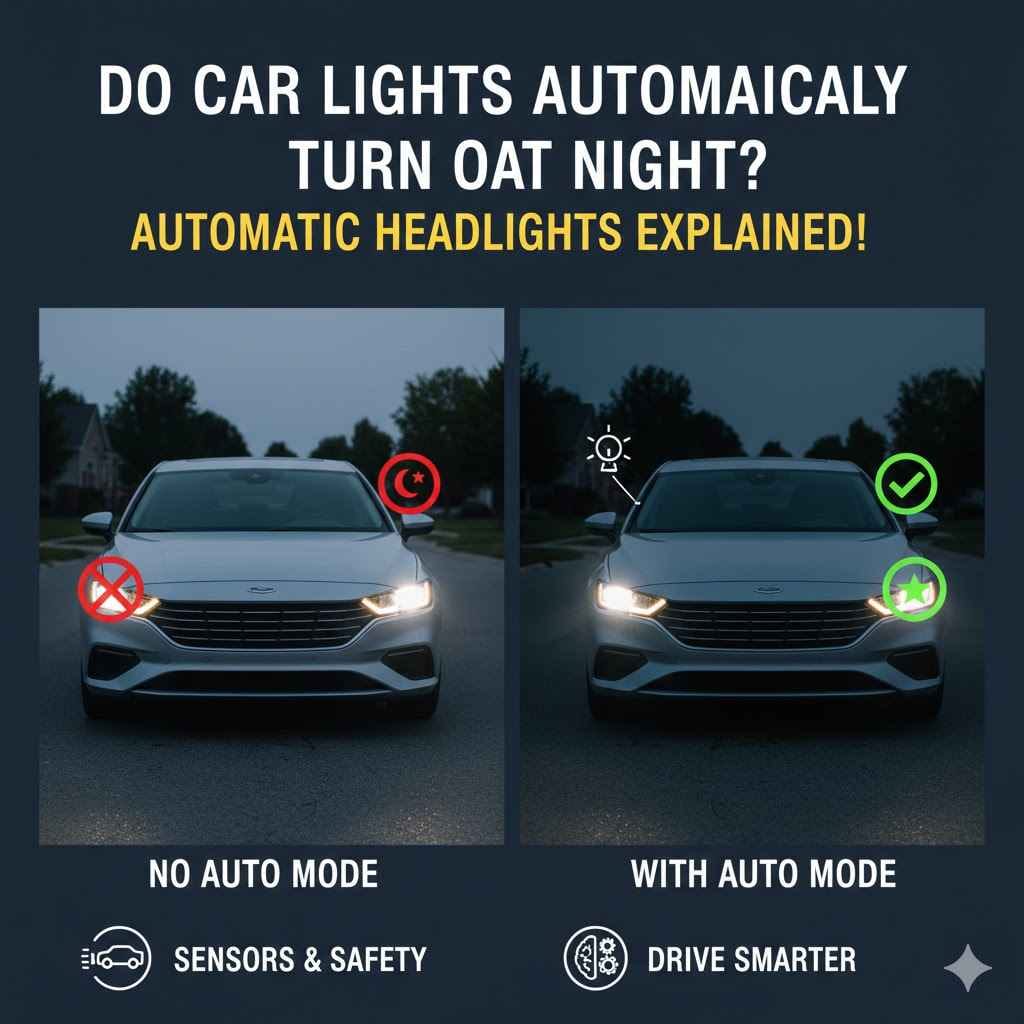
Have you ever wondered, “Do Car Lights Automatically Turn On at Night?” Many drivers, especially new ones, find this question a bit puzzling. It seems like cars magically know when to turn on their lights as it gets dark. It’s not magic, though, and it’s easier to understand than you might think.
This guide will break down how your car’s lights work so you feel confident. We’ll cover everything simply, step by step. Let’s find out what makes your car lights come on when they need to.
Understanding Automatic Car Headlights
Motarithl
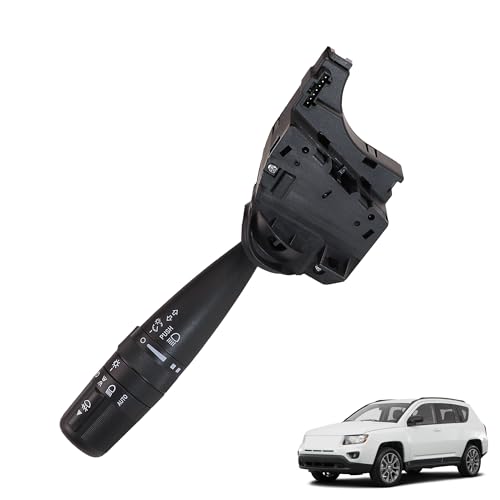
Motarithl Turn Signal Switch w/Automatic Headlights Fog…
- Description: The turn signal switch controls the vehicle's turn signals, headlights, and warning lights, ensuring driving safety a…
- Compatible With: 2009-2014 Dodge Avenger;2009-2010 Dodge Journey;2008-2010 Dodge Nitro;2011-2014 Chrysler 200;2008-2010 Jeep Comma…
- OE Number: 68015101AA 68015101AB 68015101AC 68015101AD 68015101AE 68015101AF 68015101AG
As an Amazon Associate I earn from qualifying purchases.
Many modern cars have systems that turn the headlights on automatically when it gets dark. This is a safety feature designed to make driving safer for everyone. These systems usually use sensors to detect light levels.
When the sensors notice it’s getting dim, they signal the car’s computer to switch on the headlights. This means you don’t have to remember to turn them on yourself, which is great for busy drivers or when weather changes quickly.
How Automatic Headlights Work
Automatic headlights rely on a few key components working together. The most important part is the light sensor. This sensor is typically a small device located on the dashboard or near the rearview mirror.
It measures the amount of ambient light outside the car.
When the light sensor detects that the light levels have dropped below a certain point, it sends a signal to the car’s body control module (BCM) or a similar computer. The BCM then processes this information and sends a command to turn on the headlights.
Some systems also have a timer. This helps prevent the lights from turning on and off too quickly if there are brief changes in light, like passing under a bridge. The BCM might also consider other factors, like windshield wiper activity, as a sign that conditions are poor and lights might be needed.
-
Light Sensor Function
This is the brain of the automatic headlight system. The light sensor, often called an ambient light sensor, constantly monitors the external light conditions. It’s like a tiny eye that sees how bright or dark it is outside. -
The Role of the Car’s Computer
The car’s computer acts as the conductor of an orchestra. When the light sensor tells it that it’s getting dark, the computer decides to turn on the lights. It’s in charge of sending the right signals to activate the actual headlight bulbs. -
Headlight Activation Mechanism
Once the computer gives the command, it sends an electrical signal to the headlight relays or directly to the headlight control module. This module then supplies power to the headlight bulbs, making them light up. It’s a quick process that happens automatically.
Benefits of Automatic Headlights
Automatic headlights offer significant advantages, mainly focused on safety and convenience. They ensure your car is visible to others at all times when needed, reducing the risk of accidents caused by poor visibility.
For drivers, this feature removes a common point of forgetfulness. It’s one less thing to worry about, allowing you to focus more on the road and other aspects of driving. This is especially helpful during twilight hours or in rapidly changing weather.
The technology also helps conserve energy. Unlike manual headlights that might be left on accidentally, automatic systems turn off when sufficient light is detected, saving battery power.
-
Enhanced Safety
Automatic headlights significantly improve safety by ensuring your car’s lights are on when visibility is low. This makes your vehicle more visible to other drivers, pedestrians, and cyclists, reducing the chances of collisions. Studies suggest that daytime running lights, a similar concept, can reduce daytime crashes. For example, the Insurance Institute for Highway Safety (IIHS) has reported that daytime running lights can reduce crash frequency. -
Increased Driver Convenience
This feature adds a layer of convenience for drivers. You don’t have to remember to manually switch your headlights on or off. This is particularly useful when driving in tunnels, parking garages, or during dawn and dusk when light conditions change rapidly. -
Reduced Battery Drain
Unlike headlights left on manually, automatic systems turn off when there is enough natural light. This prevents unnecessary battery drain, especially when the car is parked. This intelligent energy management helps maintain battery health.
Manual vs. Automatic Headlight Controls
Cars have different ways to control headlights. Some have simple manual switches, while others offer automatic settings. Understanding these differences helps you know how your car’s lights work and how to operate them correctly.
Manual systems require you to physically turn the lights on and off. Automatic systems use sensors and computers to do this for you. Many cars today offer a hybrid system, allowing you to choose between manual control and automatic operation.
Knowing your car’s control layout is important. You should be able to easily find and use the headlight switch, whether you want manual or automatic mode.
Locating Your Headlight Controls
The headlight controls are usually found on a stalk attached to the steering column, often on the left side. Some vehicles may have controls on the dashboard. Look for symbols that represent headlights.
Typically, there will be positions for off, parking lights, automatic mode, and headlights. Rotating or pushing/pulling the stalk usually cycles through these settings. An indicator light on the dashboard will show you if your headlights are on.
Your car’s owner’s manual is the best place to find the exact location and operation of your specific model’s headlight controls.
-
The Light Switch Symbol
The symbol for headlights is generally a rectangle with lines radiating outwards, representing light beams. This symbol is universal on most car controls. -
Common Control Stalk Functions
The stalk often controls more than just headlights. It might also operate turn signals and high beams. Pushing the stalk forward often turns on the headlights, while pulling it back might engage high beams. -
Dashboard Buttons and Dials
Some cars use a separate set of buttons or a dial on the dashboard for headlight control. These might have clear labels like “AUTO,” “OFF,” “PARK,” and “ON” or headlight symbols.
Understanding the “Auto” Setting
The “Auto” setting is where the magic of automatic headlights happens. When you select this, you are telling your car to manage the headlights for you. The car will use its light sensor to decide when it’s dark enough to switch them on.
This setting is incredibly useful for everyday driving. It means you don’t have to think about turning your lights on as dusk falls or off when you arrive at your destination. The car handles it all.
It’s important to know that not all “Auto” settings are the same. Some are more sensitive than others. You might be able to adjust the sensitivity in your car’s settings menu.
-
Sensor Sensitivity
The sensitivity of the light sensor determines how quickly the headlights turn on. A highly sensitive sensor will turn the lights on with very little dimming. A less sensitive one will wait until it’s quite dark. -
“Follow Me Home” Feature
Many automatic systems include a “Follow Me Home” feature. This keeps the headlights on for a short period after you turn off the engine and lock the car. It helps light your path to your door in the dark. -
Integration with Other Systems
The “Auto” mode can sometimes integrate with other car systems. For example, in some cars, if the wipers are on, the headlights might automatically switch to “On” or “Auto” mode, recognizing poor visibility conditions.
Troubleshooting Common Headlight Issues
Sometimes, automatic headlights might not work as expected. This could be due to a few common problems. Knowing these issues can help you fix them or know when to seek professional help.
The most frequent culprits are simple things like a blown fuse, a faulty sensor, or an issue with the car’s computer. Sometimes, a dirty sensor can also cause problems.
It’s always a good idea to check the easy things first. This might save you time and money on repairs.
When Lights Don’t Turn On Automatically
If your headlights are supposed to turn on automatically but aren’t, first check that the switch is actually set to “Auto.” Sometimes, it might have been accidentally moved to manual off.
Next, inspect the light sensor. Is it clean and unobstructed? Dirt, grime, or anything covering the sensor can prevent it from detecting light levels correctly.
Gently clean the sensor area with a soft cloth.
If these simple checks don’t solve the problem, there might be a blown fuse or a more complex electrical issue. Consult your car’s manual or a mechanic.
-
Checking Fuses
Fuses are small safety devices that protect electrical circuits. If a fuse for the headlight system blows, the lights will not work. Your car’s manual will show you where the fuse box is and which fuse controls the headlights. You can buy replacement fuses at auto parts stores. -
Inspecting the Light Sensor
The light sensor is usually a small, dark plastic disc on your dashboard or inside the windshield. Make sure it’s not damaged and that nothing is blocking it. Leaves, dirt, or even stickers can interfere with its function. -
Bulb Replacement
While less common for automatic system failures, a burnt-out headlight bulb will obviously prevent light. If one or both headlights aren’t working, the bulb might need replacing. This is a straightforward fix for most DIY mechanics.
Headlights Staying On Constantly
If your headlights refuse to turn off, even during the day when it’s bright, this usually points to a problem with the system telling them to stay on.
The most likely cause is a faulty light sensor or a problem with the car’s computer module. The sensor might be stuck in a “dark” reading, or the computer might be misinterpreting the sensor’s input.
Another possibility is a stuck headlight relay. Relays are electrical switches that control the flow of power. If a relay is stuck in the “on” position, the lights will remain illuminated.
-
Faulty Light Sensor
A malfunctioning light sensor is a common reason for headlights to stay on. It may be sending a constant signal that it’s dark, even when it’s not. Replacing the sensor might be necessary. -
Computer Module Issues
The car’s body control module (BCM) or headlight control module could be experiencing a software glitch or hardware failure. This would require diagnosis by a qualified technician. -
Stuck Headlight Relay
The headlight relay acts like a switch. If it gets stuck in the closed position, power will continuously flow to the headlights. Replacing a faulty relay can often resolve this issue.
Do All Cars Have Automatic Headlights?
No, not all cars come equipped with automatic headlights. This feature has become more common in newer vehicles, especially in mid-range and luxury models. However, it is not standard on every car manufactured.
Older vehicles are less likely to have this technology. Even some budget-friendly new cars might omit it to keep costs down. Drivers of cars without automatic headlights must remember to manually switch their lights on and off.
The presence of automatic headlights often depends on the trim level and optional packages chosen for a particular vehicle model.
Factors Affecting Availability
Several factors influence whether a car has automatic headlights. The model year is a big one; newer cars are more likely to have them.
The price point of the vehicle plays a significant role. Higher-priced cars and luxury brands tend to include automatic headlights as standard or as part of readily available packages.
Also, market regulations and consumer demand in different regions can influence manufacturers’ decisions on standard features. In some countries, automatic headlights or daytime running lights are becoming mandatory, increasing their prevalence.
-
Vehicle Age and Technology
Older cars were built before automatic headlight technology was widespread or affordable. As automotive technology advances, more features like automatic headlights are integrated into vehicle designs. -
Trim Levels and Optional Packages
Manufacturers often offer different trim levels for the same car model. Higher trim levels usually include more advanced features like automatic headlights as standard. These features may also be available as optional upgrades in lower trims. -
Regional Regulations and Market Trends
In some parts of the world, regulations require cars to have automatic headlights or daytime running lights for enhanced safety. This drives manufacturers to include these features in vehicles sold in those markets.
Aftermarket Solutions for Automatic Lights
If your car doesn’t have factory-installed automatic headlights, you’re not entirely out of luck. There are aftermarket kits available that can add this functionality to your vehicle.
These kits typically include a light sensor, a control module, and wiring harnesses. They are designed to integrate with your car’s existing electrical system to control the headlights.
Installation can range from relatively simple to more complex, depending on the kit and your car’s electrical system. Some kits are plug-and-play, while others require more wiring and professional installation.
-
Types of Aftermarket Kits
There are various types of aftermarket automatic headlight kits. Some simply add an automatic function to your existing manual switch, while others provide a completely new control system with advanced features. -
Installation Process
Installing an aftermarket kit usually involves mounting a light sensor, connecting it to a control module, and then wiring the module to your car’s headlight system. It’s crucial to follow the kit’s instructions carefully or have a professional install it. -
Cost and Benefits
The cost of aftermarket kits varies, but they are generally more affordable than buying a new car with factory-installed automatic headlights. They offer the convenience and safety benefits of automatic lights without needing a new vehicle.
Do Car Lights Automatically Turn On at Night?
To recap, the question “Do Car Lights Automatically Turn On at Night?” is answered with a ‘yes’ for many modern vehicles. This is thanks to advanced systems using light sensors and onboard computers.
These automatic features enhance safety by ensuring your car is always visible when needed, and they add convenience for the driver. While not every car has them, the technology is becoming more common. If your car doesn’t have them, aftermarket options exist.
Understanding these systems helps you drive smarter and safer.
Frequently Asked Questions
Question: Do all cars turn on their lights automatically at night?
Answer: No, not all cars have automatic headlights. This feature is common in newer vehicles but may not be present in older models or some base trim levels.
Question: What makes car lights turn on automatically?
Answer: Car lights turn on automatically using a light sensor that detects dim conditions and signals the car’s computer to activate the headlights.
Question: Where is the light sensor usually located?
Answer: The light sensor is typically found on the dashboard or near the rearview mirror, where it can easily measure outside light levels.
Question: Can I add automatic headlights to my car if it doesn’t have them?
Answer: Yes, aftermarket kits are available that can add automatic headlight functionality to vehicles not equipped with it from the factory.
Question: What should I do if my automatic headlights aren’t working?
Answer: First, check if the control is set to “Auto” and if the light sensor is clean. If problems persist, check fuses or consult a mechanic.
Summary
Modern cars often have headlights that turn on automatically at night using light sensors and computers. This feature improves safety and driver convenience. Not all cars have this technology, but aftermarket options can add it.
Understanding how these systems work is key to using them effectively. See also how to fix car interior lights that won’t turn off.
Related pick: Check today's price on Amazon
Products related to this article
Sponsored / affiliate links. As an Amazon Associate I earn from qualifying purchases. I may earn additional commission from eligible campaigns.