Best Place to Get Car Brakes Done (And Save Money Too)
Finding the best place to get car brakes done often feels like a gamble between high dealer prices and uncertain quality at independent shops. This guide breaks down every option — from dealerships to mobile mechanics — so you can choose wisely and keep your wallet intact.
Simply put, the best place to get car brakes done is an ASE-certified independent shop or a specialty brake chain that offers lifetime pads and a warranty. These options give you dealer-level quality at 30–50% less cost, especially if you supply your own parts and shop around for quotes.
Key Takeaways
- The best place to get car brakes done balances price, quality, and warranty — independent shops typically win on all three fronts.
- Dealerships charge a premium for OEM parts and brand-specific expertise, but that cost is rarely justified for standard brake pad replacements.
- Getting brakes done at a chain like Midas or Firestone can be competitive if you avoid upsells and check online coupons first.
- Mobile mechanics and DIY brake jobs save the most money, but require proper tools and confidence in your own work.
- Always ask for a written estimate and confirm whether the quote includes pads, rotors, labor, and shop fees before approving any work.
What Makes a Brake Service Provider the Best Choice?
Not every brake shop delivers the same value. The “best” choice depends on three factors: the quality of parts used, the skill of the technician, and the total price you pay. A shop that fails on any one of these can leave you with squeaky brakes, warped rotors, or a bill that makes your head spin.

KAYCENTOP
KAYCENTOP Car Steering Wheel to Brake Pedal…
- Strong Visibility: Bright yellow color add highly visual theft deterrent, Easy to carry and storage.With this steering wheel lock…
- Premium Material: The steering wheel lock constructed of solid steel pipe for great security, plastic coating protects your vehicl…
- Compatible With Large Vehicles: The steering wheel to brake pedal locks can be extended up to 78cm.Universal fit for small cars an…
As an Amazon Associate I earn from qualifying purchases.
The National Highway Traffic Safety Administration (NHTSA) reports that brake-related issues account for roughly 22% of all vehicle accidents caused by mechanical failure. That statistic alone proves why choosing the right shop matters more than just saving a few bucks.
When you search for the best place to get car brakes done, you want a provider that:
- Uses quality parts — either OEM-grade or premium aftermarket (like Bosch, Wagner, or Akebono)
- Employs ASE-certified technicians who specialize in brake systems
- Offers a written warranty on both parts and labor (minimum 12 months / 12,000 miles)
- Provides a clear, itemized estimate with no hidden fees
- Has a solid reputation verified by third-party review sites like RepairPal or Google Reviews
- Communicates repair progress and seeks approval before adding any work
Important: Brake pads alone do not stop your car — the entire hydraulic system (calipers, rotors, fluid, lines) must be in good condition. A thorough inspection before replacement prevents repeat visits.
The best shop for one driver might be a terrible fit for another. A fleet mechanic who works on trucks daily may not be the best choice for a luxury European sedan. Match the shop’s expertise to your specific vehicle make and model.
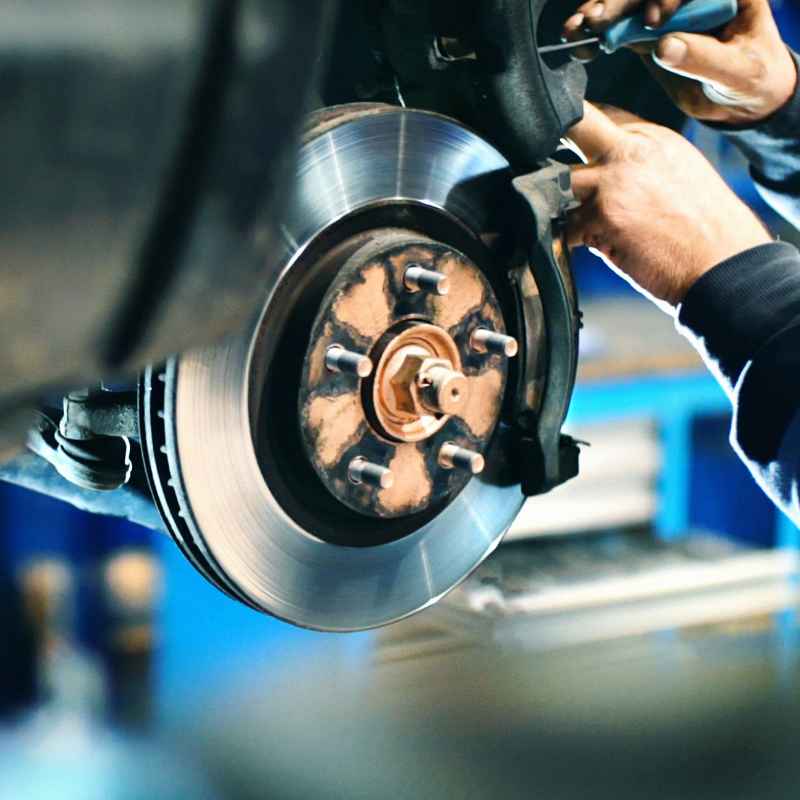
Dealership vs. Independent Shop vs. Chain: Comparing Your Options
You basically have four choices when you need brake work: the dealership, an independent mechanic, a national chain (like Midas, Firestone, or Pep Boys), or a mobile mechanic. Each comes with trade-offs that directly affect your wallet and your safety.
According to a 2023 survey by RepairPal, the average cost for a front brake pad and rotor replacement across all shop types is approximately $350 per axle. But that number swings wildly depending on where you go and what parts are used.
| Provider Type | Avg Cost (per axle) | Parts Quality | Warranty | Best For |
|---|---|---|---|---|
| Dealership | $400–$800 | OEM only | 12 months | New cars under warranty, luxury/import models |
| Independent shop | $200–$400 | Premium aftermarket | 12–24 months | Best value for most drivers |
| Chain (Midas, Firestone) | $250–$450 | Mixed (tiered options) | 12–36 months | Coupon shoppers, quick service |
| Mobile mechanic | $150–$300 | Customer-supplied or basic aftermarket | Limited (90 days typical) | Budget-conscious, simple pad swaps |
Dealerships win on brand-specific knowledge and OEM parts, but you pay a heavy premium for that privilege. Independent shops often provide the same quality work for half the price because their overhead is lower and they can source quality aftermarket parts at better margins.
Chain stores are convenient but notorious for aggressive upsells. They may quote a low base price for pads, then push new rotors, caliper flushes, and brake fluid replacements that can double or triple the final bill.
Mobile mechanics offer the lowest rates, but you sacrifice the lift, the diagnostic equipment, and the warranty coverage that a physical shop provides.
How to Evaluate Brake Service Quality Before Booking
You do not need to be a mechanic to spot a quality brake shop. A few simple checks before you hand over the keys can save you from shoddy work and repeat repairs.
Start with the shop’s certification. The best indicator is ASE (Automotive Service Excellence) certification for the technicians and the facility. AAA Approved Auto Repair shops are another strong signal because they undergo annual inspections and customer satisfaction reviews.
Next, ask these four questions over the phone:
- What brand of brake pads do you use?” — Avoid no-name generics. Quality brands include Bosch, Wagner, Akebono, Raybestos, and Centric.
- “Do you replace the rotors or resurface them?” — Many modern rotors have a minimum thickness spec; resurfacing is often not recommended on thin rotors.
- “Is the quote for pads only, or does it include rotors and labor?” — Some shops quote a cheap price for pads, then add rotor replacement as a separate surprise cost.
- “What warranty do you offer on parts and labor?” — A 12-month/12,000-mile warranty is the minimum acceptable standard.
Warning: Shops that refuse to give a written estimate over the phone or insist on “bringing it in for a free inspection” before quoting a price are often setting you up for a high-pressure upsell.
Check online reviews on Google, Yelp, and the Better Business Bureau. Look for patterns — a few bad reviews about price are normal, but multiple complaints about brake noise, premature wear, or failed repairs are red flags.
Ask friends and coworkers who drive the same make of car. A local Facebook group for your car model (e.g., “Honda Civic Owners of Atlanta”) can be an excellent source of honest, specific recommendations.
What Does a Typical Brake Job Include?
Many drivers do not realize that “brakes” is not a single repair. A full brake job can range from a simple pad swap to a complete overhaul of the hydraulic system. Understanding what you are paying for helps you compare quotes accurately.
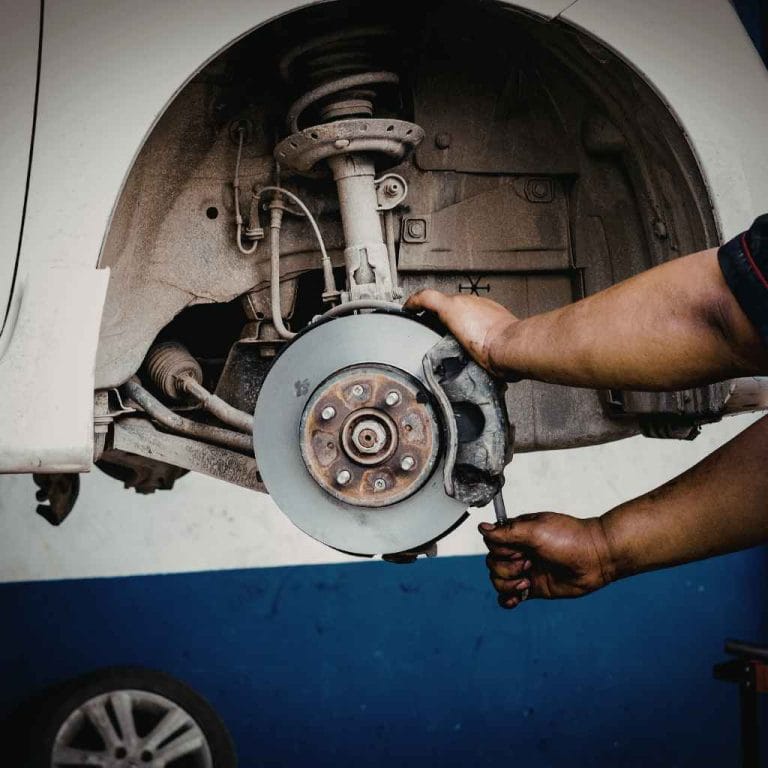
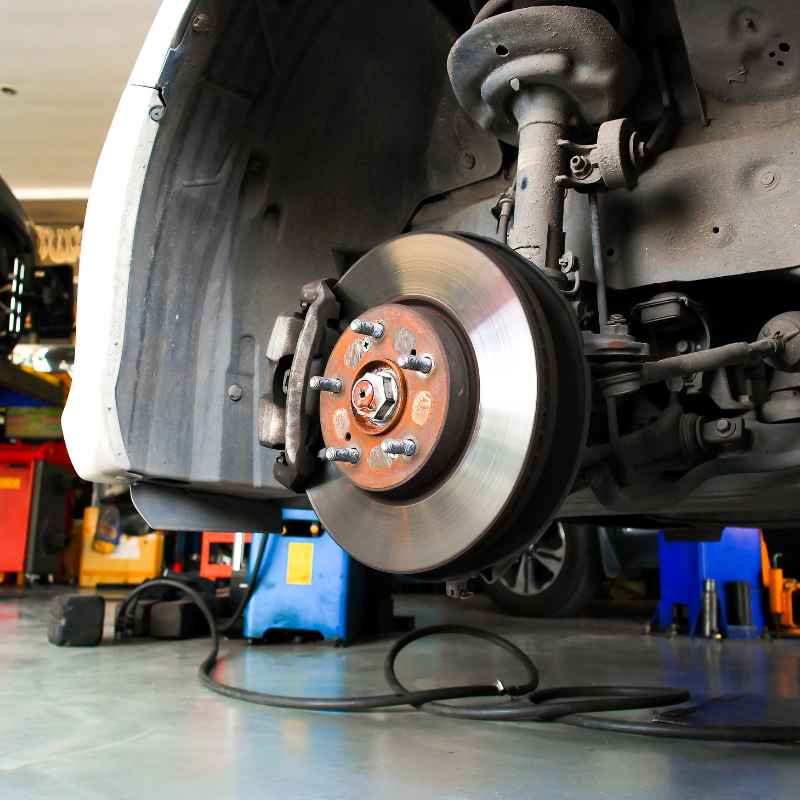
A standard front brake job (the most common service) typically includes:
- Removal of old brake pads and hardware
- Inspection of rotors for thickness, warpage, and cracking
- Installation of new brake pads (ceramic or semi-metallic)
- Resurfacing or replacement of rotors if needed
- Lubrication of caliper slide pins and contact points
- Brake fluid top-off and system bleed (if air is present)
- Road test to confirm proper braking feel and noise levels
The brake rotor decision is where costs vary most. Here is a quick comparison of the three rotor options a shop may present:
| Rotor Option | Cost per Axle | Pros | Cons |
|---|---|---|---|
| Resurface existing rotors | $15–$25 per rotor | Cheapest option, saves material | Reduces rotor mass, may warp sooner, not always possible on thin rotors |
| Aftermarket replacement rotors | $40–$80 each | Good quality, affordable, widely available | Varies by brand, some have coating that must be removed before install |
| OEM replacement rotors | $80–$200 each | Perfect fit, matched to vehicle specs | Expensive, often no performance advantage over quality aftermarket |
The best place to get car brakes done will explain each option and let you decide based on your budget and driving habits. A good shop never pushes the most expensive option for a simple commuter car, and it never recommends the cheapest fix for a heavy SUV that hauls loads.
Ask specifically: “Do I need new rotors, or can mine be resurfaced?” A reputable shop will measure rotor thickness and show you the spec sheet from the manufacturer.
How to Save Money on Brake Repairs Without Sacrificing Safety
Brake work is expensive, but you can cut the cost by 30–50% without rolling the dice on safety. The key is knowing where the markup lives and how to avoid it.
Here are seven proven ways to lower your brake repair bill:
- Buy your own parts. Purchase quality brake pads and rotors online from RockAuto, Amazon, or a local auto parts store. Shops typically mark up parts 40–60%. Many independent shops will install customer-supplied parts for labor-only pricing, though some chains will refuse.
- Ask about “economy” vs. “premium” options. Chains often offer a three-tier parts system (economy, standard, premium). The mid-tier is usually the best value — economy pads can be noisy and wear quickly.
- Look for coupons. Firestone, Midas, and Pep Boys regularly run online coupons for $50–$100 off brake services. Search “brake coupon ” before booking.
- Bundle the work. If you need both front and rear brakes, ask if the shop offers a multi-axle discount. Many will knock $50–$100 off the total for doing both at once.
- Avoid add-ons you do not need. Brake fluid flush, caliper
- Check for manufacturer specials. Some automakers run brake service specials, especially on older models. Call the parts department directly, not the service desk, to ask about current deals.
- Compare mobile vs. shop pricing. Mobile mechanics charge less because they have no facility overhead. Use platforms like YourMechanic or Wrench to get a quote before visiting a brick-and-mortar shop.
Tip: If you buy your own rotors, choose “coated” or “premium” rotors that resist rust. Rust on the rotor hat (the non-contact center section) looks unsightly and can lead to premature wear of the wheel hub surface.
The average savings from supplying your own parts is around $150 per axle. Combined with a coupon and bundling both axles, you can save as much as $400 on a typical sedan brake job.
Just remember: not all shops will install customer-supplied parts due to liability concerns. Confirm this policy before you buy anything.
Red Flags to Watch Out for When Getting Brakes Done
Dishonest or incompetent brake shops cost American drivers an estimated $3 billion annually in unnecessary repairs, according to the Car Care Council. You can protect yourself by recognizing the most common red flags.
The “pad slap” scam. Some shops will
The “free inspection” upcharge. Shops that refuse to quote over the phone and insist on an inspection often find “urgent” issues that require immediate, expensive attention. A legitimate shop should be able to give you a rough estimate based on your vehicle’s year, make, and model over the phone.
Other red flags include:
- Pressure to approve work immediately with phrases like “your brakes are dangerous” or “we cannot let you drive this out”
- Refusal to show you the old parts after replacement
- A quote that jumps significantly from the initial estimate without clear justification
- No written warranty provided on the invoice
- Technicians who lack ASE certification or the shop refuses to disclose credentials
- Online reviews that mention “brakes still squeaking” or “had to return after one month”
Warning: If a shop tells you that your brake lines need replacement but you have no visible leaks, soft pedal, or warning light, get a second opinion. Brake line replacement is rarely needed on vehicles under 10 years old in non-salt-belt regions.
Trust your gut. If the shop feels pushy, the facility looks disorganized, or the technician cannot explain the repair clearly in plain language, walk away. There are dozens of qualified shops competing for your business.
What Are the Signs You Need Brake Service Immediately?
Knowing when to seek service is just as important as knowing where to go. Catching brake wear early can save you from rotor damage, caliper failure, and dangerous stopping distances.
Watch for these five signs that you need brake service right away:
- Squealing or screeching noise — A thin metal indicator tab is scraping against the rotor, telling you the pad material is down to 2–3mm. You have about 500–1,000 miles of driving left before metal-on-metal contact damages the rotors.
- Grinding sound when braking — This means the pad backing plate is gouging the rotor surface. Continuing to drive will ruin the rotors and can damage the caliper pistons, turning a $250 repair into a $1,200 one.
- Vibration or pulsation in the brake pedal — Warped rotors cause the pedal to pulse under braking. This typically happens from overheating the brakes (long downhill descents, heavy towing) or from uneven pad deposits.
- Soft or spongy brake pedal — Air in the brake lines or a leaking caliper causes the pedal to sink toward the floor. This is a safety-critical issue that requires immediate attention.
- Dashboard brake warning light — The brake warning light can indicate low fluid, worn pads (on some models with wear sensors), or a system fault. Never ignore it.
According to the Brake Manufacturers Council, the average lifespan of front brake pads on a typical passenger car is 30,000 to 50,000 miles, while rear pads last 40,000 to 60,000 miles. These numbers vary based on driving habits, vehicle weight, and pad material.
If you notice any of these symptoms, the best place to get car brakes done is a shop you have already vetted — not the first place that appears in an emergency search. Having a trusted shop on speed dial prevents rushed decisions.
Frequently Asked Questions
Is it cheaper to buy brake parts online and have a shop install them?
Yes, in most cases. Buying your own pads and rotors online can save you $100–$200 per axle because shops typically mark up parts 40–60%. Just confirm the shop will install customer-supplied parts before you order anything.
How long does a brake job take at a shop?
A standard front or rear brake pad and rotor
Should I replace all four brake pads at the same time?
Not necessarily. Front brakes wear out faster than rear brakes because they handle most of the stopping force. Replace them in axle pairs (front set or rear set) rather than all four at once, unless both sets are near the wear limit.
What is the difference between ceramic and semi-metallic brake pads?
Ceramic pads are quieter, produce less dust, and handle heat well for daily driving. Semi-metallic pads use metal fibers for better braking performance under heavy loads and high heat but can be noisier and wear rotors faster. For most commuters, ceramic pads are the better choice.
Can I negotiate the price of a brake job at a shop?
Yes, especially at independent shops. If you have a lower quote from a competitor, ask if the shop can match or beat it. Many shop owners will adjust their price to earn your business, particularly if you mention you are comparing multiple estimates.
Final Thoughts
The best place to get car brakes done is not a single chain or a specific brand — it is a shop that combines honest pricing, certified technicians, and quality parts within your budget. Independent shops and some national chains offer excellent value when you come prepared with knowledge and a written estimate. Take time to compare quotes, read reviews, and understand exactly what you are paying for before you authorize any work.
Related pick: Check today's price on Amazon See also how to brake gently in a car without jerking passengers.
Products related to this article
Sponsored / affiliate links. As an Amazon Associate I earn from qualifying purchases. I may earn additional commission from eligible campaigns.