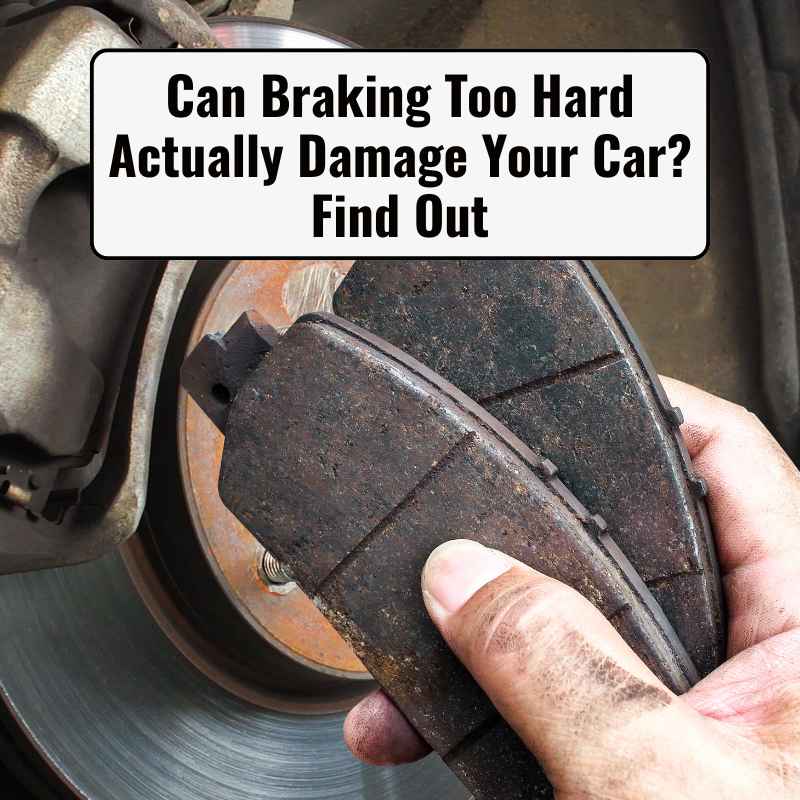
Can Braking Too Hard Actually Damage Your Car? Find Out
Braking too hard is a driving habit that can quietly shorten your car’s lifespan. This article explains exactly how aggressive braking affects your vehicle and what you can do to prevent costly repairs.
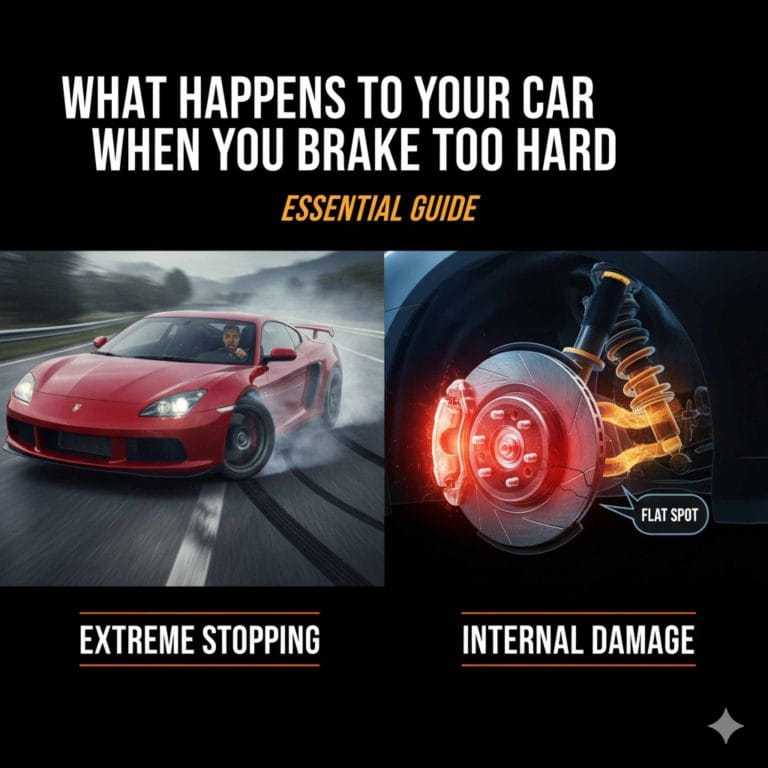
Simply put, yes, braking too hard can absolutely damage your car. While an occasional emergency stop is fine, consistently slamming on the brakes accelerates wear on rotors, pads, tires, and suspension components, costing you hundreds in premature replacements.
Key Takeaways
- Braking too hard significantly reduces the lifespan of brake pads and rotors through excessive heat and friction.
- Aggressive braking generates extreme temperatures that can warp rotors and degrade brake fluid.
- Hard stops put immense stress on your suspension system, including shocks, struts, and bushings.
- Your tires wear out faster due to flat spotting and increased friction from harsh braking.
- Adopting a proactive, gentle driving style can save you thousands in repair costs over time.
How to Identify the Warning Signs of Overheating Brakes
When you repeatedly brake hard, your braking system generates extreme friction. The Brake Manufacturers Council reports that excessive heat is the primary cause of premature brake system wear. Understanding the warning signs can save you from dangerous brake failure.
Your brakes are designed to convert kinetic energy into heat. But when that heat exceeds the system’s capacity, components begin to degrade. The most common signs of overheated brakes include a pulsating brake pedal, a burning chemical smell, and reduced stopping power known as brake fade.
- Vibrating steering wheel: Indicates warped front rotors from uneven heat distribution.
- Burning smell: A chemical odor means brake fluid or pad binder is overheating.
- Soft or spongy pedal: Brake fluid has boiled, introducing air bubbles into the hydraulic system.
- Squealing or grinding: Worn pads or glazed pad surfaces from excessive heat.
- Pulling to one side: Uneven rotor wear or caliper sticking caused by heat damage.
- Reduced responsiveness: Brake fade occurs when pads lose friction at high temperatures.
| Symptom | Likely Cause | Recommended Action |
|---|---|---|
| Pulsating pedal | Warped rotors | Resurface or replace rotors |
| Burning smell | Overheated pads or fluid | Stop and let brakes cool |
| Squealing noise | Glazed pads or wear indicators | Inspect and replace pads |
Catching these symptoms early can prevent a minor repair from turning into a full system replacement. If you notice any of these signs, have your brakes inspected immediately.
Warning: If you smell a chemical burning odor after a long descent or series of hard stops, your brake fluid may have boiled. Pull over safely and allow the system to cool completely before continuing. Do not touch the rotors.
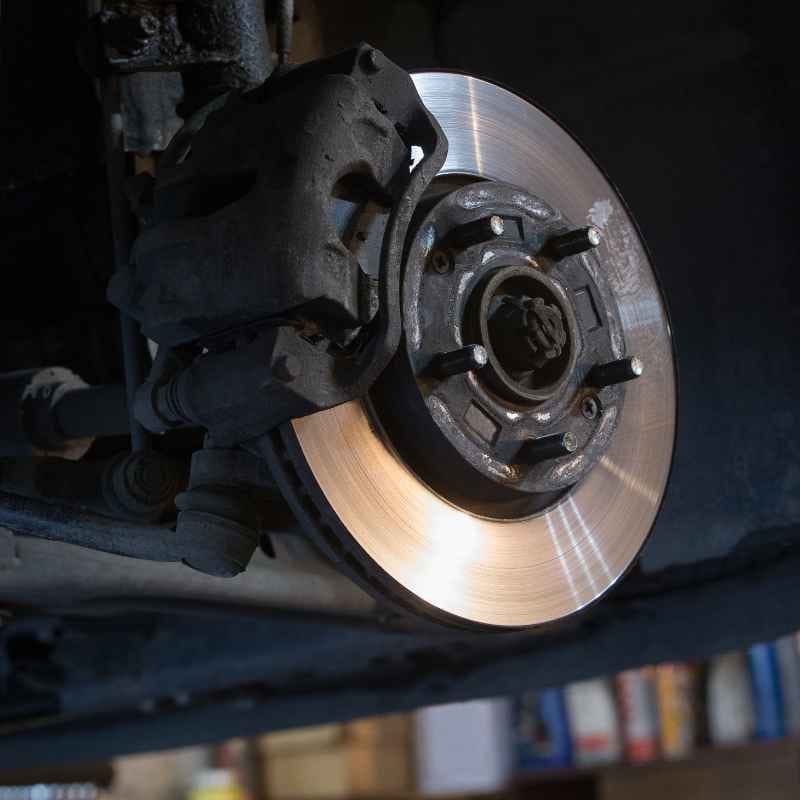
What Are the Long-Term Effects of Hard Braking on Rotors?
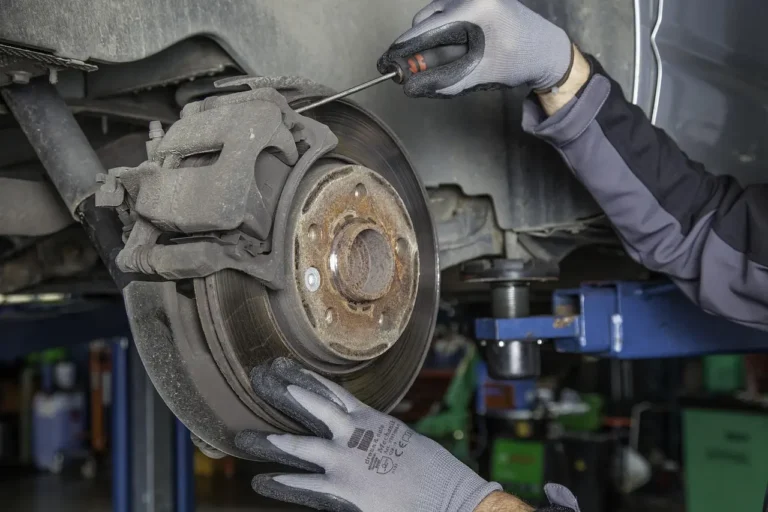
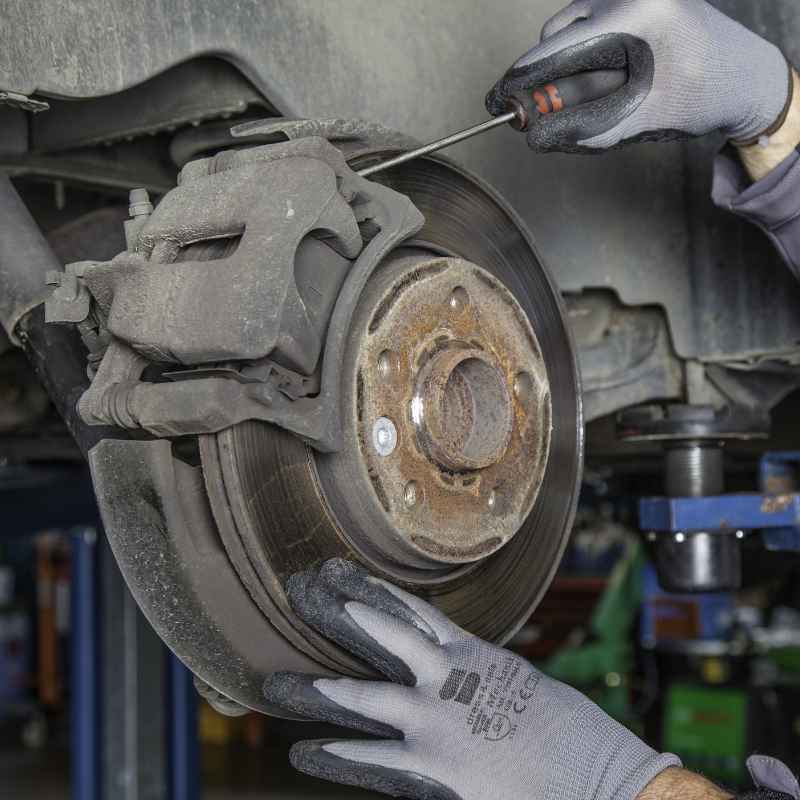
Your rotors are the most vulnerable component when you brake too hard. They absorb massive amounts of heat and can become permanently deformed. Over time, hard braking causes the rotor surface to develop high spots and low spots, leading to a pulsating sensation every time you stop.
Rotor warping, technically called “lateral runout,” happens when heat builds up unevenly. The metal expands in hot spots and contracts when cooled, creating a wavy surface. Studies show that a few hard stops from highway speeds can raise rotor temperatures above 1200 degrees Fahrenheit, enough to temporarily soften the metal.
- Thickness variation: Uneven material wear leads to pedal pulsation.
- Heat checking: Small surface cracks form from repeated thermal stress.
- Blue discoloration: A clear sign the rotor has been severely overheated.
- Hard spots: Changes in the metal’s crystalline structure reduce braking efficiency.
- Increased stopping distance: Damaged rotors can no longer provide consistent friction.
| Rotor Type | Average Lifespan (Normal Driving) | Lifespan with Hard Braking | Replacement Cost |
|---|---|---|---|
| Standard Solid Rotors | 50,000 – 70,000 miles | 20,000 – 30,000 miles | $200 – $400 |
| Vented Rotors | 60,000 – 80,000 miles | 25,000 – 40,000 miles | $300 – $600 |
| Drilled & Slotted | 40,000 – 60,000 miles | 15,000 – 25,000 miles | $400 – $800 |
The cost of replacing warped rotors adds up quickly. Resurfacing can buy you some time, but once they fall below the minimum thickness specification, new rotors are the only safe option.
Tip: To extend rotor life, practice “bedding in” new brake pads. This transfers a thin layer of pad material onto the rotor surface evenly, reducing the chance of hard spots and pulsation later.
How Does Constant Hard Braking Compromise Your Tires?
Your tires take the brunt of the impact when you stomp on the brake pedal. The NHTSA reports that tire failure contributes to nearly 11,000 crashes annually, and heat buildup from aggressive driving is a major factor. Hard braking can literally melt rubber and grind flat spots into your tread.
When you lock up the brakes or activate ABS, the tire skids or rapidly decelerates across the pavement. This friction wears away the rubber unevenly. Over time, flat spots develop that cause a thumping vibration whenever you drive.
The heat generated during hard stops can also cause belt separation, leading to dangerous blowouts.
- Flat spotting: A flat area on the tread that causes a rhythmic thumping noise.
- Cupping: Scalloped wear patterns from suspension oscillation during hard stops.
- Overheating: Excessive heat breaks down rubber compounds and accelerates aging.
- Sidewall damage: Extreme forces can weaken the sidewall structure.
- Reduced tread depth: Aggressive braking can cut tire lifespan by 30% to 50%.
- Belt separation: Heat degrades the adhesive between rubber and steel belts.
According to Tire Rack, a leading tire testing organization, a single panic stop from 60 mph can remove up to 0.002 inches of tread depth. Over thousands of aggressive stops, that adds up to months of lost tire life.
Important: If you feel a constant thumping in the steering wheel or seat after a hard braking event, check your tires carefully for flat spots. If the vibration persists, the tire may need to be replaced.
Why Should You Care About the Suspension System?
Hard braking doesn’t just stop the wheels, it transfers thousands of pounds of weight forward onto the front suspension. This repeated nose-dive effect stresses every component in the front end. Over time, bushings crack, ball joints wear out, and alignment angles shift permanently.
The suspension system is designed to absorb bumps and maintain tire contact with the road. When you brake too hard, the weight transfer compresses the front springs and struts beyond their normal operating range. This repeated shock loading accelerates wear on several critical parts.
- Control arm bushings: Tear and develop play, causing clunking noises.
- Ball joints: Premature wear leads to loose steering and unsafe handling.
- Struts and shocks: Internal seals blow out, reducing damping ability.
- Tie rod ends: Excessive force loosens steering connections.
- Sway bar links: Break or develop play, increasing body roll.
- Engine mounts: Transfer shock to the engine, causing vibration and damage.
| Symptom | Worn Component | Repair Cost Range |
|---|---|---|
| Clunking over bumps | Control arm bushings | $200 – $500 |
| Excessive nose dive | Struts / Shocks | $400 – $1,200 |
| Loose steering | Tie rod ends or ball joints | $150 – $400 |
| Vibration under braking | Alignments / Rotors | $100 – $600 |
Ignoring suspension wear not only ruins the ride quality but also compromises your ability to steer and stop safely in an emergency.
What Is the Real Cost of Driving Aggressively?
Hard braking has a direct financial impact on your wallet. The U.S. Department of Energy reports that aggressive driving can lower gas mileage by 15% to 30% in city driving.
Combined with accelerated part wear, the total cost of this habit is much higher than most drivers realize.
Let’s break down the true cost per mile. A defensive driver might get 50,000 miles from a set of pads. An aggressive driver who brakes too hard might only get 15,000 miles.
That means three times as many brake jobs, plus more frequent rotor replacements and tire purchases.
- Fuel waste: 15-30% reduction in fuel economy equals hundreds of dollars per year.
- Brake parts: Premature pad and rotor replacements cost $300 to $800 extra annually.
- Tire wear: Replacing tires 50% more often adds $200 to $500 per year.
- Suspension repairs: Worn bushings and struts can cost $500 to $1,500 extra.
- Alignment fees: Frequent alignments needed after hard stops add $50 to $100 yearly.
Add it all up, and the annual penalty for braking too hard can easily exceed $1,000 to $2,000 per year. Over the life of a car, that’s a significant portion of its original value.
Tip: The EPA estimates that avoiding aggressive starts and stops can improve fuel economy by up to 33% on the highway. Smooth driving saves money at the pump and at the repair shop.
How Does Braking Technique Differ Between Manual and Automatic Cars?
The method of braking can amplify or reduce damage depending on your transmission type. In a manual car, you have the ability to engine brake, which reduces reliance on the friction brakes. In an automatic, you rely entirely on the hydraulic system unless you manually downshift.
Each approach has unique implications for wear and damage.
Engine braking in a manual transmission uses the engine’s compression to slow the vehicle. This saves brake pads and rotors but puts extra stress on the transmission mounts and clutch. In modern automatic cars, shift lock technology prevents you from downshifting into a gear that would over-rev the engine, limiting your engine braking options.
- Manual transmission: Engine braking reduces brake wear but can wear out clutch components faster.
- Automatic transmission: Hard braking forces the torque converter to lock and unlock aggressively, generating heat.
- CVT transmissions: Sudden braking can stress the steel belt, leading to premature CVT failure.
- Electric vehicles: Regenerative braking recaptures energy, but aggressive regen settings can still cause tire flat spotting.
- Hybrids: Brake blending between regen and friction brakes can feel inconsistent under hard braking.
| Transmission Type | Best Braking Strategy | Damage Risk from Hard Braking |
|---|---|---|
| Manual | Downshift + gentle pedal | Clutch wear, transmission mount stress |
| Automatic | Smooth, progressive pressure | Torque converter heat, shift solenoid wear |
| CVT | Anticipate stops early | Steel belt deformation, pulley wear |
| Electric/Hybrid | Standard regen, avoid max regen | Battery stress, tire flat spotting |
Understanding your specific vehicle type helps you adjust your driving habits to minimize damage.
Important: If you drive a manual car, always rev-match when downshifting. Dumping the clutch without matching the revs sends shock through the drivetrain and can cause costly transmission damage.
What Are the Best Practices to Avoid Braking Too Hard?
The best way to prevent damage from hard braking is to avoid needing to do it in the first place. Proactive driving habits significantly reduce the frequency of aggressive stops. By scanning the road ahead and anticipating traffic flow, you can brake smoothly and gently in almost every situation.
Defensive driving is the foundation of vehicle longevity. The key is to create space around your vehicle. With a larger following distance, you have more time to react to changes in traffic.
This means you can lift off the accelerator early and coast to a stop instead of slamming the brakes at the last second.
- Increase following distance: The 3-second rule becomes a 4-5 second rule for optimal safety.
- Scan far ahead: Look 12-15 seconds down the road to see brake lights and traffic changes early.
- Lift off early: Take your foot off the accelerator as soon as you see a red light or slowing traffic ahead.
- Coast to stop: Use the natural friction of the drivetrain to slow down before touching the brakes.
- Apply steady pressure: Brake smoothly and progressively rather than jamming the pedal.
- Use threshold braking: Brake at the maximum limit just before the wheels lock for the shortest safe stop.
| Driving Scenario | Aggressive Driver Action | Defensive Driver Action |
|---|---|---|
| Red light ahead | Accelerate then brake hard | Coast to the light |
| Traffic slowing suddenly | Stomp on brakes | Lift off and lightly tap brakes |
| Curve approaching | Brake hard in the turn | Brake before the turn |
These techniques not only save your car from damage but also provide a much smoother ride for you and your passengers.
Can Advanced Driver-Assistance Systems (ADAS) Prevent Damage from Hard Braking?
Modern cars come equipped with ADAS features like Automatic Emergency Braking (AEB). These systems are designed to apply the brakes automatically when a collision is imminent. While they brake hard, they do so to prevent an accident, which is always the priority.
However, relying on them too heavily can still create wear.
ADAS systems from companies like Bosch and Continental are calibrated to apply maximum braking force precisely. They can react faster than a human, reducing impact severity. The trade-off is that when the system activates, it often applies full brake pressure instantly, which is exactly the hard braking condition that wears components out quickly.
- AEB: Applies full brakes to avoid collision; hard stop is unavoidable.
- Adaptive cruise control: Maintains distance but can brake aggressively if a car cuts you off.
- Collision avoidance: Often combines hard braking with steering assist.
- Post-collision braking: Applies brakes after a crash to prevent secondary impacts.
To minimize the wear caused by these systems, drive in a way that prevents them from activating. Maintain a safe following distance so adaptive cruise control rarely needs to brake hard. Treat ADAS as a safety net, not a replacement for smooth driving habits.
Important: After an AEB event, your vehicle’s ADAS sensors may need recalibration. Hitting a pothole or curb during a hard stop can knock radar and camera sensors out of alignment. Check the service manual for recommended calibration intervals after hard braking incidents.
Frequently Asked Questions
Can hard braking damage my transmission?
Yes, hard braking can damage your transmission. In automatic cars, sudden deceleration forces the torque converter to lock and unlock rapidly, increasing heat and wear on the clutch packs. In manual cars, sudden downshifting without rev-matching can damage the synchros and transmission mounts.
Does braking hard use more gas?
Yes, braking hard significantly reduces fuel efficiency. The U.S. Department of Energy states that aggressive driving, including hard braking, can lower gas mileage by 15% to 30% on the highway and 10% to 40% in stop-and-go traffic.
Every time you accelerate hard and then brake, you waste the energy used to get the car moving.
Is it better to brake hard or swerve to avoid a collision?
In most modern cars equipped with Electronic Stability Control (ESC) and anti-lock brakes (ABS), braking hard is statistically safer than swerving. Swerving increases the risk of losing control, rolling over, or hitting an object in an adjacent lane. Brake firmly and steer only if you know the path is clear.
How often should I replace my brake pads if I brake hard?
If you frequently brake hard, you may need new pads every 10,000 to 15,000 miles. Normal drivers typically get 30,000 to 50,000 miles from a set of pads. Frequent hard stops generate heat that glazes the pad surface, dramatically reducing friction and pad life.
What is brake fade and how is it caused by hard braking?
Brake fade is a temporary reduction in stopping power caused by overheating the brake system. When pads and rotors reach extremely high temperatures, the friction material can become glazed or the brake fluid can boil. This results in a soft pedal and longer stopping distances.
Brake fade is common after repeated hard braking from high speeds.
Final Thoughts
Braking too hard is a costly habit that accelerates wear on your brakes, tires, and suspension. By adopting smooth, proactive driving techniques, you can extend the life of your vehicle components and save over a thousand dollars each year. The small effort of lifting off the accelerator earlier makes a measurable difference in your car’s health and your wallet.
Stay aware, drive smoothly, and let your car reward you with greater reliability.
See also how to stop car brakes binding before it gets dangerous.
Products related to this article
Sponsored / affiliate links. As an Amazon Associate I earn from qualifying purchases. I may earn additional commission from eligible campaigns.