Why Do Car Batteries Die in Winter?
Method note: The symptom table below was built from standard diagnostics used in battery load-testing and charging-system diagnosis: rested voltage, cranking voltage, running charging voltage, terminal inspection, and symptom correlation across cold-soak starts and warm restarts. Voltage thresholds reflect common vehicle testing guidance.
Car batteries can die in winter because cold slows the lead-acid reaction inside the battery, engine oil thickens, and short trips can leave the battery undercharged; around 0°F, a battery may deliver roughly half its normal cranking power, and in some cases the drop can be greater. As temperatures fall, available starting power drops sharply, which is why a battery that seems fine in warm weather can fail once the weather turns cold. Miss the cause, and you can replace a good battery or keep chasing no-starts. This guide shows how to tell battery weakness, charging problems, and starter strain apart.
Why winter exposes weak batteries
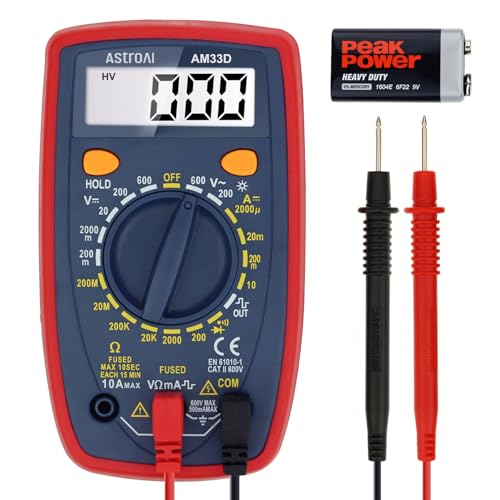
- Measures AC/DC voltage, current, resistance, and diode
- Backlit LCD and data hold help in dim light
- Includes continuity buzzer and double-fuse protection
Cold weather exposes a weak battery because the battery’s electrolyte solution reacts more slowly, the available state of charge delivers less useful power, and the starter has to work harder. As cold cranking performance falls, a battery that seems acceptable in warm weather can fall short once temperatures drop, especially if age has already reduced its reserve.
How cold slows battery output
An automotive battery stores and delivers power through a lead-acid chemical reaction. Cold conditions slow that reaction and cut the current the battery can supply, so the same battery may struggle to provide enough cranking power for a cold start. That drop is why winter failures often appear suddenly, even when the battery seemed fine days earlier. Available cranking output can fall by roughly half near 0°F, with the exact figure varying by battery design and state of charge.
Battery power can fall sharply at 0°F in winter conditions. A healthy battery can lose a large share of its cranking power at around 0°F, which is enough to turn a marginal battery into a no-start problem. That is the mismatch: the battery has less to give exactly when the engine asks for more.
Why lower charge shows up faster in cold weather
State of charge matters more in winter. If a battery is already partly discharged, cold weather leaves less margin for starting. A battery that would still start a warm engine may not have enough reserve once the temperature drops and the starter load rises. Low state of charge reduces cold-start reliability even when the battery is not yet “dead.”
That is one reason repeated weak starts matter. Each short drive may return only part of the energy used to start the car, so the battery starts the next cold morning lower than before.
How battery age magnifies the problem
Older batteries fail more often in cold weather because age-related wear reduces available capacity and cold-cranking performance. A battery can still seem usable in warm weather and still be near the edge in winter. That is especially common when the battery has already needed a jump-start more than once.
Say your car starts after a jump on Monday, then cranks slowly on Wednesday morning after a 10-minute drive home. That pattern points away from a single random failure and toward a battery that is being asked to do more than it can in cold weather.
What makes cold starts harder
Cold starts are harder because the starter motor may demand more power in cold weather, and engine oil gets thicker in cold weather, making the engine harder to turn over. Starting tests treat this as a load problem: the engine needs more torque while the battery is capable of less current. The result is more load on the battery at the exact moment battery output is lower.
Starter load rises in cold weather
The starter motor has to spin a colder, less willing engine. In cold weather, the starter motor may demand more power to start, which can turn a marginal battery into a no-start problem. Slow crank and click symptoms often show up here first.
Thicker engine oil adds resistance
Engine oil thickens in cold weather, so the engine resists turning more than it does in mild conditions. That extra resistance raises cranking demand. If the battery is already weak, the starter may draw hard enough to pull voltage down before the engine catches.
Picture a car parked outside overnight at freezing temperatures. The battery is cold-soaked, the oil is thicker, and the headlights and blower may have been on during the last drive. The engine does not need to be broken for the start to fail; the load stack is enough.
What CCA tells you
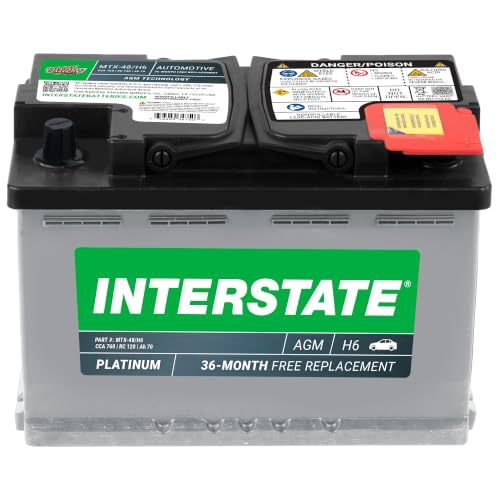
Cold Cranking Amps tells you how much current a battery can produce when cold. Battery makers define CCA as the number of amps a 12-volt battery can deliver at 0°F for 30 seconds while maintaining at least 7.2 volts, which is the standard used for comparing winter starting performance. A larger CCA number means better winter performance, but the label alone does not prove the battery is healthy. Age, state of charge, terminal condition, and charging-system performance still matter.
How to read the rating
CCA is the battery cold-start rating used to compare starting power in cold conditions. In practical terms, it tells you how much starting help the battery can provide when temperatures are low. Higher CCA generally helps winter starting, especially for vehicles that sit outside.
Why the label does not rule out a fault
A battery can carry an appropriate CCA rating and still fail if it is undercharged, worn out, or poorly connected. A battery can also test well after warming up and still be too weak when cold. That is why symptom pattern matters as much as the label.
Winter no-start symptom table
This table separates the usual winter no-start patterns by the most likely cause, the quickest at-home check, and the next action. Use it as a first pass, not a final diagnosis.
| Symptom | Most likely cause | Quickest at-home check | Look for | Next action |
|---|---|---|---|---|
| Slow crank | Weak battery or high starter load | Measure resting voltage, then cranking voltage | About 12.6 volts at rest; during cranking, stay above 9.6 volts | Test battery first, then starter if voltage stays up |
| Single click | Battery too weak to engage starter, or poor terminal connection | Check terminal tightness and corrosion, then retry voltage test | White or blue-green buildup, loose clamp, or a large voltage drop under load | Test battery and terminals first |
| Rapid clicking | Low battery voltage or bad connection | Check battery terminals and resting voltage | Voltage below normal and repeated relay chatter | Test battery first, then charging system |
| Dim dash lights | Low state of charge, weak battery, or bad connection | Turn on headlights and watch for severe dimming during crank | Lights fade sharply when the key turns | Test battery and terminals first |
| Repeated jump-starts | Undercharging, weak alternator, or battery age | Check charging voltage after the engine starts | About 13.8 to 14.4 volts while running | Test alternator and charging habit first |
| Battery tests okay after warming up | Cold-soaked battery or marginal reserve capacity | Repeat the test cold, before the car warms up | Passes warm test but drops under load in the cold | Test battery first, then judge age and winter reserve |
Could it be the alternator instead?
Yes. A weak alternator can mimic a dead battery because the battery may start the car once, then fail again after driving. A healthy 12-volt charging system often runs above resting battery voltage and may fall outside a narrow fixed band depending on vehicle design and smart-charging strategy; if charging voltage is too low, the battery never gets fully replenished. That shows up most often after repeated short trips or after a jump-start that “worked” only once.
What charging voltage checks can show
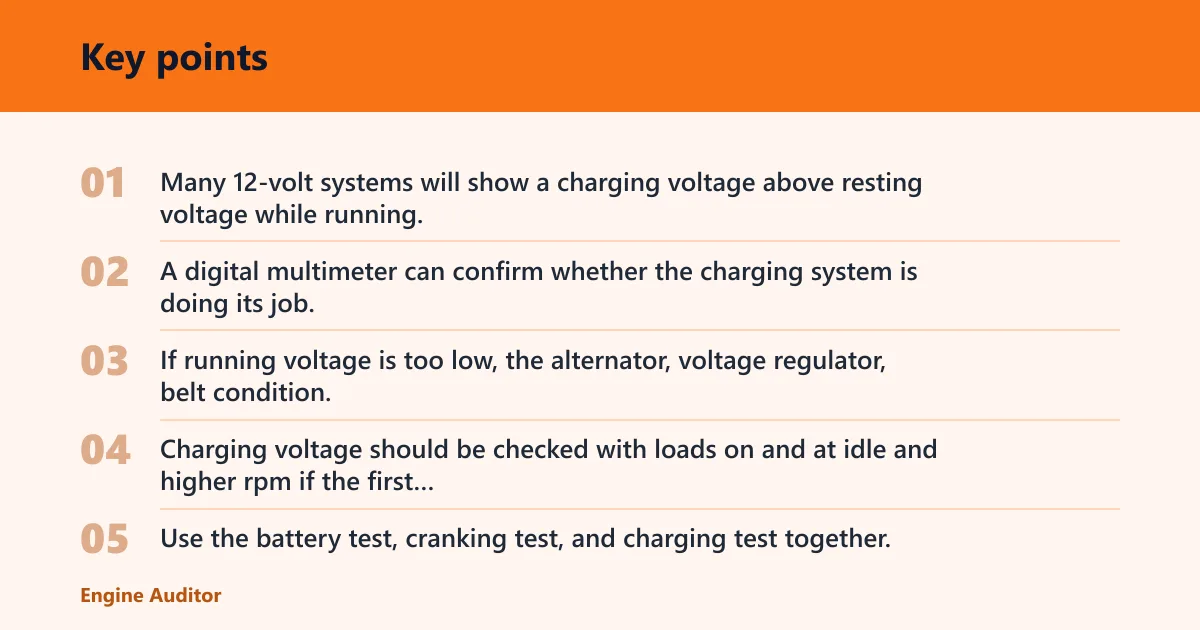
Many 12-volt systems will show a charging voltage above resting voltage while running, but the exact target depends on the vehicle and operating conditions. A digital multimeter can confirm whether the charging system is doing its job. If running voltage is too low, the alternator, voltage regulator, belt condition, or wiring may need attention. Charging voltage should be checked with loads on and at idle and higher rpm if the first reading is borderline.
Use the battery test, cranking test, and charging test together. A battery that reads about 12.6 volts at rest but drops sharply under cranking is a different problem from a battery that reads normally at rest yet does not return to a healthy charging voltage while the engine runs.
When to test the charging system first
If the car has needed repeated jump-starts, or if it dies after a short drive, test the charging system early. A failing alternator can leave the battery looking guilty when the real issue is undercharge. If the car runs but the battery keeps coming back weak, charging-system checks should move up the list.
How short trips drain winter batteries
Short journeys can leave the battery undercharged because the alternator may not have enough time to replace what starting used. Winter makes this worse because lights, wipers, heaters, and demisters add load. Repeated undercharging shortens battery life and makes cold starts less reliable.
Why short trips do not repay the starting load
Repeated short trips can prevent the alternator from fully recharging the battery. If the car is used for only a few minutes at a time, the next start begins from a lower state of charge. The battery then starts cold, which cuts its available cranking performance further.
How winter accessories add demand
More accessories are used in winter, including lights, wipers, and heaters. Those loads matter most on short drives, because the charging system must cover both the starting event and the accessories at once. The battery can end up doing more of the work than it should.
What to check before replacing the battery
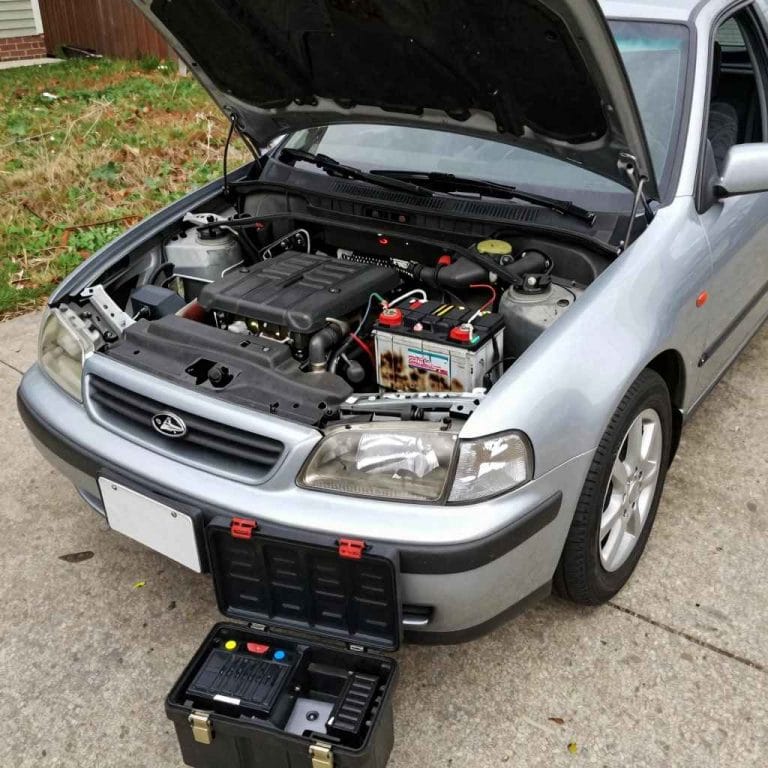
Before replacing the battery, check the terminals, then verify voltage with a digital multimeter, and then decide whether the battery, alternator, starter, or charging habit is the first problem to address. Follow the vehicle manual.
Battery terminals and loose connections
White or blue-green buildup on battery terminals can increase electrical resistance and contribute to starting trouble. A loose connection can mimic a weak battery because the starter cannot draw steady current. Clean, tight connections matter as much as battery capacity when the weather is cold.
How to use a digital multimeter
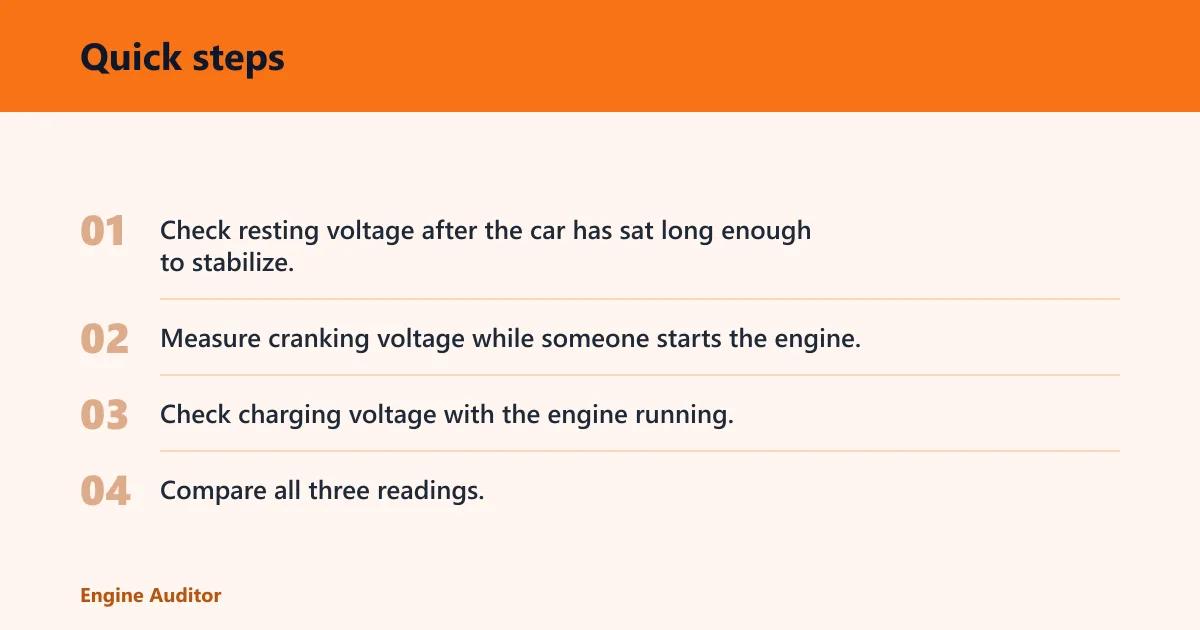
- Check resting voltage after the car has sat long enough to stabilize. A healthy rested battery should read about 12.6 volts.
- Measure cranking voltage while someone starts the engine. During cranking, battery voltage should usually stay above a condition-dependent minimum that can vary by vehicle and temperature.
- Check charging voltage with the engine running. The exact running voltage target depends on the vehicle and charging strategy.
- Compare all three readings. A normal resting voltage with a low cranking voltage points to battery weakness or starter load, while low running voltage points to a charging-system problem.
Suppose a battery reads about 12.6 volts after sitting overnight, then drops sharply while cranking on a cold morning. That points toward weak cranking performance, not just a bad gauge or a cold cabin. If the same battery then reads below the charging range after the engine starts, the alternator moves higher on the list.
Which part to test first?
Start with the battery if the main symptom is slow crank, a single click, or rapid clicking. Start with the alternator if the car keeps needing jump-starts after short trips or the battery goes flat again after driving. Start with the starter if voltage stays healthy but the engine still turns slowly and the battery checks out.
Frequently asked questions
Why do car batteries die in winter?
Car batteries die in winter because cold slows the lead-acid chemical reaction, the starter needs more power, and short trips often leave the battery undercharged.
Why do car batteries fail in cold weather?
Cold weather reduces the battery’s ability to transfer full power, and engine oil gets thicker, which raises cranking demand. That combination stresses weak batteries first.
Why does my car battery die in winter?
The usual reason is a three-way mismatch: less battery output, higher starter demand, and not enough recharge from driving.
Why does my car battery die in cold weather?
Cold weather makes a borderline battery behave like a failed one. The battery’s electrolyte solution is temperature-sensitive, the starter motor may need more power, and the alternator may not have enough time on short trips to restore charge.
What to do when a car battery dies in winter?
Check the terminals, then test resting voltage, cranking voltage, and charging voltage. If the car starts with a jump, do not assume the battery is the only issue.
Can a battery be weak even if it seems fine in warm weather?
Yes. Warm weather can hide a weak battery because higher temperature helps the chemical reaction and lowers cranking demand.
How do short trips make winter battery problems worse?
Short trips make winter battery problems worse because the alternator may not fully replace the energy used to start the engine, especially with lights, wipers, and heaters running. Over time, the battery stays partly discharged.
Products related to this article
Sponsored / affiliate links. As an Amazon Associate I earn from qualifying purchases. I may earn additional commission from eligible campaigns.