How to Get the Most Out of an Electric Car: Expert Tips
Owning an electric car opens a new world of driving. It is different from owning a petrol or diesel vehicle. People buy electric cars for many reasons: to save money, to help the environment, or for the joy of new technology. But simply owning an electric car does not mean you get all the benefits. To truly enjoy your electric vehicle (EV), you need to understand how to use it smartly. From charging habits to battery care, smart driving to making use of all the features, there are many ways to get the most out of your electric car.
This guide will help you get the maximum value, performance, and convenience from your EV. Whether you are new to electric cars or want to improve your experience, you will find practical tips and clear explanations here. You will also see some mistakes many new EV owners make, plus how to avoid them.
Let’s get started on your journey to better, smarter, and more satisfying electric car ownership.
Understand Your Battery And Range
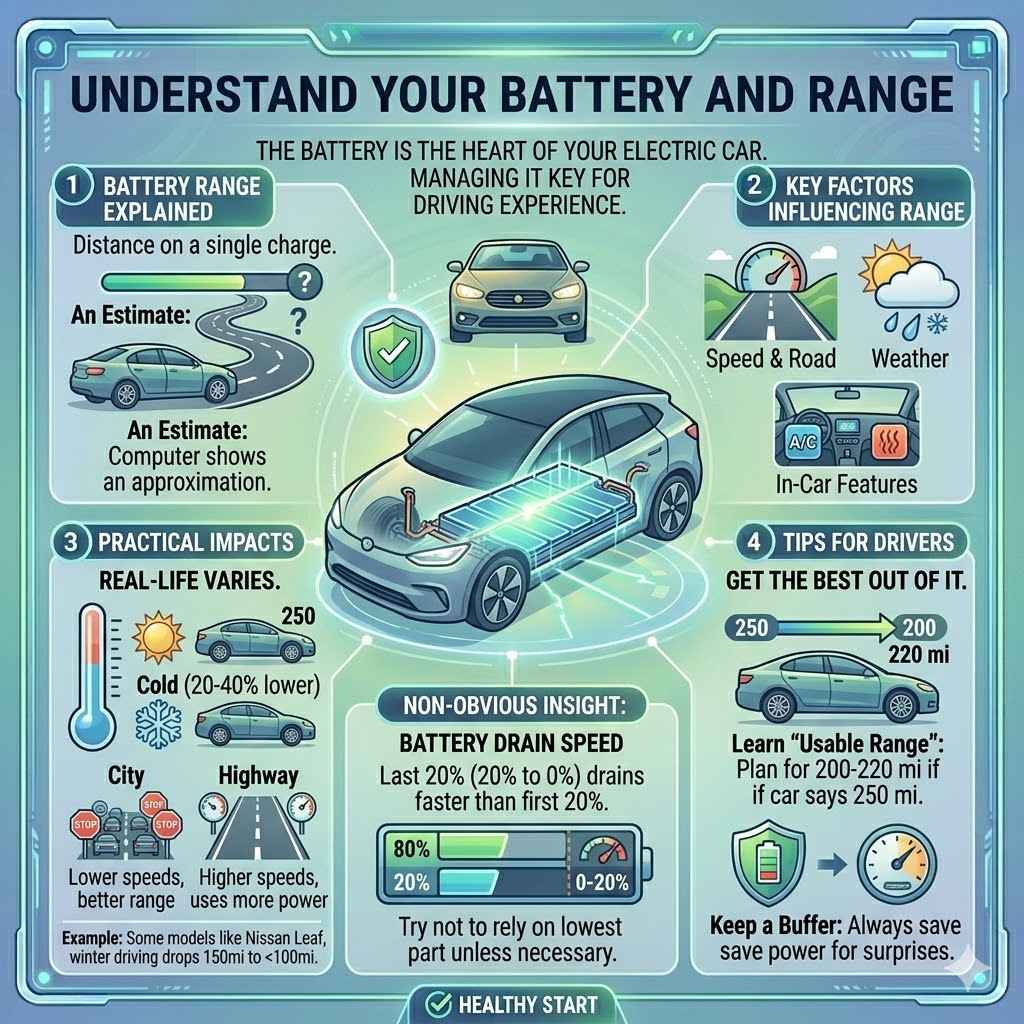
The battery is the heart of your electric car. Most owners quickly learn that their driving experience depends on how well they manage the battery. Unlike a petrol tank, battery range can change with temperature, driving style, and more. Knowing a few key facts helps you get the best out of it.

As an Amazon Associate I earn from qualifying purchases.
Battery range is the distance your car can travel on a single charge. This range is often shown by the car’s computer, but it is an estimate. Real-life range depends on speed, road conditions, weather, and use of features like air conditioning or heating.
For example, cold weather can lower range by 20-40%. If you drive mostly in the city, you may get better range than on highways because lower speeds use less power.
Tip: Learn your car’s “usable range.” If your car says 250 miles, you should plan for 200-220 miles in real life. Always keep a buffer for surprises.
Non-obvious insight: The last 20% of battery (from 20% to 0%) drains faster than the first 20%. Try not to rely on the lowest part of your battery unless necessary.
Example: Some models, like the Nissan Leaf, can show a range of 150 miles, but winter driving with heating can drop this to 100 miles or less.
Optimize Your Charging Habits
Charging is a new habit for most people. With a petrol car, you fill up when empty. With an EV, you “top up” more often, just like charging your phone. There are several ways to make charging easier and cheaper.
Home Charging
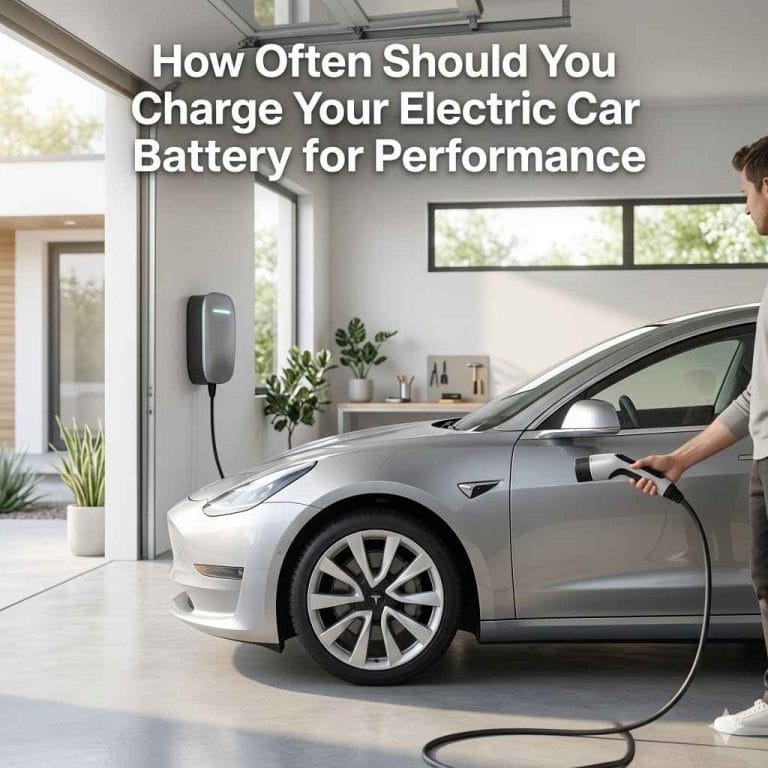
Most EV owners charge at home. The best solution is a dedicated home charging station (Level 2 charger). This charges your car 3-7 times faster than a normal wall outlet.
- Plug in every night, even if your battery is not empty.
- Set your charger to stop at 80-90% for daily use. Full charges are only needed for long trips.
- Use your car’s timer to charge when electricity is cheapest (often at night).
Public Charging
Public chargers are useful for longer trips or if you cannot charge at home. Fast chargers (DC fast charging) can charge your car to 80% in 30-60 minutes, but frequent fast charging can wear down the battery over time.
- Plan your route and know where charging stations are along the way.
- Do not rely on one station—sometimes they are busy or broken.
- Keep apps (like PlugShare or ChargePoint) to find available chargers.
Charging Speed Comparison
Here’s how different charging methods compare:
| Charger Type | Charging Speed | Time for 100 miles | Best Use |
|---|---|---|---|
| Level 1 (120V) | 2-5 miles/hour | 20+ hours | Emergency/overnight |
| Level 2 (240V) | 10-30 miles/hour | 3-8 hours | Home/Work |
| DC Fast Charger | 60-200 miles/hour | 30 min-1 hour | Trips/Quick stop |
Non-obvious insight: It’s better for battery health to keep your charge between 20% and 80% most of the time.
Take Care Of Your Battery
EV batteries last a long time, but they are expensive to replace. Simple habits can help your battery stay healthy for many years.
- Avoid full charges every day. Only charge to 100% for long trips.
- Do not let the battery go below 10% unless you must.
- Keep the battery cool. Parking in shade or a garage helps, especially in hot weather.
- Limit fast charging. Use it only when you need a quick top-up on long trips.
Most batteries have a warranty for 8 years or 100,000 miles. But with good habits, they can last longer.
Example: Tesla recommends keeping daily charge between 20% and 80%, and their batteries often last more than 200,000 miles.
Plan Your Routes And Charging Stops
Electric cars need a little more planning for long trips. Unlike petrol stations, charging points are not everywhere—yet.
- Use navigation apps that show real-time charging stations.
- Plan charging stops along your route, not just at your destination.
- Check charger status before you go. Some stations may be out of service.
- Have a backup plan for each stop, especially in remote areas.
Modern EVs often have built-in trip planners. If not, use phone apps or maps. Spend a few minutes planning before a long trip, and you’ll avoid stress later.
Non-obvious insight: Charging from 20% to 80% is much faster than from 80% to 100%. For road trips, stop more often for short, fast charges instead of one long charge.
Drive Efficiently
How you drive affects range more than you might think. Fast acceleration and high speeds use more energy, just like in petrol cars—but the effect is even stronger in electric cars.
- Drive smoothly. Gentle starts and stops use less power.
- Keep speed moderate. Driving at 70 mph uses much more energy than 60 mph.
- Use regenerative braking. This feature returns energy to your battery when you slow down.
- Avoid heavy loads. Remove roof racks when not needed—they increase air drag.
Real-world Example
A test by the U. S. Department of Energy found that driving at 80 mph instead of 60 mph can reduce range by up to 30%.
Tip: Use your car’s eco mode for daily driving. It limits power but extends range.
Use Preconditioning And Climate Control Wisely
Heating and cooling take a lot of energy in an electric car. Using these systems the smart way can save your battery and improve comfort.
- Precondition your car while it’s plugged in. Most EVs allow you to heat or cool the cabin before you start driving. This uses grid power, not your battery.
- Use seat heaters instead of cabin heat—they use less energy.
- Dress for the weather. In winter, warm clothes mean you can use less heat.
- Ventilate before cooling. Open the windows first to remove hot air, then use air conditioning.
Non-obvious insight: A cold battery charges slower and gives less range. Preconditioning warms the battery as well as the cabin.
Make Use Of Smart Features And Apps
Electric cars are full of smart technology. Many owners do not use all the features their car offers.
- Remote start and stop: Heat or cool your car before you get in, using your phone.
- Charging schedule: Set charging times to use cheaper, off-peak electricity.
- Range prediction: Apps can show real-time range estimates based on your driving.
- Trip planning: Many apps help you plan routes with charging stops.
- Over-the-air updates: Some cars improve over time with software updates.
Example: Tesla and Hyundai both offer apps that let you control many functions from your phone, such as checking battery status or starting climate control.
Non-obvious insight: Software updates can add new features to your car, just like a phone. Check for updates regularly.
Keep Up With Maintenance
Electric cars need less maintenance than petrol cars, but some parts still need care.
- Brakes: Because of regenerative braking, brakes last longer, but you should still check them yearly.
- Tires: EVs are heavier and have instant torque. Check tire pressure and rotate them every 6,000-8,000 miles.
- Coolant: Some EVs have a cooling system for the battery. Check levels as the manual suggests.
- Cabin filter: Change the air filter every 1-2 years for fresh air inside.
Tip: Regular maintenance helps keep your warranty valid.
Learn About Incentives And Savings
Electric cars can save you money in many ways. Beyond the lower cost of charging compared to petrol, many countries and states offer incentives.
- Tax credits: Some governments offer thousands of dollars in tax savings for buying an EV.
- Lower running costs: Electricity is usually cheaper than petrol. Maintenance costs are lower, too.
- Special lanes and parking: Many cities allow EVs to use carpool lanes or offer free/reduced parking.
- Home charger rebates: Some areas help pay for installing a home charging station.
Example: In the US, the federal tax credit for new EVs can be up to $7,500, depending on the model. Check your local programs for more savings.
Know Your Charging Network Options
Not all charging networks are the same. Some are free, some are fast, some require a membership. Knowing your options saves time and money.
Charging Network Comparison
Here’s how some major networks compare:
| Network | Availability | Speed | Payment |
|---|---|---|---|
| Tesla Supercharger | Wide (Tesla only) | Up to 250 kW | App/Car linked |
| ChargePoint | Very wide | Up to 62 kW | App/Card |
| Electrify America | Growing | Up to 350 kW | App/Card |
| EVgo | Urban areas | Up to 350 kW | App/Card |
Tip: Sign up for accounts with major networks before you need them. Keep charging cards or apps ready.
Monitor Real-time Data
Modern electric cars give you lots of information—use it! Watching real-time data helps you spot problems early.
- Check energy use after each trip. See what habits use the most power.
- Watch battery temperature during fast charging or hot weather.
- Follow tire pressure—low pressure lowers range and increases wear.
- Track charging speed. If it’s much slower than normal, check for problems.
Some cars let you download all your driving and charging data. This helps you improve efficiency over time.
Join Ev Communities
You are not alone. There are thousands of electric car owners sharing tips, stories, and help. Joining a community gives you answers and support.
- Online forums: Places like InsideEVs or Reddit’s r/electricvehicles.
- Local clubs: Many cities have EV owner groups.
- Social media: Facebook and Twitter have active EV communities.
Non-obvious insight: Local groups often share tips about the best local charging spots, repair shops, or incentives.
Be Prepared For Emergencies
Even with good planning, things can go wrong. Be ready for rare problems.
- Carry a portable charger if possible.
- Know roadside assistance numbers for your car brand.
- Have a backup plan if a charger is broken or full.
- Keep a phone charger in your car—navigation and apps are essential.
Tip: Some EVs come with free roadside help for the first few years.
Use Energy Tariffs And Smart Charging
Charging an electric car uses a lot of electricity. Smart use of energy tariffs can save you money.
- Off-peak charging: Many utilities offer lower rates at night.
- Smart chargers: These can start or stop charging based on electricity prices.
- Solar charging: If you have solar panels, charge your car during the day.
Example: In the UK, using a night tariff can cut charging costs by up to 70%.
Non-obvious insight: Some smart chargers can even send energy back to the grid at high prices (vehicle-to-grid).
Compare Electric Car Models For Your Needs
Choosing the right electric car is the first step to a good experience. Not all EVs are the same in range, space, or features.
Sample Model Comparison
Here’s how three popular EVs compare:
| Model | Range (miles) | 0-60 mph (sec) | Cargo Space (cu ft) | Price (USD) |
|---|---|---|---|---|
| Tesla Model 3 Long Range | 333 | 4.2 | 15 | 47,740 |
| Hyundai Ioniq 5 | 303 | 5.1 | 27 | 45,000 |
| Chevy Bolt EUV | 247 | 7.0 | 16 | 28,795 |
Tip: Choose a model that fits your daily needs, not just the highest range. Most people drive less than 40 miles per day.
Stay Updated On Ev News And Technology
The world of electric cars is changing fast. New models, better batteries, and more charging stations appear every year.
- Follow trusted news sites for EV updates.
- Check for recalls or software updates for your car.
- Learn about new incentives and rules in your area.
A good place to keep learning is the U.S. Department of Energy EV page.
Non-obvious insight: Some cities are adding wireless charging or battery swap stations. Watch for new technology that could make ownership even easier.
Teach Family And Friends
If you share your car, make sure everyone knows how to use it safely. Show them:
- How to start and stop charging
- How to find charging stations
- What to do if the battery is low
- How to use important features
This prevents mistakes and helps everyone feel confident.
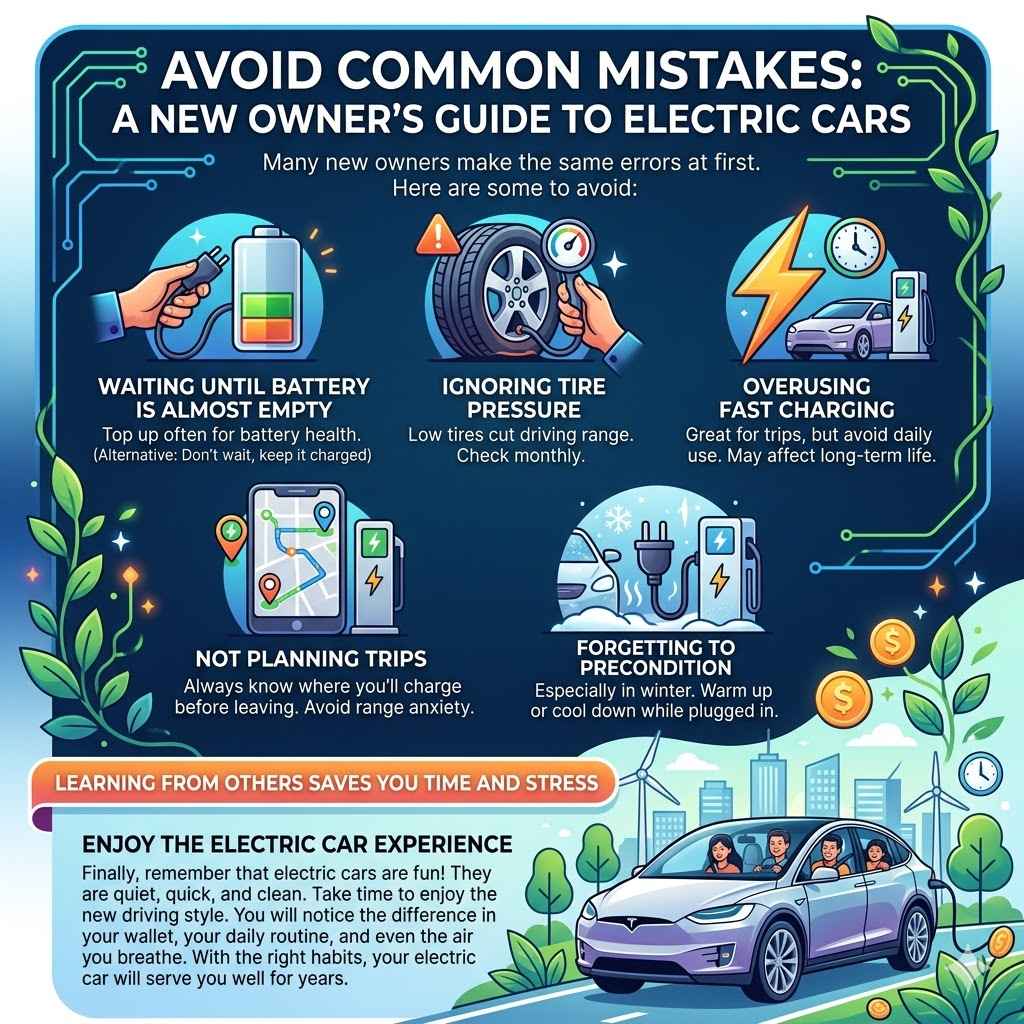
Avoid Common Mistakes
Many new owners make the same errors at first. Here are some to avoid:
- Waiting until the battery is almost empty to charge—top up often.
- Ignoring tire pressure—low tires cut range.
- Overusing fast charging—it’s great for trips but not for every day.
- Not planning trips—always know where you’ll charge.
- Forgetting to precondition—especially in winter.
Learning from others saves you time and stress.
Enjoy The Electric Car Experience
Finally, remember that electric cars are fun! They are quiet, quick, and clean. Take time to enjoy the new driving style. You will notice the difference in your wallet, your daily routine, and even the air you breathe.
With the right habits, your electric car will serve you well for years.
Frequently Asked Questions
How Long Does An Electric Car Battery Last?
Most modern EV batteries last 8 to 15 years or over 100,000 miles. Good charging habits (not always charging to 100%, avoiding deep discharge) help extend this life.
How Much Does It Cost To Charge An Electric Car?
Charging costs depend on local electricity rates and the car’s battery size. Home charging is often 3-5 times cheaper than petrol. Public fast charging costs more but is still usually cheaper than filling a tank.
Can I Use An Electric Car For Long Road Trips?
Yes, but you need to plan your route and charging stops. Many apps and car navigation systems help with this. Charging takes longer than refueling, so allow extra time.
What Happens If I Run Out Of Battery?
If your battery reaches zero, the car will stop. Roadside assistance can tow you to a charger. It’s best to keep a buffer and plan ahead to avoid this.
Are Electric Cars Really Better For The Environment?
Yes, they produce no tailpipe emissions and are cleaner even when considering electricity production. Over time, as more electricity comes from renewable sources, EVs will become even greener.
By following these tips and understanding your electric car, you will enjoy the full benefits of electric driving—saving money, time, and the environment.
Related pick: Check today's price on Amazon