How to Start a Diesel Truck in Extreme Cold
Start with the symptom. Slow cranking usually points to a weak battery or thick oil, normal cranking with no start points to glow plugs or fuel gelling, and no crank points to battery voltage or cable problems. Keep cranking, and you can drain the batteries, overheat the starter, and make the cold no-start worse. This guide lays out the battery, glow-plug, fuel-gel, and oil checks in a decision-tree order so you can stop at the right fault fast.
What you’ll need
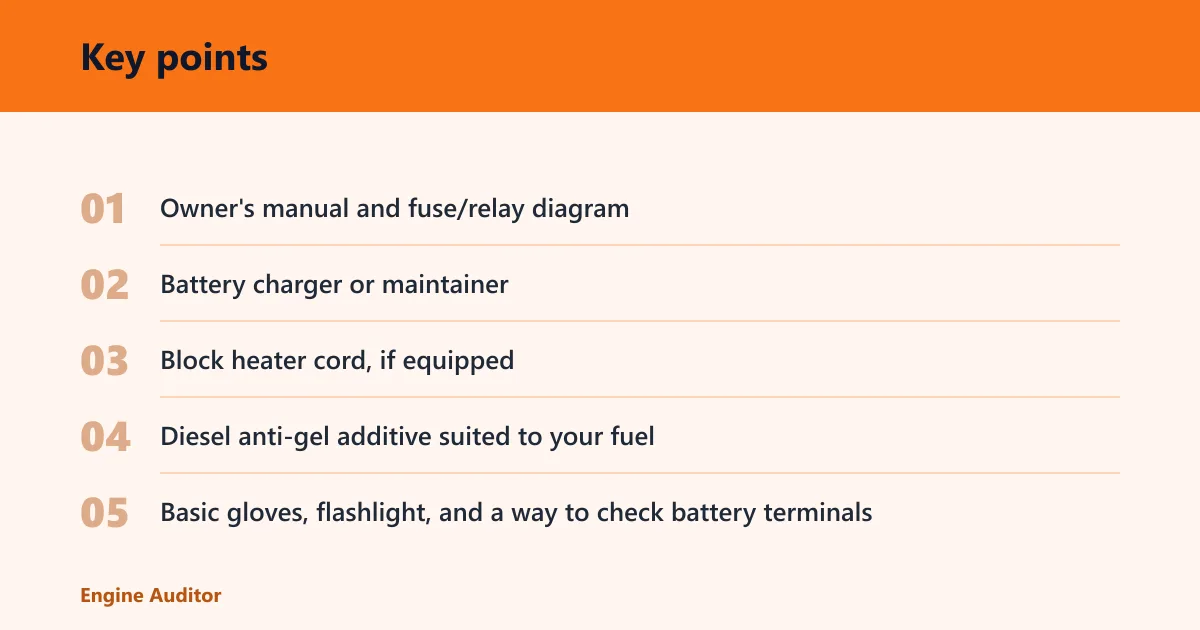


- Owner’s manual and fuse/relay diagram
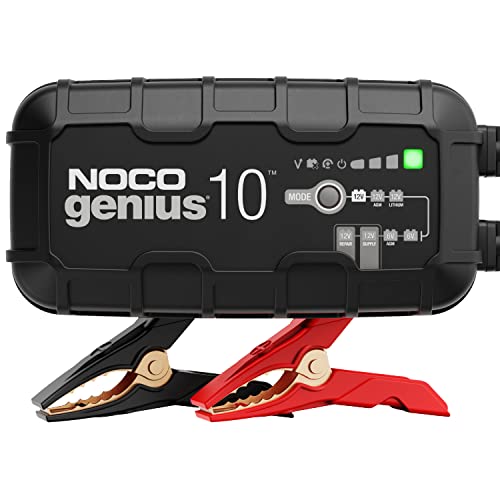
- Battery charger or maintainer
- Block heater cord, if equipped
- Diesel anti-gel additive suited to your fuel
- Basic gloves, flashlight, and a way to check battery terminals
- Hand tools for tight battery clamps, if your truck allows simple access
📊 WikiHow says diesel trucks have 2 batteries to start the engine. Source: Wikihow.
How do you tell the problem?
Use the symptom first. Slow crank usually points to battery output or oil drag, fast crank with no fire points to glow-plug timing, fuel delivery, or heat loss in the cylinders, and rough fire followed by a stall often points to fuel gelling or a supply restriction. That split saves time and cuts starter abuse.
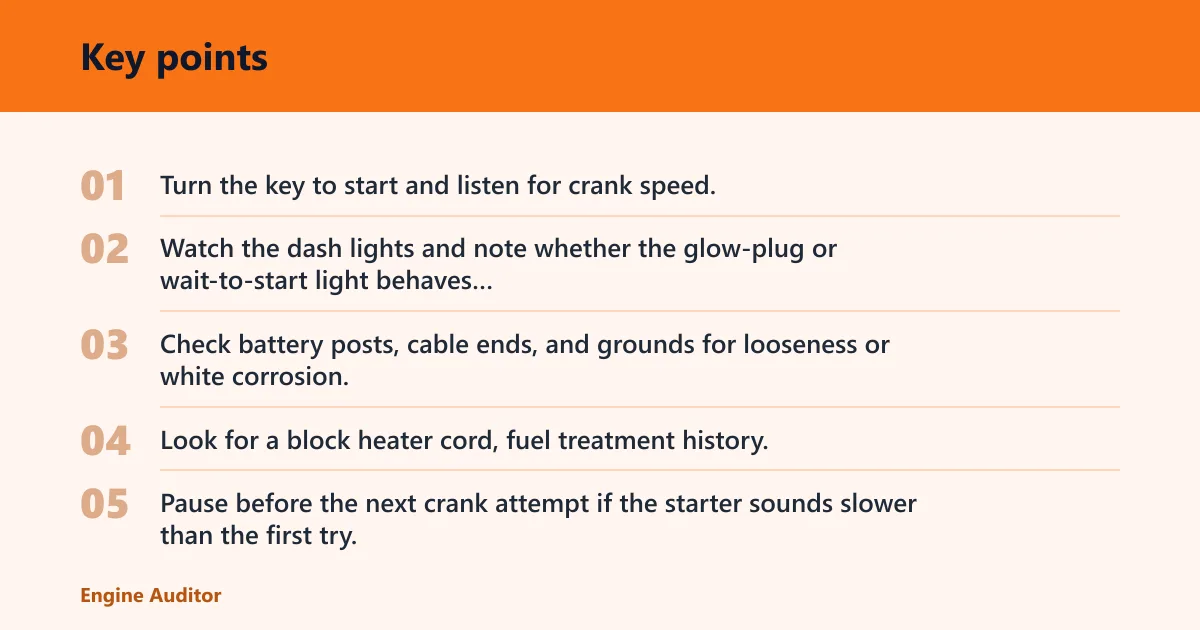
- Turn the key to start and listen for crank speed.
- Watch the dash lights and note whether the glow-plug or wait-to-start light behaves normally.
- Check battery posts, cable ends, and grounds for looseness or white corrosion.
- Look for a block heater cord, fuel treatment history, and any signs of gelled fuel in very low temperatures.
- Pause before the next crank attempt if the starter sounds slower than the first try.
Suppose a pickup cranks with a dragging, uneven sound after an overnight freeze. That points more toward battery strength or oil viscosity than fuel. Suppose a fleet truck spins normally but never coughs, even after the wait-to-start light goes out. That points you toward glow plugs, fuel quality, or air in the supply side instead.
Cold-start troubleshooting table
| Symptom observed | Most likely cause | Fastest safe check | Next action |
|---|---|---|---|
| Slow crank | Weak battery, poor cable connection, or thick oil | Check battery terminals and watch whether the starter speed drops sharply | Charge or replace weak batteries, then confirm oil grade is winter-suitable |
| Fast crank, no fire | Glow plugs not heating, fuel not reaching the cylinders, or heat loss in extreme cold | Confirm the wait-to-start light and review recent fuel treatment and block-heater use | Let the glow-plug cycle finish, then inspect fuel supply and additive use |
| Rough fire then stall | Fuel gel, restricted supply, or partial thaw with weak delivery | Check for waxing in the filter area and whether the truck improves after heat soak | Warm the fuel system safely, replace a restricted filter if needed, and treat fuel for cold weather |
| Glow-plug light behavior | Short light, no light, or repeated cycling can point to temperature strategy or a fault | Compare the light timing with the owner’s manual and see whether it stays on longer in deeper cold | Follow the manual’s preheat procedure and diagnose the glow-plug circuit if the pattern is abnormal |
| Fuel-gelling signs | Waxed diesel, blocked filter, or cold fuel in the tank and lines | Look for a no-start after exposure to deep cold, especially after untreated fuel use | Add the correct anti-gel product if the fuel is still usable, then warm the system and inspect the filter |
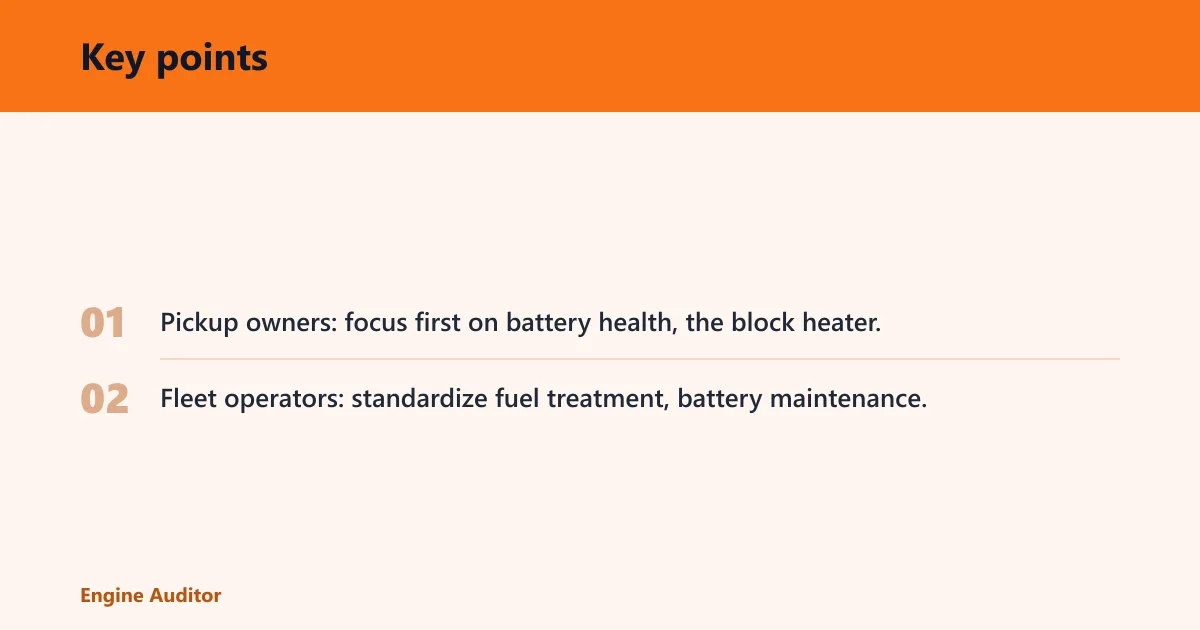
Pickup owners: focus first on battery health, the block heater, and the wait-to-start cycle. Fleet operators: standardize fuel treatment, battery maintenance, and overnight plug-in procedures across the yard.
Start the engine
Wait for the glow-plug or wait-to-start light as directed by the truck, then crank briefly and stop if it does not catch. Diesel engines rely on compression heat for ignition, not spark plugs, so the preheat step matters more in freezing weather. Cold-weather heating can take longer, but follow the truck’s manual rather than guessing at a fixed time.
- Turn the key to the preheat position and wait for the indicator to finish its cycle.
- Crank the engine in a brief attempt, then pause if it does not start.
- Let the starter cool before the next attempt if the truck still will not fire.
- If the truck starts, hold a steady idle only long enough to stabilize oil pressure and smooth the first few seconds.
- Drive gently until coolant warms.
Avoid long, repeated cranking. One practical limit often cited is no more than 30 seconds at a time, but the safer rule is simpler: use the cranking interval in your owner’s manual and give the starter a cooling pause between attempts. Extra cranking is not a fix.
Do you need to plug it in?
Plug in the block heater when the truck and the forecast call for it, especially if the engine has been sitting long enough to lose warmth. A block heater is an electric engine warmer. It helps the oil and coolant warm up before start-up, which lowers cranking load and helps the truck reach firing speed faster.
The plug-in time depends on the truck’s manual and the block heater fitted to that engine. One reported cold-start example reached around -30 degrees Fahrenheit after about nine hours of block-heater use, which suggests that preheat time can matter in severe cold. Do not generalize that timing to every diesel.
If the batteries are weak, a charger or maintainer may help more than extra cranking. On a diesel, two weak batteries can drag the whole starting system down, and weak batteries also reduce glow-plug performance.
Which oil and fuel help most?
Lower-viscosity winter oil helps a diesel turn over more easily in subzero weather because it flows faster when cold. Where the manufacturer approves it, 5W-40 is commonly used for cold-weather diesel service. Use the grade listed for your truck, not a guess.
Diesel fuel anti-gel additive can help keep fuel flowing in cold weather, and the right formulation may also support lubricity. That matters because fuel-starvation no-starts can strain the high-pressure fuel pump, which is sensitive to both pressure and lubrication. Use the additive before the fuel gels; it cannot reliably fix already-waxed fuel by itself.
Older mechanical diesels may tolerate some cold-start struggle better than newer high-pressure systems, but they still need clean fuel, enough cranking speed, and the right oil. The starting problem changes, not the physics.
Battery and glow-plug checks
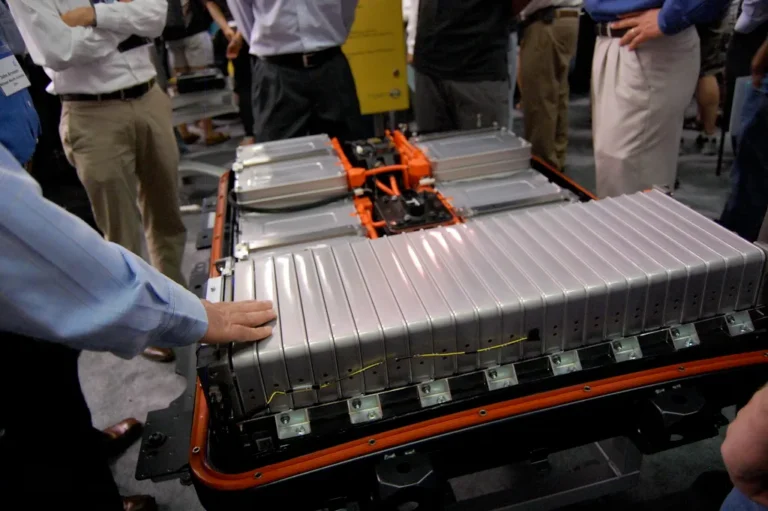
Diesel trucks often use two batteries, and both need enough cold-cranking amps to help the starter turn fast enough for compression heat. CCA is the battery output rating used for winter starting. Higher CCA helps, but the rating still has to match the truck, tray space, and conditions.
The wait-to-start light is a cue that the glow plugs are preheating the combustion chamber area. That heating step can take up to about 15 seconds, and very cold weather can require a longer preheat period than mild weather. If the light behavior does not match the manual, inspect the glow-plug circuit, relays, and fuses.
Weak batteries can make glow-plug performance look worse than it is, because low voltage cuts both cranking speed and heater output. Check the batteries before assuming the glow plugs failed.
Common mistakes
Cranking too long is the fastest way to turn a cold no-start into a worse one. So is ignoring dirty terminals, a loose ground, or a low battery that cannot support the starter and the glow plugs at the same time.
- Do not keep cranking after the starter slows noticeably.
- Do not assume fuel gel is the cause if the truck also cranks slowly.
- Do not skip the glow-plug cycle because the weather is only “a little” cold.
- Do not idle the engine for a long time after it fires. Start it, stabilize it, and drive gently until coolant warms.
Picture a truck that starts, then idles for 20 minutes before moving. That wastes fuel and delays warm-up under light load. A brief idle is enough in most cases; then gentle driving builds heat faster and more evenly than prolonged driveway idling.
Frequently asked questions
How to get a diesel to start in the cold
Give the engine full preheat time, use winter-grade oil approved for your model, and make sure the fuel has not gelled. If the truck still only cranks, switch to battery and cable checks before trying more starts. The right fix depends on whether the symptom is slow crank or no fire.
Is it bad to cold start a diesel?
Cold starting itself is normal, but repeated long cranking is hard on the starter and batteries. A cold diesel also reaches firing conditions more slowly, which is why glow plugs, winter oil, and good batteries matter. One clean start is better than several dragged-out attempts.
How long should I wait for the glow plugs in cold weather?
Wait for the wait-to-start light to finish its cycle, then follow the owner’s manual for any extra preheat behavior in deep cold. The glow-plug heating step can take up to 15 seconds, and colder weather can lengthen that time. Do not guess by the calendar temperature alone.
Do I need to plug in my diesel truck before starting it?
If your truck has a block heater and the manual recommends it for the conditions, plug it in before you try to start. It warms the engine, oil, and coolant, which helps cranking speed and reduces cold wear. The needed plug-in time varies by truck and heater.
What oil weight helps a diesel start easier in extreme cold?
Use the winter grade approved for your engine, then pick the lower-viscosity option that the manufacturer allows. In many diesel applications, 5W-40 is a common cold-weather choice, while some engines also approve 10W-30. Lighter oil flows better when subzero temperatures slow the crank.
Products related to this article
Sponsored / affiliate links. As an Amazon Associate I earn from qualifying purchases. I may earn additional commission from eligible campaigns.