What Happens When Car Tires Are Overinflated? Must Know
It’s a common car care task, but one that many people get wrong. You might think that filling your tires up as much as possible is a good idea. It could help with gas mileage, right?
Or maybe you just want to make sure they’re good and firm. But what if you’re actually going too far? What happens when car tires are overinflated?
It’s a question that pops up when you start thinking about tire health and your car’s performance. This guide will break down exactly what’s going on when your tires have too much air.
When car tires are overinflated, they become too stiff. This means less of the tire touches the road. It can lead to a bumpy ride, uneven wear, and even make your car harder to control. It’s important to keep tires at the right pressure.
The Core of Overinflation
So, what does it really mean for your tires to be overinflated? Think of your tires like a balloon. When you blow it up too much, it gets really hard and round. It’s not flexible anymore. The same thing happens with your car tires. They have a specific amount of air they should hold. This is called the tire pressure.
When you add too much air, the tire’s shape changes. The center part of the tire bulges out more. The edges of the tire, the sides, lift up a bit. This means that only the middle part of the tire is actually touching the road surface. The shoulders, or the sides of the tread, are no longer making good contact.
Why does this matter? Your tires are the only things connecting your car to the road. They handle steering, braking, and acceleration. They also absorb a lot of the bumps and vibrations from the road. When the tire isn’t shaped correctly, it can’t do these jobs as well. It’s like trying to walk on stilts instead of your normal shoes.
My Tire Pressure Scare
I remember a time a few years back. I was getting ready for a long road trip. I thought, “I’ll just make sure my tires are super full. It will save me gas!” So, I went to the gas station and just kept pumping air into them. I didn’t even check the recommended pressure. I just filled them until they felt really, really hard.
When I started driving, the car felt… weird. It bounced around way more than usual. Every little crack in the pavement felt like a huge pothole. I was holding the steering wheel tighter than I needed to. It felt like the car was a bit jumpy. I even got a little worried that something was wrong with my suspension.
Then, a few days later, I got a flat. It wasn’t a total blowout, but a slow leak. I took it to a tire shop. The mechanic took a look and asked me if I’d recently overinflated my tires. He pointed out how the tread was worn really unevenly. The middle was super smooth, almost shiny, while the edges still had plenty of tread. He explained that overinflating can actually cause the tire to fail sooner. It was a wake-up call.
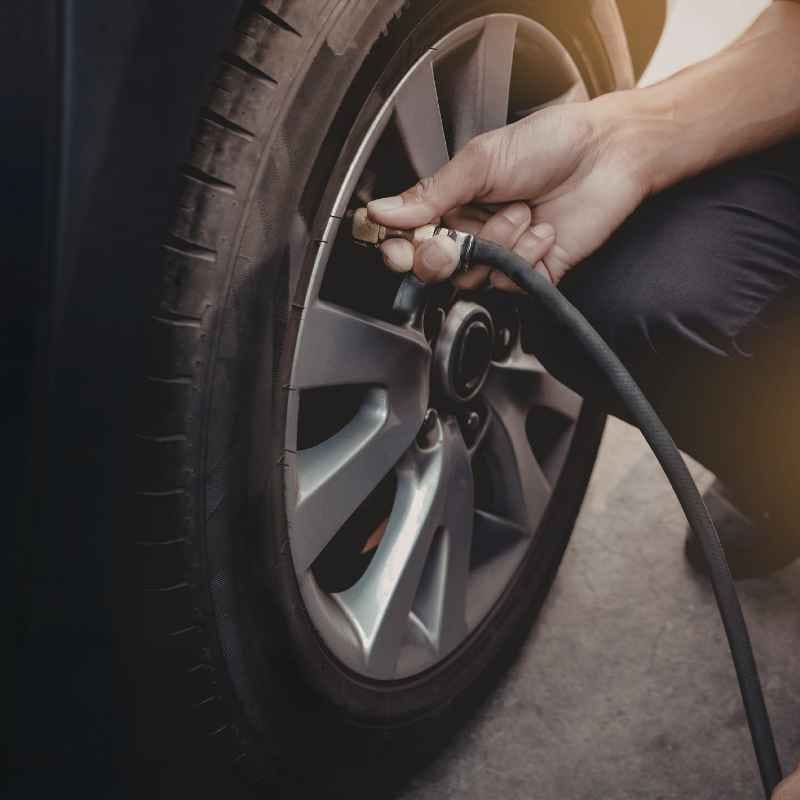
Signs Your Tires Might Be Overinflated
Sometimes, your car will give you hints that something isn’t quite right. You don’t always need to be a mechanic to notice these things. Most drivers can spot the common signs. It just takes paying a little attention to how your car feels and sounds.
Here are some things to look out for.
Feeling the Difference
Bumpy Ride: Your car feels like it’s bouncing more than usual. Small bumps and cracks feel much bigger.
Stiff Steering: The steering wheel might feel harder to turn. It can feel less responsive.
Increased Road Noise: You might hear more of the road noise coming into the cabin.
Visual Clues
Uneven Tire Wear: This is a big one. Look at your tires. Is the very center of the tread worn down much more than the edges?
That’s a strong sign.
Tire Shape: The tire might look more like a perfect circle. It can seem to bulge out in the middle.
Performance Changes
Reduced Grip: In wet conditions, you might feel like your car slides a bit more. The braking might not feel as strong.
Faster Wear: While it seems like keeping tires full would make them last longer, overinflating actually makes them wear out faster in the center.
These signs are not always about overinflation. But when you see a few of them together, it’s a good idea to check your tire pressure.
Why Tire Pressure Matters So Much
Tire pressure isn’t just about how the tire looks or feels. It’s a critical part of your car’s safety and how well it runs. The engineers who designed your car and your tires figured out a very specific pressure. This pressure helps the tire do its job perfectly.
The recommended tire pressure is usually found on a sticker inside your driver’s side doorjamb. You can also find it in your car’s owner’s manual. It’s usually measured in PSI (pounds per square inch).
When your tires are at the right pressure, they can:
- Grip the road properly: This is key for safe driving. Good grip means you can steer and brake effectively.
- Absorb shocks: The air inside the tire acts as a cushion. It smooths out the ride.
- Wear evenly: When the tire’s tread makes full contact with the road, it wears down at an even rate. This means they last longer.
- Offer better fuel economy: Properly inflated tires roll more easily. This uses less gas.
- Run cooler: Overinflated or underinflated tires can heat up more. This can be dangerous.
So, the right pressure is a balance. Too much or too little air throws that balance off.
The Risks of Overinflated Tires
Driving with overinflated tires isn’t just uncomfortable. It can also be downright dangerous. There are several risks involved that you should know about.
Reduced Traction
As we’ve talked about, overinflated tires don’t have as much of their tread touching the road. They become smaller contact patches. This means less rubber is gripping the pavement.
On dry roads, this might not be too noticeable at first. But in wet weather, or on slippery surfaces like ice or snow, this reduced grip is a big problem. Your ability to brake suddenly might be cut down. You could also find it harder to make sharp turns without your tires losing grip and sliding.
Bumpy and Uncomfortable Ride
The air inside your tires is meant to absorb impacts from the road. When there’s too much air, the tire becomes much stiffer. It can’t flex as much to absorb those shocks.
This means that every little bump, pebble, or crack in the road is felt much more directly by the car. The ride becomes bouncy and uncomfortable. Passengers might feel jiggled around. Long drives can become much more tiring because of the constant jarring.
Increased Risk of Tire Damage and Blowouts
Overinflated tires are more vulnerable to damage. Because the tire is so stiff, it can’t deform around obstacles as well. A sharp object that might have just poked a properly inflated tire could cause a serious cut or puncture in an overinflated one.
Also, too much pressure builds up stress inside the tire. The rubber can become brittle. This increases the chance of a sudden tire failure, known as a blowout. A blowout at high speeds can be very dangerous and lead to a loss of control of the vehicle.
Uneven Tire Wear
This is one of the most common and frustrating consequences. When only the center of the tire is touching the road, that’s the part that takes all the friction.
Over time, this leads to the center tread wearing down much faster than the outer edges. You’ll see the middle of the tire become smooth and bald while the sides still have plenty of tread. This uneven wear means you’ll have to replace your tires sooner than you should. It’s a waste of money.
Potential for Handling Issues
Your car’s steering and suspension systems are designed to work with tires at the correct pressure. When the tires are too hard, they don’t absorb the road as intended. This can affect how the car handles.
You might notice the car is more sensitive to steering inputs. It might feel less stable around corners. Some drivers even report a feeling of the car wanting to wander or drift. This can make driving feel less secure.
Checking and Adjusting Your Tire Pressure
The good news is that overinflation is usually easy to fix. The key is knowing how to check your tire pressure correctly and knowing what the right pressure should be.
Find Your Recommended Tire Pressure
This is the first and most important step. Don’t guess. Don’t rely on what someone told you.
- Driver’s Side Doorjamb: Open your driver’s side door. Look for a sticker inside the frame. It will list the recommended front and rear tire pressures, usually in PSI.
- Owner’s Manual: Your car’s manual is another reliable source. It will have a section on tires and maintenance.
- Fuel Door: Some cars have the sticker on the inside of the fuel door.
Important Note: The number on the tire’s sidewall (the maximum pressure) is NOT the recommended daily driving pressure. That’s the maximum the tire can handle. Always use the pressure listed on your car’s sticker or manual.
What You’ll Need
You’ll need a tire pressure gauge. These are inexpensive and widely available at auto parts stores, department stores, and even some gas stations. They come in a few types:
- Digital Gauges: These are easy to read and often very accurate.
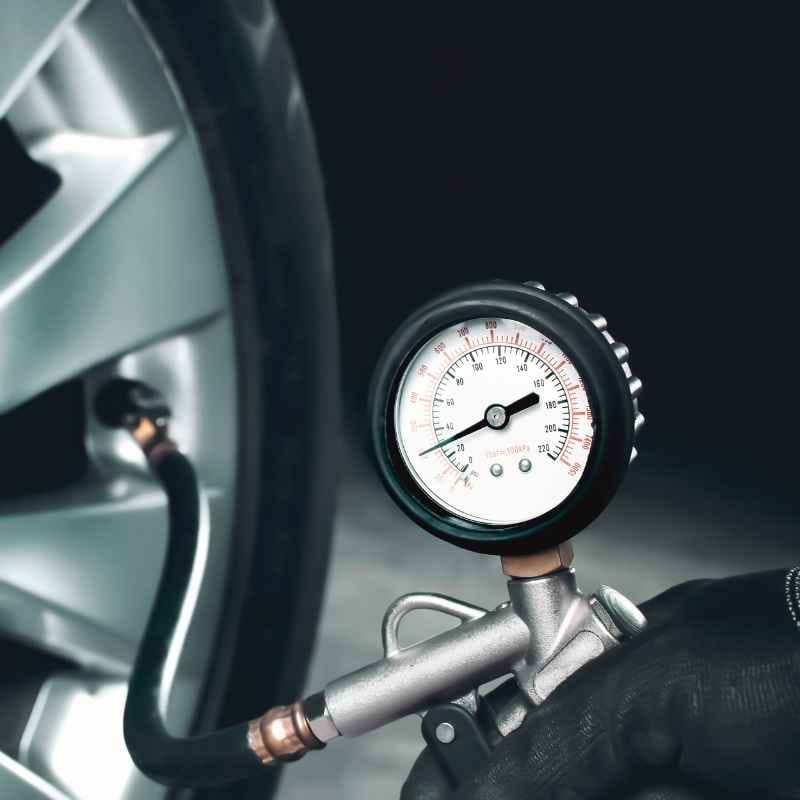
- Dial Gauges: These have a round face with a needle. They are also quite common.
- Stick Gauges: These are the simplest, using a sliding plastic or metal bar to show the pressure.
Make sure the gauge is working. You can test it by checking a tire you know is properly inflated.
How to Check Your Tires
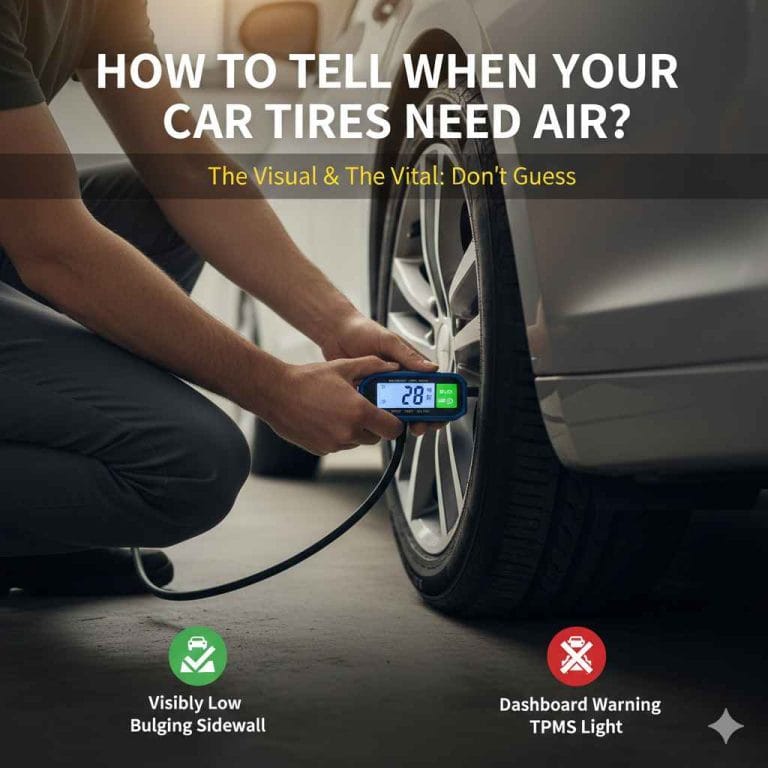
It’s best to check your tire pressure when the tires are “cold.” This means the car hasn’t been driven for at least three hours, or has only been driven a short distance at low speed. Driving heats up the air inside the tires, which makes the pressure reading higher than it actually is.
1. Unscrew the valve cap: Find the small black or metal cap on the end of your tire’s valve stem. Unscrew it and keep it somewhere safe.
2. Press the gauge onto the valve stem: Push the gauge firmly onto the valve stem. You might hear a little hiss of air.
3. Read the pressure:
For digital gauges, the number will appear on the screen.
For dial gauges, look at the needle on the gauge.
For stick gauges, pull the gauge off and read the number marked on the sliding bar.
4. Compare to recommended pressure: See if the reading matches what’s on your car’s sticker.
5. Repeat for all tires: Check all four tires. Don’t forget your spare tire if you have one!
6. Replace the valve cap: Screw the cap back on tightly.
Adjusting the Pressure
If the pressure is too high: Gently press down on the small metal pin in the center of the valve stem with your fingernail or the tip of your gauge. A small amount of air will escape. Let out a little air at a time and re-check the pressure until it’s correct.
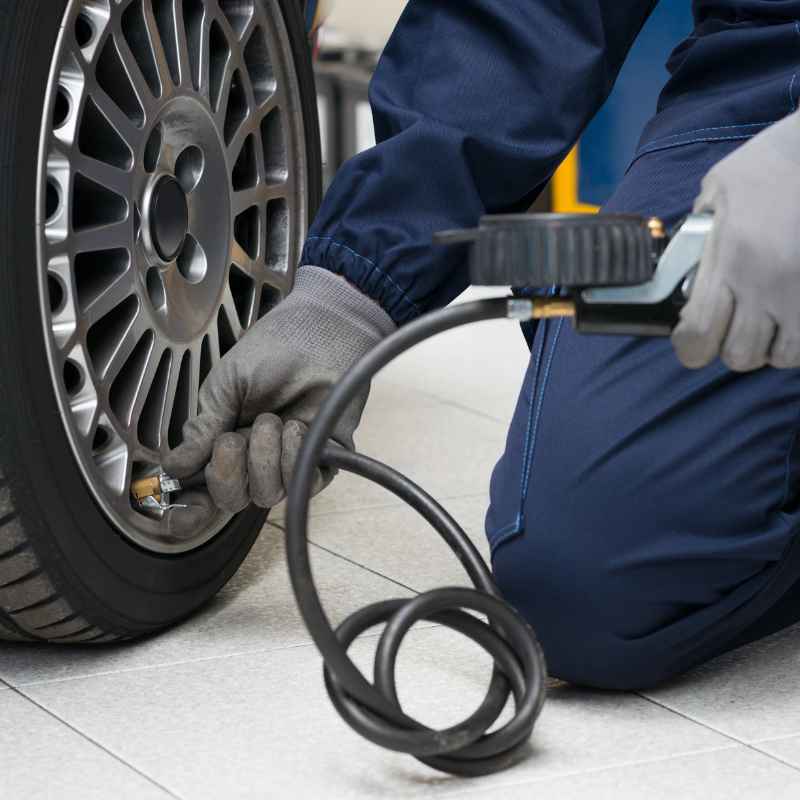
If the pressure is too low: You’ll need an air compressor. Most gas stations have them. Attach the air hose to the valve stem and add air. Check the pressure frequently as you add air. Don’t just let it run for a long time.
Quick Scan: Tire Pressure Basics
| Check When: | Tires are cold (car has sat for 3+ hours). |
| Where to Find Recommended PSI: | Driver’s doorjamb sticker or owner’s manual. |
| What You Need: | Tire pressure gauge. |
| Too High? | Release air by pressing valve stem pin. |
| Too Low? | Add air with an air compressor. |
Understanding Tire Wear Patterns
Looking at how your tires wear down can tell you a lot about what’s happening with your car. Overinflation is just one reason for strange wear. But it’s a very common one, and it leaves a distinct mark.
The Overinflated Tire’s Signature
When a tire is overinflated, the center of the tread is the only part making firm contact with the road. Imagine pressing a very firm ball onto a flat surface. Only the very middle of the ball touches. The sides curve away.
This means that over time, the rubber in the center of the tread band wears down much faster. You’ll see a wide, smooth band across the middle of the tire. The edges of the tread might still look good, with sharp edges and good depth.
This kind of wear is a sure sign that your tire pressure has been too high for too long. It’s a waste because the tire could have lasted much longer if it wore evenly.
Comparing to Other Wear Patterns
It’s helpful to know what other wear patterns look like, so you can be sure about overinflation.
Myth vs. Reality: Tire Wear
Myth: A bald tire in the middle means the tire is old.
Reality: A bald tire in the middle is almost always a sign of overinflation.
Myth: Bald edges mean the tire needs more air.
Reality: Bald edges often mean the tire has been underinflated, or there’s an issue with alignment or suspension.
Myth: Cupping or feathering on the edges means the tire is bad.
Reality: This often points to suspension problems or alignment issues.
If you see a tire that is worn down on the outer edges, but the center still has good tread, that’s a sign of underinflation. The tire is bulging out at the sides, so the edges make contact.
Tires that are worn unevenly on one side, or have a scalloped look, often point to alignment problems. The wheels are not pointing straight.
Fuel Economy and Overinflation
You might have heard that keeping tires a bit overinflated can help with gas mileage. And there’s a tiny bit of truth to it. When tires are overinflated, they have less friction with the road. They roll a little easier. This means your engine doesn’t have to work quite as hard to move the car.
However, the savings are usually very small. They are often not worth the risks. The slightly better MPG you might get can be easily cancelled out by:
- Shorter tire life due to uneven wear.
- Increased risk of tire damage.
- Potential safety issues like reduced grip.
Most car manufacturers recommend a specific tire pressure for a reason. It’s the best balance between ride comfort, tire wear, safety, and fuel efficiency. Sticking to that recommended pressure is usually the smartest choice for your wallet and your safety.
For example, if your car sticker says 32 PSI, and you inflate your tires to 40 PSI, you might save a tiny bit of gas. But you’re also risking a blowout, poor braking, and wearing out the middle of your tires way too fast. Those aren’t good trade-offs.
The Importance of Regular Checks
Tire pressure isn’t something you set and forget. It can change due to several factors.
- Temperature: For every 10-degree Fahrenheit drop in temperature, tire pressure can decrease by about 1 PSI. This is why you see a big drop in pressure in the fall and winter.
- Leaks: Even small slow leaks can cause pressure to drop over time.
- Natural Loss: Tires naturally lose a small amount of air over time, even when they are in good condition.
Because of these factors, it’s a good idea to check your tire pressure at least once a month. Many people find it helpful to do it every time they fill up their gas tank. That way, it’s a regular part of your routine.
Checking regularly also helps you catch problems early. If a tire is losing air quickly, you can get it fixed before it becomes a dangerous situation. If all your tires are low, you know it’s time to add air.
When is Overinflation a Concern?
While it’s possible to overinflate tires, it’s often more common for people to underinflate them. Many drivers don’t realize how much pressure they lose over time.
However, some situations can lead to overinflation:
- Mistaking the Sidewall Number: As mentioned, the number on the tire sidewall is the maximum pressure, not the recommended pressure. Some people fill their tires to this maximum, thinking it’s best.
- Using a “Hard” Setting on Air Machines: Some air machines at gas stations have preset levels. If you don’t check the actual reading, you might overfill.
- Adding Air in Hot Weather: If you check your tires in the hot sun and add air to the recommended cold pressure, they will be overinflated once the temperature drops. It’s best to check and adjust when tires are cold.
- Tire Type: Some specialty tires, like those on some performance vehicles or trucks, might have higher recommended pressures. But even these have a correct range.
If you are using the recommended pressure from your car’s sticker and checking when the tires are cold, you are very unlikely to overinflate them. The key is to use the car’s recommendation, not the tire’s maximum.
How Overinflated Tires Affect Handling in Curves
Turning is where you might really feel the difference with overinflated tires. When you take a curve, your car naturally wants to lean outwards. The tires are designed to resist this lean and keep the car on its intended path.
With overinflated tires, the tire is too stiff. It can’t flex and grip the road as well when you lean into a turn. This means:
- Less grip: The tire may start to slide sooner than it should.
- More body roll (ironically): Because the tire isn’t absorbing the forces properly, the car’s body might feel like it’s leaning more.
- Reduced steering precision: The steering might feel vague or less responsive. It’s harder to make fine adjustments.
This can be especially concerning if you need to make a sudden evasive maneuver. Your car might not react as predictably as you’d expect.
Can Overinflation Cause a Blowout?
Yes, overinflation can contribute to a tire blowout. Here’s why:
- Increased Stress: The excessive air pressure puts constant stress on the tire’s internal structure, including the steel belts and cords within the rubber.
- Reduced Flexibility: A stiff, overinflated tire is less able to absorb impacts. A sharp object or even a hard pothole can cause a more severe rupture than it would in a properly inflated tire.
- Heat Buildup: While often associated with underinflation, overinflated tires can also experience heat buildup due to increased internal friction from being too rigid, especially at higher speeds. Too much heat weakens the tire materials.
A blowout is a sudden, rapid loss of air. It can cause the tire to disintegrate. If this happens at highway speeds, it can be very difficult to maintain control of your vehicle, leading to accidents.
Frequently Asked Questions About Overinflated Tires
What is the correct tire pressure for my car?
The best way to find the correct tire pressure is to look for the sticker on the driver’s side doorjamb of your car. Your owner’s manual is also a reliable source. The number listed there is the recommended pressure in PSI when the tires are cold.
How often should I check my tire pressure?
It’s a good practice to check your tire pressure at least once a month. Many people check them every time they refuel their car to make sure they stay on top of it.
Can I just fill my tires to the max PSI on the sidewall?
No, you should not fill your tires to the maximum pressure listed on the sidewall. That number is the maximum pressure the tire can safely hold, not the recommended pressure for daily driving. Always use the recommended pressure found on your car’s doorjamb sticker or in the owner’s manual.
What is the difference between overinflation and underinflation?
Overinflation means there is too much air in the tire, making it stiff and causing the center tread to wear faster. Underinflation means there is too little air, causing the tire to sag and the edges of the tread to wear faster. Both can be dangerous and reduce tire life.
Will overinflated tires affect my braking?
Yes, overinflated tires can negatively affect your braking. With less of the tire tread making contact with the road, the braking force is reduced. This means your car may take longer to stop, especially in wet conditions.
Is it okay to slightly overinflate my tires for better gas mileage?
While slightly overinflating tires might offer a very small improvement in gas mileage, the risks often outweigh the benefits. Overinflation can lead to a harsher ride, uneven tire wear, reduced traction, and an increased risk of blowouts. It’s best to stick to the manufacturer’s recommended tire pressure for optimal safety and performance.
Wrapping Up: The Importance of the Right Pressure
It’s easy to overlook something as simple as tire pressure. We focus on oil changes and tire rotations, which are also vital. But the air inside your tires plays a huge role in how your car performs, how safe it is, and how long your tires last.
When your car tires are overinflated, you’re creating a less stable, less comfortable, and potentially less safe driving experience. You’re also likely to wear out your tires faster. That means more trips to the tire store and more money spent.
The good news is that fixing overinflation is usually as simple as checking your pressure and letting out a little air. Make it a habit to check your tires monthly. Use the recommended PSI from your car’s manufacturer. Your car, your tires, and your wallet will thank you.
See also does a car tire have an inner tube inside here’s the truth.
Products related to this article
Sponsored / affiliate links. As an Amazon Associate I earn from qualifying purchases. I may earn additional commission from eligible campaigns.