Can You Fill Car Tire With Bike Pump
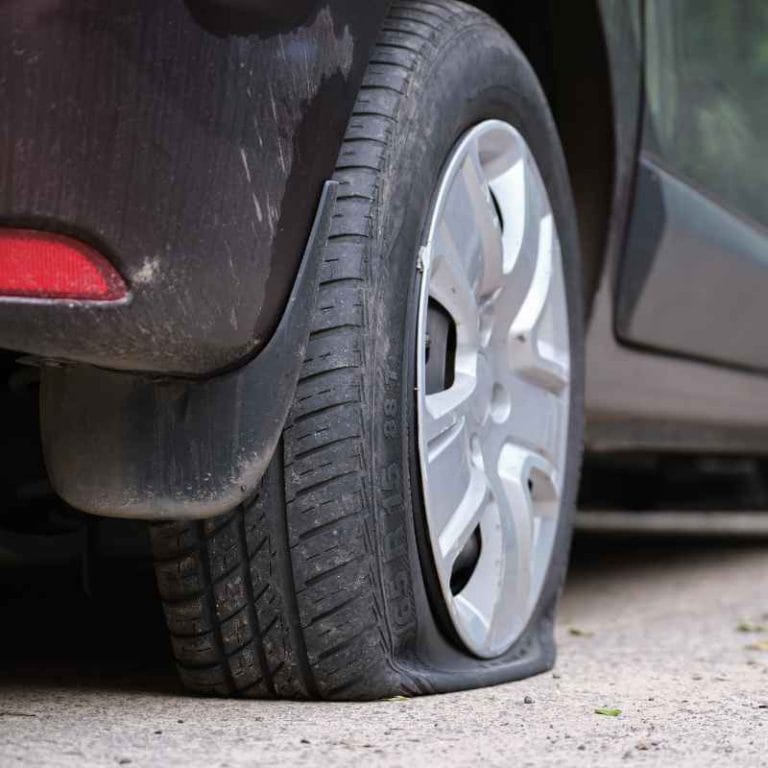
It’s a common situation. You notice one of your car tires looks a bit low. Maybe it’s been sitting for a while, or perhaps the temperature dropped.
You need to add some air, but your big air compressor is broken, or maybe you don’t have one at all. Then, a thought pops into your head: “Can I just use my bike pump?” It seems like a good idea, right? After all, it pumps air.
But is it really a good idea for your car? Let’s dive into this and see if it’s a viable solution or a bit of a gamble for your car’s tires.
While a bike pump can technically add air to a car tire in an emergency, it’s generally not recommended for regular use. It’s slow, difficult, and may not reach the correct pressure. It’s best used only for very minor top-ups when no other option is available.
What Happens When a Car Tire Loses Air?
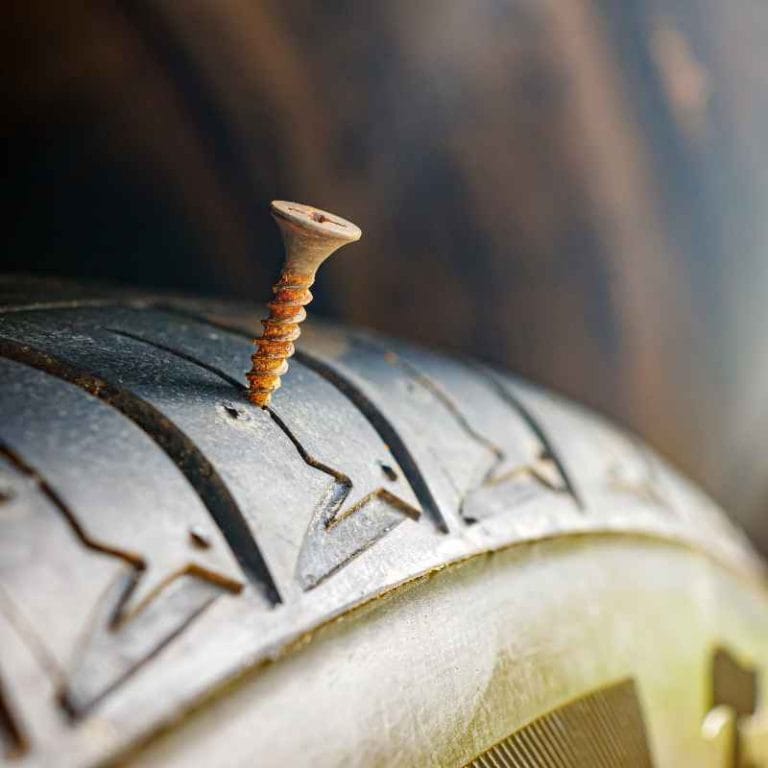
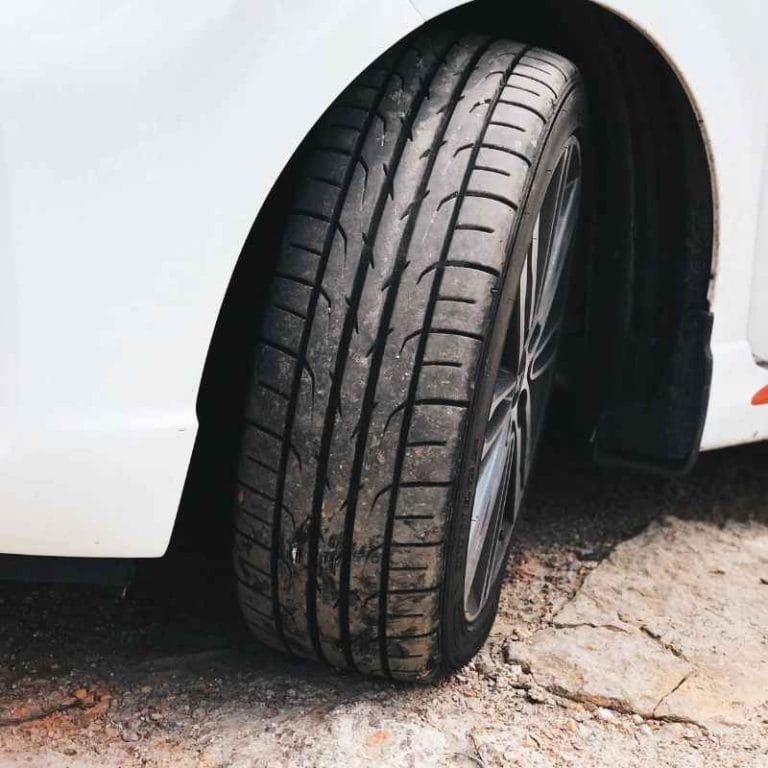
Car tires lose air for a few main reasons. Tiny leaks are the most common culprits. These can happen around the valve stem, where the tire meets the rim, or even through the rubber itself if there’s a small puncture.

AstroAI
AstroAI L7 Tire Inflator Portable Air Compressor,150…
- ADVANCED TRUEGAUGE SCREEN: This battery tire inflator includes updated sensor technology, capable of collecting pressure data from…
- EASY TO USE: You can choose 4+N smart modes (car, motorcycle, bicycle, ball, and custom) and 4 pressure units (PSI, Bar, kPa, kg/c…
- COMPACT, FASTER INFLATION: Weighing less than 1 pound, this portable tire inflator is easy to carry and store in any limited space…
As an Amazon Associate I earn from qualifying purchases.
Temperature changes also play a big role. When it gets cold, the air inside the tire shrinks. This means your tire pressure drops.
Hot weather does the opposite; the air expands, and pressure goes up.
Driving with underinflated tires isn’t good. It affects how your car handles. Your steering might feel a bit sluggish.
Braking can take longer. Your gas mileage also takes a hit because the engine has to work harder to move the car. Plus, underinflated tires wear out faster and unevenly.
This can lead to a blow-out, which is very dangerous.
Keeping your tires at the right pressure is super important for safety and for saving money on gas. The correct pressure is usually listed on a sticker inside your car’s driver-side door jamb or in the owner’s manual. It’s not the number on the tire sidewall; that’s the maximum pressure the tire can hold.
Can You Actually Use a Bike Pump on a Car Tire?
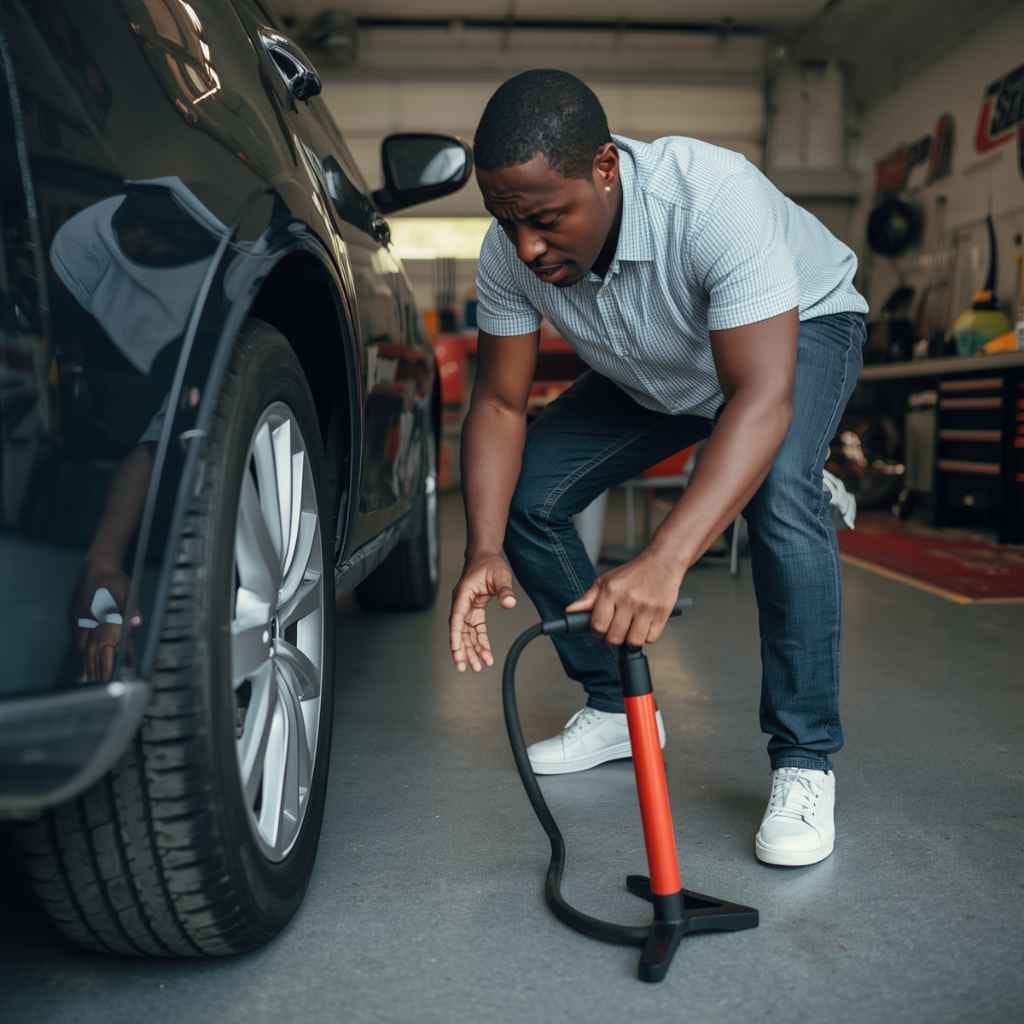
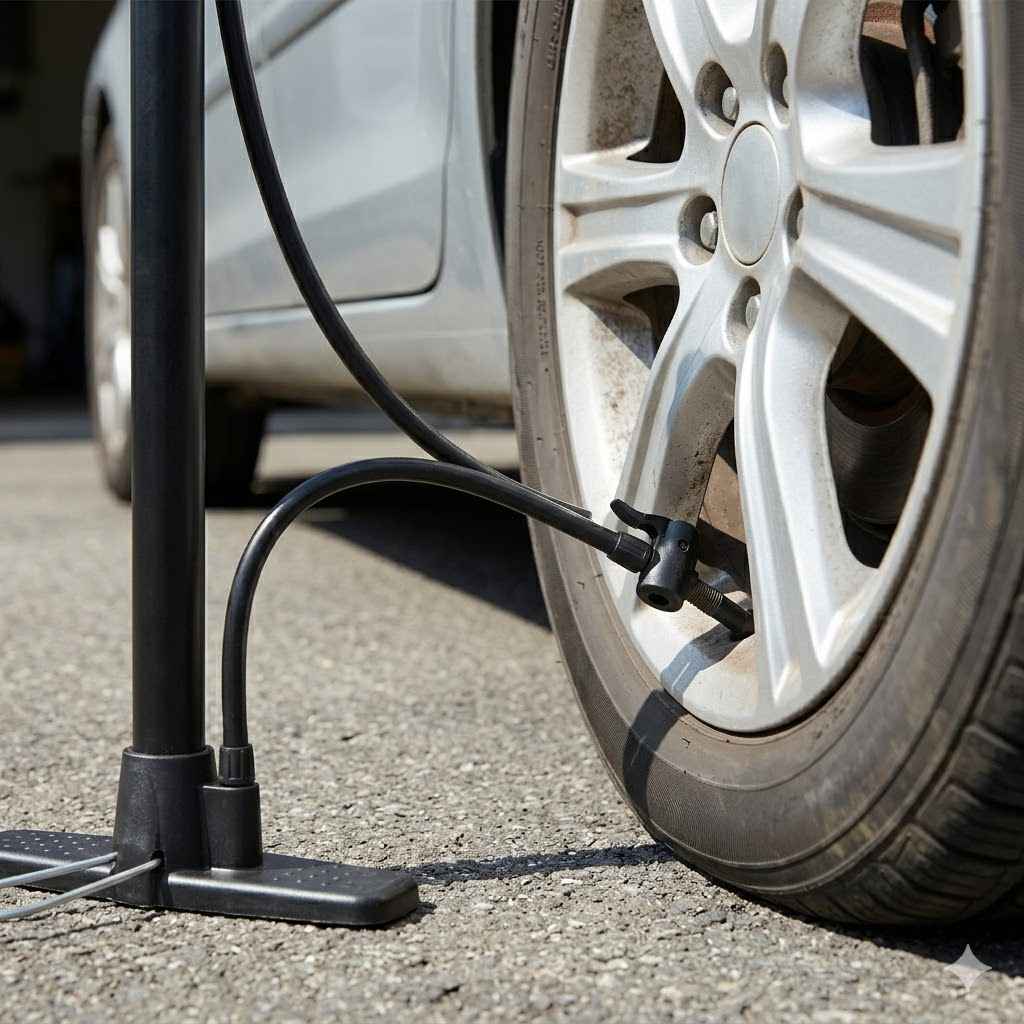
Yes, you absolutely can connect a bike pump to a car tire. Most bike pumps have a universal valve head that can fit the Schrader valve found on car tires. Schrader valves are the standard type on cars and many bikes.
So, physically, it will connect. The question is, will it work well enough?
Here’s the big difference: car tires need a lot more air than bike tires. Car tires typically need to be filled to pressures between 30 and 35 pounds per square inch (PSI). Some might go a bit higher.
Bike tires, depending on the type, might need anywhere from 50 PSI for a mountain bike to over 100 PSI for a road bike.
So, while a bike pump is designed to reach high pressures for bikes, it’s not designed for the volume of air needed for a car tire. You’ll be pumping a very small amount of air with each stroke. This means it will take a very, very long time to add even a few PSI to a car tire.
We’re talking maybe hundreds, even thousands, of pumps to go from a very low pressure to the recommended level.
Bike Pump vs. Car Tire: The Volume Difference
Bike Tire Volume: Small. Needs high pressure, but not much air overall.
Car Tire Volume: Large. Needs moderate pressure, but a huge amount of air.
Pump Action: Each pump stroke moves a small amount of air. For a car tire, this is like trying to fill a swimming pool with an eyedropper.
My Own Little Adventure with a Bike Pump
I remember one chilly autumn evening. I was heading out to meet some friends. As I walked to my car, I noticed the rear passenger-side tire looked pretty flat.
Ugh. I had a small emergency kit in the trunk, including a basic hand pump for my bike. My mind immediately went to that bike pump.
“Maybe I can just give it a little boost,” I thought. It was dark, cold, and I was already running late.
So, I grabbed the pump. It had a reversible head, perfect for both my bike and, sure enough, my car’s Schrader valve. I attached it.
My first few pumps felt… pointless. I heard air going in, but the tire didn’t look any different. I checked the gauge on the pump.
It barely budged. I kept going. Pump.
Pump. Pump. My arm started to ache.
I could feel sweat beading on my forehead despite the cold. I looked at the tire. Still looked flat.
I checked the gauge again. Maybe 5 PSI higher? It was impossible to tell for sure.
I probably pumped for a good 15 minutes. My arm was burning. I felt so frustrated.
I was supposed to be on my way to dinner, not doing an intense workout just to add a few pounds of air.
That’s when I realized this wasn’t going to work. Not effectively, anyway. I managed to add just enough air to make the tire look slightly less flat, enough to maybe limp to a gas station.
But it was clear this wasn’t a real solution. It was a last-resort, emergency measure that took way too much effort for very little gain. I ended up calling a friend to pick me up so I could get the tire properly inflated at a service station.
That night taught me a valuable lesson about the sheer volume of air cars need!
Why It’s So Much Harder Than Pumping a Bike Tire
The physics are simple, really. Think about the size of a car tire compared to a bike tire. A car tire is like a big balloon, and a bike tire is a much smaller one.
When you pump your bike tire, you’re filling up that smaller balloon. It doesn’t take many strokes to reach a high pressure because there isn’t much space to fill.
Now imagine trying to fill that huge car tire with the same small pump. Each pump adds only a tiny puff of air. To get a car tire from, say, 10 PSI up to 30 PSI, you need to add a significant amount of air.
With a bike pump, this means you are doing a lot of repetitions. Your arm will get tired quickly. Also, many hand pumps are designed for higher pressures, not for moving large volumes of air at lower pressures like you need for a car tire initially.
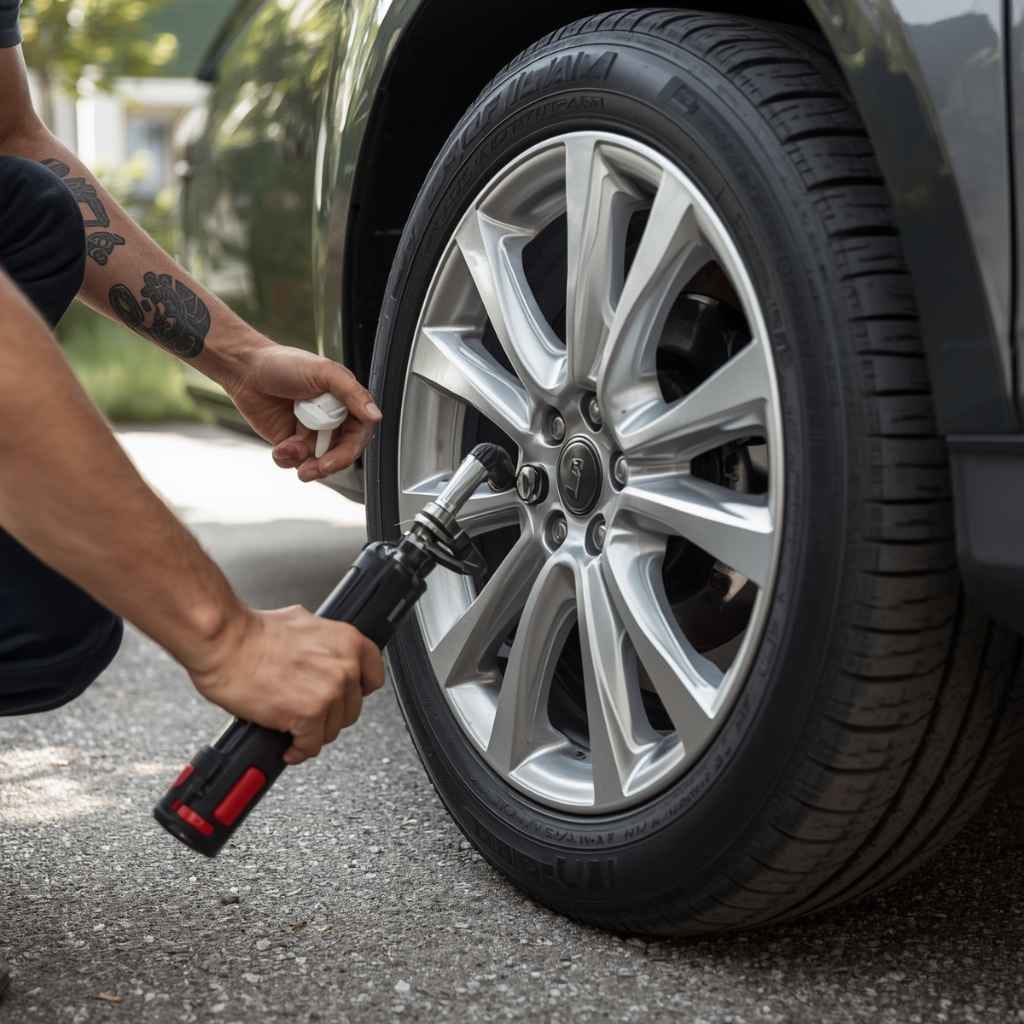
This is why portable air compressors, even small 12-volt ones that plug into your car’s cigarette lighter, are so popular. They have a motor that does the hard work for you. They can move a much larger volume of air much faster, making the job of inflating a car tire quick and easy.
Quick Comparison: Inflation Speed (Estimated)
Hand Bike Pump: 20-60 minutes for one car tire (to reach moderate pressure, arm permitting).
12V Portable Air Compressor: 5-15 minutes for one car tire (to reach correct pressure).
Gas Station Air Pump: 2-5 minutes for one car tire (to reach correct pressure).
When Might a Bike Pump Be Your ONLY Option?
Let’s be honest, sometimes you find yourself in a pickle. You’re on a road trip, far from any service station, and you notice a tire is a bit low. You don’t have a portable compressor.
Your only tool is that trusty bike pump.
In such a situation, a bike pump can be used, but with important caveats. Its primary use in this scenario is for a very minor top-up. If a tire is just a few PSI low, and you need to get it to a safe level to drive to the nearest place to get it fixed, a bike pump can help you get there.
Think of it as an emergency aid, not a solution. You’re not aiming to get the tire to its perfect, recommended PSI. You’re aiming to make it safe enough to travel a short distance.
You’ll likely only be able to add 5-10 PSI this way before your arm gives out or you get frustrated. That might be enough to prevent further damage while you seek proper help.
Emergency Bike Pump Use: Best Practices
- Assess the Situation: Is the tire just a little soft, or is it completely flat?
- Target: Minor Top-Up: Aim to add only a few PSI to make it driveable.
- Check Pressure Often: Stop pumping and check the gauge regularly.
- Prioritize Safety: If it feels unsafe to drive, don’t risk it.
- Head to a Service Station ASAP: This is not a long-term fix.
What to Expect if You Try It
If you decide to use a bike pump on your car tire, be prepared for a workout. You’ll be doing a lot of pumping. You might get about 3-5 PSI of air per minute, and that’s if you’re pumping vigorously.
It will take at least 10-20 minutes to add 10 PSI to a car tire. That’s a significant time commitment.
You also need a pump with a reliable gauge. Many basic bike pumps have small, not-so-accurate gauges. You might think you’re at 30 PSI when you’re actually at 20 PSI, or vice-versa.
This inaccuracy can be a problem, as over or under-inflating your tire can cause issues.
The process can be tiring. You’ll be bending over, working your arms and shoulders. If you have any physical limitations, this might be too much.
It’s definitely not the quick fix some people imagine it to be.
Are There Any Risks Involved?
Using a bike pump on a car tire isn’t inherently dangerous in the way that, say, driving on a completely flat tire is. However, there are some risks and downsides to consider:
- Inaccurate Pressure: As mentioned, cheap gauges aren’t always precise. This can lead to over-inflation (which causes a harsh ride and uneven wear) or under-inflation (which is unsafe and wastes fuel).
- Tire Damage: If you’re pumping for a very long time and the tire is already damaged or has a slow leak, you might worsen the problem without realizing it. Constant, inefficient pumping could potentially stress the tire.
- Valve Stem Damage: While less common, if you’re not careful connecting or disconnecting the pump, you could potentially damage the valve stem, leading to a faster leak.
- Exhaustion and Frustration: The sheer effort involved can lead to giving up too soon or not reaching adequate pressure, leaving you in a suboptimal situation.
- False Sense of Security: You might add just enough air to make the tire look okay, but it might still be dangerously underinflated, leading to a potential blow-out if you drive at high speeds or for long distances.
Myth vs. Reality: Bike Pump for Car Tires
Myth: It’s a quick and easy way to top up your car tires.
Reality: It’s extremely time-consuming and physically demanding. It’s only suitable for very minor adjustments in emergencies.
Myth: Any bike pump will do the job fine.
Reality: The quality of the pump and its gauge significantly impacts the effectiveness and accuracy.
What’s the Alternative? Better Options for Car Tire Inflation
If you’re looking for a more practical way to keep your car’s tire pressure in check, there are much better options than a manual bike pump. These will save you time, effort, and ensure your tires are properly inflated for safety and efficiency.
1. Portable 12V Air Compressors: These are perhaps the most popular choice for car owners. They plug into your car’s 12V power outlet (cigarette lighter).
They have a small motor that inflates the tire for you. Most come with a gauge. They are relatively inexpensive and a great investment.
They can fill a car tire from flat to full in about 5-15 minutes.
2. Gas Station Air Pumps: Most gas stations have air pumps available. Some are free, while others require a small fee.
These are powerful and efficient, designed specifically for car tires. They are the quickest and easiest option if you’re out and about and notice a low tire.
3. Home Air Compressors: If you have a garage, a larger home air compressor can be a good option. These are more powerful and can also be used for other tasks like powering air tools.
They are a bigger investment and take up more space.
4. Tire Pressure Monitoring Systems (TPMS): While not an inflation method, modern cars come with TPMS that alert you when a tire’s pressure is low. Knowing this early helps you address the issue before it becomes critical.
Some advanced systems even show individual tire pressures.
Quick-Scan Table: Tire Inflation Tools
| Tool | Pros | Cons | Best For |
|---|---|---|---|
| Hand Bike Pump | Portable, cheap (if you own one) | Extremely slow, very tiring, often inaccurate gauge | Emergency, tiny top-ups only |
| 12V Portable Compressor | Convenient, affordable, efficient | Requires car power, can be a bit noisy | Regular maintenance, roadside emergencies |
| Gas Station Pump | Fast, powerful, readily available | May cost money, requires a trip to station | Quick top-ups, routine checks |
When is Tire Pressure “Normal” and When Should You Worry?
It’s normal for tire pressure to fluctuate slightly with temperature. A drop of 1-2 PSI for every 10°F (about 5.5°C) change in outside temperature is common. So, if it gets colder, expect your tire pressure to drop a bit.
You should worry if:
- A tire is significantly low: If a tire looks visibly flat or is more than 5 PSI below the recommended level, it needs immediate attention.
- Pressure drops rapidly: If you check your tires and they are low, and then a day or two later they are low again, you likely have a leak that needs fixing.
- Pressure is too high: Over-inflation can be just as bad as under-inflation. It makes the ride bumpy and can cause the tire to wear in the center.
- The tire warning light comes on: Your car’s TPMS is there for a reason. Don’t ignore it.
If you find a tire is consistently losing air, it’s crucial to get it inspected by a tire professional. They can find the leak and repair it properly. Driving on underinflated tires for too long can cause permanent damage to the tire’s internal structure, making it unsafe even after a repair.
Quick Tips for Maintaining Tire Pressure
Keeping your tires properly inflated is easy if you make it a habit. Here are a few simple tips:
- Check Monthly: Make it a habit to check your tire pressure at least once a month.
- Check When Cold: The most accurate reading is when the car has been sitting for at least three hours or driven less than a mile.
- Use the Right Gauge: Invest in a good quality tire pressure gauge. They are inexpensive and far more accurate than most pump gauges.
- Know Your PSI: Always refer to the sticker on your driver’s side door jamb or your owner’s manual for the correct pressure. Remember, it’s not the number on the tire sidewall!
- Don’t Forget the Spare: If you have a spare tire, check its pressure too. It’s no good if it’s flat when you need it!
Frequently Asked Questions About Bike Pumps and Car Tires
Can I use a floor pump for my bike on a car tire?
Yes, a floor pump for a bike typically has a head that fits the Schrader valve on a car tire. However, like a hand pump, it will be very slow and tiring to inflate a car tire. It’s best for very small emergency top-ups.
How much air pressure can a bike pump deliver?
Bike pumps are designed to reach high pressures, often 80-120 PSI or even more for road bike pumps. The issue for car tires isn’t the maximum pressure, but the volume of air moved per pump stroke. Car tires need a lot of air, even at lower pressures.
How long will it take to inflate a car tire with a bike pump?
It can take a very long time, potentially 20-60 minutes or more, to add a significant amount of air (like 10-15 PSI) to a car tire using a manual bike pump. This depends heavily on the pump’s efficiency and your stamina.
Is it better to use a bike pump or walk to a gas station?
If a gas station is within walking distance and the tire is not completely flat, walking to a gas station and using their air pump is almost always a better, faster, and less physically demanding option than using a bike pump.
What is the correct tire pressure for my car?
The correct tire pressure for your car is listed on a sticker located on the driver’s side door jamb. You can also find this information in your car’s owner’s manual. It is usually between 30 and 35 PSI for most cars.
Can over-inflating a car tire with a bike pump cause damage?
Yes, over-inflating a tire can cause it to wear unevenly, lead to a harsher ride, and increase the risk of damage from road hazards. While less likely to over-inflate severely with a manual bike pump due to the effort involved, inaccurate gauges can still lead to incorrect pressures.
Final Thoughts on Pumping Car Tires with a Bike Pump
So, can you fill a car tire with a bike pump? Technically, yes. But is it a good idea for anything more than a dire emergency?
Not really. The time, effort, and potential for inaccurate inflation make it a frustrating and often ineffective solution. For regular tire maintenance, or even for most roadside emergencies, investing in a small 12V portable air compressor is a far more practical choice.
See also car tire won’t go on rim here’s how to fix it fast.
Related pick: Check today's price on Amazon