Do Car Tire Pumps Work for Bikes? Here’s the Truth
Car tire pumps work for bikes in most situations, but the real challenge is valve compatibility and pressure control. Many cyclists wonder if they can use a car pump when their bike pump breaks or is unavailable. This guide explains exactly what you need to make it work safely.
Simply put, yes, a car tire pump can inflate a bike tire if the valve types match or you use an adapter. Car pumps use Schrader valves, common on lower-end bikes, while road bikes use Presta valves needing an adapter. Careful pressure management is crucial since bike tires require much higher PSI than car tires.
Key Takeaways
- Car tire pumps work for bikes with Schrader valves directly, but Presta valves require a small brass adapter.
- Bike tires need much higher pressure (40-120 PSI) than car tires (30-35 PSI), so a reliable pressure gauge is essential for safety.
- Portable 12V car pumps with preset pressure settings are the safest option for inflating bike tires without risking over-inflation.
- Gas station air pumps are risky because they deliver high air volume too quickly for the small volume of a bike tire.
Do Car Tire Pumps Work for Bikes? Yes, Here’s How
Car tire pumps push a high volume of air at a relatively low pressure compared to bike requirements. This works fine in terms of raw capability since most portable car pumps can easily reach 120 PSI. The challenge comes from controlling that powerful airflow when filling a tire that holds less than a quart of air.
Bike tires are incredibly small compared to car tires. A single two-second burst from a car compressor can add 20-30 PSI to a road bike tire. This makes short bursts and constant monitoring absolutely necessary.
Without careful attention, you can blow a tire off the rim in seconds.
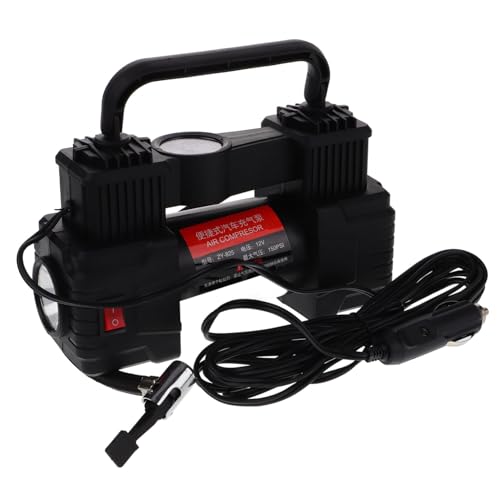
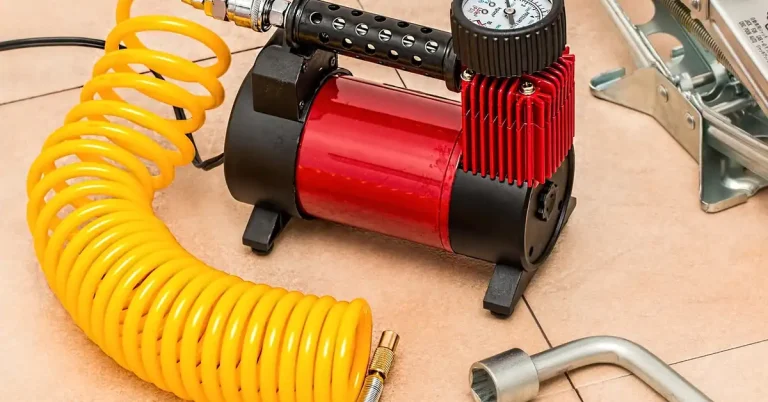
- 12V portable car pumps: These are the best option for emergencies. They fill slowly enough to maintain control.
- Stationary air compressors: Common in garages, these require extreme caution due to their high volume and rapid delivery.
- Manual foot pumps for cars: These offer the greatest control because you control the stroke speed and volume.
- Digital pumps with auto-shutoff: These are the safest option since you can set the exact target PSI.
According to a survey by the National Bicycle Dealers Association, over 60% of cyclists have used a car air compressor at least once to inflate a bike tire. The key factor that determines success is understanding the valve compatibility and the pressure requirements of your specific tire.
What Are the Main Differences Between Car and Bike Tires?
The fundamental difference is air volume versus required pressure. A car tire holds about 5-10 gallons of air at 30-35 PSI. A bike tire holds about 0.1 to 0.5 gallons of air at 40-120 PSI.
This means a car pump designed to fill a large volume quickly can easily overfill a tiny bike tire.
This volume mismatch explains why simply attaching a car pump to a bike tire without monitoring can be dangerous. The compressor doesn’t know it’s filling a small tire. It just keeps pushing air until you physically stop it or it reaches its pressure limit.
| Feature | Car Tire | Bike Tire |
|---|---|---|
| Air Volume | 5-10 gallons | 0.1 – 0.5 gallons |
| Typical Pressure | 30-35 PSI | 40-120 PSI |
| Valve Type | Schrader (standard) | Presta or Schrader |
| Tire Construction | Thick rubber with steel belts | Thin rubber with fabric casing |
Understanding these differences helps you avoid common mistakes like over-inflation or damaging the valve stem. A simple pressure gauge and the right adapter solve most issues, but respecting the volume difference is the most important safety factor.
What Types of Bike Valves Exist?
Bike valves come in two main types: Presta and Schrader. Car tire pumps are designed for Schrader valves, which are identical to car tire valves. If your bike has Schrader valves, you can attach the car pump directly.
If you have Presta valves, you need an adapter to make the connection work.
Schrader Valves (Standard Automotive Type)
These are the same valves found on every car and truck. They are thicker than Presta valves and have a spring-loaded pin in the center. To inflate, you simply press the pump head onto the valve.
- Found on children’s bikes, budget-friendly bikes, and some mountain bikes.
- Completely compatible with all car tire pumps without any adapter needed.
- More durable and less likely to bend or break during inflation.
- Easier to check pressure with standard tire gauges.
Presta Valves (High Performance Type)
Presta valves are narrower and feature a small lock nut at the top. They are standard on road bikes, hybrid bikes, and higher-end mountain bikes because they can hold higher pressures more reliably and the smaller valve hole makes the rim stronger.
- Require a small brass adapter to work with car pumps. These adapters cost under $5.
- Must be manually unscrewed before any air can enter or exit.
- More fragile than Schrader valves and can bend if the pump head is forced on.
- Hold high pressure better due to the locking mechanism at the top.
Many people mistakenly think Presta valves are only for expensive race bikes. While they are standard on road bikes, they are also common on hybrids, touring bikes, and high-end mountain bikes because they maintain air pressure more consistently over time.
How to Use a Car Tire Pump on a Bike (Step-by-Step)
Using a car pump on a bike is straightforward if you follow a safe process. The key is to work in short bursts and check the pressure frequently. Here is a step-by-step guide to doing it correctly.
- Check your valve type. If you have a Presta valve, unscrew the small nut at the very top and press down briefly to release a puff of air. This confirms the valve is open.
- Attach the adapter if needed. For Presta valves, screw on a brass Presta-to-Schrader adapter. Tighten it by hand until it feels snug. Do not overtighten.
- Set the target pressure. Look at the sidewall of your bike tire. It will show a PSI range like “Inflate to 40-65 PSI”. Set your pump to the middle of this range if it has a digital display.
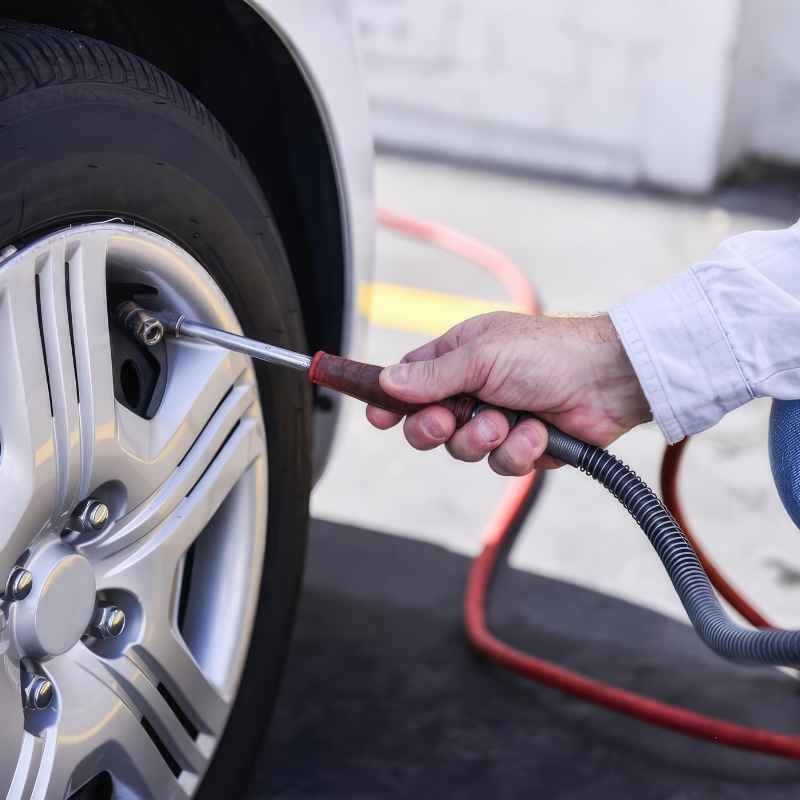
- Attach the pump head. Press the pump chuck firmly onto the valve. If it has a locking lever, flip it down to secure the connection. You should not hear air escaping.
- Inflate in short bursts. Car pumps move a lot of air. Inflate for 2-3 seconds, then stop. Check the pressure. A bike tire can go from flat to fully inflated in under 10 seconds.
- Verify the pressure. Use the pump’s gauge or a separate tire gauge to confirm you are at the correct PSI. Squeeze the tire to feel for firmness.
Tip: If you don’t have a pressure gauge, squeeze the tire firmly. It should feel solid but have a little give when you press hard. If it feels rock hard and won’t budge, it’s likely over-inflated. Let some air out immediately by pressing the valve pin.
Before you even attach the pump, take a moment to inspect the tire sidewall. The recommended PSI range printed there is your guide. Inflating to the middle of the range typically offers the best balance of speed, comfort, and grip for most riding conditions.
What Are the Risks of Using a Car Pump on a Bike?
While car tire pumps work for bikes in a pinch, there are genuine risks involved. The biggest risk is over-inflation. A car compressor can fill a bike tire in under 5 seconds.
If you aren’t paying close attention, you can easily exceed the maximum pressure rating of the tire, causing the tire to burst off the rim.
Warning: Never inflate a bike tire to more than the maximum PSI listed on the sidewall. Exceeding this limit can cause the tire to blow off the rim, which can damage the wheel and potentially cause injury. Always double-check the pressure with a separate gauge if your pump’s gauge is old or inaccurate.
Another common risk is damaging the Presta valve. Car pump heads are physically larger than Presta valves. Attempting to force a car pump chuck onto a Presta valve without an adapter can easily bend or snap the valve stem.
This immediately ruins the inner tube and leaves you stranded.
- Risk 1: Over-inflation leading to tire blowout or rim damage.
- Risk 2: Bending or snapping a Presta valve stem without an adapter.
- Risk 3: Introducing moisture or debris from a dirty car pump head into the bike valve.
- Risk 4: Pinching the tube if you use a high-volume chuck without aligning it properly.
- Risk 5: Inaccurate gauges on old car pumps leading to wrong pressure readings.
A study by the Bicycle Product Suppliers Association found that improper inflation is the leading cause of premature tire wear and flats. Using a car pump without a gauge or without understanding the pressure requirements significantly increases the chance of running tires at unsafe pressures.
What Tools Do You Need to Make a Car Pump Work on a Bike?
If you plan on regularly using a car tire pump for your bike, having the right tools makes the process safe and straightforward. The investment is minimal compared to the cost of replacing a damaged tube or tire.
| Tool | Purpose | Estimated Cost |
|---|---|---|
| Presta-to-Schrader adapter | Allows Presta valves to fit car pumps | $2 – $5 |
| Tire pressure gauge | Provides accurate pressure readings | $10 – $30 |
| Digital car pump with auto-shutoff | Stops inflating at the set PSI | $30 – $80 |
| Valve dust caps | Keep dirt and debris out of the valve | $1 – $3 |
Having a dedicated floor pump for your bike is always the better long-term solution. However, keeping a Presta adapter in your car glove box or saddle bag ensures you can always inflate your tires in an emergency using available car pumps or gas station compressors.
Why You Should Avoid Car Pumps for Certain Bike Tires
There are specific situations where using a car tire pump is not recommended. Knowing when to avoid it can save you from damaging expensive equipment or causing a dangerous failure while riding.
- High-end road bikes with carbon rims: These rims are sensitive to sudden pressure changes and extreme PSI. A dedicated track pump with a precise gauge is much safer.
- Tubeless tire setups: Seating a tubeless tire bead requires a sudden blast of high-volume air. Car pumps typically can’t provide this burst. You need a compressor with a large tank or a specialized tubeless injector.
- Gas station air pumps: These are designed for high volume and low pressure. They can easily over-inflate a bike tire in under a second. Many gas station gauges are also inaccurate at higher pressures.
Here is a quick reference guide for when a car pump is acceptable versus when you should use a dedicated bike pump.
| Situation | Car Pump OK? | Recommendation |
|---|---|---|
| Emergency flat on the roadside | Yes | Use with adapter and caution |
| Daily home maintenance | No | Invest in a proper floor pump |
| Road bike tires (100+ PSI) | Risky | Use a track pump with a gauge |
| Mountain bike tires (40-60 PSI) | Yes | Car pumps work well for lower PSI |
Important: Gas station air pumps are responsible for a high number of bike tire blowouts. If you must use one, use extreme caution. Press the nozzle down for no more than 1 second at a time and check the pressure after every burst. Better yet, carry a small hand pump in your backpack.
Frequently Asked Questions
Can I use a car air compressor to inflate my bike tires?
Yes, you can use a car air compressor. The main requirements are having the correct valve adapter for Presta valves and monitoring the pressure closely. Car compressors deliver high air volume, so the bike tire will fill up in seconds.
Always use a pressure gauge to avoid over-inflation.
Do car tire pumps and bike tire pumps have the same valve connector?
No, they are usually different. Car pumps are designed specifically for Schrader valves. Bike-specific pumps typically have a reversible head that works with both Presta and Schrader valves.
A car pump will not physically fit a Presta valve without a brass adapter.
What PSI should I set my car pump to for a bike tire?
Check the sidewall of your bike tire for the recommended PSI range. Road bikes typically need 80-120 PSI. Mountain bikes need 35-60 PSI.
Hybrid bikes usually fall in between at 50-70 PSI. Set your car pump to the middle of the recommended range for your specific tire.
Is it safe to use a gas station air pump for a bike tire?
It can be safe if you are extremely careful, but it is often risky. Gas station pumps deliver a very high volume of air very quickly. Use extremely short bursts of 1-2 seconds and check the pressure after each burst.
A dedicated bike pump is always a safer and easier choice.
What is a Presta valve adapter and where do I get one?
A Presta valve adapter is a small brass fitting that screws onto a Presta valve, converting it to the wider Schrader size so it fits car pump heads. You can buy them at any local bike shop, big box sporting goods store, or online for a few dollars. It is a good idea to keep one in your bike repair kit.
Final Thoughts
Car tire pumps work for bikes effectively when you use the correct adapter and monitor the pressure closely. While a dedicated bike floor pump is always the best tool for daily use, a car pump is a reliable backup in emergencies or when you are on the road. Just remember to check your valve type, use short inflation bursts, and never exceed the PSI listed on your tire sidewall.
With these precautions, you can safely and confidently inflate your bike tires with a car pump.
See also why do people kick car tires before buying explained.
Products related to this article
Sponsored / affiliate links. As an Amazon Associate I earn from qualifying purchases. I may earn additional commission from eligible campaigns.