Can You Inflate Car Tire With Bike Pump
It’s a common worry. You see your car tire is a bit low. Maybe you’re on a road trip or just heading to work.
The gas station air pump is broken or too far. Then you remember that trusty bike pump in your trunk or garage. You start to wonder, can you inflate a car tire with a bike pump?
It sounds like a simple fix. But is it really that easy? Let’s dive in.
Many of us have been in that spot. That sinking feeling when a tire looks flat. You need air, and fast.
This question pops up because we want practical answers. We don’t want to be stuck. Or worse, damage our car.
We’ll look at what’s really possible. We’ll cover the pros and cons. And when this method might save the day.
Or when it’s just not worth the effort.
Understanding Tire Pressure Needs
Car tires need a specific amount of air. This is called tire pressure. It’s usually measured in PSI (pounds per square inch).
Your car’s door jamb or owner’s manual tells you the right PSI. Cars have big, heavy tires. They carry a lot of weight.
They need a good amount of air to do their job well.
Bike tires are much smaller. They don’t carry as much weight. They need less air.
But sometimes, they need a good amount of pressure too. Think of road bike tires. They can be inflated quite a bit.
This is where some confusion might start. Both use air. But the scale of the job is very different.
Proper tire pressure is key for safety. It helps with how your car handles. It affects your brakes.
It also helps your tires wear evenly. Plus, it saves you gas. Underinflated tires waste fuel.
Overinflated tires can be dangerous. They can lead to a bumpy ride and tire damage.
When you look at a car tire, it’s big. It’s made of thick rubber. It holds a lot of air.
Think about how much effort it takes to inflate one. Compare that to a bike tire. They are much thinner.
They hold less air. This size difference is a big clue.
Bike pumps are designed for smaller volumes. They are built to get a bike tire up to pressure. They are often manual.
You use your own strength. Some are electric. But they are still small.
They are meant for smaller jobs. This is important to remember.
So, the question isn’t just about air. It’s about the volume of air. And the pressure needed.
And the tool you’re using. We need to match the tool to the task. Can a small tool handle a big job?
Sometimes. But usually not perfectly.
My Own Tire Scare
I remember one crisp autumn morning. I was rushing to an important client meeting. I stepped outside, keys in hand, and saw it.
My front passenger tire looked sad. It was definitely lower than the others. Panic started to bubble up.
The meeting was in an hour. The nearest gas station air pump was a good 15-minute drive away.
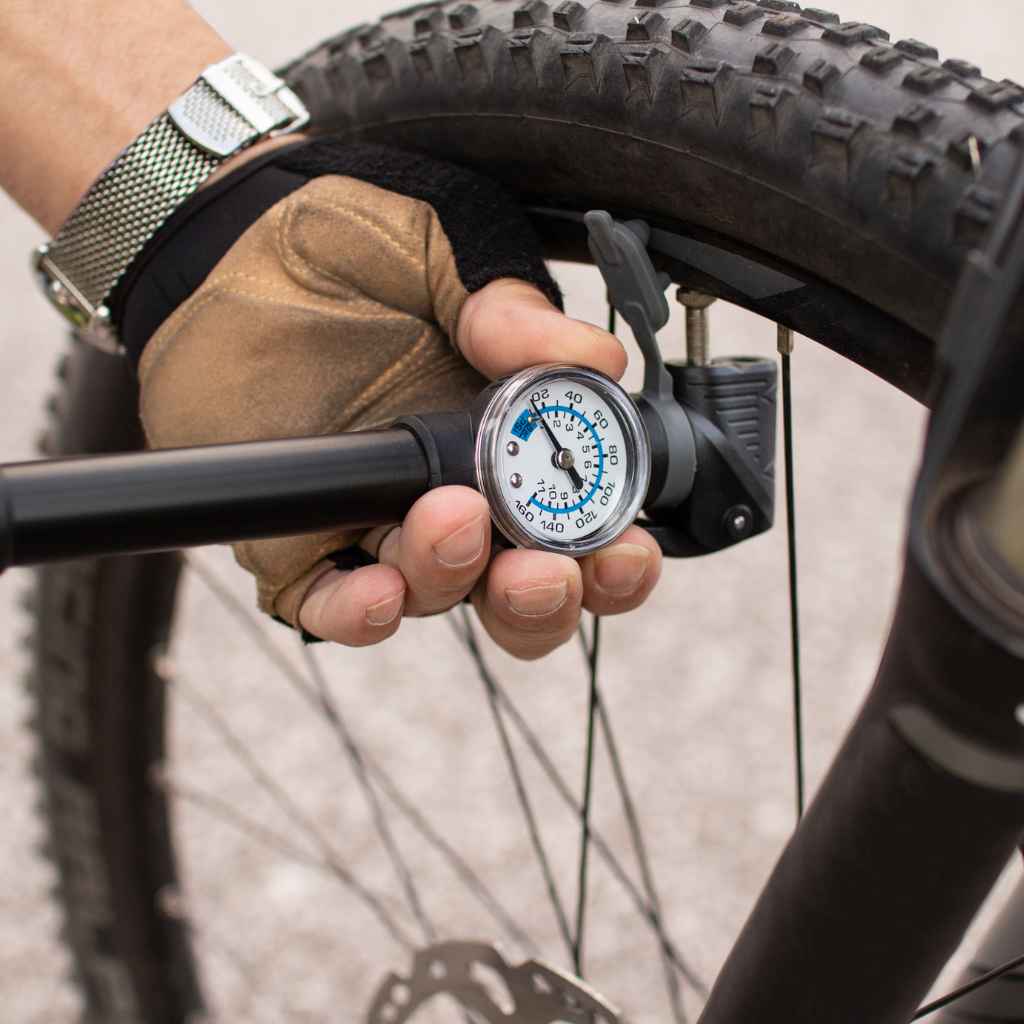
I dashed back inside and grabbed the portable bike pump I kept in the trunk. It was a decent hand pump, the kind with a little pressure gauge. I’d used it for my bike tires countless times.
It always got them to the right firmness. I figured, “How different can it be?” I hurried back to the car.
Getting the pump onto the car’s valve stem was the first hurdle. Car valves and bike valves are similar. But sometimes the fit isn’t perfect.
I fiddled with it. It seemed to connect. Then I started pumping.
And pumping. And pumping. My arm started to ache almost immediately.
The gauge on the pump barely moved.
After about five minutes of furious pumping, I checked the gauge. It had gone up maybe 2 PSI. The tire still looked very low.
I realized this was going to take forever. And a lot of effort. I was sweating.
My arm was burning. And I was still nowhere near ready for that meeting.
It was a moment of stark realization. The bike pump was designed for a small volume. A car tire is a big volume.
It holds so much more air. My little pump just couldn’t keep up. I had to make a tough call.
I ended up calling roadside assistance. It was embarrassing. And it made me late.
But it was the only way to get the car safely inflated.
That experience taught me a lot. It showed me that while the basic principle is the same, the scale matters. A lot.
It also showed me that a bike pump isn’t a magic fix for a car tire emergency. It’s good for small top-offs on bikes. But for a car?
It’s a whole different ballgame.
The Mechanics: Pump Size vs. Tire Volume
At its heart, inflating a tire is about moving air. A pump creates pressure. It pushes air into a confined space.
The space here is your car tire. Car tires are much, much larger than bike tires. This is the biggest factor.
Think about it this way. A small bicycle tire might hold 50 PSI. A typical car tire might need 30-35 PSI.
That sounds like less pressure for the car. But the volume of air is huge. A car tire has a much bigger air capacity.
It’s like comparing a teacup to a bathtub. You need a lot more water to fill the tub.
A manual bike pump has a small cylinder. It has a piston inside. Each pump stroke moves a small amount of air.
To get enough air into a car tire, you’d need thousands of these strokes. Your arm would give out long before the tire was properly inflated.
Even electric bike pumps, while faster than manual ones, are still designed for that smaller volume. They have smaller motors and compressors. They can’t move the large quantity of air needed for a car tire quickly or efficiently.
Car tire pumps, like those at gas stations or portable 12-volt pumps, have much larger cylinders or compressors. They are built to move a significant volume of air. This allows them to inflate a car tire in a matter of minutes, not hours.
So, yes, in theory, you can use a bike pump. You could technically fill a car tire if you pumped long enough. But it’s not practical.
It’s not efficient. And it’s very, very tiring. It’s like trying to fill a swimming pool with a watering can.
You might eventually succeed, but it’s a monumental task.
The pressure gauge on your bike pump might show it reaching 60 or even 100 PSI. This can be misleading. It shows the maximum pressure the pump can create.
It doesn’t show how much air volume it can deliver. You need both volume and pressure. For a car, the volume is the harder part for a small pump.
Can You Inflate a Car Tire with a Bike Pump? The Short Answer
While technically possible to add a small amount of air to a car tire with a bike pump, it is highly impractical for significant inflation. You would need to pump for an extremely long time, and it’s unlikely you could reach the necessary pressure or volume for safe driving, especially from a very low tire. It’s best suited for tiny top-offs on a bicycle, not a car.
The Practical Reality: What Happens If You Try?
Let’s be clear. If your car tire is only slightly low, like maybe 2-3 PSI down, and you have a very robust, high-volume bike pump, you might be able to add a little bit of air. It will take a lot of effort.
You will be pumping for a long time. The pressure gauge on the pump will show some increase.
However, most situations where you’re asking this question involve a tire that’s more than just a little bit low. Maybe it’s visibly flat. Or it’s lost a significant amount of air.
In these cases, a bike pump is simply not going to cut it.
You will spend a long time pumping. Your arms will get very tired. You might not even make a noticeable difference.
The tire might still look flat. And you might not reach the recommended PSI. Driving on an underinflated tire is dangerous.
It can cause the tire to overheat. This can lead to a blowout. The car will be harder to control.
Your fuel economy will drop. So, trying to force it with a bike pump when the tire is very low is not a good idea.
Think about the effort involved. A manual bike pump might deliver maybe 5-10 cubic inches of air per stroke. A car tire can hold upwards of 1500 cubic inches of air.
That’s a massive difference. You’d need hundreds, possibly thousands, of strokes.
Even an electric bike pump, which is faster, is still in the same league. It’s designed for the smaller volume of a bike tire. It’s not designed for the large demands of a car tire.
What if you have a very high-quality, large-volume manual bike pump? Some are built for better performance. They might have a larger barrel.
Or a better piston seal. Even with one of these, it’s still a tough job for a car tire.
The biggest challenge is the sheer volume of air required. You can achieve high pressure with a small pump. But you can’t move enough air volume to fill a large space quickly.
This is why specialized car tire inflators exist. They have the power and volume needed.
So, while the physics aren’t impossible, the practicality is extremely low for anything more than a very minor top-off. You’re better off finding another solution if the tire is significantly low.
Bike Pump vs. Car Tire: A Quick Look
Bike Pump Strength: Good for small volumes, portable, often manual (no power needed).
Bike Pump Weakness: Very low air volume per stroke, requires immense effort for large tires, slow.
Car Tire Need: Large air volume, moderate pressure (30-35 PSI), quick inflation for safety.
The Mismatch: A bike pump’s low volume struggles to fill a car tire’s large capacity.
When It Might (Barely) Work: The Tiny Top-Off Scenario
There are very specific times when a bike pump might be useful for a car tire. This is not for a flat tire. This is not for a tire that’s lost a lot of air.
This is for a situation where the tire is just a few PSI low. Maybe you checked it this morning and saw it was 30 PSI. You want it at 32 PSI.
And you’re away from a gas station. In this exact scenario, a bike pump could help.
You would connect the pump. You would start pumping. It would still take effort.
But you’re only adding a small amount of air. You’re not trying to fill an empty space. You’re just nudging the pressure up a bit.
You would need to be patient. You’d pump for a few minutes. You’d check the gauge often.
You would stop when you reach the desired pressure. Even then, you might need to pump very hard to get the last few PSI.
This is where a pump with a reliable pressure gauge is important. If your bike pump doesn’t have one, you’re guessing. And guessing with tire pressure is not safe.
You need to know the PSI.
For this to work, you also need a good seal on the valve stem. Some bike pump adapters fit car valves better than others. If it leaks air as fast as you pump it in, you’re wasting your time.
So, if your tire is only slightly low, and you have a good bike pump with a gauge, and you are willing to put in a good amount of effort, you might be able to bring it up a few PSI. It’s a last resort option. It’s not ideal.
But it’s better than driving on a slightly low tire.
Why Car Tire Inflation is Different
Car tires are designed for high speeds and heavy loads. They need to maintain their shape and support the vehicle. This requires a specific amount of air pressure.
This pressure is achieved by a pump that can deliver a large volume of air.
The internal structure of car tires is also much more robust. They have thicker sidewalls. They are built to withstand more stress than a bike tire.
This also means they can hold more air. And it takes more air to fill them.
Consider the valve stems. Car valve stems are usually brass. They are designed to withstand the higher pressures and continuous use.
Bike valve stems can be brass or rubber. Rubber stems are common on lower-pressure bikes. They might not be as durable for car use.
The connection between the pump and the valve is also critical. A good car tire inflator will have a chuck that securely grips the valve stem. This ensures no air leaks during inflation.
Bike pumps sometimes come with adapters. But these might not create a perfect seal on a car valve.
The pressure required for a car tire, even if it’s 30-35 PSI, needs to be sustained. A bike pump is good at reaching high pressures for small volumes. But maintaining a high pressure in a large volume is a different challenge.
It requires continuous air delivery.
Think about a car tire deflation. If a car tire blows out, it loses all its air very quickly. This is a lot of air escaping.
A bike pump, even a powerful electric one, is nowhere near capable of replacing that volume of air in a reasonable time. It would take hours.
This is why portable 12-volt car tire inflators are so popular. They plug into your car’s power outlet. They have a small compressor.
They can fill a car tire in a few minutes. They are designed for the volume and pressure needs of a car.
They are also relatively inexpensive. For the peace of mind and convenience they offer, they are a worthwhile investment for any car owner. They offer a practical solution to a common problem.
A bike pump, for car tires, is generally not that solution.
Key Differences: Bike vs. Car Tires
- Volume: Car tires hold much more air.
- Pressure: Similar or sometimes lower PSI for cars, but more volume.
- Construction: Car tires are more robust for heavier loads.
- Inflation Tools: Car pumps deliver high volume quickly; bike pumps deliver low volume slowly.
Alternatives to Using a Bike Pump for Car Tires
If you find yourself with a low car tire and no gas station air, what should you do? Relying on a bike pump is a risky plan. Here are better alternatives.
1. Portable 12-Volt Car Tire Inflator: This is the best option. These small compressors plug into your car’s cigarette lighter.
They are designed for car tires. They can inflate a tire in minutes. Many come with a pressure gauge.
They are relatively cheap and small enough to keep in your trunk.
2. Tire Sealant and Inflator Cans: These cans contain a sealant that fills small punctures. They also inject air to inflate the tire.
They are a temporary fix. They can help you get to a repair shop. Read the instructions carefully.
Some sealants can damage tire pressure monitoring systems (TPMS).
3. Run Flat Tires: If your car has run-flat tires, you can drive a limited distance on a flat tire. Check your car’s manual for specifics.
This is for emergencies only. You still need to get the tire repaired or replaced soon.
4. Roadside Assistance: If you have a roadside assistance plan (like AAA or through your insurance), call them. They can send someone to inflate your tire, or tow you to a service center.
5. Spare Tire: If your car has a spare tire, you can use it. This involves taking off the flat tire and putting on the spare.
This is a more involved process. Make sure you know how to change a tire safely. Spare tires are usually temporary and require you to drive at reduced speeds.
Trying to use a bike pump for a significantly low car tire is not a reliable or safe solution. It’s important to have a proper tool for the job. Or to know your emergency options.
When Is It Okay to Worry About a Low Tire?
You should always pay attention to your car’s tire pressure. Sensors on your dashboard can alert you. But sometimes a tire can lose air slowly without the warning light coming on.
Here’s when you should definitely worry:
- Visibly Flat or Low Tire: If a tire looks flat, or is much lower than the others, it needs immediate attention. Do not drive on a flat tire unless you have run-flats and are following specific guidelines.
- Tire Pressure Light On: This light means one or more tires are significantly underinflated. Find a safe place to check your tire pressure and add air if needed.
- Sudden Loss of Pressure: If you feel your car pulling to one side, or the steering feels strange, you might have lost air rapidly. Pull over safely and check your tires.
- After Hitting Something: If you hit a pothole, curb, or debris, your tire could be damaged. Check its pressure afterward.
- Slow Leaks: If your tire consistently loses pressure over a few days, even after adding air, it has a slow leak. This needs to be inspected by a professional.
A bike pump isn’t the tool for these situations. Its limitations make it unsuitable for anything beyond a minor nudge in pressure.
Quick Tire Pressure Checks
When to Check: Regularly, and especially if the warning light comes on.
Tools Needed: Tire pressure gauge, air source.
Target PSI: Check your car’s door jamb or manual.
Action for Low Tire: Add air immediately. Use a proper car inflator if possible.
The Role of Tire Pressure Monitoring Systems (TPMS)
Most modern cars come with a Tire Pressure Monitoring System (TPMS). This system uses sensors in each wheel. They measure the air pressure inside the tire.
If the pressure in a tire drops too low, the TPMS warning light will appear on your dashboard. This is a critical safety feature. It alerts you to a potential problem before it becomes dangerous.
The TPMS light usually looks like a flat tire with an exclamation mark inside it. It’s important to take this light seriously. It means your tires need air or there’s a leak.
When the TPMS light comes on, you should find a safe place to check your tire pressure. Use a reliable tire pressure gauge. Add air as needed.
Some TPMS systems need to be reset after you add air. Your car’s manual will explain how to do this.
While TPMS is a great warning system, it doesn’t inflate your tires for you. It just tells you when they are low. You still need a way to add air.
This is where a portable car tire inflator is invaluable.
A bike pump can’t interact with the TPMS system. If your TPMS light is on, and you try to use a bike pump, you’ll still face the same volume and time limitations. You might add a little air, but it might not be enough to turn off the light if the tire is very low.
So, TPMS is a great reminder. But it doesn’t replace the need for proper tire inflation tools. It highlights the importance of maintaining correct tire pressure.
Final Thoughts on Bike Pumps and Car Tires
So, to sum it up, can you inflate a car tire with a bike pump? Technically, yes, for a very small amount of air. Realistically, no, not for any significant inflation.
The sheer volume of air needed for a car tire is far beyond the capability of a typical bike pump.
Trying to do so will likely result in frustration, exhaustion, and a barely-inflated tire. It’s not a safe or practical solution for a car. It’s like trying to fill a swimming pool with a teaspoon.
My own experience taught me this firsthand. It’s a lesson learned the hard way. Always have the right tool for the job.
For car tires, invest in a portable 12-volt tire inflator. Keep it in your car. It’s a small price to pay for safety and peace of mind.
It ensures you can handle low tire pressure situations effectively and safely.
Frequently Asked Questions About Bike Pumps and Car Tires
Can I use a bike pump to inflate a car tire if it’s completely flat?
No, it is not practical to inflate a completely flat car tire with a bike pump. The volume of air needed is immense, and a bike pump cannot deliver it quickly or efficiently. You would need to pump for an extremely long time, likely without reaching sufficient pressure.
How long would it take to inflate a car tire with a manual bike pump?
It would take an extremely long time, potentially many hours, and a huge amount of physical effort to inflate a car tire with a manual bike pump. This is because the pump delivers a very small volume of air with each stroke. It is not a feasible method.
What is the difference between car tire pressure and bike tire pressure?
While car tires often have lower PSI (around 30-35 PSI) than some high-pressure bike tires (which can go up to 100+ PSI), car tires have a much larger volume. Therefore, they require significantly more air to inflate. The challenge for a bike pump is the volume, not just the pressure.
Are there any adapters to make a bike pump work better for car tires?
Yes, some bike pumps come with universal adapters or specific attachments for car valve stems (Schrader valves). However, even with an adapter, the fundamental limitation of the pump’s low air volume per stroke remains. It may improve the connection, but not the speed or feasibility of inflating a car tire.
If my car tire is slightly low, can a bike pump get it to the correct PSI?
Possibly, if the tire is only a few PSI low and you have a good quality bike pump with a reliable pressure gauge. It will still require significant effort and time. However, it’s not a guaranteed method, and it’s crucial to monitor the pressure accurately. A portable car tire inflator is a much better tool for this.
What should I do if my car tire is low and I don’t have a car inflator?
If your tire is significantly low and you don’t have a car inflator, your best options are to use your spare tire (if you know how and are comfortable), call roadside assistance, or drive slowly and carefully to the nearest service station or tire shop. Do not rely on a bike pump for a seriously low car tire.
See also where does car tire air go why tires lose pressure slowly.