Pros And Cons Of Car Tire On Motorcycle
Putting a car tire on a motorcycle is generally not recommended due to significant safety risks. Car tires are designed for different vehicle dynamics, weight distribution, and tire profiles. Using one on a motorcycle can lead to poor handling, reduced braking ability, and an increased chance of accidents. It’s crucial to use tires specifically made for motorcycles to ensure rider safety.
What’s the Big Difference? Tires Aren’t Just Round and Black
You might think a tire is a tire. They all hold air, they all touch the road. But when it comes to cars and motorcycles, they are worlds apart.
The shape, the way they are built, and what they are expected to do are totally different. This difference matters a lot for how your ride feels and, more importantly, how safe you are.
A car tire is flat. It has a wide, square-like shape on top. This is perfect for a car that weighs a lot and moves mostly straight.
Cars have four points of contact with the road, giving them stability. They don’t lean into turns the way a motorcycle does.
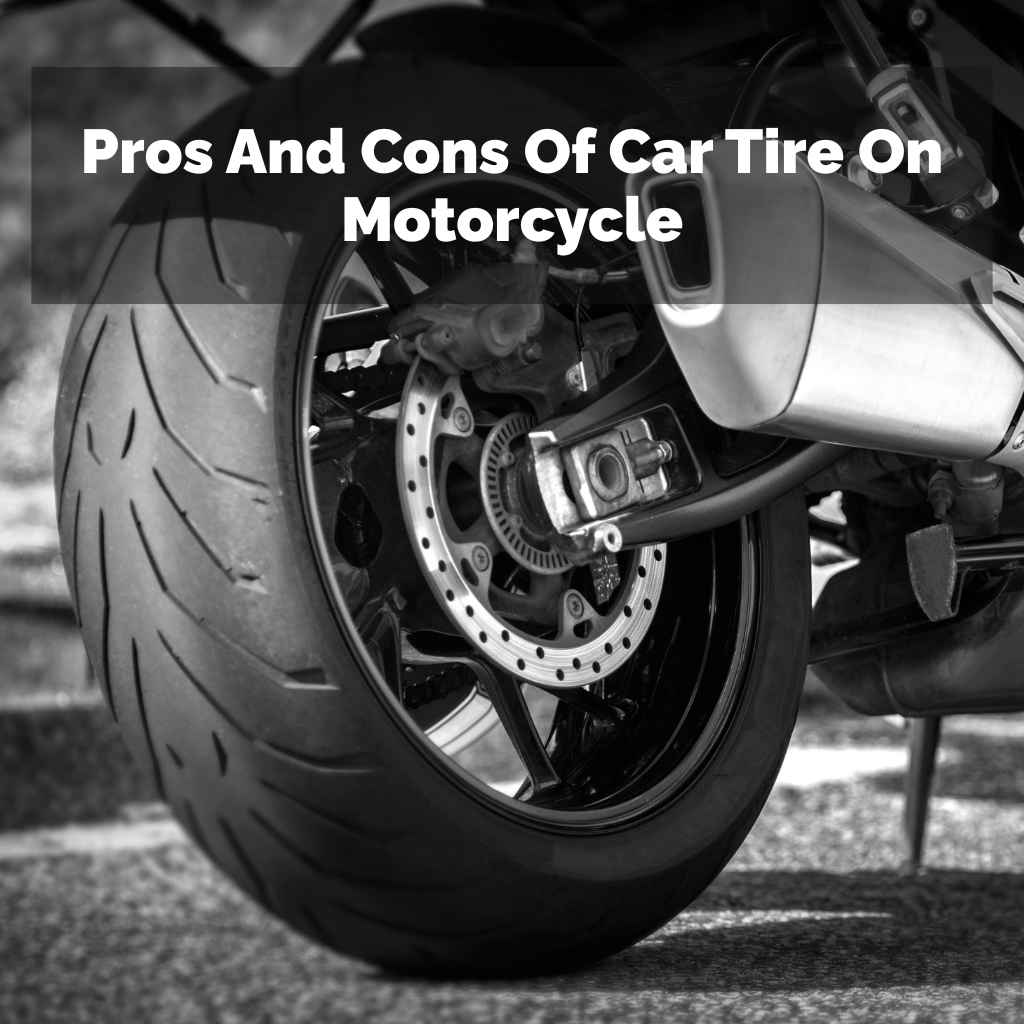
A motorcycle tire is round. It has a curved profile. This round shape is what lets your motorcycle lean into corners.
When you tilt your bike, the round tire lets you keep a consistent contact patch with the road. This is key for safe turning and control. A car tire’s flat shape just can’t do this well.
Why Would Anyone Even Think About This? The “Pros” That Aren’t
Okay, let’s be fair. People don’t just dream up bad ideas for no reason. There are some perceived benefits that might lead someone to consider a car tire.
Understanding these helps us see why the idea pops up.
One common thought is cost. Car tires are often cheaper than motorcycle tires. They are made in huge numbers for cars, so their prices can be lower.
For someone on a tight budget, this can seem like a smart way to save money.
Another reason is availability. If you’re out on a long trip and your motorcycle tire gets damaged, finding a car tire might seem easier in some remote areas. A car is a more common vehicle, so its parts might be more common too.
Some folks might also think a car tire is tougher. They are built to carry more weight and take more abuse from rough roads. This can make a motorcycle rider think it will last longer and be more durable on their bike.
Finally, there’s the idea of better grip in straight lines. Because car tires are wider and flatter, some people believe they offer more rubber on the road for acceleration and braking when going straight. This seems logical, but it ignores how motorcycles actually work.
Car Tire vs. Motorcycle Tire: Key Design Differences
Shape:
- Car Tire: Flat, square tread surface.
- Motorcycle Tire: Rounded, curved tread surface.
Purpose:
- Car Tire: Stability for straight-line travel, load bearing.
- Motorcycle Tire: Lean angle control, turning stability.
Construction:
- Car Tire: Designed for different sidewall flex and load distribution.
- Motorcycle Tire: Tuned for rider input and lean dynamics.
The Harsh Reality: Why It’s a Terrible Idea
Now, let’s get to the important part. Those supposed “pros” quickly disappear when you look at the serious dangers. Putting a car tire on a motorcycle isn’t just a little compromise; it’s a fundamental misunderstanding of physics and safety.
It affects almost every aspect of your ride.
Handling Takes a Huge Hit
This is the biggest problem. Motorcycles are designed to lean. When you turn your handlebars, you also lean your body.
This lean is what allows the motorcycle tire to maintain grip. A car tire, with its flat profile, doesn’t let you lean safely. When you try to lean, the tire might only be touching the road on its edge, or not at all.
Imagine trying to balance a bowling ball on a flat plate. It wobbles and doesn’t feel stable. Now imagine balancing a basketball on a small ring.
It’s designed to be stable in that position. A motorcycle tire is like the basketball on the ring; it’s built for leaning. A car tire is like the bowling ball on the flat plate; it’s not meant for that kind of dynamic movement.
This lack of proper lean means your motorcycle won’t steer predictably. Turns can feel sluggish or jerky. High-speed maneuvers become terrifying.
Even simple lane changes can feel unstable and frightening. Your bike might feel like it’s fighting you, or worse, like it’s about to slide out from under you.
Braking Becomes Dangerous
When you brake, especially hard, you need your tires to grip the road firmly. The way a car tire interacts with the road surface is different from a motorcycle tire. A car tire’s flat tread isn’t designed to shed water or debris in the same way a motorcycle tire is, which can lead to hydroplaning.
Also, the load distribution when braking is different. On a motorcycle, braking force is transferred through the tires in a specific way. A car tire might not handle these forces correctly.
This can mean your stopping distances are much longer than they should be. In an emergency, those extra feet can be the difference between a close call and a serious crash.
Think about it: you rely on your tires for grip in all conditions. If that grip is compromised, especially during braking, you’re putting yourself in a very vulnerable position. You lose the confidence to react quickly when you need to.
Sidewall Stress and Tire Wear
Car tires and motorcycle tires are built differently inside. They have different types of cords and different ways of flexing. A car tire is designed to support weight from above and resist sideways forces from bumps.
It’s not built to withstand the constant leaning and flexing a motorcycle puts it through.
When you lean a motorcycle, the sidewall of the tire is put under stress in ways it was never meant to handle. This can cause the tire to overheat, deform, or even fail catastrophically. The tire might start to peel apart or blow out without much warning.
This is incredibly dangerous, especially at speed.
The wear pattern on a car tire on a motorcycle will also be all wrong. You might wear out the center of the tire very quickly if you ride mostly straight. Or, if you do manage to lean, you’ll wear the edges unevenly and dangerously.
It simply won’t last as long or wear as predictably as a proper motorcycle tire.
Real-World Scenario: A Leaky Tire Surprise
I remember a friend, let’s call him Mark, who was on a cross-country trip. His rear motorcycle tire started losing air faster than he liked. He was in a small town with only one garage.
The mechanic there, trying to be helpful, suggested a car tire from a junked minivan. Mark, tired and wanting to keep moving, agreed. He said the bike felt “weird” from the start.
Every turn felt like he was pushing a heavy box. He got maybe 50 miles before the tire developed a huge bulge on the sidewall. He was lucky it didn’t blow out on the highway.
He learned a hard lesson that day about using the right parts.
It’s Not Just About You: The Impact on Others
When you ride a motorcycle, your choices don’t just affect you. They affect other drivers, passengers, and pedestrians. Using the wrong tires makes your motorcycle less predictable and harder to control.
This increases the risk of causing an accident that could involve innocent people.
If your bike slides out because the tires can’t handle a lean, you could go into another lane, hit another vehicle, or even crash into a crowd. The consequences of using incorrect equipment can be devastating, not just for the rider but for everyone around them.
Responsible riders always prioritize safety. This includes using parts that are specifically designed for their vehicle. That means motorcycle tires for motorcycles, car tires for cars.
It’s a simple rule, but it’s one that saves lives.
What Does This Mean for Your Motorcycle?
If you’re considering putting a car tire on your motorcycle, you need to understand what it truly means for your bike’s performance and safety. It fundamentally changes how your motorcycle behaves.
Compromised Cornering Ability
This cannot be stressed enough. Motorcycles lean. They are designed to be leaned.
A car tire will prevent you from leaning properly. This means slower cornering speeds, wider turning arcs, and a general feeling of instability when turning. You won’t be able to take turns as confidently or as sharply as you should.
Unpredictable Braking
Your braking distances will increase. The grip will be less reliable, especially in wet conditions. The tire might lock up more easily.
This reduced braking performance puts you at a significant disadvantage, particularly in traffic or emergency situations.
Increased Risk of Tire Failure
As mentioned, car tires aren’t built for the stresses of motorcycle riding. They can overheat, deform, and fail suddenly. A blowout at highway speeds can be catastrophic.
This is a risk no rider should ever take.
Myth vs. Reality: Car Tires on Motorcycles
Myth: Car tires are stronger and will last longer.
Reality: While car tires are robust, they are not designed for the specific stresses of motorcycle lean angles and tire profile. This can lead to premature wear on the edges or center, and a higher risk of catastrophic failure due to flexing incorrectly.
Myth: A wider car tire means better grip.
Reality: Wider tires on cars are for distributing weight over a larger surface area. On a motorcycle, a flat, wide tire prevents the lean needed for proper cornering grip. The rounded profile of a motorcycle tire is essential for maintaining a consistent contact patch during turns.
Myth: It’s a cost-saving solution.
Reality: The potential cost of an accident caused by using the wrong tires far outweighs any initial savings. Motorcycle tires are an investment in safety.
When Is It Maybe Okay? (Spoiler: Rarely)
There are very, very few circumstances where this might even be considered, and even then, it’s highly inadvisable. Some older, very specific trike conversions or specialized industrial vehicles might use automotive tires, but these are not standard motorcycles.
Some people might experiment with very small scooters or certain custom builds. But for the vast majority of motorcycles – anything you ride on public roads for commuting, touring, or recreation – using a car tire is dangerous.
Even if you only ride in a straight line, which is almost impossible to do 100% of the time, the tire’s construction is still a major concern. It’s not just about the tread pattern; it’s about the entire tire’s integrity under different forces.
Quick Scan: Motorcycle Tire Must-Haves
Correct Size: Fits your rim diameter and width perfectly.
Correct Profile: Rounded for leaning and turning.
Correct Load Rating: Can support the weight of your bike and rider.
Correct Speed Rating: Can handle the speeds you ride.
Motorcycle-Specific Compound: Designed for motorcycle use.
So, What Should You Do Instead?
If you need new tires, or your current ones are worn, stick to what’s designed for your motorcycle. This is the most important thing you can do for your safety.
Choose Tires Made for Your Bike
Visit a reputable motorcycle shop. Talk to the mechanics and sales staff. They can help you find tires that are the right size, type, and compound for your specific motorcycle model and your riding style.
There are tires for sport bikes, touring bikes, cruisers, and off-road bikes. Each is engineered for a different purpose.
Check Your Tire Pressure Regularly
Proper tire pressure is crucial for handling, tire wear, and fuel efficiency. Over or under-inflated tires can be dangerous. Check your owner’s manual for the recommended pressures and use a reliable gauge.
Inspect Your Tires Often
Get in the habit of looking at your tires before you ride. Check for any cuts, bulges, embedded objects, or signs of uneven wear. If you see anything concerning, get it checked out by a professional immediately.
Understand Tire Lifespan
Motorcycle tires don’t last forever. They wear out with use, but they also degrade over time due to exposure to sunlight, heat, and air. Most manufacturers recommend replacing tires after about five years, even if they look okay, because the rubber can become brittle.
Rider’s Checklist: Safe Tire Practices
Inspect Daily: Look for obvious damage.
Check Pressure Weekly: Use a reliable gauge.
Clean Wheels: Remove debris that can damage tires.
Avoid Potholes: They can damage rims and tires.
Know Your Tread Depth: Replace before it’s too low.
Consider Age: Replace tires every 5-6 years, regardless of wear.
Frequently Asked Questions
Can I put a tire from a different type of motorcycle on my bike?
It’s generally best to use tires designed for your specific motorcycle type (e.g., sportbike tires on a sportbike). While some overlap might exist, using tires with incorrect sizing, profile, or load rating can compromise handling and safety. Always consult your owner’s manual or a professional.
Are front and rear motorcycle tires interchangeable?
No, front and rear motorcycle tires are designed differently. They have specific tread patterns, constructions, and often directional markings to ensure proper performance and safety when installed on the correct wheel. Rear tires typically handle more torque and weight.
How do I know when my motorcycle tires need replacing?
Look for worn tread patterns that are flat across the tire, visible tire cords, cracks or cuts in the sidewalls, or any bulges. Also, consider the age of the tire; rubber degrades over time. Most manufacturers recommend replacement after about five years.
Will a car tire make my motorcycle ride smoother?
While a car tire might feel different, it’s unlikely to make the ride smoother in a positive way. The compromise in handling and stability will likely make the ride feel much rougher and more unpredictable. The specialized suspension and tire profile of a motorcycle are designed to work together.
What are the risks of a tire blowout on a motorcycle?
A tire blowout on a motorcycle is extremely dangerous. It can cause a sudden loss of control, leading to high-speed wobbles, the bike veering sharply, or even flipping. The rider can be thrown from the motorcycle, resulting in severe injuries or fatalities.
Can I use a used motorcycle tire?
Using used motorcycle tires can be risky. You don’t know the tire’s history, including potential unseen damage, age, or past improper storage. It’s always safer to buy new tires from a reputable dealer to ensure their integrity and performance.
The Bottom Line: Safety First, Always
When it comes to motorcycle tires, there are no shortcuts. The perceived benefits of using a car tire are far outweighed by the serious risks to your safety and the safety of others. Your motorcycle is a finely tuned machine, and every part, especially the tires, plays a critical role in its performance and stability.
Always use tires specifically designed for motorcycles. They are engineered to handle the unique demands of two-wheeled travel, allowing you to lean, turn, and stop safely. Don’t gamble with your life; invest in the right tires for your ride.
See also why do people kick car tyres the real reason revealed.