What to Do When a Car Tire Blows Out Safely
A tire blowout can happen to any driver at any speed, and knowing how to react in those first few seconds is critical for your safety. This guide walks you through exactly what to do when a tire blows out, from the moment you hear the pop to safely pulling over and handling the aftermath.
Simply put, when a tire blowout occurs, take your foot off the gas, grip the steering wheel firmly, and steer straight while coasting to a stop. Do not slam the brakes. Do not jerk the wheel. Controlled deceleration and steady steering are the two actions that keep you safe during a tire blowout.
Key Takeaways
- A tire blowout requires immediate but calm action: ease off the gas, steer straight, and coast to a stop.
- Never slam the brakes or make sudden steering movements during a blowout — these actions cause loss of control.
- Preventing tire blowouts starts with regular tire pressure checks, tread inspections, and avoiding overloading your vehicle.
- After a blowout, pull completely off the road, turn on hazard lights, and call for roadside assistance if needed.
- Knowing the common causes of blowouts — underinflation, overloading, and road hazards — helps you avoid them in the first place.
What Exactly Is a Tire Blowout?
A tire blowout is a sudden, rapid loss of air pressure in a tire caused by a structural failure. Unlike a slow leak, a blowout happens in a split second — often with a loud bang or pop — and the tire deflates almost instantly. The vehicle immediately reacts by pulling hard to one side, and the driver feels a strong vibration through the steering wheel.
The National Highway Traffic Safety Administration (NHTSA) reports that tire-related crashes account for approximately 11,000 accidents each year in the United States, with blowouts being a leading cause. Knowing what a blowout feels like and how to respond can mean the difference between a controlled stop and a serious crash.
Types of Tire Blowouts
Not all blowouts are the same. Understanding the type helps you respond appropriately:
- Front tire blowout: The steering wheel pulls sharply to the side of the failed tire. This is the more dangerous type because it directly affects steering control.
- Rear tire blowout: The rear of the vehicle sways or fishtails. Drivers often overcorrect, which can lead to spinning out.
- Sidewall blowout: Caused by impact with curbs, potholes, or debris. The sidewall ruptures and air escapes almost instantly.
- Tread separation blowout: The tread layer detaches from the tire casing, often due to manufacturing defects or extreme heat buildup.
Important: Rear tire blowouts are actually harder to control than front tire blowouts because the driver cannot feel the loss of grip as directly. If the rear of your car starts swaying, do not turn the steering wheel to correct it — ease off the gas and let the car slow down naturally.
How to Recognize a Tire Blowout While Driving
Recognizing a tire blowout in the first second is crucial because your reaction time determines whether you maintain control. The signs are distinct and unmistakable once you know what to look for.
According to data from the Tire Industry Association, nearly 70% of drivers admit they would not know how to react correctly during a blowout. This lack of knowledge leads to panicked responses — slamming brakes or jerking the wheel — which cause most blowout-related crashes.
Common Signs of a Tire Blowout
- A loud popping or banging sound from one corner of the vehicle
- The steering wheel suddenly pulls hard to the left or right
- Strong vibration or wobbling felt through the steering column or seat
- The vehicle begins to drift or veer without input from the steering wheel
- A thumping noise continues as the deflated tire flap hits the road
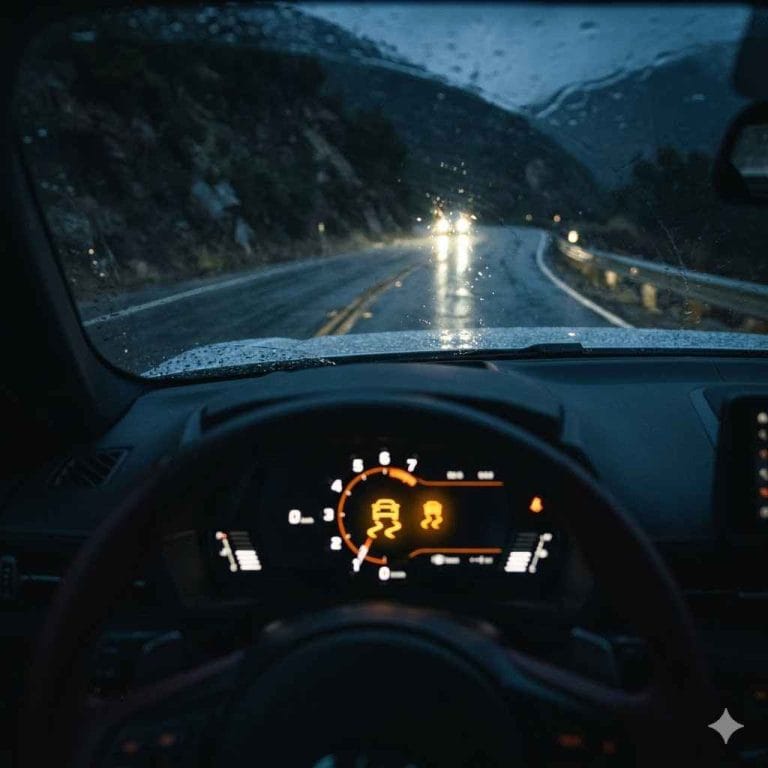
- The dashboard tire pressure warning light may illuminate (if equipped)
- The rear of the vehicle sways or feels unstable if the blowout is on a rear tire
Warning: Do not confuse a blowout with a flat tire. A blowout happens instantly with a loud bang. A flat tire develops gradually with a slow loss of air. Your reaction should be different — a blowout requires immediate steering control, while a flat tire allows more time to pull over.
Step-by-Step: What to Do When a Tire Blows Out
When a tire blowout happens, your actions in the first five seconds determine the outcome. Follow these steps in order. Do not skip any step.
- Take your foot off the gas pedal immediately. Do not accelerate. Do not press the brake. Let the car begin to slow down naturally through engine braking and rolling resistance.
- Grip the steering wheel with both hands at the 9 and 3 positions. Hold it firmly but do not fight the pull. Keep the wheel straight and let the car stabilize.
- Do not brake. Braking shifts weight to the front tires and can cause you to spin out. If you must slow down faster, gently apply the brakes only after the car has slowed to under 30 mph.
- Steer straight and allow the car to coast. The car will pull toward the side of the blown tire. Countersteer gently to keep the vehicle straight, but do not make sudden movements.
- Turn on your hazard lights. Once you have the car under control, activate your hazard lights to alert other drivers that you are in distress.
- Slowly reduce speed and pull over. When the car has slowed to 20-30 mph, gently steer toward the shoulder or an exit. Aim for a flat, straight area away from traffic.
- Come to a complete stop. Once on the shoulder, press the brake gently and stop. Keep your foot on the brake or set the parking brake.
Tip: If you are on a highway with no shoulder, do not stop in the travel lane. Slow down as much as possible and drive on the flat tire to the nearest exit or wide shoulder. Driving a short distance on a flat tire will damage the wheel, but your safety is more important than the rim.
Quick Decision Guide for Tire Blowout Response
| Situation | Correct Action | Common Mistake |
|---|---|---|
| Front tire blowout at highway speed | Ease off gas, steer straight, coast | Slamming brakes or yanking the wheel |
| Rear tire blowout at highway speed | Ease off gas, do not steer, let car stabilize | Overcorrecting steering to stop fishtailing |
| Blowout in heavy traffic | Hold wheel, coast, signal and move to shoulder | Stopping in the middle of the lane |
| Blowout in a curve or turn | Ease off gas, steer through the curve gently | Abruptly straightening the wheel mid-turn |
This table covers the most common blowout scenarios. In every case, the principle is the same: reduce speed gradually without braking and keep the steering inputs minimal.
What NOT to Do During a Tire Blowout
Knowing what not to do during a tire blowout is just as important as knowing the right steps. Most blowout-related crashes happen because of panicked reactions, not the blowout itself.
The AAA Foundation for Traffic Safety reports that over 50% of drivers who experience a blowout admit to slamming the brakes as their first instinct. This reflexive action is the number one cause of loss of control and rollovers after a blowout.
Critical Mistakes to Avoid
- Do not slam the brakes. Braking hard shifts weight forward, lifts the rear tires, and reduces steering control. This is the fastest way to spin out or roll over.
- Do not jerk the steering wheel. Sudden steering inputs cause overcorrection and can send the car into a skid or into oncoming traffic.
- Do not accelerate. Some drivers mistakenly think speeding up will stabilize the car. Acceleration increases tire speed and makes the blowout worse.
- Do not take your eyes off the road. Looking down at the dashboard or turning to check the tire takes your attention away from steering and traffic.
- Do not immediately pull over on a curve or bridge. If possible, wait until you reach a straight, flat section of road with a wide shoulder before stopping.
- Do not exit the vehicle while on a busy highway. Stay inside with your seatbelt fastened until help arrives or until it is safe to change the tire.
Warning: Never attempt to change a tire on the side of a highway, especially at night or in bad weather. The risk of being hit by passing vehicles is extremely high. Call for roadside assistance or use a tow service. Your life is worth more than the cost of a tow.
Common Causes of Tire Blowouts
Understanding what causes a tire blowout helps you prevent one from happening in the first place. While some blowouts are unavoidable — hitting a sharp object on the road, for example — many are caused by factors you can control through regular maintenance and smart driving habits.
The Rubber Manufacturers Association estimates that 85% of tire failures are related to improper inflation, overloading, or tread wear. Regular tire checks can eliminate the majority of these risks.
Top Causes of Tire Blowouts
| Cause | Why It Causes a Blowout | How to Prevent It |
|---|---|---|
| Underinflation | Low pressure causes excessive sidewall flexing and heat buildup | Check tire pressure monthly with a gauge |
| Overloading | Excess weight strains tire structure beyond its capacity | Do not exceed the load rating printed on the tire sidewall |
| Worn tread | Shallow tread cannot dissipate heat and is prone to puncture | Replace tires when tread depth reaches 2/32 inch |
| Road hazards | Potholes, debris, and sharp objects cut or puncture the tire | Drive defensively and avoid debris when possible |
| Heat and speed | High speeds generate extreme internal heat in underinflated tires | Reduce speed in hot weather and check pressure before long trips |
| Tire age | Rubber degrades over time, even if tread looks fine | Replace tires every 6 years regardless of tread wear |
Tire age is one of the most overlooked factors. The NHTSA recommends replacing tires once they reach 6 years old, even if they appear to have plenty of tread left. Dry rot and internal degradation can cause a blowout at any speed.
Tip: Perform a simple penny test on your tires. Insert a penny into the tread groove with Lincoln’s head facing down. If you can see the top of his head, your tread depth is below 2/32 inch and the tire needs replacement. This quick test takes 10 seconds and can prevent a blowout.
How to Prevent Tire Blowouts
Prevention is the best strategy when it comes to tire blowouts. A few minutes of regular maintenance can dramatically reduce your risk. The Consumer Reports Tire Buying Guide notes that properly maintained tires last 20% longer and are 50% less likely to fail unexpectedly.
Follow this prevention checklist to keep your tires in safe condition year-round:
Tire Blowout Prevention Checklist
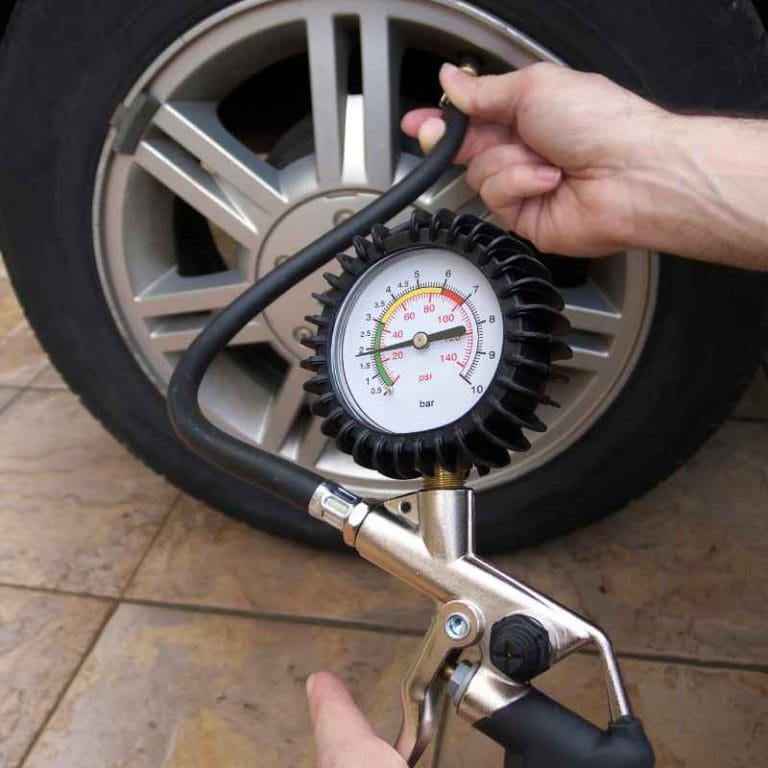
- Check tire pressure monthly. Use a digital tire gauge and inflate to the pressure listed on the driver’s door jamb sticker, not the maximum pressure printed on the tire sidewall.
- Inspect tread depth every 3,000 miles. Use the penny test or a tread depth gauge. Replace tires at 2/32 inch minimum depth.
- Rotate tires every 5,000 to 7,500 miles. Rotation ensures even wear across all four tires and extends tire life.
- Check for visible damage. Look for bulges, cracks, cuts, and embedded objects like nails or glass. Any damage warrants a professional inspection.
- Maintain proper alignment. If your car pulls to one side or the steering wheel is off-center, get an alignment check. Misalignment causes uneven tread wear.
- Do not overload your vehicle. Check your owner’s manual for the maximum load capacity. Overloading generates excessive heat and stress on tires.
- Replace tires at 6 years. Check the DOT date code on the sidewall. The last four digits indicate the week and year of manufacture.
Important: Tire pressure should always be checked when tires are cold — meaning the car has been parked for at least three hours. Driving heats up the tires and increases pressure readings by 2-4 psi, giving you a false reading. Checking cold pressure gives you an accurate baseline.
What to Do After a Tire Blowout
Once you have safely pulled over after a tire blowout, your next steps focus on getting help and assessing the damage. Do not rush this process. Your safety remains the top priority.
Post-Blowout Steps
- Stay inside the vehicle. Keep your seatbelt fastened. If you are on a busy road or highway, do not get out. Call for roadside assistance.
- Turn on hazard lights. Keep them flashing so other drivers see you. If it is dark or foggy, also turn on your parking lights.
- Call for help. Use your phone to call roadside assistance through your insurance provider, auto club, or a towing service. Give them your exact location.
- Place reflective triangles or flares. If you have them and it is safe to do so, place warning triangles 50-100 feet behind your vehicle to alert approaching traffic.
- Do not change the tire yourself on a highway. Only change a tire in a parking lot or on a quiet residential street. On highways and busy roads, wait for professional help.
- Document the incident. Take photos of the blown tire, the surrounding road conditions, and any damage to your vehicle. This helps with insurance claims.
- Have the other tires inspected. After a blowout, all four tires should be checked by a professional. The remaining tires may have been damaged by debris or stress.
Emergency Kit Items Every Driver Should Carry
| Item | Purpose After a Blowout | Budget Option |
|---|---|---|
| Reflective triangles | Alert other drivers to your stopped vehicle | Road flares or LED warning lights |
| Portable tire inflator | Only useful for slow leaks, not blowouts | Tire sealant aerosol can |
| First aid kit | Treat minor injuries from debris or accident | Bandages and antiseptic wipes |
| Flashlight | Assess damage at night or in low light | Phone flashlight (less ideal) |
| Gloves and reflective vest | Protect hands and stay visible if you exit | Work gloves from hardware store |
A well-stocked emergency kit gives you peace of mind and practical tools if a blowout or other roadside emergency occurs. Keep these items in your trunk year-round.
Frequently Asked Questions
What should I do first when a tire blows out?
Take your foot off the gas pedal immediately. Do not brake. Grip the steering wheel firmly with both hands and steer straight.
Let the vehicle coast and slow down naturally before gently pulling over to the shoulder.
Can I drive on a spare tire after a blowout?
Yes, but only if you have a full-size spare or a temporary “donut” spare. Donut spares are rated for speeds under 50 mph and distances under 50 miles. Drive directly to a tire shop for a replacement.
Never drive on a donut spare for extended periods.
Is it safer to have a blowout on a front or rear tire?
Rear tire blowouts are generally considered more dangerous because they cause the vehicle to fishtail, and drivers often overcorrect. Front tire blowouts pull the steering wheel hard but are more intuitive to countersteer. Either way, the correct response is the same: ease off the gas and steer straight.
How long do tires last before they are at risk of a blowout?
Tires typically last 6 years from the date of manufacture, regardless of tread wear. After 6 years, the rubber compound degrades and internal structural integrity weakens, increasing blowout risk. Check the DOT code on the sidewall for the manufacturing date.
Does tire pressure monitoring (TPMS) prevent blowouts?
TPMS alerts you when tire pressure drops 25% below the recommended level, which helps prevent blowouts caused by underinflation. However, TPMS cannot detect tread separation, sidewall damage, or age-related degradation. Regular visual inspections are still essential.
Final Thoughts
A tire blowout is a sudden and stressful event, but a calm, deliberate response keeps you safe. Take your foot off the gas, hold the wheel steady, and coast to a controlled stop. Preventive maintenance — checking tire pressure, tread depth, and tire age — is the most effective way to avoid blowouts altogether.
Keep an emergency kit in your car and save your roadside assistance number in your phone so you are prepared if the unexpected happens.
See also why does a car tire explode causes you should know. See also where to find car tire size on your vehicle quick guide .
Products related to this article
Sponsored / affiliate links. As an Amazon Associate I earn from qualifying purchases. I may earn additional commission from eligible campaigns.