What Causes Feathering on Tires?
Feathering usually comes from toe being out of spec, often because worn steering or suspension parts let the wheels shift while rolling. If you guess wrong, you can buy tires, then ruin the new set before the real fault is fixed. This guide shows how feathering feels, how to tell it from cupping and camber wear, and what to inspect first.
What feathering looks and feels like
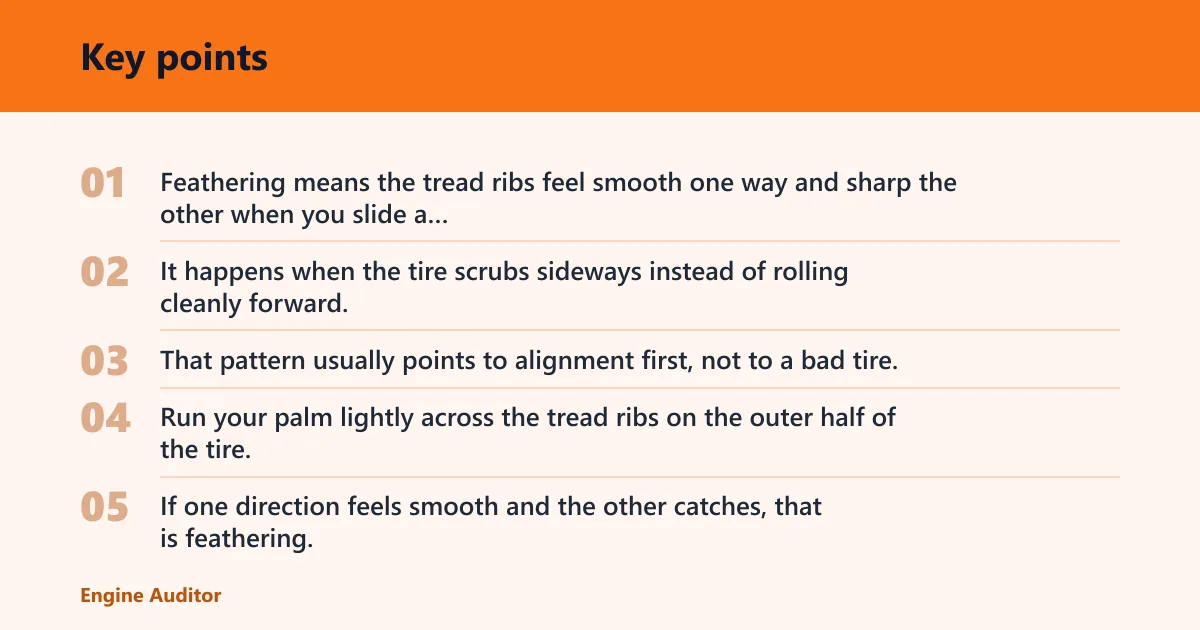
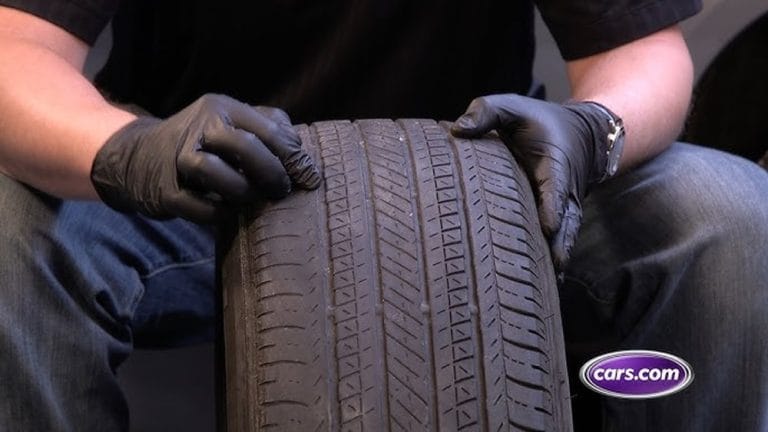
Feathering means the tread ribs feel smooth one way and sharp the other when you slide a hand across the tire. It happens when the tire scrubs sideways instead of rolling cleanly forward, so the tread blocks wear into a sawtooth edge. That pattern usually points to alignment first, not to a bad tire.
The quick roadside check is simple. Run your palm lightly across the tread ribs on the outer half of the tire, then again in the opposite direction. If one direction feels smooth and the other catches, that is feathering. Les Schwab describes the same pattern as edges that feel fuzzy in one direction.
How feathering differs from cupping and one-sided wear
Feathering is a directional tread texture. Cupping feels like a series of dips or scallops, often with vibration or a droning noise. One-sided shoulder wear leaves the inside or outside edge thinner than the rest of the tread. Those patterns can appear together, which is why the diagnosis order matters.
Suppose the front tires feel feathered across the center ribs, but the inner shoulders are still even. That points more toward toe than camber. If the inside shoulder is worn thin on one side and the tread is also feathered, inspect camber and toe together before you buy anything.
When noise or vibration matters
Feathering can make the tire noisy, but vibration usually means more than feathering alone. If you feel a shake, hop, or steering wheel buzz, check for cupping, a bent wheel, or a tire defect in addition to alignment. A noise that changes with road speed but not engine speed often fits tire wear, not brake or engine trouble.
Toe alignment and feathering
Toe is the angle the tires point in or out when viewed from above, and toe misalignment is the usual cause of feathering. When toe is off, the tire scrubs sideways instead of tracking straight. Toe-in and toe-out both can do it, depending on the vehicle and which end of the axle is leading the scrub.
Toe matters more than caster for feathering. Caster affects steering effort and straight-line stability, while camber changes how the tread leans on the road. Toe is the angle tied most closely to the sawtooth wear pattern you feel by hand.
Why toe specs vary by vehicle
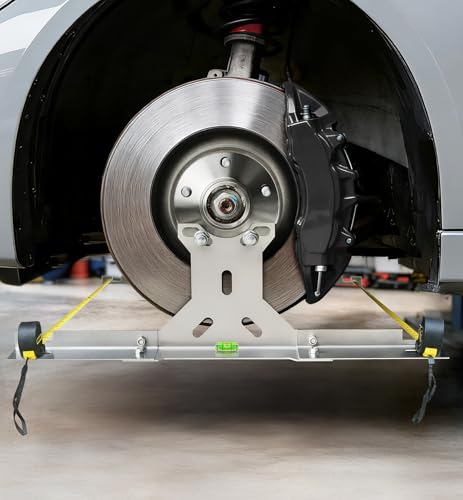
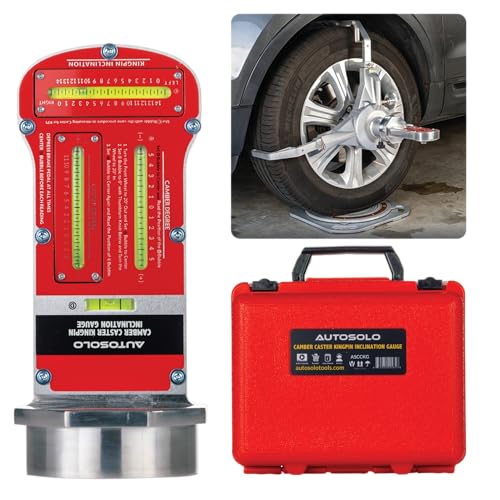
Do not assume a generic toe target. Factory toe specs vary by model, axle, and suspension design, and some vehicles allow front toe adjustment only while others allow rear toe correction too. A standard alignment checks camber, caster, and toe, but it may not restore every angle to a perfect factory number if parts are bent or nonadjustable.
The same source notes that total toe should be at or near 0° for normal street use on the vehicles it is referencing, but that does not replace the factory spec for your vehicle. Use the service data for the exact model, because the right setting depends on the chassis, not a universal rule.
Which suspension parts can cause it?
Worn shocks, struts, tie rods, ball joints, control arms, and bushings can allow alignment to drift under load. A small bend in a control arm or a loose tie rod end can change alignment, and worn bushings or ball joints can let the wheel move as you drive. Feathering then comes back even after a fresh alignment.
Impacts matter too. Hitting a pothole hard enough may knock alignment out of spec, and curb strikes can bend parts or shift settings. If a wheel and tire assembly takes a hard hit, inspect for sidewall bulges as well as alignment changes.
How impacts and potholes shift alignment
A sharp impact can move more than one part at once. A bent tie rod can change toe. A control arm that is slightly bent can alter both toe and camber. Worn bushings may not look broken, but they can let the wheel change angle under braking, acceleration, or cornering load.
If feathering appears after a pothole, treat that event as a clue, not a coincidence. The tire may still be serviceable, but the underlying geometry may no longer be correct. The longer the car is driven that way, the faster the tread can wear into the same pattern again.
Feathering diagnostic matrix
This table helps you sort toe-only feathering from mixed wear patterns before you book service or buy tires. Start with the pattern you can see and feel, then look at the most likely cause, the first inspection point, and whether short-term driving is reasonable.
| Wear pattern | Most likely cause | First inspection point | Short-term driving? |
|---|---|---|---|
| Feathering only | Toe out of spec | Wheel alignment, then tie rods and related play | Usually yes for short trips if the car tracks straight and no cords are exposed |
| Feathering + cupping | Toe issue plus weak damping or loose parts | Shocks or struts first, then alignment | Use caution; vibration means service should be prompt |
| Feathering + inside-edge wear | Toe plus camber problem, often with worn joints or bushings | Camber check and suspension inspection | Short term only if the pull is mild and wear is not severe |
| Feathering + pull | Toe drift, camber split, or a bent part | Alignment report and steering linkage | Drive only far enough to reach service if the pull is strong |
| Front-only feathering | Front toe change, steering wear, or load transfer under braking | Front tie rods, ball joints, and alignment | Usually yes if steering feel is normal |
| Rear-only feathering | Rear toe issue or rear suspension wear | Rear alignment and rear bushings | Often yes, but do not ignore a rear-end sway or noise |
| One-sided feathering | One wheel out of spec, bent part, or camber split | That corner first, then the matching axle | Short term if the other tire on the axle is clean |
| All four feathering | Systemic toe error, incorrect recent alignment, or widespread wear in bushings or joints | Full alignment plus suspension inspection | Yes only for limited driving; schedule service soon |
A common first-timer mistake is to rotate the tires and call the job done. Rotation can reveal whether the wear is active, because the same pattern may show up on a different corner after the move. It does not fix the cause. If feathering appears on the new position, the fault is still present.
What causes feathering on front tires?
Front tires often show feathering first because they steer, carry braking load, and react to road impacts through the steering system. If the wheel pulls, the steering wheel sits off-center, or the car wanders, the front axle is a strong suspect. Front toe drift is the first thing to check, then the parts that hold that angle under load.
Loose tie rods, worn ball joints, and weak bushings can let the front wheels change angle when you brake or turn. A front tire can also feather after a pothole if the impact bends a part enough to change toe. That is why front wear often traces back to both alignment and wear in the steering hardware.
Steering wear and load transfer clues
Front feathering with a steering wheel off-center often points to toe drift. Front feathering with brake pull or uneven response can point to a part that shifts as weight moves forward. If the wear is heavier on the inside edge too, camber needs to be checked alongside toe.
Say your left front tire feels feathered, the car drifts right, and the steering wheel is no longer centered. That combination points to a front-end geometry problem rather than a bad tire. The first stop should be an alignment rack with a suspension inspection, not a tire purchase.
What causes feathering on rear tires?
Rear tire feathering usually points to rear toe or rear suspension wear, and it can go unnoticed longer because the rear axle does not steer. Many drivers first notice it during a tire rotation, when the front and rear positions swap and the pattern becomes easier to feel. If the rear axle wears both tires the same way, look for a system-wide alignment issue.
Rear feathering can also show up after impacts that disturb rear alignment or damage bushings. If the vehicle feels loose from the back or the rear tires start to hum, do not treat it as a front-only problem. Rear geometry matters for tracking and stability.
Why rear wear can go unnoticed
Rear feathering may not change the steering wheel feel, so the driver may miss it until the tires are rotated. That is why tire rotation is useful as a diagnostic step: it can show whether the wear pattern is active on the new position. If the same pattern stays with the axle, the source is still there.
Suppose the front tires look normal, but the rear right tire shows feathering on one shoulder and the car feels steady. That one-corner pattern suggests a rear corner problem rather than a whole-car issue. The first check should be the rear alignment and the related bushings on that side.
What should I check first if my tires are feathering?
Check the tread pattern first, then the alignment report, then the parts that hold the settings in place. If the wear is feathering only, start with toe. If it is feathering plus cupping, add shocks or struts. If the wear includes a pull, vibration, or one-sided shoulder wear, inspect the steering and suspension hardware at the same visit.
Follow the vehicle manual for inspection points and lifting instructions, and never work under a vehicle held only by a jack. If a tire shows a bulge after a curb or pothole impact, stop driving that tire and have it inspected before more road use.
- Confirm the pattern by touch across the tread ribs.
- Look for cupping, inside-edge wear, or a pull.
- Check recent pothole, curb, or impact damage.
- Schedule a wheel alignment with camber, caster, and toe checked.
- Ask for a suspension and steering inspection if wear keeps returning.
Frequently asked questions
What causes feathering on tires?
Feathering on tires usually comes from toe misalignment, which makes the tread scrub sideways instead of rolling straight. Worn tie rods, ball joints, control arms, or bushings can let that alignment drift under load. It can appear on one tire, one axle, or all four, depending on the cause.
What causes feathering on tire tread?
Feathering on tire tread happens when the ribs wear unevenly across their edges. The tread feels smooth one way and sharp the other because the tire is sliding a little as it rolls. That sideways scrub comes from incorrect toe far more often than from a tire defect.
How do I know if my tires are feathering?
Run your hand lightly across the tread ribs. If it feels smooth in one direction and sharp in the other, that is feathering. Compare both sides of the axle and look for cupping, shoulder wear, pull, or vibration, because mixed patterns often point to more than one problem.
Can worn suspension parts cause feathering?
Yes. Worn shocks, struts, tie rods, ball joints, control arms, and bushings can let the wheels move enough to change alignment while driving. That movement can make feathering return even after a fresh alignment. If the wear keeps coming back, inspect the parts, not only the settings.
Can potholes cause feathering on tires?
Yes. Hitting a pothole hard enough may knock alignment out of spec, and a strong impact can bend parts or damage a tire and wheel assembly. If feathering starts after a pothole, check for sidewall bulges, bent parts, and a shifted alignment before you assume the tire itself is the root cause.
What causes feathering on tires: feathering on tires comes
Feathering on tires comes from sideways scrub while the tire rolls, most often because toe is out of spec. Worn steering or suspension parts can make that error appear or return after alignment. The pattern can affect one tire, one axle, or all four, so location matters.
What causes cupping on tires
Cupping on tires is usually linked to poor damping, worn shocks or struts, and looseness that lets the wheel hop instead of stay planted. It often pairs with vibration or a thumping noise. If cupping appears with feathering, inspect both alignment and the suspension before replacing tires.
Products related to this article
Sponsored / affiliate links. As an Amazon Associate I earn from qualifying purchases. I may earn additional commission from eligible campaigns.