Why Is My Car Overheating After a Coolant Change?
If your car overheats right after a coolant change, first suspect trapped air. If it still runs hot after about two proper bleed cycles, move on to circulation, pressure, fan control, and then possible internal engine faults. Ignoring it can warp the head, pop hoses, or send you after the wrong repair. This guide follows that order and checks bleed points, thermostat, water pump, cap, fans, and head-gasket warning signs.
What you’ll need


- Owner’s manual or service specs for bleed points and coolant type
- Correct coolant, either pre-mix or concentrate mixed 50/50 with distilled water
- Drain pan, funnel, gloves, and clean rags
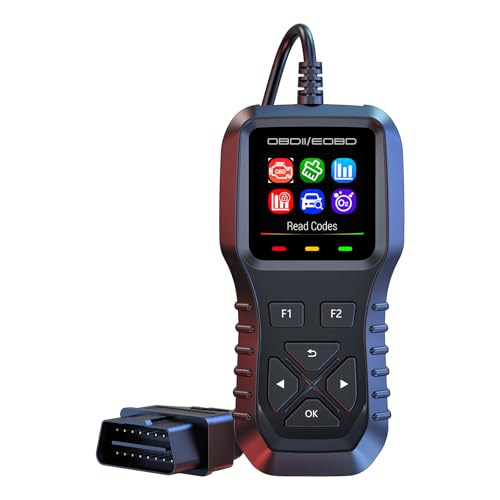
- OBD-II scan tool with live data for coolant temperature
- Basic hand tools for hose clamps, bleed screws, and the radiator cap
What to check first
Start with the cold engine only. Check the reservoir and radiator cap area for the correct level, then look for steam, bubbling, or a gauge that climbs fast; if the needle heads into the red, shut it down and let it cool. Do not keep driving an overheating car.
If the gauge rises, the cabin heat drops to cold, and you hear gurgling behind the dash, that points to air in the system more than a dead thermostat or pump. A steady hot gauge with normal heater output points elsewhere.
Why is my car overheating after a coolant flush?
After a flush, trapped air is the most common cause, especially if the heater blows warm, then cool, then warm again. If the coolant is full but the gauge swings, bleed the system again before replacing parts. A weak cap or wrong mix can add boil-over risk.
Why is my car overheating after a coolant change?
Right after a refill, airlock is the first thing to rule out. If the problem began after a thermostat or hose job, check installation direction, clamp sealing, and coolant mix. A bad OBD-II coolant reading can also make a healthy engine look hot.
Diagnose the overheating sequence
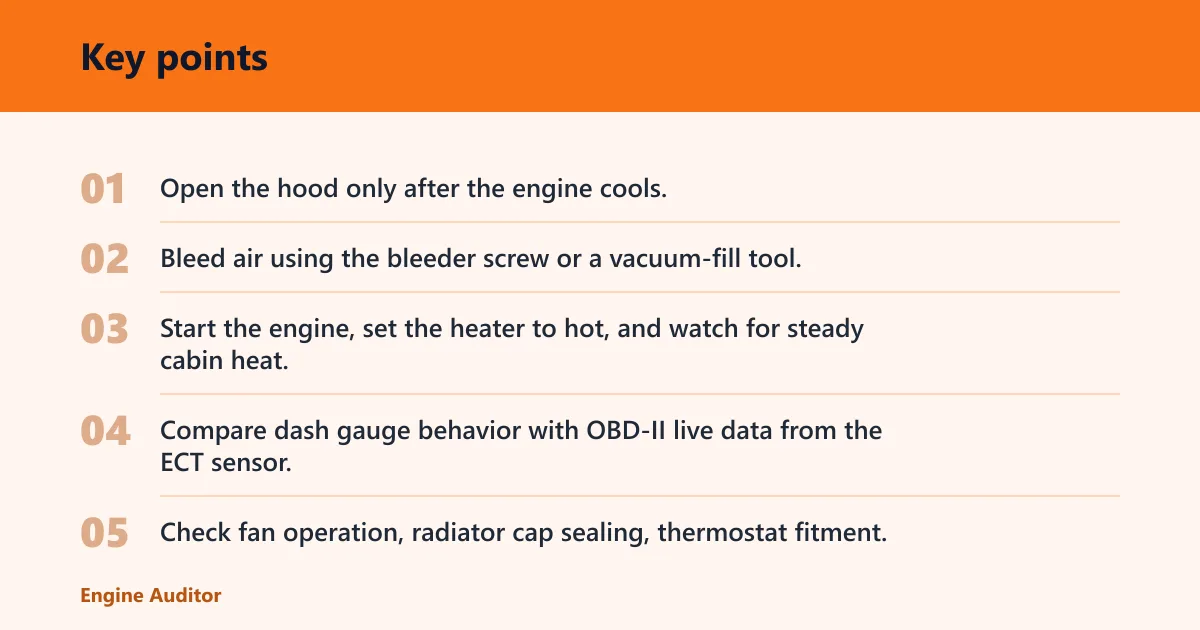
- Open the hood only after the engine cools, then confirm the coolant level in the reservoir and radiator matches the spec.
- Bleed air using the bleeder screw or a vacuum-fill tool, then top up in about 250 mL steps and recheck after each fill.
- Start the engine, set the heater to hot, and watch for steady cabin heat; gurgling or no heat means air may still be trapped.
- Compare dash gauge behavior with OBD-II live data from the ECT sensor.
- Check fan operation, radiator cap sealing, thermostat fitment, and hose clamps in that order.
- Inspect the water pump for seepage at the weep hole, belt slip, or weak circulation.
- Escalate to a head-gasket test if bubbles continue, coolant disappears, or the system pressurizes very fast.
Picture a car with a new radiator hose and a full reservoir, yet the heater stays cold at idle. If the temperature drops when the engine is revved, flow improves only when pump speed rises. That clue fits air, weak circulation, or a pump issue better than a simple low-level problem.
Coolant bleed diagnostic table
| Scenario | Symptom | Most likely cause | Quick check | Next action |
|---|---|---|---|---|
| Coolant flush | Gauge swings; cabin heat changes every few minutes | Trapped air or incomplete bleed | Check for gurgling at the heater core and watch for bubbles in the reservoir | Bleed again with the screw or vacuum-fill tool |
| Radiator replacement | Overheats at idle, cooler on the road | Air pocket or fan issue after reassembly | Verify fan command and hose routing; confirm cap seal | Bleed, then test fan motor, relay, and fuse |
| Thermostat replacement | Rapid climb to hot, upper hose stays cool | Thermostat stuck closed or installed backward | Check housing direction and rating; compare to OEM-equivalent spec | Reinstall correctly or replace with the correct opening temperature |
| Hose replacement | Intermittent heat and coolant smell, no obvious leak | Clamp leak, hose collapse, or trapped air | Squeeze the hose when cool and inspect clamp seating | Reseat clamps, refill, and bleed again |
Why does it overheat and then cool down?
A rise-and-fall pattern usually means the system is moving air or the thermostat is opening late. It can also happen when the fan turns on too late, or when a low level clears after the pump catches coolant. If the gauge falls only after revving, keep air, pump, and thermostat on the list.
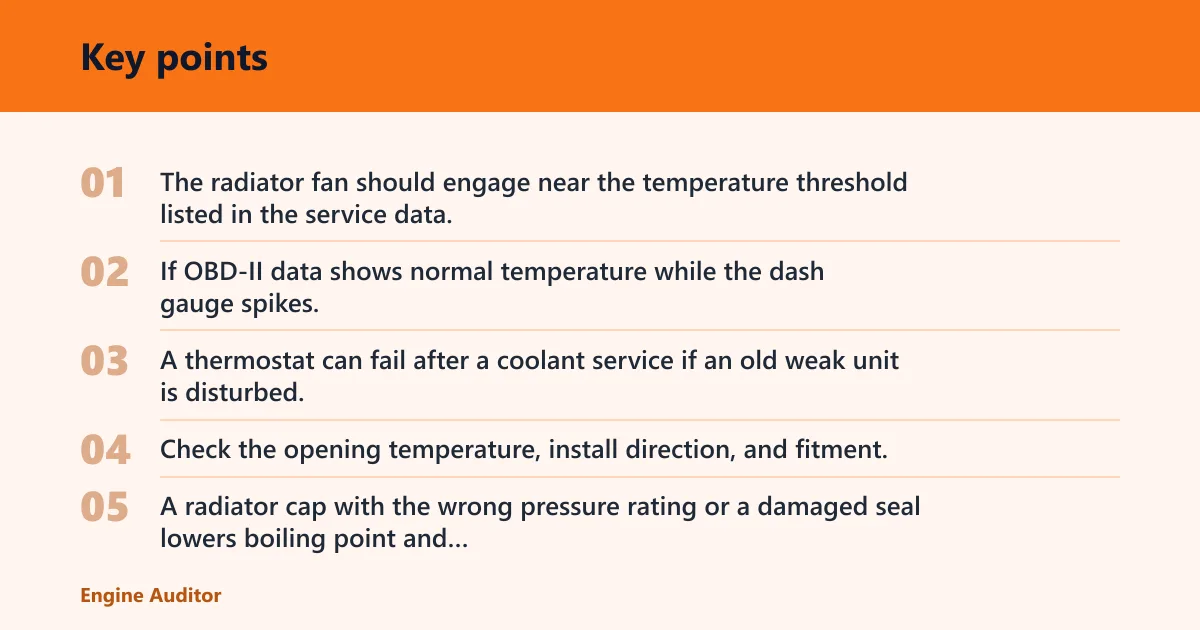
The radiator fan should engage near the temperature threshold listed in the service data, not only when the gauge is already deep into hot. If OBD-II data shows normal temperature while the dash gauge spikes, suspect the ECT sensor or wiring before condemning the engine.
Check thermostat, cap, fan, and pump
A thermostat can fail after a coolant service if an old weak unit is disturbed. Check the opening temperature, install direction, and fitment. A radiator cap with the wrong pressure rating or a damaged seal lowers boiling point and can mimic a larger fault. That matters after any service.
The fan system needs a working motor, relay, fuse, and ECT input. If the fan never comes on, the engine may sit hot at idle even with full coolant. Next, inspect the water pump for leaks at the weep hole, impeller damage, or belt slip on belt-driven units.
Why is my car overheating after replacing the radiator?
After a radiator swap, air trapped in the new core is common, but a blocked hose routing or bad fan command can look the same. Confirm hose orientation, cap pressure, and that the fan starts at the specified temperature. If the upper hose is hot and the lower hose stays cold, flow may be restricted.
Why is my car overheating after replacing the radiator and thermostat?
When both parts are new, the fault is often in the bleed, the cap, or the install direction. A thermostat flipped backward can prevent opening, and a poor cap seal can boil coolant early. Recheck the assembly before moving to the pump or head-gasket tests.
If that didn’t work, test for combustion gas
If the system still bubbles, loses coolant with no visible leak, or pressurizes quickly from a cold start, head-gasket intrusion should be considered as a real possibility. Continuous bubbles in the reservoir are not normal after a proper bleed. A chemical block test is the next check, followed by compression or leak-down testing if needed.
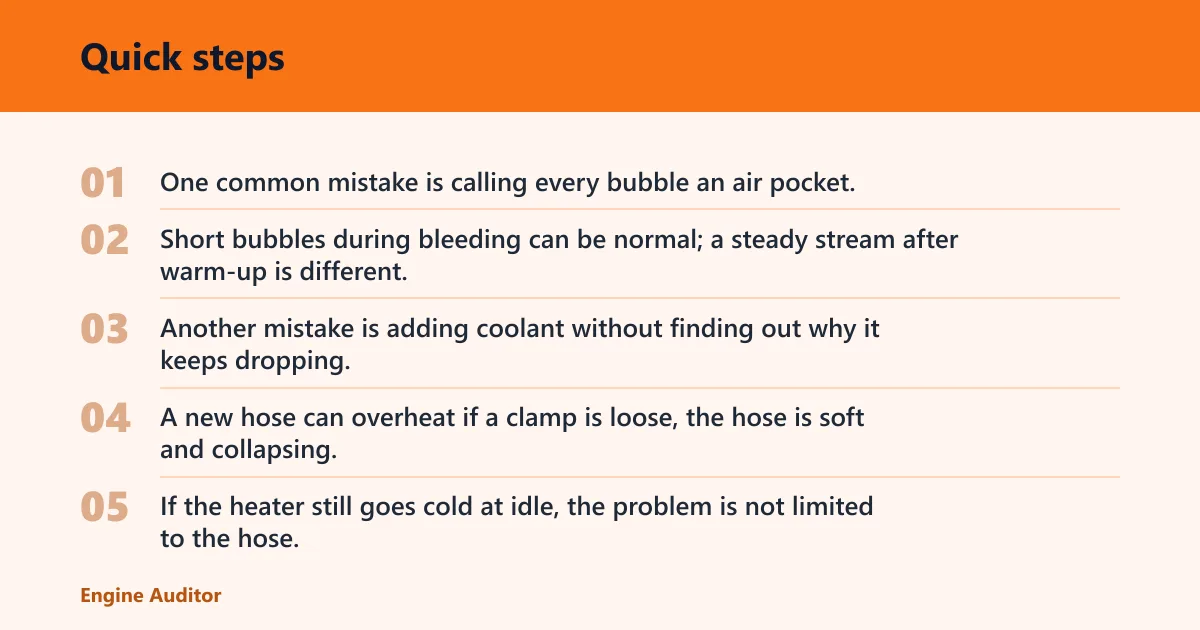
One common mistake is calling every bubble an air pocket. Short bubbles during bleeding can be normal; a steady stream after warm-up is different. Another mistake is adding coolant without finding out why it keeps dropping.
Why is my car overheating after replacing a radiator hose?
A new hose can overheat if a clamp is loose, the hose is soft and collapsing, or air remains trapped in the system. Check the hose after it cools, then rebleed. If the heater still goes cold at idle, the problem is not limited to the hose.
Common mistakes
- Bleeding the system when the engine is already hot
- Mixing concentrate with tap water instead of distilled water
- Ignoring no-cabin-heat symptoms, which often point to trapped air
- Replacing the thermostat, fan, or pump before checking the cap and ECT data
- Driving after repeated steam, bubbling, or a rapidly rising gauge
Frequently asked questions
Can trapped air cause overheating after a coolant change?
Yes. Trapped air can block coolant flow through the heater core and thermostat, which gives you fluctuating gauge readings, changing heater output, and gurgling noises. Bleed the system with the bleeder screw or vacuum-fill tool, then recheck the level cold after one full warm-up and cool-down cycle.
Why is my car overheating when the coolant is full?
Full level does not rule out air, a stuck thermostat, weak cap pressure, fan failure, or a bad ECT reading. Use OBD-II live data to compare the sensor reading with the dash gauge, then confirm fan operation and cap seal. A full reservoir can still hide circulation problems.
Why is my car overheating after a radiator flush?
A flush can leave air in the radiator and heater core, especially if the bleed point was missed. It can also loosen debris that later restricts flow. Start with a proper bleed, then check heater output, fan engagement, and cap pressure before blaming the radiator itself.
What should I do when my coolant is overheating?
Stop driving if the gauge climbs fast, steam appears, or the heater goes cold at the same time. Let the engine cool fully, check the level, then bleed the system again and verify fan operation with OBD-II live data. If the problem returns after about two proper bleed cycles, move on to pressure and combustion-gas checks.
Common first-timer mistake: adding coolant in 100 mL sips with the engine running and calling the job done after the first drop stops. That can leave an air pocket in the heater core or thermostat housing, so the level should be rechecked cold after the engine has completed a full heat cycle.
Products related to this article
Sponsored / affiliate links. As an Amazon Associate I earn from qualifying purchases. I may earn additional commission from eligible campaigns.