Can a Misaligned Wheel Cause Uneven Brake Wear?
Wheel misalignment usually does not wear brake pads directly, but it can cause pull, vibration, and tire wear that may hide a brake problem. Check brake hardware first, then verify alignment. Ignoring the symptom can waste money on pads, rotors, and alignments that do not fix the real fault. This guide explains the signs, the inspection order, and when alignment matters versus brake hardware.
Uneven brake wear usually points to brake hardware

Usually, no. Toe, camber, and caster mainly change how the tire contacts the road and how the car tracks. Uneven pad wear often points first to brake hardware, such as a sticking piston, seized guide hardware, corroded slide pins, or a hose that does not release pressure cleanly.
Alignment can still matter when it hides the real cause. A car that pulls, drifts, or steers off-center can make a brake issue feel like an alignment issue, especially if rear toe or thrust angle is off and the vehicle does not track straight after a stop.
Suppose the left front pad is thinner than the right front pad, and the left wheel stays hotter after a drive. That pattern fits brake drag before it fits alignment. The next step is a brake inspection, not a toe adjustment.
Brake wear diagnostic matrix
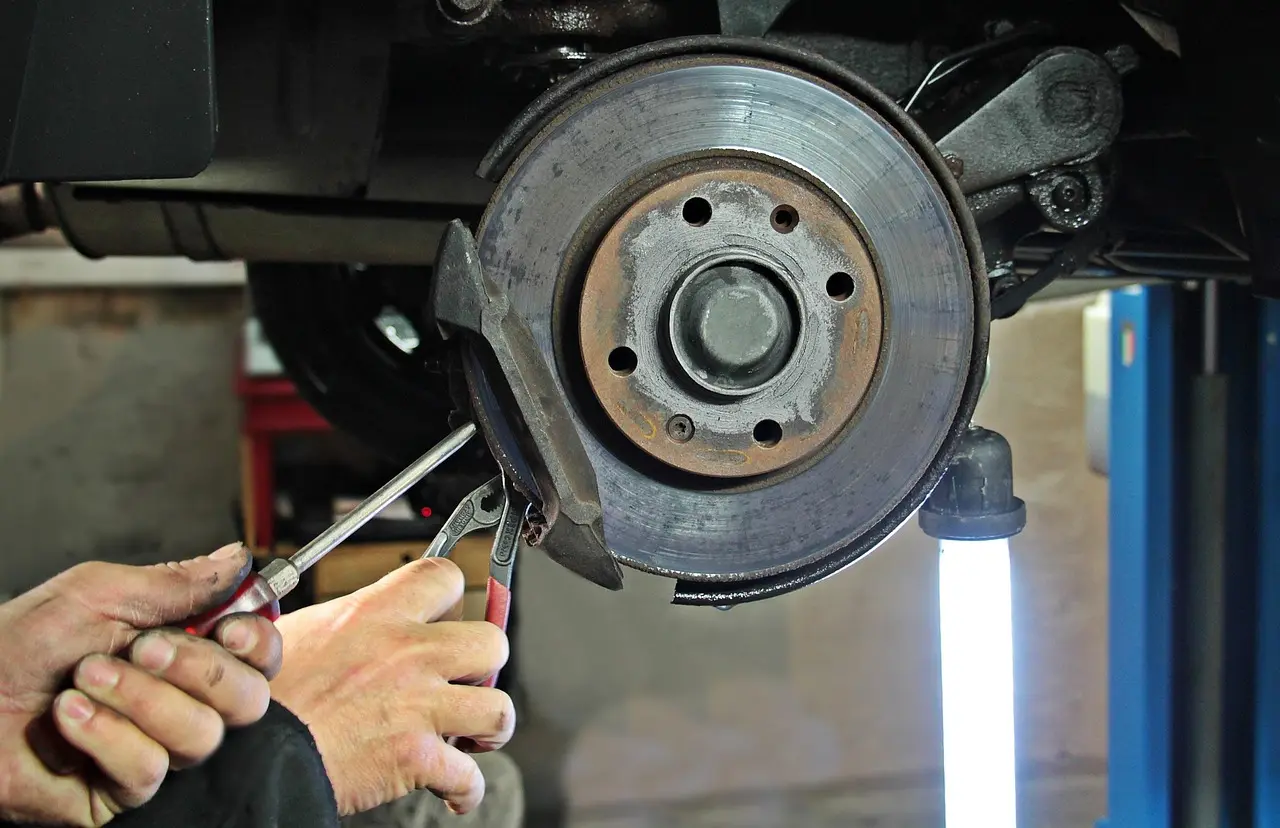
Use the wear pattern first, then choose the next test. This keeps tire wear, brake drag, and alignment complaints separate instead of treating them as one problem.
| Wear pattern or symptom | Most likely area | Next test | What to inspect first |
|---|---|---|---|
| Inner pad thinner than outer pad on one wheel | Caliper piston, slide pins, or floating caliper hardware | Compare pad thickness with a micrometer or caliper | Caliper slides, guide hardware, piston movement, hose flex |
| Outer pad thinner than inner pad on one wheel | Sticking hardware or caliper not clamping squarely | Check caliper movement and guide pin corrosion | Guide pins, abutment clips, caliper bracket, piston return |
| One wheel hotter after a normal drive | Brake drag at that corner | Lift and spin the wheel after a short road test | Caliper, hose, rotor surface, parking brake if rear |
| Both pads on one axle wear faster | Hydraulic or axle-specific brake issue | Check line pressure release and rotor condition | Hose collapse, master cylinder release, rotor taper or runout |
| Pulling under braking | Unequal brake force side-to-side | Compare pad wear and rotor condition left to right | Caliper, hose, pad friction material, rotor thickness variation |
| Vibration with braking | Rotor runout, thickness variation, or hub issue | Measure rotor runout with a dial indicator | Rotor, hub face, wheel mounting surface, lug nut torque |
| Outer tire wear plus steering wheel off-center | Alignment | Review toe, camber, caster, and thrust angle | Front and rear alignment, suspension wear, tire condition |
Why alignment and brakes get mixed up
Tire wear, steering pull, and brake pull are different clues. Misalignment changes tire wear patterns and straight-line stability. Brake drag changes pad thickness, rotor condition, and wheel temperature. A vibration under braking often points to a rotor or hub problem rather than toe or camber by itself.
Rear toe and thrust angle deserve attention when the car feels off after a stop or needs a steering correction on the highway. A bad rear thrust angle can make the car track sideways, which may make the driver suspect a front brake pull when the real issue is in the rear alignment.
Suspension wear can connect both problems. Worn ball joints, tie rods, control arm bushings, struts, or shocks can let the wheel move out of spec under load, which changes tire wear and can alter brake feel during weight transfer.
What to inspect on the brakes first

Start with pad thickness, because uneven pad wear is the clearest clue. Measure the inner and outer friction material on each wheel, and compare side-to-side on the same axle. A pad that is several millimeters thinner than its mate deserves a hardware check before alignment work.
Next, inspect the caliper. On a floating caliper design, the piston should retract smoothly and the slide pins should move without corrosion or binding. Seized guide hardware often leaves one pad worn much faster than the other, while a sticking piston can keep one pad in contact after pedal release.
Then check the rotor. Look for heat spots, taper wear, and thickness variation. Use a micrometer for rotor thickness and a dial indicator for runout if the brake system shows vibration, pulsation, or repeat heat on one corner. A wheel that runs hot can also point to a hose that traps pressure.
A common first-time mistake is replacing pads on both sides and skipping the caliper slides. The new pads then wear unevenly again because the fault never changed.
Brake inspection order
- Measure pad thickness inner and outer on each wheel.
- Check for a hot wheel after a short drive, without using the brake hard.
- Inspect caliper piston movement, slide pins, boots, and guide hardware.
- Measure rotor thickness and look for taper wear, scoring, or heat spots.
- Check rotor runout with a dial indicator if there is vibration or pulsation.
- Verify wheel mounting surfaces and lug nut torque before blaming the rotor.
What alignment and suspension checks come next
After the brakes check out, move to alignment. Review front and rear toe, camber, caster, and thrust angle. Specs are vehicle-specific, so the only useful target is the manufacturer’s range on the alignment report.
Then inspect the parts that hold those angles steady: ball joints, tie rods, control arm bushings, struts, and shocks. A worn joint or bushing can let the wheel shift under braking, cornering, or road impact, which changes both tire wear and steering feel.
Finish with the wheel and tire assembly. A bent rim, tire conicity, wheel balance issue, or wrong lug nut torque can create vibration or a pull that looks like a brake problem. None of those should be treated as a direct cause of pad wear without a brake fault alongside it.
Alignment report checks
- Compare before and after measurements for toe, camber, caster, and thrust angle.
- Look for cross-camber and cross-toe differences that explain a pull or drift.
- Check for out-of-spec values on front and rear alignment, not only the front axle.
- Read the customer printout for any note about bent parts, ride height, or adjustment limits.
Can alignment fix uneven brake wear?
Not by itself. An alignment can help correct tire wear, steering pull, and straight-line tracking, but it does not repair a sticking caliper, seized slide pin, warped rotor, or hose that holds pressure. If the pads or rotors wear unevenly, replace or repair the brake fault first.
An alignment is the right next step when the brake hardware is even, the wheels do not run hot, and the main complaint is drift, off-center steering, or abnormal tire wear. If suspension work was just completed, alignment should follow that repair.
Picture a car with even brake pads but the steering wheel sits left of center and the right front tire wears on the outside shoulder. That points toward alignment, not brake hardware. By contrast, a left front inner pad that is half the thickness of the right front pad points to a brake issue first.
What a mechanic should measure
Use measurements, not guesses. Pad thickness shows whether wear is side-to-side or corner-specific. Rotor thickness and runout show whether the disc brake system is stable. Tread depth and tire wear pattern show whether alignment or suspension movement is changing road contact. The alignment report ties the handling complaint to actual values.
For brake work, a micrometer or caliper is the right tool for pad thickness, and a dial indicator is the right tool for rotor runout. For wheel and suspension checks, a tread depth gauge and a torque wrench matter because uneven tire wear and wrong lug torque can distort the diagnosis.
| Measurement | Tool | Why it matters |
|---|---|---|
| Pad thickness inner and outer | Micrometer or caliper | Shows whether wear is normal or one-sided |
| Rotor thickness | Micrometer | Checks for wear limits and taper |
| Rotor runout | Dial indicator | Finds wobble that can cause pulsation |
| Tread depth across the tire | Tread depth gauge | Helps separate alignment wear from brake wear |
| Lug nut torque | Torque wrench | Confirms the wheel is mounted evenly |
Frequently asked questions
Can bad alignment wear brakes faster?
Bad alignment usually wears tires faster rather than brake pads. It can still create symptoms that look like brake trouble, such as pull or vibration. If brake wear is uneven, start with calipers, slide pins, hoses, and rotors before treating alignment as the cause.
Why is one brake pad wearing faster than the others?
One pad wearing faster usually points to a local brake fault. Common causes include a sticking piston, corroded slide pins, seized guide hardware, or a hose that does not let pressure release. Measure pad thickness side-to-side on the same axle before moving on to alignment.
Can a bent wheel cause braking problems?
A bent rim can cause vibration, poor tire wear, or a steering shake that feels like a brake issue. It does not usually cause one-sided pad wear by itself. Check wheel runout, lug nut torque, and rotor runout before blaming alignment or replacing brake parts.
What are the signs of a wheel alignment issue versus a brake issue?
Alignment problems usually show up as uneven tire wear, a steering wheel off-center, or a steady pull while cruising. Brake problems usually show up as pad thickness differences, a hot wheel, pull only during braking, or vibration from the rotor. Those clues should be separated first.
How do I tell if uneven brake wear is from calipers or alignment?
Uneven brake wear is far more likely to be caliper, slide pin, hose, rotor, or hub related than alignment related. If one pad is thinner, inspect the brake hardware at that corner first. If the pads are even but the car pulls or the tires wear oddly, then verify alignment.
Will an alignment fix uneven brake wear?
No. An alignment can correct toe, camber, caster, and thrust angle, but it will not free a seized caliper or fix rotor wear. If brake parts are wearing unevenly, repair the brake fault first, then align the car if steering or tire wear still calls for it.
How long can I drive with misaligned wheels before it damages brakes?
Misalignment usually affects tires and handling before it affects brakes, so there is no useful mileage threshold for brake damage. The better rule is to fix alignment soon after suspension or steering repair, and not let a pull, drift, or rapid tire wear continue unchecked.
Products related to this article
Sponsored / affiliate links. As an Amazon Associate I earn from qualifying purchases. I may earn additional commission from eligible campaigns.