Can Car Tire Pressure Be Too High? Risks You Should Know
Car tire pressure being too high poses real dangers to your safety and your vehicle’s overall performance. While most drivers understand the risks of under-inflated tires, many overlook the fact that overinflating tires can be just as hazardous, leading to reduced traction, uneven tread wear, and potential tire failure.
This guide explains everything you need to know about high tire pressure, how to spot it, and the simple steps to keep your tires perfectly inflated for a safer drive.
Simply put, yes, car tire pressure can be too high. Overinflated tires reduce the tire’s contact patch with the road, which decreases braking performance, creates a rougher ride, and significantly increases the risk of a blowout. The recommended PSI listed on your vehicle’s door placard is the gold standard you should always follow.
Key Takeaways
- Overinflated tires reduce traction and braking performance on both dry and wet roads.
- Driving with car tire pressure too high significantly increases your risk of a dangerous blowout.
- Always check your tire pressure when the tires are cold for the most accurate reading.
- Properly inflated tires improve fuel economy, extend tire life, and ensure safe handling.
- Ignoring the recommended PSI can void your tire warranty and lead to costly premature replacements.
What Does It Mean When Car Tire Pressure Is Too High?
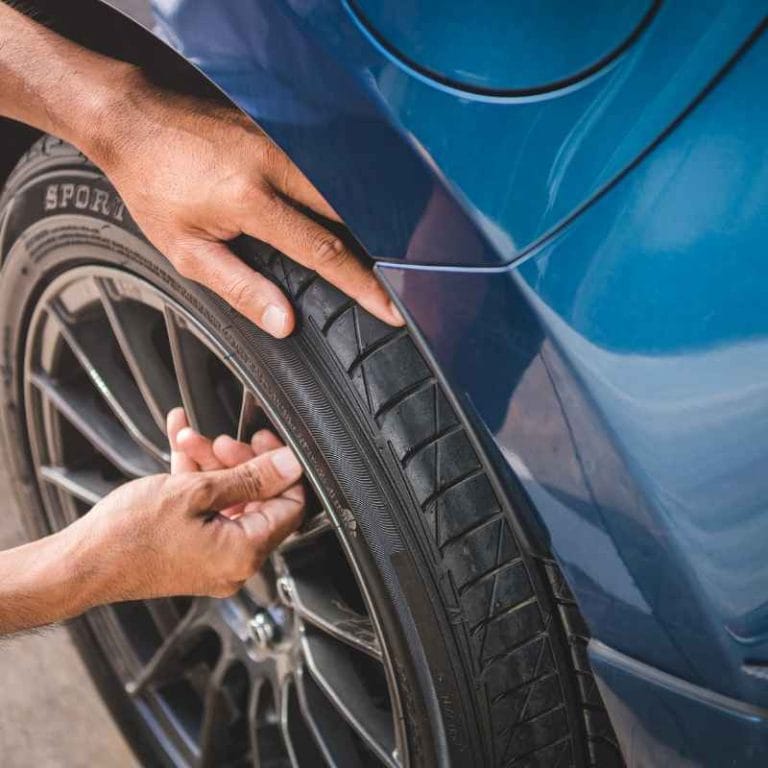
Every tire has a maximum load capacity and a corresponding PSI rating. When you fill the tire beyond the vehicle manufacturer’s recommended specification, you create an overinflated condition. This reduces the tire’s footprint—the actual area of the tire touching the road surface.
AstroAI
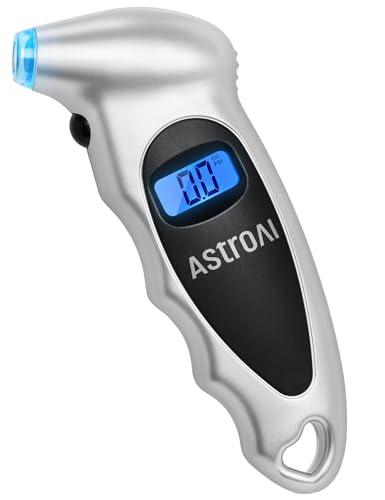
AstroAI Digital Tire Pressure Gauge 150PSI, ±1PSI…
- Accurate, Dependable Readings: Factory‑calibrated to ±1 PSI, so you can confidently match your vehicle’s recommended PSI (check th…
- Bright Backlit Display & Nozzle Light: The illuminated nozzle helps you find the valve stem in the dark, while the backlit LCD mak…
- 4 Measurement Units, One Button: Quickly switch among PSI, Bar, Kgf/cm², and KPA with a single press. No complex settings — just p…
As an Amazon Associate I earn from qualifying purchases.
The recommended pressure is always found on a sticker inside the driver’s door frame, not on the tire sidewall. The sidewall number is the maximum safe pressure, not the recommended operating pressure. Exceeding this recommendation, even by a few PSI, starts to introduce real risks.
Here are the key effects of overinflation:
- Reduced Contact Patch: The center of the tread bulges outward, wearing faster and reducing grip.
- Stiffer Ride: The tire absorbs less road shock, transmitting more vibration into the cabin.
- Increased Susceptibility to Damage: The tire is less able to deflect around potholes or sharp debris.
- Compromised Handling: The car feels twitchy and less stable during cornering maneuvers.
- Higher Risk of Blowout: Excessive pressure puts immense strain on the tire’s internal structure.
According to the National Highway Traffic Safety Administration (NHTSA), tire-related crashes cause thousands of accidents each year. While under-inflation is more common, overinflation is equally dangerous because it reduces the tire’s ability to absorb road impacts. Tire Rack testing has shown that overinflation by just 10 PSI can reduce the contact patch by nearly 20 percent.
Warning: Never use the maximum pressure printed on the tire sidewall as your target. That number is the structural limit of the tire, not the optimal pressure for your vehicle. Using it as a daily pressure setting almost guarantees overinflation.
How Does Overinflated Tire Pressure Affect Your Driving Experience?
Driving with car tire pressure too high transforms the feel and safety of your vehicle almost immediately. The most noticeable change is the harshness of the ride. Every crack, pebble, and pothole is transmitted directly to the steering wheel and chassis.
Beyond comfort, the performance impacts are significant. Braking distances increase because the smaller contact patch has less rubber gripping the road. Cornering becomes unpredictable as the tire struggles to maintain lateral grip.
| Driving Aspect | Effect of Overinflation |
|---|---|
| Ride Comfort | Harsh and bumpy; every road imperfection is felt |
| Braking Distance | Increased, especially dangerous on wet surfaces |
| Cornering Grip | Reduced; the car is more prone to understeer |
| Tread Wear | Accelerated wear across the center of the tread |
| Fuel Economy | Slightly improved, but at the direct cost of safety |
While you might see a minor improvement in fuel economy due to reduced rolling resistance, the sacrifice in safety, tire longevity, and overall comfort makes it entirely not worth it. Proper inflation gives you the best balance of all factors.
Why Is Driving on Overinflated Tires Dangerous?
The most severe risk of overinflation is a catastrophic tire blowout. An overinflated tire cannot properly absorb impacts from potholes or debris, making it much more likely to rupture instantly upon impact. This is especially dangerous at highway speeds.
The danger escalates during hot weather or long-distance driving. As the tire heats up from friction with the road, the air inside expands, further increasing the PSI. This can push an already overinflated tire past its structural limits without you even noticing.
Here are the top three dangers associated with overinflated tires:
- Blowouts: Sudden tire failure leads to immediate loss of vehicle control and potential crashes.
- Hydroplaning: The reduced contact patch makes it much easier for the tire to slide on a layer of water.
- Increased Stopping Distance: You need significantly more room to stop safely in an emergency situation.
The loss of traction is particularly concerning during emergency maneuvers. If you need to swerve suddenly to avoid an obstacle, an overinflated tire is more likely to break loose and cause the car to spin. The rigid structure also accelerates the aging process of the rubber, leading to cracks and premature tire failure.
The Rubber Manufacturers Association states that a large percentage of drivers fail to properly maintain their tire pressure, and overinflation is a key contributor to irregular wear patterns that shorten tire life.
Tip: Get into the habit of visually inspecting your tires every time you fill up with gas. Look for bulging in the center of the tread or a tire that looks overly round and stiff. A quick visual check can catch overinflation before it becomes a serious problem.
What Are the Signs of Overinflated Tires?
Knowing the symptoms of car tire pressure too high can help you catch the problem before it causes an accident. You do not always need a pressure gauge to spot the issue. Your car will tell you something is wrong.
Here are the most common signs to look for:
- Center Tread Wear: The middle of the tire looks significantly more worn down than the outer edges. This is the classic sign.
- Harsh Ride: You feel every crack and bump in the road directly through the steering wheel and seat.
- Poor Traction: The car feels loose or skittish when turning corners or changing lanes.
- Visible Bulge: The tire may look overly round and stiff, protruding in the center where it contacts the road.
- Excessive Road Noise: Overinflated tires often produce a louder, higher-pitched hum on the highway.
If you notice any of these signs, check your tire pressure immediately with a reliable digital gauge. Addressing the issue early can save your tires from permanent damage and prevent a dangerous driving situation.
How to Check and Fix High Tire Pressure Safely
Fixing overinflated tires is a straightforward process. You simply need to let some air out. However, you must do it correctly to avoid ending up with under-inflated tires, which are just as dangerous.
Follow these simple steps to correct your tire pressure:
- Find the Recommended PSI: Look at the sticker inside your driver’s side door jamb. This is the number you need.
- Check When Cold: Measure tire pressure in the morning before you drive, or at least three hours after the car has been driven.
- Remove the Valve Cap: Unscrew the small cap on the tire’s air valve. Keep it in a safe place so it does not roll away.
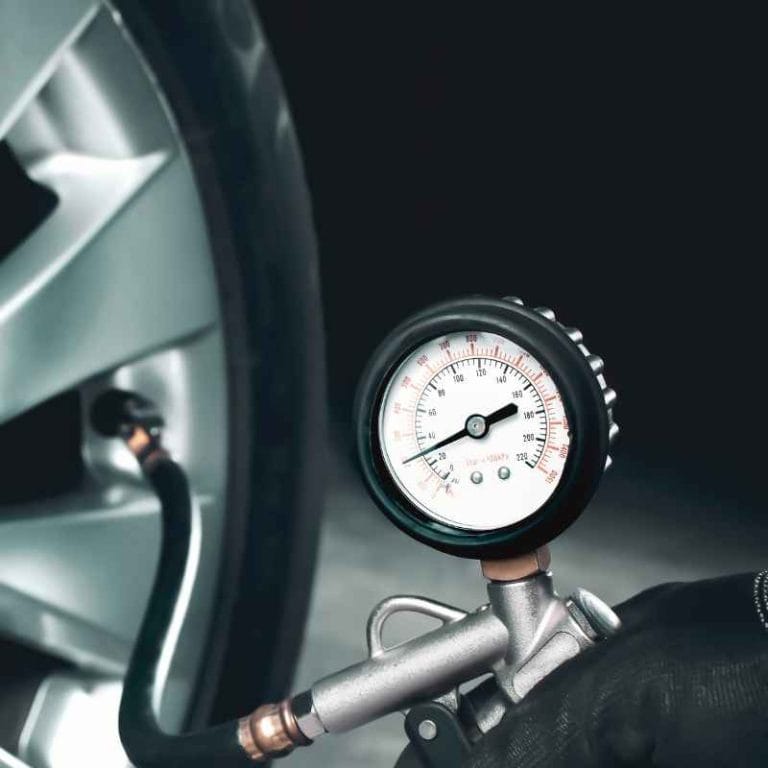
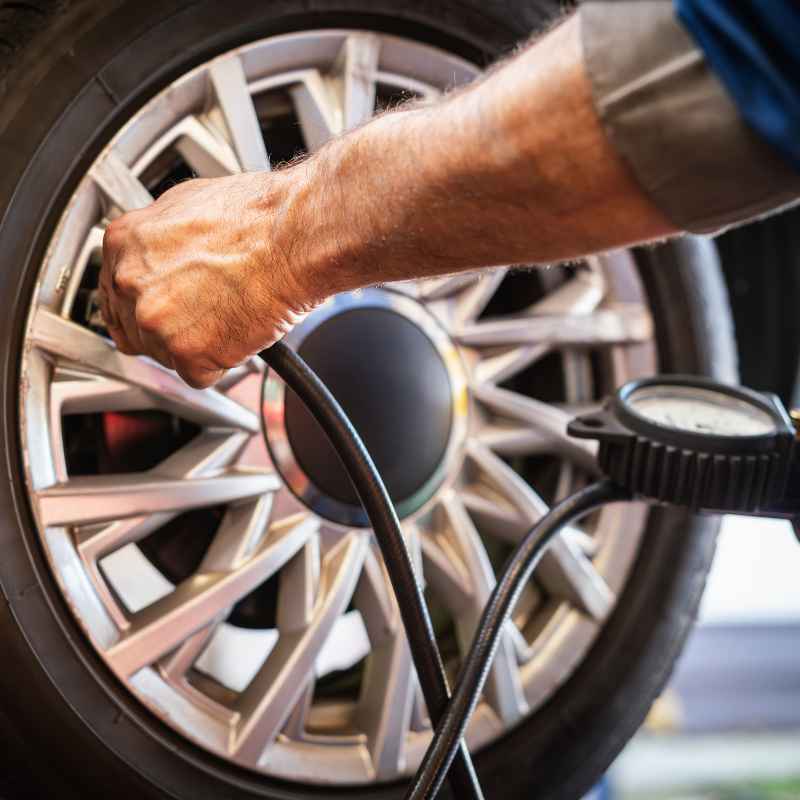
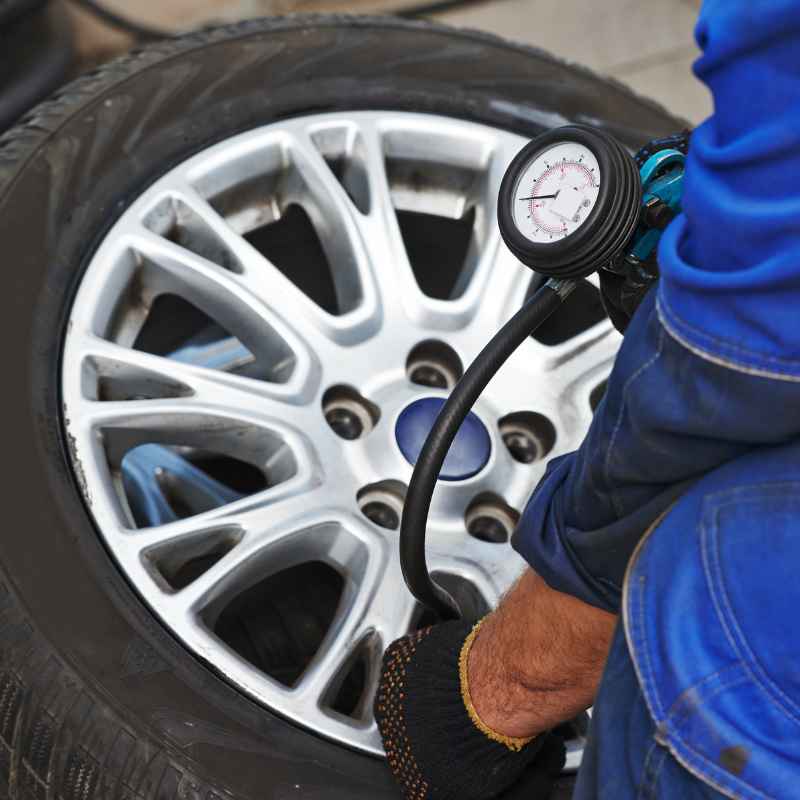
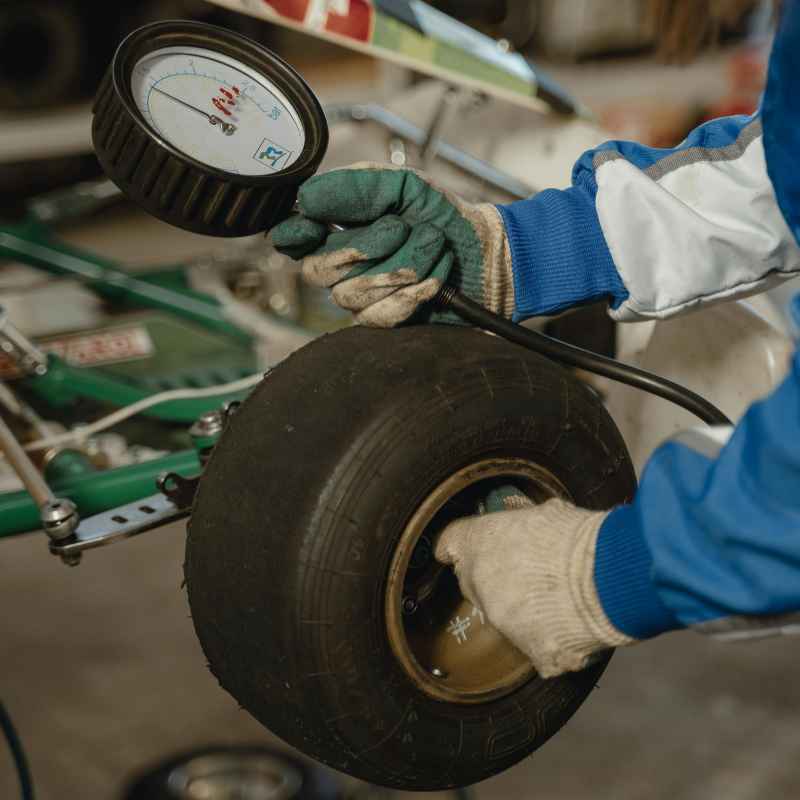
- Use a Tire Gauge: Press the gauge firmly onto the valve stem. You will hear a quick hiss of air, then get a reading.
- Release Air: Use the small nub on the back of the gauge or a small screwdriver to press the pin in the center of the valve stem. Release air in short bursts.
- Re-check: Check the pressure again after each burst of air until you reach the exact recommended PSI.
- Replace the Valve Cap: Screw the cap back on tightly to keep dirt and moisture out of the valve mechanism.
Repeat this process for all four tires. It takes only a few minutes and is one of the most important maintenance tasks for overall vehicle safety. Keeping your tires properly inflated can also improve your gas mileage by up to three percent, according to the Department of Energy.
What Is the Correct Tire Pressure for Your Car?
Many drivers mistakenly use the maximum pressure printed on the tire sidewall as their target. That number is the maximum load capacity limit, not your car’s recommended operating pressure. The correct number is tailored to your specific vehicle’s weight, suspension tuning, and handling characteristics.
| Location | What It Tells You |
|---|---|
| Driver’s Door Jamb Sticker | Recommended PSI for front and rear tires. This is your target. |
| Owner’s Manual | Lists pressure specs, often with different values for heavy loads. |
| Glove Box or Fuel Filler Door | Secondary locations where some manufacturers place the sticker. |
| Tire Sidewall | MAXIMUM pressure only. Do not use this for daily driving. |
For most passenger cars, the recommended pressure falls somewhere between 30 and 35 PSI. However, you should always defer to your own car’s placard. Using the correct pressure ensures optimal tire wear, the best fuel efficiency, and the highest possible level of road safety.
How Does Temperature Affect Tire Pressure?
Tire pressure fluctuates significantly with the weather. For every 10-degree Fahrenheit drop in outside temperature, tire pressure decreases by about 1 PSI. This means that car tire pressure too high in the summer can actually become dangerously low in the winter if you do not monitor it.
This is why tire pressure monitoring systems (TPMS) often alert drivers during the fall and winter months. The cold weather causes a natural drop in pressure. Conversely, driving for an extended period on a hot day can increase tire pressure by 4 to 6 PSI above your cold reading.
Key things to remember about temperature and pressure:
- Cold Weather: Pressure drops naturally. Check your tires frequently during cold snaps.
- Hot Weather: Pressure rises. Never release air from a hot tire to match the cold spec.
- Driving: Friction heats the tire. Always check pressure when tires are cold for an accurate reading.
- Altitude: Driving in mountainous areas can cause significant pressure changes.
Important: If your TPMS warning light comes on, check your tire pressure immediately. Do not just reset the system and assume everything is fine. The warning light is your car’s way of telling you that at least one tire is significantly outside the safe pressure range.
Overinflated vs Underinflated Tires: Which Is Worse?
Both extremes are bad for your car, but they impact safety in different ways. Under-inflation is more common and leads to excessive heat buildup and eventual tire failure. Overinflation, while slightly less common, makes tires brittle and more vulnerable to sudden impact damage.
| Factor | Underinflated | Overinflated |
|---|---|---|
| Contact Patch | Too large, edges of tread wear fast | Too small, center of tread wears fast |
| Handling Feel | Sluggish response, heavy steering feel | Twitchy steering, harsh, jarring ride |
| Primary Risk | Heat buildup leading to internal separation | Impact damage leading to instant rupture |
| Fuel Economy | Poor, due to high rolling resistance | Slightly improved, but at the cost of safety |
The NHTSA emphasizes that both conditions are unsafe. The goal is always to hit the middle ground recommended by your vehicle manufacturer. Neither driving on overinflated nor underinflated tires is something you should accept.
- Under-inflation: Causes excessive sidewall flex and dangerous heat buildup.
- Overinflation: Causes center tread wear and vulnerability to impact.
- Proper Inflation: Maximizes safety, tire lifespan, and driving efficiency.
Frequently Asked Questions
Is 40 PSI too high for car tires?
It depends on your vehicle. For most passenger cars like sedans and hatchbacks, 40 PSI is well above the recommended 30 to 35 PSI range. You should always check your specific vehicle’s manufacturer recommendation on the door placard.
If the recommended pressure is 32 PSI, then 40 PSI is too high and will cause center tread wear and a harsh ride.
Can overinflated tires cause a blowout?
Yes. Overinflated tires are more rigid and less able to absorb impacts from potholes, curbs, or road debris. This puts extreme stress on the tire’s internal structure, making a sudden blowout much more likely, especially when driving at highway speeds on rough roads.
How much air pressure is safe for car tires?
The safe pressure is the number recommended by your car manufacturer, which is usually found on a sticker inside the driver’s door jamb. This number is engineered to balance safety, ride comfort, and tire longevity. You should never exceed the maximum pressure listed on the tire sidewall.
Can I drive with the TPMS light on?
You should not drive far with the TPMS light illuminated. It indicates your tire pressure is significantly outside the safe operating range, whether too high or too low. Check your tire pressure immediately using a reliable gauge and adjust to the recommended PSI.
If the light stays on, have your tires inspected for damage.
How often should I check my tire pressure?
You should check your tire pressure at least once a month and before any long road trips. Tire pressure naturally decreases over time and is affected by changes in outside temperature. Regular monthly checks help you catch gradual pressure loss or overinflation before it becomes a serious safety hazard.
Final Thoughts
Maintaining the correct tire pressure is one of the simplest yet most critical aspects of regular car care. Car tire pressure being too high compromises your safety on the road, wears out your tires faster, and creates an uncomfortable driving experience. By checking your tire pressure monthly and sticking strictly to the manufacturer’s recommended PSI, you can avoid the significant risks of overinflation.
A few minutes of basic maintenance each month can save you from expensive repairs, extend the life of your tires, and keep you safe behind the wheel.
See also how long do car tires last miles and years explained. See also when should you put air in car tires for best performance.
Related pick: Check today's price on Amazon
Products related to this article
Sponsored / affiliate links. As an Amazon Associate I earn from qualifying purchases. I may earn additional commission from eligible campaigns.