Pickup truck vs SUV: which is better for daily driving?
For most daily drivers, an SUV is the better buy; choose a pickup only if you haul dirty cargo, tow often, or need open-bed use regularly, such as a few days a week. Pick the wrong body style and you pay every day in parking hassle, fuel use, ride comfort, and cargo access. This guide compares commute comfort, cargo use, parking, family duty, and weekend hauling so you can pick the one that fits your weekly routine.
This guide is part of our Vehicle types guide: body styles and categories series.
Pickup truck vs SUV for daily driving: the core trade-off

| Decision factor | Pickup truck | SUV: which is better for daily driving? | Winner |
|---|---|---|---|
| Commuting comfort | Higher step-in, more road feel, cab noise varies by size and trim | Usually quieter and easier to settle into for long highway and city use | SUV: which is better for daily driving? |
| Parking and garage use | Longer exterior length, bed makes tight spaces harder | Usually shorter and easier to place in apartment lots and garages | SUV: which is better for daily driving? |
| Groceries, kids, pets | Open bed is awkward for small items, strollers, and weather-sensitive gear | Enclosed rear cargo area makes daily family loading and pet transport easier | SUV: which is better for daily driving? |
| Towing and hauling | Usually stronger for tow rating and payload | Good enough for light duty, but usually not the first choice for heavy work | Pickup truck |
| Cargo security and weather protection | Bed is open-air unless fitted with a cover | Locked, enclosed cargo area is easier for daily errands | SUV: which is better for daily driving? |
Commuting comfort
An SUV usually wins the commute because it feels closer to a passenger car. The ride is calmer, the cabin is often quieter, and step-in height is easier to live with when the trip starts and ends five days a week. A pickup can be comfortable, but the truck shape still asks for more compromise.
Cab size matters. A crew cab pickup with supportive seats may suit a long highway commute better than a cramped smaller SUV, while a basic regular cab truck is a poor daily choice for most people.
Turning radius and parking in tight lots and garages
This is where SUVs usually pull ahead. A pickup truck often has a longer exterior length, and the bed makes the vehicle feel bigger in parking lots, drive-throughs, and narrow apartment garages. You notice it every day, not only when backing into a space.
If a buyer lives in a dense city or uses a crowded office garage, the parking penalty is real. A midsize SUV or smaller crossover is easier to place, easier to swing around, and less annoying when there is only one open space left.
How do groceries, pets, and family gear fit in each one?
An SUV is usually easier for family duty because its enclosed rear area keeps groceries, diaper bags, pet crates, and sports gear out of the weather and out of sight. A pickup can carry the same stuff, but the open bed is a poorer match for small daily loads unless the truck has a bed cover and the owner uses it all the time.
Open bed versus enclosed cargo area
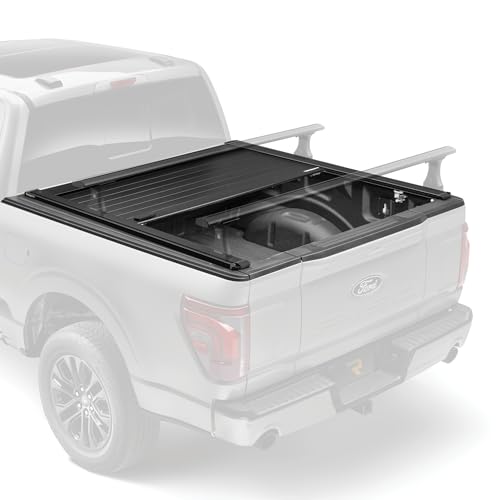
Pickup trucks have an enclosed cab and a cargo bed with no roof. That bed is excellent for dirty tools, mulch, lumber, or oversized items that would soil an interior, but it exposes contents to rain, snow, dust, and opportunistic theft. Tie-down points help, but they do not fix the storage problem.
SUVs offer enclosed rear cargo space, which is better for everyday storage and less annoying when plans change. The trade-off is that the interior must do more work, so folding seats and load-floor design matter more than headline cargo volume.
Child seats, strollers, fold-flat seats, and third-row trade-offs
For child seats, the SUV is usually the easier answer. Rear doors, lower load height, and enclosed cargo space make school drop-off, stroller handling, and grocery runs simpler. In a pickup, rear-seat legroom depends heavily on cab configuration, and the seat height can make child-seat loading more awkward.
Three-row SUVs add another layer. They can carry more people, but that third row often trades away cargo space when it is in use. A crew cab pickup can seat a family, yet it still cannot match the flexible enclosed cargo layout of many SUVs for mixed errands.
What are the daily-driving downsides of owning a pickup truck?
The daily penalties are usually cargo security, weather exposure, parking length, and extra ownership friction. A pickup’s bed is useful, but the bed also demands more planning: a cover, stronger tie-down habits, and more care if tools, packages, or pet gear will sit unattended. For a commuter who rarely hauls, those penalties show up all week.
Bed security and weather exposure
An open bed is a strength and a weakness. It is great for dirty cargo and awkward loads, but anything loose or valuable is exposed unless the owner adds a cap or cover. That adds cost, complexity, and another thing to manage when the truck is supposed to be easy daily transport.
Crew cab, extended cab, and regular cab as daily-use choices
Cab configuration matters as much as body style. A regular cab is the least practical for daily family use. An extended cab can work for occasional passengers, while a crew cab is the sensible truck choice when child-seat access and rear legroom matter.
Even then, a crew cab pickup still keeps the bed-vs-cargo compromise. It is better for mixed duty than a work-trim truck, but it does not fully solve the security and weather issues that an SUV avoids by design.
How do towing and hauling change the answer?
Towing and payload are where pickups separate themselves. Trucks are built around light-duty truck use, so they usually have higher tow ratings, stronger payload capacity, and better trailer-focused hardware. If towing is frequent, the daily inconvenience of the truck body starts to make sense.
Tow rating, payload, and trailer stability
For a concrete example, Ford’s 2026 F-150 starts at MSRP $37,290, with max available towing of 13,500 lbs, max available payload of 2,440 lbs, and max available torque of 640 lb-ft. The F-150 PowerBoost is a full hybrid V6, can tow up to 11,600 lbs, and includes 7.2kW Pro Power Onboard on some trims.
Those numbers matter if the truck will live near a trailer, a utility trailer, or heavy gear. Payload is often the overlooked limit, especially once passengers, fuel, and tongue weight are added. An SUV may tow enough for occasional use, but a pickup is usually the better daily answer when the trailer is part of the routine.
When truck capability matters more than SUV convenience
If the vehicle will haul tools, tow a camper, or move construction materials on a regular schedule, the truck wins. The bed, higher payload, and tow hardware are not theoretical advantages; they cut the number of separate trips and the amount of cargo shuffling required each week.
If towing is rare, though, buying around max capability usually creates daily drag. That extra size and bed length do nothing for a Tuesday grocery run.
Do pickup trucks get worse gas mileage than SUVs?
Not automatically. Fuel economy depends more on engine size, drivetrain, weight, and hybrid options than on body style alone. Still, pickups often pay a penalty because they are larger, taller, and built to work harder, while many SUVs are smaller and shaped for passenger use.
City versus highway use and what that means for commuters
City driving widens the gap because stop-and-go traffic punishes heavier vehicles and larger engines. Highway commuting narrows it somewhat, especially when the vehicle has a well-matched transmission and a calmer powertrain. A compact or midsize SUV may return better real-world efficiency simply because it carries less mass.
For the supplied examples, Car and Driver rates the 2026 Ford Maverick at 23–38 combined mpg, the 2026 Ford Ranger at 21–23 combined mpg, and the 2026 Ford F-150 at 18–21 combined mpg. That spread shows why buyers should compare specific vehicles, not assume every truck or SUV follows the same pattern. (caranddriver.com)
Scorecard: pickup truck vs SUV in 10 real daily tasks

This is the daily-use scorecard that matters more than a brochure. It rates the body style against real errands, not capability badges. The winner in each line is the one that usually creates less friction for the task.
| Daily task | Pickup truck | SUV: which is better for daily driving? | Winner |
|---|---|---|---|
| Commuting | Can be pleasant in a crew cab, but usually larger and noisier | Usually more relaxed for repeated weekday driving | SUV: which is better for daily driving? |
| Parking | Longer body makes tight lots and garages harder | Usually easier to fit and place | SUV: which is better for daily driving? |
| Groceries | Bed works only if contents are secured and weather is not a concern | Enclosed cargo area is simpler | SUV: which is better for daily driving? |
| Kids | Crew cab helps, but child-seat loading can be more awkward | Usually easier for child seats and school runs | SUV: which is better for daily driving? |
| Pets | Bed is poor for pets; cab space depends on trim | Better enclosed space for carriers and restrained pets | SUV: which is better for daily driving? |
| Weather protection | Bed contents are exposed unless covered | Interior cargo stays protected | SUV: which is better for daily driving? |
| Cargo security | Bed is weaker unless the owner adds a cover or cap | Locked cargo area is better for daily errands | SUV: which is better for daily driving? |
| Towing | Usually the stronger choice | Usually the lighter-duty choice | Pickup truck |
| Home-improvement hauling | Best for dirty, bulky, or awkward materials | Works for smaller loads only | Pickup truck |
| Weekend trips | Good if gear is dirty or oversized | Usually easier for mixed luggage, people, and pets | SUV: which is better for daily driving? |
Choose pickup truck if… / Choose SUV: which is better for daily driving? if…
Choose a pickup truck if your week includes dirty cargo, trailers, tools, mulch, or home-improvement runs often enough that the bed will be used several times a week. It also fits buyers who need payload or tow strength and can accept the parking, weather, and security trade-offs.
Choose SUV: which is better for daily driving? if your routine is mostly commuting, school drop-off, groceries, pets, and weekend trips. It is the easier daily companion for apartment dwellers, city parkers, and families that want enclosed cargo space without adding a bed cover to every errand.
Size matters as much as body style. A small pickup and a large three-row SUV do not live the same way day to day. If the vehicle will spend most of its life in tight lots, under a carport, or at school pickup, smaller is usually the better daily-driving move.
What size pickup truck is easiest to live with every day?
The easiest truck to live with is usually the smallest one that still covers the actual job. A midsize or compact pickup is simpler to park, cheaper to fuel, and less tiring in city use than a full-size long-bed truck. If the bed is rarely used, bigger usually means more inconvenience.
Ford’s 2026 Maverick starts at MSRP $28,145, and Ford’s 2026 Ranger starts at MSRP $33,350. Those price points do not decide the whole purchase, but they do show why many daily drivers compare smaller trucks before jumping to a full-size model.
How do towing and cargo needs affect truck vs SUV choice?
Towing and cargo are the main reasons a pickup can beat an SUV for daily driving. If those needs happen regularly, a truck reduces repeat trips and handles messy loads better. If they happen only a few times a year, the SUV usually makes more sense because the rest of the week is easier.
Think in weekly frequency. A truck used for towing on most weekends and hauling on weekdays earns its keep. A truck bought for one summer move and a few garden runs does not.
Is a pickup truck or SUV better for daily driving?
An SUV is better for most daily driving because it handles commuting, parking, groceries, family loading, and weather protection with less friction. A pickup is the better daily choice only when open-bed utility, towing, or dirty-cargo work happens often enough to justify the extra length and cargo compromises.
Which is more comfortable for commuting, a pickup truck or SUV?
Most of the time, the SUV is more comfortable for commuting. It usually gives a calmer ride, easier entry and exit, and less annoyance in traffic and parking. A crew cab pickup can be comfortable, but it still tends to ask more from the driver every day.
Do pickup trucks get worse gas mileage than SUVs?
Often, yes, but the answer depends on size, engine, drivetrain, and hybrid setup more than body style alone. The supplied MPG figures show that a smaller truck can beat a larger one by a wide margin. Buyers should compare specific models, not assume one body style always loses.
Which is easier to park every day: a truck or SUV?
An SUV is usually easier to park. Pickup trucks are longer, and the bed makes them more awkward in narrow lots, parking garages, and short driveways. That difference becomes painful for apartment dwellers and anyone who parks in the same tight space every day.
Is a pickup truck safer or more practical than an SUV for families?
For family practicality, an SUV usually wins because it offers enclosed cargo space, easier child-seat loading, and better protection for groceries and pets. A pickup can be practical in a crew cab, but the bed is still exposed and less convenient for family errands and school runs.
When does a pickup make more sense than an SUV?
A pickup makes more sense when the owner regularly hauls heavy, dirty, or oversized cargo, or tows enough that SUV cargo convenience no longer matters as much. It is the stronger answer for frequent projects, trailers, and job-site duty, especially when payload matters.
What are the daily-driving downsides of owning a pickup truck?
The main downsides are parking length, exposed cargo, weaker theft protection for bed contents, and more planning around weather. Add the cost of bed accessories if the owner wants secure storage, and the truck can become less convenient than an SUV for ordinary errands.
Should I buy an SUV if I rarely haul anything?
Yes, usually. If hauling is rare, an SUV gives better cargo security, easier family loading, and less day-to-day friction. Buying a pickup for occasional use often means paying every day for bed utility that rarely gets used.
What size pickup is easiest to live with every day?
The easiest pickup to live with is the smallest one that still meets the task list. A smaller truck is simpler to park, easier on fuel, and less frustrating in tight urban use. Full-size trucks make sense when the weekly work actually needs their added bed and tow capacity.
How do towing and cargo needs affect truck vs SUV choice?
They should decide the purchase. If towing and hauling are frequent, the pickup’s bed, payload, and tow hardware give it a real edge. If those jobs are occasional, the SUV usually wins because the rest of the week is easier, cleaner, and more secure.
Products related to this article
Sponsored / affiliate links. As an Amazon Associate I earn from qualifying purchases. I may earn additional commission from eligible campaigns.