Which Vehicle Type Is Best for Highway Commuting?
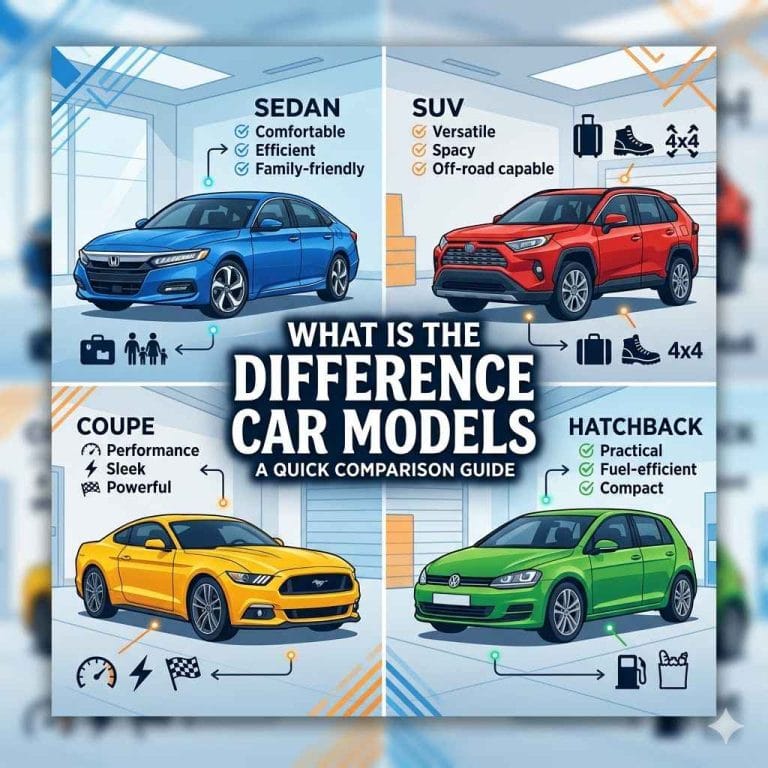
For most highway commuters, a midsize sedan is the best vehicle type because it usually pairs steady high-speed manners, lower cabin noise, good fuel economy, and lower running costs. Choosing the wrong body style can mean more fuel stops, more road noise, and more fatigue on long drives. This guide compares sedans, hatchbacks, crossovers, SUVs, minivans, and EVs for highway use, then points you to the right body style by priority.
What highway commuting demands

Highway commuting rewards stability at speed, low cabin noise, and low running cost. At about 70 to 80 mph, small differences in aerodynamics, wheelbase, and tire noise tend to show up more clearly than they do in stop-and-go traffic, so the right body style can vary with your route, weather, and passenger load.
Stability at speed
High-speed stability depends on wheelbase, center of gravity, suspension tuning, and body shape. A longer wheelbase helps a vehicle absorb bumps better and track straighter at high speeds, while a lower center of gravity usually reduces the floaty feeling that taller vehicles can have on patched pavement.
Aerodynamics matter more as speed rises. Boxier vehicles push more air, which raises drag, wind noise, and sensitivity to crosswinds. That is why a shape that feels fine in town can feel different on an open interstate.
Cabin noise and fatigue
Cabin noise on highways comes mostly from wind noise and tire noise. When both rise, the driver works harder to monitor the car, listen for gaps in traffic, and keep a steady lane position, which adds fatigue over multi-hour drives.
Adaptive cruise control helps because it reduces micro-adjustments to speed. Lane centering can cut steering corrections on straight interstates, and together they make long trips less tiring when traffic is moving steadily.
Fuel use at 70 to 80 mph
Efficiency on the window sticker does not translate perfectly to highway use. At posted speeds near about 75 or 80 mph, aerodynamic drag rises quickly, so taller vehicles often give up more efficiency than lower sedans. That gap grows on routes where the cruise speed stays high for long stretches.
Driver-assist features that matter
Highway driving prioritizes high-speed stability, passing power, cabin quietness, and driver-assistance technology. Car and Driver ranks commuter vehicles using roughly 200 data points, but for this use case, the features that matter most are easy to identify: adaptive cruise control, lane centering, good visibility, and seats that stay comfortable after an hour or more.
📊 Car and Driver ranks commuter vehicles using roughly 200 data points. Source: Best Commuter Cars, Ranked.
Why a midsize sedan is the default pick

A midsize sedan is the default highway commuter for most drivers because it usually balances stability, quietness, and fuel economy better than taller, boxier vehicles. Its lower center of gravity and aerodynamic shape help it feel steady at speed, and that same shape usually cuts drag and wind noise.
Low center of gravity and aerodynamics
A midsize sedan sits lower than most crossovers and SUVs, which helps on long freeway stretches and in crosswinds. Its smoother body shape usually moves less air, so it often uses less fuel and makes less wind noise at 70 to 80 mph.
That does not mean every sedan beats every crossover in every trim. Tires, engine choice, and wheel size still matter. But if you want one body style that usually handles the highway basics well, this is the safest starting point.
Stable high-speed behavior
The sedan’s longer, lower stance usually gives a calmer feel during lane changes and passing. That can matter more than top-end acceleration for commuters who spend most of the trip holding one speed and making small corrections in traffic.
Why it usually beats boxier vehicles on mpg
At steady interstate speeds, drag is a major factor. A sedan’s shape generally helps it return better highway fuel economy than a similarly powered SUV or crossover, and that can mean fewer fuel stops over a month of commuting.
Hybrids fit well here. A hybrid powertrain can improve highway mpg and reduce fuel stops, but it does not remove the body-style tradeoff. A hybrid sedan still keeps the sedan’s lower stance and usually stays easier to place on the road than a taller SUV.
When a full-size sedan makes more sense
A full-size sedan can beat a midsize sedan when long-wheelbase comfort, rear-seat space, and steadier ride quality matter more than a small efficiency gain. If you spend hours at 70 mph or above, the extra length can pay off in calmness and space.
Long wheelbase and ride quality
Longer wheelbase helps vehicles absorb bumps better and track straighter at high speeds. That is useful on patched interstates, expansion joints, and roads with repeating pavement seams that can make shorter vehicles feel busy.
Mid-size to full-size sedans and SUVs typically perform best for long-wheelbase comfort. In practice, that means a full-size sedan can feel less restless over the same route, especially when the pavement is rough.
Passenger space for daily highway use
If the commute includes a coworker, teenager, or adult passenger several days a week, a full-size sedan can be the cleaner answer. More rear legroom and a wider cabin reduce the sense of crowding that matters on long drives.
The tradeoff is cost and size. A full-size sedan can be pricier to buy, insure, and feed with tires than a midsize sedan, so it makes sense only when the extra space is something you will actually use.
Which vehicle type is best for highway commuting?

For solo commuting, a midsize sedan is often a strong default choice. For mixed cargo and passenger needs, a hatchback or crossover can work better if you need easier loading or more flexible space. For rough pavement and crosswinds, a full-size sedan or a well-sorted minivan usually rides calmer than a tall, short-wheelbase SUV.
For long family routes, a minivan often wins on space and fatigue reduction. If you drive high miles in bad weather, cargo flexibility, or all-day comfort matters more than pure efficiency, the answer can move away from the sedan and toward a larger, longer-wheelbase vehicle.
Decision matrix
Scores below use a simple 1 to 5 scale for highway commuting, where 5 indicates the strongest performance for that criterion. They are comparative, not lab measurements.
| Vehicle type | Stability | Cabin quietness | 75–80 mph efficiency | Passing power | Seat comfort | Crosswind control | Cargo flexibility | Fatigue reduction | Best for | Do not buy if |
|---|---|---|---|---|---|---|---|---|---|---|
| Midsize sedan | 4 | 4 | 5 | 3 | 4 | 4 | 2 | 4 | One-driver highway commuting with a focus on mpg and calm cruising. | You need tall cargo space, very easy rear-seat access, or regular rough-road clearance. |
| Hatchback | 4 | 3 | 4 | 3 | 3 | 4 | 4 | 3 | Commuters who want sedan-like efficiency with easier cargo loading. | Cabin hush and long-trip seat comfort matter more than flexible cargo space. |
| Crossover | 3 | 3 | 3 | 3 | 4 | 3 | 4 | 3 | Drivers who want a higher seat, easy entry, and usable cargo room. | You drive fast highways often and care most about wind noise and efficiency. |
| SUV | 3 | 3 | 2 | 4 | 4 | 3 | 5 | 3 | Families, snowy climates, or commuters who need cargo volume more than mpg. | Your commute is long, fast, and fuel cost matters more than space. |
| Minivan | 4 | 4 | 3 | 3 | 5 | 3 | 5 | 5 | Long family routes, shared commuting, and people who want easy loading plus calm ride quality. | You want the lowest drag, the sportiest response, or the smallest footprint. |
| EV | 4 | 5 | 3 | 4 | 4 | 4 | 3 | 4 | Quiet commuters with home charging and a predictable daily route. | Your route is long, cold, or charging access is uncertain. |
How to read the rankings
The sedan wins the default highway test because it balances the most criteria without asking you to give up too much elsewhere. The minivan scores high on comfort and fatigue reduction because its long wheelbase and space make long hours easier. The crossover sits in the middle, which is why it sells well but rarely wins a pure highway comparison.
Picture a roughly 48-mile interstate commute with steady about 75 mph traffic and frequent crosswinds. A midsize sedan usually feels calmer and uses less fuel than a compact SUV. Now change one variable: add two adults and a stroller every day. The crossover or minivan starts to make more sense because cargo flexibility matters more than a small mpg edge.
Are SUVs and crossovers good for long commutes?
Yes, but with a tradeoff. A crossover is good for long highway commutes when you value ride height, easier entry, and some cargo flexibility more than the last bit of fuel economy and wind noise control. Compact SUVs are the most common compromise choice, but they are still less efficient than sedans at sustained highway speed.
Compact SUV tradeoffs
Compact SUVs bring a higher seating position and a more upright cabin, which many drivers like for visibility and access. The cost is more wind drag than sedans, which usually means more noise and weaker highway mpg at the same speed.
At 80 mph, SUV fuel efficiency can drop by up to 20% versus the official highway rating. That gap is one reason the “higher seat” advantage does not automatically make an SUV the right commuter answer.
Wind drag and cabin noise
Taller bodies catch more air. That can raise wind noise around mirrors, rooflines, and pillars, and it can make the vehicle feel less settled in gusty conditions. On some routes, the difference is obvious before you even look at fuel receipts.
Snow and bad weather can push some drivers toward an SUV or crossover, but tire choice often matters more than body type for winter highway safety. All-season, winter, and performance tires change grip and braking far more than an extra few inches of ride height.
When ride height is worth the penalty
Choose a crossover or SUV if the commute includes steep driveway angles, deep snow, poor visibility into traffic, or frequent loading and unloading of gear. If none of those are real needs, the extra drag and noise are harder to justify.
Should you consider a minivan or EV?
A minivan makes sense when comfort, space, and low fatigue matter more than appearance or fuel economy bragging rights. An EV makes sense when quietness and smooth power matter, but only if your daily and occasional long trips fit its charging and range limits.
Minivan comfort and space
A minivan’s long wheelbase and roomy cabin make it one of the easiest vehicles to live with on long highway routes. It tends to ride smoothly, has flexible seating, and offers enough space that passengers and cargo stop fighting each other.
That makes it a strong answer for parents, carpool drivers, or commuters who regularly carry work gear. It is less attractive if you never use the extra room, because you still pay for the size in parking and fuel use.
EV quietness and range at highway speed
EVs are excellent for cabin quietness at highway speeds because there is no engine vibration filling the background. They also deliver quick passing response, which is useful in merging and short gaps.
The limitation is range. The 2026 Hyundai Ioniq 5 has an estimated range of 245–318 miles, and the 2026 Tesla Model 3 has an estimated range of 309–363 miles. Those numbers can shrink at higher speed, cold weather, and headwinds, so highway trips need more charging planning than a gas sedan does.
Where each one falls short
A minivan is not the efficient answer. An EV is not the easiest answer for a driver who cannot charge at home or work. For a long highway commute, the right pick depends on whether you are buying comfort for people, quiet for yourself, or convenience for the route.
Suppose your daily route is 90 miles round-trip, with a 75 mph cruise and no reliable home charging. A quiet EV may still work on paper, but the charging buffer gets thin in winter. In that case, a hybrid sedan or hybrid crossover is usually easier to live with.
What ownership costs change the answer?
Tire wear, brake wear, insurance, and depreciation often separate body styles more than buyers expect. Tall, heavy vehicles tend to use tires faster and can cost more to insure, while some sedans lose value more slowly because commuter demand stays steady.
Tire wear and brake wear
Heavier vehicles and wider tires usually cost more over time. SUVs and EVs can push tires harder because of weight, torque, or both, while regenerative braking in EVs can reduce brake wear but does not remove the tire-cost penalty.
For high-mile commuters, that matters. A vehicle that saves a little fuel but eats expensive tires can erase part of the advantage.
Insurance and depreciation by body style
Insurance often rises with vehicle price, repair cost, and crash-part expense. Larger vehicles can also cost more to repair after a minor parking or bumper impact. Depreciation follows demand, and commuter-friendly sedans and hybrids often keep a broader used-market audience than niche trims.
Vehicle type buying checklist
- Check whether adaptive cruise control and lane centering are standard on the trim you are buying.
- Compare seat shape and steering wheel reach, not just window sticker mpg.
- Look at tire size, because bigger wheels often ride harsher and cost more to replace.
- For used cars, review service records for tires, brakes, and suspension parts.
- For new cars, compare total price with the features you need for highway use, not only the base trim.
- If you expect winter driving, compare tire options first and body style second.
Commuter cars are often chosen for fuel efficiency, lower prices, and smaller footprints. The 2026 Honda Civic starts at $25,990, the 2026 Toyota Prius gets 49–57 combined mpg, the 2026 Honda CR-V Hybrid is rated 35–40 combined mpg, the 2026 Chevrolet Trax gets 30 combined mpg, and the 2026 Ford Maverick is described as small and fuel-efficient. Those figures help as shopping anchors, but highway comfort still comes down to the body style and equipment you choose. (Caranddriver)
Frequently asked questions
Are sedans better than SUVs for highway driving?
Usually yes, if your priority is efficiency, quieter cruising, and steady behavior at speed. SUVs can win on space, visibility, and cargo flexibility, but they usually bring more drag and noise. On a long interstate commute, that tradeoff matters every day.
Is a crossover good for long highway commutes?
A crossover is good when you want an easier step-in height and flexible cargo space, and you can accept more wind drag than a sedan. It is less compelling if your commute is long, fast, and mostly solo, because sedans usually do the highway basics better.
What car type gets the best highway mpg?
Among common commuter body styles, a sedan usually posts the best highway mpg because of its lower profile and cleaner aerodynamics. Hybrids can improve that further, but body style still matters. Boxier vehicles spend more energy pushing air at speed.
Are EVs good for highway commuting?
Yes, if you can charge easily and your route fits the available range. EVs are quiet, smooth, and quick in traffic, but highway range drops at speed and charging planning matters more on longer routes. That makes them strongest for predictable daily driving.
Is adaptive cruise control worth it for commuting?
Yes, especially for long highway drives. Adaptive cruise control and lane centering reduce micro-adjustments, which lowers mental and physical strain over multi-hour commutes. If your route is mostly open interstate, this feature is close to essential rather than optional.
Products related to this article
Sponsored / affiliate links. As an Amazon Associate I earn from qualifying purchases. I may earn additional commission from eligible campaigns.