3 Best Multimeter Settings for Car Electrical Tests: we compared
For car electrical testing, I use DC volts for battery and circuit checks, resistance or continuity for fuse and wire checks with power off, and current only in series after moving the red lead to the amp jack. The wrong mode can blow the meter fuse, make a good part look bad, or hide a real voltage drop. This guide maps each common diagnosis to the exact setting, jack, and reading I expect.
Quick comparison
| Product | Badge | Best for | Price | ||
|---|---|---|---|---|---|
 |
Fluke 17B+ Digital Multimeter, for Electrical Applications,Fluke | Our pick | Measures AC/DC Voltage 1000V | $155.94
Price as of 29 Sep 2026
|
View |
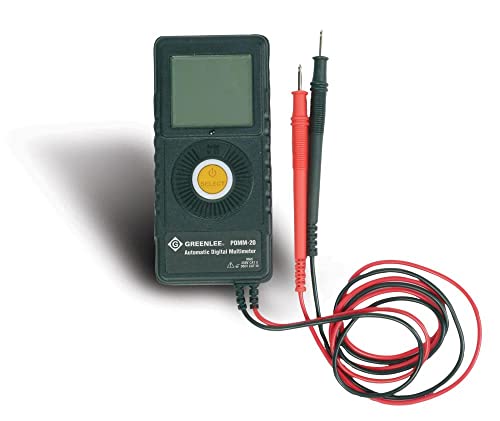 |
Greenlee PDMM-20 Pocket MultimeterGreenlee | Budget pick | Compact pocket multimeter design | $55.49
Price as of 29 Sep 2026
|
View |
 |
Klein Tools MM450 Slim Digital Multimeter, Reverse ContrastKLEIN TOOLS | Also great | Slim profile with lead alert | $74.50
Price as of 29 Sep 2026
|
View |
 |
EEVblog Brymen BM235 MultimeterEEVblog | Upgrade pick | True RMS professional multimeter | $150.00
Price as of 29 Sep 2026
|
View |
For most beginners, an auto-ranging meter with clear lead-alert cues is the easiest place to start because it cuts down on setting mistakes on 12-volt car circuits. The right multimeter setting still depends on the test goal, so the matrix below matters more than brand alone.
How we chose
The main filters were simple: the meter had to fit the job, use the right probe jacks without guesswork, read the expected automotive ranges, and limit common mistakes such as blown fuses or false continuity. For current testing, I also looked for clear guidance on the safe jack choice and whether the meter is practical for parasitic draw work.
Auto-ranging helps beginners on battery and charging checks because it removes range selection errors. Manual-ranging still matters when the meter is older, when fast screen response is needed, or when the user wants to force a higher range before probing an unknown circuit.
Fluke 17B+: best for all-around car diagnostics
Fluke 17B+ is the broadest pick for someone who wants one meter for battery checks, charging-system tests, fuse checks, and basic circuit troubleshooting. Based on the spec sheet and owner feedback, its AC/DC voltage, resistance, continuity, capacitance, diode, and frequency functions cover the usual car electrical jobs without sending the user into specialty tools.
The main strength is headroom. It measures AC/DC voltage up to 1000V and current up to 10A, so it is comfortable for automotive work even though most 12-volt diagnosis is far below that level. The drawback is cost; for simple battery and fuse work, it is more meter than many DIY owners need.
Greenlee PDMM-20: best for basic pocket testing
Greenlee PDMM-20 suits a DIY owner who wants a compact meter for battery voltage, fuse continuity, and quick wiring checks. Based on the spec sheet and job-site reputation, it is a straightforward tool for the common 12-volt checks that matter most at home.
Its appeal is size and simplicity. The drawback is that a pocket meter usually gives up screen size, current flexibility, and feature depth compared with full-size models, so it is better for diagnosis than for advanced current work.
Klein Tools MM450: best for beginners who want lead guidance
Klein Tools MM450 is a strong choice for beginners because the lead-alert LEDs help confirm the probes are in the right jacks before a test starts. Based on specs and reviews, that is especially useful when switching between DC volts, continuity, resistance, and current on a car.
It also has auto-ranging, a reverse-contrast display, and TRMS voltage measurement, which makes it easier to read under a hood or in a dim garage. The limitation is voltage ceiling; 600V AC/DC is plenty for automotive work, but it does not give the same high-voltage cushion as the Fluke.
EEVblog Brymen BM235: best for safety-minded diagnostics
EEVblog Brymen BM235 fits users who care about safety rating, fast continuity checks, and a meter that is comfortable for regular diagnostic work. Based on the spec sheet, its CAT IV rating, contactless voltage detection, and fast latching continuity buzzer make it practical for electrical troubleshooting around vehicles and shop power.
The drawback is cost relative to simple car use. It is excellent for measurement confidence, but a beginner who only wants battery, fuse, and occasional parasitic draw checks may not use its full feature set.
What multimeter setting should you use first?
Start with DC volts for battery and charging checks, continuity for fuses and broken wires, ohms for powered-off resistance checks, and amps or milliamps for parasitic draw. That order matches the most common car faults and avoids the easiest mistake: using a resistance or current setting on a live circuit and damaging the meter or the fuse.
Use the mode that matches the question
If the question is “Is the battery healthy?” use DC volts. If it is “Is this wire broken?” use continuity first, then ohms if you need a more exact check. If it is “How much current is the car drawing while parked?” move to the amp or milliamp jack and connect the meter in series.
Know the jack before you touch the probes
For most voltage, resistance, and continuity checks, black goes to COM and red goes to VΩ. For current, red usually moves to mA or 10A depending on the expected draw. The jacks are not interchangeable, and many blown meter fuses start with the red lead left in the current jack from a previous test.
Best digital multimeter: best for all-around car diagnostics
For car work, the best all-around digital multimeter is the one that makes it hard to pick the wrong mode and easy to confirm the right jack. Auto-ranging helps beginners because the meter selects the scale, while a clear continuity buzzer and separate current jack reduce confusion during battery, fuse, and charging tests.
Which jacks matter most on a car
COM and VΩ handle voltage, continuity, and resistance. mA and 10A are for current only. A beginner-friendly meter should make that split obvious, because a lot of automotive mistakes come from leaving the red lead in the wrong socket and then trying to measure volts or ohms with the current input still selected.
When auto-ranging helps, and when manual range still matters
Auto-ranging is ideal for most 12-volt diagnosis because battery, charging, and fuse checks sit in predictable ranges. Manual-ranging still has value when the meter is older or when an unknown circuit needs a quick highest-range start, especially if the user is worried about overloading the meter on a first probe touch.
Best budget multimeter: best for battery, fuse, and basic wiring checks

A budget meter is enough for most beginner car diagnostics if it can read DC volts cleanly, beep for continuity, and check resistance with the power off. The budget ceiling shows up on current work, where many inexpensive meters have lower fusing quality, less helpful displays, or weak guidance on the right jack.
Best settings for 12-volt battery tests
Use DC volts on a budget meter for resting battery checks and charging checks with the engine running. A healthy 12-volt lead-acid battery often sits around 12.6V at rest, while an AGM battery may read a little higher when fully charged. Cranking voltage should stay above roughly 9.6V during startup.
Continuity and resistance use cases
Continuity is faster for simple pass/fail checks on fuses and broken wires. Ohms is better when the question is how much resistance exists in a ground path or wire segment, but the circuit must be powered off. On a budget meter, the limit is often less precision and slower screen response, not the basic test method.
Limits to know before testing current
Budget meters can handle light current checks, but parasitic draw often needs more care than the meter can safely provide. If the current input is fused at a low value, or if the meter only has a 10A jack with limited protection, it is easy to blow the meter fuse or overload the meter during a wrong connection.
Best clamp-style meter: best for parasitic draw and higher current tests

A clamp-style meter is useful when current is the main problem, especially if the car’s parked draw or charging output is too awkward for a series meter setup. It reduces the chance of blowing a meter fuse because the circuit does not have to be opened for every current check, though it still has to be used on the right conductor and range.
Why amps testing can blow a meter fuse
Traditional multimeters measure current by routing all the current through the meter. That is why the red lead moves to the mA or 10A jack. If the meter is set for current and the user connects it like a voltage probe across a battery or powered circuit, the internal fuse can fail immediately.
Sleep-mode timing before drawing current
Parasitic draw testing is not instant. The car should be allowed to go to sleep first, which can take roughly 20 minutes or more depending on the vehicle. Only after modules time out should the meter be read on the milliamps scale, otherwise the reading will be too high and the diagnosis will be wrong.
Fuse-by-fuse isolation after the reading
Once a parasitic draw is confirmed, the next step is usually fuse-by-fuse isolation. Pull one fuse at a time and watch for the current drop. That process narrows the circuit without guessing, but it only works if the meter is already on the correct series connection and the car has completed sleep mode.
Diagnostic settings matrix: 10 common car tests mapped to the right mode

This matrix is the quickest way to stop guessing between DC volts, continuity, ohms, and amps. It also shows the jack to use, the reading range to expect, and the mistake that most often ruins the test.
| Test goal | Multimeter mode | Probe jack | Expected reading | Most likely mistake |
|---|---|---|---|---|
| Battery resting voltage | DC volts | COM + VΩ | About 12.4V to 12.8V | Checking right after charging, before surface charge settles |
| Battery cranking voltage | DC volts | COM + VΩ | Usually stays above 9.6V while cranking | Reading after the engine has already started |
| Alternator output with engine running | DC volts | COM + VΩ | About 13.5V to 14.8V on many vehicles | Using AC volts instead of DC volts |
| Fuse check out of circuit | Continuity | COM + VΩ | Beep or near-zero resistance | Testing the fuse while power is still on |
| Fuse check in circuit | DC volts | COM + VΩ | Near 0V on both sides if the fuse is good and loaded | Assuming continuity alone proves the circuit can carry load |
| Broken wire test | Continuity or ohms | COM + VΩ | Beep for closed circuit, OL or high resistance for open | Testing a live wire |
| Ground resistance | Ohms | COM + VΩ | Very low resistance, often under 0.2Ω on a good path | Using dirty metal or painted chassis contact |
| Ground voltage drop under load | DC volts | COM + VΩ | Usually under 0.1V to 0.2V on many ground paths | Measuring resistance instead of loaded voltage drop |
| Parasitic draw | Amps or milliamps | COM + mA or 10A | Often tens of milliamps after sleep, vehicle-dependent | Connecting the meter in parallel instead of series |
| Starter-circuit voltage drop | DC volts | COM + VΩ | Low drop across cables and connections under cranking load | Not loading the circuit during the test |
Which one should you buy
Choose the Fluke 17B+ if you want one meter that can stay in the toolbox for years and handle broader electrical work beyond the car. Choose the Klein MM450 if you want beginner-friendly lead guidance and auto-ranging at a lower cost than the Fluke. Choose the Greenlee PDMM-20 if pocket size matters most. Choose the Brymen BM235 if safety rating, continuity speed, and serious diagnosis matter more than price.
If the goal is only battery, fuse, and occasional ground checks, the budget-friendly choice is usually enough. If the goal includes parasitic draw, the meter choice matters less than getting the connection, sleep timing, and current range right.
How do I test continuity in car wiring?
Continuity testing works best on a powered-off circuit and is used to see whether a wire, fuse, or connection is open or closed. Put the meter on continuity, use COM and VΩ, and expect a beep or very low resistance on a complete path. No beep usually means an open circuit, a broken conductor, or a bad connection.
When continuity beats ohms
Continuity is faster when the question is simple: is the path complete or not. Ohms is better when the result needs more detail, such as comparing a questionable ground cable to a known good one. For fast fuse and harness checks, the audible beep is easier than watching decimal places on a display.
Common mistakes on wiring checks
The biggest mistake is testing a live circuit. Resistance and continuity can be misleading or damaging when power is present. Poor probe contact also creates false opens, especially on corroded terminals, dirty connector pins, or painted ground points. A clean metal contact point matters as much as the meter setting.
What ohms setting should I use to test a car ground?
Use the ohms or resistance setting with the circuit powered off, and expect very low resistance from a good ground path. Put the black lead on COM and the red lead on VΩ, then probe bare metal on the chassis and the ground point. A clean, tight ground should read near zero ohms, not a high or wandering value.
Why voltage drop is often better than resistance
Resistance tells part of the story, but voltage drop shows what the ground does under load. That is often more useful because a ground can look acceptable with no current flowing and still fail when the starter, blower, or fuel pump is active. For loaded ground diagnosis, DC volts often gives the clearer answer.
What a bad ground usually looks like
A bad ground often combines corrosion, loose hardware, paint under the terminal, or a cracked cable. The meter may show higher resistance than expected, but the loaded voltage drop is the more practical clue. If the drop climbs above a small fraction of a volt on a low-current circuit, the ground path deserves inspection.
How do I measure parasitic draw with a multimeter?
Measure parasitic draw with the meter in series, on the correct amps or milliamps jack, after the vehicle has gone to sleep. Disconnect the battery or circuit path, place the meter inline so current flows through it, wait for modules to time out, then read milliamps. If the car is still awake, the reading will be misleadingly high.
Series connection is mandatory
A current test is not a clamp-on guess and not a parallel voltage check. The meter has to sit in the current path, which is why the red lead moves to mA or 10A. If the meter is connected across the battery like a voltmeter, it can blow the fuse inside the meter very quickly.
Sleep mode and fuse-by-fuse isolation
Allow enough time for sleep mode before trusting the number. Then remove fuses one at a time to isolate the culprit circuit. That sequence matters because modern modules can stay awake for a while, and many “bad draw” complaints turn out to be normal wake-up current measured too early.
What should a healthy car battery read on a multimeter?
A healthy 12-volt automotive battery should usually read about 12.6V at rest for a fully charged lead-acid battery, with AGM batteries often a little higher, near 12.8V. During cranking, voltage should not fall too far; a common practical threshold is staying above about 9.6V. Readings below those levels point toward discharge, aging, or a weak battery.
Resting voltage versus state of charge
Resting voltage is a state-of-charge clue, not the whole diagnosis. A battery can read acceptably at rest and still fail under load. Likewise, a battery that recently came off a charger can hold surface charge and read higher than it really is. Let it settle before judging the number.
Lead-acid and AGM are not identical
AGM batteries often show a slightly higher fully charged resting voltage than flooded lead-acid batteries. That small difference matters when deciding whether a reading is normal or borderline. The charging system also matters, because a healthy alternator can hide a weak battery until the engine is shut off and the car sits.
Frequently asked questions
What multimeter setting should I use to test a car battery?
Use DC volts for a car battery. Put the black lead in COM and the red lead in VΩ, then measure across the battery posts. A resting reading around 12.6V is typical for a fully charged lead-acid battery, while AGM batteries often read slightly higher. Cranking should not collapse far below 10V.
Should I use AC or DC volts for car electrical testing?
Use DC volts for most car electrical testing because the vehicle’s battery, starter, lights, and charging system are all part of a DC system. AC volts is only for specific checks, such as alternator ripple or an unusual AC-related fault. It is not the normal setting for battery or charging diagnosis.
What range do I set on a multimeter for 12-volt car circuits?
If the meter is auto-ranging, no manual range choice is needed. If it is manual-ranging, start at the highest voltage range and step down until the reading is stable. For 12-volt automotive checks, a 20V DC range is commonly appropriate, because it covers battery and charging-system readings cleanly.
How do I check car fuses with a multimeter?
The quickest method is continuity with the fuse removed and the power off. A good fuse should beep or show very low resistance. For in-circuit checks, use DC volts on a loaded circuit and compare the two sides of the fuse. If one side has voltage and the other does not, the fuse or its feed path is suspect.
What should a healthy car battery read on a multimeter?
A healthy battery typically reads about 12.6V at rest for flooded lead-acid and around 12.8V for AGM when fully charged. During cranking, a good battery usually stays above about 9.6V. Readings lower than that can mean the battery is discharged, aging, or being dragged down by a starter or cable problem.
How do I measure parasitic draw with a multimeter?
Place the meter in series with the battery, move the red lead to the mA or 10A jack, and wait for the vehicle to go to sleep before reading current. Then isolate the draw by pulling fuses one at a time. If the meter is connected in parallel or the car is still awake, the reading will be wrong.
Products related to this article
Sponsored / affiliate links. As an Amazon Associate I earn from qualifying purchases. I may earn additional commission from eligible campaigns.