What are the Different Categories of Vehicles Explained Simply
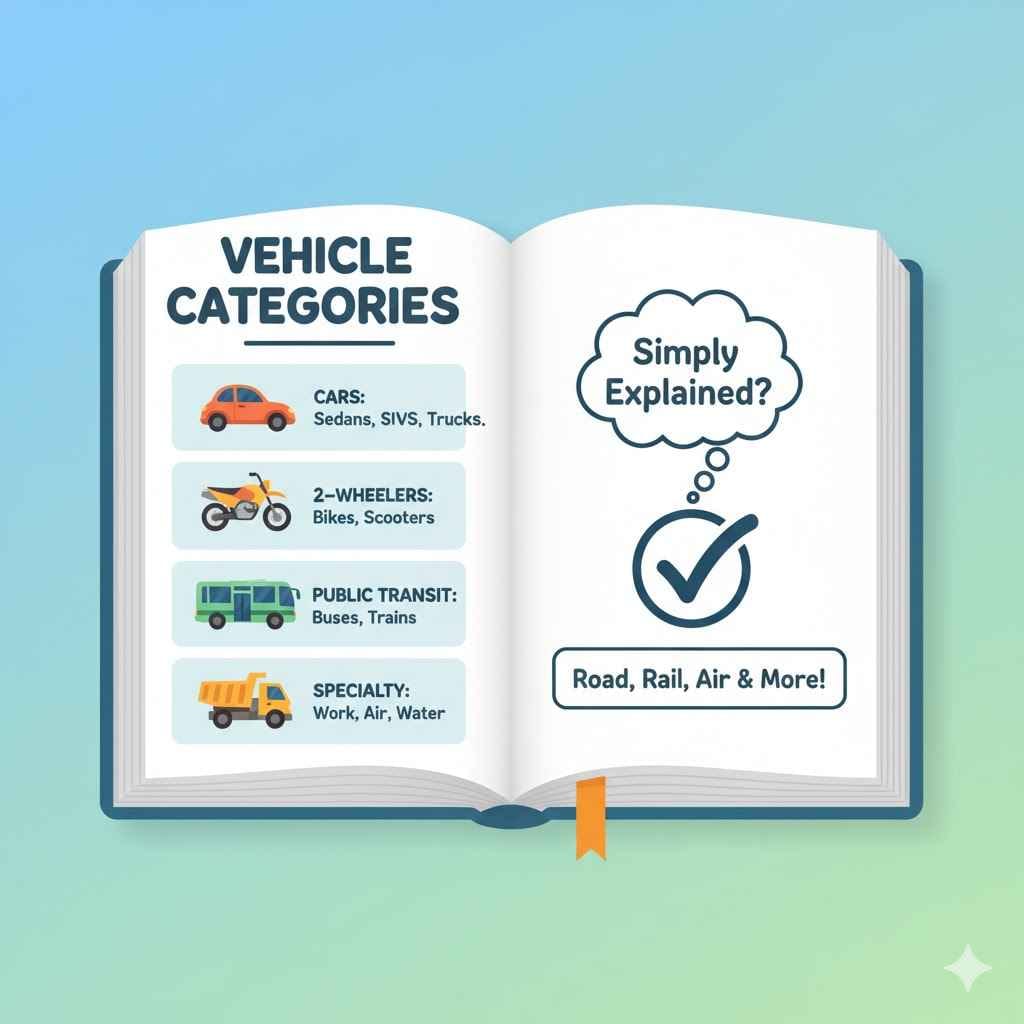
Every day, millions of people use vehicles for travel, work, and transport. But the word “vehicle” covers a huge range of machines, from small scooters to giant trucks and aircraft. Understanding the different categories of vehicles is important for many reasons.
It helps with choosing the right type for your needs, understanding road rules, and even planning a business. Each vehicle type has its own purpose, features, and even legal requirements. Whether you want to buy a car, start a delivery service, or just learn more, knowing these categories will help you make better decisions and avoid common mistakes.
This article explores the main vehicle categories, their uses, key differences, and unique characteristics. We’ll also look at how vehicles are classified in different countries, practical examples, and some surprising facts even experienced drivers might not know. If you want a full understanding of vehicle types, read on.
What Is A Vehicle?
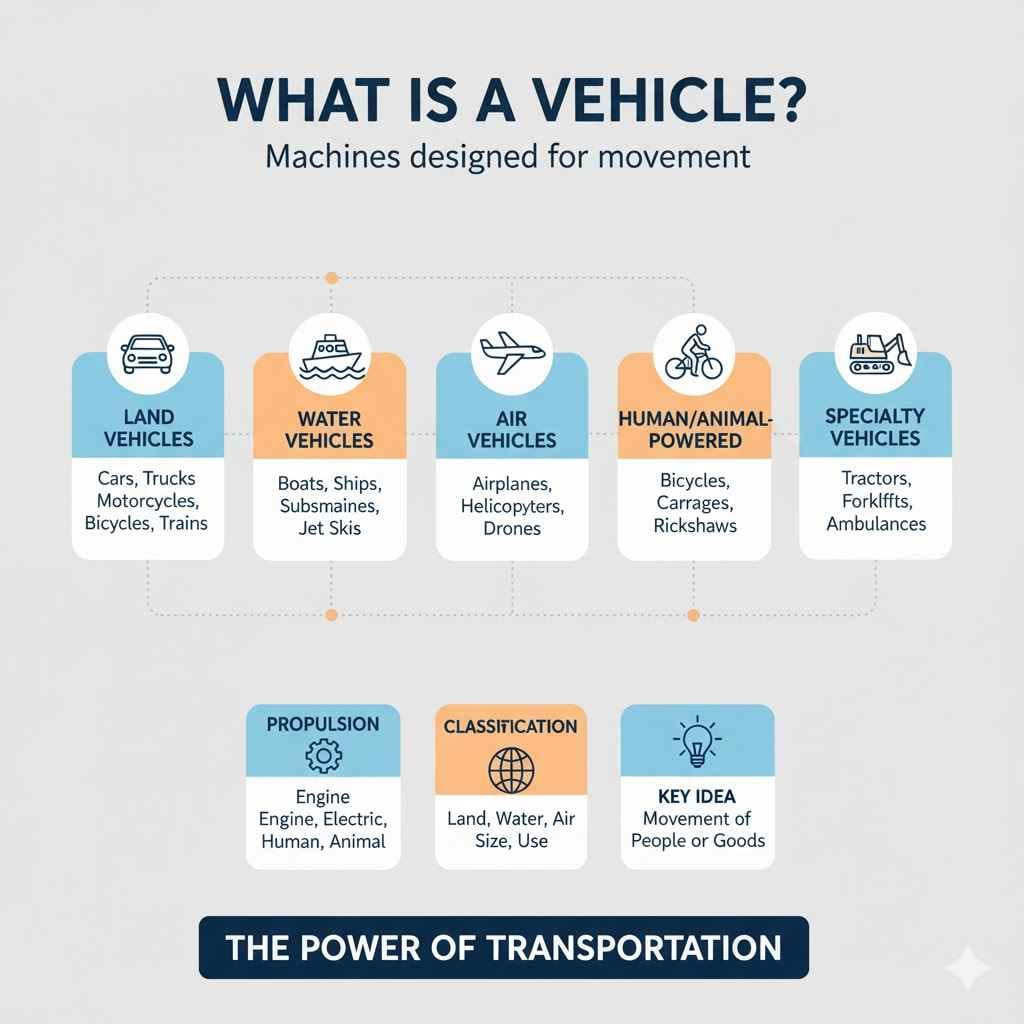
A vehicle is any machine or device that moves people or goods from one place to another. Most people think of cars and trucks, but vehicles also include motorcycles, buses, airplanes, boats, and even bicycles. Some vehicles are powered by engines, while others use human or animal power. The main idea is movement.
Vehicles are usually grouped by how they move (on land, water, or air), their size, what powers them, and what they are used for. These categories help governments make laws, insurance companies set rates, and people choose what to buy.
Main Categories Of Vehicles
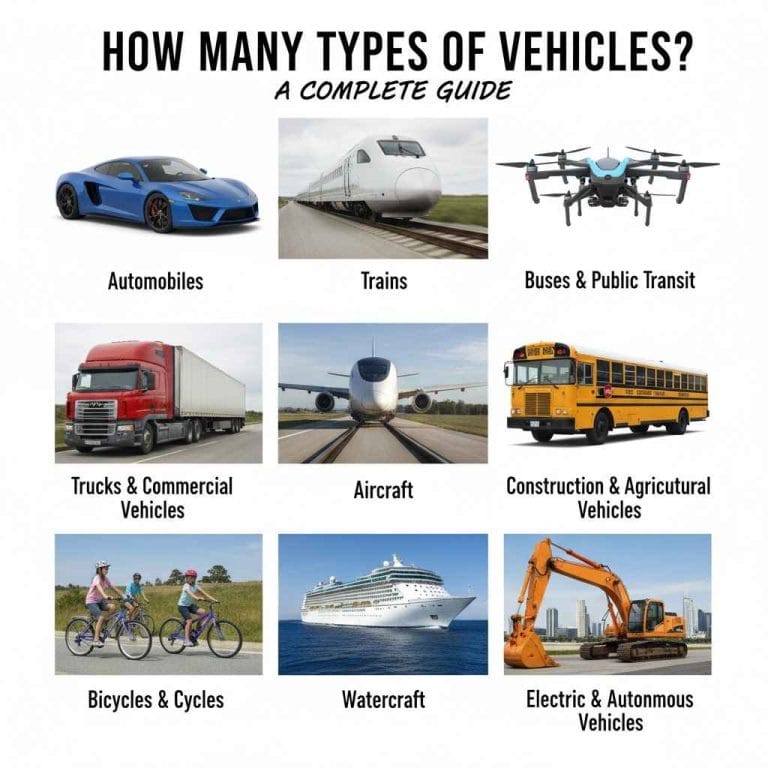
Vehicles can be classified in many ways, but the most common method is by their main purpose and where they operate. Here are the broadest and most important categories:
- Land Vehicles
- Water Vehicles
- Air Vehicles
- Space Vehicles
Let’s dive into each main category and see what types you’ll find inside.
Land Vehicles
Land vehicles are the most common and include everything that moves on roads, rails, or off-road surfaces. They are divided into several subcategories.
Motor Vehicles
These are vehicles powered by engines or motors. They include:
Passenger Cars
Passenger cars are designed mainly to carry people. Examples include sedans, hatchbacks, and coupes. They usually have four wheels and can seat 2-7 people. Cars are popular for personal transport due to comfort and convenience. In 2023, over 66 million cars were produced worldwide.
Suvs And Crossovers
SUVs (Sport Utility Vehicles) and crossovers are bigger than standard cars. They offer higher ground clearance, can handle rough roads, and often have all-wheel drive. SUVs are very popular in North America, with over 50% of new vehicles sold in the US being SUVs or crossovers.
Pickup Trucks
Pickup trucks have an open cargo area at the back. They are used for carrying goods, tools, or equipment. Pickups are common in the US, Australia, and other countries where people need to transport heavy items.
Vans And Minivans
Vans are larger than cars and used for carrying more people (like minibuses) or goods (like delivery vans). Minivans are smaller and often used by families. Vans play a key role in city deliveries and group travel.
Motorcycles And Scooters
Motorcycles are two-wheeled vehicles powered by engines. They are fast, fuel-efficient, and used for both daily travel and sport. Scooters have smaller engines and are easier to ride, making them popular in crowded cities, especially in Asia.
Buses
Buses can carry large groups, usually between 20 and 100 people. There are city buses, school buses, and long-distance coaches. Buses help reduce traffic and pollution when more people use them.
Trucks And Lorries
Trucks (also called lorries in the UK) carry goods over long distances. They range from small delivery trucks to huge 18-wheelers or semi-trailers. Heavy trucks are critical for moving products between cities and countries. In Europe, trucks move about 75% of all inland freight.
Off-road Vehicles
These vehicles are built to handle rough terrain. Examples include ATVs (All-Terrain Vehicles), dune buggies, and utility terrain vehicles (UTVs). They are used in farming, construction, and recreation.
Emergency Vehicles
Emergency vehicles include ambulances, fire trucks, police cars, and rescue vehicles. They have special equipment and lights to help them respond quickly in emergencies.
Specialized Vehicles
Some vehicles are built for special tasks, such as:
- Garbage trucks
- Tow trucks
- Cement mixers
- Street sweepers
These are essential for city services, construction, and maintenance.
Non-motor Vehicles
Not all land vehicles have engines. Some use human or animal power.
Bicycles
Bicycles have two wheels and are powered by pedaling. They are cheap, healthy, and eco-friendly. In many countries, bikes are the main way people travel short distances.
Rickshaws
Rickshaws are three-wheeled vehicles. Some are pulled by people, while others have pedals or small engines. They are common in Asia for short trips.
Animal-drawn Vehicles
Carts and carriages pulled by horses, oxen, or camels are still used in some rural areas.
Rail Vehicles
Vehicles that run on tracks are another land category.
Trains
Trains carry people and goods on rails. There are passenger trains, freight trains, and high-speed trains. In Japan, the Shinkansen (bullet train) can reach 320 km/h.
Trams And Light Rail
Trams run on tracks in city streets. Light rail is similar but covers longer city routes. They are quiet and efficient for city travel.
Subways
Subways (also called metros or undergrounds) run below cities. They move millions every day. The London Underground is over 150 years old.
Comparison Of Land Vehicle Types
Here’s a quick look at how common land vehicles compare on size, speed, and typical use.
| Vehicle Type | Seats | Average Speed (km/h) | Main Use |
|---|---|---|---|
| Car | 4-7 | 80-160 | Personal travel |
| Bus | 20-100 | 40-100 | Mass transport |
| Motorcycle | 1-2 | 60-250 | Personal travel |
| Train | 100-1000+ | 80-320 | Long/short distance |
| Bicycle | 1 | 10-30 | Short trips |
Water Vehicles
Water vehicles move on or under water. They are vital for travel, transport, fishing, and recreation.
Surface Vessels
These float on water and include:
Boats
Boats are small to medium-sized watercraft. There are many types, such as:
- Rowboats (human-powered)
- Sailboats (wind-powered)
- Motorboats (engine-powered)
- Fishing boats
Boats are used for sport, fishing, and short trips.
Ships
Ships are larger than boats and can cross oceans. Types include:
- Cargo ships (move goods)
- Oil tankers (carry oil/gas)
- Passenger ships (cruise ships, ferries)
- Warships (navy use)
The world’s biggest ships can carry over 20,000 containers at once.
Ferries
Ferries move people and vehicles across rivers, lakes, or short sea routes. They are essential in cities with many islands, such as Istanbul or Hong Kong.
Underwater Vehicles
These travel below the water’s surface.
Submarines
Submarines can dive deep for military, research, or rescue missions. Some stay underwater for months. The deepest-diving submarine, the Trieste, reached 10,911 meters in the Mariana Trench.
Submersibles
Submersibles are smaller than submarines and used for research or underwater inspection.
Personal Watercraft
These are small, fun vehicles like jet skis. They are fast and used for recreation.
Comparison Of Water Vehicle Types
Let’s compare some common water vehicles:
| Type | Typical Length (m) | Passenger/Goods Capacity | Main Use |
|---|---|---|---|
| Boat | 3-15 | 1-20 people | Fishing, leisure |
| Ship | 50-400 | 100-6,000 people or 20,000+ tons | Cargo, cruise |
| Submarine | 15-170 | 10-100+ people | Military, research |
| Ferry | 20-200 | 50-2,000 people, 10-500 vehicles | Short crossings |
Air Vehicles
Air vehicles fly above the ground. They are key for fast travel, moving goods, and even defense.
Airplanes
Airplanes have fixed wings and engines. They are the most common air vehicles. Types include:
- Commercial jets (carry passengers)
- Cargo planes (move goods)
- Private planes (for individuals or business)
- Fighter jets (military use)
Modern commercial jets, like the Boeing 777, can carry over 350 passengers and fly over 15,000 km non-stop.
Helicopters
Helicopters have rotating blades and can take off vertically. They are used for:
- Rescue missions
- Air ambulances
- Military operations
- News reporting
- Transport to remote places
Helicopters are more flexible than airplanes but have lower speed and range.
Drones
Drones (also called UAVs: Unmanned Aerial Vehicles) are aircraft without a pilot onboard. Controlled remotely or by computer, drones are used for:
- Aerial photography
- Deliveries
- Agriculture (crop spraying)
- Military surveillance
Drones are changing how people do business, especially in delivery and farming.
Gliders
Gliders have no engines. They use wind and air currents to fly. Gliding is a popular sport.
Hot Air Balloons
Hot air balloons are powered by heated air. They offer a unique, slow way to fly. Balloons are used for tourism and special events.
Comparison Of Air Vehicle Types
A quick look at how air vehicles compare:
| Type | Passenger Capacity | Typical Speed (km/h) | Main Use |
|---|---|---|---|
| Commercial Jet | 100-850 | 800-950 | Passenger travel |
| Helicopter | 2-20 | 150-350 | Rescue, transport |
| Drone | 0-1 (pilotless) | 30-200 | Delivery, surveillance |
| Hot Air Balloon | 2-20 | 10-30 | Tourism |
Space Vehicles
These are the rarest but most advanced vehicle category. Space vehicles leave the Earth’s atmosphere and travel in space.
Rockets
Rockets are used to launch satellites, people, and cargo into space. They have powerful engines and drop parts as they rise. Famous rockets include the Saturn V (Apollo missions) and the Falcon 9 (SpaceX).
Spacecraft
Spacecraft are vehicles that operate in space. They include:
- Satellites (for communication, GPS, weather)
- Space probes (explore other planets)
- Space capsules (carry astronauts)
- Space stations (people live and work in space, like the ISS)
Space Shuttles
Space shuttles were reusable vehicles that carried astronauts and cargo to and from space. The US used them from 1981 to 2011.
How Governments Classify Vehicles
Governments classify vehicles for licensing, taxes, road safety, and insurance. Categories may differ by country, but usually include:
- Passenger vehicles (cars, SUVs, minivans)
- Commercial vehicles (trucks, buses, taxis)
- Motorcycles
- Off-road vehicles
- Emergency vehicles
- Heavy goods vehicles (trucks over a certain weight)
For example, in the US, the Department of Transportation uses “Class 1” to “Class 8” to group trucks by weight. In the EU, “M1” means private cars, while “N1” means small trucks. Knowing your vehicle’s category is important for following the law and getting insurance.
Insights Beginners Often Miss
- One vehicle can fit multiple categories. For example, a pickup truck used for family trips is a passenger vehicle, but the same model used by a plumber is a commercial vehicle.
- Vehicle class affects cost and rules. Insurance, taxes, and even where you can drive depend on the category. For instance, in some cities, large trucks cannot enter the center during the day.
- Electric and hybrid vehicles are changing old categories. Many countries now have special rules and benefits for electric cars, buses, and trucks.
- New types appear fast. Drones and self-driving cars didn’t exist 20 years ago but are now common. Always check the latest local laws.
- The same vehicle may be classified differently in different countries, which can affect import/export, travel, and business.
Vehicle Categories By Power Source
Another way to classify vehicles is by what powers them:
- Gasoline-powered (most cars, motorcycles)
- Diesel-powered (trucks, buses, some cars)
- Electric (cars, bikes, buses, trains)
- Hybrid (mix of gasoline and electric)
- Human-powered (bicycles, rickshaws)
- Animal-powered (carts, carriages)
- Nuclear-powered (submarines, some ships)
- Wind-powered (sailboats)
Electric vehicles are growing fast. In 2023, over 14 million electric cars were sold worldwide, up from 3 million in 2020.
Vehicle Categories By Use
Some vehicles are grouped by what they do:
- Personal vehicles: For individual or family use (cars, bikes)
- Public transport: Buses, trains, subways
- Goods transport: Trucks, cargo ships, freight trains
- Emergency and service: Ambulances, fire trucks, police cars
- Military: Tanks, fighter jets, warships
- Construction and farming: Tractors, excavators, bulldozers
Why Vehicle Categories Matter
Vehicle categories are not just for experts. They matter for:
- Safety: Some vehicles need special training or licenses.
- Cost: Taxes and insurance depend on category.
- Rules: Where and when you can drive varies by type.
- Environment: Some categories have stricter pollution standards.
If you run a business, choosing the wrong category can mean fines or lost money. For personal use, understanding categories helps you pick the best vehicle for your needs.
Surprising Facts About Vehicle Categories
- The world’s largest vehicle is the Bagger 293, a German mining machine weighing 14,200 tons.
- The fastest land vehicle is the ThrustSSC, a jet car that reached 1,228 km/h.
- Some cities classify electric scooters as bicycles, while others treat them as motorcycles.
- In Venice, Italy, the main “vehicles” are boats—no cars allowed!
- The Antonov An-225 is the biggest airplane ever, with a wingspan of 88.4 meters and up to 640 tons takeoff weight.
Common Mistakes When Choosing Vehicle Categories
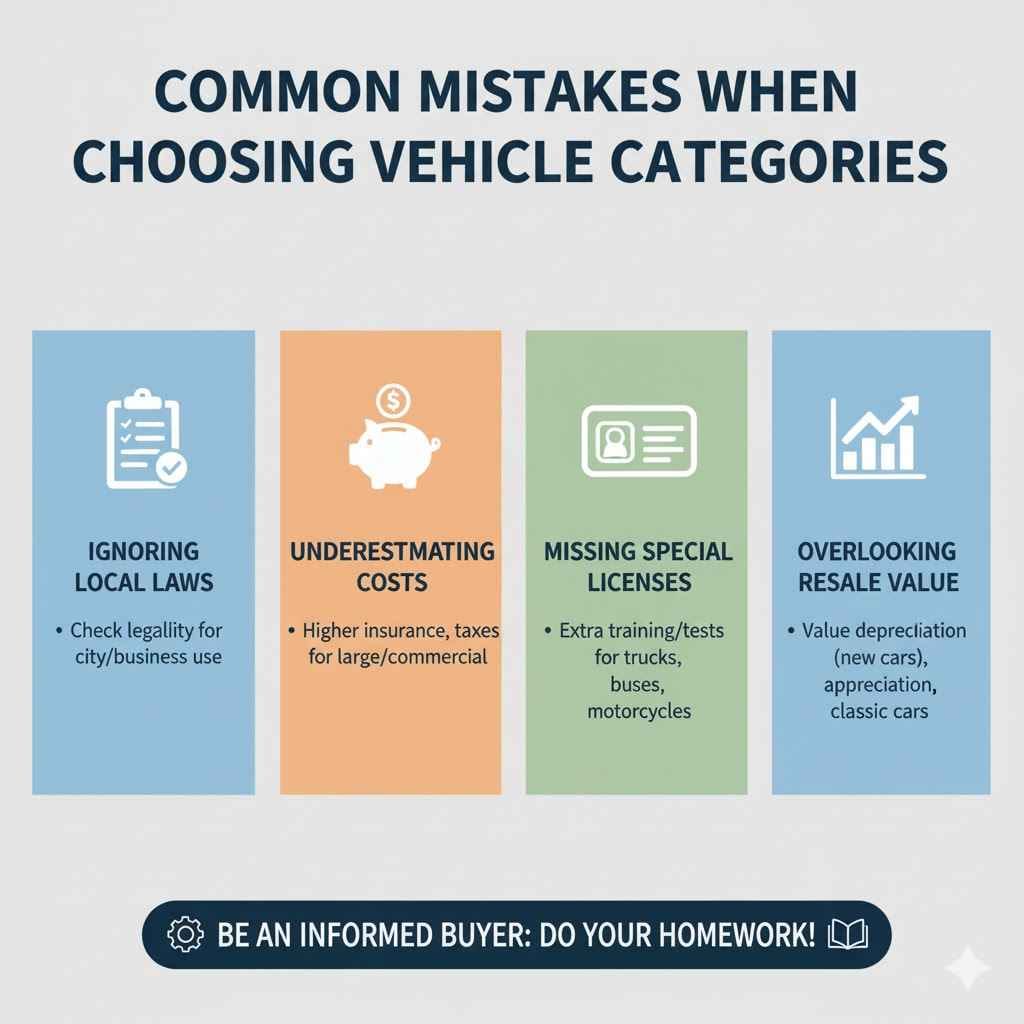
- Ignoring local laws: Many buyers choose a vehicle without checking if it’s legal for their city or business.
- Underestimating costs: Larger or commercial vehicles often cost much more for insurance and tax.
- Missing special licenses: Buses, trucks, and even some motorcycles need extra training and tests.
- Overlooking resale value: Some categories lose value fast, while others (like classic cars) may rise in price.
Frequently Asked Questions
What Is The Difference Between A Car And An Suv?
A car is usually lower, lighter, and built for comfort and efficiency on paved roads. An SUV (Sport Utility Vehicle) is bigger, sits higher, and is designed to handle rougher roads or light off-road conditions. SUVs often have all-wheel drive and more space for people or cargo.
How Do Electric Vehicles Fit Into Traditional Categories?
Electric vehicles (EVs) can be found in almost every category: cars, buses, trucks, and even motorcycles. Most countries now have special rules and incentives for EVs. Some cities allow electric cars in bus lanes or offer free parking to encourage people to use them.
Are Motorcycles And Scooters The Same Category?
Not always. Motorcycles are usually bigger, faster, and can be used on highways. Scooters have smaller engines (often under 50cc), are lighter, and are usually limited to city streets. Insurance, licensing, and road rules can be different for each.
What Are Commercial Vehicles?
Commercial vehicles are used for business, not personal travel. Examples include trucks, delivery vans, buses, and taxis. They often need special licenses and have stricter rules for safety and emissions.
Where Can I Find More About Vehicle Regulations In My Country?
You can check your local transport department or national government website. For a global overview, see this Wikipedia page on vehicle classification for links and detailed explanations.
Understanding the different categories of vehicles is essential for safe, legal, and cost-effective travel or business. Whether you’re buying your first car, starting a delivery company, or just curious, knowing these categories will keep you informed and prepared for the road ahead. See also how much do car models cost every price range explained.