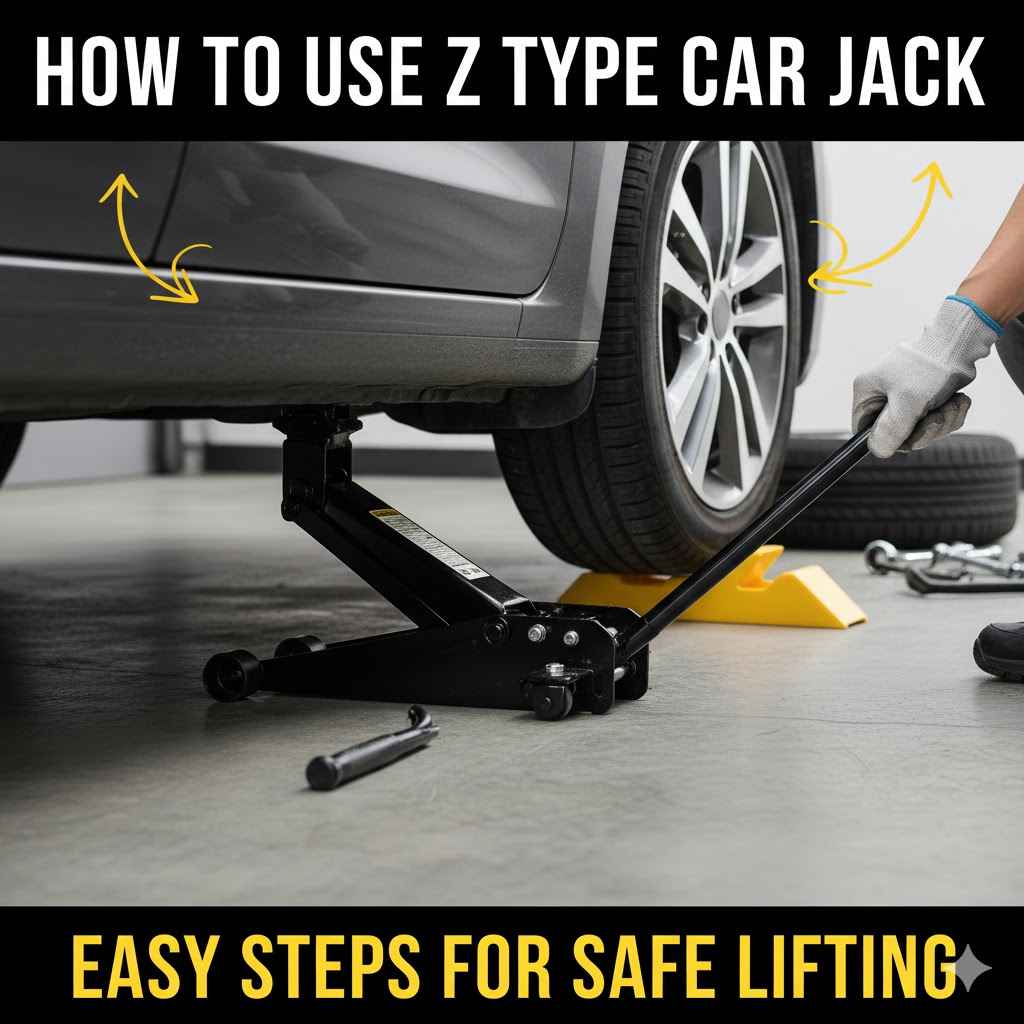
How to Use Z Type Car Jack (Step-by-Step Guide)
Getting a flat tire is never fun, but having the right tools makes all the difference. One tool every car owner should know is the Z type car jack. This simple device lifts your car safely so you can change a tire or check underneath. Many people see a jack and feel unsure about how to use it. If you’ve struggled or never used a Z type car jack before, this guide will help you master it. You’ll learn every step, tips for safety, common mistakes, and even a few expert tricks most beginners miss.
What Is A Z Type Car Jack?
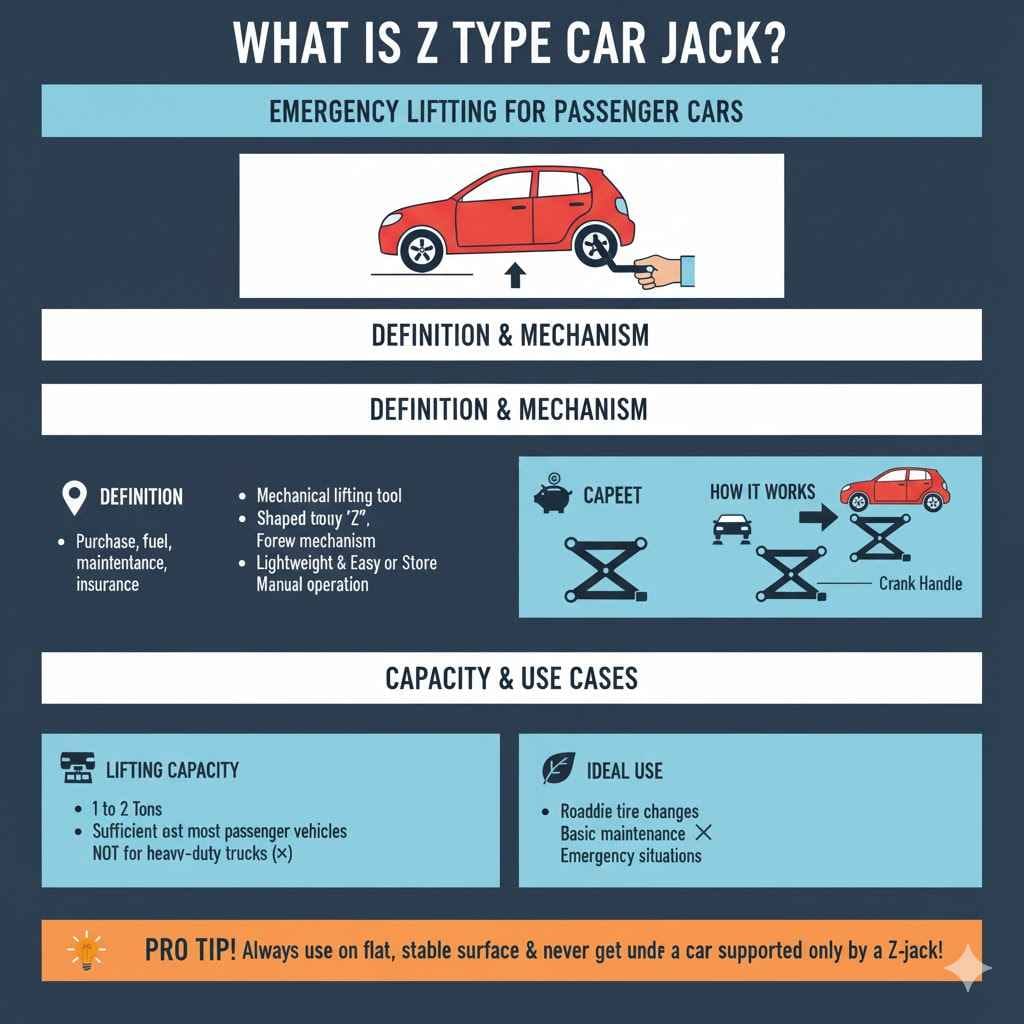
A Z type car jack is a mechanical lifting tool shaped like the letter “Z.” It’s often found in car trunks, especially with compact cars. The design uses a screw mechanism—when you turn the handle, the jack opens and lifts the car. It’s sometimes called a scissor jack because of the way the arms fold and unfold.
These jacks are lightweight, easy to store, and don’t need electricity or hydraulics. They’re ideal for roadside emergencies and basic maintenance. Most Z type jacks can lift between 1 to 2 tons, enough for most passenger vehicles. However, they are not meant for heavy-duty work or lifting large trucks.
Why Knowing How To Use A Z Type Car Jack Matters
Many drivers ignore their car jack until they need it. But using a jack incorrectly can cause accidents, car damage, or injuries. Proper use means:
- Safety: Protect yourself and others.
- Efficiency: Change tires faster and easier.
- Preventing Damage: Avoid harming your car’s body or frame.
- Confidence: Handle emergencies without stress.
Understanding the right technique is the key. Let’s break down the process step by step.
Step-by-step Guide: Using A Z Type Car Jack
1. Prepare Your Car And Tools
Before lifting, make sure you have:
- Z type car jack
- Jack handle or wrench
- Wheel chocks (blocks for the wheels)
- Spare tire
- Lug wrench
Find a flat, solid surface. Parking lots or paved roads are best. Avoid soft ground, gravel, or slopes. Turn off the engine, put the car in park (or first gear for manual cars), and set the handbrake.
Place wheel chocks behind the wheels opposite the one you’re lifting. This keeps the car from rolling.
2. Locate The Jacking Point
Every car has special spots for jacking, called jack points. These are reinforced parts of the frame, often marked with notches or arrows. Check your owner’s manual if you’re unsure.
Never place the jack anywhere else—it can damage the body or slip.
3. Position The Z Type Car Jack
Slide the jack under the car so the top rests against the jack point. Make sure the base sits flat on the ground. The jack should be straight, not tilted.
4. Assemble The Handle
Attach the handle or wrench to the jack’s turning bolt. Most Z type jacks use a detachable handle that fits into a loop. If your jack uses a screwdriver or special tool, use that.
5. Begin Lifting
Turn the handle clockwise. The jack will open, raising the car. Go slowly and check that the jack stays stable. Lift until the tire is about 2 inches off the ground—enough to remove it easily.
Never crawl under the car while using only a jack. If you need to go underneath, use jack stands for extra safety.
6. Remove The Wheel
Use the lug wrench to loosen the nuts. Do this before lifting the car too high. Once the nuts are loose, finish raising the car, then remove the wheel.
7. Lower The Car
After finishing your work, turn the handle counterclockwise to lower the car. Go slowly to avoid sudden drops. Remove the jack and store your tools.
8. Double-check Everything
Tighten wheel nuts properly. Make sure the jack and tools are packed away. Check tire pressure and drive carefully.
Safety Tips Most People Miss
Using a Z type car jack isn’t complicated, but many people make mistakes. Here are some expert safety tips:
- Use wheel chocks: Many skip this step. Without chocks, your car can roll—even with the handbrake on.
- Never jack on uneven ground: The jack can slip or fall.
- Don’t lift more than needed: Only raise the car enough to remove the wheel.
- Keep hands clear: Watch out for pinch points around the jack.
- Stay alert: Don’t get distracted while jacking.
Common Mistakes And How To Avoid Them
Even experienced drivers sometimes make errors with Z type car jacks. Here are the most frequent mistakes:
- Placing the jack in the wrong spot: This can cause serious damage or make the jack slip.
- Not using wheel chocks: Cars can roll unexpectedly.
- Over-tightening the jack: Can strain or break the mechanism.
- Trying to lift too much weight: Each jack has a maximum capacity. Check before use.
- Rushing the process: Hurrying increases risk.
To avoid these mistakes, always follow your car’s manual, and take your time.
Comparing Z Type Car Jack With Other Car Jacks
Many car owners wonder how the Z type jack compares to other common jacks. Here’s a quick comparison:
| Jack Type | Max Weight | Ease of Use | Size | Price Range |
|---|---|---|---|---|
| Z Type (Scissor) | 1-2 tons | Moderate | Compact | $20-$40 |
| Hydraulic Bottle | 2-4 tons | Easy | Medium | $30-$60 |
| Floor Jack | 2-3 tons | Very Easy | Large | $50-$120 |
Z type jacks are best for emergencies and space-saving. Hydraulic bottle and floor jacks are easier but heavier and take more room.
Understanding The Mechanics: How Z Type Car Jack Works
The Z type jack uses a screw mechanism. When you turn the handle, the screw pulls the arms together, making the jack rise. This “scissor” action gives the jack its name.
Most jacks have a lead screw made of steel. As you rotate, the arms fold and lift the car. The design is simple, durable, and reliable. However, it requires physical effort—unlike hydraulic jacks, which use fluid pressure.
Key Parts Of A Z Type Car Jack
- Base plate: Sits on the ground.
- Arms: Form the “Z” shape.
- Lead screw: Central bolt for lifting.
- Top plate: Contacts the car.
- Handle: Used for turning.
Understanding these parts helps you troubleshoot problems if the jack doesn’t work.
Choosing The Right Z Type Car Jack For Your Vehicle
Not all Z type jacks are equal. Choosing the right one is important for safety and ease of use.
| Feature | Why It Matters | Common Mistakes |
|---|---|---|
| Weight Capacity | Should match your car’s weight | Buying too small |
| Lift Height | Must clear tire and allow enough space | Buying too short |
| Size & Storage | Fits in trunk or storage area | Choosing oversized jack |
| Build Quality | Strong steel, smooth screw | Choosing cheap, weak materials |
Always check your car’s weight and ground clearance. Most sedans need a jack with at least 1. 5 tons capacity and 12-15 inches lift height.
Maintenance And Care For Your Z Type Car Jack
A good jack lasts years if you maintain it well. Here’s how to keep your Z type jack in top shape:
- Clean after use: Wipe off dirt and grease.
- Oil the screw: Use light oil for smooth turning.
- Check for rust: Inspect arms and screw regularly.
- Store in dry place: Moisture causes rust.
- Test periodically: Lift your car every few months to make sure it works.
Neglecting maintenance can cause the jack to jam or fail when you need it most.
Practical Tips For Difficult Situations
Sometimes, you face challenges like soft ground, rain, or a stuck tire. Here are practical tips for tough conditions:
- On soft ground, place a wooden board under the jack for stability.
- In rain or mud, wipe the jack and handle to keep your grip firm.
- If the tire is stuck, wiggle it gently or tap with your foot.
- For nighttime emergencies, keep a flashlight in your trunk.
These small tricks make a big difference in real-world situations.
Real-life Example: Changing A Tire With A Z Type Car Jack
Imagine you’re driving home and get a flat tire. You pull over to a safe spot and follow these steps:
- Place wheel chocks behind the opposite wheels.
- Find the jack point near the flat tire.
- Position the Z type jack and attach the handle.
- Turn the handle to lift the car.
- Loosen lug nuts with the wrench.
- Remove the tire and put on the spare.
- Lower the car slowly.
- Tighten the lug nuts.
- Pack away tools and drive carefully.
Most people complete this in 20–30 minutes. With practice, you’ll feel confident and safe.
How Much Force Is Needed?
Many wonder if using a Z type jack is hard work. In fact, lifting a small car usually takes about 30–50 Newton meters of force on the handle. If you struggle, check for rust or lack of oil on the screw. A well-maintained jack is much easier to use.
Advantages And Disadvantages Of Z Type Car Jacks
Advantages
- Compact and portable
- Affordable
- Simple design
- No electricity needed
- Good for emergencies
Disadvantages
- Requires manual effort
- Limited weight capacity
- Not for frequent heavy-duty use
- Can be slow compared to hydraulic jacks
For most drivers, the advantages outweigh the disadvantages, especially for basic tire changes.
When Not To Use A Z Type Car Jack
There are situations where a Z type jack is not suitable:
- Lifting large trucks or SUVs: Weight exceeds capacity.
- Major repairs: Use a stronger jack and stands.
- On very soft or uneven ground: Jack may slip.
- If the jack is damaged: Never use a cracked or bent jack.
In these cases, use a hydraulic jack or professional equipment.
Legal And Insurance Considerations
Some countries have rules about car jacks. For example, your insurance may require you to use only the jack supplied with your car. Check local laws and your policy before replacing your jack.
If you damage your car while using an improper jack, insurance might not cover the repair.
Environmental Impact
Most Z type car jacks are made from steel, which is recyclable. When your jack gets old or broken, take it to a recycling center. Avoid throwing it in the trash.
Some newer jacks use lighter alloys to reduce weight and carbon footprint. Always look for jacks with eco-friendly materials if possible.
How Z Type Car Jacks Have Evolved
The basic scissor design has been around since the early 20th century. Modern jacks have stronger metals, smoother screws, and better handles. Some come with rubber pads to protect the car’s body.
Recent models also feature foldable handles for easier storage and anti-slip bases for extra safety. According to Wikipedia, the scissor jack remains one of the most reliable tools for simple lifting.
How To Store And Transport Your Z Type Car Jack
Most cars have a dedicated space in the trunk for the jack. Always store the jack:
- Clean and dry
- In its case or pouch
- Away from loose objects
If you travel often, consider a padded bag to avoid rattling. Don’t leave the jack exposed in the car cabin, as it can become a projectile during accidents.
Troubleshooting: What To Do If Your Z Type Car Jack Fails
Sometimes, your jack won’t work as expected. Here are common problems and solutions:
- Jack won’t lift: Check for jammed screw or rust. Oil the screw and try again.
- Handle slips: Make sure the handle is attached properly.
- Jack bends: Stop using it immediately; replace with a new one.
- Jack won’t lower: Turn the handle gently; never force it. Check for obstructions.
- Car moves while lifting: Stop, lower the car, reposition jack and wheel chocks.
If your jack fails, don’t risk injury. Call for roadside assistance.
Expert Tips: Making Your Experience Easier
- Practice at home: Try using the jack before you need it. Practice makes perfect.
- Keep gloves and flashlight: These help in cold or dark conditions.
- Mark jack points: Use a sticker or chalk to make jack points easy to find.
- Take photos: If unsure, take a picture of the jack position for future reference.
Most beginners overlook practice and preparation. These small steps save time and stress.
Z Type Car Jack In Numbers
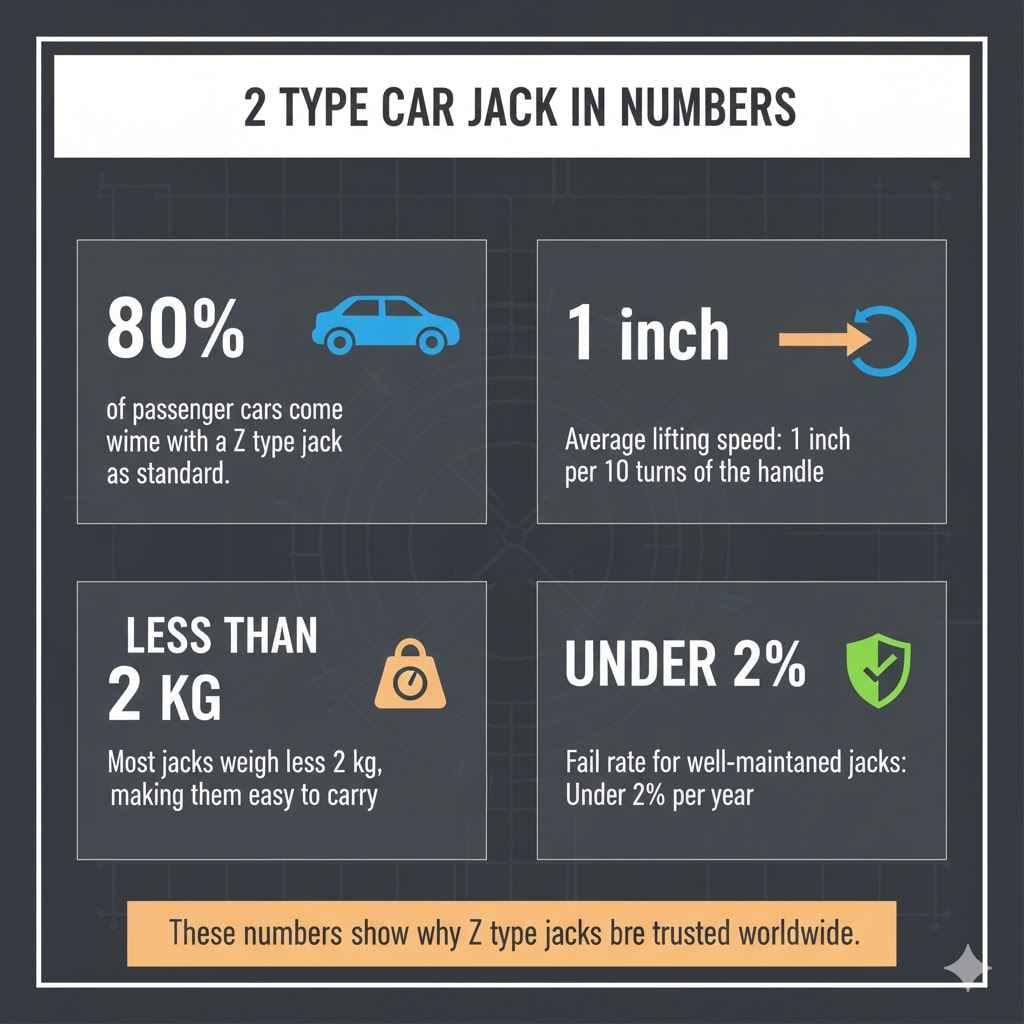
- About 80% of passenger cars come with a Z type jack as standard.
- Average lifting speed: 1 inch per 10 turns of the handle.
- Most jacks weigh less than 2 kg, making them easy to carry.
- Fail rate for well-maintained jacks: Under 2% per year.
These numbers show why Z type jacks are trusted worldwide.
Frequently Asked Questions
What Is The Maximum Weight A Z Type Car Jack Can Lift?
Most Z type car jacks lift 1–2 tons. Always check your jack’s label. Using a jack for heavier vehicles can cause it to bend or fail.
Is It Safe To Use A Z Type Car Jack On All Surfaces?
No. Only use on solid, level surfaces like asphalt or concrete. Avoid grass, gravel, or sloped roads, as the jack can slip or sink.
How Often Should I Check Or Maintain My Z Type Car Jack?
Inspect your jack every 3–6 months. Look for rust, dirt, or wear. Oil the screw and test the jack to make sure it works before emergencies.
Can I Use A Z Type Car Jack For Repairs Other Than Tire Changes?
You can, but only for minor repairs like checking brakes or underbody. Never crawl under a car supported only by a Z type jack. Use jack stands for extra safety.
What Should I Do If My Z Type Car Jack Stops Working During Use?
Lower the car immediately if possible. Check for jams, rust, or broken parts. If the jack is damaged, don’t try to fix it roadside—call for help or use a backup jack.
Learning how to use a Z type car jack is a basic skill every driver should have. With the right technique, proper safety steps, and a bit of practice, you’ll handle roadside emergencies with confidence. Remember, preparation and care are the keys to safe lifting. If you follow these guidelines, you’ll protect yourself, your car, and your peace of mind. See also vehicle can types understanding container and cargo use. See also how to get started in type soul beginner’s full guide .