How to Know If a Tire Valve Stem Is Bad
A tire valve stem is usually bad when air escapes from the stem body or the wheel-hole seal, the rubber shows cracking or dry rot, or the tire keeps losing pressure after the core checks out. Use a no-tools soap test first; if the leak is at the stem base, replacement is usually the right fix.
Sealing points and distinct leak locations


What a tire valve stem does
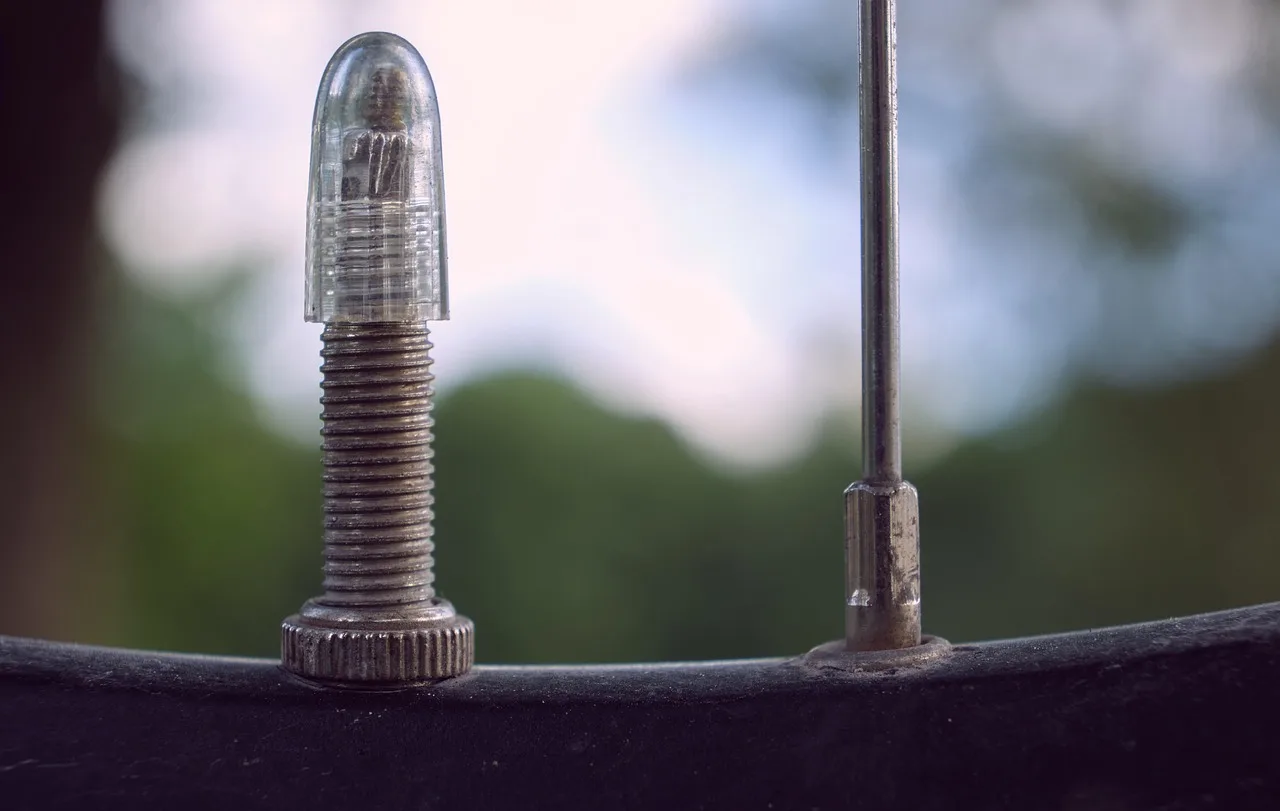
The tire valve stem is the air passage through the wheel that lets you inflate the tire and helps hold pressure after the chuck is removed. NHTSA treats tire pressure as a safety item because underinflation affects handling, wear, and heat buildup. If the stem no longer seals, the tire can lose air even when the tread is intact.
Core vs. stem: what fails where?
A valve core leak usually shows at the tip, while a stem-body leak usually shows at the rubber shaft or the rim-hole seal. Tire-service guidance from major tire makers and the Tire Industry Association commonly treats the core, cap, stem body, and wheel seal as separate leak points, so each one has to be checked on its own.
Bead leak vs. puncture: how do you separate them?
A bead leak forms at the tire-to-rim seam, often after corrosion, impact, or poor sealing on the wheel edge. A puncture leak shows up on the tread or sidewall away from the valve. Industry repair guidance is consistent on one point: tread-area punctures may be repairable, but sidewall and bead-area damage is a different problem.
If tire valve stem decision table
| Leak source | Symptom pattern | Exact bubble location | Pressure-loss pattern | Likely failed part | Immediate next step | Wheel off? |
|---|---|---|---|---|---|---|
| Valve stem body | Cracks, dry rot, cuts, bending, or hissing near the stem itself | At the rubber shaft or where the stem passes through the wheel | Slow leak that may look fine after inflation, then drops over hours or days | Stem body or rim-hole seal | Confirm with soapy water; if bubbles appear at the base or along the stem body, plan replacement | Usually yes |
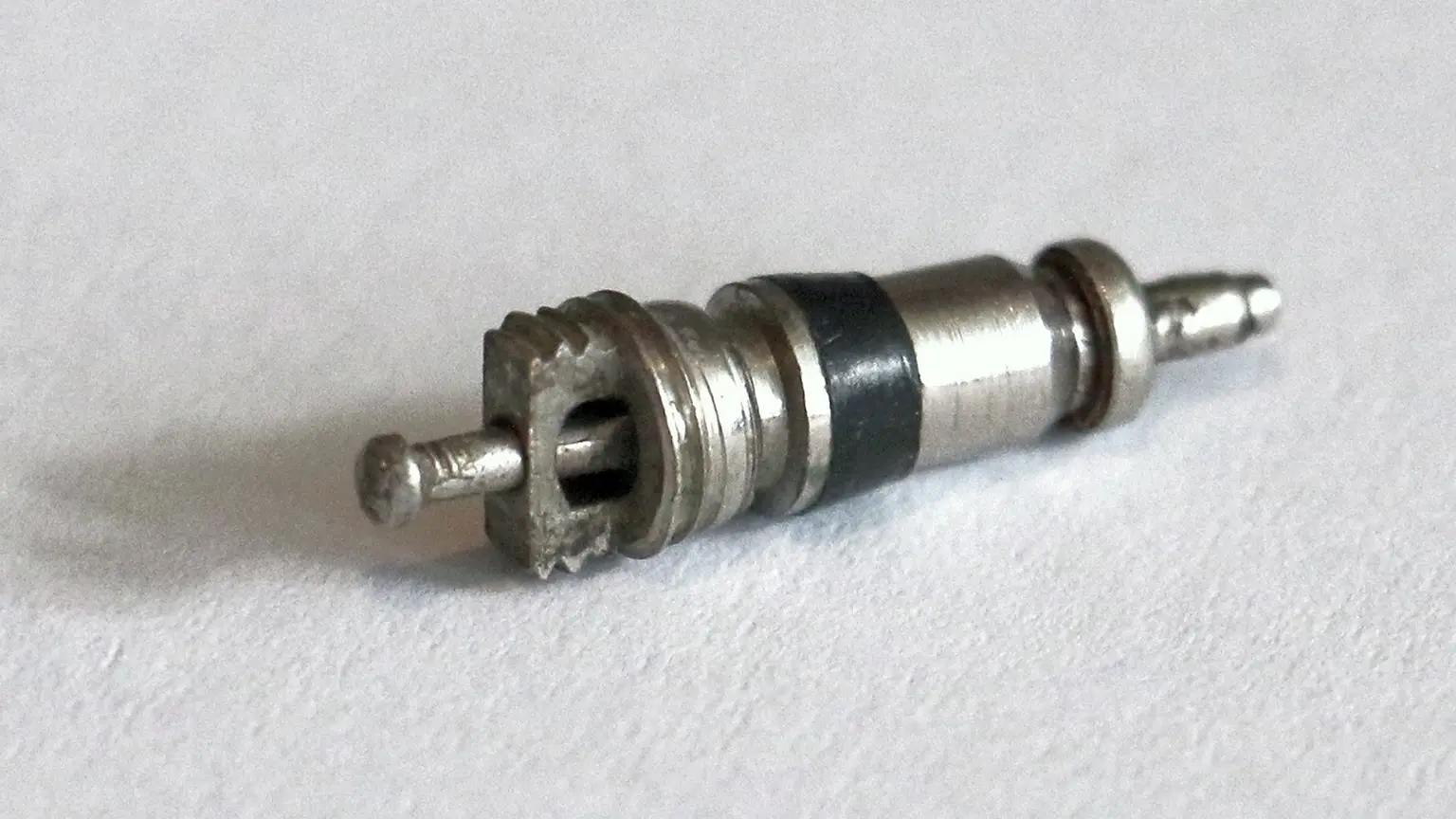
| Valve core | Leak seems to come from the tip, especially with dirt, corrosion, or a loose center pin | At the valve tip only | Pressure loss can be steady but usually stays localized to the cap/tip area | Valve core | Check the tip with soapy water; tighten or replace the core, then reinstall the cap | No |
| Bead seal | Leak appears after impact, curb strike, or corrosion on the wheel edge | At the tire-to-rim seam | Can be slow and intermittent, often worse after temperature change or driving | Bead seal or rim corrosion | Soap the full bead area and inspect the rim edge for corrosion or damage | Often yes |
| Tread puncture | Nail, screw, cut, or embedded object in the tread or sidewall area | On the tread or sidewall away from the valve | Can drop quickly or slowly depending on puncture size and object position | Puncture in the tire carcass | Inspect the tread carefully; repair only if the puncture falls within accepted repair limits | No for diagnosis |
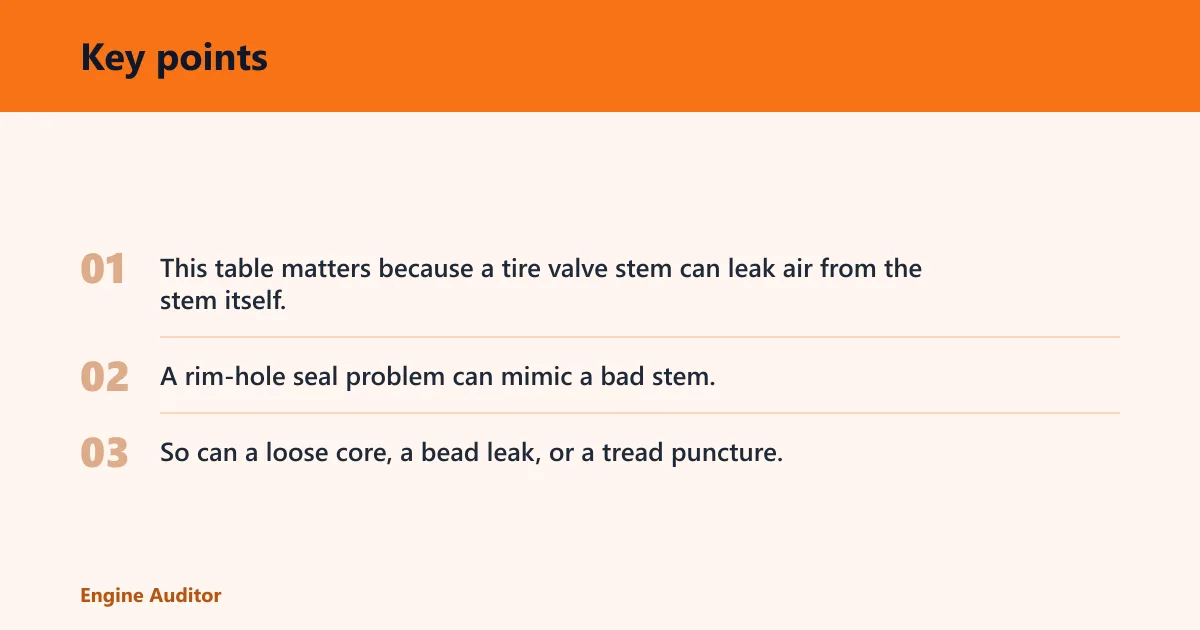
This table matters because a tire valve stem can leak air from the stem itself, but that is only one of several common leak sources. A rim-hole seal problem can mimic a bad stem. So can a loose core, a bead leak, or a tread puncture, which is why source separation comes before replacement.
Why the valve cap matters
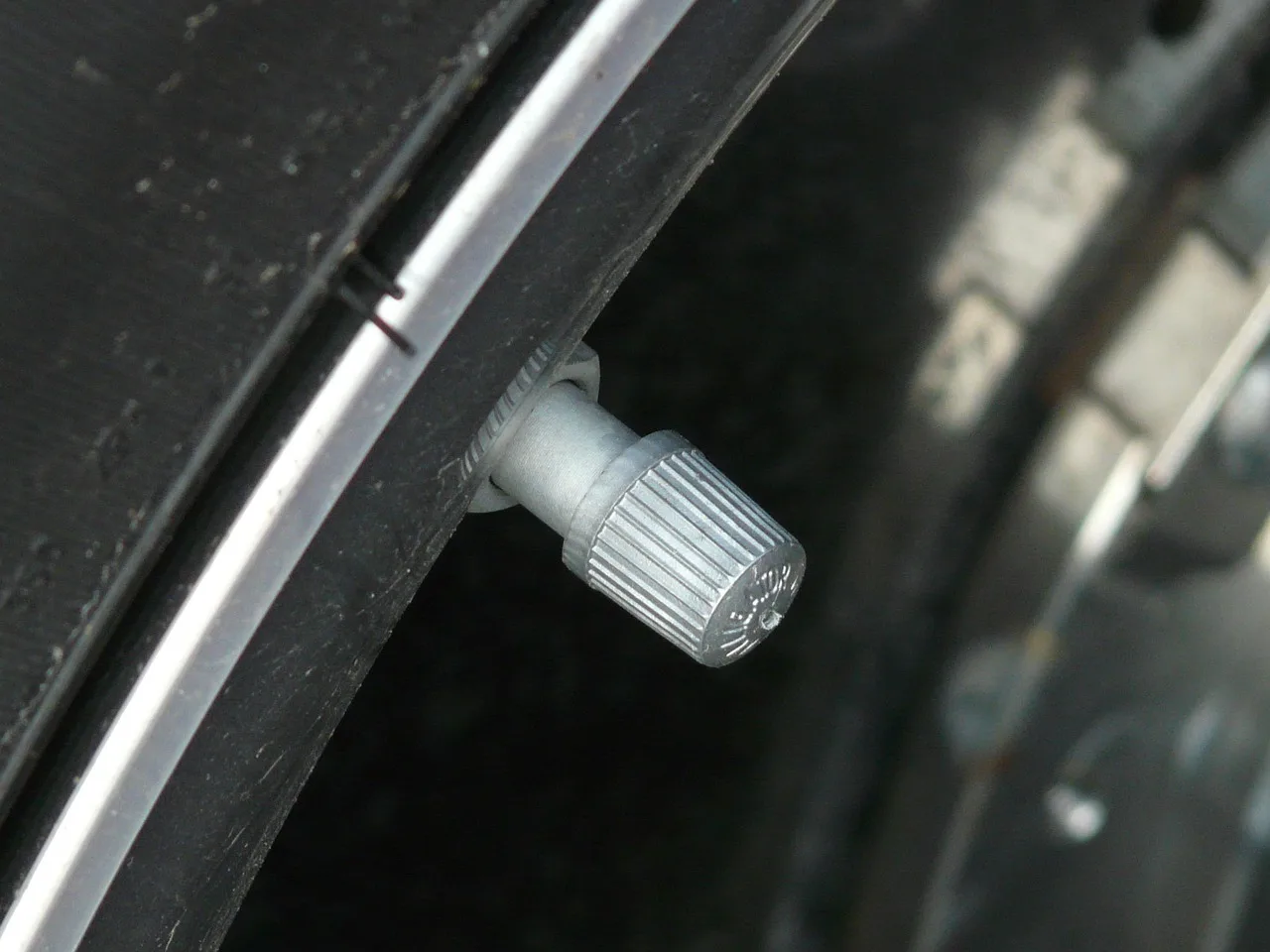
The valve cap helps keep dirt, water, road salt, and debris out of the valve core and tip. That matters because contamination can keep the core from sealing cleanly and can accelerate corrosion. A missing cap does not automatically mean the stem is bad, but it raises the odds that the tip area needs attention.
How cap problems show up
If the cap is missing, cracked, or packed with grit, inspect the tip closely before assuming the stem body has failed. A dirty cap area can cause a small leak pattern that looks like a larger stem problem. If the only bubble point is the tip, the core is the more likely culprit.
How do you know if the stem is bad?
Look for visible damage first, then confirm the leak location with a soapy-water check and a correct inflation setting. A bad stem usually shows cracks, hardening, cuts, bending, or bubbling at the base or through the wheel hole. If the tire keeps losing pressure after inflation, the stem moves higher on the list.
No-tools diagnosis only: what to check
- Check tire pressure, then inflate to the vehicle placard value.
- Inspect the stem body for cracks, hardening, splits, or a bent angle.
- Check that the valve cap is present and not packed with dirt or rust.
- Wet the stem body, the valve tip, and the wheel hole area with soapy water.
- Watch for bubbles at the base, the tip, or the wheel-to-stem interface.
- If bubbles appear at the stem body or wheel hole, treat it as a stem or rim-seal issue, not a core issue.
Say a sedan loses pressure overnight, the valve tip stays dry, and bubbles form only where the rubber stem passes through the wheel rim. That pattern points away from a tread puncture and toward the stem or the wheel seal. If the bubbles stay at the tip, the core is the better first fix.
What a bad stem usually looks like
Rubber stems often fail by aging, hardening, cracking, and dry rot. Metal stems can leak when the seal, grommet, or hardware wears or corrodes. Tire and wheel service guidance from major manufacturers treats those parts as wear items, which is why a visibly cracked stem is not a candidate for a patch-style repair.
How to tell a stem leak from a core leak
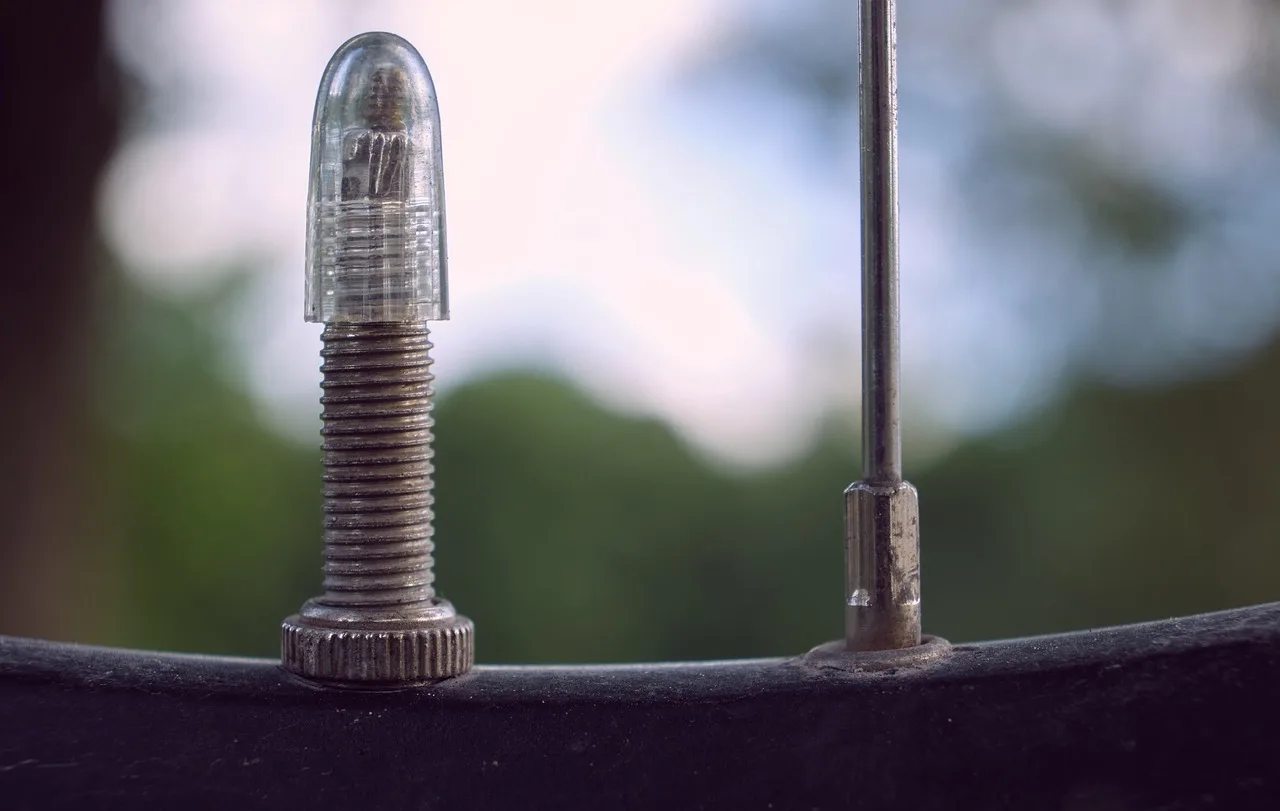
A valve core leak shows at the tip of the stem, while a stem-body leak shows around the shaft or base. The rim hole can also fool you because air can escape where the stem seals through the wheel rim, making the stem look guilty when the wheel opening is the problem.
Signs the leak is in the valve core
A loose core often leaks at the tiny center pin area and may hiss only when the tire is inflated. Corrosion, dirt, or damage around the tip can keep the core from sealing. If soapy water bubbles at the tip but not at the body, the core is the first part to replace or tighten.
Signs the leak is in the stem body
Cracks in rubber, a split near the wheel, or bubbles at the base point to a stem-body failure. On rubber snap-in stems, age and ozone exposure can make the body stiff and brittle. On metal stems, a damaged seal or wheel-side hardware can create the same slow leak pattern.
Why the rim hole can mimic stem failure
The stem passes through the wheel rim hole, and the sealing surface there has to be clean and intact. Rust, deformation, or debris around the hole can leak air and look like a bad stem from the outside. That is why a leak at the base is not enough by itself to call the stem bad.
Can a bad tire valve stem be fixed?
Yes, but only in the right sense: a damaged stem body is usually replaced, not patched. If the problem is only a valve core or a missing cap, the stem itself may be fine. Tire repair limits still apply, so the fix depends on whether the leak is at the core, stem, bead, or tire body.
When replacement is the right call
If soapy water bubbles at the stem body or rim seal and the stem shows physical damage, replace the stem rather than trying to rescue it. A cracked rubber stem or damaged metal stem can keep leaking after every inflation cycle. That lines up with standard tire-service practice from major tire manufacturers and service manuals.
When the core or cap is the only problem
If the leak stops after the core is tightened or replaced, the stem body may be fine. If the cap is missing, replace the cap and inspect for dirt or corrosion before deciding on a larger repair. Do not replace the stem just because the valve area looks dirty.
When repair limits rule out a simple fix
If the leak is in the tread area and falls within accepted repair limits, a patch or patch-plug repair may be appropriate. If the leak is in the sidewall, bead area, or stem body, the repair path is different. The part that failed determines the repair, not just the fact that the tire is losing air.
When should a shop handle tire valve stem replacement?
A shop should handle the work if the stem is metal, the wheel uses a clamp-in design, or the tire bead has to be broken to reach the stem base. Proper replacement usually requires bead access and tire equipment, because the valve stem is installed from inside the wheel area rather than from the outside alone.
Why bead access matters
On many wheels, the tire bead has to be compressed or partially separated to reach the stem base. That is why the safe repair path is usually tire-service equipment, not a force-from-the-outside approach. A new stem only seals correctly if the wheel hole and tire are handled the right way.
What changes on metal clamp-in stems
Metal clamp-in stems depend on the wheel-side seal and hardware as much as the stem itself. If the rim hole is damaged, out of shape, or corroded, the new stem may not seal well. A replacement only works if the wheel opening condition is acceptable.
Should you keep driving with a bad valve stem?
Stop driving and get help if pressure drops quickly, the tire looks visibly low, or there is a steady hiss from the valve area or the tread. A missing cap alone is not an emergency, but a bent stem, damaged rim hole, or shredded rubber stem is a strong sign to quit driving on it.
What makes it unsafe
Jacking and wheel-handling safety matters here. Work on level ground, keep the car stable, and do not crawl under an unsupported vehicle. If the wheel must come off and you do not have a safe way to support the car, leave the repair to a shop.
When the pressure drop becomes the warning sign
Also watch for a tire that loses air after repeated refills. If the pressure keeps dropping over a short period, the leak is active and the tire should not be ignored. A slow leak can become a flat tire without warning, especially if the stem damage worsens.
Frequently asked questions
How to know if a tire valve stem is bad: a bad tire valve stem
A bad tire valve stem often shows cracks, dry rot, cuts, bending, or bubbles at the base when you use soapy water. If the tire keeps losing pressure after correct inflation and a good valve core check, the stem body or rim seal is the next place to inspect.
How to tell if a tire valve stem is bad
Check the stem body, the valve tip, and the wheel hole separately. Bubbles at the tip point to the core, bubbles at the base point to the stem or rim seal, and visible cracks or hardening point to stem replacement. Do not treat every valve-area leak as a stem failure.
Can tire valve stems go bad?
Yes. Rubber stems age, harden, crack, and dry rot, while metal stems can leak from worn seals, damaged hardware, or corrosion. A bad stem can cause a slow leak that looks like a mystery pressure loss until you isolate the leak source with a soapy-water check.
Can I replace a tire valve stem?
You can replace a tire valve stem if you have the right setup and can safely separate the tire enough to reach it. The job often requires bead access, and the tire may need to come off the wheel. If that sounds risky, a shop is the better choice.
How long does it take to replace a valve stem on a tire?
Time depends on wheel design, stem type, and access to the bead and rim hole. A simple core swap is quick, but a full stem replacement takes longer because the tire often has to be separated enough to remove the old stem and install the new one.
Can you fix a valve stem on a tire?
You can fix some stem-area problems, but only when the fault is the core or cap. If the stem body is cracked, cut, bent, or leaking at the wheel hole, replacement is the correct repair. A patch is not the right answer for a damaged stem body.
Products related to this article
Sponsored / affiliate links. As an Amazon Associate I earn from qualifying purchases. I may earn additional commission from eligible campaigns.