How to Make Car Tyres Last Longer (Proven Tips That Work)
Making your car tyres last longer starts with understanding what actually wears them down and taking simple preventive steps. This guide covers the essential maintenance habits, driving techniques, and storage practices that add thousands of miles to your tyre lifespan.
From pressure checks to rotation schedules, you’ll learn exactly what to do and when to do it.
Simply put, you can make your car tyres last longer by maintaining correct pressure, rotating them every 6,000–8,000 miles, keeping wheels aligned, and avoiding aggressive driving. These four actions alone can double tyre lifespan from 30,000 to over 60,000 miles.
Key Takeaways
- Correct tyre pressure is the single biggest factor in preventing premature wear.
- Regular rotation and alignment keep tread wear even across all four tyres.
- Smooth driving habits — gentle acceleration, braking, and cornering — reduce tread loss significantly.
- Tread depth below 3mm increases stopping distances and hydroplaning risk in wet conditions.
1. Why Tyre Longevity Matters for Your Wallet and Safety
Tyre replacement costs can hit £200–£600 per corner depending on your vehicle. Stretching the life of your existing set from 30,000 to 50,000 miles saves you hundreds of pounds over time.
Beyond money, worn tyres directly affect braking distance, cornering grip, and hydroplaning resistance. The National Highway Traffic Safety Administration (NHTSA) reports that tyres are a contributing factor in roughly 11,000 crashes annually in the US alone.
Here is what proper maintenance delivers:
- Lower long-term cost — fewer replacements over the ownership period
- Better fuel economy — under-inflated tyres increase rolling resistance by up to 3%
- Shorter stopping distances — full tread depth reduces wet braking distance by 30% compared to worn tyres
- Reduced risk of blowouts — properly maintained tyres are far less likely to fail at speed
- Consistent handling — even tread wear keeps the car predictable in corners
The small effort of monthly checks and an annual alignment pays off in both cash and safety.
Tip: Set a recurring calendar reminder for the first weekend of every month to check your tyre pressure. It takes five minutes and adds thousands of miles of life.
2. What Causes Premature Tyre Wear and Damage?
Understanding the root causes of tyre wear helps you target the right fixes. Most wear patterns fall into one of five categories, each with a specific cause and solution.
Ignoring these early signs can turn a minor alignment issue into a full replacement job within a few thousand miles.
| Wear Pattern | Cause | Solution |
|---|---|---|
| Centre tread worn faster | Over-inflation | Reduce pressure to manufacturer spec |
| Both edges worn faster | Under-inflation | Inflate to recommended pressure |
| One edge worn faster | Misalignment | Get wheel alignment checked |
| Cupping / scalloping | Bad shocks or suspension | Replace worn suspension components |
| Feathering (smooth on one side, sharp on the other) | Toe misalignment | Adjust toe angle at alignment shop |
Each pattern tells a story about what is happening with your vehicle. Learning to read these signs helps you catch problems early and make your car tyres last longer by fixing the root cause before the damage worsens.
Warning: If you notice cupping or feathering, do not just rotate the tyres and hope the noise disappears. Get the suspension inspected — damaged shocks will destroy a new set of tyres in under 5,000 miles.
3. How to Check Tyre Pressure Correctly Every Time
Checking tyre pressure is the single most effective habit for extending tyre life. The Tyre Industry Association states that 85% of drivers do not check pressure regularly, and over 50% drive with at least one tyre under-inflated by more than 20%.
Here is the correct process to follow:
- Check when tyres are cold — drive less than 1 mile or wait 3 hours after driving. Heat increases pressure readings and gives a false result.
- Find the correct pressure — look on the driver’s door jamb sticker, inside the fuel flap, or in the owner’s manual. Do not use the number on the tyre sidewall — that is the maximum, not the recommended.
- Unscrew the valve cap and press the gauge firmly onto the valve stem. Hold for 2–3 seconds until the reading stabilises.
- Compare to the recommended PSI (pounds per square inch) or bar value. Most passenger cars run between 30–36 PSI (2.0–2.5 bar).
- Add or release air as needed. Use a compressor at a petrol station or a portable 12V pump. Recheck after adjusting.
- Replace the valve cap — it keeps dirt and moisture out of the valve mechanism.
| Pressure Check Frequency | Result |
|---|---|
| Monthly | Optimal tyre life, best fuel economy, safe handling |
| Every 3 months | Moderate wear acceleration, slightly lower fuel efficiency |
| Twice a year or less | Significant risk of uneven wear, blowouts, and poor handling |
Even a 5 PSI drop can reduce tyre life by 25%. Monthly checks cost nothing and deliver the biggest return of any maintenance habit.
Important: Always check pressure on all five tyres — including the spare. A flat spare is useless in an emergency, and pressure drops over time even if the tyre is never used.
4. How Does Wheel Alignment Affect Tyre Lifespan?
Wheel alignment refers to the angles of the tyres relative to each other and the road surface. When these angles are off, the tyres scrub sideways as they roll, wearing down the tread rapidly and unevenly.
A single pothole hit can knock the alignment out by 1–2 degrees. At 60 mph, a 1-degree misalignment causes the tyre to scrub sideways roughly 6 inches per rotation — equating to miles of unnecessary abrasive wear over a journey.
Three alignment angles matter most:
- Camber — the inward or outward tilt of the tyre when viewed from the front. Negative camber wears the inside edge; positive camber wears the outside edge.
- Toe — the direction the tyres point relative to the centreline. Toe-in causes feathering on the outer edges; toe-out wears the inner edges.
- Caster — the steering pivot angle. Bad caster affects straight-line stability and return-to-centre feel.
Signs that your alignment needs checking include:
- Car pulls to one side on a straight, flat road
- Steering wheel is off-centre when driving straight
- Uneven tread wear across the tyre face
- Vibration in the steering wheel at highway speeds
Alignment should be checked every 12,000 miles or whenever you hit a significant pothole or curb. A professional alignment costs £50–£100 and typically pays for itself in extended tyre life within 10,000 miles.
5. What Is Proper Tyre Rotation and When Should You Do It?
Tyre rotation means moving each tyre to a different position on the car to promote even wear. Front tyres typically wear faster than rears because they handle steering, braking forces, and a larger share of the vehicle’s weight under deceleration.
According to Consumer Reports, regular rotation can add 20%–30% to the total mileage you get from a set of tyres. That means a tyre rated for 50,000 miles could deliver 60,000–65,000 miles with proper rotation.
Here are the three standard rotation patterns:
- Forward cross — front tyres move straight back; rear tyres cross to the front on the opposite sides. Best for front-wheel-drive cars.
- Rearward cross — rear tyres move straight forward; front tyres cross to the rear on the opposite sides. Best for rear-wheel-drive cars.
- Side-to-side — swap left and right tyres on the same axle. Used when tyres are directional (marked with a rotation arrow).
- Every 6,000–8,000 miles — this is the standard rotation interval. Align it with oil changes for convenience.
- Whenever you notice uneven wear — if the front tyres show more wear than the rears, rotate early.
- After an alignment — rotate after alignment to start fresh wear patterns on corrected angles.
Tip: Many tyre shops offer free rotation if you bought the tyres from them. Ask about this when purchasing — it is an easy way to save £20–£40 per rotation over the life of the set.
6. How Driving Habits Affect Your Tyre Wear
Your driving style directly controls how fast the tread disappears. Aggressive driving can halve the life of a tyre compared to smooth, anticipatory driving. The friction generated by hard acceleration, late braking, and fast cornering literally grinds rubber off the road surface.
Here is how specific habits affect tyre wear:
- Hard acceleration — spins the drive wheels, especially on wet or loose surfaces. Each wheelspin removes visible rubber in seconds.
- Late braking — concentrates wear on the front tyres, particularly the leading edge of each tread block.
- Fast cornering — loads the outside tyres heavily, wearing the shoulder tread at an accelerated rate.
- Driving on under-inflated tyres — flexes the sidewall excessively, generating heat that weakens the rubber compound.
- Overloading the vehicle — exceeding the maximum load rating compresses the tyres and increases rolling resistance and heat.
Techniques to extend tyre life through driving style:
- Anticipate stops — coast to a stop instead of braking hard at the last moment
- Accelerate gently — especially from a standstill
- Take corners at moderate speed — you do not need to slow to a crawl, but stay within the tyre’s grip range
- Reduce speed over potholes and rough roads — impact damage is a leading cause of tyre failure
- Avoid curbs — scraping the sidewall weakens the structure and can cause bulges
The cost of a smoother driving style is zero. The reward is thousands of extra miles from every set of tyres.
7. Why Tyre Tread Depth Is Critical for Safety and Longevity
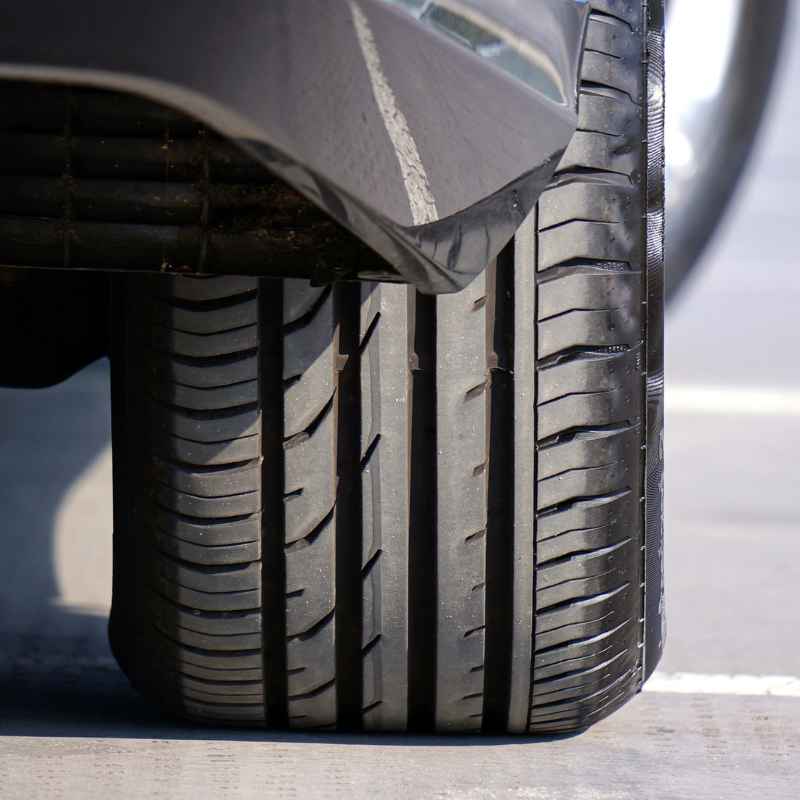
Tread depth determines how well your tyres channel water away from the contact patch. As tread depth decreases, hydroplaning risk increases dramatically. The legal minimum in most countries is 1.6mm, but safety organisations recommend replacement at 3mm for wet weather performance.
The Rubber Manufacturers Association reports that stopping distance on wet roads increases by 30% when tread depth drops from 4mm to 2mm. At highway speeds, that extra distance can mean the difference between a near-miss and a collision.
How to measure tread depth:
- Use a tread depth gauge — insert the probe into the groove and read the measurement. Cost is £5–£10 online.
- The 20p test — insert a 20p coin into the main grooves. If the outer band of the coin (the milled edge) is visible, the tread is below 3mm.
- Check the wear indicators — moulded into the grooves at 1.6mm depth. When the tread is flush with these bars, the tyre is at the legal limit.
| Tread Depth | Condition | Action |
|---|---|---|
| 6mm–8mm | New or near-new | No action needed |
| 3mm–5mm | Moderate wear, still safe in rain | Monitor monthly; plan replacement soon |
| 1.6mm–2.9mm | Low tread, poor wet performance | Replace as soon as possible |
| Below 1.6mm | Illegal and dangerous | Immediately replace — fine and safety risk |
Running tyres until the legal minimum is a false economy. The extra 5,000–8,000 miles gained from wearing them down to 1.6mm comes at the cost of significantly compromised wet-road braking and cornering grip. Replace at 3mm for the best balance of cost and safety.
Warning: Never mix tyres with significantly different tread depths on the same axle. A difference of more than 2mm between the left and right tyre can cause unpredictable handling during emergency braking or cornering.
8. What Are the Best Practices for Tyre Storage and Maintenance?
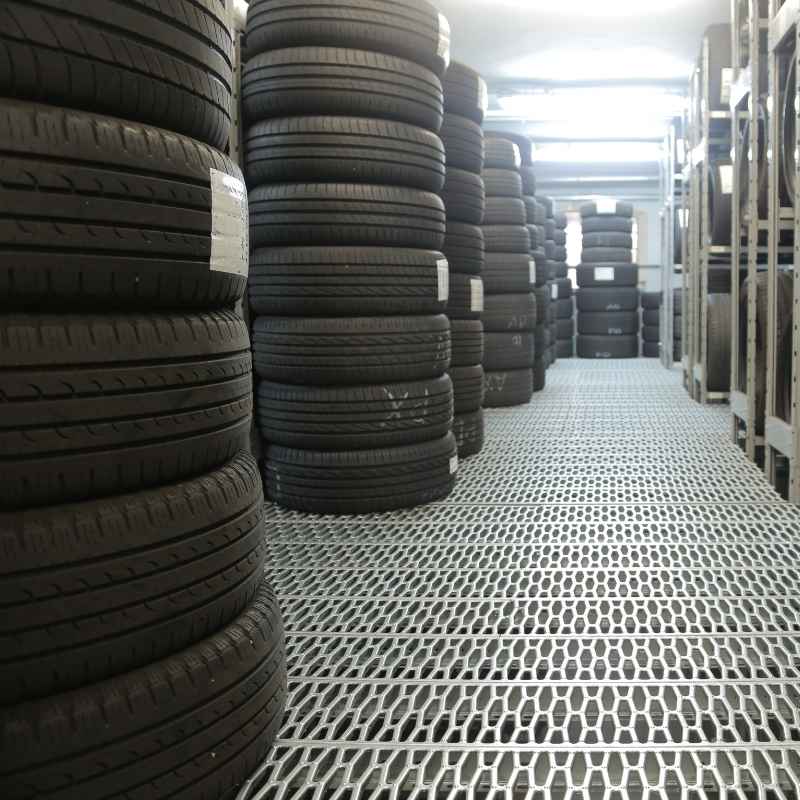
If you run summer and winter tyres, or keep a spare set, proper storage prevents rubber degradation. Tyres age even when not in use — heat, light, and ozone attack the rubber compound over time.
The Tyre and Rubber Association recommends replacing tyres that are 6 years old regardless of tread depth, because rubber compounds harden and lose grip with age.
Storage best practices:
- Store in a cool, dry place — away from direct sunlight, radiators, and strong electrical motors that generate ozone. Ideal temperature is 10°C–25°C.
- Keep them upright — stack tyres vertically if mounted on rims. Unmounted tyres should be stacked flat, no more than 4 high.
- Reduce pressure for long-term storage — drop to about 15 PSI (1 bar) to reduce stress on the sidewalls.
- Use tyre bags — opaque plastic bags block UV light and prevent dirt accumulation. Do not use tyre shine products before storage as some can accelerate cracking.
- Mark the position — use chalk or a label to note which corner each tyre came from, making reinstallation easier.
General maintenance tasks to extend tyre life:
- Inspect for bulges, cuts, or embedded objects monthly
- Check valve stems for cracks or leaks
- Keep tyres clean — road salt and grit can accelerate rubber degradation
- Replace valve caps — missing caps allow dirt into the valve core
- Monitor tyre age — check the DOT code on the sidewall; the last four digits indicate the week and year of manufacture
Important: The DOT code looks like “3521” — meaning week 35 of 2021. If the tyres are approaching 6 years from that date, start planning for replacement even if the tread looks fine.
Frequently Asked Questions
How often should I check my tyre pressure?
Check tyre pressure at least once a month and before any long journey. Pressure naturally drops 1–2 PSI per month, and seasonal temperature changes of 10°C can cause a 2–3 PSI shift. Monthly checks catch these changes before they cause uneven wear.
Can I rotate tyres myself at home?
Yes, if you have a jack, jack stands, and a torque wrench. Always follow the vehicle’s specified torque settings when tightening lug nuts — typically 80–100 Nm depending on the model. If you are unsure about lifting the car safely, a tyre shop charges £20–£40 for rotation and does it in 15 minutes.
Does driving with low tyre pressure damage the tyre permanently?
Yes. Running a tyre at 20% below recommended pressure for more than a few hundred miles can cause sidewall flex damage that weakens the structure permanently. The damage may not be visible initially but increases blowout risk.
Always reinflate immediately and have the tyre inspected if it has been driven while significantly under-inflated.
How do I know if my tyres need alignment or balancing?
Alignment issues cause the car to pull to one side and create uneven tread wear. Balancing issues cause a vibration in the steering wheel or seat at specific speeds. If you feel a shake at 50–60 mph, balancing is likely the fix.
If the car drifts on a flat road or the steering wheel is off-centre, alignment is needed.
What is the maximum age for car tyres regardless of tread?
Most tyre manufacturers recommend replacing tyres at 6 years from the date of manufacture, even if they have unused tread depth. At 10 years, the tyres are considered unsafe and must be replaced regardless of appearance. Check the DOT code on the sidewall to determine the age of your tyres.
Final Thoughts
Making your car tyres last longer is mostly about consistent habits — checking pressure monthly, rotating every 6,000–8,000 miles, and driving smoothly. These actions cost almost nothing but can double the life of your tyres and significantly improve safety. Start with a pressure check this week, schedule a rotation next month, and your tyres will reward you with thousands of extra miles.
See also does a car tire have a tube inside the honest answer. See also cheapest place to get car tires honest guide to saving big.
Products related to this article
Sponsored / affiliate links. As an Amazon Associate I earn from qualifying purchases. I may earn additional commission from eligible campaigns.